REVIEW · KYOTO
Private Japanese Sound Bath in Kyoto
Book on Viator →Operated by Miracle.Sound.Vibration · Bookable on Viator
Kyoto gets quiet in your lap. This fully private session uses the handcrafted Singing Ring, and I love that it’s just you, with no strangers added to your time. I also like the close, body-focused part where the guide brings the vibrations right onto you, but note the optional Traditional Tatami Room is at a separate venue.
Plan on about 1 hour 20 minutes total, with roughly 60 minutes of sound therapy. You meet at Little Granmy 京都 (Shimogyo Ward) and return there at the end, and the setup is comfortable: a heated mat plus an eye mask and blanket. If you want a break from temples and noise, this is an easy way to reset your nervous system—at a price that’s not cheap, but pays off with full privacy and Japan-made instruments.
In This Review
- Key Things I’d Pack Mentally Before You Go
- A Private Kyoto Sound Bath That Actually Feels Personal
- Meeting Point at Little Granmy 京都: Your First Win Is Easy Directions
- The Setup: Heated Mat, Eye Mask, and Blanket Time
- The Singing Ring: Why This Instrument Is the Big Deal
- What Happens During the 60-Minute Session
- How Privacy Works When There Are Up to 2 People
- Traditional Tatami Room Option: Beautiful, But Watch the Location
- Price and Value: Paying for Craft and Full Quiet
- Who Should Book This in Kyoto (and Who Might Skip)
- Small Tips That Make the Session Work Better
- Should You Book This Private Japanese Sound Bath in Kyoto?
- FAQ
- How long is the sound bath session?
- Where do I meet for the Kyoto sound bath?
- Is this experience private?
- What instrument is used during the session?
- Is there a Traditional Tatami Room option?
- Can the Traditional Tatami Room fit more than 2 people?
- How soon will I get confirmation after booking?
- What if I need to cancel?
Key Things I’d Pack Mentally Before You Go
- True private timing: Up to 2 people per session, and no one else gets added once you book.
- Handcrafted Singing Ring sound: A special harmonic instrument made by Japanese artisans, built one by one.
- A laid-back physical setup: A heated mat, eye mask, and blanket so you can stop holding yourself together.
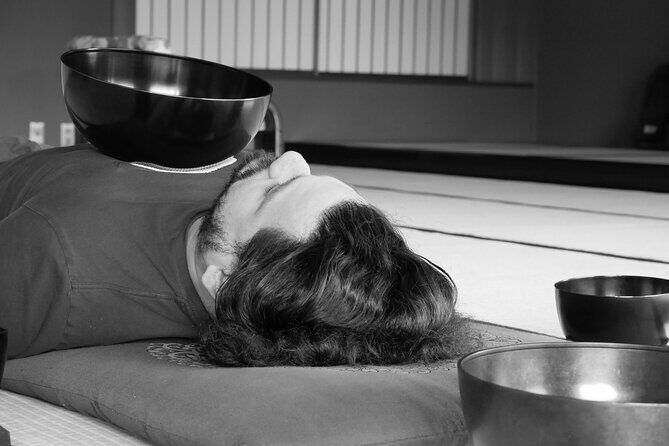
- Vibrations you can feel: The guide begins near you, then places the bowl/instruments on your body during the session.
- Tatami Room means a second location: If you choose it, you’ll use a different venue than the main meeting point.
- Easy check-in area: The meeting spot is near public transportation, and you end where you start.
A Private Kyoto Sound Bath That Actually Feels Personal
Kyoto is famous for peace. But this experience gives you peace that’s more controlled than most sightseeing. It’s built around a single, fully private sound bath session where you lie down and let vibrations do the work, instead of trying to relax through willpower.
Two details matter a lot here. First, the session is private by design, capped at up to 2 people, so you aren’t sharing a calm moment with strangers. Second, the instrument choice is unusual: the Singing Ring is specifically described as a Japanese-made harmonic instrument crafted one by one, so the sound character is part of what you’re paying for.
The one “heads up” I’d keep in mind is the optional Traditional Tatami Room setup. It’s at a separate venue, and the map link in the listing won’t set the location correctly. If you’re the type who hates last-minute confusion, read the directions message carefully after booking.
You can also read our reviews of more private tours in Kyoto



Meeting Point at Little Granmy 京都: Your First Win Is Easy Directions
Your session starts at Little Granmy 京都, 85-10-203 Koinarichō, Shimogyo Ward, Kyoto (600-8208). It’s the kind of meeting point you can actually find without a drama-filled scavenger hunt, especially since it’s noted as near public transportation.
This matters more than it sounds. A sound bath works best when you’re not rushing, sweaty, and searching for the right building. The experience is set up so you arrive, get settled, and then the session begins without you spending the first 20 minutes figuring things out.
Another practical comfort: the guide will meet you at the start location (and you’ll get guidance if you might have trouble getting there). Once you’re there, you’re led through the simple setup—heated mat, eye mask, blanket—so you can focus on listening and feeling.
The Setup: Heated Mat, Eye Mask, and Blanket Time
Most people don’t struggle with sound baths because the sound is too intense. They struggle because their body is stiff, their mind is loud, and they don’t know what to do with their hands.
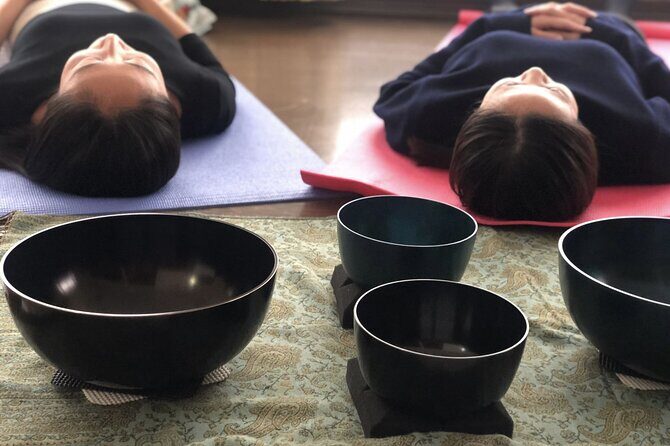
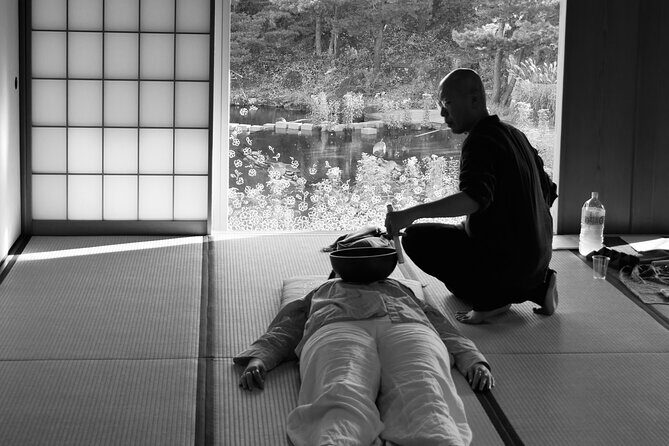
Here, the physical setup takes care of the basics. You lie down on a heated mat, and you’re provided an eye mask and a blanket. That’s a big deal in real terms: warmth helps your muscles drop tension, the eye mask reduces visual stimulation, and the blanket keeps you comfortable through the full session.
Then the guide takes over. The session is described as simple—you lie down and let the sound wash over you—but it’s not passive in a boring way. The guide’s role is to use the instruments with timing and placement so you can actually notice the vibrations as they happen.
If you’ve never done a sound bath before, this is the kind of structure that helps. You don’t need to meditate first. You just need to get down on the mat and follow along.
The Singing Ring: Why This Instrument Is the Big Deal
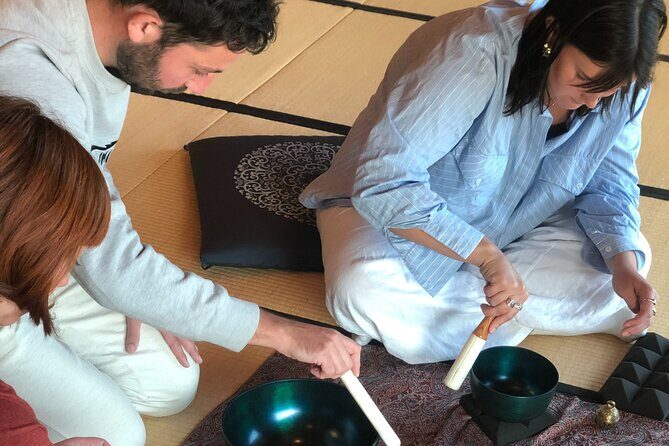
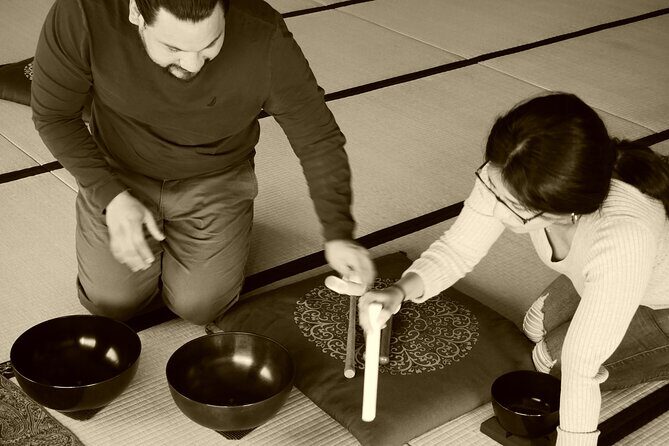
A lot of sound bath experiences use bowls, chimes, or similar instruments. This one leans into a specific feature: the Singing Ring. It’s described as a special harmonic instrument meticulously crafted by Japanese artisans, one by one.
Why you should care: instruments don’t just sound different. They can create different patterns of resonance, and that affects how “present” you feel during the session. The description frames it as a deeply meditative form of music, with rich and intricate sounds. In other words, you’re not just listening to gentle background noise—you’re entering a sound world.
Also, the guide doesn’t treat you like a distant listener. The session is described as Zen-like while lying down, and the vibrations can be felt as instruments interact with your body. In practice, that body-focused element is where the experience can feel more grounding than typical audio-only relaxation.
If you’ve done sound baths elsewhere and felt like it was mostly soothing with no strong physical effect, this is the angle to look for: vibration placement plus a Japan-made instrument designed for harmonic resonance.
What Happens During the 60-Minute Session
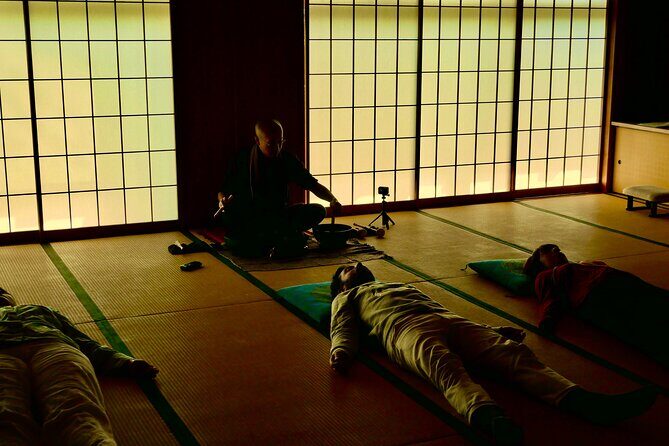
Think of your session as a quiet sequence rather than a performance. You lie down, you settle, and then you’re guided into deeper listening. The overall duration is about 60 minutes, within a total block of roughly 1 hour 20 minutes (including time before and after the actual sound portion).
Here’s the flow you can expect:
1) Settle and position
You lie on the heated mat with the eye mask and blanket. This stage is about comfort and readiness.
2) Sound begins near you
The session starts with the sound made near your position. The goal is to let your nervous system adjust to the frequencies without sudden intensity.
3) Instruments move to body placement
At key moments, the guide places instruments (including bowls) so you feel the vibration through your body. That’s the part people usually remember most—because it turns sound into something physical.
4) Keep still and let it work
You don’t have tasks, charts, or breathing drills. The session is intentionally simple: you lie there and let the sound guide your relaxation.
5) Gentle wrap-up
When it ends, you return to the meeting point area. There’s no long transition ritual described, just a finishing step and then you’re done.
From a “does it actually help?” point of view, that body-feel section is the key. If you’re the type who benefits from physical relaxation (like massage warmth or guided rest), you’ll likely connect with this format quickly.




How Privacy Works When There Are Up to 2 People
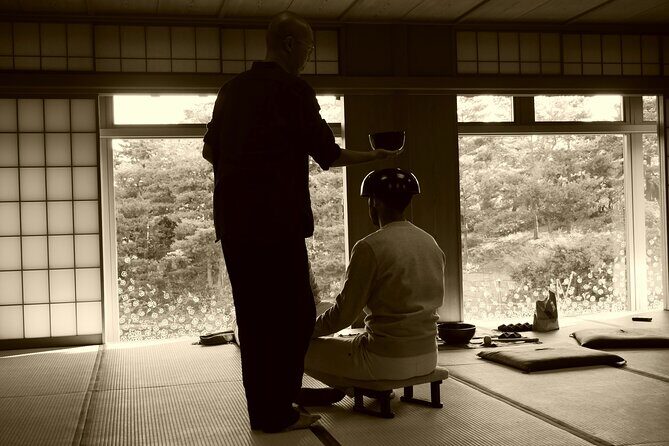
Privacy isn’t a luxury add-on here. It changes the emotional tone of the experience. A shared room can create micro-stress—someone coughs, someone shifts, someone speaks at the wrong moment.
Instead, this session is set up for a quiet, controlled environment:
- Up to 2 people per session
- Once your booking is confirmed, no other guests are added to your time slot
So if you book solo, you’re essentially getting one person in the focus space. If you book with a partner, you’re still getting a small, contained atmosphere with only your group.
This is also why timing matters. If you’re squeezing it into a hectic Kyoto day, pick a calm window. Sound baths work best when you can leave afterwards without racing to your next stop.
Traditional Tatami Room Option: Beautiful, But Watch the Location
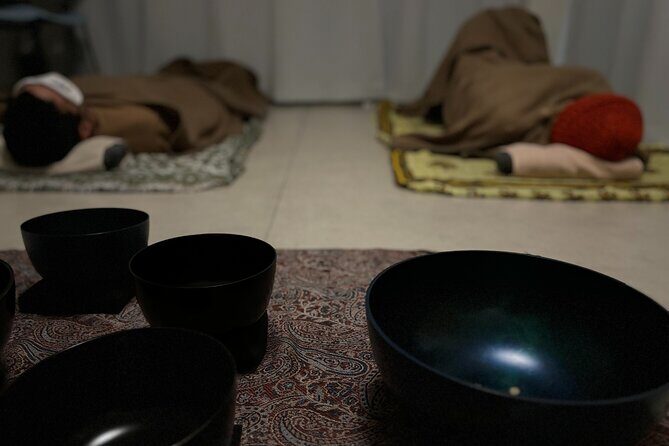
There’s an optional Traditional Tatami Room setup, and it can be worth choosing if you like the feel of older Japanese interiors.
But here’s the practical catch: the tatami room is at a separate venue from the main meeting point. The info note also says the Google Maps link may not set properly, so you need to rely on the guidance message sent after booking.
There’s also a group-size consideration: the standard session fits up to 2 people, while the optional tatami room may be able to accommodate up to 3 people if you contact the provider after booking. If you’re planning with a small group, reach out early so you don’t assume the same room setup applies.
If you’re the type who likes everything to run smoothly with minimal friction, treat this upgrade as a choice that requires slightly more attention to directions—then it can be a very satisfying match for Kyoto.
Price and Value: Paying for Craft and Full Quiet
At $97.73 per person, this isn’t a “cheap add-on.” It’s in the category of experiences where you’re paying for setup, skill, and a specific instrument.
Here’s the value logic I see:
- You’re paying for a fully private session, not a shared class.
- You’re paying for a special Japanese instrument (Singing Ring) and an approach that includes body vibration placement.
- You’re paying for the comfort layer: heated mat, eye mask, blanket, and a guided process that doesn’t require you to figure anything out.
If you compare it to other in-spa type relaxation options, the sound bath’s unique selling point is that it’s both sensory and intentional. You’re not just resting—you’re experiencing guided resonance.
Also, booking early can matter. The experience is listed as commonly booked about 38 days in advance on average, so if you’re traveling in peak season or have a tight itinerary, don’t wait until the last week.
Who Should Book This in Kyoto (and Who Might Skip)
This experience is a great fit if you want:
- A low-effort activity with high payoff for calm
- A private relaxation reset away from crowds
- Something distinctly Japanese, centered on an instrument and technique made with local craft
- An experience you can do even if you’ve never tried a sound bath before
It may be less ideal if:
- You strongly dislike being physically still in a closed, quiet space
- You want something active, scenic, and movement-heavy
- You hate potential location confusion and you’re thinking of choosing the tatami room option (because it’s a separate venue)
That said, the “most travelers can participate” note matters. This isn’t presented as a difficult ritual. It’s presented as accessible relaxation.
Small Tips That Make the Session Work Better
You don’t need special clothing or meditation skills. But a few smart choices help you get more out of the time.
- Arrive slightly early so you can settle without rushing.
- Plan to stay in the calm zone after. Don’t book a sound bath right before a stressful shopping mission or late-night train sprint.
- Let yourself feel the vibrations without overthinking them. The placement part can feel surprising at first; it gets easier as you stop trying to control the sensations.
- If you choose the Tatami Room, read the post-booking venue message carefully. That extra step prevents confusion.
If you’re doing this as a mental health reset or a stress off-ramp, the calm after is half the benefit. Treat it like part of your recovery schedule, not just an hour of entertainment.
Should You Book This Private Japanese Sound Bath in Kyoto?
If you’re in Kyoto for temples, shrines, and walking miles, this is a smart counterbalance. I’d book it when you want a quiet, private moment that feels genuinely tied to Japanese craft, not just generic wellness vibes.
This is also a strong choice if you already know you like body-based relaxation—heated setup plus vibration placement is the whole point. The one thing that can sway you is logistics: if you choose the Traditional Tatami Room, you’ll need to follow the correct-location guidance rather than relying on the map link.
If you’re looking for a calm afternoon with minimal effort and a real sense of being looked after, this private Singing Ring sound bath is an easy yes.
FAQ
How long is the sound bath session?
The session lasts about 60 minutes, and the total experience time is listed as approximately 1 hour 20 minutes.
Where do I meet for the Kyoto sound bath?
You meet at Little Granmy 京都, 600-8208 Kyoto, Shimogyo Ward, Koinarichō, 85-10-203, and the activity ends back at the meeting point.
Is this experience private?
Yes. It’s a fully private sound bath session. Up to 2 people can participate per session, and no other guests will be added after your booking is confirmed.
What instrument is used during the session?
The experience uses the Singing Ring, described as a special harmonic instrument crafted by Japanese artisans.
Is there a Traditional Tatami Room option?
Yes, there is a Traditional Tatami Room option, but it is at a separate venue. You’ll receive guidance after booking because the location can’t be set correctly from the map link in the option description.
Can the Traditional Tatami Room fit more than 2 people?
The info says they may be able to accommodate up to 3 people in the optional Traditional Tatami Room if you contact them after making your booking.
How soon will I get confirmation after booking?
You should receive confirmation within 48 hours of booking, subject to availability.
What if I need to cancel?
Free cancellation is available. You can cancel up to 24 hours in advance for a full refund, and cancellations made less than 24 hours before the start time are not refunded.