REVIEW · EVENING EXPERIENCES
Kyoto: Gion Night Walking Tour with Geisha Insight
Book on Viator →Operated by With Japan · Bookable on Viator
Kyoto at night has a different rhythm. This Gion walking tour is a smart way to see the lantern-lit streets without wrestling a map, and you’ll pick up real context about geisha culture as you go. I liked the small-group feel and how the guide (Ryu) explained what you’re looking at in a practical way. I also liked the food leads that help you plan the rest of your Kyoto evenings. One possible drawback: a geisha or maiko sighting isn’t guaranteed, and it can be dim enough at times that photos are tricky.
What makes this tour worth your time is the pacing. You’re not just passing famous streets—you’re getting pointed toward the quieter corners locals actually use, which is the whole point of doing it at night rather than in the daytime crowds. You also get a guided contrast: historic Gion elegance at first, then the more modern Kyoto energy around Shijo-Kawaramachi.
Plan for a gentle, on-foot experience rather than a sightseeing sprint. Expect about 2 hours of walking, with stops that mix atmosphere (teahouse streets and canal views) and culture (shrines and geisha etiquette). If you’re the type who wants certainty about a geisha photo, adjust your expectations before you go.
In This Review
- Key things I’d circle before you book
- Gion after dark: why this walking tour works
- Price and value: what $25 gets you
- Meeting point at Tanaka Coffee Gion: start easy, start together
- Stop 1 in Gion: Hanamikoji Street, Shirakawa Canal, and a tucked-away shrine
- Hanamikoji Street: the geisha district heartbeat
- Shirakawa Canal: stone lanes, red bridges, and willow shadows
- Tatsumi Daimyojin Shrine: a cultural stop that breaks the postcard loop
- Geisha and maiko insight: spotting without chasing
- Stop 2 around Kawaramachidori: Shijo-Kawaramachi and the local Kyoto vibe
- Hidden backstreets and alleys
- Machiya houses, bars, and eateries
- Food recommendations that actually help
- Small group size: why it feels more personal
- Timing and how to prepare for a night walk
- Who should book this tour (and who might skip it)
- Should you book? My honest take
- FAQ
- How long is the Gion night walking tour?
- Where does the tour start and end?
- How big is the group?
- What areas do you visit during the walk?
- Do you visit a shrine?
- Is a geisha or maiko sighting guaranteed?
- Is admission included?
- Does the tour include food?
- What are the cancellation rules?
Key things I’d circle before you book
- Guide-led navigation: you won’t waste time figuring out side streets at night
- Geisha/miko spotting tips: learn what matters, and why you usually don’t just “see one” on demand
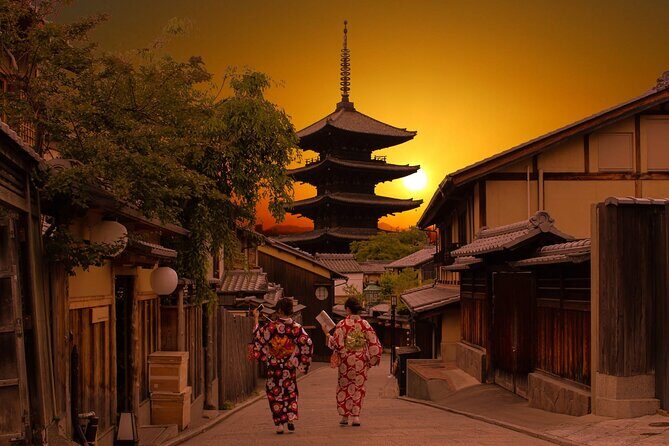
- Gion + Shirakawa Canal at night: lantern-lit streets, stone-paved lanes, and red bridges
- A shrine visit in the backstreets: Tatsumi Daimyojin Shrine adds real local texture
- Kyoto food insight: recommendations are aimed at helping you eat well after the tour
Gion after dark: why this walking tour works
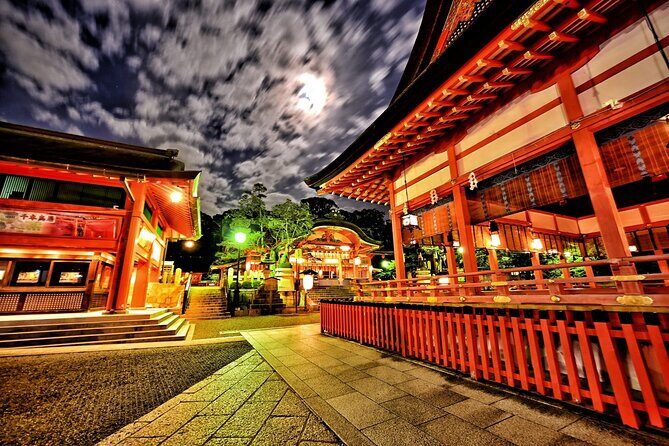
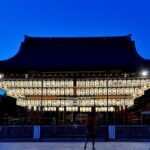
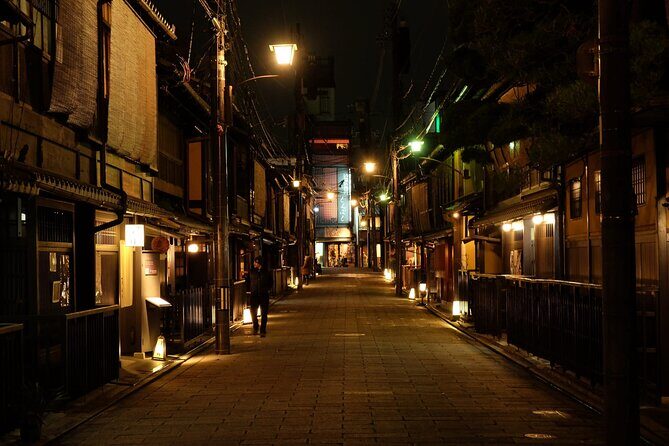
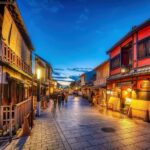
Gion is one of those Kyoto areas where daytimes look great on photos, but the experience can feel crowded and hard to read. At night, the mood shifts. Streets soften. Lantern glow helps the old wood facades and teahouses look like they’re part of the story—not just scenery.
This tour leans into that. Instead of trying to cram in every highlight of Gion in one go, you get a guided route that stays focused. And because it’s a small group (up to 15), the guide can keep things moving without turning the walk into a herd.
The biggest practical win for you is that you won’t need to study routes, compare pins on your phone, or wonder if you’re walking the “right” alleys. Your guide is there to keep you oriented, which matters even more at night when landmarks can look different in low light.
You can also read our reviews of more walking tours in Kyoto
Price and value: what $25 gets you
$25 for a 2-hour, small-group guided walk in Kyoto is pretty reasonable value. You’re not paying for admission to a big museum. You’re paying for guidance, timing, and cultural context.
Here’s how I’d judge the value:
- You’re buying clarity. A night walk in Gion can be confusing fast. Having someone show the route reduces wasted time and wrong turns.
- You’re buying cultural context. The tour includes geisha insights, plus guidance on how to spot real geisha and maiko appropriately (and with realistic expectations).
- You’re buying better next steps. The tour includes insider recommendations for where to eat in Kyoto—helpful if you haven’t figured out dinner yet.
If your goal is purely “photo hunt, zero walking,” then you might not feel the value. But if you want your time in Gion to feel intentional, this price makes sense.
Meeting point at Tanaka Coffee Gion: start easy, start together
The tour starts at Tanaka Coffee Gion, Higashiyama Ward. You’ll also end back at the meeting point, which is convenient if you’re pairing the walk with dinner plans nearby.
Starting from a recognizable café is a small detail, but it helps. You can arrive, get oriented, and join the group without a scramble. That matters for night tours, where a few minutes lost can feel like a lot.
Stop 1 in Gion: Hanamikoji Street, Shirakawa Canal, and a tucked-away shrine
This is where the tour earns its keep, because it combines the obvious sights with the less obvious “how to look” moments.
Hanamikoji Street: the geisha district heartbeat
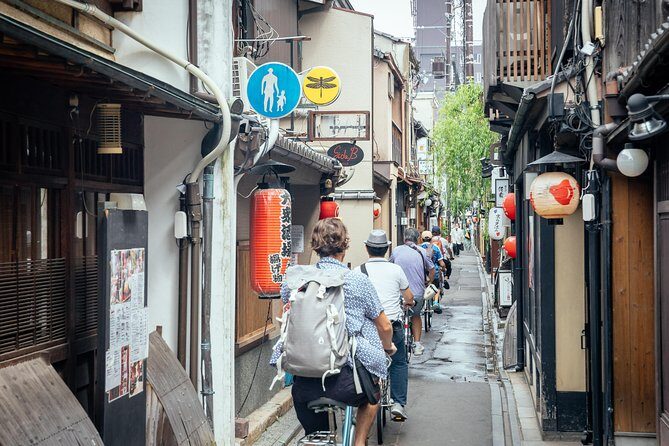
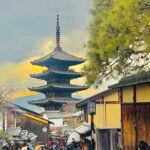
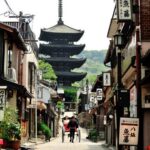
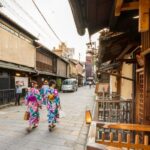
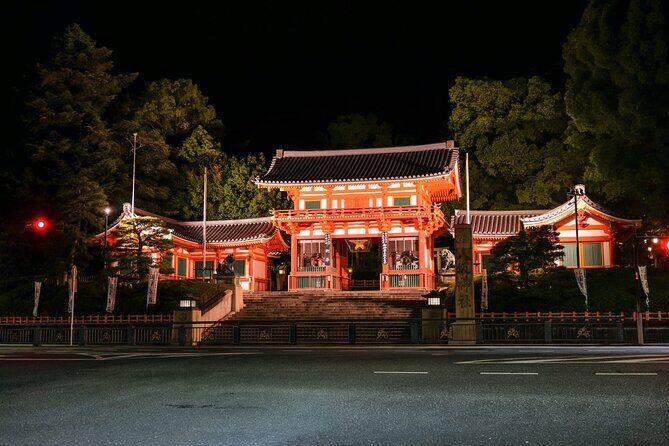
You’ll walk along Hanamikoji Street, the core corridor associated with Kyoto’s geisha district. It’s lined with traditional wooden teahouses (ochaya), and the street’s atmosphere is what people come for.
What’s useful here is the guide framing. Instead of you staring at storefronts, you’re learning what’s significant about the area and how geisha culture connects to these spaces. That turns “cool street” into “I understand what I’m seeing.”
Tip for you: slow down here. If you rush through, you miss the rhythm that makes Gion feel like Gion.
You can also read our reviews of more evening experiences in Kyoto

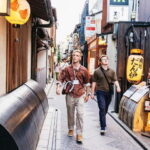
Shirakawa Canal: stone lanes, red bridges, and willow shadows
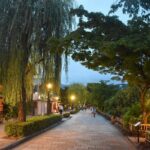
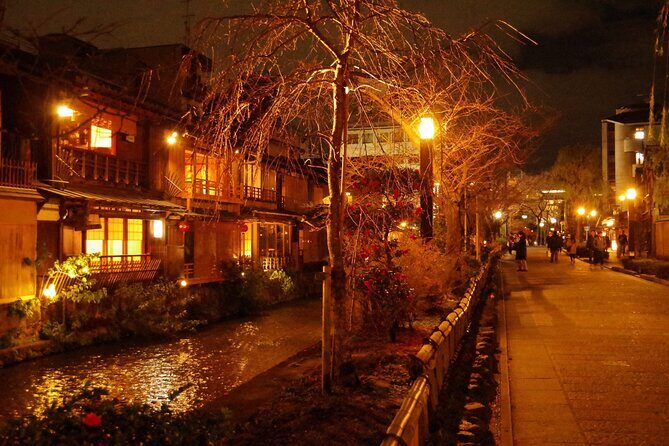
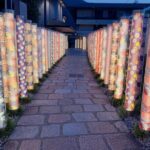
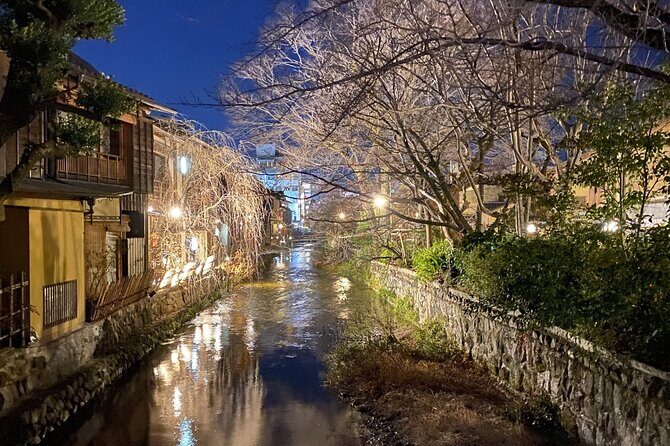
Next you’ll move toward the Shirakawa Canal area. Think stone-paved alleys, red bridges, and willows lining the waterways.
At night, the canal zone feels calmer than the main street. The guide helps you notice the layout—where the lanes open, how the streets bend, and why certain viewpoints feel more private than they look on a phone screen in daylight.
A small consideration: the same night calm that creates atmosphere can reduce photo clarity. One review mentioned it was so dark that taking photos was difficult, so if photography is your main goal, be ready for less-than-perfect results and rely on your eyes more than your camera.
Tatsumi Daimyojin Shrine: a cultural stop that breaks the postcard loop
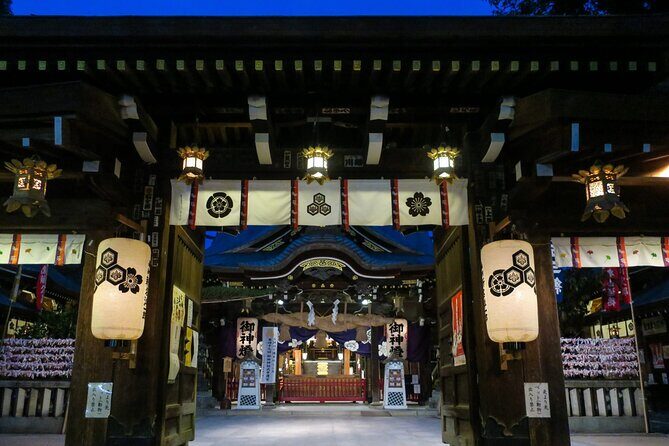
You also visit Tatsumi Daimyojin Shrine, described as small but culturally meaningful, tucked away in the backstreets. This is a nice change of pace from street-level scenery. It also makes the walk feel less like a single continuous “look at this building” loop.
Because it’s a shrine stop in an out-of-the-way spot, it adds local texture: you’re not only seeing the famous face of Gion, you’re getting a glimpse of how everyday religious spaces exist alongside the tourism.
Geisha and maiko insight: spotting without chasing
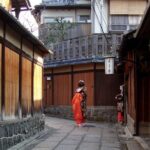
The tour’s geisha focus is a big part of why people book. It’s not presented like a guaranteed meeting with a celebrity. Instead, you’re taught how to spot real geisha and maiko—and more importantly, how to interpret what you’re seeing.
You’ll get guidance on how to behave and what to look for as the night progresses. The itinerary also frames the chance of seeing one as being dependent on timing, with the idea that you might spot someone gracefully headed to an evening appointment.
From what I’ve learned, this kind of cultural guidance is where the tour can really outclass self-guided wandering:
- You learn the difference between “looks similar in a photo” and something you can identify more reliably in real life.
- You learn that the goal isn’t confrontation or crowds—it’s observing respectfully.
That said, here’s the balanced note you should take seriously: one review pointed out that very early in the walk the group was told it was likely they wouldn’t see a geisha, and that photographing in the dark was difficult. So go in knowing that you’re paying for cultural context and a thoughtful night walk, not for a certainty of spotting a geisha on cue.
Stop 2 around Kawaramachidori: Shijo-Kawaramachi and the local Kyoto vibe
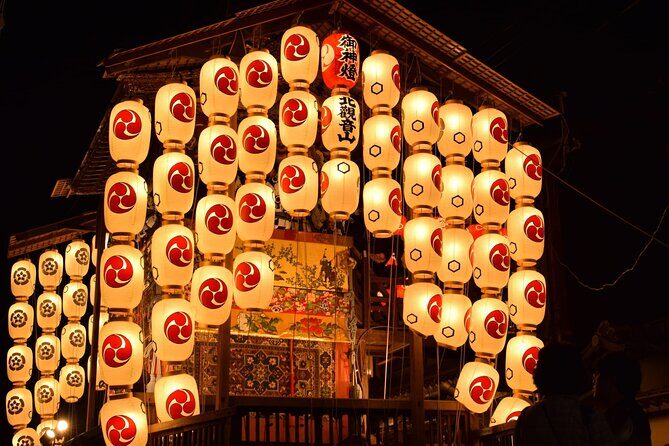
After Gion, the tour shifts to Kawaramachidori near the Shijo-Kawaramachi intersection. This is a different scene: more modern Kyoto energy, more street life, and a setting that helps you understand how Kyoto blends old and new.
Hidden backstreets and alleys
You’ll venture into hidden backstreets and alleys that are known more to locals than tourists. This is one of the best parts of night walking tours—because the “famous street” factor drops, and you start experiencing Kyoto’s everyday texture.
And because this is a guided small-group walk, you’re not just wandering aimlessly. The guide’s route choice is doing the work for you. It helps you find places you’d likely miss if you were trying to navigate alone.
Machiya houses, bars, and eateries
The route includes cozy bars and eateries, plus old machiya houses—traditional Kyoto townhouses. Even if you don’t go inside during the walk, you’ll get a feel for how Kyoto’s historic architecture can sit right next to lively city movement.
The guide also shares stories about how the area evolved. That kind of context is the difference between “I walked through a cool street” and “I get why this street looks like this.”
Food recommendations that actually help
One of the highlights of this tour is that it includes insider recommendations on local eateries. The tour doesn’t promise a meal as part of the ticket, but that’s okay: the recommendations are meant to help you choose your next stop without guessing.
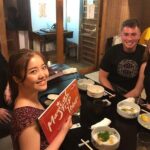
When a tour gives food advice, I look for whether it’s practical. A night walking tour in Kyoto can leave you hungry quickly. Having a guide point you toward places that fit the vibe you just walked through—Gion’s elegance, then Shijo-Kawaramachi’s livelier energy—can save you time and help you eat well with less stress.
My suggestion: after the tour, take 10 minutes to match your mood with the guide’s suggestions. If you want quieter and traditional, aim for that side. If you want energy and options, stay closer to the intersection area.
Small group size: why it feels more personal
With a maximum of 15 travelers, you’re more likely to get:
- clearer guidance when questions come up,
- a group pace that doesn’t turn into a shuffle,
- and enough attention that the geisha culture explanation feels grounded, not generic.
This is a key point for you if you care about learning. Large group tours can sometimes reduce the guide’s role to announcements over a crowd. Here, the structure supports actual conversation and clearer cultural takeaway.
Timing and how to prepare for a night walk
The tour is about 2 hours on foot. Night timing changes everything: surfaces can be uneven, and visibility can drop. Based on the feedback about darkness limiting photos, I’d plan like this:
- Wear comfortable shoes you trust on street surfaces.
- Keep your phone ready, but don’t expect perfect night photos.
- Stay mentally focused on the experience rather than treating it like a scavenger hunt.
Also, think about what kind of traveler you are. This tour suits you best if you enjoy walking, want cultural context, and like asking a guide questions. If your main goal is a guaranteed geisha sighting, you’ll likely be happier choosing something with different expectations.
Who should book this tour (and who might skip it)
Book this tour if:
- You want a guided, low-stress way to see Gion at night.
- You’re interested in geisha culture and want practical explanations, not just street photos.
- You value food leads for where to eat after your walk.
- You like small-group tours that feel more personal.
Skip it (or adjust expectations) if:
- You only care about catching a geisha or maiko on camera.
- You get disappointed easily when plans depend on night conditions and schedules.
- You hate walking at night or dislike dim lighting for photos.
If you’re somewhere in the middle—curious but flexible—this is exactly the kind of tour that can make Kyoto feel more understandable fast.
Should you book? My honest take
Yes, you should book it if your priority is a guided night experience with cultural insight and practical food suggestions. The guide-led navigation alone can save you time and stress, and the geisha/miko context adds meaning to the streets you walk through.
But if your top goal is a guaranteed sighting of a geisha and crisp night photos, don’t count on it. Consider this tour a thoughtful way to learn and observe, with a chance of seeing someone only if the evening lines up.
FAQ
How long is the Gion night walking tour?
It’s about 2 hours.
Where does the tour start and end?
It starts at Tanaka Coffee Gion in Kyoto and ends back at the same meeting point.
How big is the group?
The tour has a maximum of 15 travelers.
What areas do you visit during the walk?
You’ll cover Gion (including Hanamikoji Street and the Shirakawa Canal area) and then head to the Kawaramachidori area near Shijo-Kawaramachi.
Do you visit a shrine?
Yes. You visit Tatsumi Daimyojin Shrine.
Is a geisha or maiko sighting guaranteed?
No. The experience is framed as something you might see with luck as part of the evening routine, and some groups may not see one.
Is admission included?
The tour includes an admission ticket component during the itinerary stops.
Does the tour include food?
No, meals aren’t listed as included. What you get are insider recommendations on where to eat in Kyoto.
What are the cancellation rules?
You can cancel for a full refund up to 24 hours before the experience starts. Free cancellation is available, and changes within 24 hours aren’t accepted.