REVIEW · 1-DAY TOURS
Osaka/Kyoto: Katsuoji, Kinkakuji, Arashiyama 1-Day Bus Tour
Book on GetYourGuide →Operated by Japan Visionary Tour · Bookable on GetYourGuide
Katsuo-ji to Kinkaku-ji feels like a whole Japan story in one day. This 9–10 hour bus tour strings together temple prayer and nature calm, with an English/Chinese-speaking guide to keep your timing sane.
I especially like the Daruma eye-wish ritual at Katsuoji, where you can pray for good luck and success in a hands-on way. I also love the Arashiyama flow: bamboo, the Togetsukyo Bridge, and quiet shrine time before you move on to the golden stillness of Kinkakuji.
One thing to consider: the schedule is busy by design, so if you want to linger deeply at every corner (or if lines slow you down), the time blocks—especially at the temples—can feel a bit tight.
In This Review
- Key highlights worth marking on your map
- A practical one-day loop from Kyoto with real guiding
- Before you go: what to pack and what to expect on the bus
- Katsuo-ji Temple and the Daruma eye-wish at Temple of Victory
- Arashiyama: bamboo calm, kimono art, and a river-bridge moment
- Kimono Forest for a quick visual reset
- Togetsukyo Bridge: classic old-Japan views
- Arashiyama Bamboo Grove: slow your pace on purpose
- Nonomiya Shrine: a small prayer stop for love and health
- Kinkaku-ji Golden Pavilion: quiet time in golden splendor
- Price and value: what $56 buys you in Kyoto and Osaka
- Who this one-day tour fits best (and who should skip it)
- Should you book this Katsuoji–Arashiyama–Kinkakuji bus tour?
- FAQ
- What is the duration of the Osaka/Kyoto 1-Day Bus Tour?
- Where do we meet the guide?
- Are entrance fees to Katsuo-ji Temple and Kinkaku-ji included?
- Is lunch provided?
- What languages are supported by the guide?
- Is this tour suitable for wheelchair users or mobility impairments?
Key highlights worth marking on your map
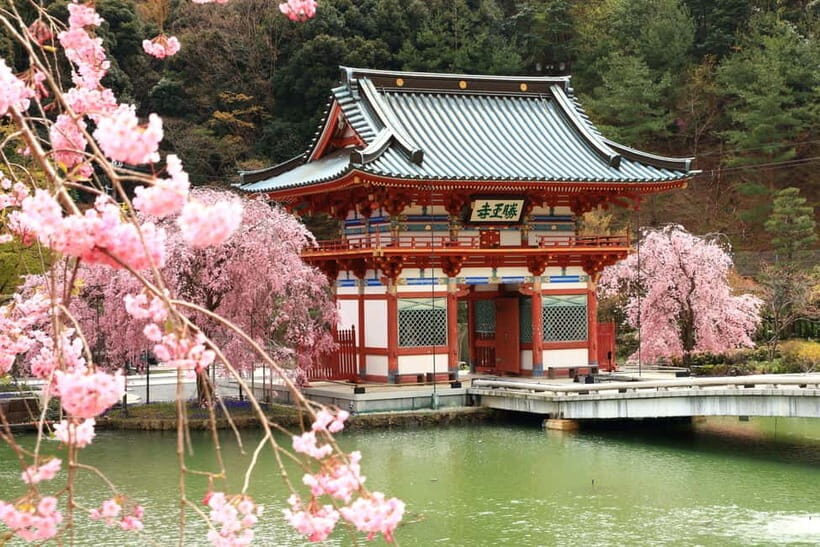
- Katsuo-ji Daruma eye ritual: pray, then complete the left-eye/right-eye agreement for good luck and success
- Arashiyama bamboo calm: a slower walk through the bamboo grove to reset your day
- Togetsukyo Bridge photo moment: Oi River views plus old-Japan vibes in one classic spot
- Nonomiya Shrine love prayers: a simple, heartfelt place to write wishes
- Kinkaku-ji golden quiet: gold foil reflected in the mirror lake for a reflective finale
A practical one-day loop from Kyoto with real guiding
This is the kind of day trip that works because it reduces decision fatigue. You pick a meet-up point in Kyoto (either Kyoto Station Hachijo Entrance Square Sunken Garden or Harimaya Nippombashi 1-chome), climb onto a clean, comfortable bus, and let the route do the heavy lifting.
You’re not trying to stitch together trains and buses across neighborhoods. Instead, you get round-trip transfers, tolls, parking, and fuel taken care of, plus an English/Chinese-speaking guide who explains what you’re seeing and helps you return on time. Many guide names show up in the feedback—Willa, Steven, Theodore, Amanda, Lee, and Chan San—so you can expect a team style focused on clarity and pacing.
The best part for most people is the “enough time to feel it” model. You get some breathing room at each stop, plus directions when you need them—especially helpful when temple grounds are confusing at first glance. If you’ve ever lost 20 minutes looking for the exact place you wanted to photograph, you’ll feel the value fast.
You can also read our reviews of more tours and experiences in Kyoto

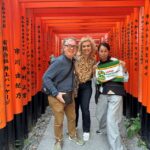
Before you go: what to pack and what to expect on the bus
For this style of tour, footwear matters more than you think. Bring comfortable shoes you can walk in for stretches, and plan for standing while you look around and take photos.
Also pack:
- Camera (you’ll use it)
- Water (hydration helps, especially with walking)
- Sunscreen (the open sightlines in Arashiyama can catch you off guard)
Two small rules that affect your day:
- No smoking on the tour.
- You cannot eat on the bus because of Japanese law. You can still snack off the bus, but plan around that.
If you travel with luggage or small children, the operator asks you to note it when booking, so they can plan accordingly. And the company will send an email before 21:00 the day before the trip with guide and vehicle details—so keep an eye on your inbox.
One more practical note: traffic can cause delays. The company covers overtime costs if the driver and guide must stay late, but you may still wait a bit. That’s normal for city touring, and it’s worth building a little buffer into your wider Kyoto/Osaka plans.
Katsuo-ji Temple and the Daruma eye-wish at Temple of Victory
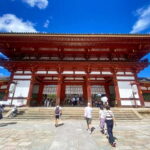
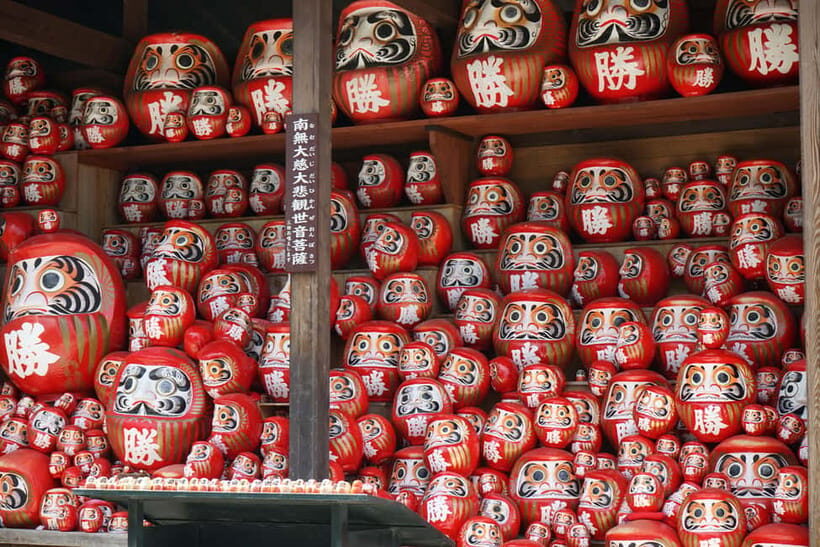
Your day starts with Katsuoji, a temple with a history of more than 1,300 years and a very specific focus: Daruma. You’ll spot Daruma everywhere, which turns the visit from a quick look into a guided story you can actually participate in.
The core experience is the eye ritual. The idea is beautifully simple and oddly satisfying:
- Draw the left eye while making your wish.
- Return later to fill in the right eye after your wish comes true.
Whether you believe it literally or treat it as a meaningful tradition, it gives your trip a center point. You’re not just sightseeing; you’re doing something symbolic that connects you to the temple’s purpose: praying for good luck, success, and momentum in the year ahead.
What I like about putting Katsuoji early in the day is the emotional rhythm. You start with a prayer act, then your mind settles. Later, when you move into Arashiyama’s quiet nature scenes and Kinkakuji’s gold reflections, the day feels less like hopping between attractions and more like moving through different moods.
Practical consideration: Katsuoji can involve waiting at entrances depending on the day. Your time block is about 1 hour, so if you want to read every sign, explore every corner, and also watch for a long line to enter, you may feel slightly rushed. Still, the ritual itself is quick to complete, so you can usually hit the meaningful parts even in a crowd.
Arashiyama: bamboo calm, kimono art, and a river-bridge moment
After Katsuoji, you shift into Arashiyama, where the scenery does the talking. This portion is designed for a gentle pace over about 2.5 hours, and it’s the highlight for people who want nature without giving up the convenience of a bus day.
Kimono Forest for a quick visual reset
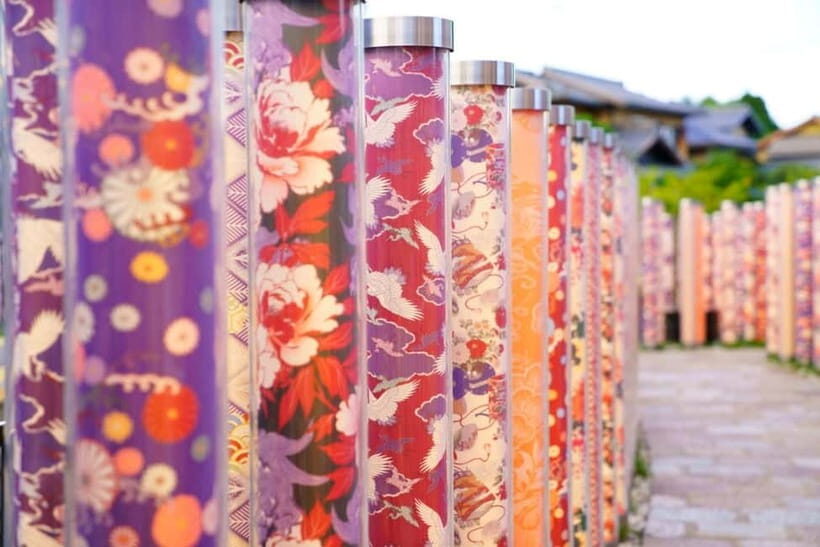
One of the stops is called Kimono Forest. Think of it like stepping into a light-and-color exhibit: hundreds of transparent columns display colorful kimonos stacked in layers, like an art gallery where the room changes with shadows and daylight.
It’s short enough to keep momentum, but it gives your eyes a break from outdoor walking. If you’re traveling with someone who enjoys photos and visual experiences, this part usually lands well.
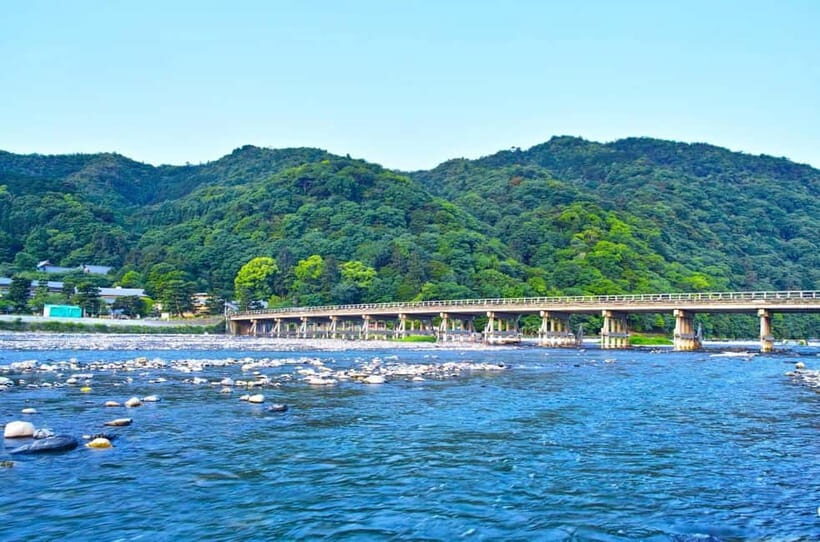
Togetsukyo Bridge: classic old-Japan views
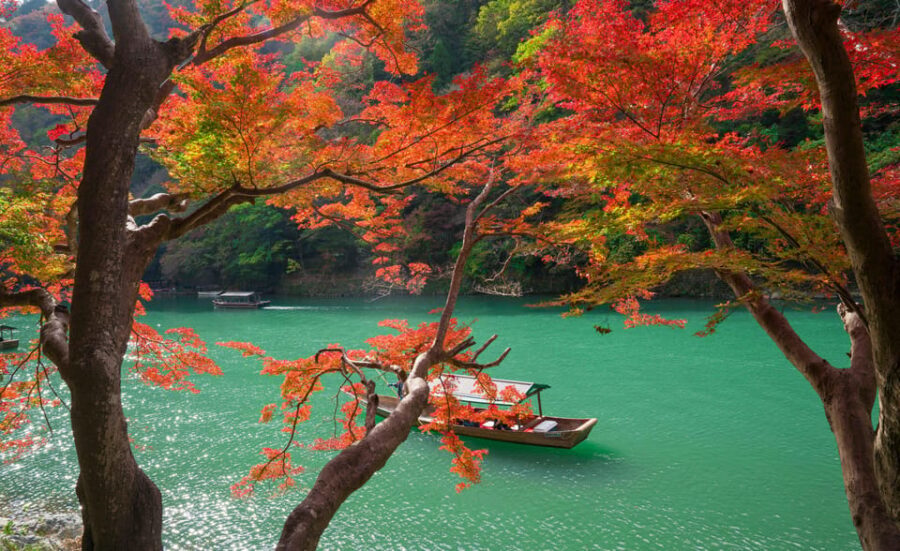
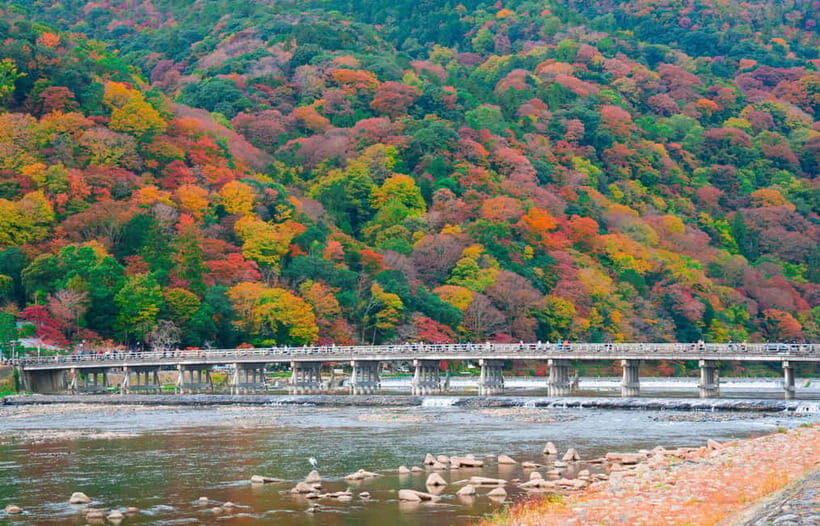
Then you’re at Togetsukyo Bridge, looking over the Oi River with mountains in the distance. This is a “stand and breathe” stop even if you’re there for photos, because the view is naturally calm. The bridge is one of those landmarks that feels timeless; it makes the whole area snap into focus.
Bring your camera, but also take a minute without shooting. The best photos often happen when you notice where the river lines lead your eye, not when you just chase angles.
A practical tip: plan for time to reposition. The bridge area is popular, so you might not get your ideal spot instantly. Being flexible helps.
Arashiyama Bamboo Grove: slow your pace on purpose
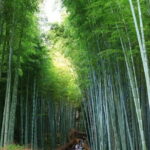
Next comes the Arashiyama bamboo grove walk. This is the moment people describe as peaceful for a reason. As you move under the tall stalks, the bamboo leaves rustle, light filters through gaps, and the air feels cooler and cleaner than the city streets.
This is also where your tour day can either feel “fast and tiring” or “worth it.” If you walk quickly just to check the box, you miss the point. Slow down for 10 minutes and let the sound and shadows do their job. It’s one of those places where your brain naturally quiets.
Nonomiya Shrine: a small prayer stop for love and health
You’ll also visit Nonomiya Shrine, a place to pray for love, health, and happiness. The ritual here is approachable: hang a painted horse and write down your wishes, then look forward to a sweet, hopeful future.
It’s not a huge spectacle like some bigger temples. That’s the value. It’s quiet, intimate, and a nice contrast to the big open views around the river.
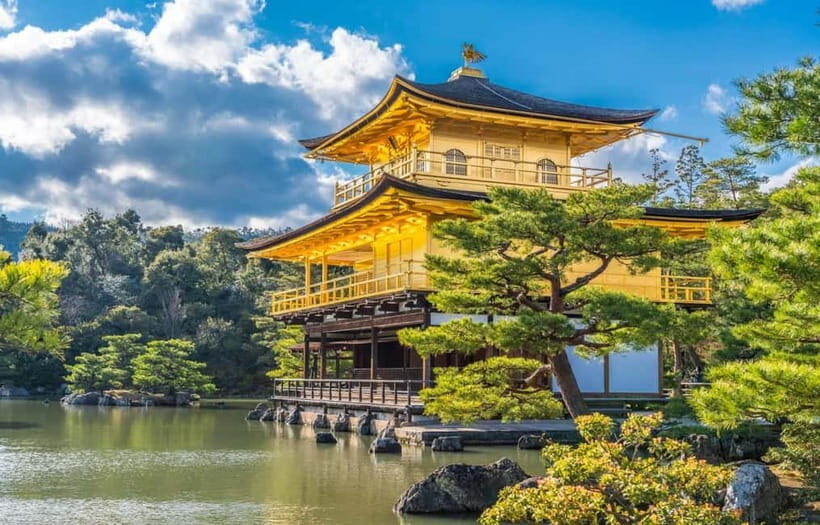
Kinkaku-ji Golden Pavilion: quiet time in golden splendor
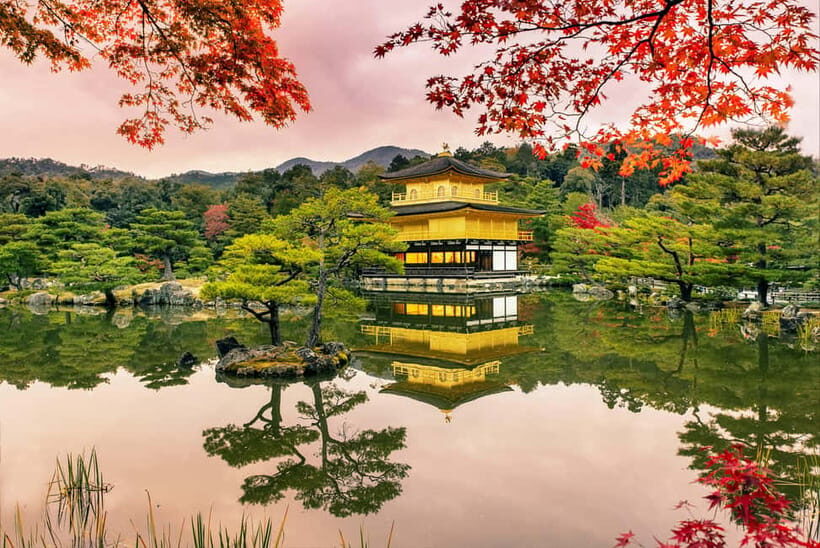
Your finale is Kinkakuji, the World Cultural Heritage site often called the Golden Pavilion. The temple’s outer wall is covered in gold foil, and it’s designed for reflection—especially in the mirror lake pool.
So when you arrive, your first instinct is right: look for the gold, but then look for what it’s doing. The water reflection turns a single building into a double scene. It looks peaceful rather than flashy, which is why people call the visit restorative.
You get a shorter sightseeing block of about 40 minutes. That’s not a lot, but it’s enough for the highlights—especially since the most important parts are the pavilion and the surrounding view lines near the mirror lake.
Practical consideration: if the crowd level is high, you’ll want to decide early what you want most—photos, stillness, or reading details. You can usually do two, but doing all three at full depth takes more time than this tour provides.
Price and value: what $56 buys you in Kyoto and Osaka
At $56 per person, this tour is good value if you care about efficiency and guidance. The biggest cost you’re paying for is time saved. You’re not navigating between distant sights on your own across a long day. You’re also getting a guide in English/Chinese, plus round-trip transportation, tolls, parking, and fuel.
Two costs to plan for:
- Admission tickets for Katsuoji and Kinkakuji are not included.
- Meals and drinks are not included.
Because the bus doesn’t allow eating on board, you’ll likely want to buy snacks or use convenience options between stops. That means your day cost will be the tour price plus temple admissions plus whatever you choose for food and water.
Also worth noting: transport quality is generally rated highly, but there’s at least one mention of an older-feeling bus. You’ll still get the practical benefits, but if you’re picky about seat age, bring that expectation with you.
If you’re visiting Kyoto for the first time and want the big hits—Daruma prayer, Arashiyama bamboo and bridge, and Kinkakuji—this pricing structure makes sense. If you’re the type who wants to wander slowly for hours and do every side detail, you might find the fixed time blocks limiting.
Who this one-day tour fits best (and who should skip it)
This tour is a strong match if:
- You want major Kyoto highlights in one day
- You like temple traditions and also want nature scenery
- You appreciate a guide who gives context and helps you keep your schedule
- You’re okay with walking on uneven ground and standing for photos
It’s less of a fit if:
- You need wheelchair access or have mobility challenges (it’s listed as not suitable for mobility impairments and wheelchair users)
- You dislike group pacing, since the day is structured around set stops
- You want long, slow wandering without time pressure
Should you book this Katsuoji–Arashiyama–Kinkakuji bus tour?
I’d book it if you want a guided day that balances prayer, nature, and landmark sights without the stress of moving yourself across Kyoto. The Daruma eye-wish at Katsuoji gives the day meaning, Arashiyama gives you the calm reset, and Kinkakuji closes with a quiet, gold-reflection finale.
Skip it if you’re the “give me half a day at one place” type. This tour is built to cover several emotional beats in 9–10 hours, not to satisfy a slow-browse museum mind.
If you do book, do yourself a favor: wear supportive shoes, carry water, and choose your priorities for each stop early. You’ll get the most out of the time you’re given—and you won’t leave wishing the day had been longer.
FAQ
What is the duration of the Osaka/Kyoto 1-Day Bus Tour?
The tour runs for about 9–10 hours, depending on the starting time.
Where do we meet the guide?
Meeting points can vary based on the option you book, with two listed choices: Kyoto Station Hachijo Entrance Square Sunken Garden or Harimaya Nippombashi 1-chome.
Are entrance fees to Katsuo-ji Temple and Kinkaku-ji included?
No. Admission to Katsuo-ji and Kinkaku-ji is not included in the tour price.
Is lunch provided?
Meals and beverages are not included. Also, you cannot eat on the bus.
What languages are supported by the guide?
The guide speaks English and Chinese.
Is this tour suitable for wheelchair users or mobility impairments?
No. The tour is not suitable for people with mobility impairments and wheelchair users.