REVIEW · BIKE & E-BIKE TOURS
Kyoto: Full Day Bike Tour
Book on GetYourGuide →Operated by Cycle Kyoto · Bookable on GetYourGuide
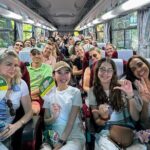
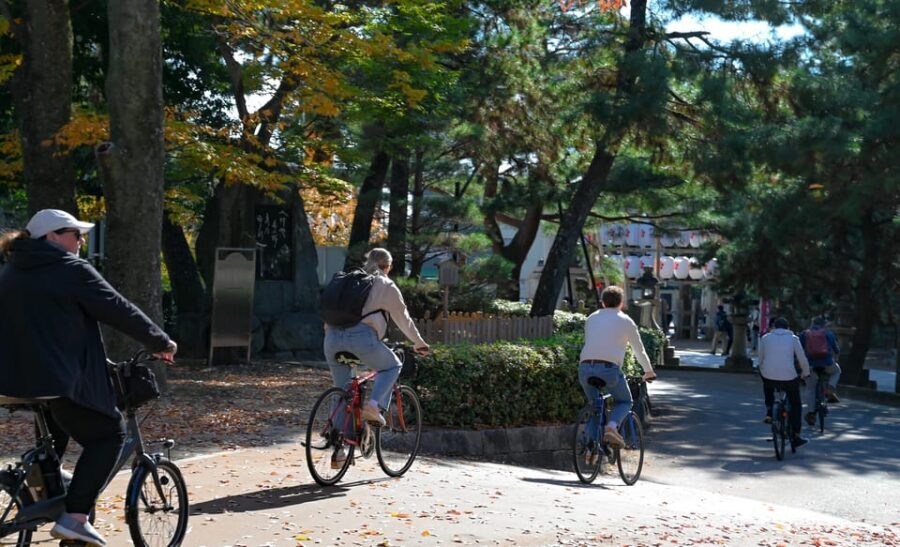
Kyoto looks different when you pedal through it. I love two things most: the English-speaking guides who’ve lived in Japan for a long time (I’ve heard from people guided by Shawn, Juan, Jay, and Karl), and the mix of famous sights with local backstreets you’d likely skip on your own. The only real catch is also the biggest one: you have to be comfortable riding a bike, and the tour won’t run in all weather.
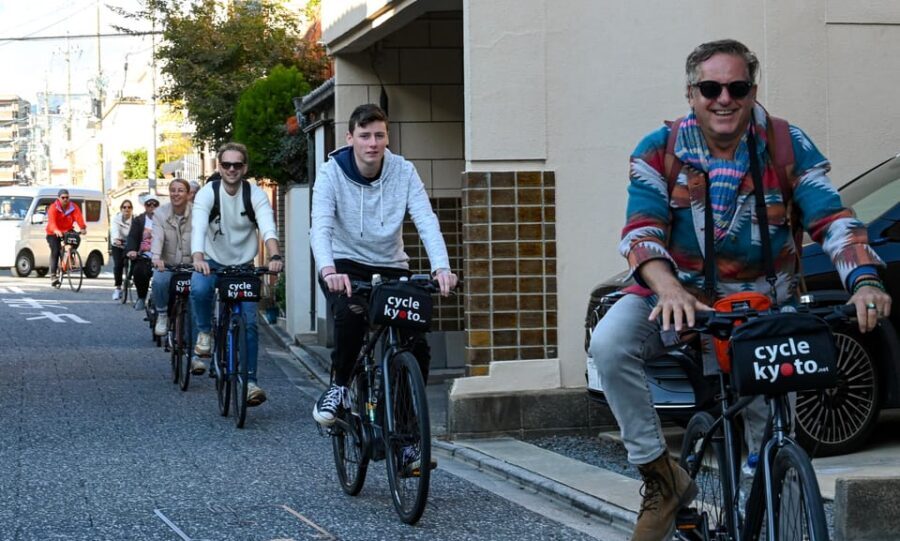
You meet at Cycle Kyoto and get fitted with a well-maintained cross bike (Giant and Trek), with helmets included. If you want an easier day, you can request an e-bike, and the route is planned to keep the flow moving from Toji to Nishi Honganji, Kinkaku-ji, Gion, and then Fushimi Inari. Just know this is a full-day commitment starting at 9:30 AM sharp, so bring the right shoes and stamina.
In This Review
- Key reasons this Kyoto bike day works
- What $116 gets you: bike, helmet, Golden Pavilion entry, and lunch
- Starting at Cycle Kyoto: bike fitting, a real safety talk, and a 9:30 AM push
- Toji first: getting oriented with Kyoto’s oldest temple vibe
- Nishi Honganji by short ride: a quieter, bigger contrast
- Sanjo Shopping arcade to Shinsen-en gardens: ride the everyday Kyoto
- Kitano Tenmangu Shrine: where you learn the rules of the place
- Kinkaku-ji (Golden Pavilion) with entry included: plan for a short, focused visit
- Lunch in the middle of the day: food stop beats searching between landmarks
- Kyoto Imperial Palace area: a slower section before the river and Gion
- Kamo River photo stop and Gion backstreets: the day turns cinematic
- Tofukuji and Fushimi Inari torii: finish with the foot-busy finale
- How the ride feels: full-day pace, low-traffic routing, and e-bikes if you want them
- Who this bike tour is best for (and who should skip it)
- What to bring (and what to avoid) so the day stays comfortable
- Should you book this Kyoto Full Day Bike Tour?
- FAQ
- How long is the Kyoto Full Day Bike Tour?
- What time does the tour start?
- Where does the tour start?
- What’s included in the price?
- Are e-bikes available?
- What group size is this tour?
- What kind of bike will I ride?
- What’s the lunch like?
- Is the tour suitable for kids?
- Does it run in bad weather?
Key reasons this Kyoto bike day works
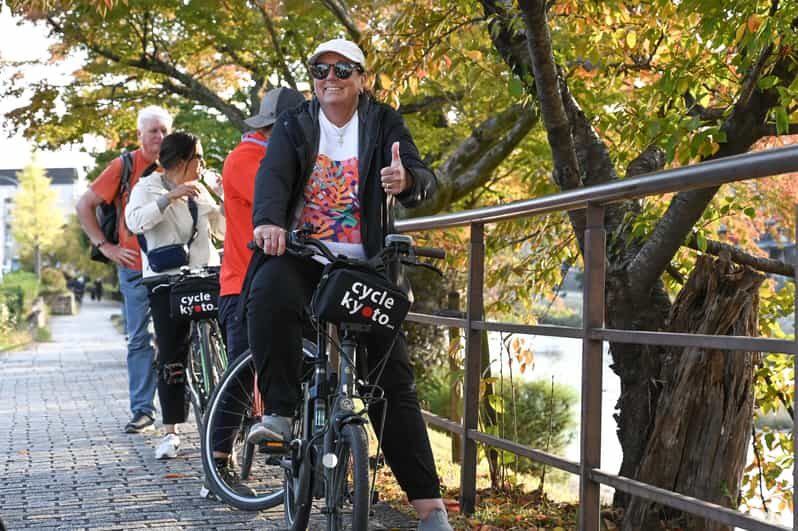
- Small group (max 9 people) means faster answers to questions and less time stuck at the curb
- Giant/Trek cross bikes feel steady and practical for city riding
- E-bikes available on request if your legs prefer a lighter load
- Golden Pavilion entry included so you spend time sightseeing, not ticket hunting
- Backstreet routing turns “big-name Kyoto” into a more local-feeling walk-and-ride mix
- Traditional lunch included at a place you probably wouldn’t find on your own
What $116 gets you: bike, helmet, Golden Pavilion entry, and lunch
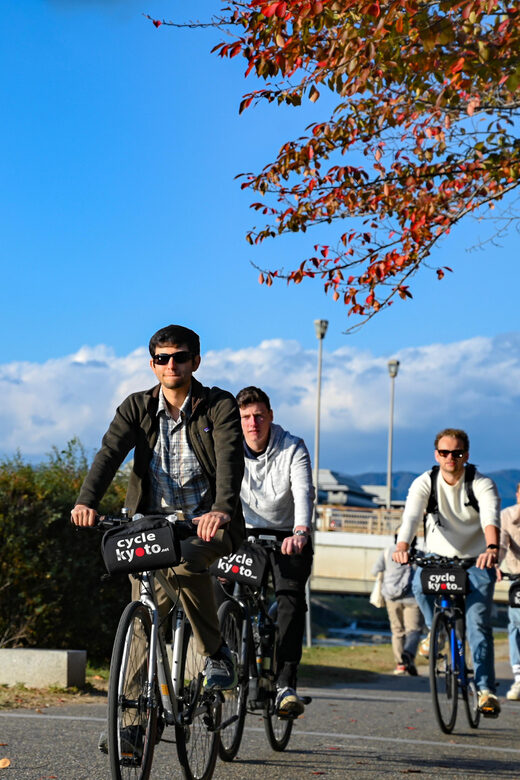
At $116 per person, this tour is priced like a full-day activity, not a quick highlights loop. The value comes from what’s included: bike rental, a helmet, the entrance fee to Kinkaku-ji, and a traditional Japanese lunch. Those add up fast in Kyoto, especially once you’re paying for separate admissions and transport.
The other part of the value is less “receipt” and more “time.” You’re not managing logistics between temples, and you’re riding a route that links major stops with smaller neighborhoods. That’s how you see more Kyoto without exhausting yourself trying to figure out where to go next.
You can also read our reviews of more cycling tours in Kyoto
Starting at Cycle Kyoto: bike fitting, a real safety talk, and a 9:30 AM push
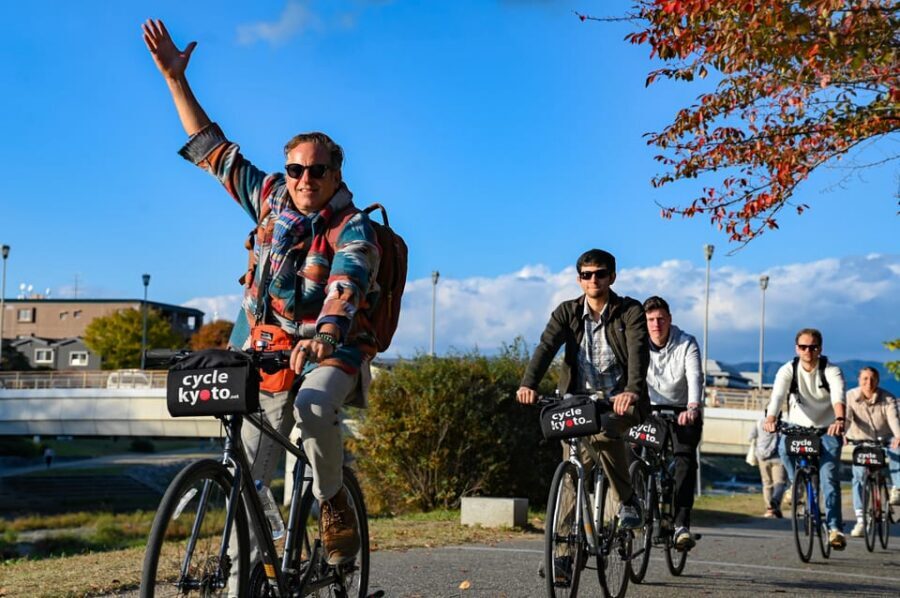
The day starts at 9:30 AM sharp, and you should show up about 15 minutes early. That early start matters because you’ll begin with a short bike fitting and a safety briefing, then roll into the city while energy is high and crowds are still manageable.
This is also where the “are you comfy on two wheels?” reality sets in. The tour isn’t for people who can’t ride, and it’s not a good match if you’d feel stressed by bike traffic and turning corners. On the brighter side, you’ll have a guide setting the pace and route, and the small group size helps keep everyone together.
Toji first: getting oriented with Kyoto’s oldest temple vibe
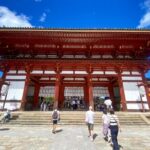
Your first temple stop is Toji, described as the oldest temple in Kyoto. I like this start because it gives you context fast: early in the day, you see how temples sit in the flow of the city, not just as isolated postcard backgrounds.
You’ll have about 30 minutes to visit, which is enough time to orient yourself, take photos, and understand what you’re looking at without feeling rushed. If you prefer to linger, you’ll still be able to—just be smart about pacing so you don’t lose your spot for the next rides.
Nishi Honganji by short ride: a quieter, bigger contrast
After Toji, it’s about a 10-minute ride to Nishi Honganji, where you get a guided tour of roughly 50 minutes. This stop works well after Toji because it changes the mood: you’re still in temple territory, but the experience feels deeper and more structured with an actual guide leading you through the important parts.
One practical benefit of this being guided is that you’re not guessing what to prioritize. Kyoto temples have lots of halls and details; having someone frame what matters saves time and helps you enjoy the visit more, even if you only skim a few areas.
Sanjo Shopping arcade to Shinsen-en gardens: ride the everyday Kyoto
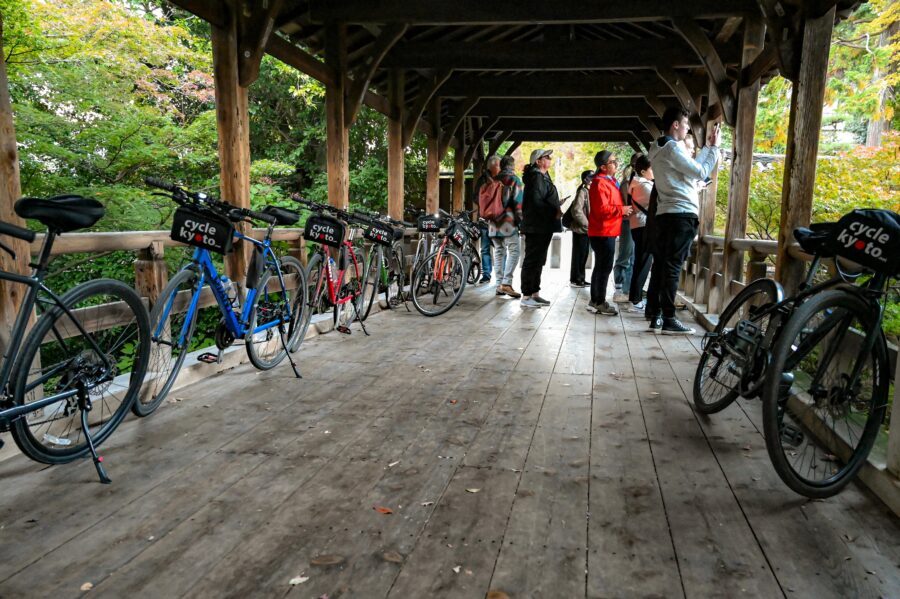
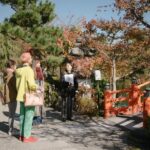
Next you’ll head through the Sanjo Shopping arcade, then pause at Shinsen-en gardens before moving toward Kitano Tenmangu Shrine. This is a big reason bike tours can feel more “real”: you see Kyoto’s shopping streets and local green spaces in one connected day instead of hopping by taxi.
The Shinsen-en stop adds a nice reset. Gardens are where you can slow down, cool off, and breathe between temple walks. If it’s hot or humid, this break is more than pleasant—it helps you stay fresh for the next big sites.
You can also read our reviews of more tours and experiences in Kyoto
Kitano Tenmangu Shrine: where you learn the rules of the place
At Kitano Tenmangu Shrine, you’ll walk the grounds with a guided visit of around one hour. Shrines can look similar from a distance, but the guide’s job is to show you what’s specific here and why it matters. This is also one of those stops where time on foot feels more meaningful because you’re taking in details, not just passing through.
If you’re the type who likes learning even on vacation, this hour is a good use of your time. You’ll get your bearings in a way that makes later stops—especially Kinkaku-ji—hit harder visually.
Kinkaku-ji (Golden Pavilion) with entry included: plan for a short, focused visit
Then comes Kinkaku-ji, the Golden Pavilion. You enter with admission handled for you, and the visit time is about 25 minutes on the grounds, with additional time built around riding, arrival, and photos.
That timing is a plus for two reasons. First, Kinkaku-ji is popular—so having a guided, time-bound visit keeps you from getting trapped in the “wait and shuffle” rhythm. Second, it helps you avoid temple fatigue. You’ll see the signature views, take your photos, and still feel like you got something instead of just surviving a crowd.
Lunch in the middle of the day: food stop beats searching between landmarks
Lunch is included and served at a local restaurant, and the location can vary depending on availability. The point is that it’s planned, not improvised, which is a big deal when you’re biking and don’t want to waste time hunting.
In past days, people have described lunches like ramen with a special duck broth, and guides have also steered the group toward food and treats such as ice cream. You can treat lunch as fuel for the afternoon leg, not just a break—because after lunch you’ll ride toward Kyoto’s palace area, then pivot into riverside and Gion streets.
Kyoto Imperial Palace area: a slower section before the river and Gion
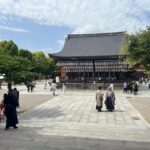
After lunch, you’ll visit the Kyoto Imperial Palace area for around one hour. This stop gives you variety after temples and shrines, because the atmosphere shifts toward palace grounds and a more open-feeling layout.
It’s also a smart pacing move. Mid-afternoon is when legs start to feel it, and a palace visit gives you time to walk at a comfortable speed rather than constantly climbing on and off the bike.
Kamo River photo stop and Gion backstreets: the day turns cinematic
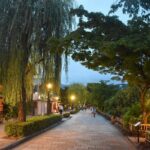
Once you’re finished with the palace visit, you’ll pick up the Kamo River with a photo stop of about 40 minutes. I like this part because it’s visually Kyoto without being “another temple entrance.” The river area gives you breathing space and lets you reset between guided walking segments.
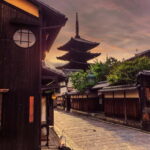
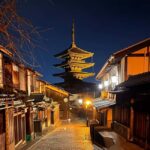
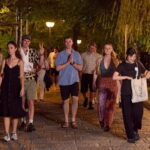
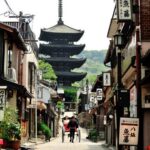
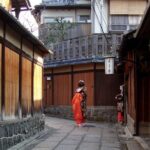
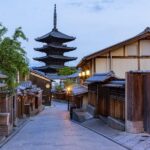
From there, you ride into the backstreets of Gion, Kyoto’s famous geisha district, with a guided tour of about one hour. This is where your bike route really pays off. You don’t just stare at the big-name lanes—you move through smaller streets where the whole area feels more lived-in and less like a theme park.
Tofukuji and Fushimi Inari torii: finish with the foot-busy finale
Your last major structure stop is Tofukuji Temple, where you’ll have a photo stop of about 30 minutes. It’s not a long visit, so use the time for quick highlights and photos, then roll onward without overextending.
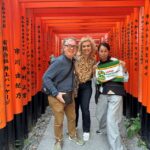
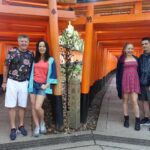
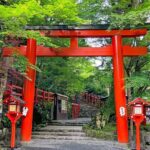
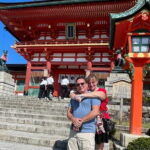
Then comes Fushimi Inari Taisha Shrine and its Senbon Torii gates, with a guided tour of around one hour. This finale is the payoff for many people because the torii gates create a visual loop you can’t easily get any other way. If you’re tired, you can still enjoy it—just remember it’s a walking-and-photo moment, not a sit-and-stare one.
How the ride feels: full-day pace, low-traffic routing, and e-bikes if you want them
This is a 450-minute day, which is long enough that it should be taken seriously. One rider reported the day felt like “a little over 18 miles” plus walking mini-sites, which matches how this kind of route usually plays: biking covers the distance, walking fills in the sights.
The ride plan uses safer, lower-traffic streets most of the time, but it’s still city riding. You’ll want to be comfortable controlling your bike and staying alert at intersections. If you’re worried, the best fix is simple: request an e-bike so you can focus on the sights instead of managing effort.
Who this bike tour is best for (and who should skip it)
This tour is designed for adults and older kids, but it’s not suitable for children under 12, pregnant women, or people who can’t ride a bike. If you’re confident on a bicycle and comfortable with a long day, it’s a great way to see a lot of Kyoto without losing half your time in transit.
It also fits well if you want a guided mix of famous sites and places that feel more local. If you prefer total freedom with zero structure, you might find the packed schedule a bit much. Here, the schedule is the product—so you’re signing up for a full circuit.
What to bring (and what to avoid) so the day stays comfortable
Bring comfortable shoes, a hat, sunscreen, water, and a camera. Keep personal belongings to a minimum because storage space on bikes is limited. You can leave larger luggage in the shop space during the tour, which is a relief when you don’t want to carry everything with you.
Also note what’s not allowed: high-heeled shoes and smoking. Plan your footwear like you’re walking all day, because you are.
Should you book this Kyoto Full Day Bike Tour?
Yes—if you want a high-value, structured way to see Kyoto’s biggest hits plus neighborhoods in one day, this is a strong choice. The best reasons to book are the included Golden Pavilion entry, the traditional lunch, the small group size, and the way the route links major sights with quieter streets.
You should think twice if you’re not a confident bike rider, if you hate long days, or if weather worries you. The tour doesn’t operate in all conditions, and heavy rain leads to cancellation with refunds, so check the forecast like you mean it.
If you’re ready to pedal, you’ll end the day with Kyoto that feels more like a lived city and less like a checklist. And that’s usually the whole point.
FAQ
How long is the Kyoto Full Day Bike Tour?
It runs for 450 minutes (about 7.5 hours). You can check availability for the starting times.
What time does the tour start?
The tour starts at 9:30 AM sharp, and you should arrive 15 minutes early for bike fitting and check-in.
Where does the tour start?
You’ll start at Cycle Kyoto.
What’s included in the price?
Bike rental, a helmet, entrance fee to the Golden Pavilion, and a traditional Japanese lunch are included.
Are e-bikes available?
Yes. E-bikes are provided upon request.
What group size is this tour?
It’s a small group limited to 9 participants.
What kind of bike will I ride?
You’ll ride well-maintained cross bikes made by Giant and Trek.
What’s the lunch like?
Lunch is a traditional Japanese lunch, and the specific location may vary depending on availability.
Is the tour suitable for kids?
No. It’s not suitable for children under 12.
Does it run in bad weather?
The tour does not operate in all weather conditions. In case of heavy rain, it will be cancelled and refunds will be provided.