REVIEW · OSAKA COMBINED TOURS
One-Day Tour of Kyoto’s Highlights from Osaka/Kyoto
Book on Viator →Operated by LIMON Tours · Bookable on Viator
Kyoto in a single day hits fast and hard—in a good way. You’ll cover four headline sites with an air-conditioned bus, onboard Wi‑Fi, and an English-speaking guide, plus key temple entrances included. I like that the day is built around major UNESCO stops rather than random add-ons, and I also like the simple, mobile-ticket setup that keeps the morning from turning into a scavenger hunt.
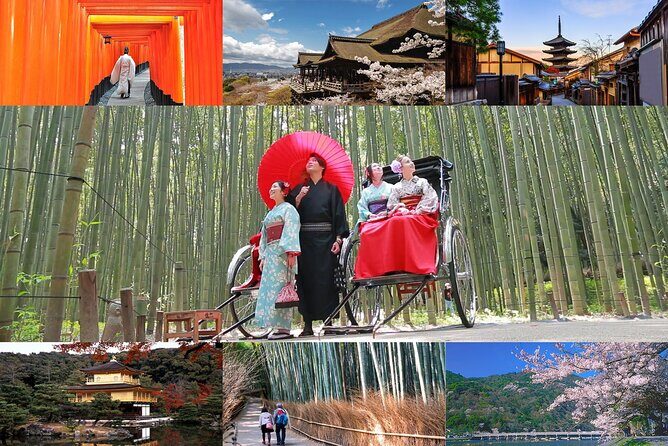
The biggest upside is how much you can see without living on trains. In a single route, you get the torii gate maze of Fushimi Inari, the nail-free stage at Kiyomizu-dera, the Golden Pavilion at Kinkaku-ji, and the cool shade of Arashiyama’s bamboo paths. One thing to keep in mind: it’s a long day with walking on slopes and temple steps, so comfortable shoes matter more than your fashion sense.
In This Review
- Key Points You Should Know Before You Go
- Price and What You Actually Get for $66.32
- Morning Pick-Up: Osaka (Namba) or Kyoto Station, and the Timing That Matters
- Riding Comfort: Air-Conditioned Bus With Wi‑Fi Between Stops
- Stop 1: Fushimi Inari Taisha and Its Vermilion Torii Maze
- Stop 2: Kiyomizu-dera, the Nail-Free Stage, and Big City Views
- Stop 3: Kinkaku‑ji (Golden Pavilion) in 45 Minutes
- Stop 4: Arashiyama Bamboo Forest and the Togetsukyo Bridge
- Lunch: Optional Add-On, and What to Do With Dietary Limits
- What the Guide Adds (When It Goes Well)
- Walking Reality Check: Hills, Steps, and Stroller Notes
- Who This Tour Fits Best
- Small Planning Tips That Make the Day Easier
- Should You Book This One-Day Kyoto Highlights Tour?
- FAQ
- How long is the Kyoto highlights tour?
- What’s included in the ticket price?
- Is lunch included, and are there dietary options?
- Where do I meet the tour in the morning?
- Do I need to pay for temple admissions?
- What’s the cancellation policy?
Key Points You Should Know Before You Go
- Four Kyoto landmarks, tightly timed so you hit the highlights even if you’re short on days
- Air-conditioned coach + free Wi‑Fi to recover between crowded sites
- English-speaking guide support that helps you understand what you’re seeing (including photo tips from some guides)
- Kiyomizudera and Kinkaku‑ji admissions included which saves hassle later
- Optional lunch helps when you’d rather not hunt for food mid-tour
- Expect hills, stairs, and walking even with bus comfort
Price and What You Actually Get for $66.32
At $66.32 per person, this isn’t a budget “just get on the bus” deal. You’re paying for a full-day circuit that includes air-conditioned transportation, an English-speaking guide, and entrance tickets to Kiyomizu-dera and Kinkaku‑ji. That combination matters because Kyoto’s big-name sites often mean separate admissions and time spent figuring out where to go next.
The value also comes from the structure. You start in the morning, you get clear stop times, and you end back at your starting point. If you’re visiting Kyoto as a stopover from Osaka (or you’re starting from Kyoto), it’s a practical way to avoid spending half your day on logistics.
That said, this is still a “highlights only” day. You’ll see plenty, but you won’t have the luxury of wandering slowly at every stop, especially during peak hours.
You can also read our reviews of more tours and experiences in Kyoto.



Morning Pick-Up: Osaka (Namba) or Kyoto Station, and the Timing That Matters
Your meeting points are straightforward and close to transit, with two options:
- Namba, OCAT 1F (near Daiso): 8:50 AM
- Kyoto Station, Hachijo Exit Tourist Bus Parking: 9:05 AM
Check in 10 minutes early. The bus will not wait for late arrivals, so plan like you’re catching a flight, not a casual coffee meet-up.
Also note: hotel pickup and drop-off are not included. You’ll need to make it to the start location under your own steam. The plus is that these are busy hubs with easy access, so you’re not trying to find a van on a quiet side street.
Riding Comfort: Air-Conditioned Bus With Wi‑Fi Between Stops
You travel in an air-conditioned bus with free Wi‑Fi onboard. In summer or during surprise rain, that comfort is more than a nice-to-have. It gives you a place to cool down, rest your feet a bit, and reset mentally before the next shrine crowd.
It also helps that the tour uses a mobile ticket. No printing required, and it cuts down on early-day friction when you’re dealing with multiple train lines or station exits.
One more practical point: the group size tops out at 42 people. That’s not tiny, but it’s small enough that you’ll usually be able to move as a unit and still enjoy short windows to explore on your own with the guide’s direction.
Stop 1: Fushimi Inari Taisha and Its Vermilion Torii Maze
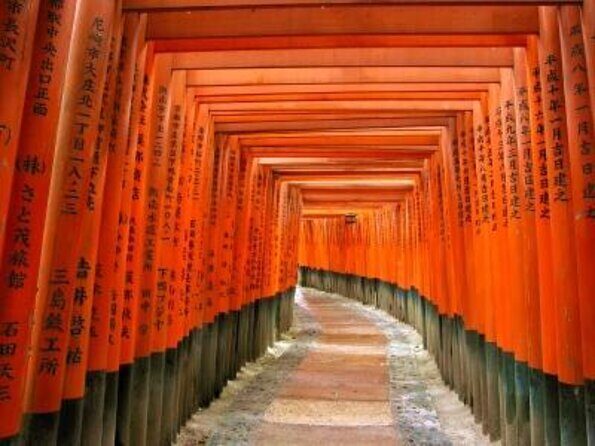
Fushimi Inari Taisha is the kind of place that makes you stop walking and start looking up. You’ll spend about 1 hour 20 minutes here, and the main attraction is the thousands of vermilion torii gates that form winding paths.
The best part is understanding the symbolism while you walk. The shrine’s connections include deities tied to agriculture, business, traffic safety, and a bountiful harvest. That detail changes how you experience the tunnels of gates—you’re not just passing photo backdrops, you’re moving through a sacred landscape with practical meaning in Japanese life.
What to watch for: it’s a busy site. Even with guided structure, you’ll still feel crowd flow. Also, if you want to go deeper up the paths beyond the first big gate areas, you’ll need to hustle a bit to fit the schedule.
Photo tip (guided days often do this well): if your guide points out good vantage points, follow their timing. Some of the most striking angles come from turning at the right gate cluster rather than trying to frame everything from the front.
Stop 2: Kiyomizu-dera, the Nail-Free Stage, and Big City Views
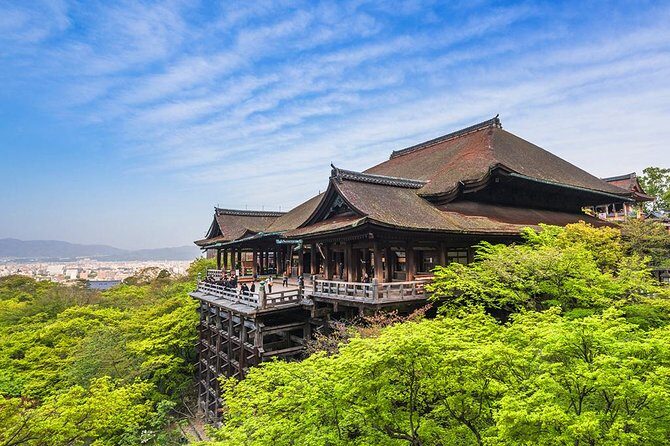
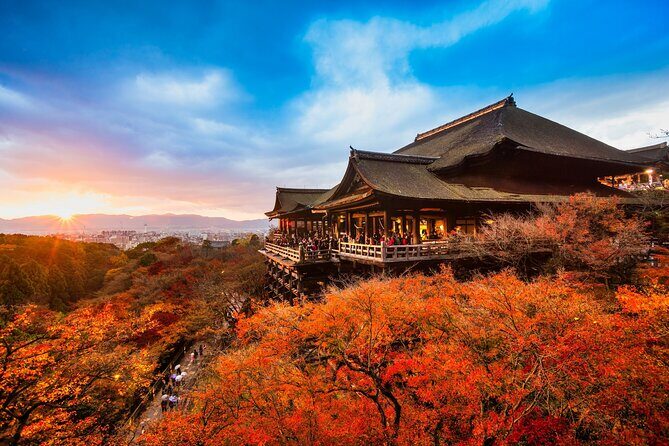
Kiyomizu-dera is built for drama. You’ll spend about 1 hour 40 minutes here, and the temple’s most famous feature is its wooden stage that juts out from the hillside.
A detail I love for context is that it was constructed without a single nail, supported by 139 pillars. When you’re standing in the area, it’s easier to picture the engineering and the confidence it must have taken to build something that appears to float out over the slope.
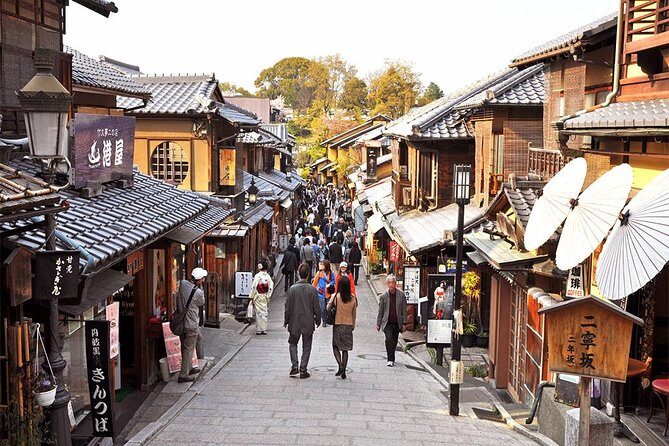
You’ll also get city views from the viewing platform. That mix—architecture you can see up close plus Kyoto laid out beyond—makes this stop feel like more than a checklist box.
Downside: this is one of the places where time disappears quickly. Between stairs, busy approach streets, and the natural temptation to linger at viewpoints, you may feel like you’re sprinting just to stay on schedule.





Stop 3: Kinkaku‑ji (Golden Pavilion) in 45 Minutes
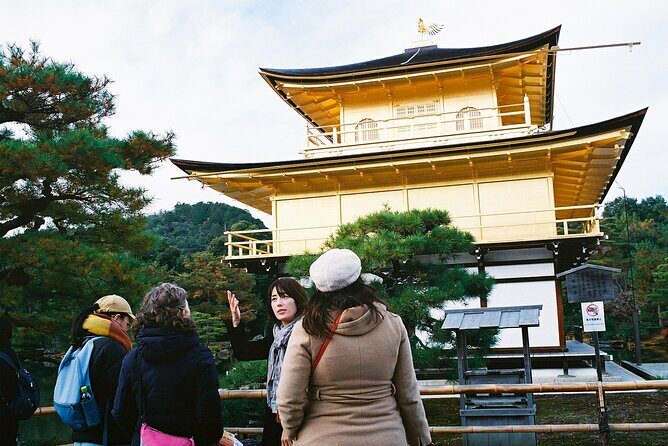
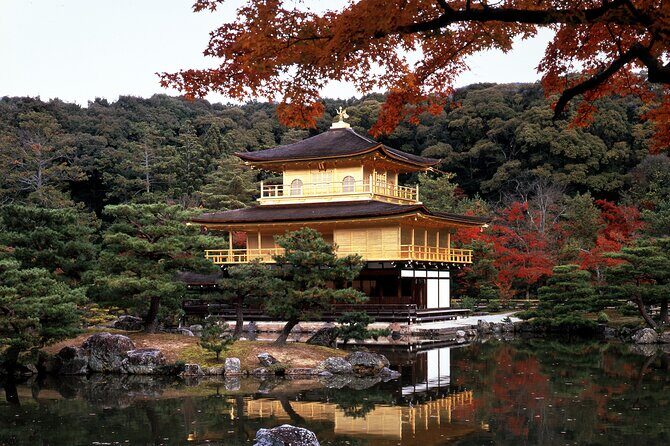
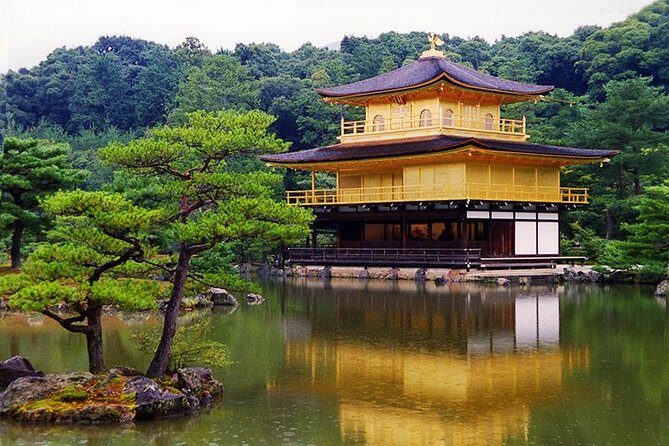
Kinkaku‑ji is shorter on time but huge on impact. You’ll have about 45 minutes here, and that window is enough to see the Golden Pavilion area and soak up the garden settings.
The pavilion itself is gold-leaf covered and once served as the villa of Ashikaga Shogun. Today it’s a Zen temple complex, and it’s recognized as a UNESCO Heritage site. That matters because it explains why the experience feels controlled and calm: it’s designed for viewing and quiet attention rather than constant motion.
The practical drawback is timing. Forty-five minutes sounds fine on paper, but Kinkaku‑ji can be crowded and photo-heavy. If you want slower viewing or a lot of extra walking around the perimeter, you’ll feel the pinch.
Still, if you treat this as your quick reset—see the pavilion, pause, then move on—you’ll get a satisfying hit of Kyoto beauty without burning the day.
Stop 4: Arashiyama Bamboo Forest and the Togetsukyo Bridge
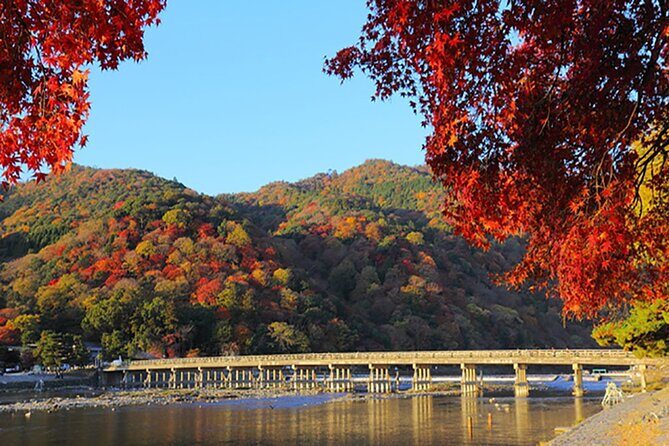
Arashiyama is where Kyoto cools down. You’ll spend about 1 hour 20 minutes walking through the bamboo forest paths in shaded conditions, which can feel like a break from the city heat and sunlight.
The bamboo forest is also a photo playground. If your guide helps with timing or good angles, it’s worth using that guidance because many of the best frames come from small changes in position, not from giant camera moves.
You’ll also see the Togetsukyo, the moon-crossing bridge. That’s a nice contrast to the vertical bamboo walls—suddenly you’re looking across a different shape of Kyoto scenery.
The key consideration here is that Arashiyama is popular. Even with a guided schedule, you’ll be in a shared walkway, and the atmosphere can feel more like a flow than a hush. Go with the mindset that this stop is for the short, stunning moments rather than deep wandering.
Lunch: Optional Add-On, and What to Do With Dietary Limits
Lunch is available as an option during the tour, and you’ll have a break for it. If you choose the lunch-included option, you get a smoother day because you don’t have to find food while the group is moving.
Important dietary note: halal and vegan meals are unavailable. Vegetarian requests are possible, but you have to contact the operator at least 3 days before the tour. If that doesn’t work for you, the safest plan is booking the option without lunch and bringing your own food.
My practical advice: if you’re even slightly picky or have a complex diet, bring something small anyway. It prevents last-minute stress when timing is tight or you arrive hungry from walking.
What the Guide Adds (When It Goes Well)
This tour lives or dies by the guide’s ability to connect the dots. The core promise is an English-speaking guide, and the best days are the ones where the guide gives clear, useful context—why a place matters, what to look for, and how to move through crowds efficiently.
The strongest experiences often include photo help and extra practical tips, and guide names like Maria, Naomi, Hama, and Tet/Ted appear in the guide roster descriptions. People also credit guides like Milo, Alice, and Maiki for being helpful and making the day feel balanced between group time and room to explore.
Be aware there are also occasional complaints about English quality or limited narration. Your counter-strategy is simple: use the guide structure, but also be ready with a bit of background reading on each site before you go. That way, even if the explanations are light, you still get meaning from your own observations.
Walking Reality Check: Hills, Steps, and Stroller Notes
This tour requires walking, and Kyoto’s temple areas include slopes, stairs, and uneven pacing between locations. Even if you’re fit, plan for leg burn. If you’re traveling with someone who tires easily, this is where the day can feel intense.
For families using strollers: folding strollers are allowed, and they’ll be stored with luggage on the bus. You’ll still deal with walking from bus stops to sites, so a stroller won’t eliminate the effort. If you’re deciding whether to bring one, consider how comfortable your group is with short uphill transfers.
Who This Tour Fits Best
This one-day Kyoto highlights tour is a good match if:
- You have limited time and want the “big names” in a single day
- You’re starting from Osaka or you want a clean day trip structure
- You value organized timing and don’t want to coordinate multiple transit hops alone
- You want an English guide to add meaning while you see UNESCO-listed sites
It may not be ideal if:
- You want long, slow exploration and deep time at just one or two temples
- You struggle with walking hills and stairs
- You need halal or vegan meals (because those options are not available)
Small Planning Tips That Make the Day Easier
A few practical moves will pay off big time:
- Wear shoes you trust on stairs and slopes. Sandals will regret you.
- Bring water, especially if it’s hot. You’ll be moving between shaded and sunny areas.
- Use the onboard Wi‑Fi break to rest your brain and recharge for the next stop.
- If you’re serious about photos, arrive ready to reposition quickly. The day moves.
Also, remember that schedules can change due to traffic or weather conditions for safety. A flexible mindset keeps the day smooth.
Should You Book This One-Day Kyoto Highlights Tour?
I’d book it if you want maximum Kyoto impact with minimum planning. For the money, you’re getting a full day with transportation, an English-speaking guide, and entrance tickets to two of the major temples, plus a tight run through Fushimi Inari, Kiyomizu-dera, Kinkaku‑ji, and Arashiyama bamboo.
I’d think twice if you hate walking or you’re hoping for a slow, calm temple experience. This tour is built for efficiency, not solitude.
If you’re visiting Kyoto for the first time and you want to see the headlines without wasting your day in transit confusion, this is one of the cleaner ways to do it.
FAQ
How long is the Kyoto highlights tour?
The tour runs about 10 hours.
What’s included in the ticket price?
Included are an English-speaking guide, air-conditioned bus with free Wi‑Fi, and entrance tickets to Kinkaku‑ji and Kiyomizudera. Lunch is included only if you book the lunch option.
Is lunch included, and are there dietary options?
Lunch is available as an option. Halal and vegan meals are unavailable. Vegetarian requests are possible if you contact the operator at least 3 days before the tour; otherwise, you may want to book without lunch and bring your own.
Where do I meet the tour in the morning?
You can meet at Namba, OCAT 1F (near Daiso) at 8:50 AM, or at Kyoto Station Hachijo Exit Tourist Bus Parking at 9:05 AM. Check in 10 minutes before departure.
Do I need to pay for temple admissions?
Kinkaku‑ji and Kiyomizudera entrance tickets are included. Fushimi Inari and Arashiyama have free admissions as part of the stops on the tour.
What’s the cancellation policy?
Free cancellation is available up to 24 hours in advance for a full refund. If it’s canceled due to poor weather, you’ll be offered a different date or a full refund.