REVIEW · WORKSHOPS
Kyoto: Traditional Mini Umbrella Making Workshop
Book on GetYourGuide →Operated by 京都和傘屋辻倉 · Bookable on GetYourGuide
Small umbrellas, serious craft. This Kyoto workshop turns traditional wagasa know-how into a hands-on class where you make your own mini umbrella using genuine Japanese materials. It’s timed perfectly for a relaxed afternoon stop in central Kyoto, just minutes from Shijo Kawaramachi.
What I like most: you get to learn from a long-running local shop setup with traditional decor and a calm pace. And I especially liked how friendly the instruction feels, including with Ai Takenaka, who keeps the process clear and patient.
One consideration: this is detailed work, so you’ll get better results if you’re ready to slow down and focus. Kids under 6 aren’t listed as suitable, and the class isn’t built for quick, casual crafting.
In This Review
- Key takeaways before you go
- Why Kyoto’s mini umbrella workshop is more than a souvenir
- Getting there: easy access from Shijo Kawaramachi
- Walking into the wagasa workshop: what the space tells you
- What you make: your own mini Japanese wagasa (Hime Wagasa)
- The hands-on process: how the 90 minutes actually feel
- What about finishing touches?
- Personalizing your umbrella: where creativity meets tradition
- The take-home kit: bamboo stand, box, and carry bag
- Price and value: is $70 fair for a 90-minute class?
- Who should book this wagasa workshop?
- Practical tips to enjoy the class more
- The bottom line: should you book this Kyoto mini umbrella workshop?
- FAQ
- How long is the Kyoto traditional mini umbrella making workshop?
- Where is the meeting point in Kyoto?
- What does the class cost, and is anything included?
- What umbrella will I make during the workshop?
- Is the instructor available in English?
- Can I pay extra to improve the final look of my umbrella?
- Is the workshop wheelchair accessible, and is it suitable for children?
- Are smoking or alcohol allowed during the workshop?
- What are my options for cancellation and reserving?
Key takeaways before you go
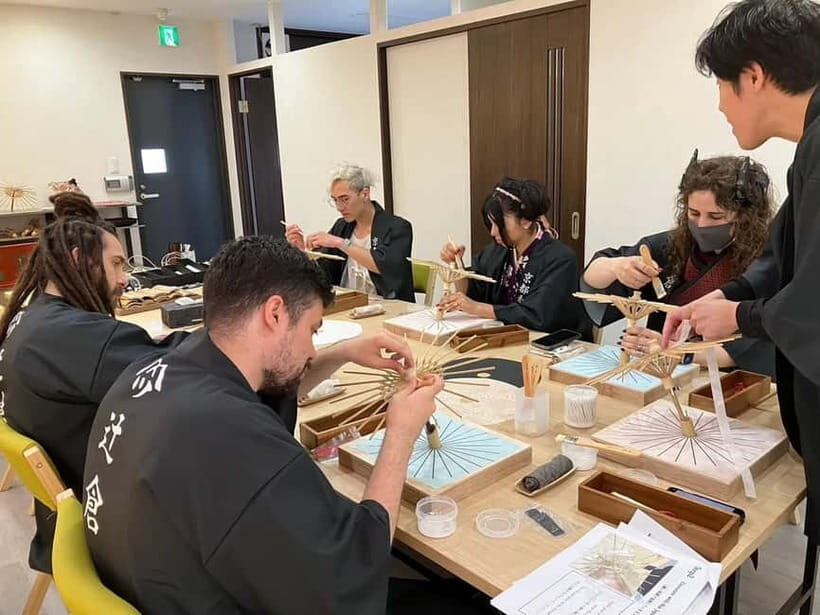
- A mini wagasa you can personalize so it feels like a real souvenir, not a mass-made keepsake
- Genuine Japanese materials for your Hime Wagasa build
- Japan craft approach, not just a demo you shape and assemble each component
- Take-home extras included including a bamboo umbrella stand, decorative box, and carry bag
- Central Kyoto location about a 2-minute walk north of Shijo Kawaramachi
- Optional finishing touches by a craftsman for an additional fee
Why Kyoto’s mini umbrella workshop is more than a souvenir
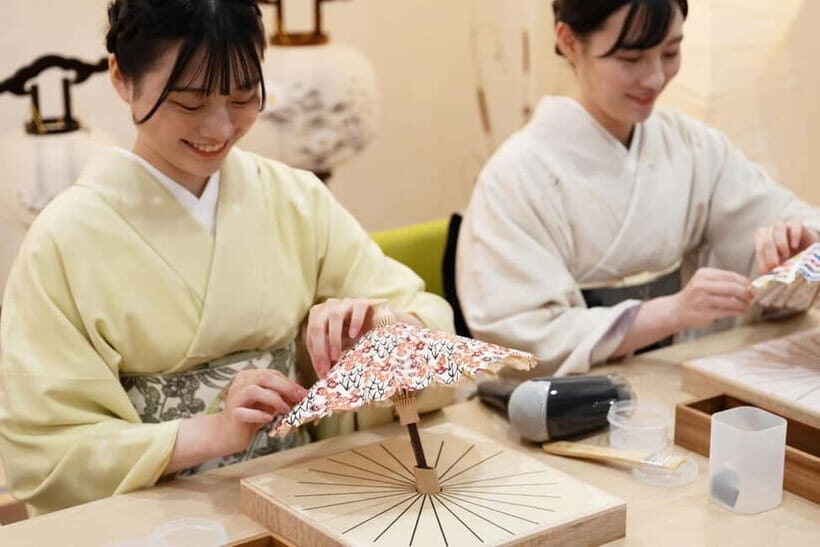
If you’ve ever seen Kyoto wagasa—those elegant paper umbrellas that look almost too beautiful to use—you’ll get why they matter. In this workshop, the focus isn’t on rushing to a photo moment. It’s on learning how the parts come together and why the craftsmanship feels so precise.
I like that you’re making a Hime Wagasa (a traditional Japanese umbrella) in miniature form. That size choice changes the experience: it’s detailed, but it stays doable within the 90-minute session. You end up with a piece that feels intentional, personal, and gift-worthy.
There’s also a cultural layer here. The mini umbrella is presented as a symbol of happiness, and the workshop frames it as something you can give—not just something to keep for yourself. Even if you don’t turn it into a gift, it nudges you to see the object as more than a decoration.
You can also read our reviews of more tours and experiences in Kyoto


Getting there: easy access from Shijo Kawaramachi
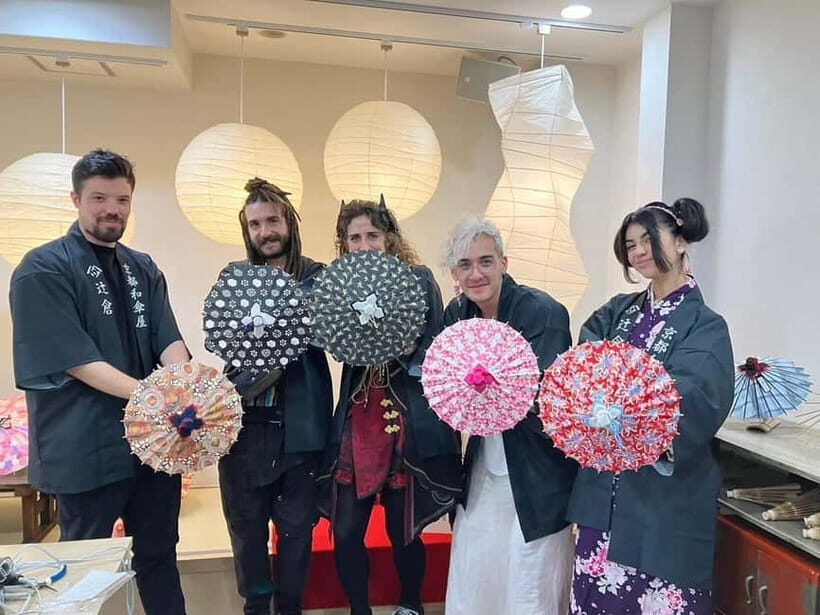
The meeting point is in central Kyoto, about 2 minutes’ walk north from the Shijo Kawaramachi intersection. That location matters because it saves you time. You’re not planning your day around a distant suburb or a complicated transfer.
This also helps if you’re doing Kyoto the usual way—temples in the morning, shopping in the afternoon. You can slot the class in without worrying that it will eat your whole day. If you’re already near one of Kyoto’s main shopping streets, you’ll find your way quickly.
And because the workshop is wheelchair accessible, it’s a good pick when you want a Kyoto activity that’s not purely sightseeing.
Walking into the wagasa workshop: what the space tells you
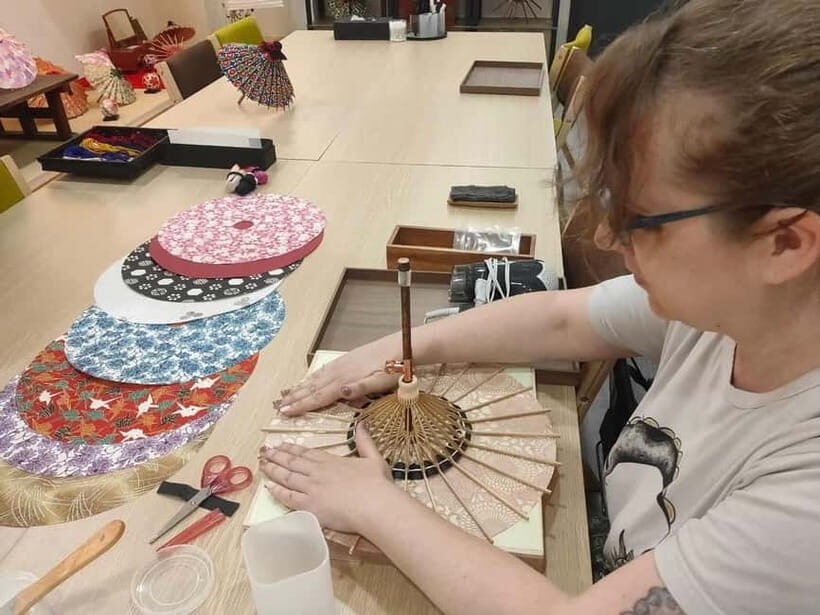
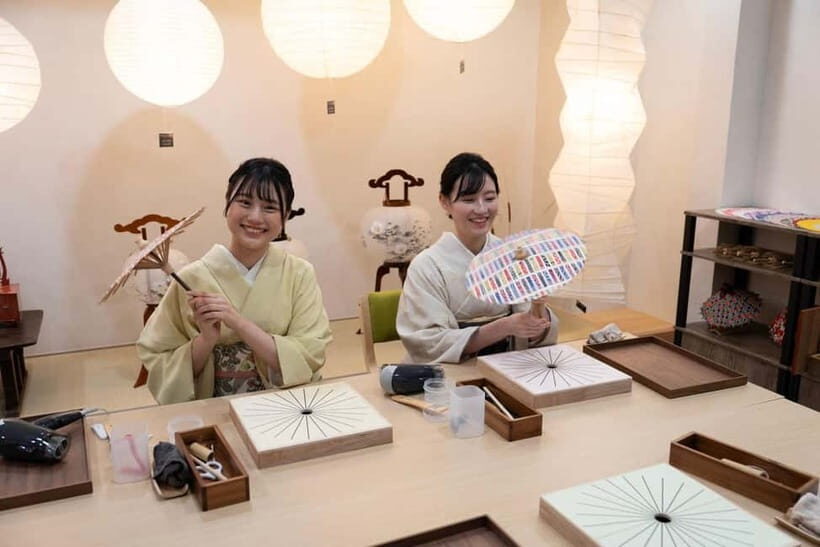
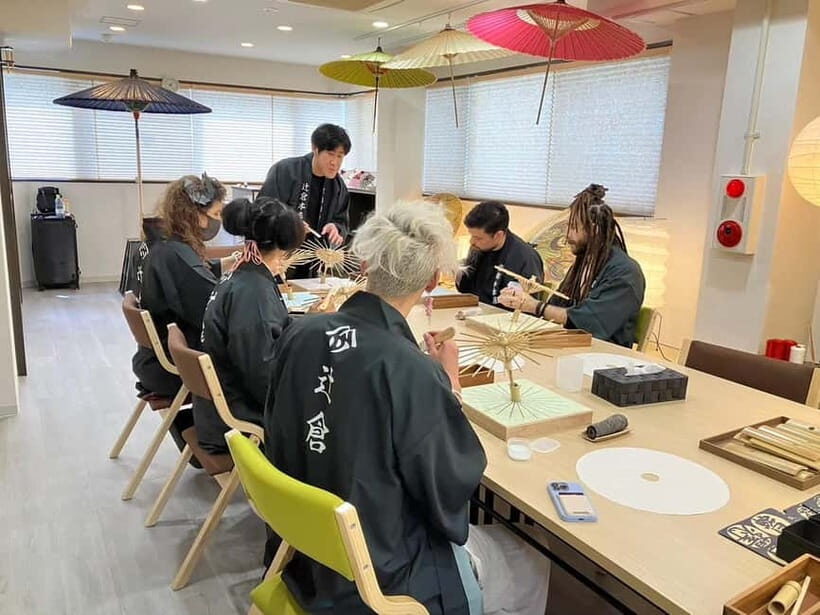
When you arrive, the room is set up to feel creative and calm. There are authentic umbrellas on display, plus traditional lighting that makes the workbench area feel special. You’re not crammed into a corner; you’re given a space where you can actually concentrate on small, careful steps.
That atmosphere is part of the value. Traditional crafts can be frustrating if you feel rushed. Here, the setting and the instruction style create the right mood to learn slowly and get things right.
Also, the workshop isn’t limited to one language. The instructor speaks Japanese and English, which helps a lot if your Japanese is basic. It’s easier to understand the sequence of steps when you can follow in the language you’re comfortable with.
What you make: your own mini Japanese wagasa (Hime Wagasa)
Your finished product is a mini Japanese umbrella, built from genuine Japanese materials. In the workshop setup, you’re not just assembling a souvenir kit—you’re guided through the process of shaping and putting together the components that make a wagasa feel like a wagasa.
You’ll also be able to design it so the umbrella reflects your personal taste and appreciation for the tradition. That’s the difference between buying something ready-made and having a story behind it. Even if your technique isn’t perfect, your choices become part of the object.
One more thing I appreciate: the workshop treats the umbrella as a symbol of happiness. That idea changes how you look at it. It’s not only craft practice; it’s a meaningful take-home item you can share.
The hands-on process: how the 90 minutes actually feel
A 90-minute class can either fly by—or become useful. This one lands in the sweet spot because the structure supports focus. You’ll be guided step by step while you shape and assemble each component into your mini umbrella.
From what’s described, the key work happens at the bench: turning raw materials into a built umbrella you can recognize as traditional wagasa. You’re asked to pay attention to detail, because wagasa craftsmanship relies on careful assembly. That’s also why the instruction style matters—when someone is patient, you’re far less likely to feel stuck.
In the reviews, you see the same theme again and again: instructors are patient and helpful. People talk about how making the mini umbrella takes careful attention, but they also describe it as fun once the steps click. If you’re someone who likes quiet concentration, you’ll probably enjoy the mental focus more than you expect.




What about finishing touches?
There’s an option to have a craftsman add finishing touches to your mini umbrella for an additional fee. If you want your piece to look extra polished, this is worth considering. It’s also a helpful safety net if you’re worried you might not nail every tiny detail within the time.
If you prefer to keep it entirely hands-on, you can still complete the core build during the class. Just remember that the optional finishing work is separate and costs extra.
Personalizing your umbrella: where creativity meets tradition
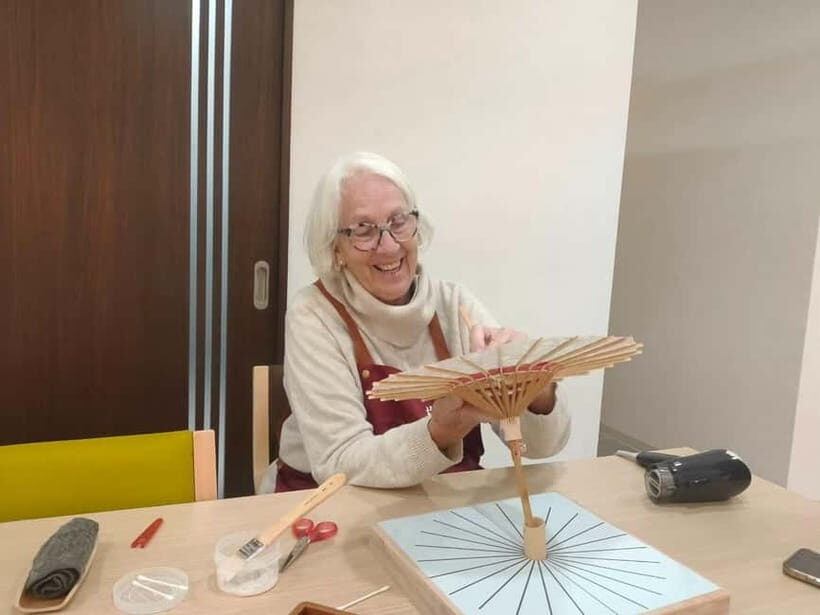
Even within a structured craft, there’s room for your style. You design a mini wagasa so it reflects elegance and tradition—while still looking like it’s yours.
That’s important for two reasons. First, a personalized umbrella becomes a memory you can hold. Second, it helps you understand why wagasa design isn’t random. It’s intentional, and the “mini” format lets you experience that without needing a long learning curve.
One of the nice parts is that you get to learn the craft logic while you make choices. You’re not only decorating; you’re building something that makes sense structurally and aesthetically.
And yes, the workshop frames the umbrella as something that can be gifted. If you’re traveling with space constraints and still want a meaningful souvenir, that idea is a strong one: this is the kind of gift that doesn’t feel generic.
The take-home kit: bamboo stand, box, and carry bag
Your class doesn’t end when you finish building. You also get a bamboo umbrella stand to take home, plus a decorative box and a carry bag.
That matters more than you might think. Paper umbrellas (even mini ones) deserve a proper display and protection. Having the stand included means you can set it up safely instead of improvising with something random. The box and bag help you store it between travel legs.
This is also where the workshop feels like real value for the price. You’re not just paying for labor and materials; you’re getting a presentation setup that helps your umbrella look like a real craft object.
Price and value: is $70 fair for a 90-minute class?
$70 per person is not cheap, but it’s not out of line for a hands-on craft experience where you’re working with genuine Japanese materials and leaving with a finished item.
Here’s what you’re effectively paying for:
- A guided build of a traditional-style umbrella (not a quick craft demo)
- Included materials for crafting your Hime Wagasa
- Included take-home support items (bamboo stand, decorative box, carry bag)
- A full 90-minute session with instruction in Japanese and English
- The chance to add your own design touches, with optional extra finishing work available
If you’re the type of traveler who buys souvenirs but wishes they came with a real story, this is the kind of class that delivers. You’ll likely remember the steps and the feel of the process, not just that you got a cute object.
On the other hand, if you don’t like careful, detail-focused activities, the time spent concentrating might feel like a lot. In that case, treat it as a craft class first, shopping experience second.
Who should book this wagasa workshop?
This is a great fit if you:
- Like hands-on activities with calm pacing
- Enjoy learning a traditional craft step by step
- Want a meaningful Kyoto souvenir you can display at home
- Prefer an experience near central Kyoto (close to Shijo Kawaramachi)
It’s also a nice option for small groups since the class is built around guided work. One review notes the provider being accommodating for a group that included children (with ages 3–9), but the activity information says it’s not suitable for children under 6. So if you’re traveling with younger kids, I’d treat it as a “contact and confirm” situation rather than assuming it will work.
Wheelchair accessibility is listed, which is a plus for travelers who want an indoor activity that’s still culturally focused.
Practical tips to enjoy the class more
To get the most out of your session, plan for focus. This isn’t a paint-by-numbers craft. The mini umbrella requires attention to detail, and your enjoyment improves when you don’t try to multitask.
A few ways to set yourself up well:
- Wear comfortable clothes you don’t mind getting a bit focused-in
- Go in with the mindset of learning, not speed
- Expect the work to take concentration—this is part of the payoff
- If you care about a super-polished final look, ask about the optional finishing touches fee
One more practical note: smoking and alcohol aren’t allowed, and the workshop also prohibits drugs and explosive substances. You’ll want to plan around that if you’re coming straight from an evening plan.
The bottom line: should you book this Kyoto mini umbrella workshop?
I’d book it if you want a Kyoto experience that’s small in scale but serious in craft. The mix of genuine materials, guided assembly, and a take-home umbrella display kit makes it feel like more than a novelty. If you enjoy patient instruction—something reviews strongly emphasize—this class is likely to feel welcoming from minute one.
Skip it (or at least reconsider) if you want something casual and low-focus. This workshop asks you to slow down and pay attention to detail. Also, it’s not listed as suitable for children under 6, so families with very young kids should confirm first.
If you’re in central Kyoto and you can spare 90 minutes, this is one of the better buys for a hands-on cultural souvenir. You’ll leave with a mini wagasa, a stand, and a story that goes beyond the photo.
FAQ
How long is the Kyoto traditional mini umbrella making workshop?
The workshop lasts 90 minutes.
Where is the meeting point in Kyoto?
You meet in central Kyoto, about a 2-minute walk north from the Shijo Kawaramachi intersection.
What does the class cost, and is anything included?
The price is $70 per person, and it includes all materials for crafting your Hime Wagasa. You also get a bamboo umbrella stand to take home, plus a decorative box and carry bag.
What umbrella will I make during the workshop?
You’ll craft your own mini Japanese wagasa, specifically a Hime Wagasa (traditional Japanese umbrella).
Is the instructor available in English?
Yes. The instructor speaks Japanese and English.
Can I pay extra to improve the final look of my umbrella?
Yes. You can opt for a craftsman to add finishing touches to your mini Japanese umbrella for an additional fee.
Is the workshop wheelchair accessible, and is it suitable for children?
Wheelchair accessibility is listed. However, it’s not suitable for children under 6 years.
Are smoking or alcohol allowed during the workshop?
No. Smoking and alcohol (as well as drugs and explosive substances) are not allowed.
What are my options for cancellation and reserving?
You can cancel up to 24 hours in advance for a full refund. You can also reserve now and pay later, so you can book a spot without paying today.