REVIEW · WALKING TOURS
Kyoto TeamLab Biovortex & Kyoto Walking Tour
Book on Viator →Operated by Amigo Tours Japan · Bookable on Viator
Kyoto can be quiet and futuristic in the same afternoon. This tour strings together Nishi Honganji (with the Amidadomon Gate), the Kyoto Station Daikaidan light show, and teamLab Kyoto Biovortex for a day that moves from temple serenity to digital art. I love how the pacing keeps you from rushing—there’s a chance to slow down at the temple and then enjoy two big set-piece stops. One possible drawback: you do need to accept that it’s a tight combo of three locations in a short window, so you won’t linger all day at any single place.
I also like that you get a bilingual guide in Spanish and English, and the small-group size (up to 25 people) makes questions easy and the day feel more personal. In the same spirit, the guide support seems to be a standout part of the experience, with multiple past participants praising the guide’s friendliness and clear information. If you’re hoping for a mostly unstructured temple day, this may feel more planned than you want.
In This Review
- Quick hits before you go
- A smart 3–4 hour Kyoto combo: temple, lights, and teamLab
- Nishi Honganji and the Amidadomon Gate: calm before the tech
- Kyoto Station Daikaidan: the staircase becomes a light screen
- Inside teamLab Biovortex Kyoto: art that reacts to nature and the body
- Price and value: why $72 makes sense for this mix
- Practical tips: how to make the most of the 3–4 hours
- Who this tour suits best (and who might want something else)
- Should you book this Kyoto TeamLab Biovortex & walking tour?
- FAQ
- How long is the Kyoto TeamLab Biovortex & Kyoto Walking Tour?
- Where does the tour start?
- Where does the tour end?
- What’s included in the price?
- Are food and drinks included?
- Is there a ticket cost for the Kyoto Station Daikaidan light show and Nishi Honganji?
- What is the cancellation policy?
Quick hits before you go

- UNESCO-listed Nishi Honganji setting: Start at the Amidadomon Gate area, a top Kyoto temple experience.
- Kyoto Station Daikaidan light show: A short stop with strong wow factor, turning the staircase into a cultural light display.
- 2-hour teamLab Biovortex slot: You get enough time to see more than just a quick walk-by.
- Bilingual support (Spanish and English): Helps you understand what you’re looking at and what to do next.
- Small group max 25: Easier to stay together and keep the flow of the day.
A smart 3–4 hour Kyoto combo: temple, lights, and teamLab
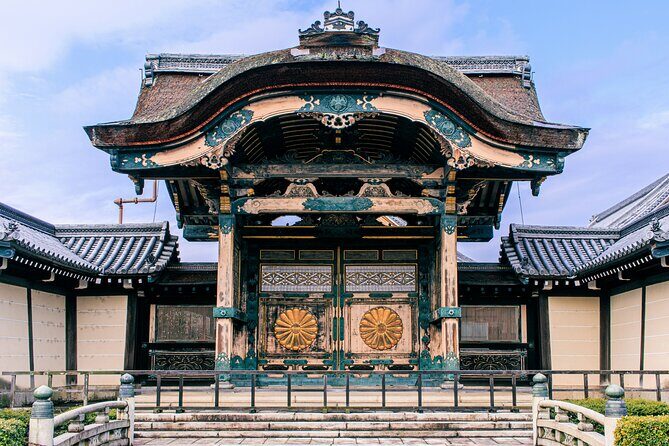
This is a classic Kyoto mix, but done in a way that’s practical for real schedules. You start in an older Kyoto landmark at Nishi Honganji, then shift gears to a major modern icon—Kyoto Station—and finish at teamLab Kyoto’s Biovortex space.
The time breakdown is built for momentum. The temple portion is about 50 minutes, Kyoto Station is a quick 15 minutes, and then you have roughly 2 hours at teamLab. That structure matters because it gives you depth at the last stop while still covering Kyoto’s major “faces” in one outing: traditional spirituality, contemporary design, and digital art.
You also avoid the most common solo problem in Kyoto: trying to connect temple logistics and timed attractions by yourself. Here, transportation is included, so you spend your energy on the sights, not on figuring out the route.
You can also read our reviews of more walking tours in Kyoto



Nishi Honganji and the Amidadomon Gate: calm before the tech
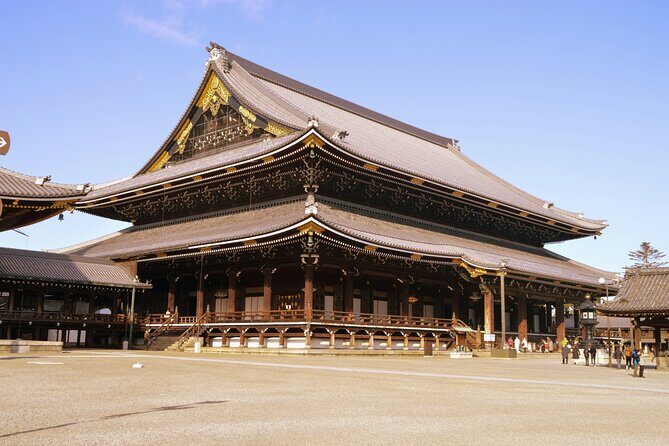
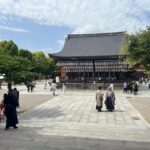
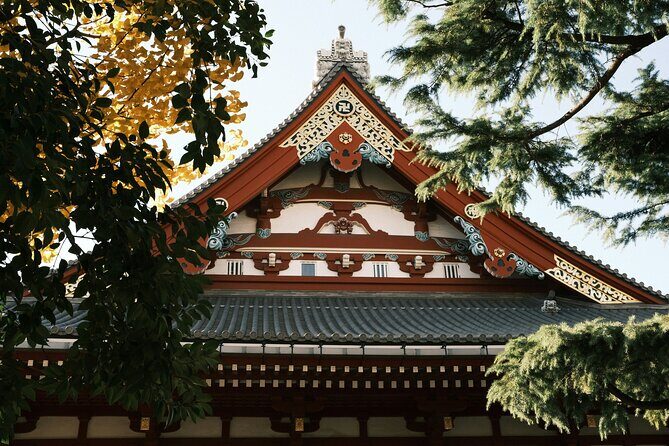
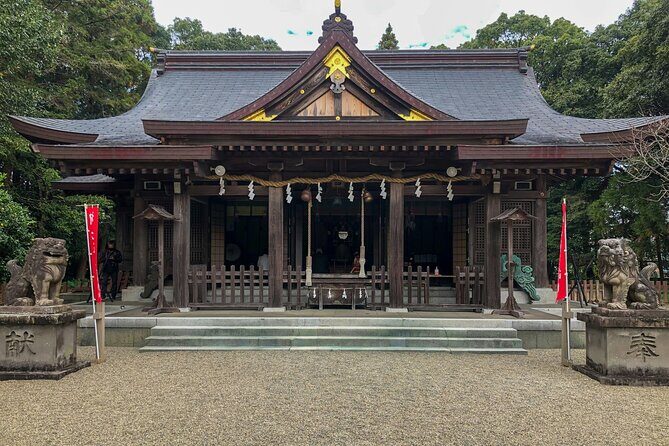
Your first stop anchors the whole tour. You begin at the Amidadomon Gate at Nishi Honganji, a major part of Honganji Temple. This temple complex is described as a UNESCO cultural treasure, and starting here is a smart move because you get the big landmark impression first, before you’re distracted by photos or the next location.
What I like about this part of the day is the feel: you’re not just looking at buildings; you’re entering a temple space meant for reflection. The tour format also gives you a bit of breathing room. There’s time built in to stroll and take photos, so you can slow down and notice details instead of treating the visit like a checklist.
The biggest benefit of starting at a major gate-area entrance is that it sets context fast. Once you’ve taken in the scale of the Amidadomon Gate surroundings, the rest of your Kyoto day makes sense—because you’re about to walk into a space where art uses light and technology, and you’ll understand the contrast more clearly.
A practical consideration: temple areas can involve walking on uneven surfaces and spending time inside/outside. With only about 50 minutes, you’ll want to plan your pace. If you love photos, you’ll probably want to choose a few key angles rather than trying to capture everything at once.
Kyoto Station Daikaidan: the staircase becomes a light screen
After the calm of the temple, you head to Kyoto Station for a short, high-impact stop: the Daikaidan (Great Staircase) light show. It turns the station’s central staircase into a luminous display that celebrates Japanese culture.
This stop works because it’s brief but memorable. You’re not committing to a long show where you might lose the rest of the day. Instead, you get a concentrated hit of modern design plus a clear visual story told through light.
I also like the logic of placing it here in the tour flow. Between the temple and teamLab, you get a transition moment. Kyoto Station is a place where you can reset—use the space to regroup, recharge your phone, and re-center your attention—before the next experience demands more focus.
One thing to consider: because the time is about 15 minutes, you’ll want to treat this as a quick appointment, not a long sit-down. If you’re someone who likes to linger at viewpoints, you may feel a tiny bit rushed. Still, the format keeps the full tour within its 3–4 hour window.
Inside teamLab Biovortex Kyoto: art that reacts to nature and the body
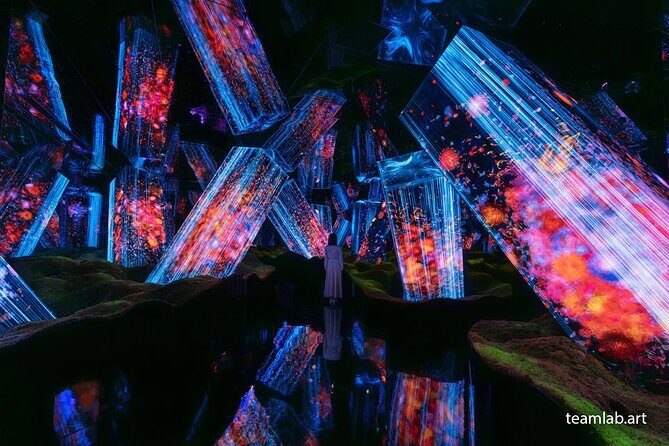
The day ends at teamLab Kyoto Biovortex, where the theme is described as interactive sensory art inspired by nature, the human body, and traditional Japanese art. The tour includes entry, and the time you get here is the longest portion—around 2 hours.
Here’s why that matters. teamLab installations often reward time and movement. With two hours, you have enough room to follow the flow, see how pieces relate, and stop when something catches your attention rather than feeling like you’re being hurried along.
What you should expect from the Biovortex concept is a blend of digital visuals and physical participation. The description leans into sensory and interactive experiences, so don’t plan this as something you’ll only watch from one spot. You’ll likely get more out of it if you’re willing to change your position and let the art affect how you experience the room.
Also, because the theme includes both nature and the human body, it tends to feel personal. That can be a nice contrast to the temple start. One place asks you to be still and look carefully; the other asks you to move and respond.
A practical note: since the tour data doesn’t spell out photography or specific interaction rules, I recommend you treat the onsite signage and instructions as your guide. If you care about photos, check what’s allowed once you’re there. If you’re sensitive to lighting or strong sensory effects, give yourself permission to step back when needed and take breaks.
Price and value: why $72 makes sense for this mix

At $72 per person, you’re paying for three things: guidance, transportation, and a paid attraction ticket. The TeamLab entry is included, and the tour also covers transportation plus a bilingual guide in Spanish and English.
That combination is where the value lives. If you tried to recreate this day on your own, you’d be piecing together transit between a major temple, Kyoto Station, and teamLab—and you’d still need someone to translate what you’re seeing at the temple and help you make sense of the interactive art. The cost is basically buying time, context, and logistics.
You also get some free admission moments in the schedule. The temple portion is listed with admission ticket free, and the Daikaidan light show is also listed as admission ticket free. That means the money you pay isn’t just going to one expensive stop; it supports the full run of the day while covering the TeamLab ticket.
Is $72 “cheap”? Not exactly. But for Kyoto, it’s a reasonable price for a guided half-day that includes a major digital art ticket and transportation.





Practical tips: how to make the most of the 3–4 hours
Here’s how I’d approach this tour so you get the best return on time.
First, arrive at the meeting point ready to move. The start is at Amida-do-mon Gate, Tokiwacho, Shimogyo Ward, Kyoto. The end is at teamLab Kyoto, 21-5 Higashikujō Higashiiwamotochō, Minami Ward. Ending at teamLab means you won’t need to retrace your steps at the very end—just plan onward transport from the Minami Ward area.
Second, pack smart for a short, active itinerary. You’ll likely walk between indoor/outdoor spaces at the temple, move around for the Kyoto Station photos, and then spend a long stretch at teamLab. Wear comfortable shoes, and bring layers. Kyoto weather can swing quickly, especially around shoulder seasons.
Third, think about your photo strategy. The day includes photo time at the temple and a visually dramatic light show at Kyoto Station. But you only have limited time at each stop. Pick a few “must capture” shots at Nishi Honganji and keep the Kyoto Station time efficient.
Fourth, plan for food outside the tour. The tour explicitly says food and drinks aren’t included, so you’ll want to eat either before you start or after you finish. If you’re the type who gets hungry fast, consider a snack plan before the temple visit.
Finally, remember the group limit. With up to 25 travelers, it should stay manageable, but it still moves like a group. Keep your pace aligned with the guide and you’ll feel less stressed.
Who this tour suits best (and who might want something else)

I think this tour is ideal if you want an easy half-day that covers multiple sides of Kyoto without doing homework. It suits people who:
- like having someone else set the order and timing
- want both traditional temple atmosphere and digital art creativity
- prefer a bilingual guide, especially if your Japanese is basic
- enjoy structured time but still want a little free strolling at the temple
It’s not the best match if you want a slow, deep temple-only day. Nishi Honganji is big, and 50 minutes can’t turn you into an expert on every corner. It’s also not built for people who want to skip modern Kyoto Station completely; the light show is part of the design of this itinerary.
Should you book this Kyoto TeamLab Biovortex & walking tour?

If you’re trying to fit Kyoto into limited time, I’d say yes—this is a smart way to hit three major experiences in one guided outing. The value is strongest when you care about guidance and included entry to teamLab Biovortex, plus you want transportation handled for you.
I’d book it if:
- you want a bilingual Spanish/English guide
- you like contrast: temple calm, station lights, then interactive digital art
- you’d rather spend time seeing than planning routes
Skip it if you’re only interested in one side of Kyoto, like temples only, or if you’re trying to maximize time at Nishi Honganji specifically. In that case, you’ll probably want a slower, temple-focused plan.
FAQ
How long is the Kyoto TeamLab Biovortex & Kyoto Walking Tour?
The duration is listed as about 3 to 4 hours.
Where does the tour start?
The meeting point is Amida-do-mon Gate, Tokiwacho, Shimogyo Ward, Kyoto, 600-8167, Japan.
Where does the tour end?
The tour ends at teamLab Kyoto, 21-5 Higashikujō Higashiiwamotochō, Minami Ward, Kyoto, 601-8006, Japan.
What’s included in the price?
The price includes transportation, a bilingual guide in Spanish and English, and the ticket entrance to TeamLab Biovortex.
Are food and drinks included?
No. Food and drinks are not included.
Is there a ticket cost for the Kyoto Station Daikaidan light show and Nishi Honganji?
Both are listed as free admission for this tour’s stops.
What is the cancellation policy?
The experience is non-refundable and cannot be changed for any reason. If you cancel or ask for an amendment, the amount you paid isn’t refunded.