REVIEW · TEA CEREMONY EXPERIENCES
Kyoto Private Tea Ceremony at a Japanese Inns
Book on Viator →Operated by ZEN: Tea Ceremony Experience in Kyoto (茶道体験所 禅) · Bookable on Viator
Kyoto deserves a quiet candlelit detour. I love that this happens in a normally closed 20-tatami banquet hall inside a long-established inn, and I love that translator devices help you ask questions without getting stuck on language.
One thing to consider: the whole experience runs about 59 minutes, so it’s less about hanging around and more about getting the ritual done right.
In This Review
- Key highlights you’ll feel right away
- Candlelit tea ceremony after dark in a Kyoto inn
- Private group size, timing, and why 59 minutes works
- Where you start: the meeting point in Shimogyo Ward
- Kimono dressing and photo shoot with Matsuda and Mayumi
- The quick Zen meditation reset (about 4 minutes)
- Tea ceremony demonstration (about 20 minutes) in a candlelit room
- Matcha whisking experience (about 20 minutes): your hands on the ritual
- Price and value: ¥15,000 adults, kids pricing, and what you actually get
- How to plan your evening (and avoid awkward moments)
- Should you book this Kyoto private tea ceremony?
- FAQ
- How long is the Kyoto private tea ceremony experience?
- How big is the group?
- What is included in the ceremony?
- Do I need to speak Japanese?
- What happens during the kimono part?
- What is the schedule inside the ceremony?
- Where is the meeting point?
- What if the weather is poor?
Key highlights you’ll feel right away
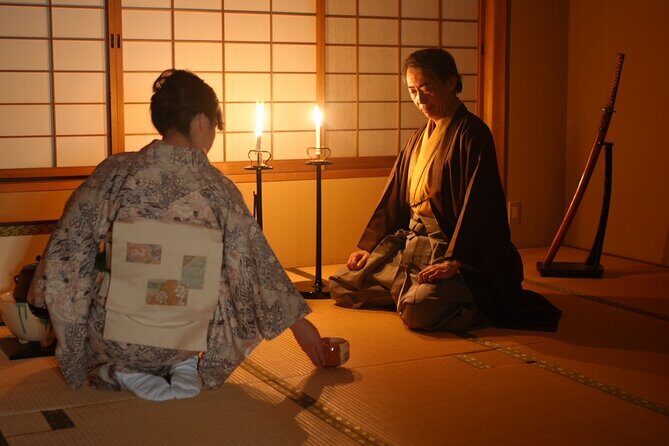
- Candlelight after dark in a pitch-black room that makes the ritual feel serious and calm
- Kimono dressing with real props like folding fans and swords, plus professional lighting for photos
- A short Zen meditation segment that gives you a reset before matcha
- Guided tea ceremony demo with a bowl of matcha and sweets
- You whisk your own matcha as a hands-on finish, not just watching
Candlelit tea ceremony after dark in a Kyoto inn
If your Kyoto trip is heavy on temples and early starts, this is the night shift you’ll be glad you booked. The big idea here is simple: you get a traditional tea ceremony experience inside a historic ryokan, with candlelight doing the mood-setting. Instead of bright lobbies and busy hallways, you’re led into a room lit by candles, where the space feels hushed and the details matter.
What surprised me from the setup is how intentional the venue is. This is a 20-tatami room that’s normally not open to the public. That makes the evening feel less like a generic class and more like you’re borrowing a private corner of Kyoto after hours.
The candlelight also changes how the ceremony lands emotionally. Tea can be pretty interesting on paper, but in a dim room it turns into a moment of focus. You’ll likely notice your body slowing down, even if you’re not trying. That’s the point.
A quick heads-up: because it runs on a tight timeline (about 59 minutes), you won’t have time to wander. Plan to show up ready to participate.
You can also read our reviews of more private tours in Kyoto

Private group size, timing, and why 59 minutes works
This is a private experience for your group only, typically 2 to 6 people. That matters in Kyoto, where many “cultural” activities are shared and scheduled like a conveyor belt. Here, the pace can stay more natural because the guide can slow down when you need translation or when kids (if you’re traveling with them) have questions.
At roughly 59 minutes, the structure is compact: kimono time, a quick calm-down moment, then the tea ritual and your own matcha whisking. It’s ideal if you want an authentic Kyoto moment without sacrificing the rest of your night.
Also, booking timing is important. The experience is usually booked about 8 days in advance on average, which is a gentle sign that popular time slots go quickly. If you’re traveling during peak season or have a narrow schedule, book sooner rather than later.
One practical win: it uses a mobile ticket, so you’re not juggling paper vouchers while you’re looking for the meeting point.
Where you start: the meeting point in Shimogyo Ward
You meet at 茶道体験所 禅 (ZEN: Tea Ceremony Experience in Kyoto), located at 緑風荘 4階 in Shimogyo Ward (Kanayachō, Kyoto 600-8323). The address is very specific, and it’s the kind of place where arriving early helps you feel calm instead of rushed.
The location is also described as near public transportation, which is useful because Kyoto nights can be easier if you’re not relying on taxis. Once you arrive, you’ll be guided into the inn setting from there, so you’re not tasked with figuring out internal logistics.
The experience ends back at the same meeting point, which keeps your evening simple. You can go straight to dinner afterward without planning a second trip.
Kimono dressing and photo shoot with Matsuda and Mayumi
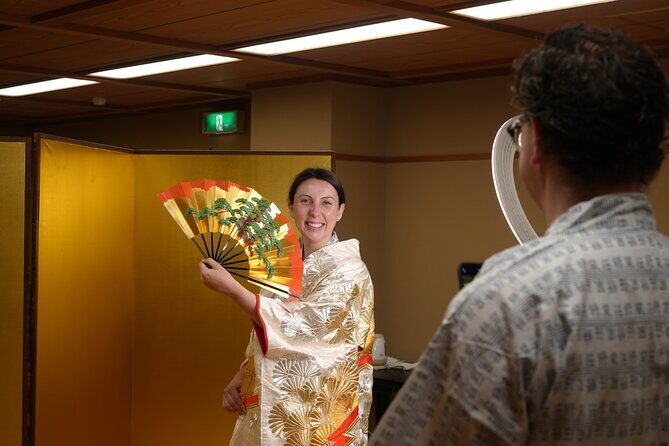
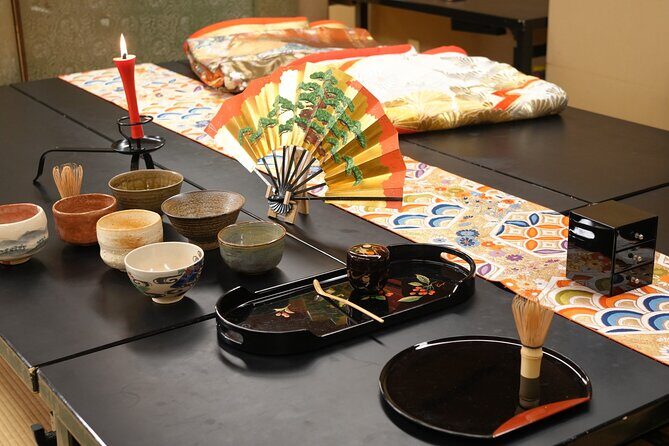
This part is the most visible, and it’s also one of the most fun. You start with dressing and a photo session that lasts about 15 minutes. For the outfits, you can be in a bridal uchikake (if it fits your selection) or a men’s haori. You’re also given props such as folding fans and swords, so your photos look like you stepped into a scene, not just tried on fabric.
A big quality detail here is the professional lighting. Many “kimono experiences” produce decent snapshots, but lighting can turn flattering outfits into awkward shadows. With proper lighting, your images look intentional, which matters if you want something more memorable than a selfie.
You’ll also have staff assistance for photography. That’s helpful because you’ll be focusing on the moment, not wrestling with your phone while wearing sleeves that don’t move like normal clothes.
One small reality check: kimono styling can affect how you walk and where your hands land. The guide support during the session is key, and the experience is designed so you’re not left figuring it out alone.
And yes, photos are welcome throughout the experience, so you can capture the candlelit room and your hands-on matcha moment too.
The quick Zen meditation reset (about 4 minutes)
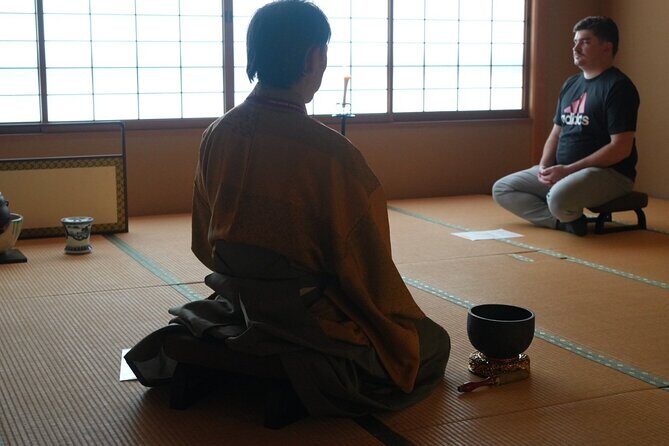
Right before the tea ceremony demonstration, there’s a Zen meditation segment lasting about 4 minutes. This isn’t long enough to become a life philosophy lesson, but it’s enough to change your rhythm.
Think of it as a reset button. If you’ve spent the day touring busy streets, your mind is probably still in “go mode.” That short meditation helps you switch to “pay attention” mode, which is exactly what tea requires. Small things become noticeable: how you hold yourself, how you breathe, how long you pause between movements.
Even if you’re not the meditating type, a guided short session can still do its job. You’re not expected to be calm on command; you’re given a structure that encourages calm.
Also, the translation devices (when you need them) can help you understand what’s happening rather than just waiting for the next step. That turns the meditation from a box you tick into something you actually follow.






Tea ceremony demonstration (about 20 minutes) in a candlelit room

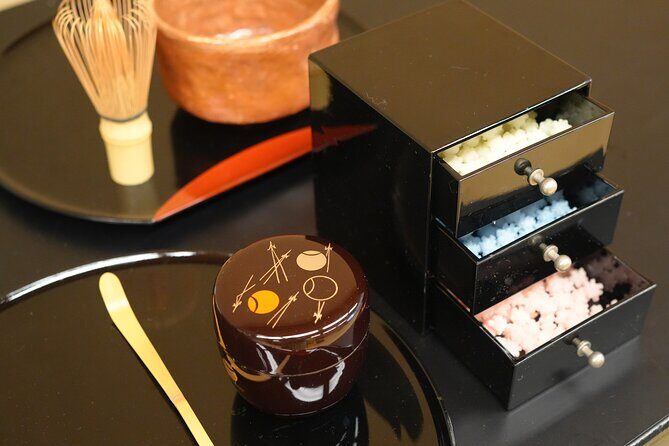
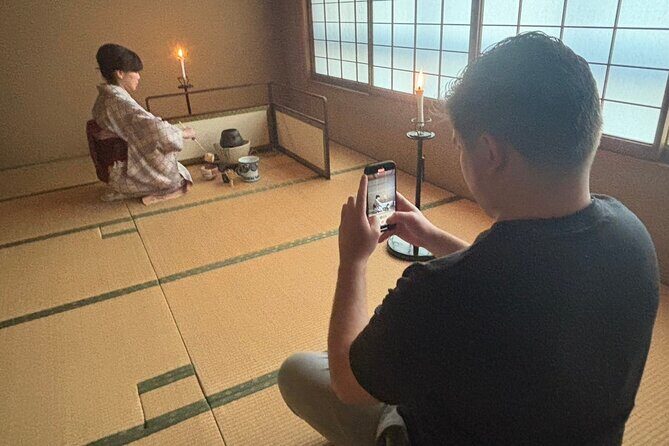
Then comes the heart of the evening: a tea ceremony demonstration of about 20 minutes. You’re treated like a guest, not a classroom student. The flow is traditional, and you’ll be served a bowl of matcha plus sweets.
For me, the value here is in learning the order and the pacing. Tea isn’t just taste. It’s a sequence—how you receive it, the gestures, and the attention you give to the bowl itself. Even if you only catch some of the meaning, the structure is clear enough to feel respectful and real.
A key practical point: the guide uses the newest translation devices, so language doesn’t block your understanding. Instead of nodding politely while thinking, I hope I get this, you can ask questions and keep up with what the host is doing.
The ceremony room is described as candlelit in a pitch-black setting, which makes the tea gestures feel sharper. When the surroundings are dim, your focus tightens. You’ll likely notice the sound of movement more, and the calm becomes physical.
This is also where the “licensed guide” part matters. You’re not just taking part in a performance; you’re being guided through something meant to be done properly.
Matcha whisking experience (about 20 minutes): your hands on the ritual
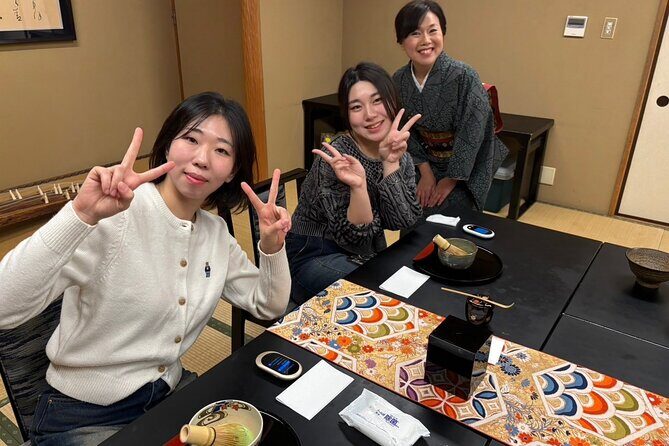
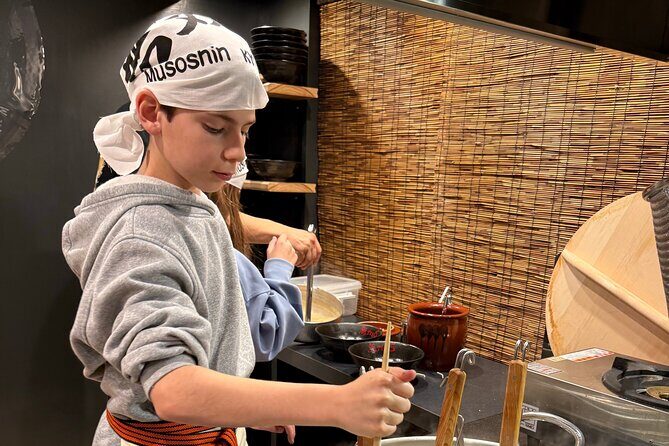
The final act is hands-on. You’ll have a matcha whisking experience for about 20 minutes, where you make your own bowl of matcha. This is the difference between watching and doing.
Whisking takes coordination. You need the right motion and attention, and it’s surprisingly calming once you start. The action becomes a kind of moving meditation, even if you’re just concentrating on technique.
You’re not doing this alone. The staff and guide support the process, and you can ask questions through translation devices. If you’re traveling with kids, this is often the part that makes the evening feel worthwhile for everyone, because it turns culture into an activity you can hold.
Also, since you’ve already seen the ceremony gestures in the demo, you understand what the tools and movements are for. That makes the whisking more meaningful instead of feeling like a simple workshop.
And because photos are welcome throughout, you can capture your bowl in action. It’s one of those moments that looks better in photos than you expect.
Price and value: ¥15,000 adults, kids pricing, and what you actually get
The cost is ¥15,000 for adults and ¥3,000 for children under 15. You’ll also see it listed as $97.98 per person, which is simply the converted price at booking time. Either way, what you’re paying for is the full package: kimono dressing, props, photo support, matcha ceremony guidance, sweets, and the hands-on whisking.
Is it cheap? No. But it’s not trying to be. For the price, you’re getting:
- A private setting for your small group (2–6 people)
- A normally closed 20-tatami room inside a traditional inn
- Kimono session with photo lighting and prop styling
- Translation devices, which protect your experience value
- A guided ritual plus your own matcha making
The translation piece is a sneaky value driver. When you don’t understand what’s happening, cultural activities can feel like pretty theater. Here, you’re set up to understand the steps, which makes the memory last longer.
If you’re on a tight budget, consider what else you could do that same evening. A tea ceremony like this is best when you want one night in Kyoto to feel personal and focused, not just another checkmark.
How to plan your evening (and avoid awkward moments)
This experience runs about an hour, so the best plan is to avoid cramming it between two big commitments. Treat it as the main event for a slice of your night.
A few practical tips based on the structure:
- Wear comfortable clothing to arrive in. You’ll be changed into kimono, but you’ll still walk around first.
- Expect hands-on participation. Even if you’re shy, the format is built for you to do the whisking.
- Bring a calm mindset. The room is candlelit and quiet, and the ceremony moves steadily.
- If you’re traveling with kids, know that they can ask questions using the translation devices, which helps keep everyone engaged.
You’ll meet at ZEN: Tea Ceremony Experience in Kyoto on the fourth floor of 緑風荘. Since it ends at the same point, you can keep your dinner reservation nearby or plan a short walk or train ride after.
If you hate waiting around, you’ll probably like the pace. If you love lingering, you might wish it ran longer—59 minutes is short by design.
Should you book this Kyoto private tea ceremony?
Book it if you want a Kyoto experience that feels intentional and personal. This is for you if you like traditional craft and ritual, if you want photos that don’t look like an afterthought, and if you appreciate guidance that helps you understand what you’re seeing. The combination of candlelit setting, kimono with props, Zen meditation, and the chance to whisk your own matcha makes it feel complete.
Skip it (or at least reconsider the timing) if you’re looking for a long, slow cultural tour. This is a tight, structured evening. Also keep in mind the experience has a good-weather requirement, so if you’re traveling in seasons with heavy rain, consider having flexible plans.
If you’re aiming for one standout night in Kyoto that’s calm and hands-on, this is a strong choice.
FAQ
How long is the Kyoto private tea ceremony experience?
It runs for about 59 minutes.
How big is the group?
It’s a private experience with your group only, typically 2 to 6 people.
What is included in the ceremony?
You’ll get matcha green tea, sweets, kimono costumes and props, tea ceremony utensils, staff help with photography, and a licensed guide. You also do matcha whisking.
Do I need to speak Japanese?
No. Translator devices are available so you can communicate regardless of language.
What happens during the kimono part?
You’ll dress in a kimono option (bridal uchikake or men’s haori) for a photo shoot with props such as folding fans and swords, plus professional lighting.
What is the schedule inside the ceremony?
The experience includes about 4 minutes of Zen meditation, about 20 minutes for the tea ceremony demonstration, and about 20 minutes for your matcha whisking.
Where is the meeting point?
You meet at 茶道体験所 禅 (ZEN: Tea Ceremony Experience in Kyoto), 緑風荘 4階, Kyoto 600-8323, Shimogyo Ward, Kanayachō, 490.
What if the weather is poor?
The experience requires good weather. If it’s canceled due to poor weather, you’ll be offered a different date or a full refund.