REVIEW · TEA CEREMONY EXPERIENCES
Kyoto: Table-Style Tea Ceremony at a Kyo-Machiya
Book on GetYourGuide →Operated by Éclat Japon · Bookable on GetYourGuide
Tea on chairs beats the usual floor drama. You’ll do a classic Japanese ritual in a kyo-machiya townhouse in southern Kyoto, with English guidance and hands-on steps. My favorite part is the chair-style seating, which lets you enjoy the ceremony without turning it into a leg-strength test.
I also love how practical and complete the workshop feels: you’ll make your own creamy, frothy matcha, try your hand at calligraphy, and even do flower arranging. One consideration: this experience has no hotel pickup, so you need to plan your own way to the outskirts and show up on time.
In This Review
- Key Points You’ll Care About
- A Machiya Tea Ceremony in Southern Kyoto (Without the Floor Fight)
- Where You Start: Welcome Drinks, Sweets, and the First Etiquette Check
- Purification at the Stone Basin: A Shrine-Like First Step
- The House Tour: Buddhist and Shinto Details, Plus Antiques
- Learning the Ceremony Rhythm With English PowerPoints
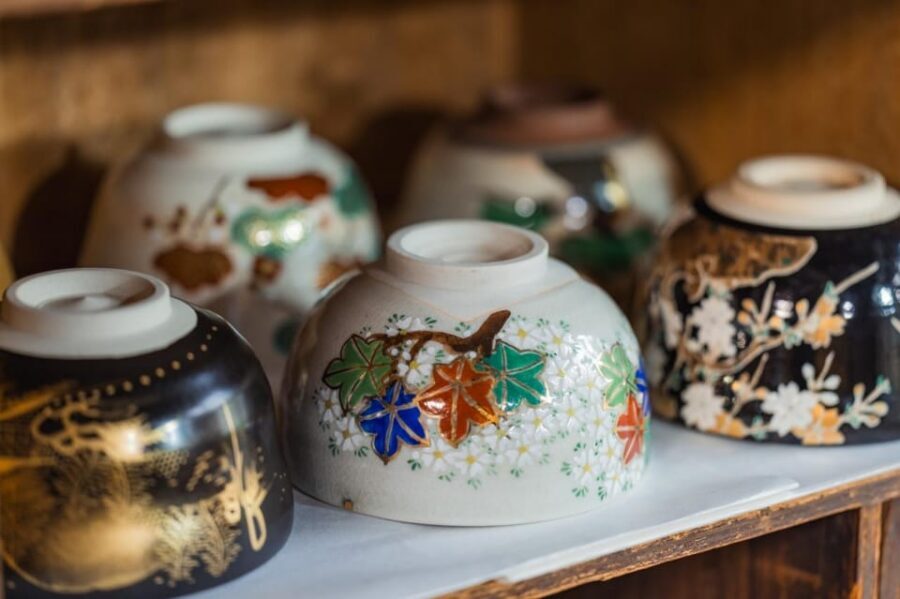
- Chair-Style Tea: Matcha, Ceramics, and the Motion of Care
- Photo Moments: Umbrellas, Fans, and the Katana Prop
- Latte Art Using Thick Tea Foam
- Calligraphy With Your Name: Kanji or Hiragana Take-Home
- Tea Ceremony Flower Arranging: Ikebana-Style Creativity
- Optional Kimono: Make It Part of the Day
- Price and Value: Why $45 Can Feel Like More Than One Activity
- How to Combine It With Fushimi Inari, Uji, Osaka, or Nara
- Getting There: The Outskirts Meeting Point (And How Not to Stress)
- Who This Workshop Fits Best
- Should You Book Kyoto: Table-Style Tea Ceremony at a Kyo-Machiya?
- FAQ
- Is there any hotel pickup or drop-off?
- How long is the tea ceremony experience?
- Do I have to sit on the floor?
- Is the guide available in English?
- What’s included in the price?
- Can I rent a kimono?
- Is this wheelchair accessible?
Key Points You’ll Care About
- Chair seating all the way through keeps the focus on manners and tea, not aching knees.
- Matcha you whisk yourself: watch the rhythm, then make it creamy with a bamboo whisk.
- Photo time with props: umbrellas, folding fans, and a katana sword-style photo moment.
- Purification basin in the garden: you’ll learn the shrine-like first step before tea.
- Name calligraphy to take home: a hanging scroll or envelope with your name written in Japanese characters.
- Optional kimono upgrade: arrive early if you choose it, and skip kimono if pregnant.
A Machiya Tea Ceremony in Southern Kyoto (Without the Floor Fight)
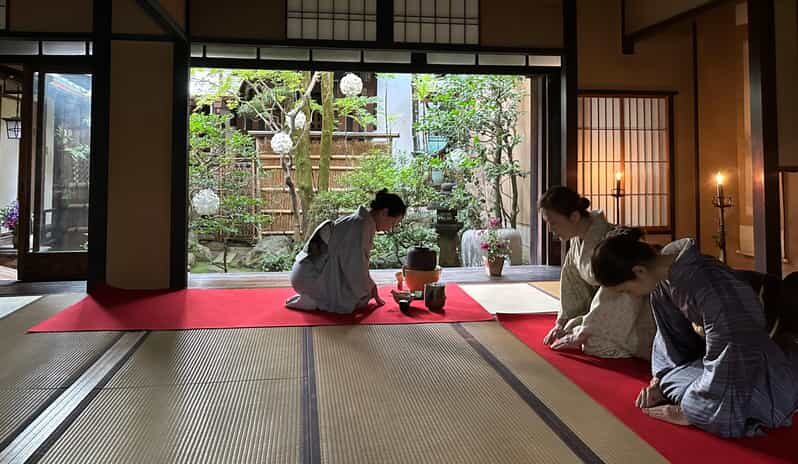
This is a table-style tea ceremony in Kyoto’s quieter southern area, where you get that sense of real neighborhood life instead of just another photo stop. The setting matters. You’ll be in a traditional, nostalgic house that’s said to be over 100 years old, with space to walk around and notice details that a busier venue can’t slow down long enough to show you.
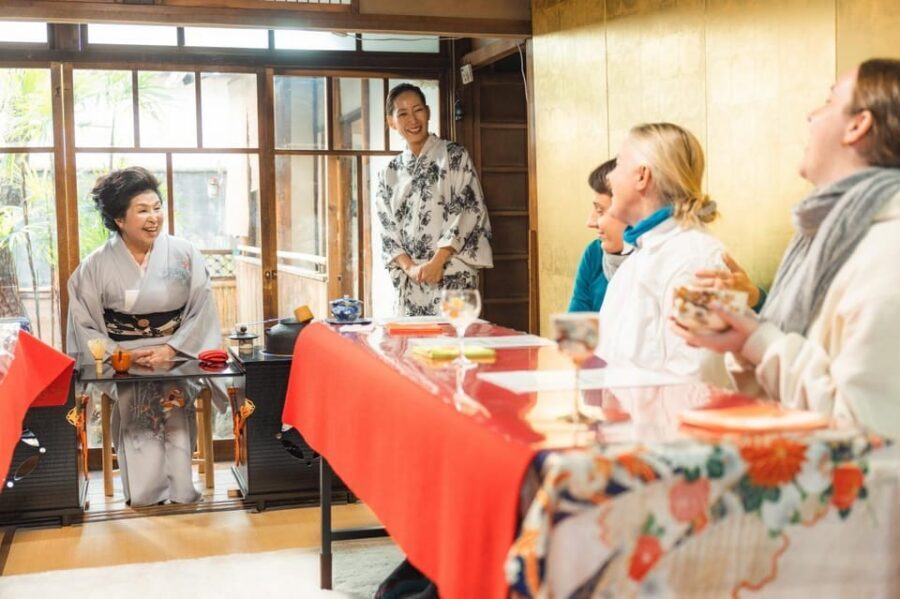
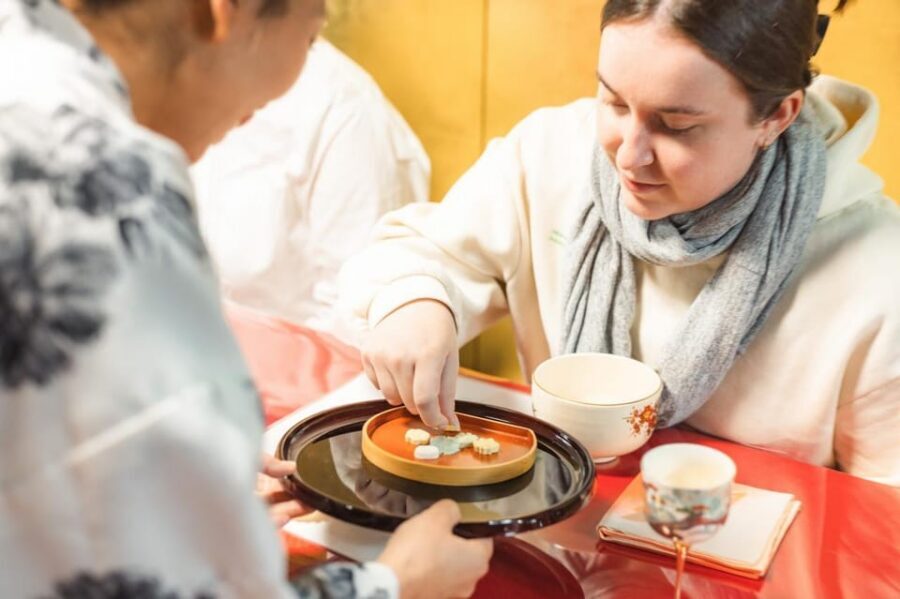
The big difference from many tea ceremonies is the seating. Here, you don’t sit on the floor. You sit comfortably, so you can pay attention to the sequence: how you handle utensils, how you accept a sweet, when you look up, and how you watch the host movements before you try the steps yourself.
There’s a thoughtful mix, too. You get some structure and explanation—yes, there’s a PowerPoint lesson about how the tea ceremony developed in Japan, along with Japanese spirit and manners—then you get hands-on practice. That combination helps it click fast.
And because the experience is built for a small group (private or small groups are available), the atmosphere tends to feel more like being invited into a home rhythm than being marched through a script.
You can also read our reviews of more tours and experiences in Kyoto.



Where You Start: Welcome Drinks, Sweets, and the First Etiquette Check
Expect your first moments to be calm and guided. You’ll be welcomed with a drink that can include sake or juice, and you’ll also get traditional sweets to eat before the matcha. This is more than a snack break. The sweet sets the tone, helps balance flavors, and gives you a gentle warm-up to the pacing of the ceremony.
Then the hosts move into basics—how to hold things, when to turn, and what the small gestures mean. Tea ceremony manners can sound intimidating on paper, but in practice it’s mostly repetition plus cues. You’ll learn the idea behind the ritual: respect, mindfulness, and order.
One detail I like for first-timers: the hosts don’t just say do this, then do that. They explain the why. That makes you feel less like you’re copying moves and more like you understand the choreography.
Purification at the Stone Basin: A Shrine-Like First Step
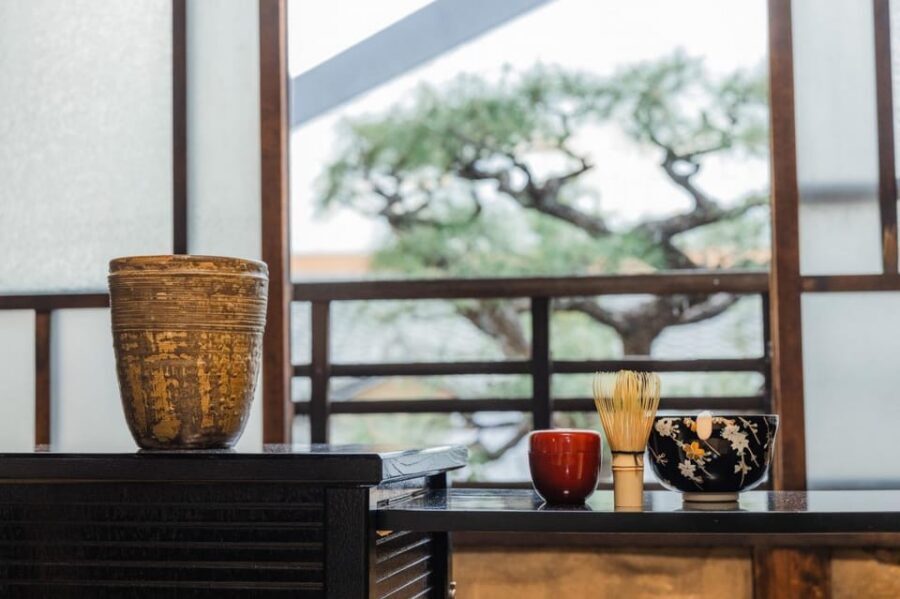
Before you get to matcha, there’s a preparation moment tied to shrine customs. You’ll experience how you can purify yourself at a stone basin in the garden, similar to what people do at Shinto shrines.
It’s a small step, but it sets the emotional tone. You start outside the tea itself—reset your mind, slow down, then enter the ceremony properly. Even if you don’t know the cultural background, the hosts guide you through what’s expected and how to do it comfortably.
This garden sequence also gives you a break from the city buzz. You’re in southern Kyoto, inside a traditional house, with a courtyard vibe that makes the whole hour-and-a-half feel less rushed.
The House Tour: Buddhist and Shinto Details, Plus Antiques
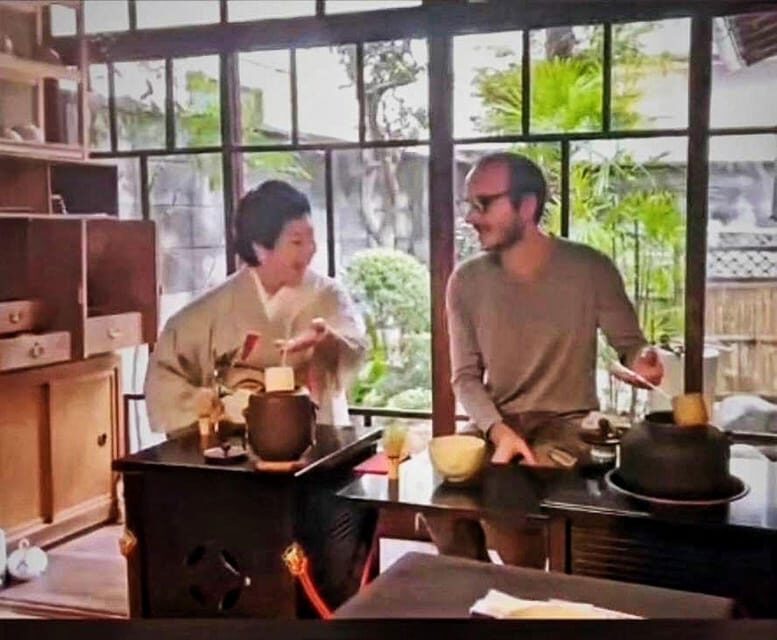
After the initial greeting and intro, you’ll stroll through the townhouse and look at the architecture and heritage details. Depending on what’s on display that day, you may see old Buddhist and Shinto altars and other antiques.
Why I think this matters: tea ceremonies often get treated like a standalone activity. Here, the ceremony feels connected to daily life and space—what surrounds it, why it’s done, and how people in Kyoto lived with these traditions over time.
It also helps with the “this is Kyoto” feeling. You’re not only tasting matcha. You’re seeing the kind of home where rituals were practiced and passed along.
Learning the Ceremony Rhythm With English PowerPoints
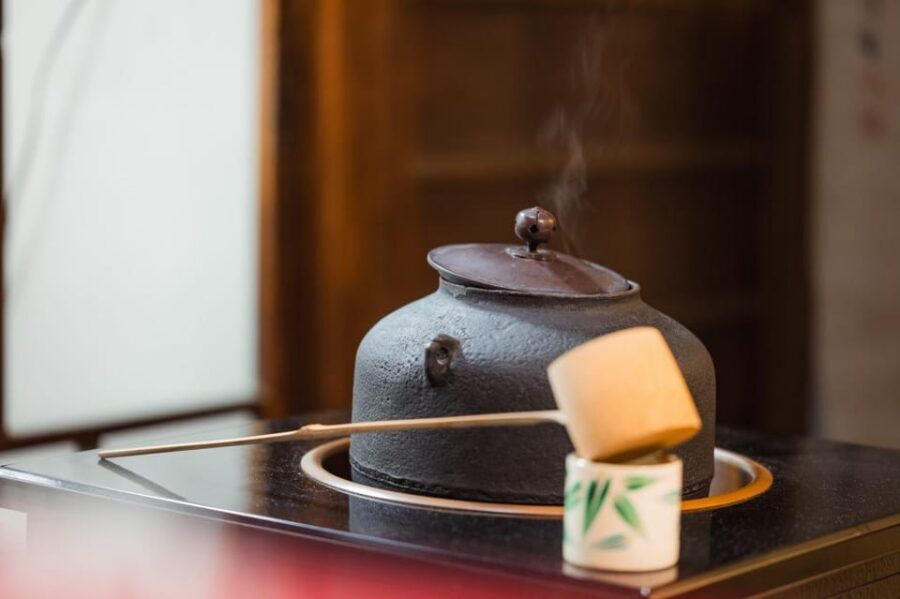
You’ll get context before you go hands-on. The hosts explain how the tea ceremony developed in Japan and what it represents in terms of manners and spirit. They use PowerPoint presentations, which is a practical choice for English speakers—clear visuals, steady pacing, and fewer moments where you’re guessing what someone means.
This portion is valuable even if you already read about tea. Most people know matcha is whisked with a bamboo chasen, but they miss the deeper idea: the sequence is a form of respect. When you understand the purpose, the actions stop feeling random.




Chair-Style Tea: Matcha, Ceramics, and the Motion of Care
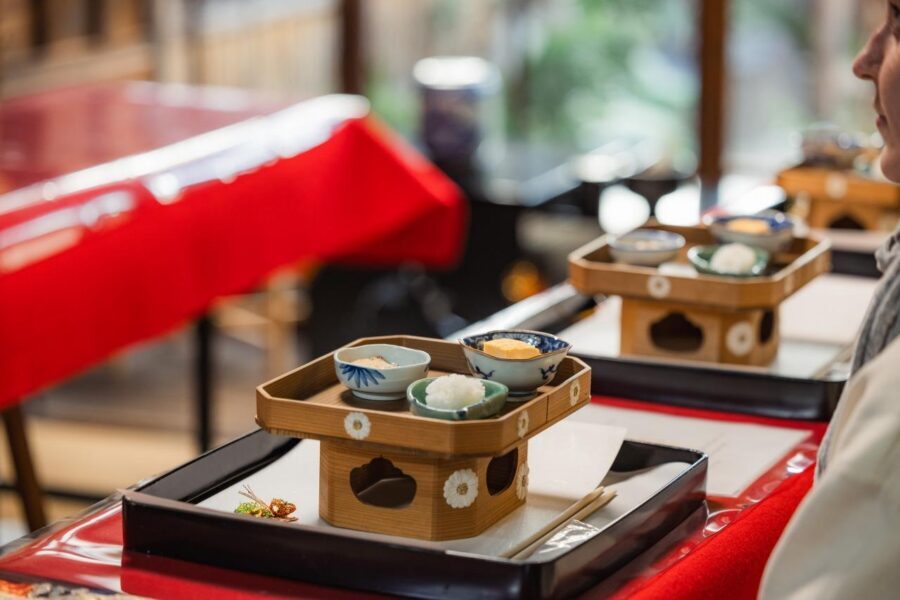
Now for the main event: making your own matcha.
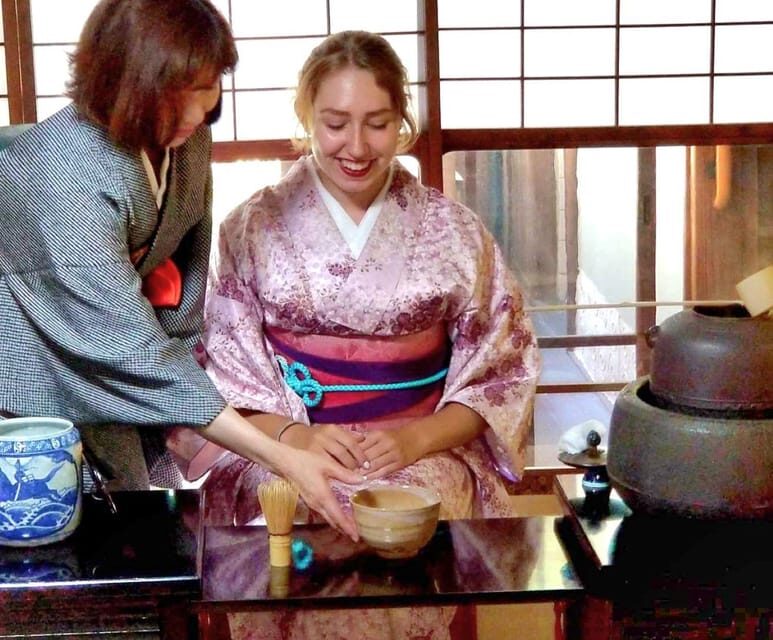
You’ll learn how to use a bamboo whisk to create creamy, frothy matcha. Watch first, then try yourself. The hosts guide your grip, the whisking motion, and how to watch the texture change.
If you’ve ever tried matcha before and it came out thin or foamy in the wrong way, this part helps. You’re not just mixing powder and water. You’re learning the technique that creates the thick, smooth foam that makes a difference in taste and mouthfeel.
It’s also where chair seating becomes a real quality upgrade. No floor kneeling means you can focus on technique instead of fighting posture. You’ll still need attention and care, but you won’t be thinking about your body.
Photo Moments: Umbrellas, Fans, and the Katana Prop
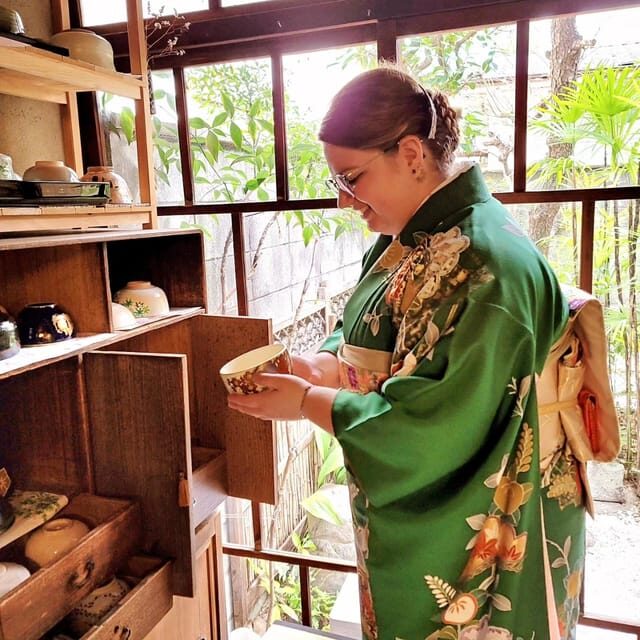
This is one of the most fun parts for most people. You’ll get time for photos and videos using traditional-style props like umbrellas, folding fans, and a katana sword for staged photo moments.
This isn’t just for selfies. It gives you a chance to see how the setting and costumes play together, and it creates a memory that feels uniquely Kyoto rather than generic “tea photo” territory.
Tip: take your photos after you’re dressed (especially if you choose kimono), and don’t forget a few wide shots before you start moving furniture or handling utensils. After the ceremony starts, your hands will be busy.
Latte Art Using Thick Tea Foam
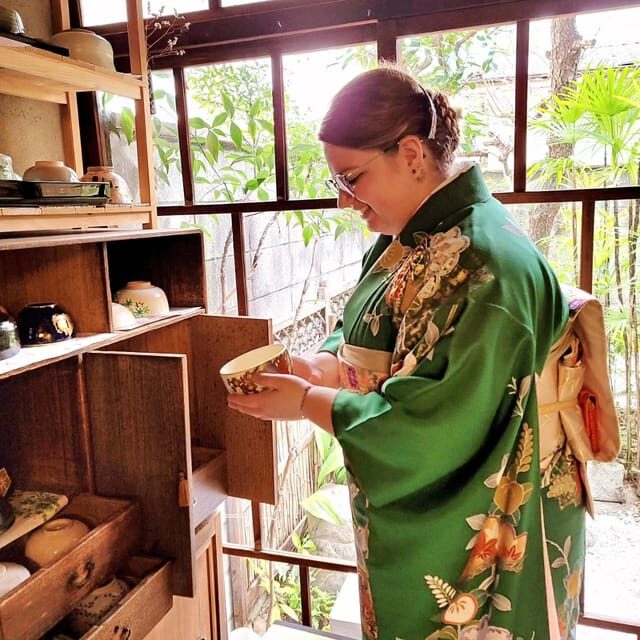
Another detail that surprised me in a good way: you can do latte art using thick tea. This ties directly to the quality of matcha foam you just created. If your foam is thick enough, it behaves like a base for small designs.
You’re not aiming for a coffee-shop masterpiece. You’re practicing control and texture. It’s a clever bridge between traditional tea and a modern visual payoff.
If you like hands-on crafts, this section is a winner.
Calligraphy With Your Name: Kanji or Hiragana Take-Home
One of the best souvenirs here isn’t a bottle or a bag of snacks. It’s you, in ink.
You’ll write your name in Japanese characters—kanji or hiragana are part of the program. Some people also get to practice multiple styles of writing, including hiragana and katakana, depending on how the session runs. Either way, the experience is structured so you get guidance and a finished result.
Then you receive a hanging scroll or an envelope with your name written in Japanese characters. It’s personal. You can frame it or keep it as a reminder of the steps you did in the room.
This part also slows things down in a good way. Whisking and drinking matcha is one type of attention. Calligraphy is another. It helps you leave with a sense of calm rather than just a filled cup.
Tea Ceremony Flower Arranging: Ikebana-Style Creativity
You’ll also do tea ceremony flower arranging. The goal is simple: learn how flowers fit into the mood of the tea space—seasonal feel, balance, and a pleasing frame for the utensils.
Even if your artistic ability is average (mine is), you’ll likely enjoy this because the hosts guide you and the arrangements don’t require perfection. You get the satisfaction of making something visible that connects to the ceremony atmosphere.
Plus, it gives you something to focus on during the slower stretch of the experience, before the final wrap-up.
Optional Kimono: Make It Part of the Day
The kimono option is a big reason many people choose this workshop. If you add it, you’ll get kimono rental, and the hosts help you get dressed. That’s a practical plus: kimono can be fiddly, and doing it yourself on a tight schedule often turns stressful.
A key detail: if you pick the kimono option, you should arrive 30 minutes before the experience starts. That extra time is for dressing and finishing touches.
Also note two real-world cautions:
- This activity is not suitable for wheelchair users.
- If you are pregnant, the provider asks you to refrain from wearing a kimono for health and safety.
If you’re deciding whether to dress up, I’d base it on how much you want the experience to feel like a Kyoto moment. If you want the full sensory story—house, garden, ceremony steps, photos—kimono is worth the upgrade.
Price and Value: Why $45 Can Feel Like More Than One Activity
At about $45 per person for 90 minutes, you’re paying for more than matcha. You get:
- The tea ceremony itself
- Traditional sweets
- A welcome drink (sake or juice)
- Matcha making with a bamboo whisk
- Latte art using thick tea foam
- Calligraphy experience
- A hanging scroll or envelope take-home
- Optional kimono rental
- Flower arranging
When you look at it like that, the value starts to make sense. A lot of Kyoto workshops focus on one skill and call it a day. Here, you practice the tea ritual, then you add cultural extras that connect to manners and presentation: calligraphy and flower arranging. You’re not only watching. You’re doing.
Also, the chair-style seating is a value factor. Many traditional experiences require floor sitting. If you’ve got stiffness, limited flexibility, or just want comfort without skipping the ritual, this version gives you access.
How to Combine It With Fushimi Inari, Uji, Osaka, or Nara
Location-wise, you’re in southern Kyoto, not deep in the most crowded tourist core. That can be a relief. The area is well known for sake, with casual restaurants and shopping streets nearby, so it’s easy to eat before or after your ceremony.
You can also pair this with popular day trips:
- Osaka is about 40 minutes by express train
- Nara is about 50 minutes by train
- Uji (tea town) is about 20 minutes by train
- You can reach Fushimi Inari Shrine on the way if you’re coming from the Fushimi area (the note says about 15 minutes from Keihan Fushimi Inari Station)
If you’re building a simple afternoon plan, this works well as a reset in the middle of Kyoto touring. Do the tea ceremony, then walk off the calm with a meal and some neighborhood browsing.
Getting There: The Outskirts Meeting Point (And How Not to Stress)
You meet on the outskirts of Kyoto, about 20 minutes by train. The directions depend on which station you start from, but the theme is the same: you head to Otesuji shopping arcade, walk west, and turn right at a landmark like Mizuho Bank or the Rakuten mobile shop.
You’re looking for a traditional Kyoto townhouse with a blue curtain. Guides wearing kimono wait there.
Since there’s no hotel pickup, give yourself buffer time. Japan trains are efficient, but Kyoto can be deceptive. A few minutes of walking and one wrong turn can add up fast.
Who This Workshop Fits Best
This tea ceremony works especially well if you:
- Want a traditional Kyoto experience without floor seating
- Love hands-on cultural activities (matcha, calligraphy, flower arranging)
- Want an easy, structured English explanation plus time to practice
- Prefer a smaller group feel (private or small groups are available)
- Are curious about etiquette and the story behind the ritual, not only the end result
If you’re expecting a “quick demo,” you may find the pacing feels complete rather than rushed. It’s designed to help you do the steps properly.
Should You Book Kyoto: Table-Style Tea Ceremony at a Kyo-Machiya?
Yes, if comfort matters and you still want the real Kyoto ritual feeling. The chair seating is the headline for a reason: you get to focus on technique and manners without fighting posture. Add in the matcha you make yourself, the calligraphy take-home, and the chance to do flower arranging and photo props, and you’re getting a lot inside one 90-minute block.
Book it now if kimono is your style and you can arrive early for dressing. Skip kimono (or talk with the provider) if you can’t meet the timing or if pregnancy makes kimono not appropriate.
If you want a single, meaningful cultural activity in Kyoto that doesn’t require hours of planning, this one is a strong choice.
FAQ
Is there any hotel pickup or drop-off?
No. Hotel pickup and drop-off are not included.
How long is the tea ceremony experience?
The experience runs for 90 minutes.
Do I have to sit on the floor?
No. This is a table-style tea ceremony where you sit on chairs.
Is the guide available in English?
Yes. The instructor is English.
What’s included in the price?
You’ll get the tea ceremony experience, traditional sweets, a welcome drink, latte art using thick tea, calligraphy (including a hanging scroll or envelope with your name), and other included cultural elements like tea ceremony flower arranging. Kimono rental is included only if you select that option.
Can I rent a kimono?
Yes, there is a kimono rental option. If you choose it, you should arrive 30 minutes before the experience starts.
Is this wheelchair accessible?
No. It is not suitable for wheelchair users.