REVIEW · FOOD
Kyoto Nishiki Market & Depachika: 2-hours Food Tour with a Local
Book on Viator →Operated by TripGuru · Bookable on Viator
Your Kyoto snack plan starts in the basement. This 2-hour walk is interesting because you get two different kinds of Kyoto food culture in one go: Nishiki Market and depachika tastings, plus a guide to translate what you’re actually eating. I like that the included bites are specific and varied (yuba sashimi and a soy milk donut, then gyoza and tempura), and I also like how guides such as Jasmine, Mao, and Boris get singled out for clear, helpful explanations. One possible drawback: the tour is short and the tasting amounts are fixed, so if you’re trying to leave with a full meal, you may want to budget for extra food after the tour.
You’ll meet at Apple Kyoto in Shimogyo Ward and finish at Kyoto-Kawaramachi Station, with your guide pointing you toward your next stop. The group stays small (max 9), which matters in a crowded food area because it’s easier to ask questions and keep track of where to go.
Expect three parts: a food-hall stop in Daimaru Kyoto’s basement, a walk through the Nishiki Market shopping district, then a quick reset at Nishiki Tenmangu Shrine nearby. Admission for these stops is marked as free, and the experience uses a mobile ticket, which makes it easier to show up on time.
In This Review
- Key things I’d plan for
- Why Nishiki Market + Depachika works so well together
- Apple Kyoto to Kawaramachi: getting to the start without stress
- Daimaru Kyoto depachika stop: learning how to shop by taste
- Nishiki Market shopping district: how to eat through the busy lanes
- Nishiki Tenmangu Shrine: the palate reset that’s not just a photo break
- What’s included in your tastings (and what that means for your appetite)
- Price and value: what $48 buys you in real terms
- The guide factor: Jasmine, Mao, Boris, and friends
- Who should book this Kyoto Nishiki + depachika tour
- Should you book Kyoto Nishiki Market & Depachika?
- FAQ
- How long is the Kyoto Nishiki Market & Depachika food tour?
- What does the tour cost?
- What food tastings are included?
- Is the tour admission-free at the stops?
- Do I get a guide and food included?
- How many people are in the group?
- Where do I meet the guide?
- Where does the tour end?
- Is hotel pickup or drop-off included?
- Is cancellation free?
- Is this tour suitable for most people?
Key things I’d plan for
- A tight, 2-hour route with three focused stops (food hall, market, shrine)
- Included tastings that cover soft tofu skin (yuba), savory gyoza, and tempura
- Small group size (max 9) so you’re not lost in the crowd
- Guides get praised by name like Jasmine, Mao, Boris, Ai, and Alex for steering you through it
- Easy start and end points at Apple Kyoto and Kyoto-Kawaramachi Station
Why Nishiki Market + Depachika works so well together
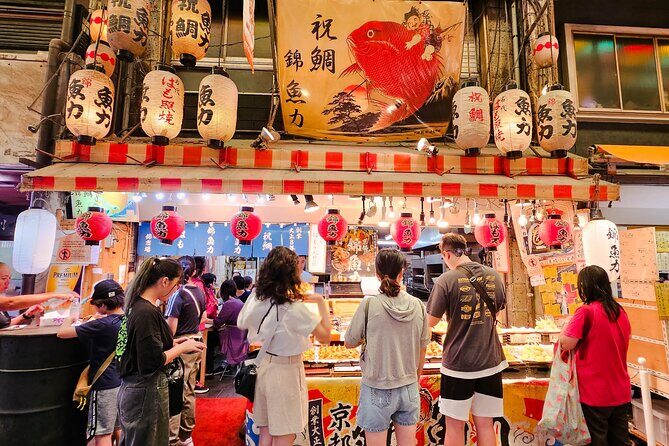
If you’ve only seen Kyoto food through restaurants, this tour gives you a different angle fast. Nishiki Market is where people shop and snack in close quarters, with vendors selling seasonal foods, Kyoto specialties, and even cookware and knives. Depachika—department store basement food halls—works differently. It’s more compact, more curated, and great for sampling Kyoto-style bites without committing to a full meal.
I like pairing these two because it changes your brain mode. You go from browsing and tasting at market stalls to moving through a department-store food hall where items are arranged like a food map. If you’re the type who gets overwhelmed in markets, this structure is a big help.
Also, the tour doesn’t pretend you’ll master everything. It’s built for learning how to choose: what to try, what to skip, and how to keep your energy up while walking.
You can also read our reviews of more food & drink experiences in Kyoto
Apple Kyoto to Kawaramachi: getting to the start without stress
Meeting at Apple Kyoto (83-1 Tachiuri Nakanochō, Shimogyo Ward, Kyoto) is smart because it’s a clear, landmark-type location. The tour is also noted as near public transportation, which usually means you can arrive without complicated transfers.
You’ll end at Kyoto-Kawaramachi Station (with the address listed near Otabichō). That’s practical because Kawaramachi is a common base area for Kyoto sightseeing. And the guide helps you with your next destination, which saves you the usual post-tour scramble.
If you’re trying to plan your day, this is a good “connector” activity. A 2-hour slot fits well between temple time and dinner plans, especially since you’re not stuck across town.
Daimaru Kyoto depachika stop: learning how to shop by taste
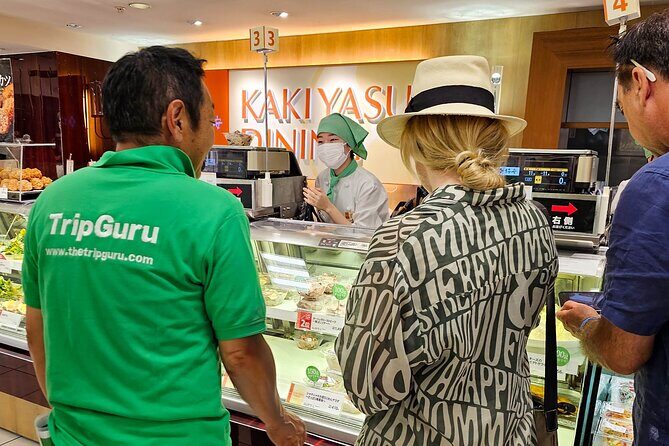
Your first stop is Daimaru Kyoto, specifically the basement food hall area. The tour keeps this part to about 30 minutes, so it’s not a long detour—it’s a taste-and-orientation intro.
This is where you get two of the most conversation-worthy items included in the tour: yuba sashimi (tofu skin) and a soy milk donut. Yuba is one of those Kyoto ingredients that feels very local once you’ve tried it. It’s also a nice “training bite” because yuba has a distinct texture compared to typical fried snacks or meat-based dishes. The soy milk donut adds something sweet and drink-adjacent, which helps balance the savory side of the tour.
Why this stop matters: department-store food halls are usually packed with good-looking items, but you can easily waste money on things that don’t match your tastes. With a guide, you’re not just eating—you’re getting a feel for what’s worth repeating later.
Possible drawback to consider here: since this is a short 30-minute block, you’ll likely be sampling rather than fully exploring. If you want to go deep into the department store after the tour, that’s totally doable, but plan to do it on your own with what you learned first.
Nishiki Market shopping district: how to eat through the busy lanes
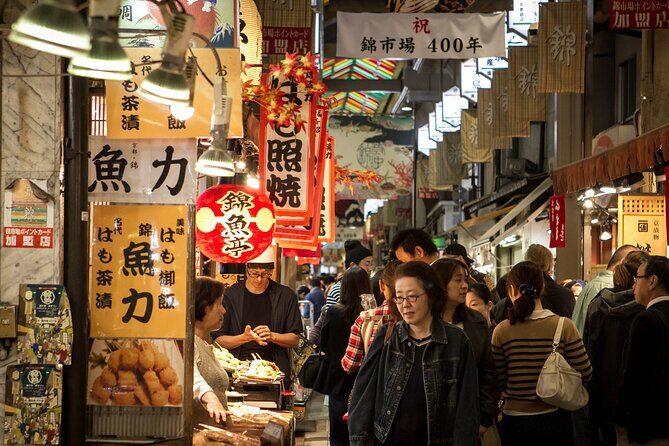
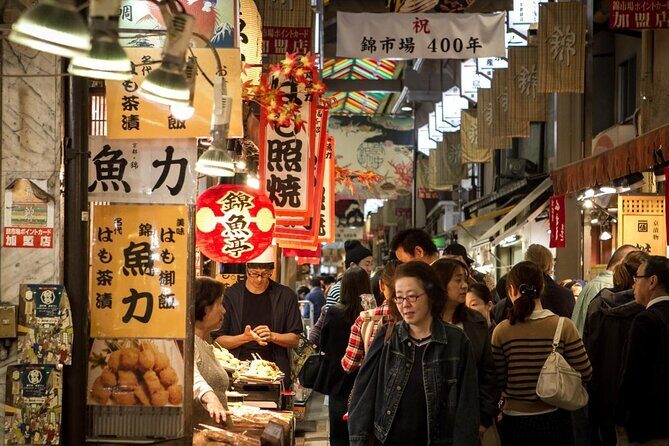
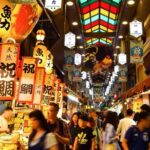
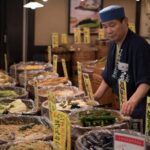
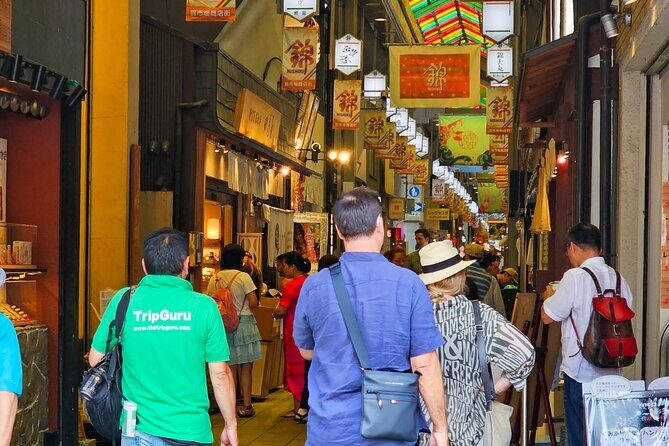
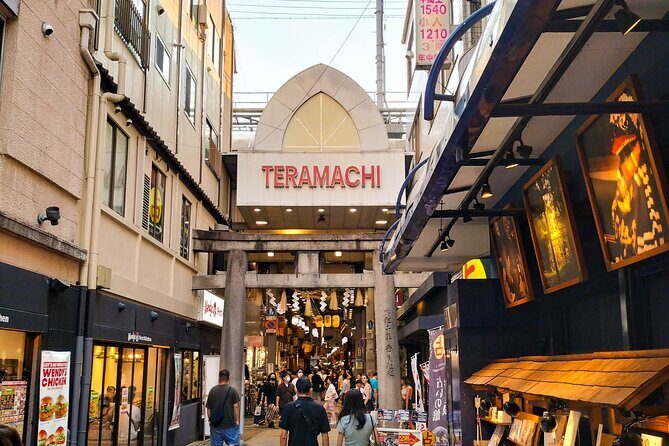
Next comes Nishiki Market Shopping District for about 1 hour. This is often called Kyoto’s Kitchen, and in practice that means you’ll see a concentrated mix of food stands selling seasonal items and Kyoto specialties. You’ll also notice non-food shops in the same area—produce, knives, and cookware—so the market feels like a place locals would wander even if they weren’t buying snacks.
The big value of a guided pass here is decision-making. Nishiki can overwhelm you with smell, packaging, and choices, especially if you’re already hungry. With a guide, you get a sequence: where to look, what to try next, and how to keep moving without missing the good stuff.
This is also where the tour includes Nishiki gyoza among the tastings. Gyoza is a safe and satisfying option that helps you understand the market’s snack logic: bite-sized, easy to share, and built for eating while walking.
A practical note: you’ll be moving through an indoor shopping district. Wear comfortable shoes, and keep your camera from becoming a full-time job. The guide’s job is to help you read the food stalls fast, and your job is to stay ready for the next stop.
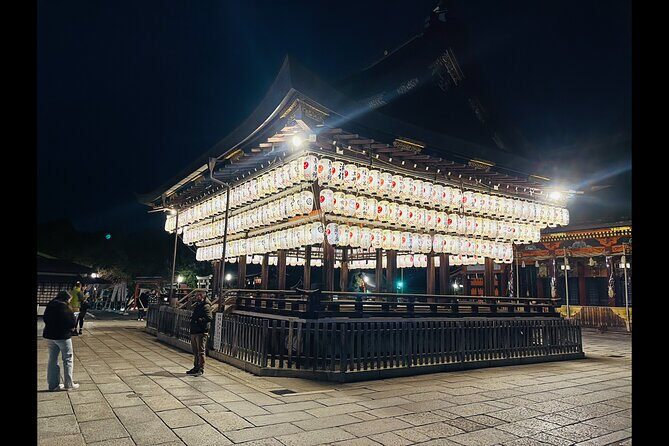
Nishiki Tenmangu Shrine: the palate reset that’s not just a photo break
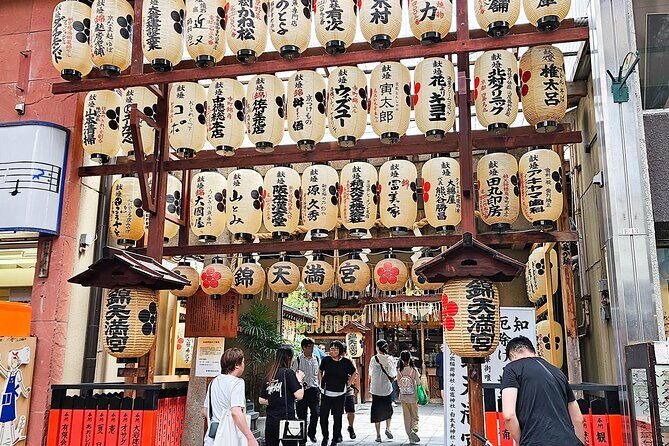
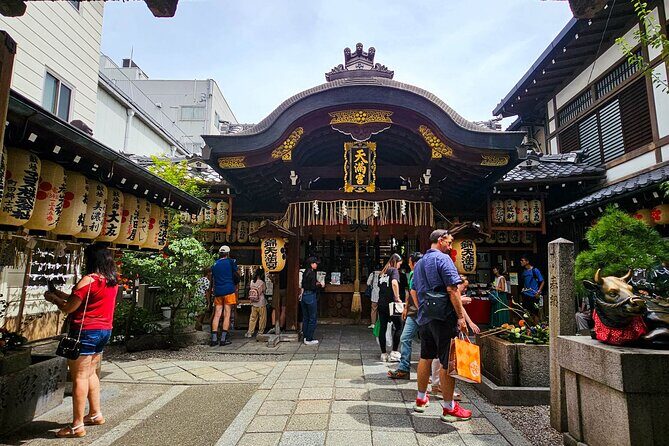
After the market, you’ll walk to Nishiki Tenmangu Shrine for about 15 minutes. Admission is listed as free. This stop is short, but it changes the pace in a helpful way.
The shrine is dedicated to the deity of learning, which gives the visit a cultural center rather than turning it into a random detour. In real terms, it’s a breathing moment after intense eating and shopping stimuli. You can slow down, stand still for a minute, and let your stomach catch up.
Why include a shrine at all? Because food tours in Kyoto are more than eating. They’re also about context—where the local rhythm of everyday life includes places like this, close to markets and shopping streets.
If you’re sensitive to crowds, this shrine stop can feel like relief rather than another “must-see” checkbox.
You can also read our reviews of more tours and experiences in Kyoto

What’s included in your tastings (and what that means for your appetite)
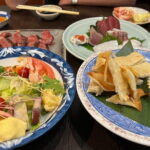
The included food items are clearly listed, which makes budgeting and planning easier:
- Yuba sashimi (tofu skin) + soy milk donut
- Nishiki gyoza
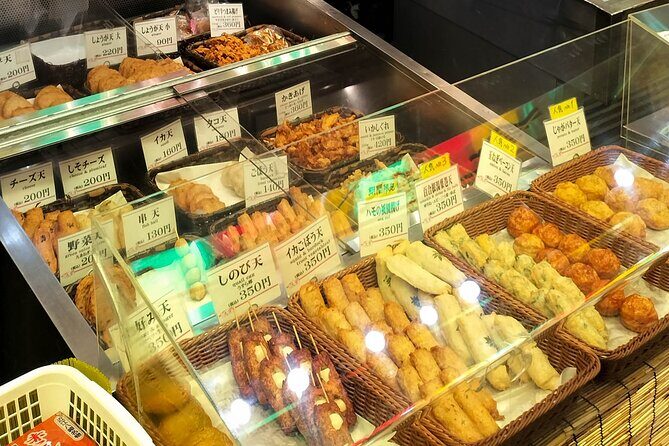
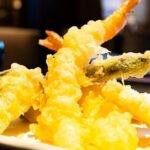
- Uoriki tempura
That mix is useful. You get:
- a Kyoto ingredient (yuba)
- a sweet snack (soy milk donut)
- a savory dumpling-style bite (gyoza)
- a fried crispy option (tempura)
From the feedback, people sometimes hit a limit with more unusual items depending on stomach sensitivity, so pacing matters. If you know you’re cautious with rich, fried, or unfamiliar textures, tell the guide early. A good guide can guide you toward what sits best with your taste and digestion.
Also remember: the tour includes tasting items, but it doesn’t include other meals or drinks. So treat this as snack learning, not a full dinner plan. You’ll likely still want a real meal later.
Price and value: what $48 buys you in real terms
At $48 per person for about 2 hours, the value comes less from “how many items you eat” and more from how you experience the market without wasting time.
Here’s what you are paying for, based on what’s included:
- a local guide in your selected language
- the food tour itself
- multiple guided tastings (not just one token bite)
- free admission for the stop locations
That guide piece matters in Nishiki Market. Without guidance, you can easily buy the wrong thing, miss the best counter, or spend too long comparing options. With guidance, you get a sequence and you can keep walking.
A fair caution: some people felt they wanted more food, and at least one comment suggested the storytelling wasn’t as strong as they hoped. That means the experience quality can depend on the guide and your personal expectations.
If you want a lot of food volume, you might still need to add a follow-up snack stop on your own. If you want an efficient orientation and helpful picking, the price usually makes sense.
The guide factor: Jasmine, Mao, Boris, and friends
One of the clearest patterns from the guide feedback is how much people value clarity and personality. Names that came up positively include Jasmine, Mao, Boris, Ai, Alex, and Brooke. Common praise points were:
- patient explanations of what you’re eating
- helping you choose based on your tastes
- being communicative when things got crowded
You also see a useful contrast: one person felt their guide didn’t explain much history or distinctions between foods enough, making the tour feel close to simply buying snacks. That doesn’t mean the tour is weak—it means you should show up with a mindset that asks for interpretation.
My practical advice: if you care about food culture and why Kyoto items are different, ask your guide questions on the spot. Things like what makes this market item different from similar snacks you’ve had elsewhere, or how locals usually eat it, can turn the tour from just tasting into actual understanding.
Who should book this Kyoto Nishiki + depachika tour
This is a strong fit if you:
- want a quick Kyoto food intro without planning each snack stop
- like walking through a real market setting but want help choosing
- travel with teenagers or mixed food preferences (the group format seems to work well for families)
- want both traditional market energy and a department-store food hall experience in one morning or afternoon
You might skip it if:
- you’re looking for a sit-down meal or a long, food-heavy “eat until full” outing
- you only want deep, detailed history (the tour is short and focused)
- you’re extremely restricted with foods and want a fully customized menu (the tour includes fixed tasting items)
Should you book Kyoto Nishiki Market & Depachika?
Book it if you want a guided way to handle Kyoto’s most snackable corridor. The sweet spot is efficiency: you get multiple tastings, you learn how to pick, and you end right by Kawaramachi Station so your day keeps moving.
If you’re on the fence, I’d make the decision based on your expectation of food volume. This is a tasting tour. It’s not designed to replace dinner. If you treat it as the start of your food night—then plan one more meal after—you’re likely to feel it’s money well spent.
One more pro tip: if your booking lets you choose language, do it carefully. A tour runs smoother when you can ask follow-up questions and understand the explanations as you walk.
FAQ
How long is the Kyoto Nishiki Market & Depachika food tour?
It lasts about 2 hours.
What does the tour cost?
The price is $48.00 per person.
What food tastings are included?
Included tastings are yuba sashimi (tofu skin) with a soy milk donut, Nishiki gyoza, and Uoriki tempura.
Is the tour admission-free at the stops?
Admission at the listed stops is marked as free.
Do I get a guide and food included?
Yes. The tour includes a guide in your selected language and the food tour with included tasting items.
How many people are in the group?
The maximum group size is 9 travelers.
Where do I meet the guide?
You meet at Apple Kyoto, 83-1 Tachiuri Nakanochō, Shimogyo Ward, Kyoto (600-8006, Japan).
Where does the tour end?
The tour ends at Kyoto-Kawaramachi Station (600-8001, Japan). The guide helps with your next destination.
Is hotel pickup or drop-off included?
No, hotel pickup and drop-off are not included.
Is cancellation free?
Yes. You can cancel up to 24 hours in advance for a full refund. If you cancel less than 24 hours before the start time, the amount paid isn’t refunded.
Is this tour suitable for most people?
The information says most travelers can participate.