REVIEW · EVENING EXPERIENCES
Kyoto: Gion Magical Night Walking Tour
Book on Viator →Operated by TravelinGood!! · Bookable on Viator
Gion turns quieter after dark. This Kyoto walk shows you the district before the big crowds pile in, with a small-group pace that keeps the streets from feeling intrusive. I like how it trades daytime throngs for lantern-lit calm, though you should expect slopes and stairs along the way.
What I love most is the guide-led focus on geisha culture and practical etiquette, plus frequent pauses for night photos. If you’re hoping for a perfectly flat stroll, this one may be more work than you expect.
In This Review
- Key moments worth your attention
- Entering Gion after the daytime crowd fades
- Where you meet, how the small group works, and why it matters
- Geisha etiquette and history: what you’ll learn on the street
- Stop-by-stop: a thoughtful night route through Gion
- Stop 1: Gionmachi Minamigawa (the street where you might spot maiko/geiko)
- Stop 2: Yasui-Konpiragu (relationship prayers and cutting off bad ties)
- Stop 3: Sannenzaka and Ninenzaka (Kyoto’s classic old-town lanes near Kiyomizu-dera)
- Stop 4: the WWII Kannon statue built in 1955
- Stop 5: the shogun’s wife garden, bamboo grove, and tea ceremony house
- Stop 6: Yasaka Shrine (Gion-san blessings for luck and beauty)
- Night photography, rain, and the walking reality
- Value check: how $29.60 stacks up in Kyoto
- Who this Gion night walk is best for
- Should you book this Kyoto Gion night walking tour?
- FAQ
- How long is the Kyoto Gion Magical Night Walking Tour?
- How much does the tour cost?
- How big is the group?
- Where do I meet the tour, and where does it end?
- What stops are included on the walk?
- Are tickets or entrances free for the stops?
- Is cancellation allowed if weather is bad or plans change?
Key moments worth your attention
- Off-hours timing in Gion so streets feel human-sized, not jammed
- Small-group cap (marketed up to 8, listed up to 10) for a calmer experience
- Geisha do’s and don’ts you can actually use on the street
- Shrines with clear relationship-and-luck themes that make the area make sense
- Old-town lanes near Kiyomizu-dera with iconic pagoda views at night
- A WWII Kannon stop plus a centuries-old garden and bamboo for variety in scenery
Entering Gion after the daytime crowd fades
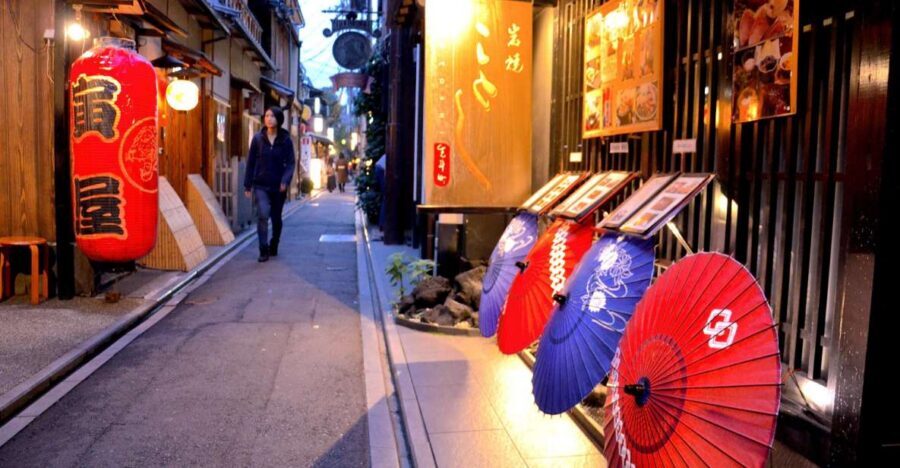
Kyoto’s Gion is famous for geisha heritage, but in daytime it can feel like you’re watching a museum exhibit through a crowd. This tour leans into the opposite vibe: you go when the neighborhood softens, and the streetlights do part of the work for you. The result is a walk that feels more like wandering with a guide than marching with a group.
I also like that the pace is built for noticing details. You’re not just passing famous buildings; you’re learning what to look for—street layout, shrine meanings, and why certain corners matter to Gion’s culture.
One practical note: the tour description warns about slopes and stairs. If your legs don’t love uphill walking, wear supportive shoes and plan for slower moments.
You can also read our reviews of more walking tours in Kyoto
Where you meet, how the small group works, and why it matters
You’ll meet at Minamiza Theater Japan (2F west lobby, near the Nakanochō area). The walk ends around 625 Gionmachi Kitagawa, so you’ll finish back in the Gion neighborhood without needing a complicated transfer right away.
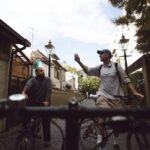
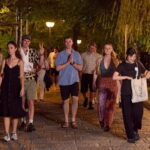
The operator markets this as a small-group tour (maximum eight), while the additional info lists a maximum of 10 travelers. Either way, you get the advantage most people want here: less crowding, more chances to ask questions, and a group size that won’t yank you away from a shrine or a photo spot.
Mobile ticket included. That matters in Kyoto, where lines and last-minute paperwork can eat the first minutes of an evening plan.
Geisha etiquette and history: what you’ll learn on the street
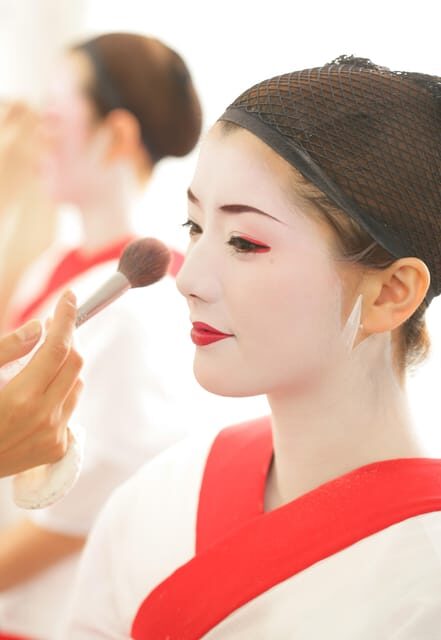
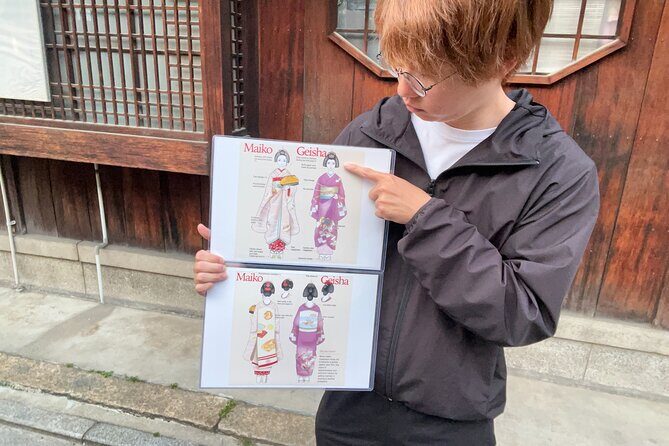
This walk is not just about pretty streets. Your guide explains geisha history, and it also touches on culture and etiquette—the kind that helps you act correctly when you’re near maiko or geiko.
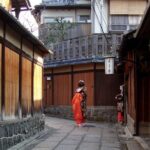
For example, on Gionmachi Minamigawa, you may catch sight of a maiko or geiko if you’re lucky. The tour guidance is simple: greet them with a smile and say Konnichiwa. That’s the difference between snapping photos and showing basic respect.
Guides on this route also bring stories that help the culture feel personal. Some guides share family connections—one guide reportedly had a geisha background through a great-grandmother and even showed pictures—while others focus on how geisha traditions fit into modern Kyoto society.
Stop-by-stop: a thoughtful night route through Gion
The itinerary is short enough to keep energy up (about 1 hour 40 minutes) but structured enough that each stop adds a new layer. Here’s how the walk plays out in a way you can mentally picture before you go.
Stop 1: Gionmachi Minamigawa (the street where you might spot maiko/geiko)
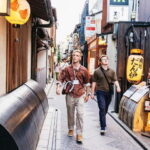
This is one of Gion’s best-known streets, and it’s also the first place your guide sets the tone. You’re there early enough that you may see a maiko or geiko—if your timing lines up with theirs.
Even if you don’t see one, you still benefit. The street’s role in Gion culture becomes clearer when your guide points out what matters: the atmosphere, the architecture, and the etiquette of being present without crowding.
Photo note: evening light here can look dramatic, but keep your movement respectful and don’t block doorways.
You can also read our reviews of more evening experiences in Kyoto


Stop 2: Yasui-Konpiragu (relationship prayers and cutting off bad ties)
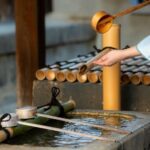
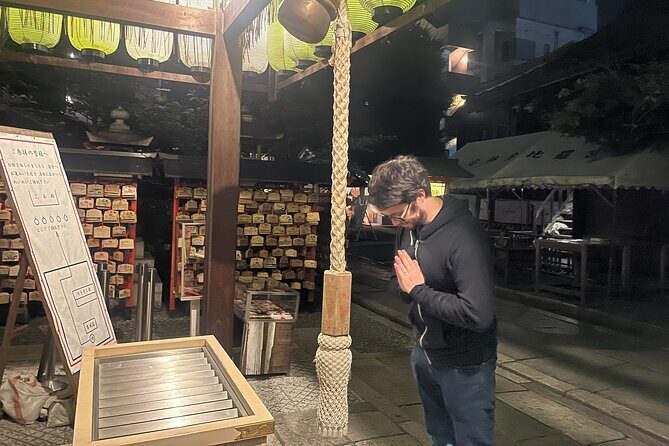
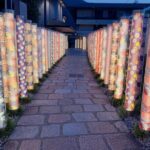
Next comes Yasui-Konpiragu, a shrine with a theme that’s easy to understand. The tour explains it as a place that helps men and women meet and supports cutting off bad relationships.
If you’re traveling with a partner, this is the stop that turns abstract shrine talk into something you can actually connect to emotions and everyday hopes. The route guidance also notes that for married couples, the bond is believed to be stronger.
The drawback? This stop is short, so if shrine symbolism is your main reason for going, you’ll want to take your time at the edges while still following the group.
Stop 3: Sannenzaka and Ninenzaka (Kyoto’s classic old-town lanes near Kiyomizu-dera)
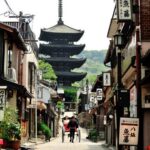
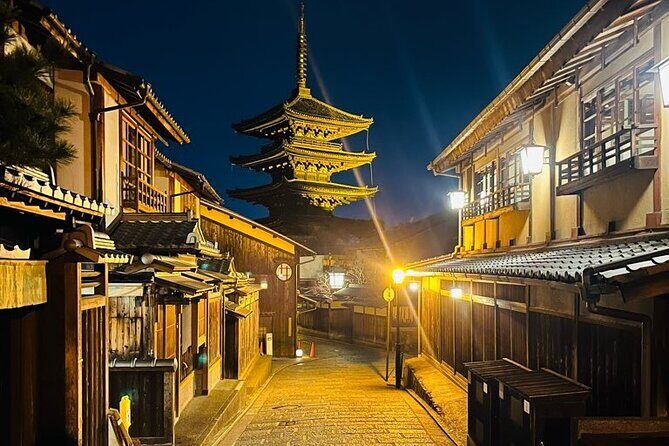
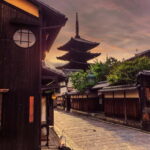
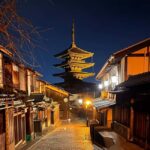
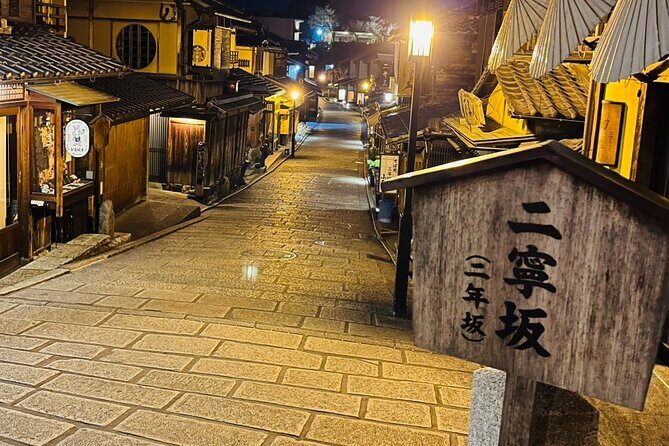
Then you move into Sannenzaka and Ninenzaka, lanes that lead toward the Kiyomizu-dera area. This is where the night feel really hits: traditional townscape facades, quiet foot traffic compared to peak hours, and a photogenic street rhythm.
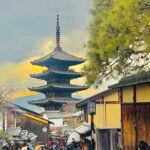
This stop also ties into one of Kyoto’s iconic visual landmarks: Yasaka-no-to (Yasaka Pagoda), which is especially popular in photos. Your guide’s explanations help you see why these lanes became “must” streets for so many visitors.
Reality check: uneven pavement and occasional stairs can happen on these lanes. In calm evening hours it’s manageable, but it’s still Kyoto walking, not an indoor tour.
Stop 4: the WWII Kannon statue built in 1955
One of the tour stops is a site built in 1955 to pray for the repose of the souls of victims of World War II, with a very large Kannon statue. It’s a heavier moment than you might expect on a “magical night walking” style tour, and that balance is part of what makes the walk feel grounded.
If you like your travel experiences a little more human—less just sightseeing, more context—this is the stop that gives the night meaning.
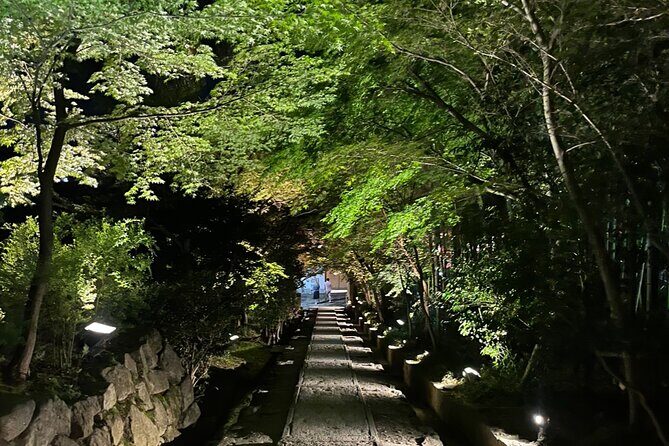
Stop 5: the shogun’s wife garden, bamboo grove, and tea ceremony house
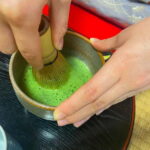
Another stop brings you to a garden area built about 400 years ago by the wife of a shogun to mourn her husband’s death. The tour highlights the garden setting, a 400-year-old tea ceremony house, and a bamboo grove.
At night, a bamboo grove can feel almost cinematic—soft light, shadows, and that quiet “Kyoto is still alive” effect. It’s also a nice contrast after the shrine-and-street portions of the walk.
One consideration: this is exactly the kind of place where you’ll want to slow down. If your main goal is nonstop movement, this stop may feel like a pause—but it’s a good pause.
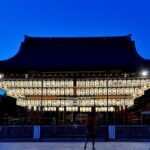
Stop 6: Yasaka Shrine (Gion-san blessings for luck and beauty)
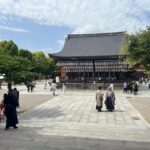
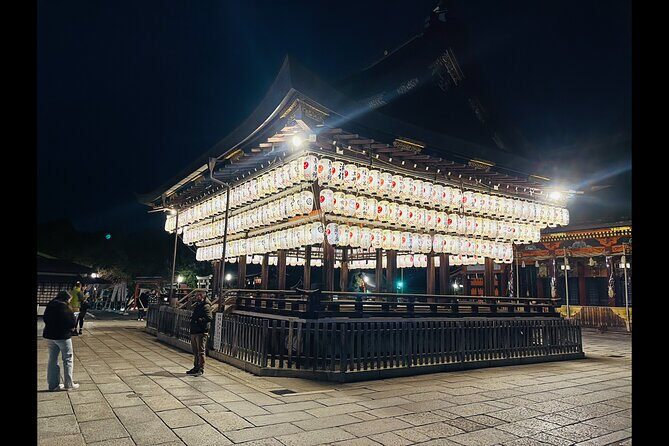
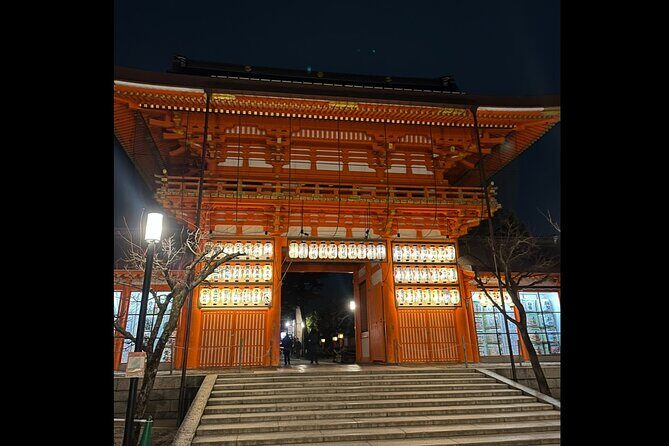
You end at Yasaka Shrine, known as the head shrine of approximately 2,300 related shrines across Japan. Your guide connects it to “Gion-san,” with blessings that include warding off bad luck, bringing good luck, and promoting beauty.
This is a classic closing point because it ties together the walk’s themes: Gion’s cultural identity, daily hopes, and the way shrines show up in real people’s lives. It’s also a solid finale if you want photos with a stronger sense of place and ceremony.
Night photography, rain, and the walking reality
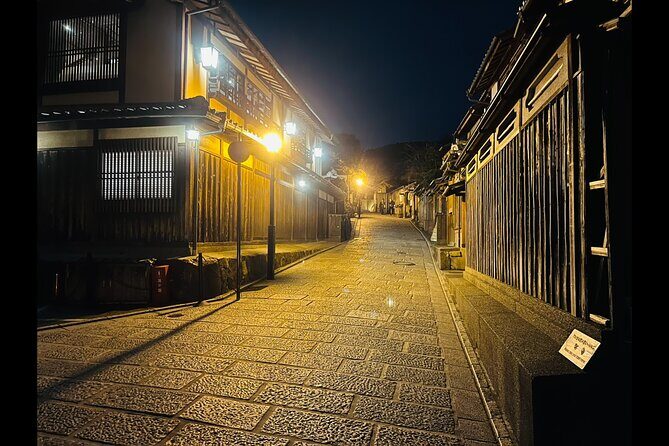
This tour is built for the evening look: quieter streets, lantern glow, and light that makes shrine details pop. If you’re into night photography, you’ll likely appreciate the built-in stops and the time to pause and shoot rather than sprinting from corner to corner.
Weather matters. The experience notes it requires good weather, and some people mention the route staying enjoyable even with light rain. Still, plan for the real possibility of wet stones, shinier pavement, and slightly slower steps.
And yes, it’s walking. The info explicitly says it’s not recommended for those who aren’t comfortable with slopes and stairs. In practice, that means you should plan to wear shoes that grip well. If your day already involved lots of sightseeing, treat this as an evening stroll with meaning, not a workout you can skip boots for.
Value check: how $29.60 stacks up in Kyoto
At $29.60 per person for about 1 hour 40 minutes, this tour sits in the “worth it if you’ll actually use the guide” category.
Why? Because the main value isn’t an entrance ticket—it’s interpretation. Places like Yasui-Konpiragu and Yasaka Shrine are easy to find, but much harder to understand on your own without turning your phone into a full-time job. The guide also helps you navigate geisha etiquette, which is both respectful and practical.
Also, the tour includes multiple stops where admission is free (as described), so you’re paying for time, pacing, and cultural context rather than for a stack of entry fees. For many people, that’s the best kind of price.
If you already know Kyoto shrine lore and geisha etiquette, you might save money by walking solo. But if you want the shortcuts—what to notice, what to do, and why it matters—this price starts to feel reasonable fast.
Who this Gion night walk is best for
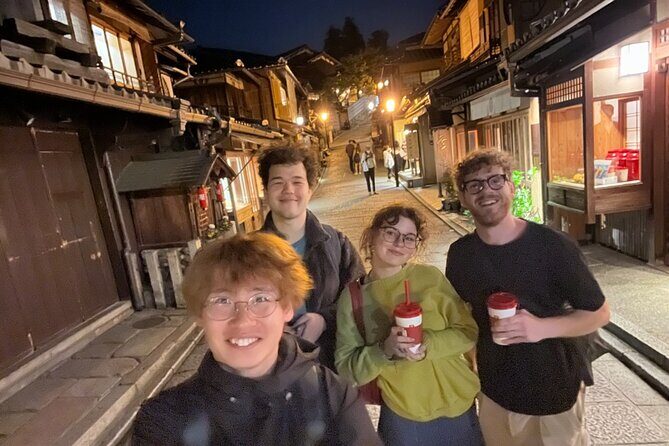
This is a good fit if you want:
- a quieter Gion experience with a small group
- clear explanations of shrines and geisha culture
- a route that hits recognizable areas (and a few less obvious ones) without taking all night
- a chance at seeing maiko or geiko, with respectful guidance
It’s also a good “second evening” activity. You’ve already seen the daytime big sights, and now you want a different mood. At night, Gion changes. Streetlight reflections, calmer lanes, and lantern-lit shrines give the area a different personality.
It’s not as good if you:
- need low-impact walking (stairs and slopes are part of the plan)
- want a long, slow, fully immersive garden day
- dislike hearing cultural stories and prefer pure wandering
Should you book this Kyoto Gion night walking tour?
I’d book it if you care about culture more than just collecting photos. The combination of early-evening timing, small-group size, and practical geisha etiquette makes it more useful than a generic stroll. The stops also give variety: relationship-themed shrine symbolism, classic old-town lanes, a WWII memorial Kannon site, and a centuries-old garden with bamboo.
If you’re prone to sore legs or hate uneven uphill walking, treat the tour as a cautious choice. Pick it only if you can handle stairs and slopes comfortably.
If your goal is a calm, meaningful Gion evening with a guide who helps you see what most people miss, this one is a strong candidate.
FAQ
How long is the Kyoto Gion Magical Night Walking Tour?
It lasts about 1 hour 40 minutes.
How much does the tour cost?
The price is $29.60 per person.
How big is the group?
It’s described as a small-group experience with a maximum of eight, and the additional info lists a maximum of 10 travelers.
Where do I meet the tour, and where does it end?
You start at Minamiza Theater Japan (2F west lobby) in Kyoto. The tour ends at 625 Gionmachi Kitagawa in Kyoto.
What stops are included on the walk?
The tour includes Gionmachi Minamigawa, Yasui-Konpiragu, Sannenzaka and Ninenzaka, a WWII memorial Kannon statue site built in 1955, a garden area built about 400 years ago with a tea ceremony house and bamboo grove, and Yasaka Shrine.
Are tickets or entrances free for the stops?
The provided details say the stops listed have free admission tickets.
Is cancellation allowed if weather is bad or plans change?
You can cancel for a full refund up to 24 hours in advance. The experience requires good weather and may be rescheduled or refunded if canceled due to poor weather. There is also a minimum number of travelers requirement.