REVIEW · GEISHA & MAIKO TOURS
Kyoto: Meet the Geisha Maiko with Gion Walking Tour
Book on Viator →Operated by Japan Wonder Travel · Bookable on Viator
A private ochaya meeting beats street chasing. This Kyoto Gion tour uses a calm, guided stroll to explain maiko and geiko life, then lands you at an off-limits teahouse for live conversation and performance. Two big wins: you get a structured look at the neighborhood’s traditions, and you also get intimate face time inside an ochaya. The main trade-off is that the experience is still a walking tour, so you’ll want comfortable shoes and patience if the day runs a bit longer.
I also like that it caps at 30 travelers, which helps keep the whole flow from feeling like a bus-stop parade. Your guide translates so you can follow what the maiko and retired geiko share, including a Q&A moment. The only drawback I’d flag upfront is that audio/translation quality can vary, so if you’re sensitive to that, sit close and plan to ask questions when you can.
In This Review
- Key things to know before you go
- How This Tour Gets You Off the Street and Into the Arts
- Gion Walking Route: Shirakawa, Hanamikoji, and Movie-Set Corners
- Tatsumi Shrine and Bridge: Quick Stops With Real Meaning
- Gion Corner and the Zen Temple Grounds: Culture Side Quests
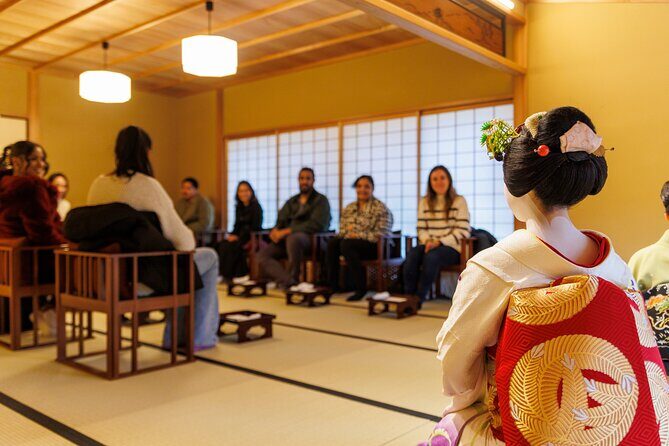
- Miyagawasuji Ochaya Time: Meeting a Maiko Up Close
- Price and Value at $109: What You Pay For
- Etiquette Checklist: Socks, Rain Rules, and Photo Permissions
- Who Should Book This Geisha Maiko Tour
- Should You Book This Tour, or Choose Another Kyoto Experience?
- FAQ
- What’s the duration of the Kyoto Gion geisha maiko walking tour?
- Where do I meet and where does the tour end?
- Is the tour only a walking tour, or is there also a performance?
- Do I need to bring socks?
- What happens on rainy days?
- Can I take photos or video?
- Who can take this tour?
Key things to know before you go
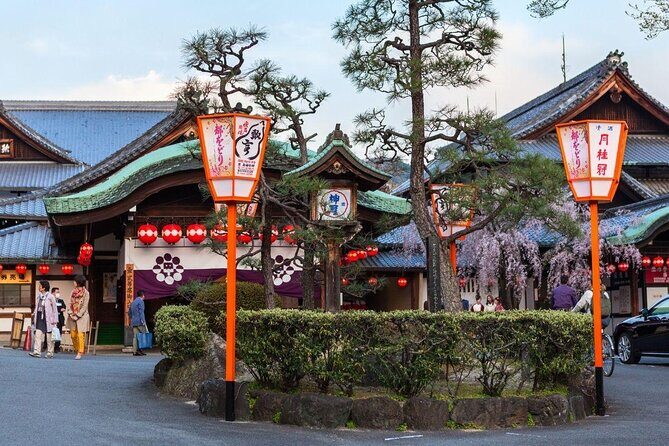
- A rare private ochaya visit: you step inside a venue that’s not meant for casual walk-ins.
- Meet a maiko plus a retired geiko: you’re not just watching from the sidewalk.
- Gion walking with real guidance: the route includes Gion Shirakawa, Hanamikoji Street, and photo-worthy corners.
- Sock-and-stairs etiquette: the performance happens on the 2nd floor, and you must wear socks.
- Rain or shine rules: umbrella use matters, and wet clothing/socks aren’t allowed at the venue.
- A small group cap (max 30): better questions, less waiting, more control of the pace.
How This Tour Gets You Off the Street and Into the Arts
Kyoto’s geisha culture is one of those things people try to “collect” by walking slowly down the streets and hoping someone appears. This tour takes a more respectful approach: you learn first, then you meet the artists in a setting designed for guests.
The tour’s big idea is access. You don’t just catch a glimpse of Gion’s silhouettes from the street; you go with a guide through the district and end at Miyagawasuji, where the performance and conversation happen at a private ochaya. That access is exactly what makes it feel different from most Gion photo tours.
You also get context along the way. Stops like Gion Shirakawa and Hanamikoji Street aren’t random scenic breaks. They’re used to explain how the district works, why certain traditions exist, and what the daily life of aspiring maiko and trained geiko is like in modern Kyoto.
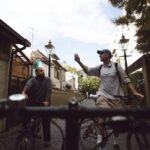
One more subtle perk: because you’re moving as a group with a guide, you can ask questions in the moment instead of worrying you’re interrupting someone on the sidewalk. Even the Q&A portion at the tea house is part of the experience, not an awkward afterthought.
You can also read our reviews of more walking tours in Kyoto

Gion Walking Route: Shirakawa, Hanamikoji, and Movie-Set Corners
The walking portion is the “story setup.” You start at Miyagawasuji and then head through Gion areas that show different sides of the neighborhood.
You spend time in Gion Shirakawa, known for its classic canal-and-lantern atmosphere. The guide uses that backdrop to explain who geishas in Kyoto are and how their lifestyle is structured around arts, discipline, and tradition. It’s a good place to calibrate your expectations, especially if you came with a Hollywood mental image.
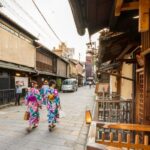
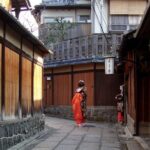
Then you’ll walk Hanamikoji Street, the main Gion lane where wooden machiya houses and teahouses sit close together. This is where you can connect what you’re learning to what you’re seeing: old facades, quiet side entries, and the sense that Gion runs on rules and etiquette more than on signage.
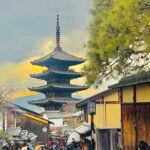
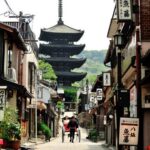
Expect a few “pause and look” moments too, like the area around Tatsumi Bridge, which feels cinematic—traditional houses and a tight streetscape that makes you understand why Gion is so often photographed. The guide helps you look past the postcard version, so you’re not just collecting sights.
Tatsumi Shrine and Bridge: Quick Stops With Real Meaning
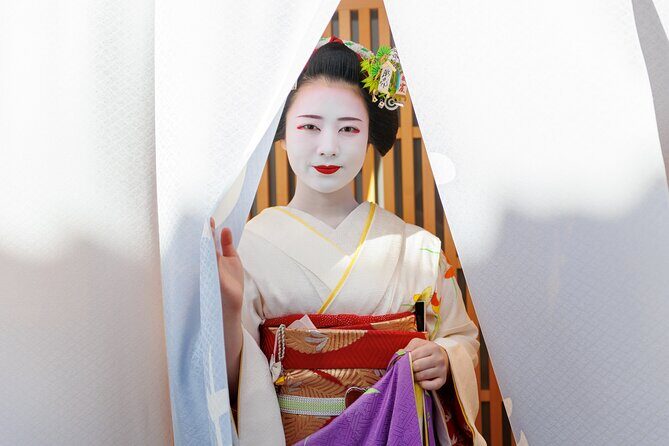
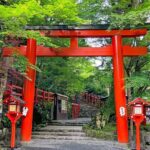
Not every tour includes religious landmarks, and that omission can flatten the story of Kyoto. Here, you get a brief visit at Tatsumi Daimyojin Shrine, dedicated to protection and good fortune, especially for travelers and those in demanding roles like warriors.
You’re there for a short stretch, so don’t expect a long temple lecture. But the timing matters. Dropping in a shrine early gives you a reminder that Gion’s arts culture doesn’t sit in a vacuum. Kyoto’s traditions, beliefs, and daily etiquette all overlap, and quick stops like this help connect the dots without slowing you to a crawl.
Right after that, you’re in the Tatsumi Bridge corner—small, traditional, and easy to miss if you’re wandering without guidance. This is the kind of moment where a guide’s framing matters: they point out what to notice and what you can safely ignore, so your walk feels purposeful rather than random.
If you like street-level history, you’ll probably appreciate how these “small” stops keep the tour from becoming only a dance-and-photo show.
Gion Corner and the Zen Temple Grounds: Culture Side Quests
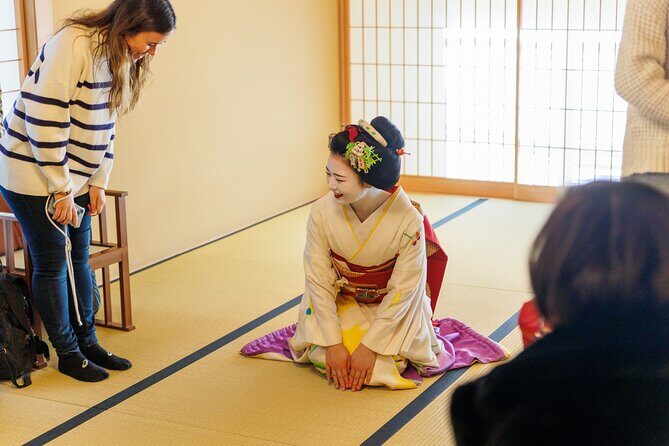
Midway through the walk, you pass Gion Corner, a cultural venue known for traditional art performances. Even if you’re not staying for a full show there, the stop helps you understand how Kyoto packages arts for understanding—like a gateway between everyday walking and formal performance culture.
Then there’s a Zen Buddhist element: you’ll visit the grounds of what’s described as the oldest Zen Buddhist temple in Kyoto, located next to the geisha district. You won’t enter the buildings, but you’ll walk the precinct like locals.
That matters. Zen temple precincts are about pacing and quiet observation, and walking there during a guided cultural tour adds contrast. It’s like giving your brain a palate cleanser before the emotional intensity of meeting a maiko and watching live dance.
If you’re the kind of traveler who likes variety, this combination works well: streetscape → shrine context → arts gateway → calm temple grounds → tea house performance.
Miyagawasuji Ochaya Time: Meeting a Maiko Up Close
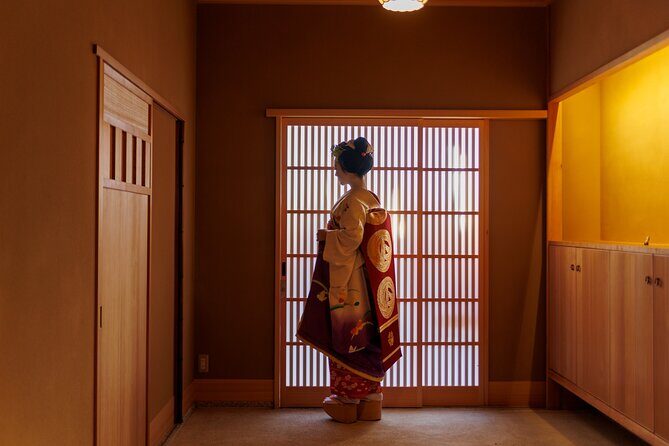
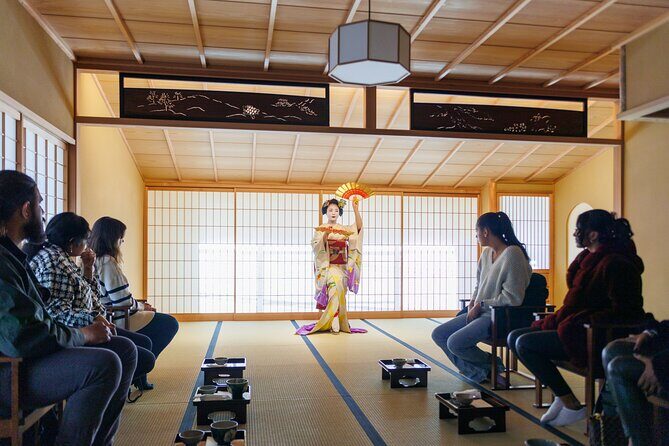
This is the heart of the tour. At Miyagawasuji, you enjoy the professional performance at a traditional tea house, with guide translation throughout. The performance portion runs about 1 hour 30 minutes, which is long enough to feel like an actual visit—not a quick cameo.
The set-up is also more intimate than most people expect. One key detail: the performance happens on the 2nd floor, and you only access it via stairs. It’s not a big deal for most people, but it is a real logistical factor. Plan your footwear accordingly and pace yourself if you need to.
You’ll also follow etiquette rules that are more strict than at regular venues:
- You MUST wear socks at the venue of the performance.
- On rainy days, no wet cloth and socks are allowed at the venue.
- If it rains, bring an umbrella for the walk, but still be ready to dry up before entering.
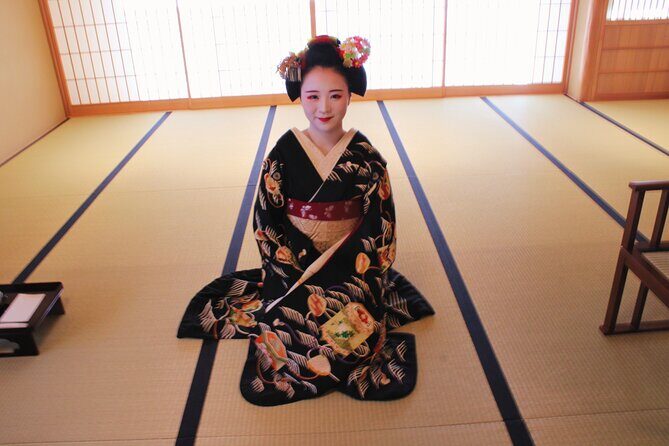
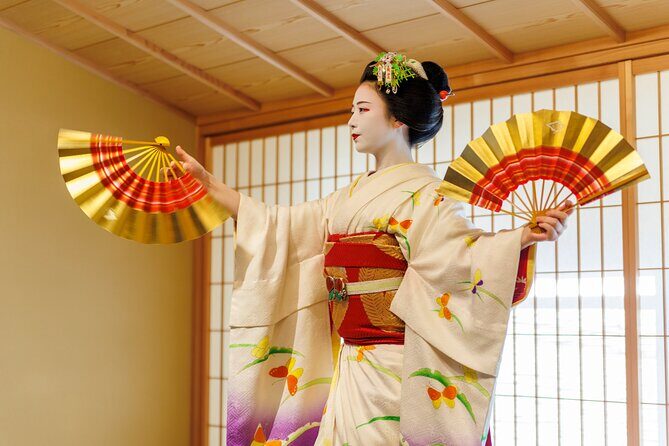
During the tea house time, you’ll meet a maiko and a retired geiko, watch live dance, and have a chance to chat and ask questions. That mix is what multiple people highlight as the reason this works. It’s not just a performance; it’s a guided conversation with people who practice the art.
Photo rules are also specific: photography and video recording are allowed only during the performance and the photo session. If you want to post photos later, you need direct permission from the maiko beforehand. That’s not “extra busywork”—it’s part of the respect system that keeps the experience humane.



Price and Value at $109: What You Pay For
At $109.43 per person for about 3 hours, this isn’t a bargain. The value case rests on the access: you’re paying for the combination of (1) a guided walk through Gion with contextual storytelling and (2) entering a private ochaya where you meet a maiko and retired geiko, with translation and time to ask questions.
So how do you decide if it’s worth it?
You’ll likely feel it’s good value if you:
- Want more than street spotting and selfies.
- Care about learning why traditions look the way they do.
- Appreciate the chance to ask questions in a controlled, polite setting.
- Prefer a max 30 group size over chaotic crowds.
Where the price can feel harder to justify is when expectations are mismatched—if you think this will be mostly sightseeing or mostly dancing. A few people felt the walking segment could be shorter or that the day ran longer than expected. Translation quality is another factor: some people found it could be quiet, which affects how much you catch in conversation moments.
Think of it as a cultural appointment with built-in context, not a casual walking sampler.
Etiquette Checklist: Socks, Rain Rules, and Photo Permissions
This tour runs rain or shine, and the venue etiquette is clear. Here’s how I’d prep to avoid awkward last-minute fixes.
Wear comfortable walking shoes. You’ll be on foot for the full experience, and shoes matter even more because the venue involves stairs to the 2nd floor.
Pack socks you’re willing to keep clean and dry. The rule is strict: socks are required at the performance venue, and wet socks aren’t allowed on rainy days. If the weather looks iffy, bring an extra pair in a small bag.
Bring an umbrella for the walk if rain starts. The goal is simple: keep the socks and clothing you’ll use at the venue from getting wet.
Photography has boundaries. You can record during the performance and during the photo session, but posting on social media needs permission from the maiko beforehand. That’s one of those details you’ll thank yourself for following.
Finally, remember this is a cultural setting. If your fellow participants treat it like a street spectacle, the tone changes fast. Being calm and respectful helps everyone, including you.
Who Should Book This Geisha Maiko Tour
This is a strong fit for travelers who want a guided, respectful introduction to Gion geiko and maiko culture with a meaningful human encounter at the end.
It’s especially good for:
- First-timers in Kyoto who want to understand Gion beyond the obvious stereotypes.
- People who like arts and performance, not just architecture.
- Anyone who enjoys asking questions and having translation support.
- Travelers who appreciate structure: a clear route, guided explanations, and a set performance window.
It’s not ideal if:
- You hate stairs or you have mobility limits that make stairs hard.
- You want a very long sightseeing day instead of a short, focused experience.
- You’re sensitive to audio/translation issues and rely on hearing every word perfectly.
Also note the basic guidelines: there are no children under 10, and the tour is listed for moderate physical fitness since it’s walking with rain-or-shine operation.
For timing, it’s an easy fit after you’ve explored Higashiyama areas, because it’s located in Kyoto’s geisha district zone around Gion and ends where you meet.
Should You Book This Tour, or Choose Another Kyoto Experience?
Book it if you want the rare stuff: private ochaya access, a close meeting with a maiko, and a conversation component that goes beyond “look, smile, move on.” At $109.43, you’re paying for entry into a world that most visitors never see up close.
Skip it if your priority is wandering Gion for pictures and people watching, or if you’re hoping for a long, varied sightseeing route with lots of stops. In that case, you can create a cheaper day on your own and still enjoy Gion’s streetscape.
If you do book, go in with the right mindset: this is a cultural performance appointment with etiquette, not a casual show. Follow the socks-and-rain rules, sit close enough to hear your guide, and come ready to learn.
FAQ
What’s the duration of the Kyoto Gion geisha maiko walking tour?
It runs for about 3 hours (approx.), and the tea house performance portion lasts about 1 hour 30 minutes.
Where do I meet and where does the tour end?
The meeting point and end point are both at Miyagawasuji, Higashiyama Ward, Kyoto (605-0801), Japan.
Is the tour only a walking tour, or is there also a performance?
There’s both. You walk through the Gion area with a local guide and then watch a professional performance at a traditional tea house.
Do I need to bring socks?
Yes. You MUST wear socks at the venue of the performance, and the rules are stricter on rainy days.
What happens on rainy days?
The tour takes place rain or shine. You should use an umbrella during the walk, and at the venue there should be no wet cloth and no wet socks.
Can I take photos or video?
Photography and video recording are allowed only during the performance and the photo session. If you want to upload photos to social media, you must obtain direct permission from the maiko beforehand.
Who can take this tour?
It’s described as suitable for travelers with moderate physical fitness, and there are no children under 10 years old. The group size is capped at a maximum of 30 travelers.