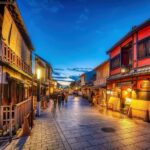
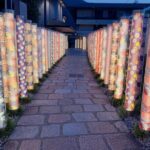
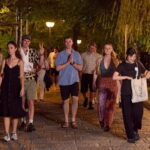
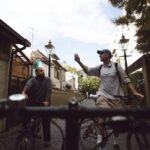
Night in Gion feels like another Kyoto.
This 1.5-hour evening walk takes you through lantern-lit streets, historic buildings, and the kinds of corners where you might spot a geisha or maiko. I especially like how the timing turns famous lanes into something quieter and more cinematic, while your guide points out what you’re actually looking at as you go.
I also love that the local English-speaking guide, Ikki, keeps things practical and easy to follow, so the stories don’t stay in the clouds. On top of that, you get admission covered for the shrines and temples, plus professional photos taken during the tour, which is a nice add-on for a low-cost evening plan.
One consideration: it’s a walking tour with a tight schedule, so if you want to wander off or linger in shops, you’ll feel rushed. And if you’re late, you can’t join and there’s no refund—so build in a little buffer.
In This Review
- Key reasons this night tour works well
- Why Gion After Dark Hits Different Than Daytime
- Price and Value: What $26 Buys You in Kyoto
- Starting at the Izumo-no-Okuni Statue and Setting Up for a Smooth 6:30 pm Walk
- Stop 1: Hanamikoji Street, Where the Gion Atmosphere Starts
- Stop 2: Gion, the District Everyone Talks About
- Stop 3: Yasui-Konpiragu Shrine and the Idea of Cutting Bad Ties
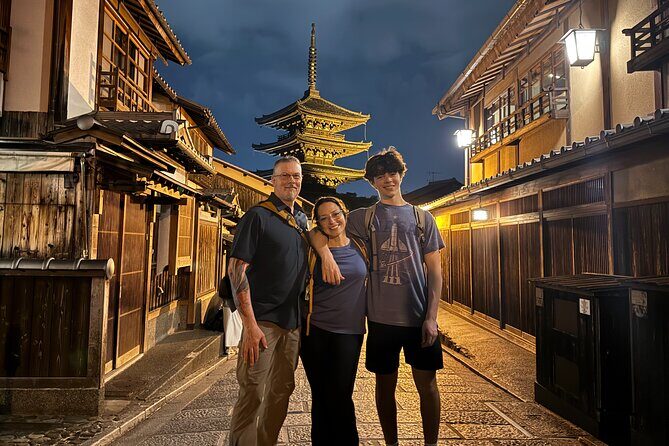
- Stop 4: Yasaka Pagoda (Hokanji Temple), Old Wood That Still Sounds Impossible
- Stop 5: Sannenzaka and Ninenzaka, The Photo-Friendly Stairs That Feel Like a Time Warp
- Stop 6: Yasaka Shrine, a Big Network in One Place
- The Guide Factor: Why Ikki Makes the Night Route Make Sense
- Timing, Walking Pace, and What to Do Before You Start
- Who Should Book This Kyoto Gion Night Tour
- Quick FAQ
- FAQ
- How long is the Kyoto Gion Night Tour?
- What time does the tour start?
- Where does the tour meet, and where does it end?
- Is admission included for the temples and shrines?
- Does the tour include food or drinks?
- Are there professional photos included?
- What’s the group size limit?
- Should You Book It?
Key reasons this night tour works well
- Lantern-lit Gion streets give you a different feel than daytime Kyoto
- Chance to see geisha or maiko as you move through Hanamikoji
- Guide Ikki’s explanations help you connect the sights to Japanese culture
- Admission fees included for shrines and temples, so there are fewer surprise costs
- Photo moments on the route so you’re not hunting for perfect shots alone
- Small group cap of 20 keeps things from feeling like a stampede
Why Gion After Dark Hits Different Than Daytime
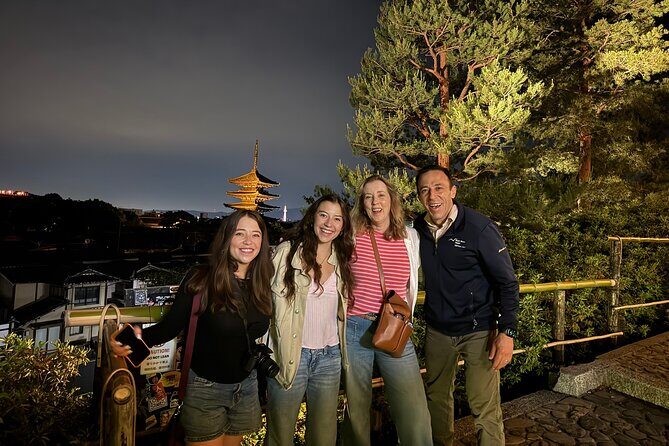
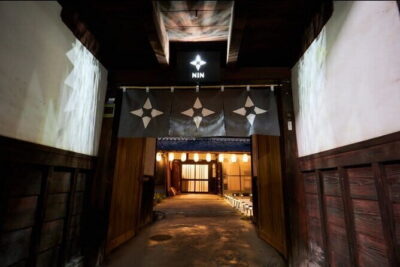
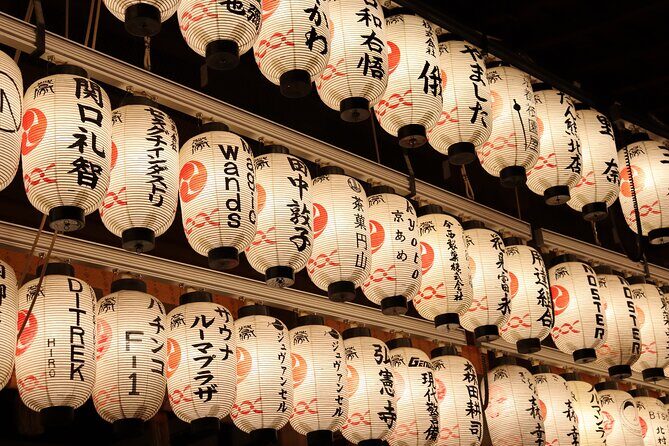
When the sun drops, Gion changes its pace. Streets that feel crowded in daylight tend to look calmer and more intimate at night, and the lantern glow makes the old wooden facades look even more timeless.
This tour leans into that mood. You’re not just passing landmarks—you’re walking the streets that make Gion feel like Gion. And even if you don’t spot a geisha or maiko, the guide’s context helps you understand what matters: the teahouses, the wooden machiya houses, and the way the district was shaped for culture, not tourism checklists.
You can also read our reviews of more evening experiences in Kyoto

Price and Value: What $26 Buys You in Kyoto
At about $26 per person for roughly 1 hour 30 minutes, the value is in how much you cover without turning it into a logistics puzzle. You’re paying for a guided evening route, English explanations, admission for the stops, and photos taken during the tour.
That combination matters. Kyoto can get expensive when you start adding temple and shrine entries one by one, especially in the evenings when you want a simple plan. Here, you get the structure of a guided walk plus access to the key sites included in the route, while you keep your own time for dinner afterward.
Starting at the Izumo-no-Okuni Statue and Setting Up for a Smooth 6:30 pm Walk
Your tour starts at the Statue of Izumo-no-Okuni in Higashiyama, near the Kawabatacho area. The specific meeting spot helps because it anchors you in the Gion/Higashiyama zone without guesswork.
The start time is 6:30 pm, and the tour loops back to the meeting point at the end. That makes planning easier: you’re not stuck figuring out where you end up after dark. Also, it’s designed as a walking experience, so you’ll want comfortable shoes and a light layer for evening air.
Group size is capped at 20. That’s big enough to feel lively but small enough that you can generally hear the guide and follow the route without losing the group every two corners.
Stop 1: Hanamikoji Street, Where the Gion Atmosphere Starts
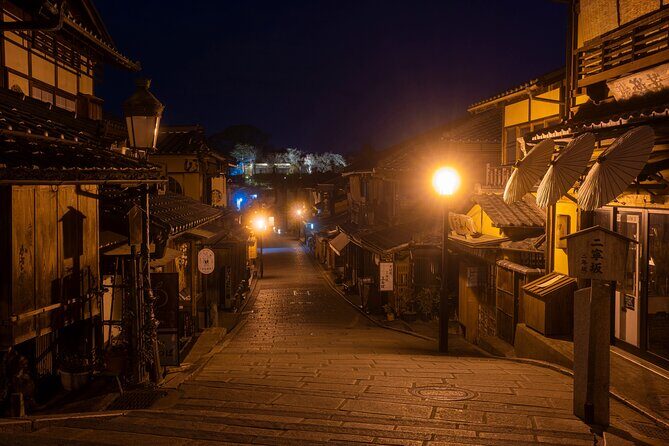
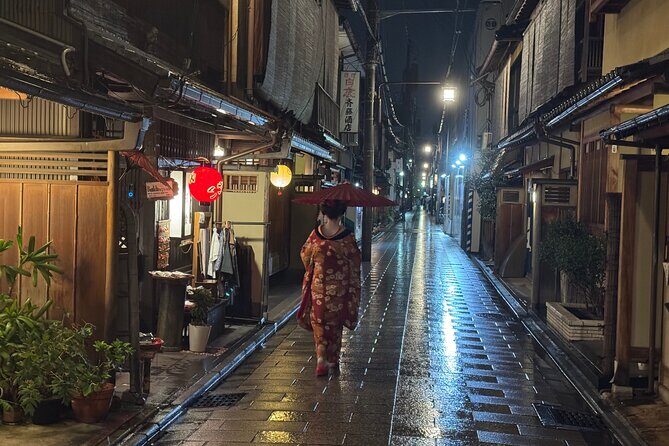
Hanamikoji Street is the first place you’ll see Gion’s signature energy up close. This is one of the most famous lanes in the district, lined with traditional teahouses and historic wooden machiya houses.
What makes this stop work at night is the way the lantern-lit street gives you a real sense of scale and style. This is also where you might have the best chance to see geisha and maiko, simply because you’re in the area people associate with that world.
One practical tip: don’t just aim your camera at everyone’s faces. Use your eyes first. Let the guide’s cues help you notice the details—teahouse frontage, street layout, and the vibe shift between quiet corners and busier stretches.
Stop 2: Gion, the District Everyone Talks About
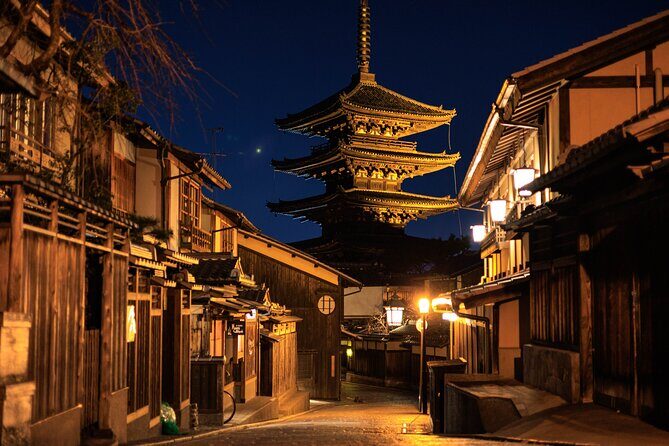
The tour then moves through Gion itself. Even if you’ve seen photos before, walking the preserved streets at night is a different experience. You get to see how the traditional wooden houses and teahouses sit right against the modern city rhythm.
Gion is Kyoto’s most famous geisha district, so you’ll likely recognize the name instantly. But the point of this stop isn’t recognition—it’s understanding. Your guide helps you connect what you’re seeing to how the district functions and why it looks the way it does.
The drawback here is subtle: it’s a popular district. Even on a guided walk, you may feel a bit of crowd energy depending on the night. The guide helps you keep moving smartly so you spend time looking rather than getting stuck.


Stop 3: Yasui-Konpiragu Shrine and the Idea of Cutting Bad Ties
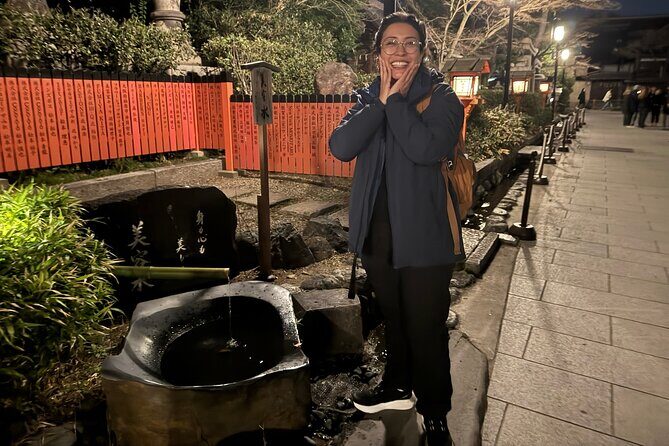
Next up is Yasui-Konpiragu, a shrine known for one very specific kind of prayer. People come here to seek the end of negative relationships and to build new, positive connections.
It’s a good stop because it breaks up the “Gion scenery” loop with something more personal and cultural. You’re not just viewing architecture—you’re seeing a place tied to a belief system and a real-world emotional goal.
This stop also tends to feel short on purpose. In 10 minutes, you’re mostly there to absorb the shrine’s purpose, see the setting, and move on. If you’re hoping for a long, quiet meditation moment, you’ll want to revisit later on your own time. Here, the tour keeps the pace.
Stop 4: Yasaka Pagoda (Hokanji Temple), Old Wood That Still Sounds Impossible
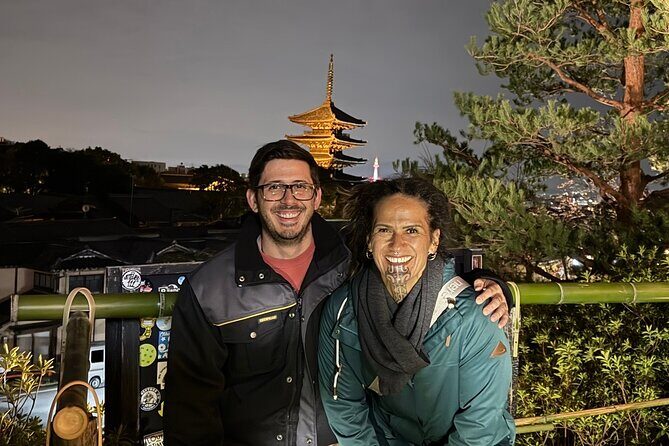
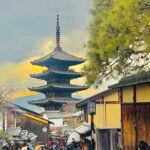
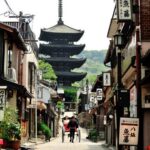
Yasaka Pagoda, part of Hokanji Temple, is a big visual anchor on this route. It’s described as one of the oldest wooden structures in Japan, and it’s known for being a scale you don’t expect to be so historic.
There’s also a specific detail people mention about the structure: it’s said to have been built without nails. Even if you don’t get into construction history, that single fact changes how you look at the building. You’ll likely find yourself staring at the silhouette a little longer, because it feels like it shouldn’t still be there.
The 15-minute timing is about the sweet spot. Long enough for photos and a good look, not so long that you lose momentum for the later streets.
Stop 5: Sannenzaka and Ninenzaka, The Photo-Friendly Stairs That Feel Like a Time Warp
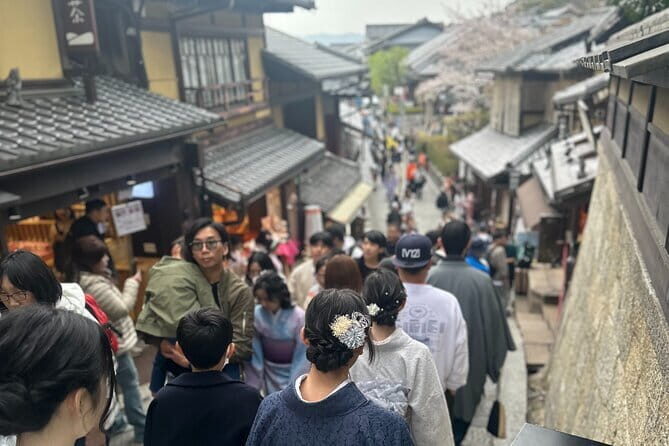
Then you’ll head toward Sannenzaka and Ninenzaka, the traditional stone-paved lanes lined with souvenir shops and restaurants housed in historic wooden buildings.
Walking here at night gives you a particular kind of contrast: the warm glow of shop lighting against older stone and wood. It’s the kind of street where you can slow down without the tour feeling broken, because the surroundings naturally invite wandering.
This is also where you’ll see plenty of the “Kyoto shopping street” vibe. The main thing I’d watch for is pacing: it’s easy to drift into browsing mode. If you let yourself fully do that, you can start falling behind the group. I’d treat this stop as a chance to pick one or two things max, then keep walking so you still enjoy the shrine finish.
Stop 6: Yasaka Shrine, a Big Network in One Place
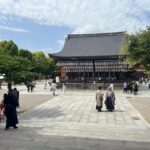
The final stop is Yasaka Shrine. It’s the headquarters of about 2,300 related shrines across Japan, which makes it feel larger than a single site.
This shrine is dedicated to gods of prosperity and protection, so the atmosphere is tied to practical hopes people bring to visits: safety, good fortune, and peace of mind. It’s a strong way to close an evening tour because it shifts you from district sightseeing into something closer to the living purpose of a shrine.
Your time here is about 15 minutes. You’ll have enough time to look around, take a few photos, and absorb the scale of the place. If you want longer exploration of other shrine paths or side areas, plan a separate visit later.
The Guide Factor: Why Ikki Makes the Night Route Make Sense
A walking tour can be just footsteps and photos. This one adds meaning because the guide, Ikki, is described as easy to talk to and focused on Japanese culture.
That matters because Kyoto is layered. Without context, you might know a place by name, but you won’t understand why it looks the way it does or why the order of stops matters. With Ikki’s explanations, you’re more likely to walk away with “I get it” moments, not just “I saw it.”
Also, with professional photos taken during the tour, you’re not stuck with only your own phone shots. It’s a small thing that can make the whole evening feel more rewarding, especially when night lighting can be tricky.
Timing, Walking Pace, and What to Do Before You Start
The tour runs from 6:30 pm for about 1 hour 30 minutes. That short window is part of the appeal—you can do this, then still have time to find dinner afterward without burning your whole evening.
Because it’s a walking route, plan around physical comfort. You’ll want footwear that works on stone and sidewalks. If you’re the kind of person who stops for every photo, you may need to choose your moments here rather than trying to capture everything.
One more practical note: if you’re late, you won’t be able to join and there’s no refund. So arrive a few minutes early, get your bearings, and don’t assume the crowd will slow the check-in pace.
Who Should Book This Kyoto Gion Night Tour
This tour is a smart match if you want:
- a short evening plan that covers major Gion and Higashiyama sights
- a guided route where someone else handles the order and explanations
- included admission fees and professional photo coverage
- a small-group feel with a maximum of 20 people
It may be less ideal if you need a slower, free-roaming schedule or you’re expecting a guaranteed geisha sighting. No one can promise that, and this tour is built for walking and culture, not holding a fixed position and waiting.
Quick FAQ
FAQ
How long is the Kyoto Gion Night Tour?
It’s approximately 1 hour 30 minutes.
What time does the tour start?
The start time is 6:30 pm.
Where does the tour meet, and where does it end?
You meet at the Statue of Izumo-no-Okuni in Kawabatacho, Higashiyama Ward, Kyoto, and the tour ends back at the meeting point.
Is admission included for the temples and shrines?
Yes. Admission fees for all temples and shrines are included.
Does the tour include food or drinks?
No. Food and drinks are not included, and you’ll handle personal expenses separately.
Are there professional photos included?
Yes. Professional photos are taken during the tour.
What’s the group size limit?
The tour has a maximum of 20 travelers.
Should You Book It?
I’d book this if you want a compact, night-focused Kyoto plan that mixes famous Gion with a few meaningful shrine stops, all with English guidance and included admissions. It’s also a good choice when you’d rather spend your evening walking with context than piecing together your own route after dark.
Pass on it only if you need guaranteed geisha viewing or you don’t like tight schedules on foot. For everyone else, this is a solid value way to experience Gion at night—and come away with both stories and photos.