REVIEW · WORKSHOPS
Fukusa Shibori Class
Book on Viator →Operated by Kyoto Shibori Museum · Bookable on Viator
Kyoto’s dye world isn’t just something you look at. In this Kyoto Shibori Museum class, you work with kasamaki and nuishime shibori methods while seeing classic samples up close. You’ll end with a silk wrapping cloth you can actually keep, not just a photo.
Two things I really like: the lesson is hands-on and tactile, and the museum context makes the craft click faster. One possible drawback is that this is a short, focused workshop—if you want hours of unhurried art-making, plan something else the same day.
You’re also not herded into a huge crowd. The group caps at 15, and the pace is built around completing your silk cloth within about 1 to 1.5 hours.
In This Review
- Key highlights you’ll care about
- Getting Oriented at Kyoto Shibori Museum
- Kasamaki and Nuishime: The Craft Behind the Patterns
- The Hands-On Class Flow (and What You’ll Actually Do)
- Museum Displays and the Shop: Why This Pairing Works
- Price, Time, and Value in Real Kyoto Terms
- Who This Shibori Class Fits Best
- Should You Book This Kyoto Shibori Class?
- FAQ
- How long is the Fukusa Shibori class?
- What shibori techniques are taught?
- What will I take home?
- Where does the class meet?
- Is there an age limit?
- What’s the booking and cancellation approach?
Key highlights you’ll care about
- Two shibori techniques in one session: kasamaki and nuishime
- You keep a finished memento: a silk wrapping cloth (38cm x 38cm)
- Museum samples for context: displays of classic shibori results
- Small-group class size: maximum 15 people
- Traditional tools and fabrics included: you’re not hunting supplies
- Works well as a break in the day: reviews mention it as a good hot-afternoon option
Getting Oriented at Kyoto Shibori Museum

Your experience starts at the Kyoto Shibori Museum at 135-5 Shikiamichō, Nakagyo Ward, Kyoto. This is one of those good Kyoto setups where you’re already in the right place for the craft—so you’re not trying to teach yourself shibori while also finding everything else in a new city.
The museum part matters more than it sounds. Before your hands get busy, you can take in the dyeing displays and see what the finished patterns are supposed to look like. That turns the workshop from random wrapping into something you understand: you start thinking in terms of how stitching and tight pulling create resist lines and textures.
If you like practical planning, the location is also described as near public transportation. There’s parking for two cars and bicycle parking too, but most people will probably come by transit based on what’s listed.
You can also read our reviews of more tours and experiences in Kyoto

Kasamaki and Nuishime: The Craft Behind the Patterns
Shibori can look like magic in photos, but it’s really physics plus patience. This class focuses on two named methods—kasamaki and nuishime—so you get more than one “how-to.”
Here’s the plain-English idea behind each technique:
Kasamaki shibori
- You stitch around the shape you want to create.
- You pull the thread tight.
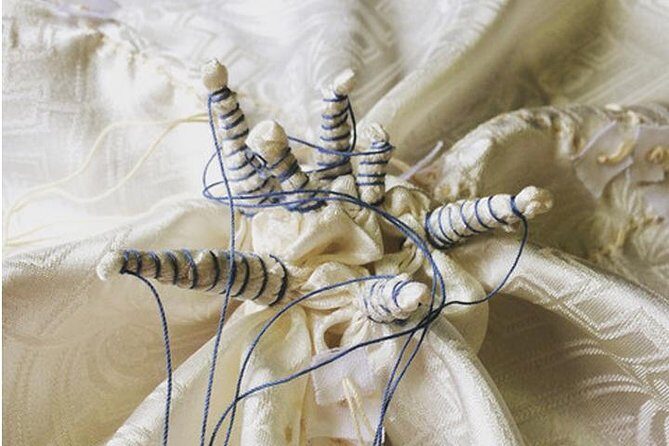
- Then you wrap those tightened threads around a cone of fabric several times.
That cone-wrapping step is what helps produce the characteristic gathered/resisted effect.
Nuishime shibori
- You stitch along a line.
- You pull the thread tight.
Instead of building a cone form, you’re tightening along a linear track, which creates a different kind of resist and pattern rhythm.
What I like about learning two methods back-to-back is that you can compare them while everything is fresh in your brain. One moment you’re building texture around a form; the next you’re creating line-based tension. If you’ve ever wondered why shibori results can look both geometric and organic at the same time, this pairing gives you a clear answer.
Also, the museum side isn’t “extra fluff.” Seeing prime displays of classic kasamaki and nuishime results helps you connect the technique to the outcome. One review highlighted that learning the history and differences between techniques made the whole thing land better, and there’s mention of an info video being helpful too.
The Hands-On Class Flow (and What You’ll Actually Do)
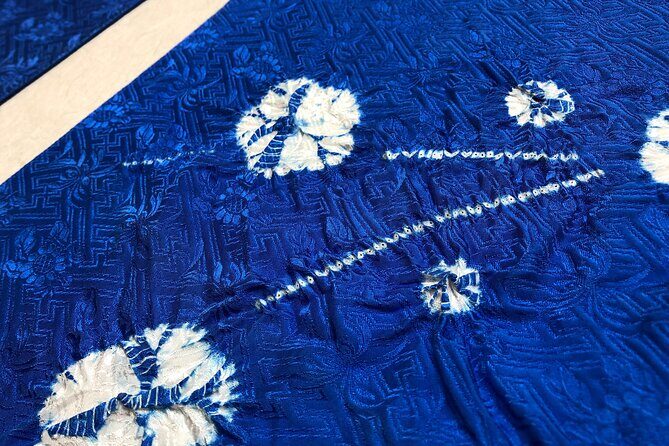
This is billed as a 60- to 90-minute cloth-wrapping class. That time window is long enough to feel productive, but short enough to fit into a Kyoto day without wrecking your schedule.
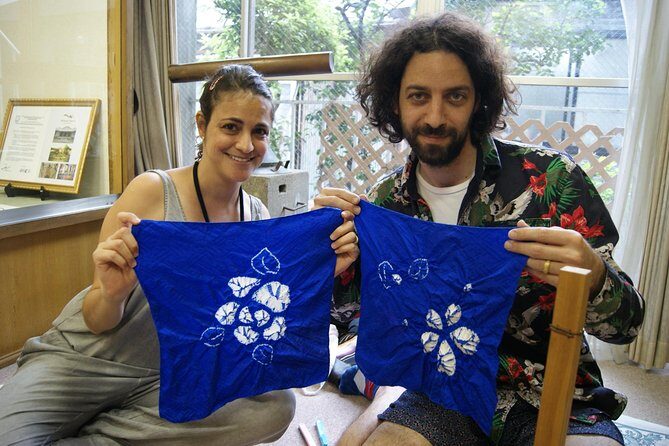
The work itself is centered on a silk wrapping cloth measuring 38cm x 38cm. In practical terms: you’ll spend your energy shaping and tightening fabric for dye, and then you’ll end up with a finished piece you can take home.
A typical flow goes like this:
Step 1: Get the method clear before you start
Even if you’re starting from zero, you’ll want to understand what to aim for. The class includes instruction from staff, and at least one guest mentioned an intro video was helpful. That kind of prep matters because shibori is all about tightness and placement—small differences can change how the pattern shows after dye.
Step 2: Make the kasamaki version
You’ll perform the kasamaki steps: stitch around the target shape, pull the thread tight, then wrap threads around the cone of fabric multiple times. This is the fiddly part. Expect focus here. You’re essentially creating a controlled structure that the dye can’t reach the same way.
Step 3: Make the nuishime version
Then you shift to nuishime: stitching along a line and pulling thread tight. The feel is different—less cone-form wrapping, more line control. If kasamaki is about building a gathered form, nuishime is about tension along a track.
Step 4: Dye and finish your silk cloth
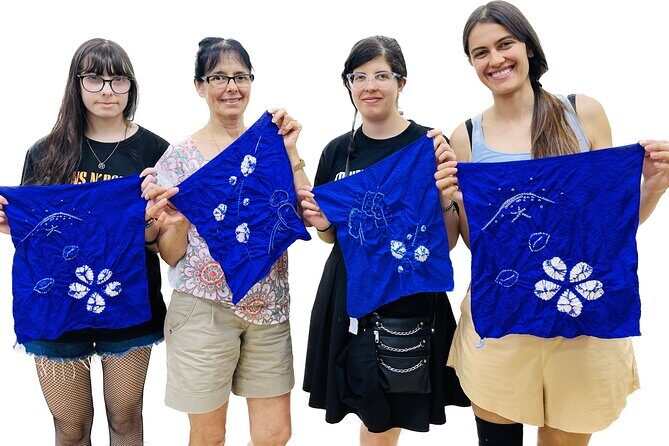
After dyeing the cloth using both methods, you’ll get that final silk wrapping cloth result. The class is set up so you’re not leaving with half-finished craft homework. You’re taking home a complete memento.
One review described the experience as wrapping and dyeing, and another praised careful teaching that supported understanding of the process. That lines up with what you should expect: the instructors guide your technique and help you keep going when the steps feel tricky.
Museum Displays and the Shop: Why This Pairing Works
This class isn’t just a craft session in a vacuum. The museum environment gives you two benefits:
First, it sets expectations. When you’re working with shibori, the pattern you want is usually a “classic” look—something you’ve seen in Kyoto shops or culture museums. Having displays right there helps you steer your effort in a direction that makes sense.
Second, it gives you ideas for how people use finished shibori pieces. Even if this class ends with a silk wrapping cloth, the museum shop can show you how shibori is marketed and styled. One review mentioned touring the museum too, plus time around staff and professional makers. That’s the kind of atmosphere that helps you feel like you’re learning a real craft, not just paying for a souvenir.
If you’re short on time, you don’t need to overthink it. A light museum glance works because you’re already about to create your own piece. If you do have extra time, the shop is worth a look—especially if you want to understand what “classic” looks like across both techniques.
Price, Time, and Value in Real Kyoto Terms
The price is $71.67 per person, and it’s typically booked about 21 days in advance on average. For Kyoto, that’s not a throwaway expense, so you want to know what you’re buying.
Here’s the value equation as I see it:
- You’re paying for two techniques in one class, not just one method. That’s efficiency.
- You get a finished silk cloth to take home (38cm x 38cm). Many workshops either give you partial work or something smaller. This is clearly meant to be a usable keepsake.
- Materials and traditional tools are part of the experience, so you’re not paying extra for supplies or improvising at home.
Time matters too. At 1 to 1.5 hours, you can book this as a mid-day activity—especially helpful if your Kyoto walking plans run into heat. One review specifically called it a great way to spend a hot afternoon, and that tracks with how these indoor craft sessions fit a Kyoto itinerary.
Also, the group size cap at 15 travelers (max) suggests a more personal experience than the typical mass workshop. You’re more likely to get attention when you hit a confusing stitch or wrapping moment.
If you’re the type who likes learning a craft with a clear outcome, this is the right kind of class. If you want a long slow art day, you might feel like you blink and it’s over.




Who This Shibori Class Fits Best
This class is a strong match for:
- People who want hands-on craft time and don’t mind working carefully with fabric and thread.
- Anyone interested in Japanese textile techniques, especially because you learn both kasamaki and nuishime methods.
- Families: there’s a minimum age of 8, and one review said the whole family enjoyed it.
It’s also useful if you like the idea of learning tricks you can try at home. The class description explicitly mentions learning ways to do these techniques at home, and the museum context helps you remember the “why” behind the “how.”
If you hate fine-motor work or you’re expecting a relaxed no-concentration activity, be honest with yourself. Shibori requires tension, placement, and patience. You’ll do fine as long as you can focus for an hour and let the process unfold.
Should You Book This Kyoto Shibori Class?
Book it if you want a real craft experience with a clear result—and you’d rather make your own Kyoto memento than just browse for one. The best part is the combination: museum context plus hands-on wrapping and dyeing, ending with a silk cloth you can keep.
Skip it (or pair it carefully) if you’re looking for a long-form creative session, or if you’re sensitive to tasks that involve tight stitching and careful wrapping. This is short by design, and it moves toward completion.
If your ideal Kyoto day includes learning something specific, doing it with your hands, and walking away with an actual object, this shibori class is a smart pick.
FAQ
How long is the Fukusa Shibori class?
It runs about 1 hour to 1 hour 30 minutes.
What shibori techniques are taught?
You’ll try kasamaki and nuishime shibori methods.
What will I take home?
After dyeing, you’ll take home a silk wrapping cloth (38cm x 38cm).
Where does the class meet?
The meeting point is the Kyoto Shibori Museum, 135-5 Shikiamichō, Nakagyo Ward, Kyoto 604-8261, Japan.
Is there an age limit?
The minimum age is 8, and adult pricing applies to any age.
What’s the booking and cancellation approach?
You receive confirmation at the time of booking, and cancellation is free up to 24 hours before the experience start time for a full refund.