REVIEW · KYOTO CRAFT WORKSHOPS
Roketsu dyeing experience: M course Roketsu Dyeing Experience
Book on Viator →Operated by 京ローケツ やまもと染工 · Bookable on Viator
Kyoto’s quiet craft breaks are the best. This Roketsu dyeing workshop lets you draw your own design and dye it step by step, using a traditional wax-resist style that turns into a wearable or wall-mountable keepsake. You’re not just watching. You’re doing.
I love how hands-on it is, right down to the wax-resist process and the satisfying final reveal. I also like that you can take your finished item home the same day, usually within about 90–120 minutes, so you’re not guessing when your souvenir will arrive. The one drawback to plan for: communication can be limited in English, so you’ll want to go in with a clear sketch idea and patience when questions get fuzzy.
If you want a calm, creative pause from temples and crowds, this is a strong pick. It’s also family-run, and the support from the owner and his mother, Yoko, shows in the way they slow down for you and help you get a clean result. Just remember it’s a craft class, so your final time can run longer if your design is detailed.
In This Review
- Key points before you go
- Roketsu dyeing in Kyoto: what you actually make
- The wax-resist process: step by step, without the mystery
- Stencils vs. freehand sketches: choose the style that fits you
- Timing that actually works in a Kyoto day
- Getting there: Roketsu73 in Nishikyōgoku (and why it’s worth the trip)
- What language you need (and how to keep things smooth)
- Value check: is 25.77 a fair price for a handmade Kyoto souvenir?
- Who should book this Roketsu dyeing experience
- My practical take: how to get the best result with less stress
- Should you book Roketsu73 for dyeing in Kyoto?
- FAQ
- How long does the Roketsu dyeing experience take?
- What is the price per person?
- Where is the meeting point?
- Can I take what I make home the same day?
- What can I dye in the workshop?
- Is the workshop dependent on weather?
Key points before you go
- Real bucket dyeing experience: you get the full process, not a quick sample.
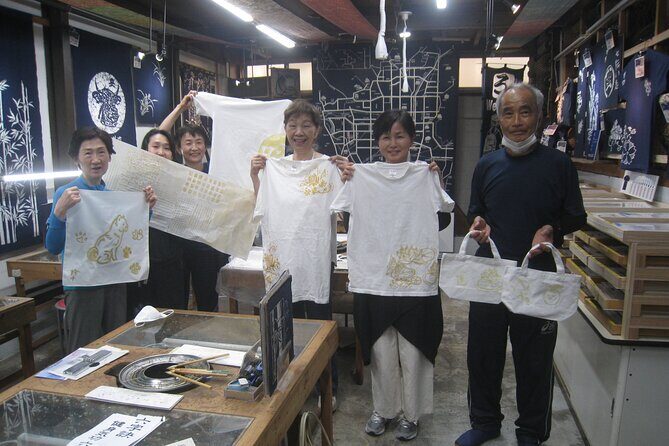
- Same-day take-home: you leave with your dyed item when it’s finished.
- Design control: use stencils or bring your own sketch for an original piece.
- Practice first: you can do a small run so you feel confident before the real pattern.
- Family-run guidance: the workshop team (including Yoko) is patient and focused on good results.
- Plan for language friction: you might speak less English here, so visual steps matter.
Roketsu dyeing in Kyoto: what you actually make
This workshop is about making something you can keep, not collecting another generic trinket. You’ll choose the item you want to dye—most commonly a T-shirt, tote bag, or a hanging/wall-style piece—then you’ll create the pattern using the Roketsu wax-resist method.
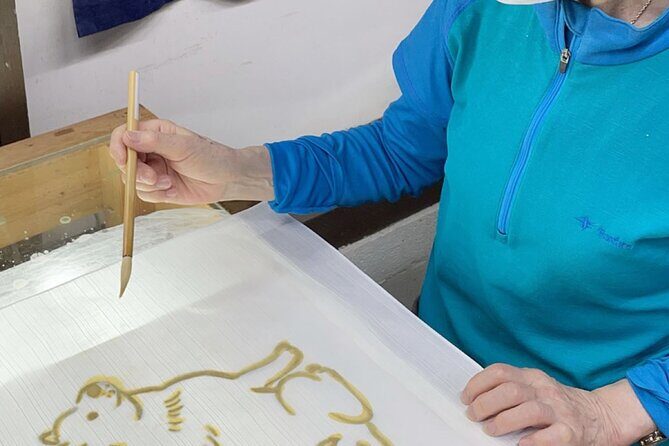
The core idea is simple. You draw a design, then you apply melted wax to block the dye from reaching certain parts of the fabric. After that, the fabric goes through bucket dyeing so color fills the open areas. When the wax is handled and removed, your pattern appears like magic.
What makes this feel special in Kyoto is the way it’s presented: you’re not doing a watered-down craft demo. The experience is designed so you can complete the full workflow inside the studio session. That’s why so many people use words like relaxing and therapeutic. It’s quiet work. It takes your mind off the day’s sightseeing route.
You can also read our reviews of more tours and experiences in Kyoto.



The wax-resist process: step by step, without the mystery
Even if you’ve never done a dye craft before, the studio approach is designed for beginners. The instruction style tends to be visual and practical, with the owners walking you through what to do and when.
Here’s what you can expect once you sit down:
- You pick a design route: stencil pattern or freehand (especially if you bring your own sketch).
- You do a short setup and possibly a quick practice run on a small piece so the technique feels natural.
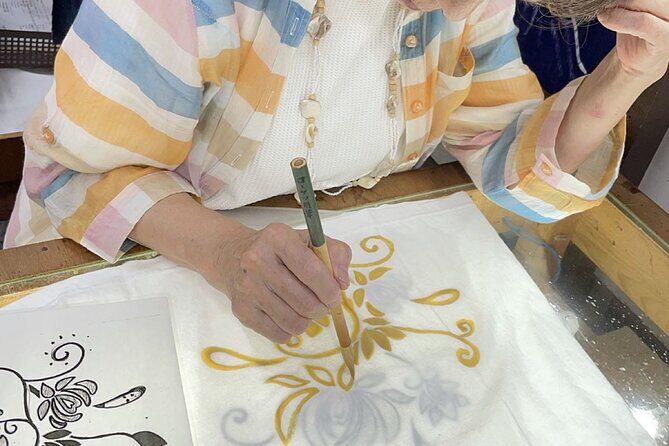
- You apply the melted wax onto your chosen fabric, painting or tracing your pattern.
- After the wax stage, the dyeing happens and your item is finished so you can take it home the same day.
The wax painting step is the heart of the experience. You’re using a tool to spread wax, like you’re drawing with thick ink that hardens. The helpful part is that the studio team pays attention to where you place lines and shapes. You don’t need artistic talent. You need calm hands and good guidance.
Also, the studio atmosphere matters. Reviews describe the pace as unhurried, with the instructor(s) not rushing you, even if you take time to perfect your drawing. If you’re tired from walking, this is the kind of activity that gives your legs and brain a break.
Stencils vs. freehand sketches: choose the style that fits you
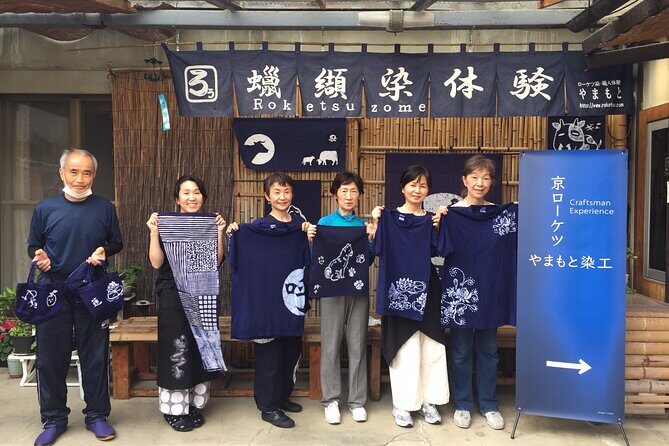
One big reason this workshop scores so high is the flexibility in design. You can:
- Choose from many stencil designs (people describe dozens to hundreds).
- Use your own sketch to create something original.
- Combine drafts in ways that help your final layout look right on fabric.
If you’re the type who likes a plan, stencils make the process much faster. If you want a personal souvenir, bring a sketch or reference image. One reviewer specifically notes that original works are possible when you have your own sketch.
A practical tip: think about how your design will look when dyed. Roketsu dyeing creates strong boundaries between dyed and undyed areas because wax blocks dye flow. That means bold shapes and clear outlines usually photograph well and look crisp in the final pattern.
If you’re nervous about drawing, don’t overthink it. The workshop team shows you the steps, and the experience is built for normal humans, not just artists.
Timing that actually works in a Kyoto day
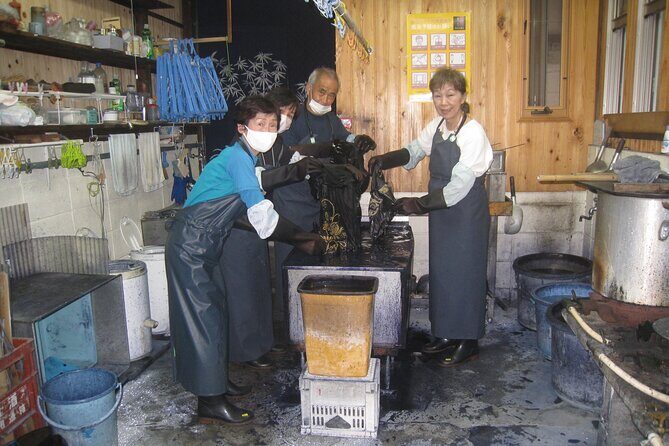
The advertised duration is about 2 hours (about 90–120 minutes), and the key benefit is that you can normally take your piece home the same day. That’s ideal if you’re on a tight schedule and you want to avoid mailing or waiting later.
However, you should plan with a little slack. Reviews mention that the class can take longer—around 3 hours—when someone chooses a more intricate design or simply spends extra time on drawing. The good news is that people didn’t feel rushed. The downside is that you’ll want to schedule this when you’re not chasing a strict next appointment.
How I’d fit it into your day:
- Book it on a morning or early afternoon, so your finished item is ready while the rest of your day still has room for wandering.
- If you have reservations at a dinner spot or a late train, give yourself a buffer.
This workshop is also a nice way to break up a Kyoto itinerary that’s heavy on walking and guided commentary. It turns the day into doing something creative instead of just consuming information.
Getting there: Roketsu73 in Nishikyōgoku (and why it’s worth the trip)
The meeting point is Roketsu73 Nishikyōgoku Umazukachō, Ukyo Ward, Kyoto. It’s not positioned in the most tourist-saturated core, which is exactly why it can feel refreshing. You’re going to a real neighborhood studio, and that usually means the experience feels more grounded and local.
Most importantly, it’s near public transportation. That matters in Kyoto because “easy to get to” can still mean a short walk from a station, and craft workshops are best when you’re not stressed about transit timing.
If you can, go with:
- Comfortable shoes (you’ll likely walk some streets).
- A small bag to keep your pencil/sketch supplies, if you’re bringing them.
- A calm mindset. This is the kind of activity where rushing can make your wax lines messier.





What language you need (and how to keep things smooth)
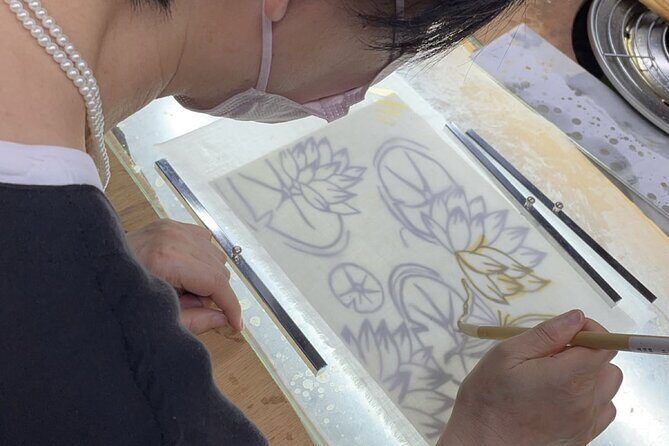
English ability isn’t the main tool here. Many reviews point out limited English from the instructors, but the experience is still workable because the teaching is hands-on and step-based.
Here’s what to do if you’re not fluent:
- Bring a simple sketch if you want originality. Clear shapes beat complicated shading.
- Choose a stencil if you want to reduce guesswork.
- Pay attention to the visual demonstrations. Wax application and dye steps are easier when you watch, not when you translate.
The team’s support style seems to be a big part of the success. Reviews mention the owners being gentle, kind, and patient—especially Yoko, who gets singled out as sweet and helpful. If you ask questions and show your plan, you’ll usually get to a good result.
Value check: is 25.77 a fair price for a handmade Kyoto souvenir?
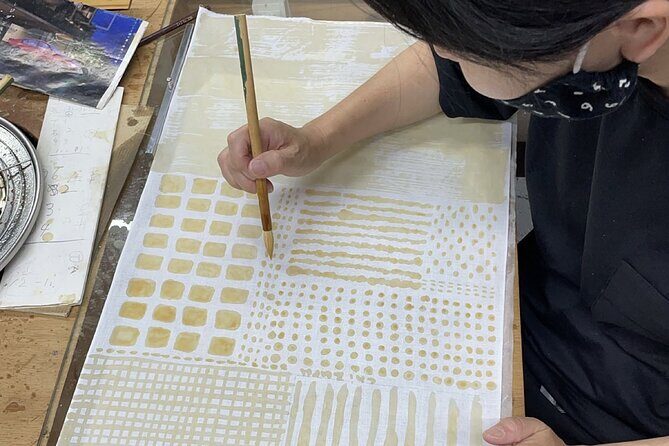
At about $25.77 per person, the price feels fair for what you get: a full craft experience, guidance from working artists, and a finished item you take home the same day. You’re paying for labor, materials, and the studio’s setup, not just entry into a store.
To judge value, compare it to two common alternatives:
1) Shopping for a ready-made souvenir: you’ll get something nice, but it won’t have your personal pattern.
2) Another “craft” where you might only do a small portion: sometimes the best work is done by the staff, and you just stamp something.
Here, you do the key creative and wax-resist steps. That’s why people call it an authentic, one-of-a-kind keepsake. It’s also relaxing, which sounds fluffy until you realize Kyoto days can wear you down. Spending a couple hours making something can be a better use of time than hunting for a new shop every hour.
If you like crafts at all, this is one of those prices that feels like it pays back in memories and in a physical object you’ll actually use or display.
Who should book this Roketsu dyeing experience
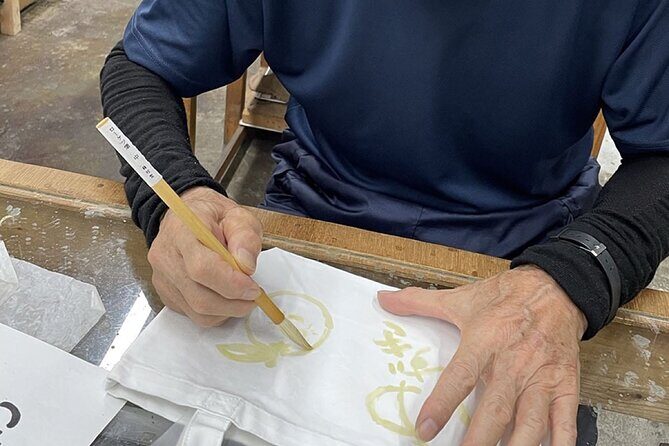
This workshop is a good fit if you want:
- A break from temples and long walking.
- A hands-on cultural activity with a real process.
- A souvenir that’s personal, not mass-produced.
- Something family-friendly, since reviews include experiences with teens and even younger kids in group settings.
It’s also great for solo travelers. One reviewer mentions booking solo and feeling comfortable from start to finish. The studio environment sounds supportive enough that you don’t need a partner to enjoy it.
You might reconsider if:
- You dislike crafts and want only sightseeing.
- You need a highly verbal explanation in English to feel comfortable (because communication may be limited).
- Your schedule is extremely tight with zero buffer for longer designs.
My practical take: how to get the best result with less stress
If you want your dyeing to look crisp and satisfying, set yourself up for success before you start drawing:
- Keep your design bold. Fine detail can be harder to translate cleanly onto fabric and wax lines.
- Choose fewer elements if you’re short on time.
- Test your approach during any practice stage the studio offers.
- Don’t fight the method. Wax-resist has its own logic—lean into strong outlines and simple blocks of color.
And mentally? Treat it like you’re making a small artwork, not a task. Many reviews describe it as soothing and calm. That’s not just nice wording. The process rewards patience. When you slow down, your lines improve and you enjoy the session more.
Should you book Roketsu73 for dyeing in Kyoto?
Yes, if you want a real craft souvenir and an honest break in your Kyoto schedule. The big reasons to book are hands-on design control, bucket dyeing through the full process, and the fact you can generally take your piece home the same day. At this price, you’re paying for a meaningful experience, not just a ticket.
I’d also book if you’re open to learning with visuals and a friendly, patient studio team. Yoko’s support comes up again and again, and that kind of guidance matters when you’re working with wax and dye.
Skip it only if you’re purely sightseeing-driven or your day has no wiggle room. Give yourself a little time. Let the craft be the plan for a couple hours, and you’ll likely leave with something that actually feels like Kyoto.
FAQ
How long does the Roketsu dyeing experience take?
The experience is about 2 hours (approximately 90–120 minutes). If you choose a more intricate design, it may take longer, and you may spend up to around 3 hours.
What is the price per person?
It’s listed at $25.77 per person.
Where is the meeting point?
You’ll meet at Roketsu73 Nishikyōgoku Umazukachō, Ukyo Ward, Kyoto, 615-0885, Japan.
Can I take what I make home the same day?
Yes. The process is designed so you can take your dyed item home on the day, typically within about 90–120 minutes.
What can I dye in the workshop?
You can dye items such as T-shirts and tote bags, and you can also make hanging or wall-style pieces. You select the item you want to dye during the workshop.
Is the workshop dependent on weather?
Yes. The experience requires good weather. If it’s canceled due to poor weather, you’ll be offered a different date or a full refund.