REVIEW · WORKSHOPS
Kyoto: Beginner Knife Sharpening & Handle Fitting Workshop
Book on GetYourGuide →Operated by Japanese knife shop HIRAI · Bookable on GetYourGuide
Sharp steel, calmer cooking ahead. This Kyoto workshop at HIRAI pairs two skills people usually learn the hard way: Japanese knife sharpening and handle fitting, taught in a small group so you get real feedback. You’ll also get a bit of context on what makes Japanese knives different and how they’re meant to be cared for.
I love that the instruction is practical, not just theory, so I felt confident about what to do next step at home. I also really like that you end with a finished knife—sharpened, handled, and packed up so you can take it home with you as a lasting Kyoto souvenir. One consideration: the handle fitting uses fire, so some smoky air can appear, and you should wear clothes you don’t mind smelling a little after.
In This Review
- Key things that make this workshop worth your time
- Kyoto knife skills, taught at HIRAI (not in a lecture hall)
- What you’re actually making: Santoku, Deba, or Yanagi
- Sharpening 101 on whetstones: you practice, then you get checked
- Handle fitting with magnolia wood: the fire step is real
- Want a different handle?
- Engraving up to 4 characters, then packaging for the trip home
- Timing, group size, and how to prepare so you enjoy it
- Price and value: what $161 actually buys you
- Who should book this workshop (and who should skip it)
- Should you book the Kyoto beginner knife sharpening and handle fitting workshop?
- FAQ
- What knives can I choose for the workshop?
- How long is the workshop?
- Can I take my knife home after the workshop?
- Is English available during the class?
- How many people are in the group?
- Do I need to bring a whetstone?
- Can I get my knife engraved?
- What handle is included in the workshop?
- Can I choose a different handle than magnolia?
- Why should I think about my clothes?
Key things that make this workshop worth your time
- Small group size (3 participants max) means you’re not watching from the sidelines.
- You choose your blade type from Santoku, Deba, or Yanagi to match your interest.
- Hands-on sharpening on provided whetstones so you learn the technique without extra shopping.
- Magnolia handle fitting is included, and you’ll see the process end-to-end.
- Optional engraving (up to 4 letters) is available if you arrange it ahead.
- You leave with your own knife, packaged for easy travel home.
Kyoto knife skills, taught at HIRAI (not in a lecture hall)
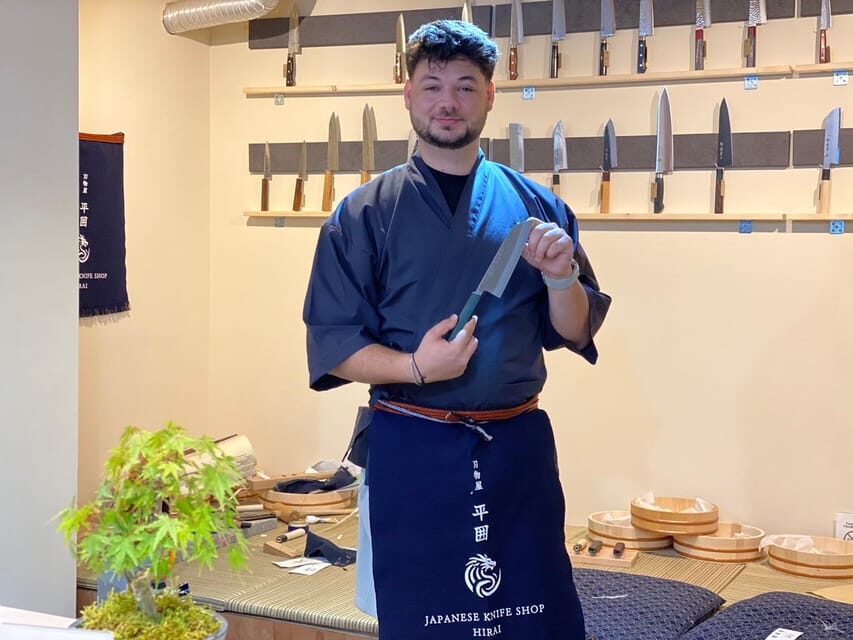
Kyoto is great for culture, but this experience is different: it’s hands-on craft. The workshop runs about 2 hours and happens right at the shop (Japanese knife shop HIRAI), so you go from talking to doing fast.
The set-up is designed for beginners. You’ll be given the uniform and apron for the activity, and the small group format keeps the pace comfortable. English support is available, and you can expect the instructor to explain what’s happening and then guide you while you practice.
You can also read our reviews of more tours and experiences in Kyoto

What you’re actually making: Santoku, Deba, or Yanagi
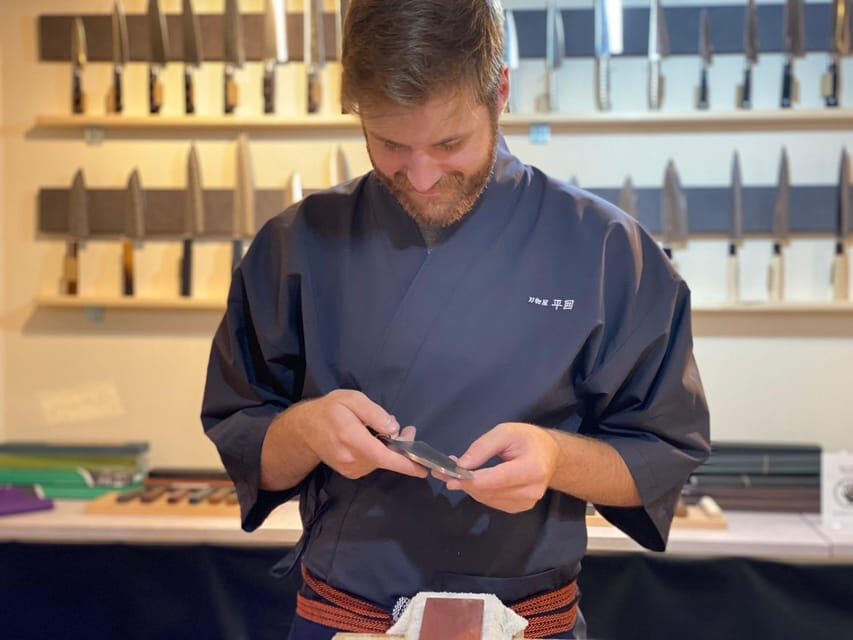
Before you start, you choose one knife style for the workshop from Santoku, Deba, or Yanagi. That choice matters because each style comes with its own “personality,” and the workshop helps you understand what you’re sharpening and why.
Here’s how to think about the decision:
- Santoku is a versatile everyday style, which makes it an easy pick if you mainly want a great general kitchen knife.
- Deba is associated with fish prep and heavier work, so it’s a good match if you want something more specialized.
- Yanagi is known for long slicing strokes, so it’s a logical choice if you love the idea of clean, controlled cuts.
In other words, the workshop isn’t just about sharpening technique in a vacuum. It’s about sharpening a knife you genuinely chose, so when you get home, it’s easier to remember what you learned and why it matters for your cooking.
Sharpening 101 on whetstones: you practice, then you get checked
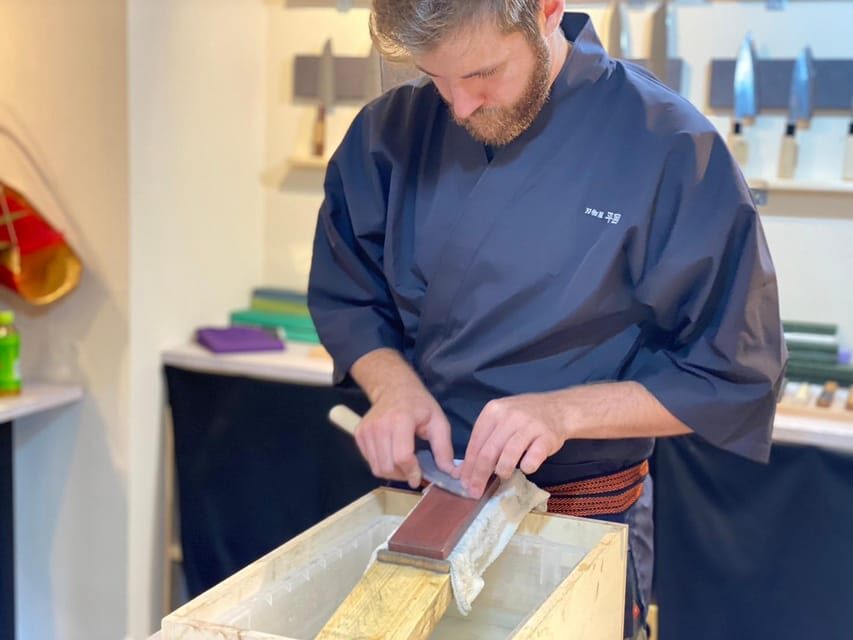
The heart of the class is sharpening. You start with an explanation (including some background on Japanese knives and how they’re used), then you move into hands-on practice on the whetstones provided by the shop. That’s a smart detail: you’re not spending extra money before you even know if you like the process.
What I like about the way this is taught is how it turns a scary skill into something repeatable. People often struggle because they only watch videos and never get their technique corrected. In this workshop format, you get direct feedback as you work, and the pacing helps you adjust while it’s still fresh.
You can also think of sharpening as two skills at once:
1) learning how to hold the knife and keep consistent contact, and
2) learning how to judge whether you’re getting the result you want.
With one-on-one attention in a group of only up to 3, you’re not stuck guessing.
Handle fitting with magnolia wood: the fire step is real
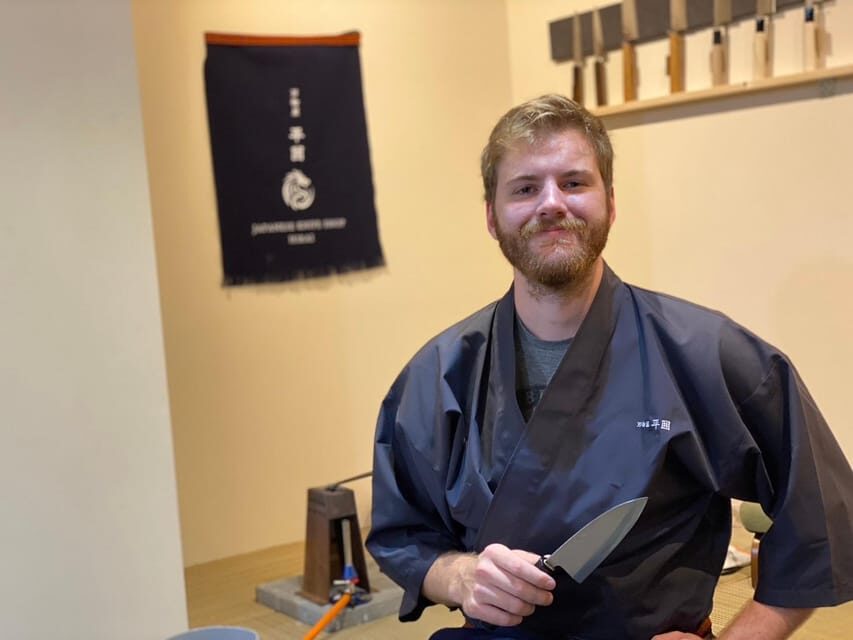
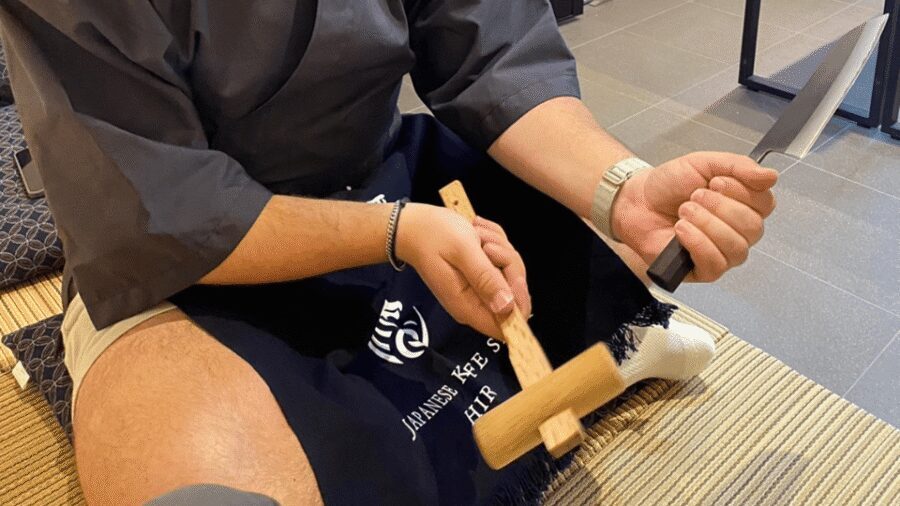
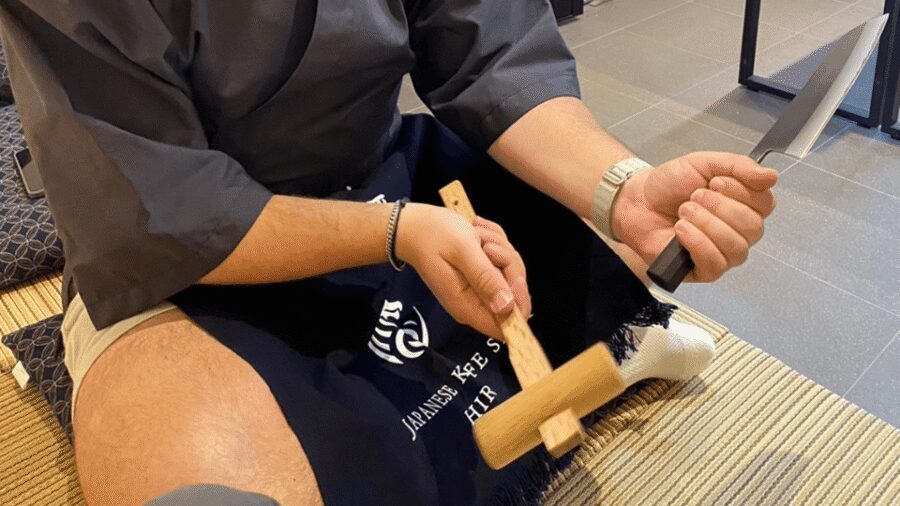
After sharpening comes the part many people underestimate: handle fitting. For this workshop, the magnolia tree handle is included, and you attach it during the session with guidance from the instructor.
One key heads-up: during handle fitting, they use fire, and sometimes smoke can come out. If you’re sensitive to smells or you like your clothes to stay crisp and clean, wear something you don’t mind getting a smoky note. The workshop provides the uniform and apron, but you’ll still be in your own clothes outside or between steps, so plan accordingly.
If you’re curious, this is also the fun part—watching how the craft moves from metal work to wood work. The class makes it feel practical, not mysterious, so you understand what the handle is doing for the knife and why the fit is important.
Want a different handle?
The included option is magnolia, but you can choose other handle types if you pay an additional fee. The exact additional cost depends on the handle type, so if you have your heart set on a specific look, be ready for that extra expense.






Engraving up to 4 characters, then packaging for the trip home
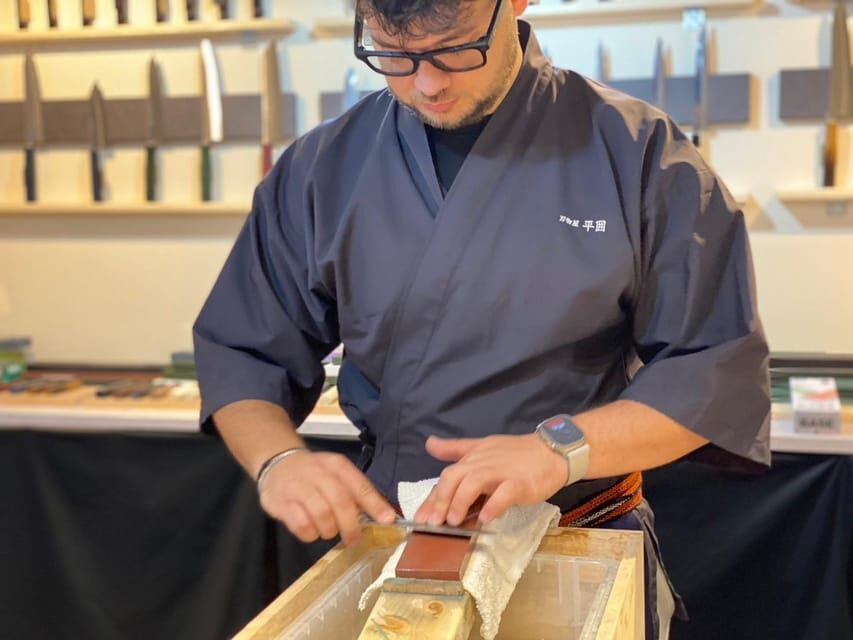
You can add an engraving service to personalize your knife. If you want engraving, you need to tell the shop in advance what characters you want—up to 4 letters/characters. The engraving fee is listed as included, and the class includes the time for it as part of your workshop experience.
This is a small detail that ends up feeling big. A take-home knife is already special, but engraving turns it into something that feels like it belongs to you and your trip.
Once everything is finished—sharpened blade, handle fitted (and engraved if you chose it)—they package your knife so you can take it home. That means you’re not juggling loose parts or worrying about transport right after the workshop ends.
Timing, group size, and how to prepare so you enjoy it
This workshop is 2 hours, and it starts smoothly when everyone shows up right away. The shop asks you to arrive about 5 minutes early so you can begin without rushing.
Group size is a big part of why the class works well. With a max of 3 participants, you get a quieter room, more attention, and more chances to ask questions while you’re working.
Dress and behavior matter too. You’ll see rules that keep the workshop safe and distraction-free:
- no smoking
- no alcohol or drugs
- no pets
- no baby strollers
- keep noise to a minimum
Also, you’ll want clothes that can handle possible smoke from the handle-fitting fire step.
Price and value: what $161 actually buys you
At $161 per person, this isn’t a “try it once and forget it” activity. You’re paying for:
- a workshop knife you sharpen,
- the included handle you attach (magnolia),
- instruction in sharpening and handle fitting,
- uniform and apron for the activity,
- and engraving service (when arranged in advance).
The real value here is not just the knife price tag—it’s the skill transfer. A store-bought knife without knowing how to maintain it can feel like a mismatch. This class gives you a practical baseline for caring for your blade, so you’re more likely to enjoy using it long after Kyoto.
The knife itself is also part of the pricing logic. You’re not simply paying for labor and education; you’re leaving with a quality Japanese knife you worked on, plus the handle and optional engraving.
One more plus: multiple people highlight that there’s no sales pressure. That matters because a class like this can easily become “buy, buy, buy.” Here, the focus stays on learning and finishing your knife.
Who should book this workshop (and who should skip it)
This is best for you if you:
- want a hands-on beginner-friendly introduction to wet-stone sharpening,
- like the idea of choosing Santoku/Deba/Yanagi before you learn,
- want a take-home knife that feels personal thanks to the handle fitting and possible engraving,
- and prefer small-group, guided practice over watching demonstrations.
It’s not a fit if you’re traveling with:
- children under 15,
- wheelchair users,
- or anyone over 80 (the workshop notes this age range isn’t suitable).
Should you book the Kyoto beginner knife sharpening and handle fitting workshop?
If you’re the type who likes real skills—things you can repeat at home—this is an easy yes. The combination of sharpening plus handle fitting, done in a tiny group, makes it feel more like learning a craft than taking a short tour.
Book it if you want:
- a sharper, more confident relationship with your kitchen knives,
- and a take-home souvenir that isn’t just a photo prop.
Skip it if you want something purely passive, or if smoke smells and fire are deal-breakers for your clothing or comfort. But if you can dress for a slightly smoky moment, you’ll walk away with both knowledge and a knife that carries a story.
FAQ
What knives can I choose for the workshop?
You can choose one knife style for the workshop from Santoku, Deba, and Yanagi.
How long is the workshop?
The workshop lasts about 2 hours.
Can I take my knife home after the workshop?
Yes. After you finish sharpening and handle fitting, they package your knife and you can take it home.
Is English available during the class?
Yes, an English guide/instructor is available.
How many people are in the group?
It’s a small group limited to 3 participants.
Do I need to bring a whetstone?
No. Customers use the whetstones provided by the shop.
Can I get my knife engraved?
Yes. Engraving is available if you tell the shop in advance. You can request up to 4 characters.
What handle is included in the workshop?
The included handle is a magnolia tree handle that you attach in the workshop.
Can I choose a different handle than magnolia?
Yes, you can choose other handle types if you pay an additional fee. The price depends on the handle type.
Why should I think about my clothes?
During handle fitting, they use fire, and sometimes smoke comes out. Wear clothes you don’t mind getting smoky.