REVIEW · EVENING EXPERIENCES
Kyoto 5-Star Geisha Night Walk: Small-Group Authentic Experience
Book on Viator →Operated by TripTomo · Bookable on Viator
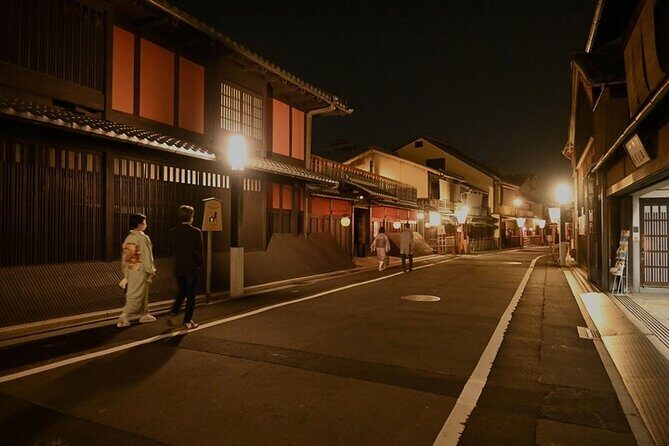
Gion looks different after dusk. This small-group Kyoto geisha night walk is all about seeing the district when the day-tour crowds thin out, while your guide connects streets, temples, and training traditions into one story. I like two things a lot: the tight group size for real conversation, and the focus on Gion after dark when lantern light makes everything feel more human. One heads-up: it’s still a 3.5-hour walking route with some steps and rough paths, so it’s not for anyone with walking limitations.
You start at 5:20 pm near the Disney Store at Shijo-Kawaramachi, then end at Sanjo Ohashi Bridge by Pontocho. The tour is priced at $98, but a big part of the value is that most stops are free to enter, plus you get a Kyoto snack and an expert guide in clear native English (many comments specifically call out Richard, who’s American and Japanese).
If you want Kyoto as more than a checklist, this is a smart way to spend your evening—just dress for pavement, not fashion.
In This Review
- Key things to know before you go
- A 3.5-hour Geisha Night Walk That Makes Gion Feel Real
- Meeting point, timing, and why 5:20 pm is a good choice
- Kabuki theater stop: performance culture before you hit the geisha streets
- Hanamikoji Street and the Gion lanes: where geisha culture lives in plain sight
- Gion Corner and geisha training: what you learn from the street view
- A temple with Zen context: why it’s not just geisha-only
- Yasui-Konpiragu shrine: Shinto traditions in a smaller setting
- Hōkan-ji Temple (Yasaka Pagoda): a night-photo moment with real character
- Ninenzaka and Nene-no-Michi: old alleyways plus a snack reset
- Yasaka Shrine and the surrounding district: top shrine energy at night
- Geisha side streets, then Pontocho: finishing with lantern life
- Price and value: what $98 buys you in Kyoto
- Pacing, comfort, and who should skip this one
- Practical photo and etiquette tips for Gion after dark
- Should you book this Kyoto geisha night walk?
- FAQ
- How long is the Kyoto geisha night walk?
- Where do I meet the group, and where does it end?
- What time does the tour start?
- Is the tour a small group?
- What’s included in the price?
- Are there any paid admission fees during the stops?
- Can I get a full refund if I cancel or if weather is bad?
Key things to know before you go
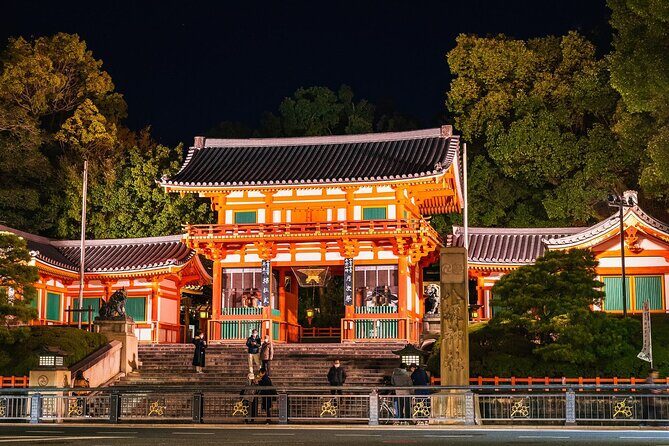
- Gion at night with crowd control: you see the geisha lanes when they’re quieter and more atmospheric
- Max 8 people: small group size means you can actually ask questions and keep up
- Richard’s storytelling style: lots of context on geisha and maiko training, plus shrine and temple explanations
- Free-entry stops most of the way: you’re not paying extra at each site listed on the route
- Snack break included: you get a short pause with a Kyoto-style treat
- Good-photo lighting: temple pagoda views and alleyways are especially photogenic after dark
A 3.5-hour Geisha Night Walk That Makes Gion Feel Real
Kyoto’s Gion can be a sight-seeing zoo in daylight. This tour is built around the opposite idea: go when the streets cool down, lanterns come on, and the district feels more like a living neighborhood than a stage.
The route runs about 3 hours 30 minutes on foot, with frequent short stops rather than one long slog. That matters because you’re walking through older lanes where the pace naturally slows—so you can actually notice details like signage, architecture, and the way people move through the area at night.
And yes, $98 sounds steep until you look at what’s included: small group (up to 8), clear English guidance, a snack, and multiple major cultural stops with free admission as listed on the itinerary. For a short Kyoto evening, that’s decent value.
You can also read our reviews of more walking tours in Kyoto


Meeting point, timing, and why 5:20 pm is a good choice
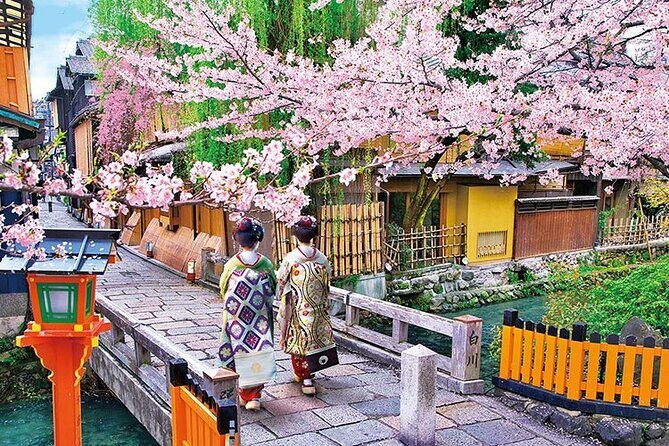
You meet at Disney Store – Kyoto Shijo-Kawaramachi (near Shijo-Kawaramachi) at 5:20 pm. Starting in late afternoon is practical. You catch the shift from busy day energy to the first wave of night atmosphere, when streets start feeling softer and slower.
There’s a simple flow: you’re led from Gion-area lanes into nearby historic areas, then around the Yasaka Shrine zone, and finally toward Pontocho at the end of the night walk near Sanjo Ōhashi Bridge.
If you’re the type who hates being rushed, the timing helps. You’re not sprinting through Gion in peak evening hours. You’re walking it in the in-between hour, when the district looks good and you’re not constantly dodging tour groups.
Kabuki theater stop: performance culture before you hit the geisha streets
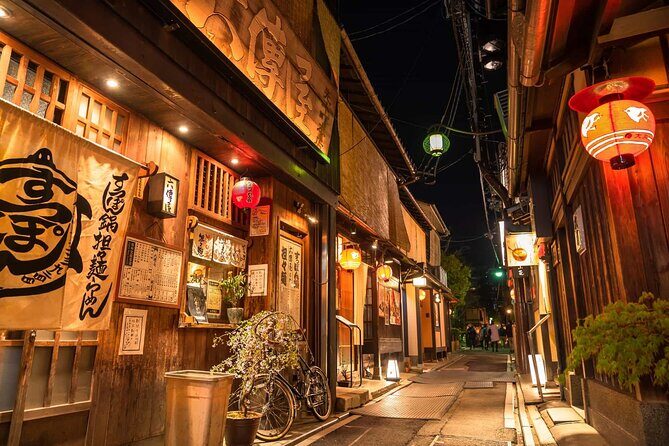
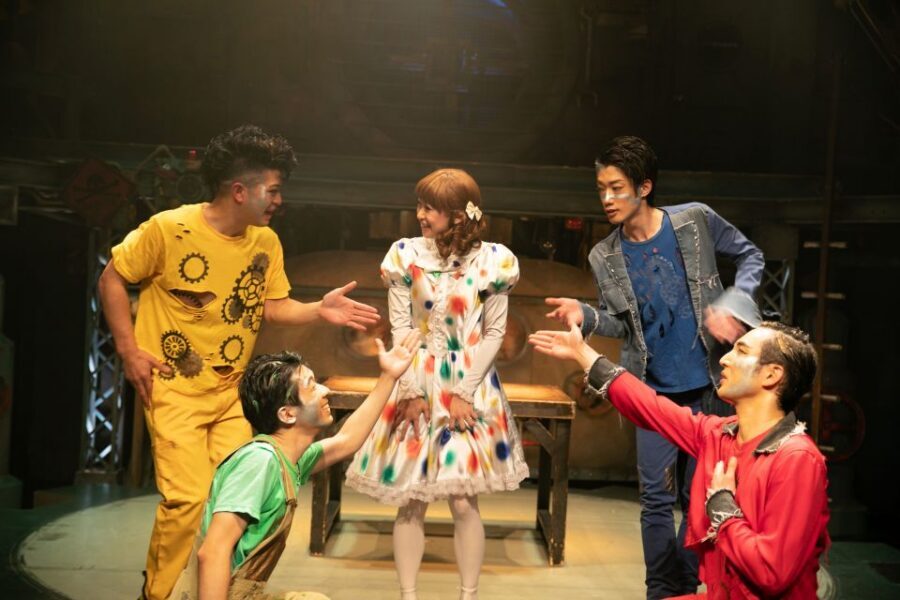
The tour begins with a stop by the Kabuki theater, where your guide explains how traditional Japanese entertainment works. This isn’t just trivia. It gives you a framework for what you’ll see later—because geisha culture, like other traditional arts, is built around practice, discipline, and public-facing performance that’s supported by a whole backstage world.
It’s a smart opener for first-timers. You get context early, so the rest of the walk feels connected instead of a list of landmarks.
Hanamikoji Street and the Gion lanes: where geisha culture lives in plain sight
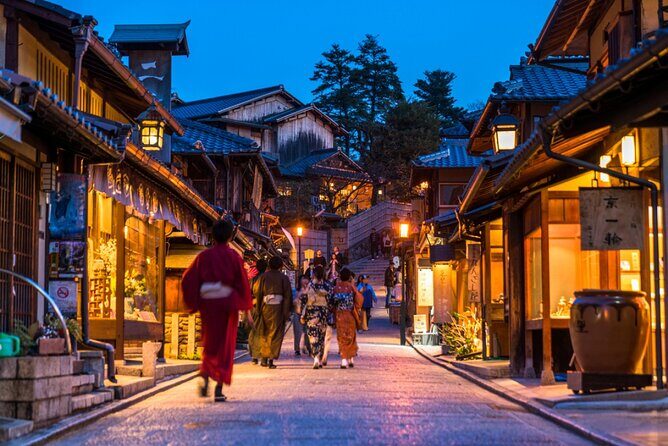
After the opener, you head into the heart of Gion along Hanamikoji Street and quieter alleys. This is the part people come for, and it’s also where the small group size pays off. With fewer people, you spend more time at street corners and less time getting stuck behind a crowd that’s only there for a quick photo.
Your guide talks through geisha arts and traditions, including the idea that you’re walking past places tied to geisha living quarters and working houses. Even if you never see a geisha or maiko directly, the explanations help you understand why certain buildings and spaces exist the way they do.
Two practical notes here:
- Wear shoes you can walk in for hours. Even when stops are short, the total ground time adds up.
- Be ready for narrow sidewalks and changing surfaces—Kyoto is old, and the paving is not always modern.
Gion Corner and geisha training: what you learn from the street view
The itinerary includes a pass by Gion Corner, described as a place where geisha study and train. Your guide uses these moments to explain how training and daily routines connect to the public image you’ll see later in the evening.
This is where the tour tends to feel most different from a standard “walk and take photos” night tour. The guide doesn’t just point out buildings. They give you the why behind the scene—how traditions are taught, how etiquette and arts fit together, and what people historically expected from performers.
If you care about culture, this is the payoff section.
You can also read our reviews of more evening experiences in Kyoto

A temple with Zen context: why it’s not just geisha-only
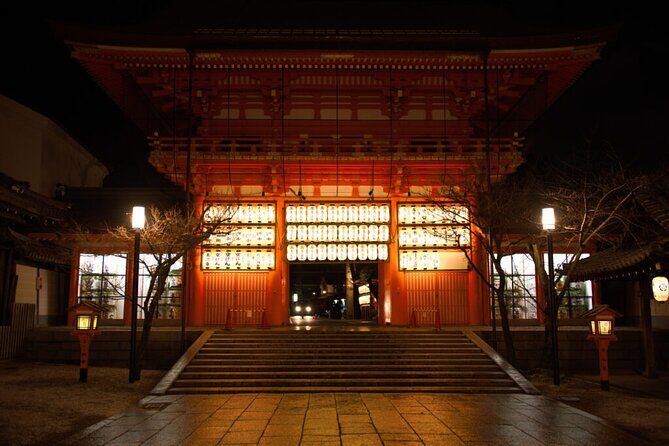
One of the stops in the early part of the walk includes passing by an old temple in Kyoto, with explanations about Japanese Zen. That might sound like a detour if your only interest is geisha streets—but it’s actually helpful.
Kyoto’s traditions are intertwined. Shrines, temples, and everyday behavior are shaped by religious ideas that influence how people think about discipline, calm, and respect in public spaces. When your guide connects those dots, the evening feels more like Kyoto-as-a-system, not Kyoto-as-a collection of sights.
Even the night setting matters. Temples after dark are quieter, so your guide’s explanations land better because you’re not competing with daytime noise.
Yasui-Konpiragu shrine: Shinto traditions in a smaller setting
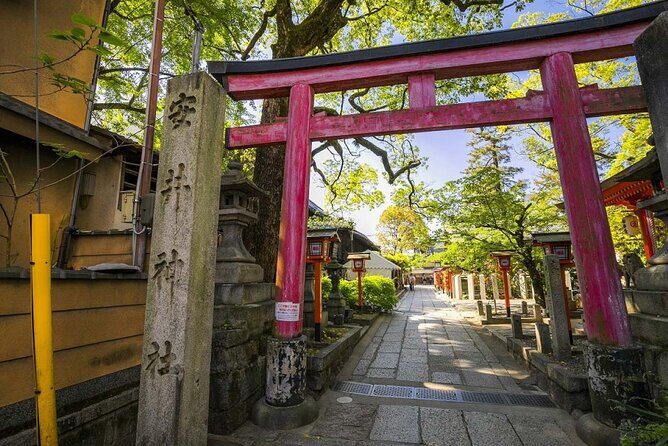
Next you visit Yasui-Konpiragu, an intimate shrine stop (about 30 minutes) focused on ancient Shinto traditions. This is a good pacing break inside the tour, because it gives you a moment to shift from Gion lanes to a sacred space that still feels active.
Shrines at night can be surprisingly calm. The atmosphere helps you understand what to look for: the details your guide calls out, and the way the shrine space changes how you stand, walk, and look around.
If you enjoy photography, this is also a quieter area to get shots without battling as many people as you might in the most famous photo zones.
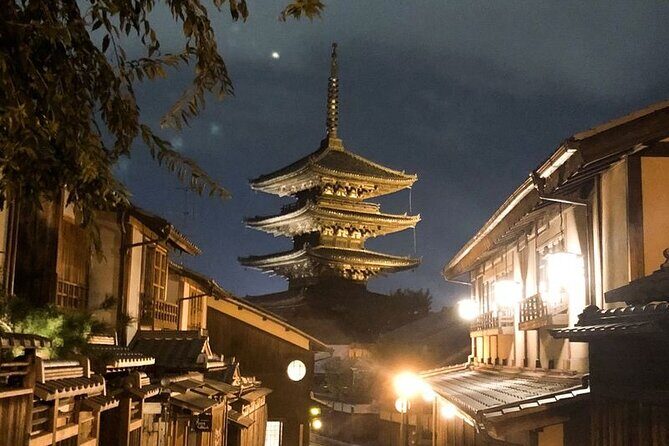
Hōkan-ji Temple (Yasaka Pagoda): a night-photo moment with real character
A standout stop on the route is Hōkan-ji Temple (Yasaka Pagoda). The time here is short (about 15 minutes), but it’s timed for impact.
This is one of those Kyoto scenes that looks good even if you’re tired: stone textures, layered architecture, and night lighting that makes the pagoda area feel cinematic. Even if you don’t love photography, it’s worth the stop because the guide’s context helps you see more than the silhouette.
Quick tip: keep your phone camera ready, but don’t stand in the middle. Kyoto is narrow here, and people move through respectfully.
Ninenzaka and Nene-no-Michi: old alleyways plus a snack reset
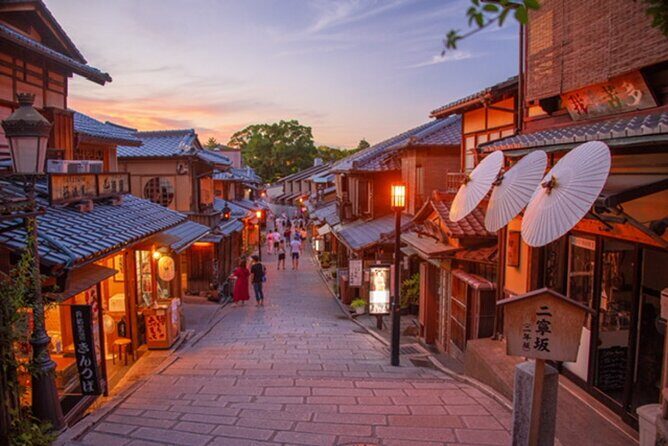
Then you walk through Ninenzaka, described as magical at night (about 15 minutes). This is the classic Kyoto “alley drama” zone: layered lanes, traditional storefront vibes, and the feeling that time is moving slower than it is outside.
Right after that comes Nene-no-Michi, where you get a refreshing Kyoto snack (included). The break is about 30 minutes—long enough to settle your feet, grab a bite, and reset mentally for the last stretch.
The snack detail is more than calories. It’s a social pause in the evening walk. And it also helps you stay present. When your feet start complaining, you’re less likely to rush through the final shrine stops.
If you have dietary restrictions, you should plan to ask ahead—your specific snack choice isn’t described in the tour info beyond being a Kyoto-style treat.
Yasaka Shrine and the surrounding district: top shrine energy at night
Next is Yasaka Shrine, about 30 minutes, with guide explanations of important features. This is a big-name Kyoto shrine, so the scale is part of what you feel.
At night, Yasaka Shrine can feel both grand and approachable. With your guide, you don’t just look at it—you understand what you’re seeing, which turns the stop from sightseeing into actual context.
This is also where the walk becomes a satisfying end-to-end experience: you’ve already built background on geisha arts, training, and religious ideas, so the shrine stop feels connected instead of random.
Geisha side streets, then Pontocho: finishing with lantern life
The tour includes a picturesque spot that you shouldn’t miss, plus a pass through a lesser-known geisha street. The point isn’t just variety—it’s contrast. You see the familiar lanes, then you get the quieter, more lived-in feeling side of the district.
Finally, you reach Pontocho District for about 30 minutes. Pontocho is narrow, lively, and known for its mix of geisha houses and nightlife. In other words: it’s where the old Kyoto world and the evening social world overlap.
This ending works well because you’re finishing at a point where you can keep going on your own—grab a drink, look for a restaurant, or simply continue walking the lantern-lit streets.
Some comments also note that Richard shares practical local recommendations if you ask, including where to eat and what nearby shops are worth your time. That’s useful at the end of a tour when you don’t want to go hunting.
Price and value: what $98 buys you in Kyoto
Let’s talk money without hand-waving. $98 is the ticket price, and for Kyoto, that can feel like a lot.
Here’s why it often works out:
- You get a small group (up to 8), which reduces crowd stress and improves the back-and-forth question time.
- The guide’s explanations are central to the experience, not a bonus. The route is built around culture and context at each stop.
- Multiple listed stops show admission ticket: free, so you’re not paying again and again.
- You get an included snack and a clear native English guide.
If your goal is to see Gion at night with stories that make the buildings and customs make sense, $98 can be a fair trade for one evening. If your goal is mostly photos and you hate guided walking, you may find you’d rather spend that money on a self-guided route plus dinner.
Pacing, comfort, and who should skip this one
This is a walking tour, so comfort matters. The info says it’s not suitable for anyone having walking issues, and it also notes that strollers face steps and unpaved rocky paths that need maneuvering.
What that means for you:
- If you can walk 3.5 hours in uneven areas, you’ll probably be fine.
- If your mobility is limited, choose a shorter route or a taxi-assisted plan instead.
- Bring shoes with grip. Kyoto sidewalks can be slick, and it’s easy to misjudge footing on older surfaces.
Group size helps with pacing. With fewer people, the guide can slow down for questions and keep the line moving without constant stop-and-go chaos.
Practical photo and etiquette tips for Gion after dark
Kyoto at night is gorgeous, but it’s also a real neighborhood. A few simple habits make your experience better for you and easier for locals.
- Keep your phone brightness lower when you can. Hard light flattens night photos and annoys others.
- Don’t block narrow alleys while you frame shots.
- Stay aware of your volume level. Even when it feels like a tour, the streets aren’t staged for loud groups.
- If you spot something you don’t understand, ask your guide. This tour is built around explanations, not just movement.
The best part: when you know what you’re looking at, your photos improve because you take better angles, not just because the light is good.
Should you book this Kyoto geisha night walk?
I’d book this if you:
- Want Gion at night without spending the whole evening fighting daylight crowds
- Like walking tours that actually explain the culture behind what you’re seeing
- Prefer a small group with a guide who can answer questions in plain, clear English
- Care about shrines and temples too, not only geisha streets
I’d skip it if you:
- Have trouble with longer walking, uneven pavement, steps, or rough ground
- Want a mostly independent, non-guided photo hunt
- Need guaranteed time at a single landmark longer than the short stops listed
If you fit the first group, this is one of the better ways to spend an evening in Kyoto: it connects the lanes of Gion to the sacred places around Yasaka, then finishes in Pontocho where Kyoto’s night energy makes sense.
FAQ
How long is the Kyoto geisha night walk?
It runs about 3 hours 30 minutes.
Where do I meet the group, and where does it end?
You meet at Disney Store – Kyoto Shijo-Kawaramachi. The tour ends at Sanjō Ōhashi Bridge at the northern end of Pontocho alley.
What time does the tour start?
The start time is 5:20 pm.
Is the tour a small group?
Yes. The group size is capped at a maximum of 8 travelers.
What’s included in the price?
The tour includes a Kyoto snack, a walking tour with an expert guide speaking clear native English, and the guided experience at the listed stops.
Are there any paid admission fees during the stops?
The itinerary lists admission ticket free for the stops included.
Can I get a full refund if I cancel or if weather is bad?
There’s free cancellation up to 24 hours in advance for a full refund. The experience requires good weather; if it’s canceled due to poor weather, you’re offered a different date or a full refund.