Torii gates feel different when you hike them quietly. On this 3-hour Fushimi Inari tour, you go off paved paths onto real forest trails, often with a small group far from the selfie crowds. I love the mostly crowd-free first half through bamboo and evergreen paths, and I also love that the guide helps you move through the shrines with proper torii etiquette. One consideration: it is not a relaxed stroll, and it is not a good fit if you have limited mobility.
You start at FamilyMart Nakai Tofukuji, then work your way from the calmer temple area up toward the torii. Expect about 7 kilometers total with plenty of uphill and stair moments, and about half the walk happening in forest shade, so direct sun is limited. At the end, you pop back into the famous area for a memorable photo and can grab local street food nearby, though it is not included.
With a price of $72 per person, you are paying for two things that are hard to copy on your own: a guided route that actually avoids the worst crowd waves, and included photos taken during the walk. If you want Fushimi Inari to feel personal instead of packed, this is a smart use of time in Kyoto.
In This Review
- Key Highlights You Can Count On
- Why Fushimi Inari Feels So Crowded—and What This Fixes
- Meeting at Tofukuji: Starting Where the Tour Energy Is Lower
- Tofukuji Temple Stop: A Quick Cultural Warm-Up
- The Hidden Trail Segment and Bamboo Grove Moments
- Summit Views and Old Altar Areas You Usually Miss
- The Forest Descent: Another Bamboo Grove and Secluded Shrine Corners
- Photo Stops That Don’t Feel Like a Photo Shoot
- How the Guides Turn a Hike Into Cultural Understanding
- Walking Distance, Pace, and What Moderate Really Means Here
- What to Bring (and What Not to Bring) for the Forest Trail
- Group Size and the Value of Paying for a Better Route
- Weather, Cancellations, and When to Expect a Different Vibe
- Who Should Book This Fushimi Inari Hidden Hiking Tour
- Should You Book This Kyoto Hidden Trail Tour?
- FAQ
- How long is the Kyoto Fushimi Inari hidden hiking tour?
- Where do I meet the guide?
- What is the walking distance and difficulty?
- What group size is this tour?
- Are photos included?
- What should I bring for this hike?
- Is this tour suitable for people with limited mobility?
- Is the tour okay for children?
- Is food provided during the tour?
- What language is the guide?
Key Highlights You Can Count On
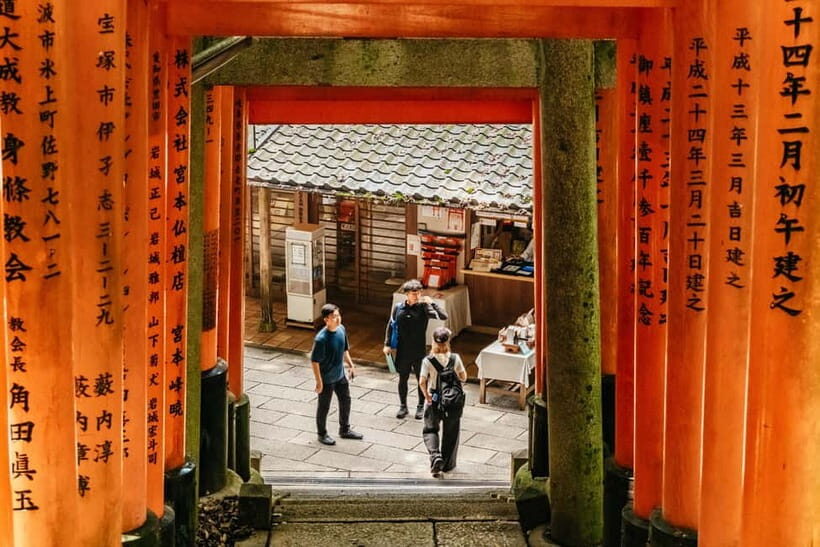
- Off-paved forest trails for most of the walk, so you spend more time walking through nature than standing in lines
- Bamboo groves at different points, giving you more variety than the main gate loop alone
- Small-group vibe (up to 9 people), which makes the pace feel human and the photos easier
- Photo stops in both famous and less-visited spots, handled by your guide
- Shrine etiquette and meaning, with many guides specifically calling out how to approach torii gates and offerings
- Forest shade for roughly half the tour, which helps when Kyoto is hot or bright
Why Fushimi Inari Feels So Crowded—and What This Fixes
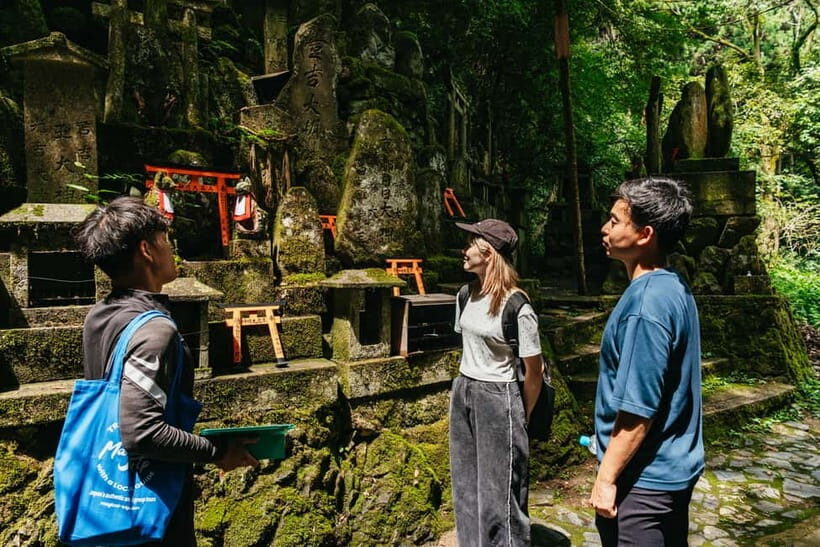
Fushimi Inari Shrine is one of those Kyoto places where the famous views pull in everyone at once. When you visit on your own, you end up sharing paths with tour groups, people stopping for photos at the exact wrong moment, and constant stopping-and-starting.
This tour aims to break that pattern. You do not just enter from the main front gates and follow the standard flow. You start from the Tofukuji side and move through quieter neighborhoods and mountain trails first, so you get a calmer experience before the foot traffic catches up.
That order matters. The torii string-up view is still there, but you see it with breathing room. And because the walking is on forest paths as well as shrine routes, the trip feels like part hike, part cultural walk—not just a photo sprint.
You can also read our reviews of more hiking tours in Kyoto

Meeting at Tofukuji: Starting Where the Tour Energy Is Lower
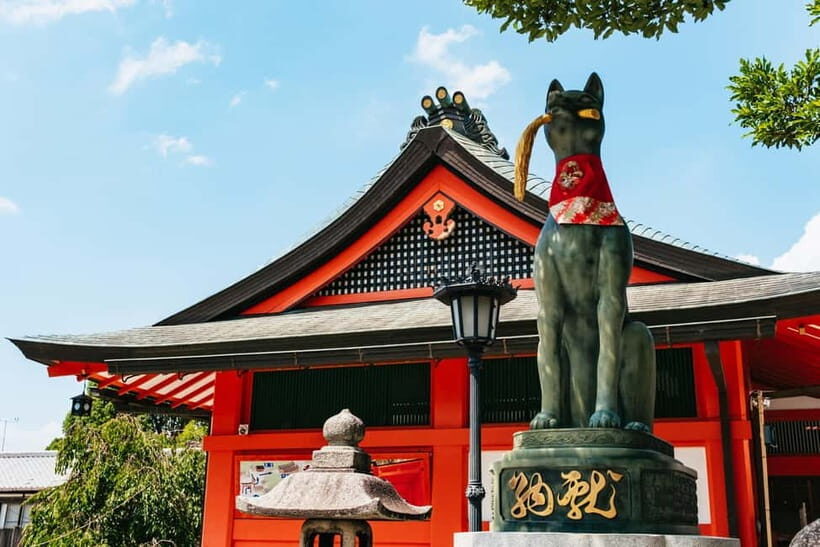
Your meeting point is FamilyMart Nakai Tofukuji, outside Tofukuji Station Exit 2. It is one of those handy Kyoto setups: easy to reach by train, and easy to find without guesswork.
From there, the tour moves into a quieter residential area before you head toward the mountain. This matters more than it sounds. A lot of people arrive at Fushimi Inari with their brains already in photo mode. Starting from the calmer side gives you a chance to get oriented, meet your guide, and settle into a slower pace.
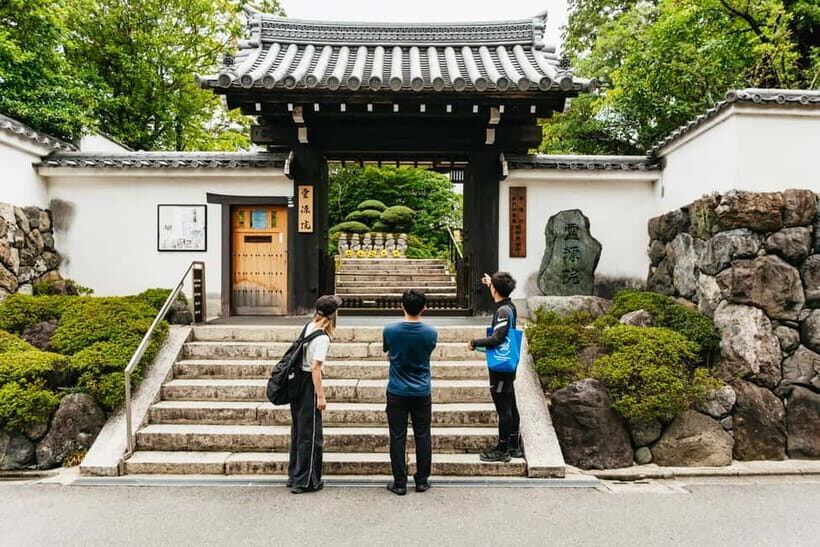
You then visit Tofukuji Temple for a short stop (about 10 minutes). It gives you a cultural starting point before you shift into the shrine trails and the Inari mountain approach.
Tofukuji Temple Stop: A Quick Cultural Warm-Up
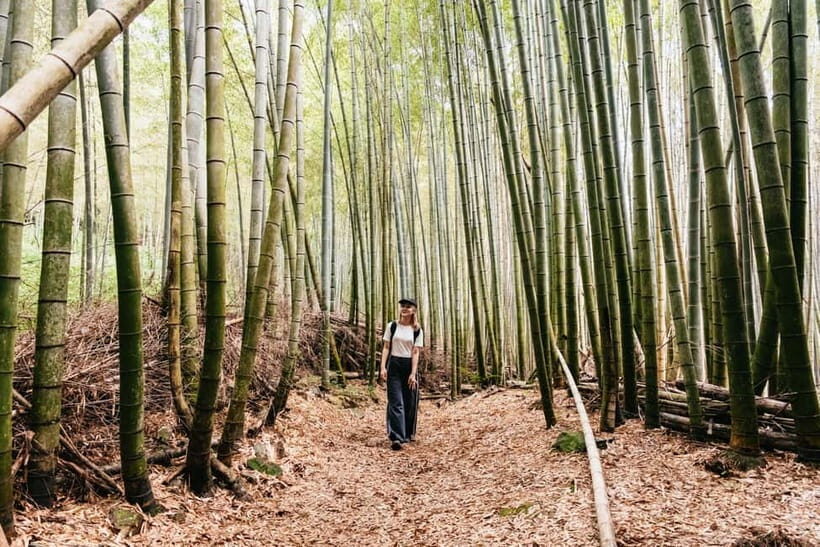
The Temple stop is short by design. You are not spending the morning in a museum; you are building context so the rest of the hike makes more sense.
Even if you are not religious, you will likely find this useful. Knowing that you are entering an area with layered shrine traditions changes how you notice the details later—like how paths branch, where people pause, and why some spots feel more sacred or more secluded than others.
The Hidden Trail Segment and Bamboo Grove Moments
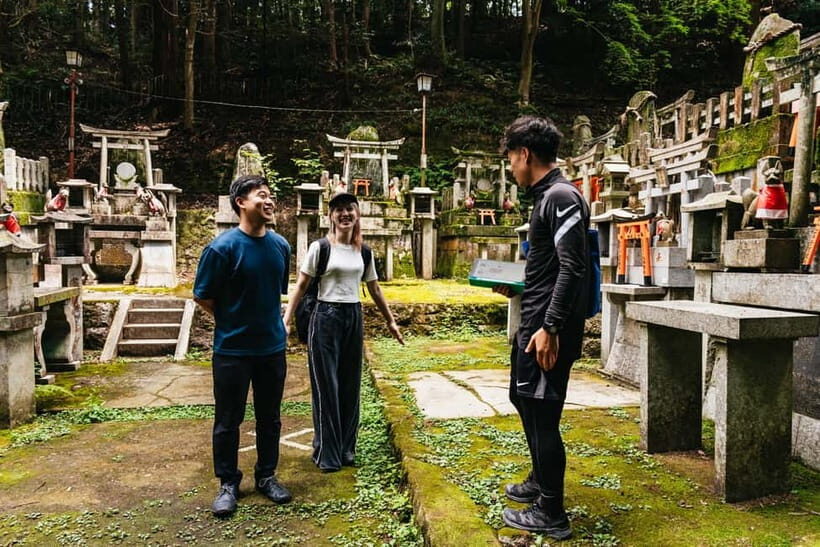
One of the most praised parts is the stretch where the route goes off the paved path for a longer time. This is where you stop feeling like you are sightseeing and start feeling like you are walking through a living place.
There is a dedicated stop labeled as a hidden gem (around 40 minutes). In the experience design, this aligns with the bamboo grove detour. You get time in a quieter patch of green, away from the constant traffic of the main torii corridor.
From here, you connect back toward the main shrine route, including the areas with the iconic vermilion torii gates. The shift is deliberate: you get nature time first, then you earn the big torii moments rather than being dropped into the busiest section immediately.
Why you’ll care: bamboo groves are visually memorable, but the real value is contrast. Your eyes adjust from the tight “torii tunnel” to open wooded views, and your photos stop looking like the same postcard everyone else got.
Summit Views and Old Altar Areas You Usually Miss
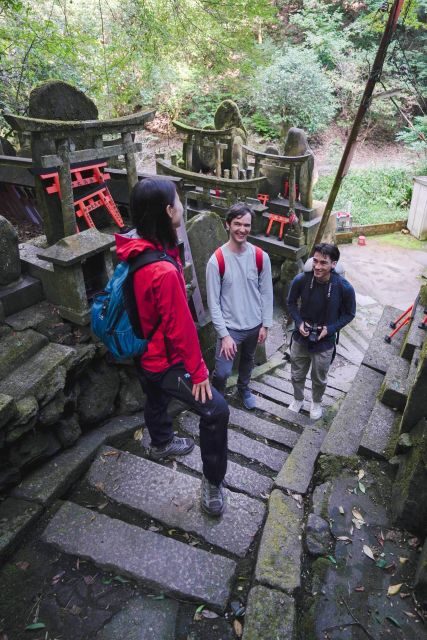
As you keep climbing, you reach the summit region where you will see shrine altars across the mountain. This is one of those parts where the walking effort pays off quickly—because you are not only looking outward. You are seeing how the shrine environment is arranged on steep terrain.
The tour includes viewpoint time blocks (one is about 1 hour, another about 45 minutes). Even with exact timing, the key idea is that your guide spaces you out. You are not rushing through each photo spot with the crowd stampede.
You also get the kind of “from the back side” approach that many visitors never experience. The hike route is designed to take you through less direct paths and smaller areas before you come into the most famous section.
If you like history and ritual details, this is also where your guide often adds meaning. Several guides on this tour are praised for explaining how to approach the torii gates respectfully and how offerings and wishes work in practice—so it does not feel like you are just walking past objects. It feels like you are participating correctly.
You can also read our reviews of more tours and experiences in Kyoto

The Forest Descent: Another Bamboo Grove and Secluded Shrine Corners
After the summit area, you head back down via a forested trail. This downhill section is not just scenery; it is part of the tour’s crowd-avoidance strategy.
During this descent, you visit smaller shrines on the way to another bamboo grove, then continue toward the famous area near the base for the classic photo setup. The big win here is that the walk stays interesting even as the main shrine gets busier. You are still moving through quiet sections, so you are not stuck waiting in the loudest crowd surge.
Footing matters on this part. The tour is not described as extremely difficult, but it is not a simple flat walk. You can expect stairs and uneven, rocky paths, especially if the weather has been wet. Some participants noted mud or slipperiness after rain, so use calm, careful steps.
Photo Stops That Don’t Feel Like a Photo Shoot
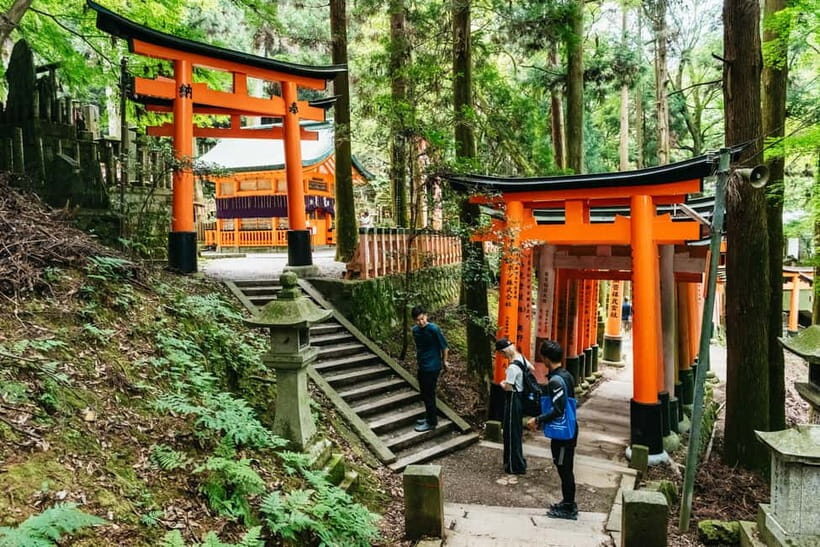
This tour includes photos taken during the walk. That sounds small until you realize how much energy it saves. At Fushimi Inari, people often spend their time wrestling for a stance in the crowd.
Here, your guide handles positioning at scenic points along the route—often in areas that are less crowded than the main gates. Guides are also praised for being personable and for taking photos at multiple stops, which helps you leave with real memories instead of just one blurry shot of the back of someone’s camera.
If you care about torii photography, you’ll appreciate the variety: you get images in popular spots, and you also get shots in less-known corners where the red gates feel more like part of the forest rhythm.
How the Guides Turn a Hike Into Cultural Understanding
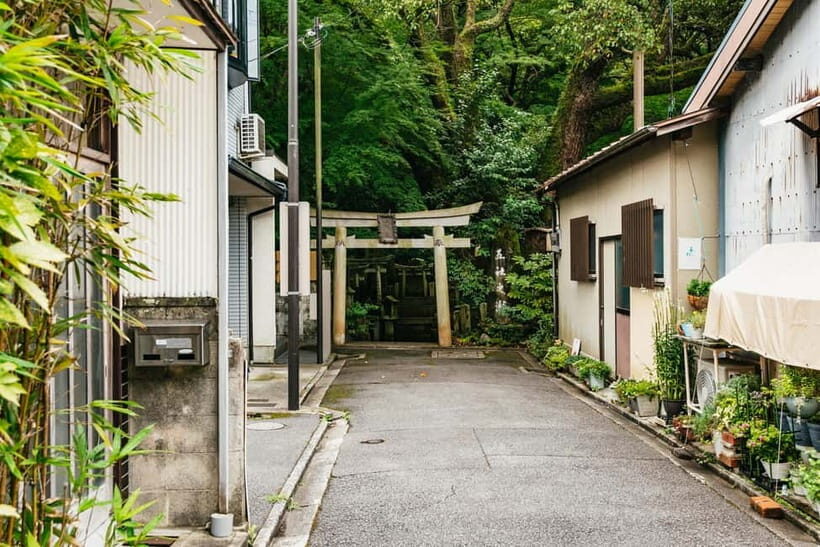
The guides on this tour are repeatedly praised for more than just route-finding. They explain shrine customs and small details that most people would otherwise miss.
For example, people mention guides like Jimmy teaching proper torii gate entry manners and how to make offerings and wishes respectfully. Others highlight guides like Hina and Shiori for answering questions and sharing explanations about shrine culture and temple practices. You can also find mention of guides explaining the meaning of amulets, and that kind of detail tends to make the shrine feel more alive.
This is the difference between seeing and understanding. When you know what you are looking at and why people pause, your photos and your walking pace both change. You slow down naturally. The place stops feeling like a checklist item.
Also, the guides are often described as friendly and welcoming, and several names come up: Lafra, Shun, Hina, Josh, Jimmy, Shiori, Naru, Yuto, Ayane, and others. That pattern suggests you are not just buying a walk—you’re buying a guide who cares about the experience.
Walking Distance, Pace, and What Moderate Really Means Here
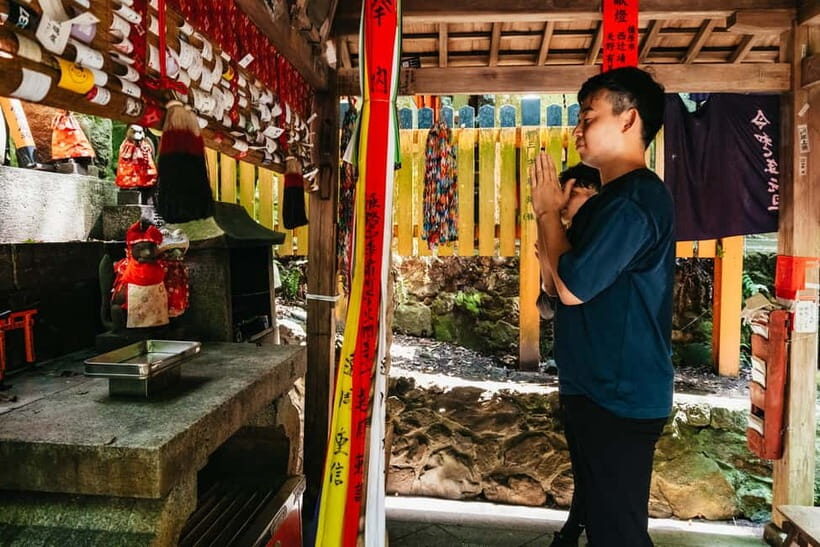
This is a 3-hour tour with about 7 kilometers total. It includes regular stops, and you can take extra breaks if needed.
How “moderate” plays out in real life:
- Expect uphill climb segments and stair sections
- Expect uneven trail surfaces on some parts
- Expect a steady hiking pace rather than a slow amble
One participant said their watch logged around 50 flights climbed, which gives you a practical sense that it’s not only a flat scenic walk. Another noted it is more of a hike than a relaxed outing. So if you plan to treat it like a casual stroll, you’ll likely feel it.
One more detail that helps: the tour notes that half the walk happens in forest, so you won’t always be in direct sunlight. Still, you’re moving for hours, so wear shoes that grip.
What to Bring (and What Not to Bring) for the Forest Trail
Bring long-sleeved shirts and long pants. Mosquitoes and bugs can show up because you are hiking in the mountain area. This is not a fashion moment; it is practical trail comfort.
You also cannot bring luggage or large bags. If you travel light for Kyoto (which you should), that is easy to manage. Keep your load small so you can move comfortably on uneven paths.
If you go at a time when rain is possible, be extra careful with your footing. Some participants described slippery or muddy conditions on rainy days, so plan for that reality even if the hike isn’t described as extreme.
Group Size and the Value of Paying for a Better Route
Up to 9 people keeps the walk from turning into a slow moving crowd. Smaller groups mean you can hear your guide, ask questions, and get help with photo timing without feeling like you are in cattle mode.
So does $72 per person feel worth it? For me, the value logic is simple:
- You are paying for a route that goes off paved paths and onto forest trails for much of the hike
- You are paying for someone to manage timing and crowd-avoidance sequencing
- You are paying for included photos, not just your own phone shots
- You are paying for cultural context that makes the shrine meaningful, not just scenic
If you love walking and want a quieter way to do Fushimi Inari, this price starts to make sense quickly. If you only want the classic torii corridor, you might feel like you could do it cheaper on your own. But if you want the mountain feel plus the etiquette guidance, this tour is built for that.
Weather, Cancellations, and When to Expect a Different Vibe
The tour can be canceled during extreme weather. Rain is also a factor, and the hike may become muddier and slipperier on rainy days.
That said, weather doesn’t just make things worse. Some participants noted that on rainy days there were almost no people, and the hidden path felt especially good. The tradeoff is comfort and footing, not just crowd levels. If the forecast looks rough, wear the right clothes and go slow.
The tour does include forest walking time, so weather affects you less than a full sun hike would—but trails still get slick.
Who Should Book This Fushimi Inari Hidden Hiking Tour
Book this if:
- You want a calmer Fushimi Inari experience with less time in crowds
- You enjoy walking in forests and taking photos in quieter settings
- You want shrine etiquette explained as part of the hike
- You can handle uneven terrain and stairs
Skip it if:
- You have limited mobility or need a wheelchair-friendly route
- You want a fully relaxed walk with minimal effort
- You are traveling with bulky luggage (not allowed)
Kids: children under 8 are not suitable, and kids under 8 need a parent or guardian permission to book in the first place. If you’re traveling with younger kids, this one is likely not the best fit based on the walking and trail conditions.
Should You Book This Kyoto Hidden Trail Tour?
I think you should book this tour if your goal is to experience Fushimi Inari in a way that feels human. The crowd-avoidance design is the whole point, and the included bamboo grove + forest trail route gives you variety you won’t get from the most direct approach.
You should not book it if you want an easy, mostly flat walk or if mobility limitations are part of your reality. Also, if you plan to bring a large bag, the tour rules mean you will have a problem.
If you’re fit enough for a moderate hike and you care about doing Fushimi Inari with context, this is one of the best ways to get the torii magic without being swallowed by the crowd flow.
FAQ
How long is the Kyoto Fushimi Inari hidden hiking tour?
It runs about 3 hours.
Where do I meet the guide?
You meet at FamilyMart Nakai Tofukuji, outside of Tofukuji Station Exit 2.
What is the walking distance and difficulty?
It is approximately 7 kilometers total. It is not a simple walk and does take some effort, with stairs and uneven paths.
What group size is this tour?
It is a small-group experience for up to 9 people.
Are photos included?
Yes. Photos are included during the tour.
What should I bring for this hike?
Bring long-sleeved shirts and long pants. Bugs and mosquitoes can be present on the mountain trails.
Is this tour suitable for people with limited mobility?
No. It is not recommended for people with mobility impairments.
Is the tour okay for children?
Children under 8 are not suitable. For children under 8, parent or guardian permission is required before booking.
Is food provided during the tour?
Food is not included. You can enjoy local street food near the main shrine at the end, but it is not part of the tour.
What language is the guide?
The live guide is available in English.


-150x150.jpg)