REVIEW · WORKSHOPS
Ikebana Floral Design Workshop in Kyoto
Book on Viator →Operated by HanaYou · Bookable on Viator
Small steps, big calm. This Ikebana workshop at HanaYou in Kyoto has you designing with real seasonal flowers in a 90-minute class led by founder Ryoko Arnwine. You do not need prior experience, and you leave with a fresh arrangement you can bring back to your hotel.
I also like the low-key pace: it is a small group of up to four, with traditional tea, a seasonal sweet, and a setup for photos. One thing to plan for is the studio is on the 2nd floor, so expect walking up stairs.
In This Review
- Key highlights to know before you go
- Entering HanaYou’s Kyoto studio for ikebana
- Price and what you actually get for $97.73
- Your 90-minute class rhythm: how the workshop flows
- Learning the ideas behind ikebana (not just the end result)
- Materials and tools: what you use during class
- The photo corner: why it matters more than you think
- Tea, sweet, and the calm pause in the middle
- Taking your ikebana back to your hotel
- Who should book this ikebana workshop in Kyoto
- How to make the most of your first ikebana session
- Should you book HanaYou’s Ikebana workshop?
- FAQ
- How long is the Ikebana workshop at HanaYou?
- Do I need prior experience in ikebana?
- Is instruction offered in English or Japanese?
- Can I take the flowers home?
- Are refreshments included?
- What’s included in the price besides instruction?
- Do I need to bring my own ikebana tools?
- Where does the workshop start and end?
- Is transportation included?
- What is the cancellation policy?
Key highlights to know before you go
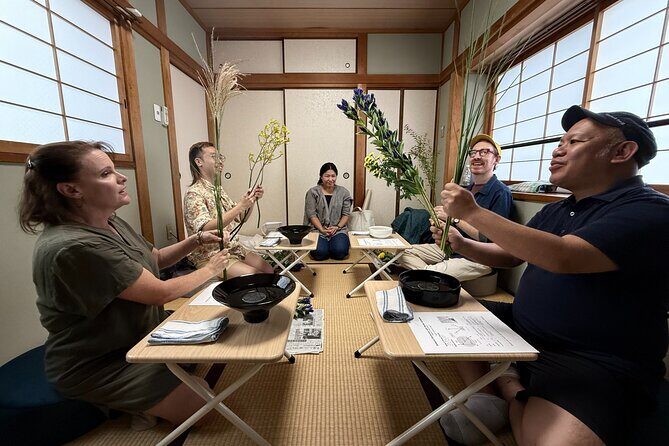
- Founder-led teaching: HanaYou founder Ryoko Arnwine guides you through the process from start to finish.
- Beginner-friendly ikebana: you get clear instruction even if you have never picked up a flower tool before.
- Take-home fresh seasonal flowers: your arrangement is meant to travel back with you to your hotel.
- Calm, small-group setting: maximum group size is 4, so you get real attention.
- Photo corner for your creation: you can snap pictures without hunting for the right light.
- Tea and a seasonal sweet: a gentle break that fits the mood of the class.
Entering HanaYou’s Kyoto studio for ikebana
Kyoto can be loud in the wrong spots. This workshop gives you the opposite feeling fast. You meet at Kawaramachi Marutamachi Iseyacho, Kamigyo Ward, and the activity ends back at the same meeting point, so you are not stuck navigating on your own afterward.
HanaYou’s studio is near public transportation, which helps a lot because a workshop like this lives or dies on timing. You do not want to arrive frazzled, hunting for your entrance while the class already started. Also note the practical detail: you will walk up stairs to the 2nd floor. If you are traveling with heavy luggage or you are short on patience that day, wear comfy shoes and give yourself a few extra minutes.
This is not a big auditorium setup. It’s a studio class, which means the experience stays hands-on. That matters because ikebana is easier to understand once your hands are doing the work, not just your brain listening.
You can also read our reviews of more tours and experiences in Kyoto

Price and what you actually get for $97.73
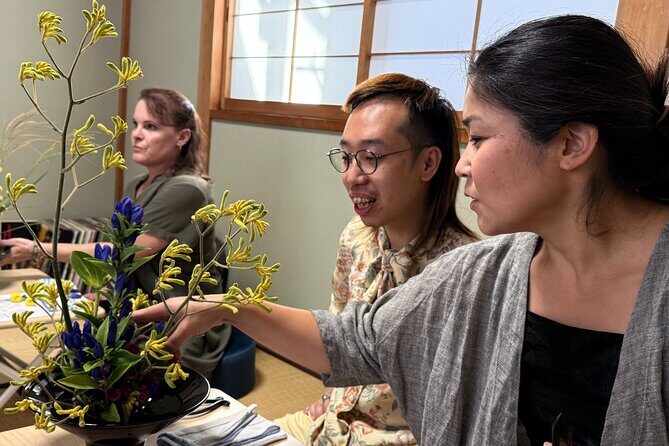
At $97.73 per person, this feels priced like a true guided craft session, not a quick demo. You are paying for several things that normally cost extra elsewhere: a hands-on 90-minute instruction session, real seasonal flowers that you take home, and the tools needed to make your arrangement.
Included in the session are:
- Fresh seasonal flowers to take back to your hotel
- Traditional Japanese tea and a seasonal sweet
- A photo setup so you can document what you made
- Studio equipment like a vase, scissors, pins, and other items used during class
What is not included is transportation to and from the studio and personal ikebana tools (the studio tools are for in-class use only). That is good news for you if you want to keep your packing simple. It also nudges you to show up with just yourself, not a suitcase of gear.
The value here is also in how the class is taught. The reviews you read before booking tend to point to the same themes: patient guidance and learning the meaning behind placement. In other words, you are not just copying a pretty picture. You are being taught how to think like an ikebana student.
Your 90-minute class rhythm: how the workshop flows
Expect a steady, beginner-friendly flow for about 1 hour 30 minutes. The structure is simple: arrive, get settled, get guided, arrange, adjust, and finish with photos and refreshments in the right places.
One nice part is the language option. Ryoko can guide you in English or Japanese depending on your preference. If you worry you will not understand the finer points, this helps. You can focus on the process rather than speed-running translation in your head.
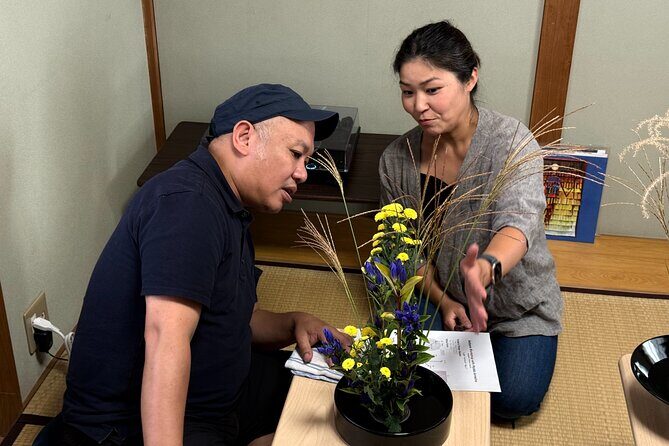
Another smart design choice: the workshop is capped at a maximum of 4 travelers. In a small group, you get quicker feedback. When you place a stem and you are not sure if it looks right, you do not have to wait for a teacher to circle the room around other people. You get corrections while the flowers are still in your hands.
Learning the ideas behind ikebana (not just the end result)
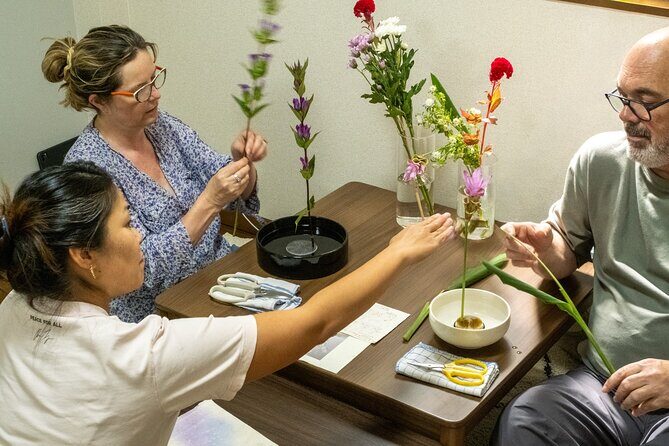
Ikebana has a reputation for being formal, strict, and intimidating. In this class, that tension drops quickly because you start with clear fundamentals and a calm pace.
The teaching emphasizes balance and harmony, and it also connects flower placement to meaning. That is exactly what you want as a first-timer. If you only learn a recipe, your next arrangement at home becomes guesswork. If you learn why certain choices work, you can keep practicing later with whatever flowers you can find.
Ryoko’s style is described as patient and knowledgeable, and that shows in how the class supports decision-making. You are not left staring at a blank space wondering what the teacher wants. You get step-by-step direction, then time to make it your own.
You also pick up cultural and historical context while you work. That is valuable because ikebana is more than decoration. It is a way of expressing intention through form. Even if you never become a lifelong student, understanding the logic behind the style makes your finished arrangement feel more grounded and less like a craft project.
Materials and tools: what you use during class
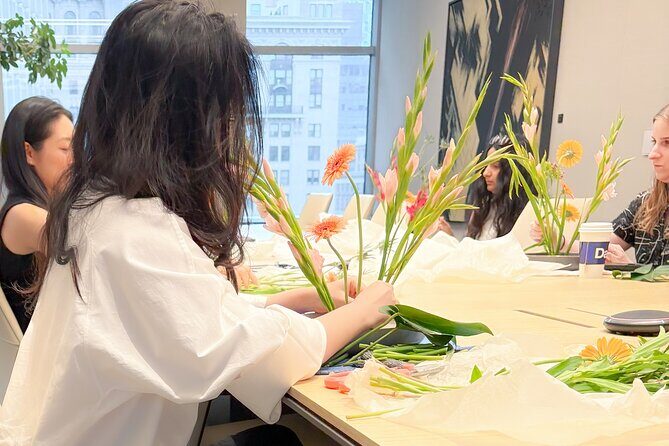
Here is how to prepare mentally: you will use studio equipment, but it is not yours to take home. During the session, you use what the studio provides, such as a vase, scissors, and pins. Those are common in ikebana because stems often need support and precise positioning.
The class provides the fresh seasonal flowers. That is important. Seasonal flowers are part of the point. They influence the look and feel of what you make, and they match the workshop’s “right now” mood rather than a generic set of blooms.
You will take your arrangement with you. That means you should plan for how you will carry it. The workshop does not hand you a magic suitcase, so think ahead:
- Leave space in your bag for a container or flower-safe wrapping
- If your hotel is not nearby, consider how you will keep the arrangement stable during transit
- If you are sensitive to scent, know that fresh flowers can be noticeable
I like that the workshop is designed around an arrangement you can actually keep. Some classes teach something you admire in the studio and then forget. Here, you get something personal to bring home.






The photo corner: why it matters more than you think
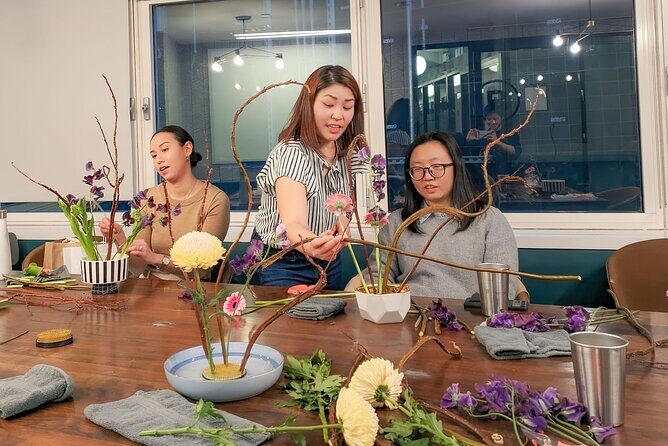
A “photo spot” can sound like fluff. In practice, it’s a smart part of the experience because it removes friction. You finish your arrangement, you want a clean photo, and you do not want to be improvising with your phone in a corner that is too dark.
The studio includes a photo setup for you to capture your creation. It is especially helpful for beginners because you are likely to be proud of what you made, even if it is not perfect. With a dedicated spot, you can take your time and get a decent record without feeling rushed.
Also, taking a photo right after the class gives you something useful later. If you ever try another arrangement at home, you can look back and remember what choices you made and how you balanced the structure.
Tea, sweet, and the calm pause in the middle
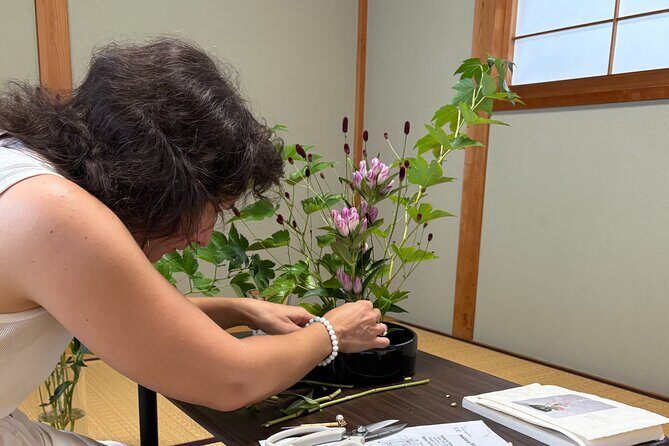
This workshop includes traditional Japanese tea and a seasonal sweet. It’s not just a snack break. It supports the mood of the craft: slow down, breathe, and reset your hands before you make final adjustments.
This is one of those details that can quietly improve your whole experience. When you are shaping stems and deciding angles, you need patience and steadiness. A short pause with tea is a gentle way to keep your attention from getting too tense.
In a city like Kyoto, where your days can be packed, I love that this gives you a cultural moment that is not another line or another bus transfer. It feels like a real studio break, not a packaged tourist stop.
Taking your ikebana back to your hotel
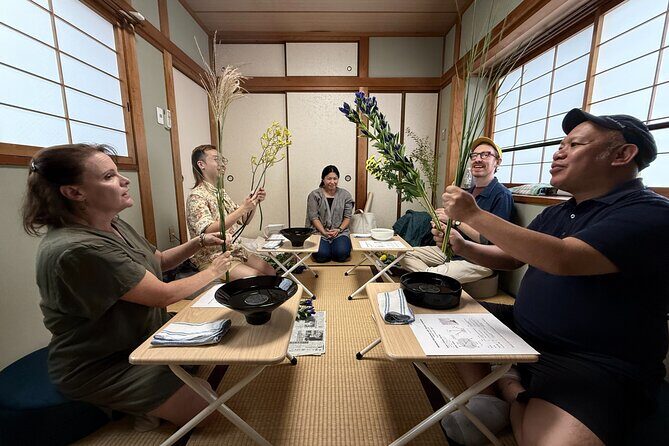
The goal is simple: you will take home fresh flowers, designed by you, made for you. Since the flowers are seasonal and real, they will change slightly over time as they settle and drink water.
That is not a flaw. It is part of the experience. You are bringing home something alive, not a souvenir that stays identical forever. If you keep your arrangement steady and protected, you’ll get a beautiful couple of days (or more, depending on conditions) where your ikebana still looks intentional.
One practical note: because studio equipment is for in-class use only, the only thing you truly own afterward is your arrangement. Pack accordingly. Do not plan to have time afterward to go on a shopping spree for containers. If you need to manage your flowers safely to your room, you will want to think about that early.
Who should book this ikebana workshop in Kyoto
This workshop is a strong match if:
- You want a hands-on Kyoto activity that is calm and not overly crowded
- You like learning the meaning behind a craft, not just copying a final look
- You want a beginner-friendly class where the instructor guides you step by step
- You want something you can take home immediately, to enjoy later in your hotel room
It is also a good option if you are traveling with limited time. The class runs about 90 minutes. That is long enough to learn and create, short enough to fit into a day that already includes temples and streets.
Where it may not suit you:
- If stairs are a problem for you, plan carefully because the studio is on the 2nd floor
- If you dislike any situation where you have to focus quietly for a set time, this is more meditative than rowdy
How to make the most of your first ikebana session
Here are the practical moves I’d suggest you use when you book this class:
- Arrive with a calm mindset. You are learning balance and harmony, and that takes a few tries.
- Ask for clarification in your preferred language early. English or Japanese guidance is available based on your preference, so set that expectation at the start.
- Take notes in your phone, even if the class feels straightforward. Remembering a few placement ideas helps you repeat the style later.
- Use the photo corner. It is there for a reason, and you’ll want to capture your finished arrangement before you transport it.
- If you tend to overthink, let yourself make small adjustments. Ikebana rewards micro-decisions, not perfectionism.
And yes, enjoy the tea and sweet. This class is built around slowing down. If you rush, you’ll miss the calm that makes ikebana feel special.
Should you book HanaYou’s Ikebana workshop?
If you want an authentic Kyoto craft that you actually take home, book this. The combination of founder-led instruction from Ryoko Arnwine, beginner-friendly guidance, and the included fresh flowers makes it good value. The small group size (up to 4) and the cultural context also make the learning stick.
I’d skip it only if the stairs matter for you or if you are looking for a high-energy sightseeing tour. This is a studio experience. Quiet focus is the whole point.
FAQ
How long is the Ikebana workshop at HanaYou?
The class lasts about 1 hour 30 minutes.
Do I need prior experience in ikebana?
No. The workshop is designed for beginners and requires no prior experience.
Is instruction offered in English or Japanese?
Yes. Guidance is available in English or Japanese based on your preference.
Can I take the flowers home?
Yes. You take home fresh seasonal flowers to your hotel.
Are refreshments included?
Yes. The class includes traditional Japanese tea and a seasonal sweet.
What’s included in the price besides instruction?
You also get fresh seasonal flowers to take home, studio photo access to capture your arrangement, and use of studio equipment during class.
Do I need to bring my own ikebana tools?
No. You do not need personal tools. Studio items are used during class, and studio equipment is not for take-home.
Where does the workshop start and end?
It starts at Kawaramachi Marutamachi Iseyacho, Kamigyo Ward, Kyoto 602-0873, Japan, and ends back at the same meeting point.
Is transportation included?
No. Transportation to and from the studio is not included.
What is the cancellation policy?
You can cancel for free up to 24 hours in advance for a full refund. If you cancel less than 24 hours before the experience starts, you will not receive a refund.