REVIEW · DRINKING TOURS
Kyoto: Newly Opened Sake Tasting – Sanjo Chasuian
Book on GetYourGuide →Operated by Sanjo Chasuian · Bookable on GetYourGuide
Kyoto’s sake tasting scene just got a new stop. This freshly opened Sanjo Chasuian experience is built around an instructor-led, English-friendly look at sake, then you taste it with snack pairings and even different serving vessels. I especially like the small-group feel (up to 6 people) and the structured guidance that helps you go beyond just sipping and guessing.
One thing to consider: this is a shared group session, so the pace is guided for the group, not private. Also, the experience is for age 20 and up, and it includes alcohol as part of the tasting flow.
In This Review
- Key highlights I’d plan around
- Sanjo Chasuian near Karasuma Oike: easy to reach, easy to enjoy
- Meeting the instructor in kimono and learning how to taste with confidence
- How the 80 minutes flow: a guided pace that stays beginner-friendly
- The 7 sake-and-snack pairings that make the flavors click
- Why the vessel matters: tasting sake through different cups
- Instructor-led English guidance beats guesswork every time
- Price and value: does $50 make sense for 8 sakes plus teaching?
- Who this Kyoto sake tasting is best for (and who should skip it)
- Quick etiquette and practical tips before you go
- Should you book Sanjo Chasuian’s newly opened sake tasting?
- FAQ
- How far is Sanjo Chasuian from Karasuma Oike Station?
- How long is the Kyoto sake tasting experience?
- What is the price per person?
- How many sake tastings are included?
- Is the session beginner-friendly?
- Will the tasting be in English?
- How big is the group?
- What kind of seating should I expect?
- Is there an age limit?
- Can dietary restrictions be accommodated?
- Is alcohol allowed if I’m driving or biking?
Key highlights I’d plan around
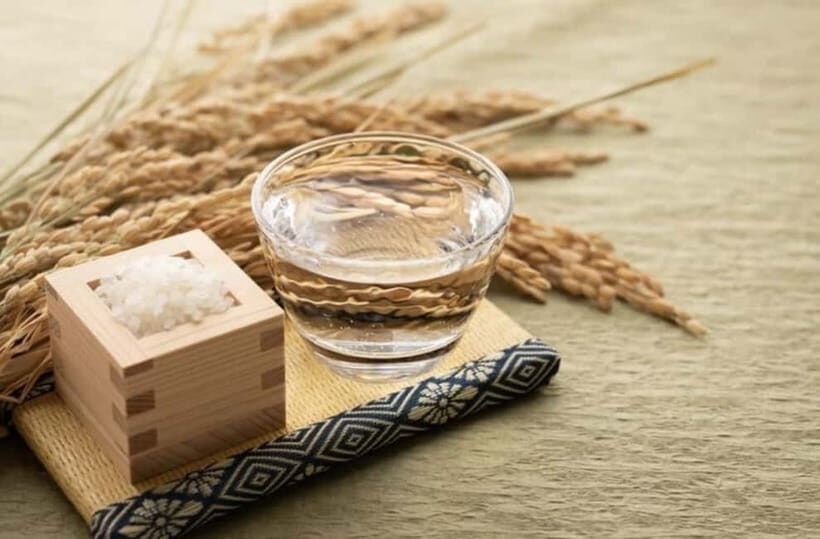
- Certified English instructor in kimono who teaches the basics of sake tasting and label reading
- 7 sake varieties paired with snacks, with a welcome drink included for 8 sakes total
- Different sake vessels so you can notice how aroma and taste shift
- Beginner-friendly approach with practical tips you can use later when you buy or order sake
- Five-minute walk from Karasuma Oike station, making it easy to fit between sightseeing blocks
Sanjo Chasuian near Karasuma Oike: easy to reach, easy to enjoy
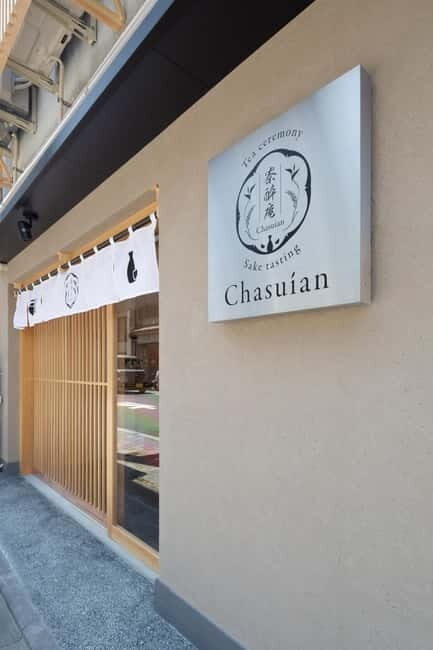
Getting to this place is one of its quiet advantages. It’s located about a 5-minute walk from Subway Karasuma Oike station, so you can tack it onto a day that’s already packed with Kyoto stops. The meeting point is simple: look for the Sanjo Chasuian logo plate by the entrance, open the door, and staff will be waiting to greet you.
Sanjo Chasuian is a cultural experience facility welcoming international visitors, and all explanations are in English. You’re not thrown into silence with a flight of drinks. Instead, you’re guided step-by-step through what you’re tasting and why it matters.
The room setup is flexible: you may sit at table seating or in a Japanese-style room, depending on the group and space. If you’re sensitive to how seating works in Japan, show up a few minutes early so you can settle in comfortably before the tasting begins.
You can also read our reviews of more food & drink experiences in Kyoto

Meeting the instructor in kimono and learning how to taste with confidence
The experience starts with the most helpful ingredient: a real instructor, not just someone pouring drinks. You’re welcomed by a female instructor who holds the International Sommelier of Sake certification, and she arrives in a traditional kimono. That sets the tone fast. This isn’t a loud party tasting. It’s calm, focused, and designed to teach you how to enjoy sake like a pro.
The teaching part is what makes this more than a standard sampling. You’ll learn sake basics such as:
- a bit of sake history and how sake fits into Japanese culture
- how sake is brewed and why that affects flavor
- the different types of sake and how to think about them
- how to read labels so you can shop smarter next time
The payoff here is practical confidence. Once you’ve learned what the label is trying to tell you, tasting stops being random. You start noticing patterns: what’s lighter or more rounded, what feels more aromatic, and what works better with certain foods.
In short: if you’ve ever stood in a sake shop thinking, I have no idea what this label means, this is the exact skill-building you’re looking for.
How the 80 minutes flow: a guided pace that stays beginner-friendly
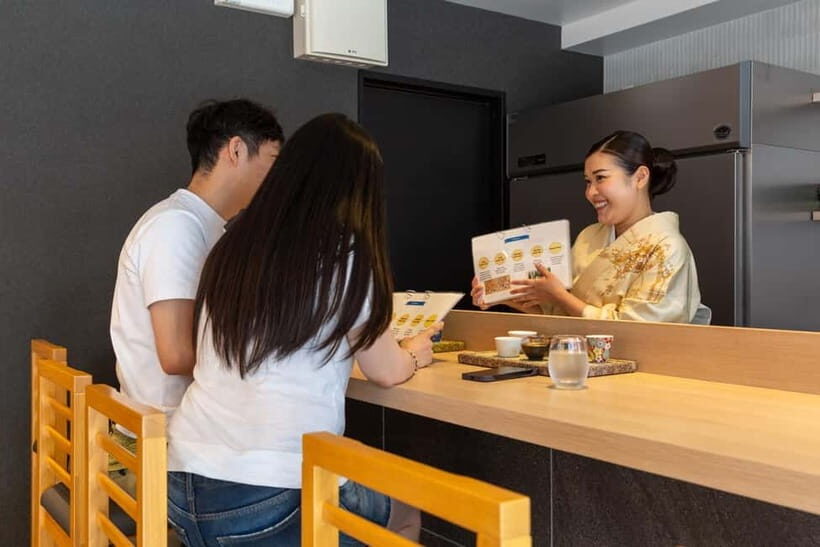
The full experience runs 80 minutes, which is long enough to teach you the basics and taste multiple sakes without feeling rushed. It’s also short enough to fit into a typical Kyoto itinerary without turning your day into a marathon.
The structure usually feels like this:
- Welcome drink to get you started
- Intro to what you’ll taste and how to taste it (including brewing and types)
- Guided tasting rounds
- Pairing snacks alongside the sakes so you can compare how food changes the experience
- A vessel moment, where you taste using different serving cups
- Wrap-up with advice for finding your personal favorites
Since this is a small group limited to 6 people, you’re more likely to get real attention and explanations instead of being swallowed by a big crowd.
Also, it’s built for beginners. You don’t need to know sake terms already. You just need curiosity and a willingness to pay attention to aroma, flavor, and how pairing affects what you think you like.
One more practical note: the session is listed as shared, meaning you’ll be with other guests. That’s part of the fun if you like a lively but controlled atmosphere, and it’s not the best fit if you want total privacy.
The 7 sake-and-snack pairings that make the flavors click
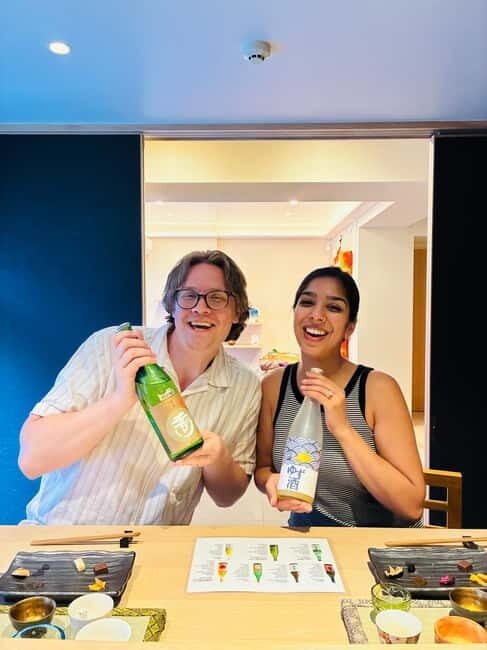
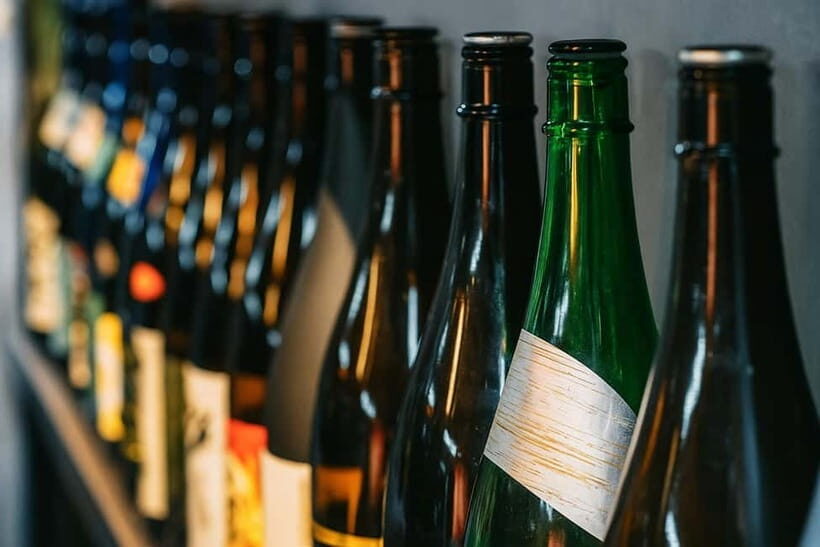
Here’s the heart of the experience: 7 types of Japanese sake paired with snacks. And because the welcome drink is included, you get a total of 8 sakes during the session. That’s a lot of variety for an 80-minute format, and it matters because you don’t just taste sake in isolation.
The snacks aren’t afterthoughts. The pairing is designed so the sake and food both act like the main characters. You’ll get tips for pairing sake with different dishes, and you’ll also learn how the same sake can taste different depending on what you eat with it.
Why this approach is so valuable: sake is often described as complex, and it can be hard to know what people mean when you’re tasting one glass at a time. Pairings give you a reference point. If a sake tastes more balanced after a bite, you learn that pattern. If a flavor becomes sharper or softer with a certain snack, you learn how to steer your own experience later.
This is also where the small-group teaching shines. You can listen for what your instructor points out, then test it immediately with the next pour and snack pairing.
And yes, you’ll likely leave wanting to remember the taste differences. That’s not a bad thing. It turns your next meal into a chance to order smarter.
Why the vessel matters: tasting sake through different cups
One of my favorite parts of sake culture is that it’s not only about what’s in the bottle. The venue leans hard into that idea with a variety of sake vessels.
You’ll learn that the flavor and aroma can change depending on the vessel you use. Then you get to experience that difference directly. In real life, you often don’t get the chance to test it. Here, you do.
Practically, this means you’re training your senses. You’re not just drinking to pass time. You’re comparing, noticing, and building a mental map of what feels right for your palate.
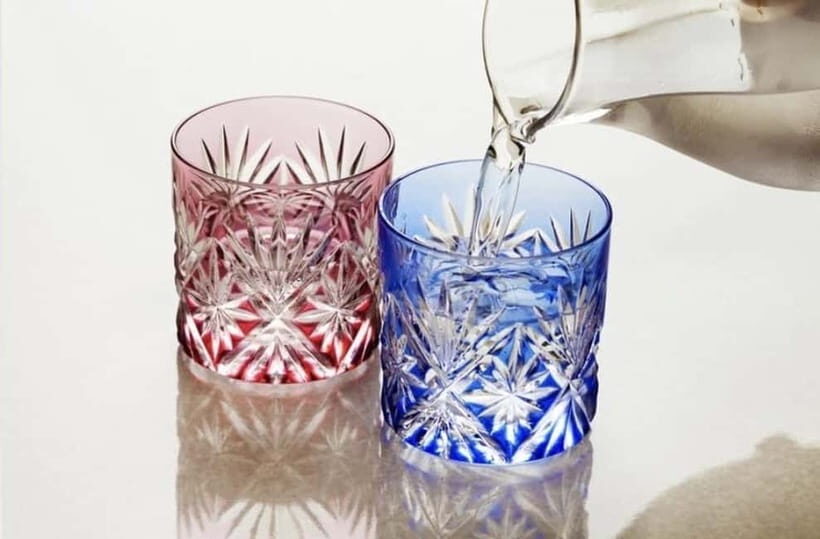
There’s also a visual side to this. The tasting includes the beauty of different cups and how they present the drink. Even if you’re not a “show me the photo spot” traveler, it makes the tasting rounds more memorable.
And if you fall for a specific sake or vessel style, you can buy your favorites at the shop after the session.
You can also read our reviews of more drinking tours in Kyoto




Instructor-led English guidance beats guesswork every time
The standout theme from the experience is explanation quality. One review highlighted that Yuko was great at explaining the culture around sake, how to taste, and how to choose based on what you like. That lines up with what this class is set up to do: give you a framework, then let you apply it in real tasting moments.
A good sake tasting should answer three questions for you:
- What am I drinking?
- How should I taste it?
- How do I pick the next one without getting lost?
This experience targets those questions with label reading basics, brewing and type explanations, and pairing guidance. It’s beginner-friendly but not dumbed down. You don’t just get a pour. You get a way to understand the pour.
Price and value: does $50 make sense for 8 sakes plus teaching?
At $50 per person for an 80-minute session, you’re paying for a few specific things that add up quickly:
- 8 total sakes including a welcome drink and 7 tasting rounds
- snack pairing designed to teach you how sake behaves with food
- an International Sommelier of Sake instructor who teaches tasting basics in English
- variety of sake vessels so you can compare sensory differences
If you compare this to buying sake by the bottle or trying to replicate a similar tasting at home, the teaching component is the value driver. You’re not only sampling—you’re getting the language and technique to understand what you’re tasting.
And because it’s a small group limited to 6, it feels less like you’re part of a cattle-call experience and more like you’re actually learning during your time there.
Also worth noting: there’s a grand opening discount until September 15. If your dates line up, it’s an even easier yes.
Who this Kyoto sake tasting is best for (and who should skip it)
This is a strong fit if you:
- are a beginner who wants a real framework for tasting sake
- like food pairing experiences, not just drinking
- want an activity that’s short, focused, and close to transit
- enjoy culture experiences that feel respectful and guided
It’s also ideal if you want something in English in Kyoto without sacrificing authenticity. The kimono welcome and the structured teaching keep it grounded in the cultural side of sake.
It might not be ideal if:
- you need a totally private experience (it’s a shared group session)
- you’re under 20 (participants must be 20+)
- you’re driving or cycling and can’t take part in alcohol tasting (alcohol is strictly prohibited for those who drive cars or bicycles)
Quick etiquette and practical tips before you go
A few small things will make your visit smoother:
- Plan to arrive a few minutes early so you can get settled in your seating setup (table or Japanese-style room).
- If you have dietary restrictions, email or message via WhatsApp ahead of time. The staff will do their best to accommodate your request.
- Bring a curious mindset. The experience is built around learning how to taste, not just finishing drinks.
- If you want to buy sake or vessels afterward, keep a little space in your travel budget and plan how you’ll carry any purchases.
If you’re traveling with an interpreter: interpreters are welcome, but the interpreter is charged the participation fee as one guest.
Should you book Sanjo Chasuian’s newly opened sake tasting?
I’d book this if you want a compact Kyoto experience that teaches you how to taste sake, not just what to drink. The combination of 8 sakes, snack pairing, variety of vessels, and an instructor with serious sake credentials makes it feel like more than a basic tasting.
The only real reason to skip is if you’re set on a private, unguided experience, or if alcohol tasting doesn’t work for your travel logistics. Otherwise, it’s a smart value use of 80 minutes—especially with the discount running until September 15.
FAQ
How far is Sanjo Chasuian from Karasuma Oike Station?
It’s about a 5-minute walk from Subway Karasuma Oike station.
How long is the Kyoto sake tasting experience?
The experience lasts about 80 minutes.
What is the price per person?
The price is $50 per person.
How many sake tastings are included?
You’ll receive a welcome drink plus 7 types of sake for a total of 8 sakes.
Is the session beginner-friendly?
Yes. The experience includes explanations on how to taste and how to read labels, and it’s designed to be beginner-friendly.
Will the tasting be in English?
Yes. The instruction is in English.
How big is the group?
The session is limited to 6 participants (and it is a shared group plan).
What kind of seating should I expect?
You may sit at table seats or in a Japanese-style room.
Is there an age limit?
Yes. Participants must be 20 years of age or older.
Can dietary restrictions be accommodated?
You should inform the staff by email or WhatsApp in advance, and they will do their best to accommodate your request.
Is alcohol allowed if I’m driving or biking?
No. Drinking alcohol is strictly prohibited for those who drive cars or bicycles.