REVIEW · WORKSHOPS
Fish cutting class
Book on GetYourGuide →Operated by Fish cutting class · Bookable on GetYourGuide
Knives, fish, and instant sashimi lessons. This Fish Cutting Class at Kimura in Nishiki Market is built for hands-on learning, starting from raw fish and ending with lunch you made yourself. I like the fact that it happens inside a fish shop that has been operating for 400 years, so the setting feels like part of the lesson, not a backdrop.
I’m especially drawn to the step-by-step flow: you’ll first watch, then you’ll fillet, and then you’ll slice sashimi and carpaccio. It’s also a class with real chef-style coaching in English, including corrections as you work, so beginners aren’t left to figure things out alone.
One thing to plan for: this is messy work with raw fish, and it’s not suitable for kids under 10. Wear clothes you do not mind getting stained, and go in knowing you will handle knives and fish guts as part of learning.
In This Review
- Key highlights to know before you go
- Why the Kimura Fish Cutting Class Works in 150 Minutes
- Finding Kimura at Nishiki Market and Getting Set Up Fast
- From Watching to Filleting: Knife Skills in a 400-Year Shop
- Sashimi and Carpaccio: Turning Fresh Fish Into Lunch
- Sauces and Dietary Needs: Gluten-Free and Halal Options
- Messy, Safe, and Realistic Expectations
- Price and Value at $77 per Person
- Who Should Book This Fish-Cutting Class
- Should You Book This Fish Cutting Class?
- FAQ
- Do I fillet the fish myself?
- What dishes will I make during the class?
- Where is the class held?
- How long is the class?
- Is the class in English?
- How big is the group?
- What is included in the price?
- What should I bring?
- Is there a dietary option for gluten-free or halal needs?
- Is alcohol included?
- Is the class suitable for children?
Key highlights to know before you go
- Kimura in Nishiki Market: you start in a working fish shop, not a demo kitchen
- Fillet from scratch: you handle the fish first, then make sashimi and carpaccio
- Small group (max 8): more time with the instructor and quicker feedback
- Blue and orange aprons plus gloves: you stay protected while you learn
- Commemorative photo with the fish: a fun keepsake from your work
Why the Kimura Fish Cutting Class Works in 150 Minutes
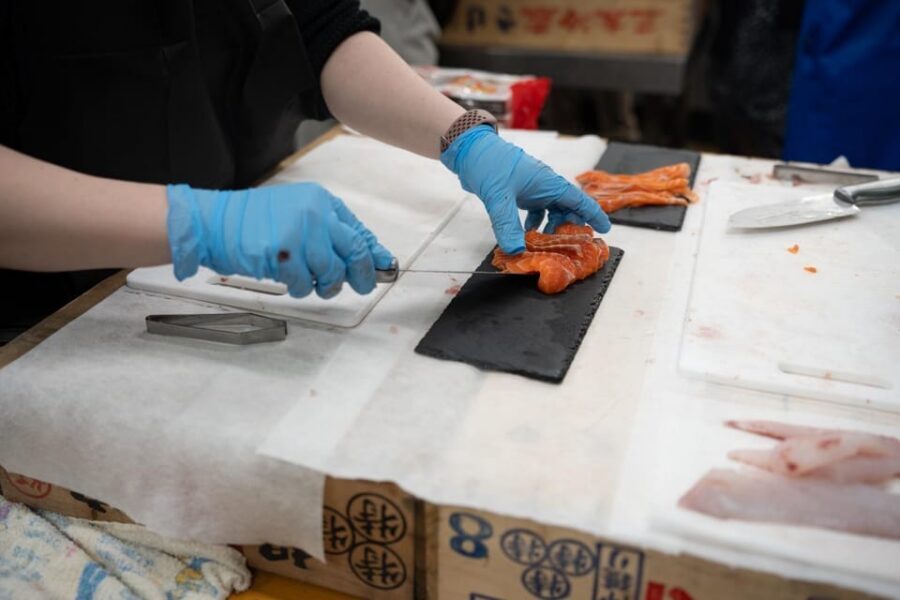
At $77 per person for about 150 minutes, this class is priced like more than a quick tasting. You’re paying for coaching, tools, ingredients, and a meal that starts with raw fish you processed yourself.
What makes the time feel worth it is the structure. You’re not just watching a chef cut fish; you’re learning the motions and then doing the real work at your own station.
Also, the “best sashimi is the one you make” idea is not just marketing. When you fillet carefully and slice with control, you pay attention in a way you cannot get from ordering a plate in a restaurant.
You can also read our reviews of more tours and experiences in Kyoto
Finding Kimura at Nishiki Market and Getting Set Up Fast
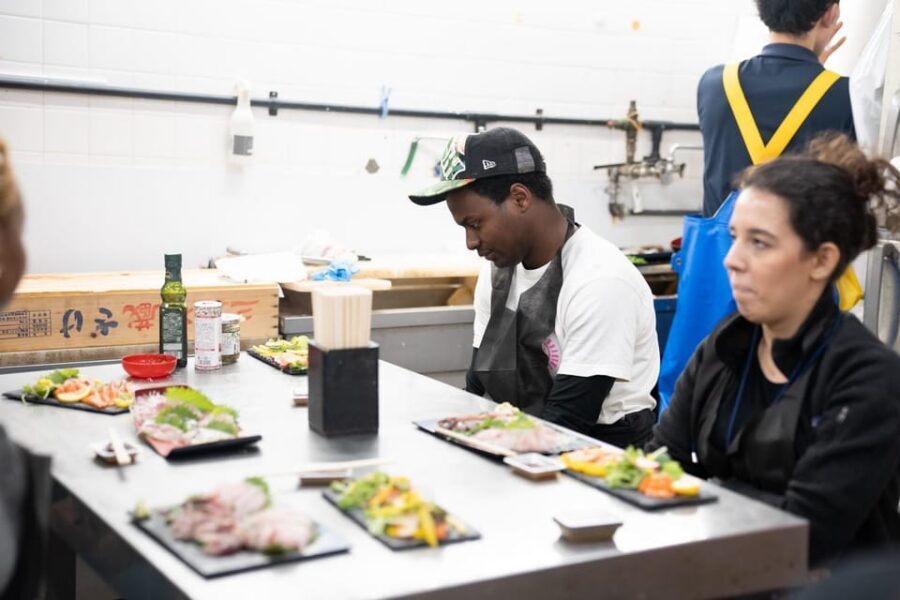
Your meeting point is Kimura in Nishiki Market. When you arrive, you’ll be guided into the shop and get into the class rhythm quickly—this is not a long waiting-room experience.
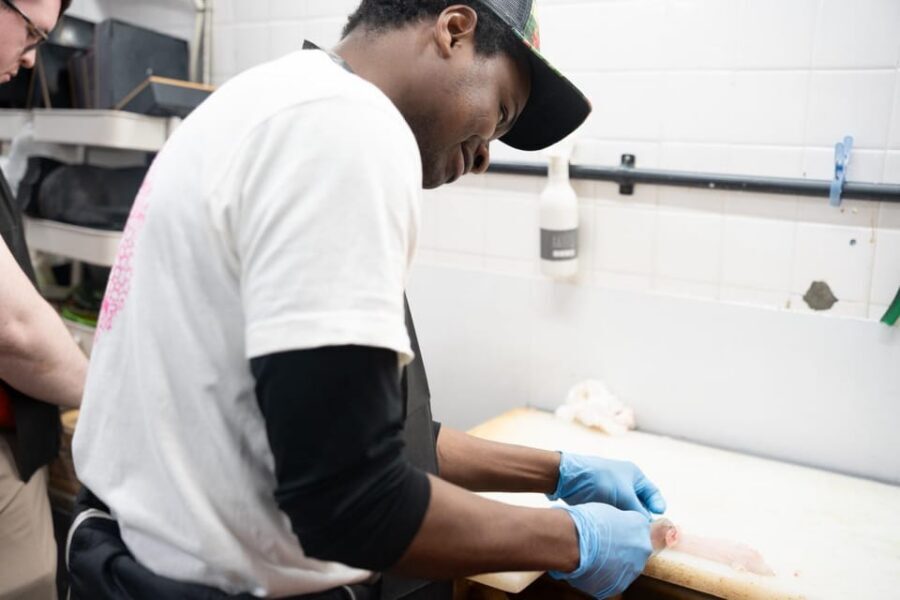
You’ll wear the shop’s blue and orange aprons and use the provided rubber gloves and knife for your workstations. You can also take a commemorative photo with the fish, which is a nice souvenir and a quick way to remember what you actually handled during the session.
The start includes introductions (including the instructor introducing themselves), so you get clear expectations before you touch the fish. That matters, especially for first-timers who may be curious but nervous about knife skills.
From Watching to Filleting: Knife Skills in a 400-Year Shop
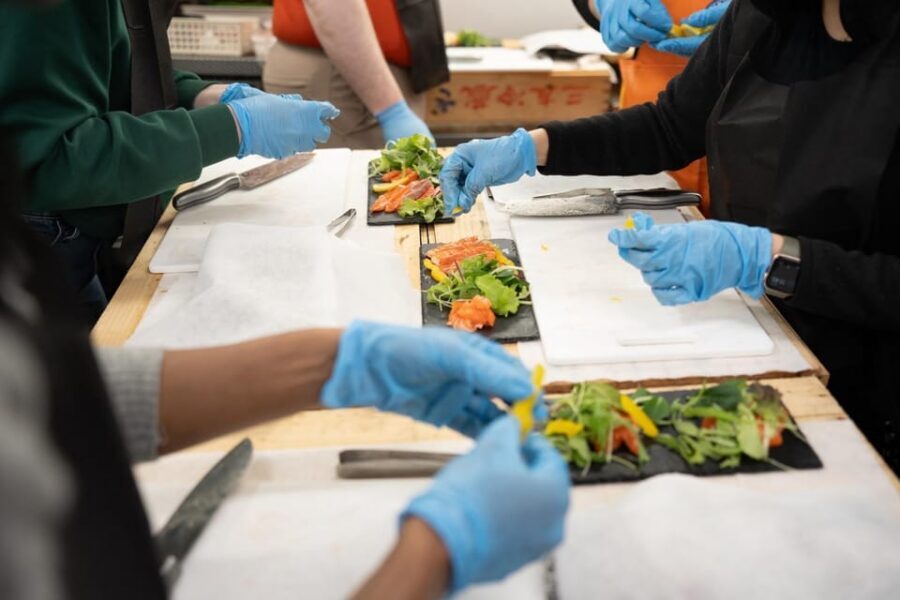
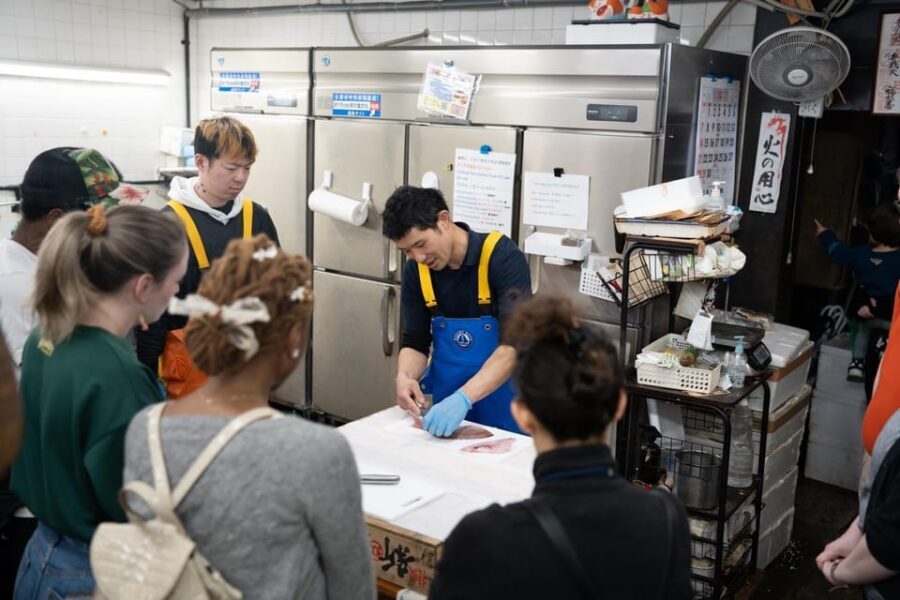
The class runs in a simple, confidence-building sequence. First, the instructor fillets the fish while you watch, so you can see what “good” looks like. Then the participants fillet the fish, and the instructor teaches you how to fillet carefully as you go.
This is where the 400-year shop setting helps. You’re surrounded by the kind of practical fishmonger workflow that Japanese food culture depends on: clean cuts, attention to texture, and respect for the ingredient.
If you’re a beginner, you’re in the right place. The class is set up for beginners welcome, and the instructor is English-speaking, with a relaxed pace and corrections made on the spot (you’ll feel the difference between a lecture and hands-on correction).
Sashimi and Carpaccio: Turning Fresh Fish Into Lunch
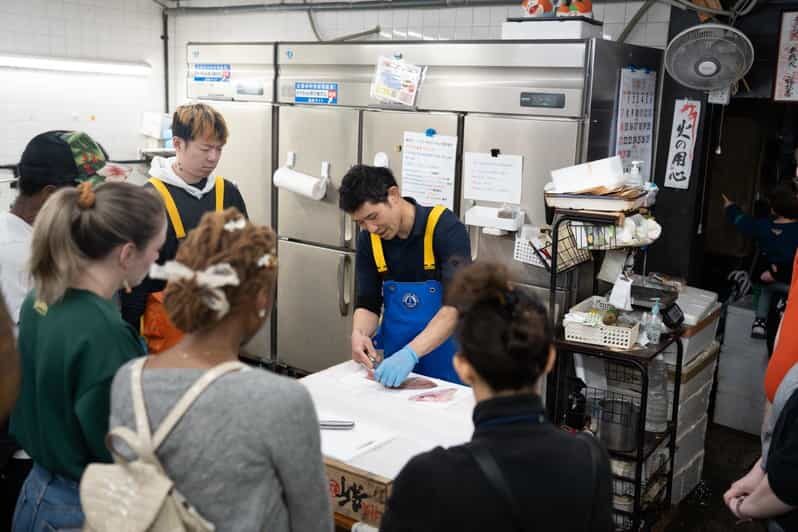
Once the filleting work is done, you shift to the food-making part. You’ll make sashimi from the fish you (and the instructor team) filleted, and you’ll also prepare carpaccio.
This part matters because it shows the logic behind the cuts. The thickness and angle you choose affects how the fish tastes and feels, which helps you understand why sushi chefs talk about precision instead of just presentation.
Then comes the best payoff: you eat what you prepared for lunch, along with rice. There’s something deeply satisfying about tasting the result of your own knife work, especially when the fish is fresh and handled correctly.
Some classes may also include additional hands-on Japanese dishes like miso soup and tempura, depending on the day and menu the instructor prepares. Even if your focus stays on sashimi and carpaccio, you’ll likely leave feeling like you learned how real Japanese cooks think, not just how to plate food.
Sauces and Dietary Needs: Gluten-Free and Halal Options
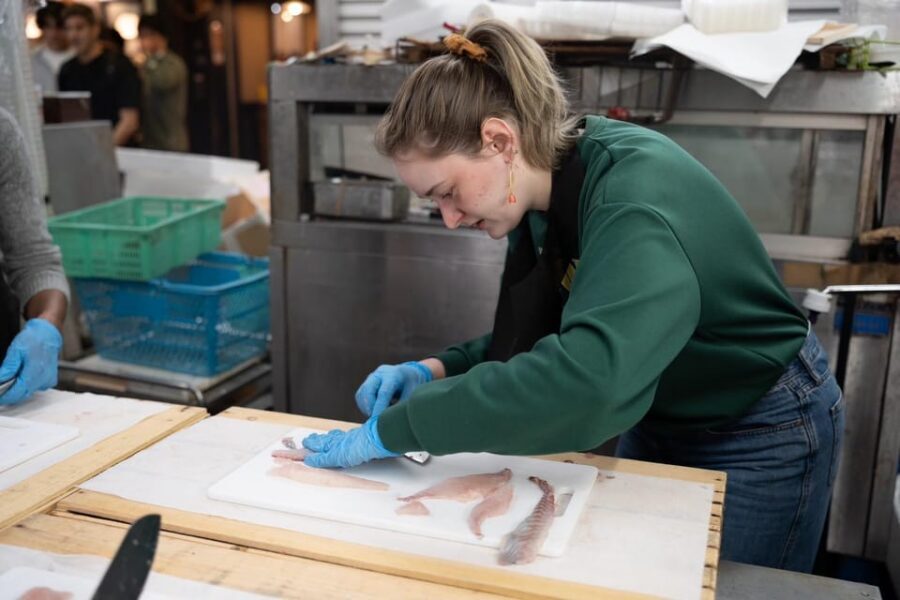
Food allergies and dietary needs are a big deal in Japan, and this class makes it easier than many do. Gluten-free soy sauce and halal soy sauce are available—just ask in advance so they can have what you need ready.
You’ll also use soy sauce during the meal, plus carpaccio sauce for the dish you make. This turns the workshop into a practical lesson: you learn how the flavor changes depending on how the fish is prepared and what sauce you pair it with.
If you’re sensitive to gluten or following halal rules, I’d treat this class as a strong option. You should still confirm ahead of time, but the availability is clearly part of the setup.






Messy, Safe, and Realistic Expectations
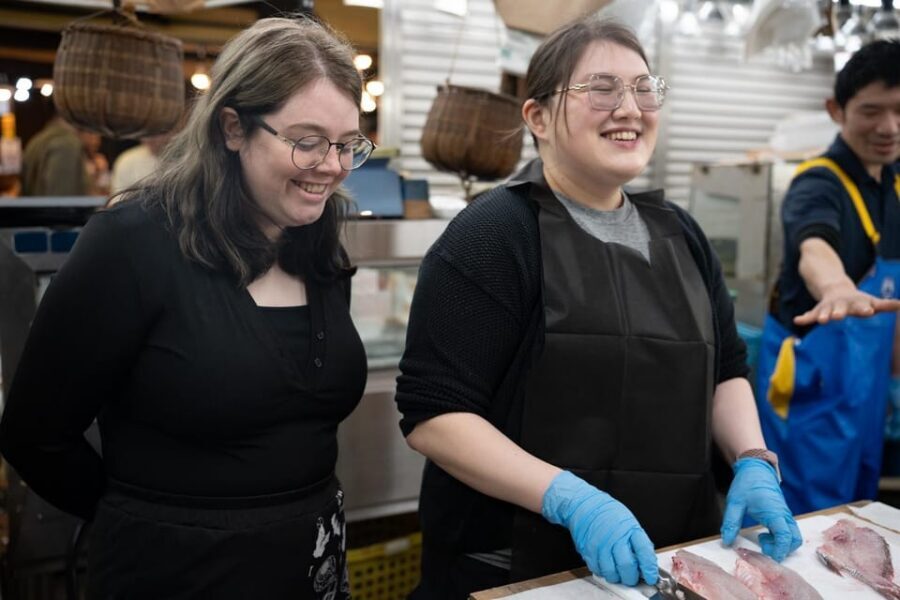
This isn’t a sit-down cooking demo. You’re handling raw fish from the start, using provided protective gear, and learning knife skills as part of the process.
So plan around the mess: the only clothing advice given is to bring clothes that can get dirty. That’s good, honest guidance. Wear something you can tolerate if fish scales or moisture find their way onto your outfit.
The class also has clear boundaries: no nudity is allowed. It’s also not suitable for children under 10, which is usually about safety and attention with knives and raw food.
One more practical point: the workshop is small group (limited to 8 participants). That size helps a lot with comfort and coaching, especially if you need help adjusting your technique or want to ask questions in English without feeling rushed.
Price and Value at $77 per Person
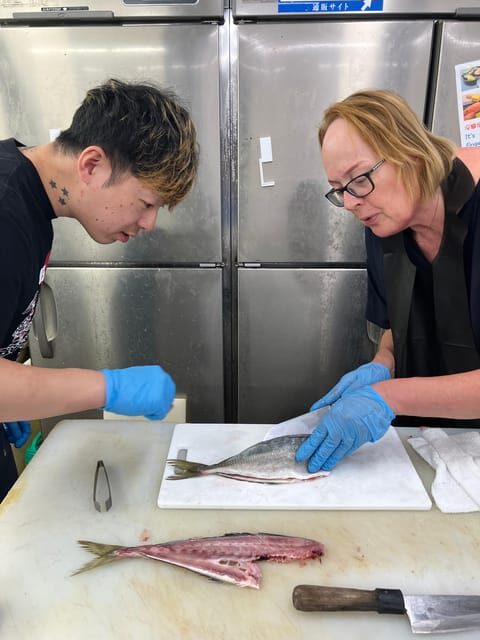
Let’s talk value without hand-waving. At $77 for 150 minutes, you’re getting more than a meal. The class includes the fish you handle, rice, the knife and apron you use, rubber gloves, and the relevant soy sauce and carpaccio sauce.
It also includes the instructor time and structure: you watch filleting first, then you practice, then you produce sashimi and carpaccio, then you eat it. When you price it this way, the cost starts to look like a workshop focused on skills, not just food consumption.
Beer and alcohol are not included, so if you like to pair everything with drinks, you’ll need to plan separately. Still, the core experience is the cooking itself and the meal you make from your own cuts.
There’s also the flexibility angle: the class offers free cancellation up to 24 hours in advance for a full refund and a reserve now & pay later option. That’s helpful if your Kyoto timing shifts due to queues, weather, or museum hours.
Who Should Book This Fish-Cutting Class
You’ll probably love this if you:
- enjoy food education and want to learn knife handling and ingredient prep
- like structured classes with step-by-step guidance rather than open-ended cooking
- want a Japan experience you cannot replicate by eating a set menu alone
- are a sashimi fan and want to understand how those cuts are made
It’s also a good fit if you’re traveling with a small group or someone who likes hands-on activities more than shopping. The class size keeps it personal while still letting you learn from how others fillet.
If you’re very squeamish about raw fish, or you hate the idea of getting hands-on with knives, this might feel like too much. But if you’re curious and willing to try, the beginner-friendly structure is a big plus.
Should You Book This Fish Cutting Class?
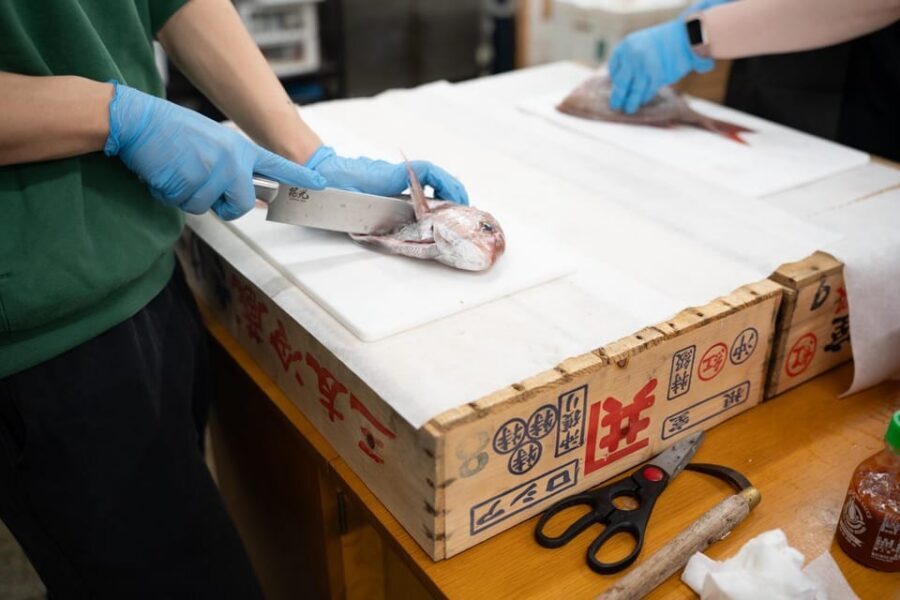
I’d book it if you want a meal with a story you can actually tell. Filleting fish and turning it into sashimi and carpaccio gives you a skill-based understanding of Japanese food that you just do not get from ordering sushi.
I’d also book it if you care about coaching and not being lost. A small group, English-led instruction, and real-time corrections make it easier to learn safely and quickly.
Skip it only if you already know you dislike messy food prep, or if you’re traveling with kids under 10. Otherwise, this is one of the more practical and memorable food experiences in Kyoto, because you leave with both lunch and a deeper respect for the craft.
FAQ
Do I fillet the fish myself?
Yes. The class includes a part where the instructor fillets first for you to watch, then participants fillet fish themselves and learn how to fillet carefully.
What dishes will I make during the class?
You’ll make sashimi from the fish you filleted and also make carpaccio.
Where is the class held?
The class meets at Kimura in Nishiki Market.
How long is the class?
The duration is 150 minutes.
Is the class in English?
Yes. The instructor provides instruction in English.
How big is the group?
The class is limited to a small group of 8 participants.
What is included in the price?
Included items are the fish you handle, rice, the knife and apron you use, rubber gloves, soy sauce, and carpaccio sauce.
What should I bring?
Bring clothes that can get dirty, since you will be handling and processing raw fish.
Is there a dietary option for gluten-free or halal needs?
Yes. Gluten-free soy sauce and halal soy sauce are available if you inquire.
Is alcohol included?
No. Beer and alcohol are not included.
Is the class suitable for children?
No. It is not suitable for children under 10 years. Beginners are welcome, but the age limit still applies.