REVIEW · BIKE & E-BIKE TOURS
See What You Can’t See by Day — Explore Kyoto at Night by E-Bike
Book on Viator →Operated by Discovery Bicycle Tours Okinawa / e-CHARIty Naha · Bookable on Viator
Kyoto at night is quieter on wheels. This e-bike ride is built for a calm evening stroll with the glow of temples and lantern-lit streets guiding you from stop to stop. I like the easy e-bike setup (so you can keep moving without turning it into a workout), and I love the short, photo-friendly stops that make Kyoto feel both special and practical.
What to consider: it depends on good weather, since the experience requires it. If rain or poor conditions hit, you’ll need to take a different date or get a full refund, so keep your schedule flexible.
In This Review
- Key Highlights You Should Actually Care About
- Kyoto After Dark, Minus the Crowds
- Price and What $117.28 Buys You (Real Value Check)
- Where the Tour Starts: Thousand Kyoto and Seikouin Wagatazizou
- Getting Comfortable Fast: Bike Basics and Night Safety
- The Night Route: Nishi Hongan-ji and Kyoto’s Calm Ritual Streets
- Stop 2: Nishi Hongan-ji Temple (20 minutes)
- Stop 3: Shirakawa Canal (20 minutes)
- Shomen-dori Street and the Nintendo Headquarters Building Pass-By
- Stop 4: Shomen-dori Street (20 minutes)
- Nanzen-ji Area: The Lake Biwa Canal Stops That Explain Kyoto’s Water Story
- Stops 5-7: Lake Biwa Canal views around Nanzen-ji (each 20 minutes)
- Heian Shrine Torii and a Kamo River Cool-Down Finish
- Stop 8: Heian Shrine (20 minutes)
- Stop 9: Hokodencho and the Kamo River (10 minutes)
- Returning to the Same Port: Stop 10 and Self-Exploration Time
- Pace, Timing, and What 3 Hours Feels Like
- Who This E-Bike Night Tour Is Best For
- Small Practical Tips That Improve Your Night
- Quick FAQ
- FAQ
- How long is the Kyoto night e-bike tour?
- What does the tour cost?
- Is a bicycle included?
- How many people are in a group?
- What languages are the guides?
- Are admission tickets included for the stops?
- Where do I meet the guide?
- What should I do at the end of the tour?
- Is the tour weather-dependent?
- Can kids join?
- Should You Book This E-Bike Night Ride?
Key Highlights You Should Actually Care About
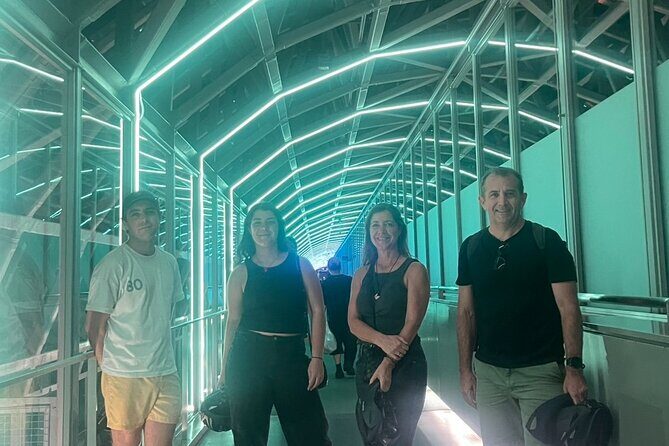
- Small group limit (max 5) means more room to ask questions and keep the route relaxed at night.
- E-bike + helmet included, so you show up ready to ride instead of hunting gear.
- Free admission at every stop listed, which helps keep the cost from creeping up.
- Guide support in Mandarin and Japanese, helpful if you’re not fluent in English.
- Kamo River finish with a cooling moment, a fun way to end the ride without rushing.
- Built-in safety briefing (hand-signs and bike basics), especially important after dark.
Kyoto After Dark, Minus the Crowds
Kyoto at night has a different rhythm. You get that nighttime lighting and temple silhouettes, but you’re also moving through calmer streets than you’d see in peak daytime hours.
The big idea here is simple: use an e-bike to cover ground at an easy pace, then pause where the atmosphere actually matters. You’re not racing through Kyoto—you’re riding long enough to connect neighborhoods, then stopping for photos and short walks.
And yes, you may see the city’s nighttime side—cool air, quiet corners, and occasional street-life. The tour description even jokes about friendly raccoons, which tells you the vibe is light and observational, not stiff and formal.
You can also read our reviews of more cycling tours in Kyoto

Price and What $117.28 Buys You (Real Value Check)
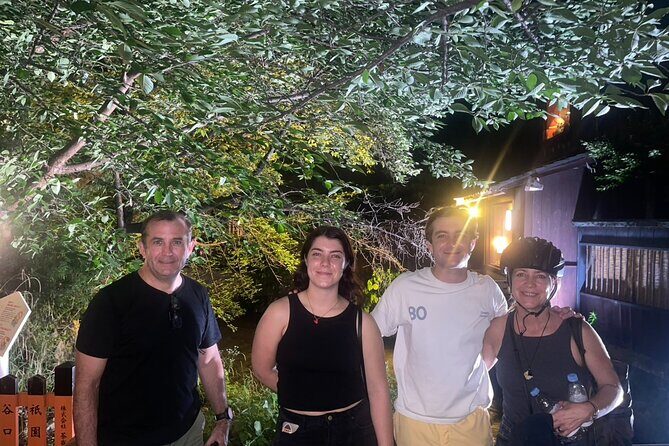
At about $117.28 per person for roughly 3 hours, this is priced like an evening private experience rather than a big-group bus tour. The value comes from what’s included, not just the duration.
You get:
- a cycling guide
- an installed helmet
- the e-bike
- and a mobile ticket
- plus the stops listed have admission ticket free
That matters because night sightseeing often means you either pay for guides and transportation, or you pay for entry tickets you didn’t plan on. Here, the structure keeps the extra costs fairly predictable.
The group size (up to 5 travelers) also changes the feel. You’re less likely to feel like a number in a moving line, and more likely to get help adjusting your speed, posture, and comfort.
Where the Tour Starts: Thousand Kyoto and Seikouin Wagatazizou
Your ride begins back at Thousand Kyoto (570 Higashishiokōjichō), Shimogyo Ward. The guide meets you at a share-cycle port labeled Clew, located in front of a temple called Seikouin Wagatazizou (described as being behind the hotel).
This start location is useful for two reasons. First, it’s a clear meeting point in a well-known area. Second, you begin with the bike setup and a briefing before you head into darker streets.
Expect a short setup window—there’s time built in for a briefing on bike use and cycling hand-signs. That’s a small detail, but it’s exactly what keeps an evening ride from turning stressful.
Getting Comfortable Fast: Bike Basics and Night Safety
Night riding is where good guidance pays off. This tour includes an in-person cycling guide and a safety briefing, with extra attention to cycling hand-signs and clear instructions for using the e-bike.
The guide support is also backed by the way people talk about the experience. The name Yuki comes up repeatedly in the tour’s feedback, with comments about being kind, patient, and thorough with safety and bike instructions. If you’re worried about confidence on a bike, that’s a comforting sign.
Practical tip: you don’t need to be a cyclist, but you do need basic comfort with balance and starting/stopping smoothly. An e-bike reduces effort, not attention.
The Night Route: Nishi Hongan-ji and Kyoto’s Calm Ritual Streets
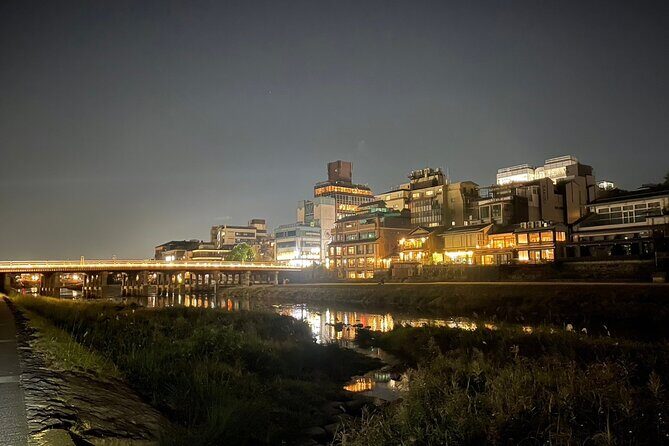
Stop 1 is essentially your launch point—briefing, bike orientation, and then heading toward older Kyoto streets with that unmistakably Japanese feel.
You can also read our reviews of more evening experiences in Kyoto


Stop 2: Nishi Hongan-ji Temple (20 minutes)
You’ll spend time at Nishi Hongan-ji, the head temple of the Jodo Shinshu Hongwanji-ha sect. It’s known for major historical buildings, including World Heritage–registered structures.
Why it’s great at night: big temple compounds can feel even more peaceful after dark. You get a chance to absorb the architecture without daytime crowds pushing you along.
Possible drawback: temples mean walking short distances on uneven ground. It’s usually manageable, but it’s not a sidewalk-only experience.
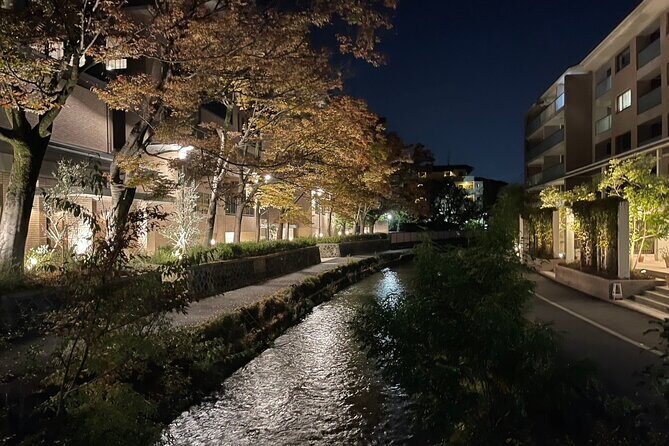
Stop 3: Shirakawa Canal (20 minutes)
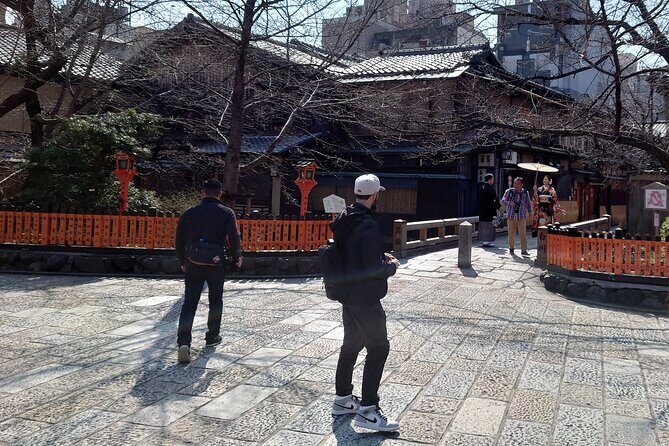
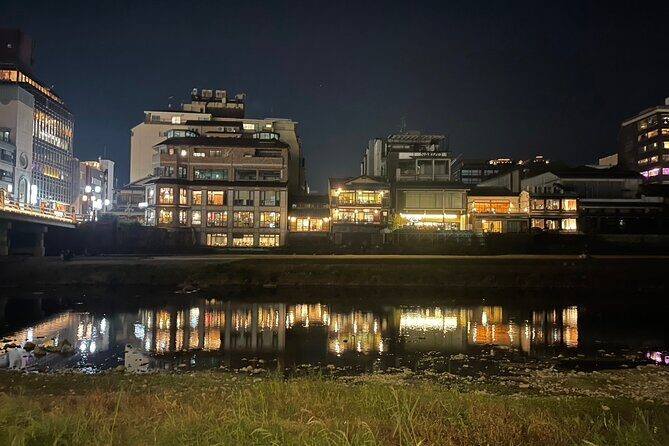
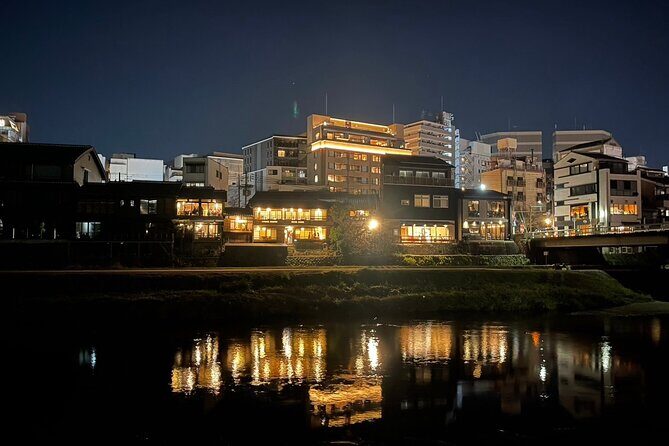
Next up is Shirakawa Canal, linked to old Kyoto’s traditional tea district atmosphere (described as a chaya-mati). The setting is framed by older buildings along the water, and the tour highlights seasonal plants like cherry blossoms.
At night, the canal area often feels romantic without being loud. The key value here is that you’re not just driving past—you stop to take in the water-side mood and get a few good photos together.
Shomen-dori Street and the Nintendo Headquarters Building Pass-By
Stop 4: Shomen-dori Street (20 minutes)
On Shomen-dori Street, you’ll ride through a local area and pass a striking building tied to the old headquarters of Nintendo.
This is a nice contrast stop. Kyoto isn’t only temples; it’s also modern identity layered onto older streets. Even if you’re not a tech fan, the building reads as an eye-catching waypoint in the middle of traditional surroundings.
Possible consideration: since this is described as a pass-through, you’ll likely get more of an exterior look than a long on-foot visit.
Nanzen-ji Area: The Lake Biwa Canal Stops That Explain Kyoto’s Water Story
The next segment turns educational in a useful way. Instead of just saying Kyoto is old, you’re shown one of the systems that helped the city function.
Stops 5-7: Lake Biwa Canal views around Nanzen-ji (each 20 minutes)
You’ll stop along the waterway described as the Lake Biwa Canal, which links Kyoto and Lake Biwa. The tour notes that the system was designed to compensate for the elevation differences between the two locations.
Why that matters: water projects are the invisible backbone of cities. Seeing the canal features in the Nanzen-ji area connects the dots between nature, infrastructure, and Kyoto’s growth.
- Stop 5 (13 Nanzenji Fukuchichō) and Stop 6 (17 Nanzenji Kusakawachō): these focus on the canal’s presence and how it shaped daily life through water supply.
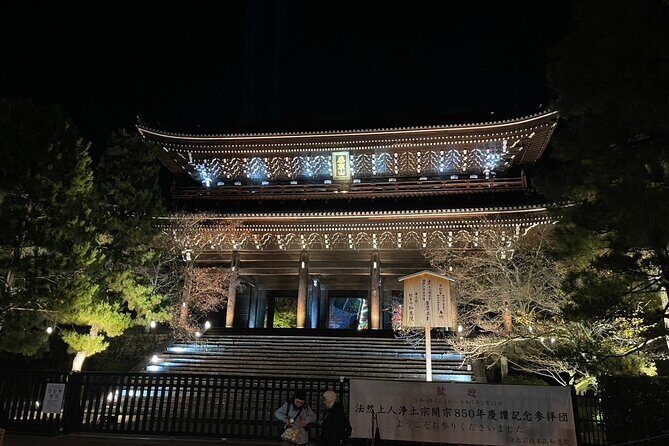
- Stop 7 (86 Nanzenji Fukuchichō): you move from water-story explanation to Nanzen-ji Temple, described as special among Kyoto’s Five Mountains, with a main temple and gate that make an impression.
Night value: Nanzen-ji is a place where lighting and scale can feel dramatic after dark. The gate and precinct can look almost cinematic—without needing to squeeze into a crowd.
Possible drawback: this segment may involve some cycling plus short periods of standing and looking. If you hate pausing for photos, you might feel the time passes slower here. If you enjoy learning and snapping pics, it’s a highlight.
Heian Shrine Torii and a Kamo River Cool-Down Finish
Stop 8: Heian Shrine (20 minutes)
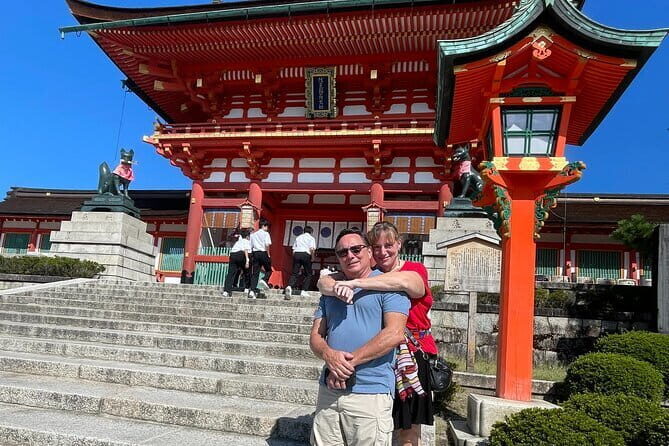
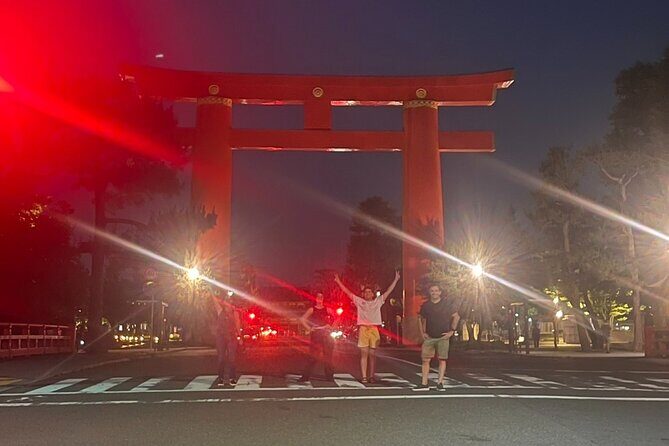
At 97 Okazaki Nishitennōchō, you’ll visit Heian Shrine, created to commemorate the transfer of the capital to Heian-kyo—marking the 1100th anniversary. The tour also points out the large red torii gate.
At night, the torii gate reads differently. It’s less about daytime tourism energy and more about a calm framing of space. If you like photo compositions, this is the kind of stop you’ll keep looking at from different angles.
Possible consideration: torii areas can be open and breezy after dark, so bring something warm enough for evening air.
Stop 9: Hokodencho and the Kamo River (10 minutes)
The end is at Hokodencho, where you reach Kamo River. The tour describes time to relax in the riverbed, or cycle along the riverbank, and then (at the end) get your feet in the water to cool down.
That’s a rare “active sightseeing” finish: you’re not just walking away—you’re cooling down like a local for a moment. It’s also a nice reset if your legs got tired from repeated starts and stops.
Possible drawback: water means you’ll want to think about footwear. The tour description doesn’t provide footwear rules, so go in with common sense: shoes you don’t mind getting a little wet, and socks you can handle.
Returning to the Same Port: Stop 10 and Self-Exploration Time
Once you reach the end, you return the bicycle back to the start area—570 Higashishiokōjichō. After that, you’re free to explore Kyoto on your own.
I like this structure. It means you’re not stuck waiting for a late pickup. You also get a head start on orientation—routes, neighborhoods, and landmarks make it easier to wander the next evening or to plan a daytime follow-up.
Pace, Timing, and What 3 Hours Feels Like
The total ride is about 3 hours. That’s long enough to see several Kyoto highlights, but short enough that the experience stays easy to manage.
You’ll spend time at multiple stops (most listed at around 20 minutes) and less time at the short photo/ride segments. The night pace is designed to keep things comfortable: ride, pause, learn a bit, take photos, and keep rolling.
Also, the maximum group size of 5 means the guide can slow down when someone needs it. That’s exactly what night biking requires—small adjustments in speed and spacing matter.
Who This E-Bike Night Tour Is Best For
This tour is described as suitable for all ages and fitness levels, and “most travelers” can participate. Based on the structure (e-bike + guidance + short stops), it fits people who want a night experience without needing elite cycling skill.
You’ll probably love it if:
- you want Kyoto’s night atmosphere but don’t want to fight crowds on foot
- you’re comfortable riding an e-bike at a relaxed speed
- you like a mix of temples, streets, and a little real-world explanation (like the canal story)
It may not be ideal if:
- you don’t feel comfortable biking at night
- you hate stopping frequently for photos
- you’re not able to ride in outdoor conditions when weather is only decent
Small Practical Tips That Improve Your Night
These are the simple things that help the experience feel smooth.
- Wear warm layers. Even if the ride is easy, nights in Kyoto can feel cooler quickly.
- Choose shoes you’re happy to walk in around temples and canal areas.
- If you’re riding as a couple or birthday celebration type, this tour’s vibe can be surprisingly personal. People have mentioned the guide Yuki arranging a small surprise cake and gift on a birthday, which tells me the experience can go beyond a standard script.
- Expect hand-sign cycling practice. It’s quick, but it sets you up for calmer riding.
Quick FAQ
FAQ
How long is the Kyoto night e-bike tour?
It runs for about 3 hours.
What does the tour cost?
The price is $117.28 per person.
Is a bicycle included?
Yes. The tour includes use of the bicycle, plus an installed cycling helmet.
How many people are in a group?
The maximum group size is 5 travelers.
What languages are the guides?
The guide provides Mandarin and Japanese speaking support.
Are admission tickets included for the stops?
Yes—each stop listed notes admission ticket free.
Where do I meet the guide?
Meet at the Clew share-cycle port in front of Seikouin Wagatazizou, behind the hotel near Thousand Kyoto, 570 Higashishiokōjichō, Shimogyo Ward, Kyoto.
What should I do at the end of the tour?
You return the bicycle back to the meeting point area, and then the activity ends.
Is the tour weather-dependent?
Yes. It requires good weather. If it’s canceled due to poor weather, you’ll be offered a different date or a full refund.
Can kids join?
Children under 10 can participate if they are taller than 140 cm and can ride a bicycle, but they pay the same fee as an adult.
Should You Book This E-Bike Night Ride?
Book it if you want Kyoto at night with less stress and more atmosphere per hour. The e-bike does the heavy lifting, the group size stays small, and the route mixes iconic temples with meaningful stops like the Lake Biwa Canal water story and the Kamo River cooling finish.
Skip it (or at least think twice) if you know you struggle with outdoor night conditions or you can’t stay flexible if weather cancels or changes the timing.
If your idea of a great evening is calm streets, good guidance, and a few standout photo moments without a huge crowd pressure, this one fits the bill.