REVIEW · WORKSHOPS
Pure Silver Spoon Making Workshop in Kyoto
Book on Viator →Operated by OKUMURA · Bookable on Viator
Kyoto can be wonderfully quiet, and this workshop adds a hands-on twist you won’t expect. You’ll shape pure silver into your own spoon, add a personal pattern, and finish with polishing and a paulownia box. I especially like the friendly, patient hosting (tea and snacks included), and I love the fact that the process ends with something you can actually use. The one thing to consider is that you are doing real metalwork—so you’ll want to feel comfortable following instructions while holding tools and striking the silver.
What really makes this worth your time is that it feels like work that still matters to the craft, not a quick demo. The workshop is set up for English instruction, so language isn’t usually a headache, and the pace gives you room to get it right. It’s also priced like a premium craft session—$141.22 per person—but many core items are included, which helps justify the cost.
In This Review
- Key points at a glance
- Why a pure silver spoon workshop feels like real Kyoto craft
- Finding the workshop: Shugakuin area, meeting point, and how timing works
- The 2.5-hour process: from silver sheet to your shaped spoon
- Adding your pattern: tools you choose, not just a fixed design
- Filing, burnishing, machine polishing, then your final shine
- What you leave with: a 12cm spoon in a paulownia box
- Price and value: what you’re really paying for at $141.22
- Who should book this silver spoon workshop (and who should think twice)
- Should you book it? My honest take on the decision
- FAQ
- How long is the Pure Silver Spoon Making Workshop?
- What will I make during the workshop?
- What size is the finished spoon?
- What’s included in the price?
- Is the workshop private?
- Is there any accessibility or travel-animal info provided?
Key points at a glance
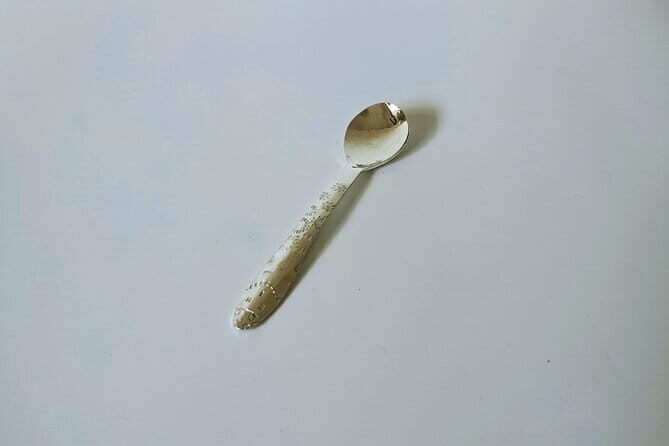
- Pure silver spoon, end to end: you’ll go from silver sheet to spoon shape and finish
- You personalize the design: add your pattern using a chisel or stamp of your choice
- Safer finishing: a craftsman does machine polishing for you, then you polish by hand
- Private group setup: only your group participates
- Thoughtful gift packaging: the spoon comes in a paulownia box
- Near Shugakuin Imperial Villa: a calmer area for craftwork instead of core-city crowds
Why a pure silver spoon workshop feels like real Kyoto craft
Silver has long carried meaning in Japan—thought of as a talisman that helps ward off misfortune and evil spirits. There’s also a tradition tied to giving a silver spoon to a baby as a wish for happiness. That background matters here because you’re not just making an object. You’re making a small item with cultural weight, using techniques that treat precision as part of the art.
The workshop’s big promise is simple and rare: you make cutlery from pure silver. Most souvenir crafts in Kyoto are nice, but they’re often decorative. Here, you’re crafting something closer to everyday function. The approximate finished spoon size is about 12cm long and 2.7cm wide, which lines up well with teaspoons and similar small uses.
You’ll also feel the shift away from typical tourist mode. One of the best parts from the experience reports is how this can be a break from crowded, go-go sightseeing. Instead, you slow down and do one thing carefully for a couple of hours.
Possible drawback? Because the item is silver, you’ll want to treat the session with care. If you’re the type who hates tool handling or being responsible for the final polish, you might find it a bit intense. But if you like learning by doing, it’s hard to beat.
You can also read our reviews of more tours and experiences in Kyoto

Finding the workshop: Shugakuin area, meeting point, and how timing works
The workshop location is about an 8-minute walk from Shugakuin Imperial Villa. That’s useful for two reasons: it places you in a quieter Kyoto pocket, and it gives you a simple orientation point if you decide to look around before or after.
Meet at: 1-15 Shūgakuin Yamanohanachō, Sakyo Ward, Kyoto, 606-8025, Japan. The activity ends back at the meeting point, so you’re not left to figure out where to go next with a tired arm and a newly finished spoon.
The experience is near public transportation, so you’re not locked into taxis or private shuttles. Still, private transportation isn’t included, so plan your route ahead if your day includes other stops. With a duration of about 2 hours 30 minutes, this is a great mid-afternoon anchor—especially if you’ve already done a morning of temples and want something different.
One more practical detail: it uses a mobile ticket. So have your phone ready, and don’t rely on finding Wi-Fi at the last second.
The 2.5-hour process: from silver sheet to your shaped spoon
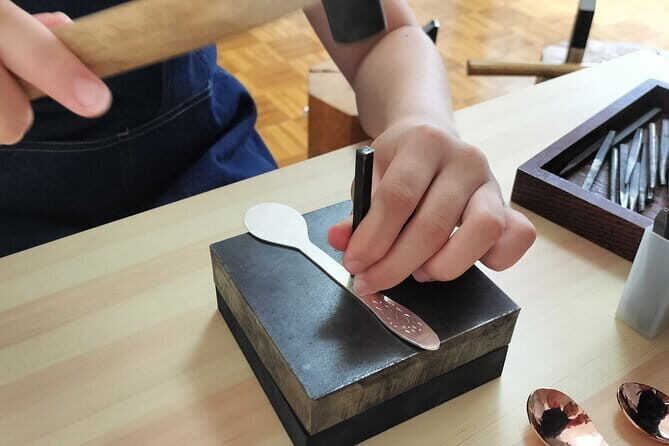
The workflow is hands-on and fairly linear, which is reassuring if you don’t know anything about metalwork. Here’s what you can expect, step by step.
First, you’ll add your personal touch. You start with spoon material prepared for you, then apply your favorite pattern using a chisel or stamp of your choice. This is where you steer the final look. It’s also the part where you learn the most about how pressure and angles affect the mark.
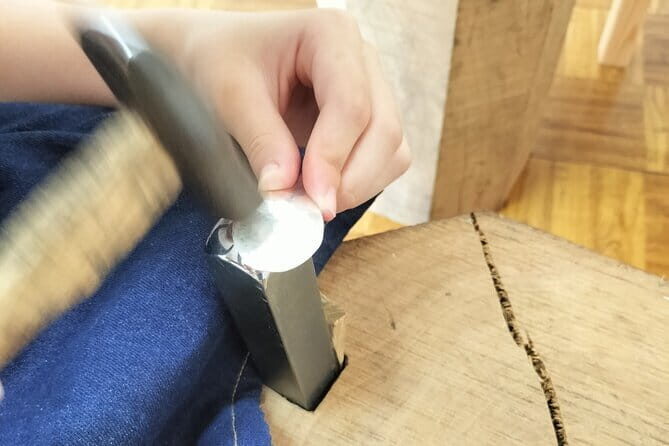
Next comes the fun (and slightly dramatic) part: you hit the metal to shape it. Once the design step is done, you’ll use a hammer to turn the piece into spoon form. The workshop gives you the structure, but you’re still the one doing the shaping, so you’ll feel that moment when the flat looks like it’s becoming a spoon.
After the shape is set, you’ll smooth the sides with a file and a burnisher. This is where rough edges start disappearing. If you’ve never worked on metal before, this step is also a good reminder that craft skill isn’t just about stamping patterns—it’s about finishing.
Then polishing takes over. A craftsman uses a polishing machine—and the point of that is safety and consistency. After they do that part, you do the final touch yourself using an abrasive. That last “your hands” stage is important because you’ll leave with a spoon that truly feels finished, not just assembled.
The session ends with your spoon ready to box up.
Adding your pattern: tools you choose, not just a fixed design
What I like about the personalization here is that it’s not just picking from pre-made designs. You can add your own pattern using a chisel or stamp. That means you can aim for something simple (like a repeating motif) or something more involved if you’re patient.
The experience is also set up for learning, not perfection. Reports highlight that the hosting couple is very patient, and that English instructions are prepared. That combination matters. If you’re traveling with someone who gets nervous with hands-on activities, you’re in good shape because the workshop doesn’t rely on you already knowing the craft.
Also, one of the most memorable details from the experience feedback is that the hosts welcome you with tea and snacks. It turns the workshop from a strict class into a calm craft session. It’s a small thing, but it changes how you feel when you’re holding tools and focusing on one task.
Practical tip if you want the best results: take your time during the pattern step. If you rush, the design can get messy, and then you’ll be compensating during shaping and finishing. Slow, steady pressure works better than force.
Filing, burnishing, machine polishing, then your final shine
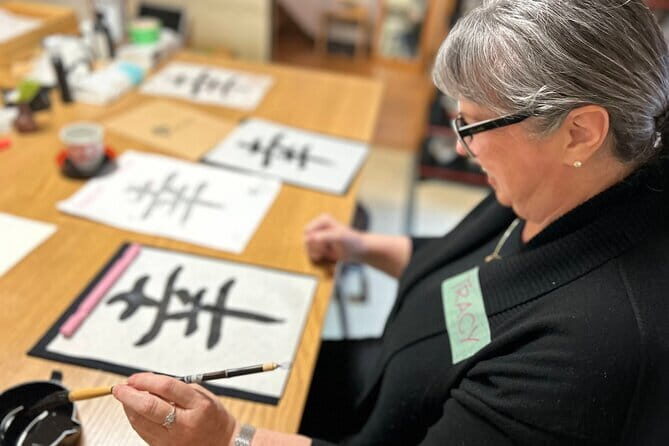
Finishing is where a workshop like this quietly shows its standards. The sequence matters.
You’ll smooth the spoon sides with a file and burnisher. That helps create the right feel and shape before polishing starts. Then a craftsman performs the machine polishing, which is a big deal for safety and even finish—especially with metal. After that, you polish yourself with an abrasive.
Why this matters for you: if you only watched a demo, you’d never learn the difference polishing makes. Doing the last step yourself gives you a real sense of ownership over the final surface. And if you care about gifting, that final shine looks great in person—and it’s hard to fake with a quick craft kit.
The workshop also includes a metal polishing cloth. That’s practical because it gives you something to maintain the spoon after the session. Silver will change over time with air and use, so having a cloth you can use right away is helpful.






What you leave with: a 12cm spoon in a paulownia box
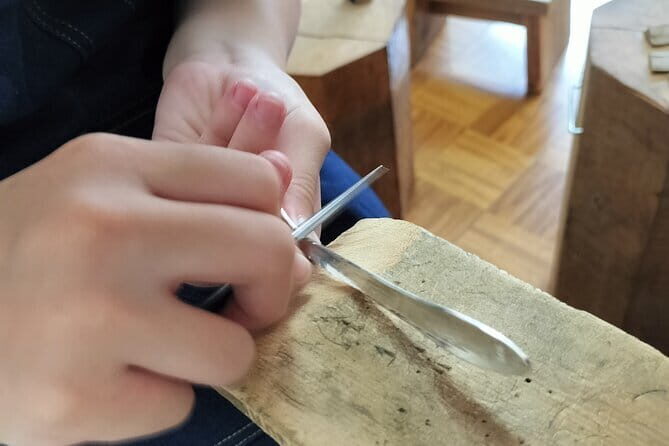
The final product is an actual spoon crafted by you. The approximate finished dimensions are 12cm long and 2.7cm wide, which makes it well suited for teaspoons and similar small bites.
And you don’t just get a loose metal item in a bag. Included is a paulownia box. That packaging is a nice finishing touch because it makes the spoon feel like a proper gift—or like a meaningful keepsake if you want one for yourself.
If you’re trying to decide whether this is a “souvenir” or a “real object,” the packaging helps settle that. The paulownia box makes it gift-ready without needing extra wrapping, and the size means you can picture how you’d actually use it.
Price and value: what you’re really paying for at $141.22
At $141.22 per person, this is not a budget craft. But it also isn’t just paying for someone else to do the work while you hold a tool for a minute.
You’re paying for:
- Material (pure silver is not cheap)
- Rental of tools
- A paulownia box
- A metal polishing cloth
That combo shifts the value. Many workshops charge similarly but give you a simpler product or omit packaging. Here, the included essentials cover both the crafting and the presentation.
Duration also plays into value. You get roughly 2 hours 30 minutes, which is enough time to actually shape, refine, and finish. If you’ve done very short “make a thing in 45 minutes” experiences before, you know how often the result feels rushed. This feels more like you’re making something real.
One more value angle: the setting. Being near Shugakuin Imperial Villa means you’re not stuck in the busiest parts of Kyoto. You get a calmer experience day, which often makes craft time feel more enjoyable.
Who should book this silver spoon workshop (and who should think twice)
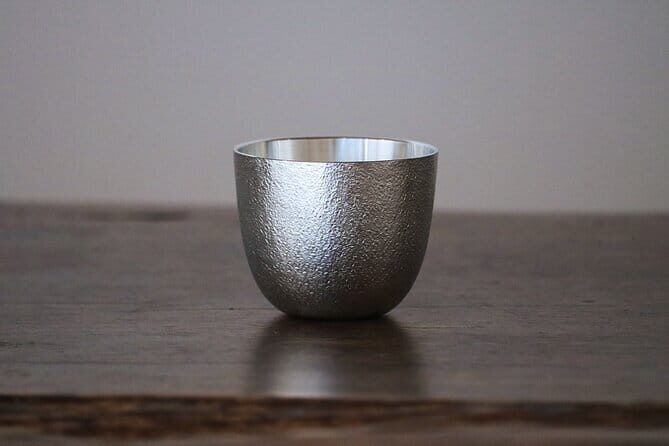
This is a good fit if you want:
- A hands-on craft that’s not mass produced
- A personal item you can use or gift
- A private setting (it’s only your group)
- Clear instruction—English support is built in based on the experience feedback you can see
Most travelers can participate, and service animals are allowed, which is a practical reassurance if you travel with a companion animal.
It may be less ideal if:
- You want only sightseeing time and no tool work
- You dislike doing repetitive, careful finishing steps (filing and polishing take patience)
- You’re trying to minimize time away from other plans, because the session is about 2.5 hours
Also, private transportation isn’t included. That’s normal in Kyoto, but you’ll want to budget for getting there with whatever public transit route fits your day.
Should you book it? My honest take on the decision
I’d book this if you want one Kyoto experience that feels tactile and meaningful—something you can hold, shine, and use. The combination of pure silver, real shaping, and a final paulownia box makes it more memorable than most day tours.
Book it if you’re looking for a break from the busiest sightseeing circuits. The Shugakuin area plus a focused workshop format makes for a very different afternoon than the typical temple-and-shrine sprint.
I’d think twice only if silver craft sounds stressful to you. The process requires attention and care, especially during pattern application and finishing. If you’re confident you’ll enjoy learning by doing, this is exactly the kind of Kyoto day that turns into a story you tell later.
If your plans are flexible, there’s also free cancellation up to 24 hours in advance, which gives you some breathing room to fit it around the rest of your Kyoto schedule.
FAQ
How long is the Pure Silver Spoon Making Workshop?
The workshop lasts about 2 hours 30 minutes (approx.).
What will I make during the workshop?
You’ll make a spoon from pure silver. You’ll add a pattern, shape it with a hammer, then file, burnish, and polish it.
What size is the finished spoon?
The finished spoon is approximately 12cm long and 2.7cm wide, and it’s recommended for use like teaspoons.
What’s included in the price?
Included items are the material (pure silver), tool rental, a paulownia box, and a metal polishing cloth.
Is the workshop private?
Yes. It’s a private activity, so only your group participates.
Is there any accessibility or travel-animal info provided?
The experience notes that service animals are allowed and that most travelers can participate. It’s also near public transportation.