REVIEW · KYOTO
Kyoto: AuthenticMatcha&TeaCeremonyExperienceinaTraditional
Book on GetYourGuide →Operated by Jナビ株式会社 · Bookable on GetYourGuide
A calm tea house moment beats the usual Kyoto checklist. You’ll learn Japanese tea ceremony etiquette, then make your own matcha with a bamboo whisk in a traditional setting. I like that the experience is beginner-friendly and explained in English and Japanese, so you’re not left guessing.
Two things I really like here: you get hands-on practice making matcha (not just watching), and you end with real Kyoto flavor by tasting Uji matcha plus seasonal Japanese sweets. One thing to consider: this is a quiet, structured ritual, so if you’re looking for loud sightseeing energy, this one may feel slower than you expect.
The basics come fast, and the mood stays gentle. Think tatami warmth, wood scent, and a teacher guiding each step so you can do it yourself.
In This Review
- Key highlights you’ll feel right away
- The setting: a traditional Kyoto townhouse with tatami calm
- Tea master guidance and the etiquette you actually need
- Making matcha with a bamboo whisk: what’s practical and what to watch
- Uji matcha and seasonal sweets: the tasting portion that finishes strong
- Walkthrough of your hour: from meeting to sipping
- Who this suits best in Kyoto (and who might want something else)
- Price and value: $49 for a full, guided ritual
- Logistics that matter: timing, pace, and language
- Practical tips so you get the most from the tea ceremony
- Should you book Kyoto matcha tea ceremony at Hotel Rakurakuan?
- FAQ
- FAQ
- How long is the Kyoto matcha and tea ceremony experience?
- Where do I meet for the tea ceremony?
- What’s included in the experience?
- What languages are available?
- Is this experience suitable for beginners and foreigners?
- Is it a private group?
- Is the tea ceremony location wheelchair accessible?
- What is the cancellation policy?
Key highlights you’ll feel right away
- 40 minutes of tea ceremony time inside a quiet, serene room
- Hands-on matcha whisking with a bamboo whisk, not just observation
- Kyoto Uji matcha served with seasonal Japanese sweets
- English and Japanese guidance that keeps the ritual approachable
- Private group for a calmer pace and more personal attention
- Tatami room atmosphere, with the scent of tatami mats and warm wood
The setting: a traditional Kyoto townhouse with tatami calm
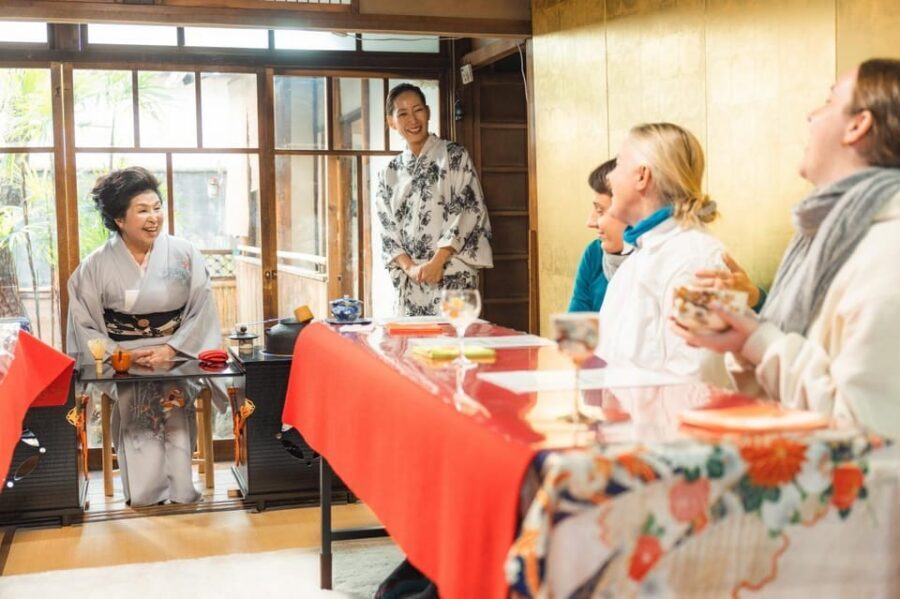
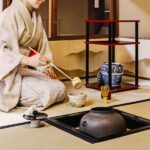
This tea ceremony experience is set in a traditional Kyoto townhouse atmosphere, where you step into a tatami room and slow down on purpose. The point isn’t to rush through photos; it’s to experience the ritual with your senses turned on.
You’ll notice how the space changes your tempo. Tatami and wood naturally dampen noise, and the room feels made for quiet focus. That’s the kind of environment where the small details matter: the feel of the whisk, the pace of the preparation, and the simple act of receiving and drinking the tea.
If you enjoy cultural experiences that don’t require advanced knowledge, this setting is a strong match. It’s also ideal for first-timers because the room won’t overwhelm you with rules on day one.
You can also read our reviews of more tours and experiences in Kyoto.



Tea master guidance and the etiquette you actually need
The experience includes an experienced instructor who provides guidance in both English and Japanese. That bilingual support is more than convenience. It means you can follow along clearly, catch the meaning behind the motions, and ask questions if something doesn’t click.
The ceremony starts with you observing a demonstration, then you switch roles and prepare your own matcha. That structure matters. Watching first helps you understand the order of actions, and then doing it yourself turns etiquette from “memorize gestures” into “make sense of the ritual.”
Based on written feedback from past participants, one of the most praised parts is how clearly the steps are explained. People highlight that they understood the tradition’s individual steps well and were able to perform them themselves—so you shouldn’t feel like a spectator stuck outside the process.
Making matcha with a bamboo whisk: what’s practical and what to watch
Here’s the core moment: you prepare matcha using a bamboo whisk. The ceremony isn’t just about drinking tea. It’s about the method—how you combine matcha and water, and how you work the whisk to get the right texture.
Even if you’ve never held a whisk in your life, the experience is designed for beginners and foreigners. You can expect basic etiquette and techniques to be taught in a calm way. The goal is not perfection; it’s competence. You’ll learn how to move through the ritual without getting lost in the details.
A useful way to approach this part is to treat it like learning a small craft. Pay attention to timing and hand motion rather than aiming for an outcome you can’t control. The teacher’s role is to guide you, and the “you do it” format means you’ll walk away with something you can repeat at home—at least the idea of the process, even if your matcha results vary.
Uji matcha and seasonal sweets: the tasting portion that finishes strong
After the preparation, you get to savor the tea. The matcha here is Kyoto’s Uji matcha, known for its distinctive character. You’ll also be served seasonal Japanese sweets, which pair naturally with tea ceremony pacing.
This combination is a big part of why the experience works for many people. Tea ceremony can feel abstract if it ends with only a lecture. Here, it ends with taste—real flavors, not just cultural talking points.
Two practical tips for the tasting:
- Start by smelling the matcha aroma before you drink. It’s part of the ritual and helps you understand what you’re tasting.
- Take small sips and notice how the sweetness and bitterness balance with the seasonal sweets.
One more thing from experience feedback: at least one participant bought the matcha they served because it tasted so good. That suggests the matcha itself is worth paying attention to, not treated as a “token tasting.” If you’re the type who wants to bring the flavor home, ask your instructor whether purchases are possible after the ceremony.
Walkthrough of your hour: from meeting to sipping
Your total duration is about one hour. The tea ceremony itself is listed as 40 minutes, which leaves time around it for greeting, explanation, and enjoying what you make.
You’ll start at the meeting point: Hotel Rakurakuan. The address provided is:
〒600-8456 京都府京都市下京区天使突抜三丁目452 ホテル楽々庵
From there, you’ll move into the tatami room and begin with observation of the tea master’s demonstration. After that, you’ll prepare your own matcha. Once you finish whisking and serving, you’ll savor the Uji matcha along with seasonal sweets.
Because the ceremony is in a quiet, serene environment, timing feels straightforward. It’s not a “hop from stop to stop” experience. It’s one focused block of time, which is exactly why it can feel memorable.





Who this suits best in Kyoto (and who might want something else)
This works especially well if you:
- Want a deeper understanding of Japanese culture and hospitality without needing prior training
- Prefer a calm activity during a busy Kyoto day
- Want English support while still doing something hands-on
- Are traveling as a private group and would rather have instruction tailored to you
It also shows up as a good choice for special occasions. One participant mentioned the experience felt extra special for a honeymoon, and that personal touch likely comes from the private, structured nature of the lesson—fewer distractions, more attention, and a ceremony that naturally creates a quiet “moment.”
If you want a high-energy, outdoors-heavy day, you may find this too slow. But if you enjoy mindful travel and learning by doing, this is a strong fit.
Price and value: $49 for a full, guided ritual
At $49 per person, you’re paying for more than a drink. You’re paying for:
- A 40-minute tea ceremony component in a traditional tatami room
- Instruction from an experienced tea ceremony instructor
- Matcha and seasonal Japanese sweets
- English and Japanese guidance
- A private group format that keeps the lesson personal
The value comes from participation. Many tea experiences can be “watch and leave.” Here, you prepare matcha yourself. That turns your money into a skill you actually practiced, not just a photo you took.
If you’re someone who wants a meaningful cultural activity but doesn’t want to spend hours hunting down a class on your own, the short duration also helps. One hour is easy to slot into a Kyoto itinerary without sacrificing your entire day.
Logistics that matter: timing, pace, and language
Duration: about 1 hour. Tea ceremony time is 40 minutes, so you can expect a calm rhythm rather than a rushed workshop.
Language: guidance is available in English and Japanese. That matters in Kyoto, where cultural activities can be confusing if the meaning isn’t explained. Here, you can follow along without needing to guess.
Group type: private group. That typically means a quieter experience and fewer interruptions. It also helps if your group has different comfort levels with the ritual.
Accessibility: wheelchair accessible. If you use a wheelchair, this is an important point, since not every traditional setting is easy to navigate. Still, you should consider confirming details with the provider if you need specific accommodations beyond what’s listed.
Practical tips so you get the most from the tea ceremony
You’ll get more out of the experience if you go in with the right expectations. This isn’t a performance where you’re there to judge. It’s a lesson and a ritual, and the teacher’s guidance shapes the flow.
A few habits help:
- Arrive a little early so you can settle into the quiet room
- Go easy on big meals right before the class, since you’ll be tasting matcha and sweets
- Watch the demonstration once fully, then focus on just your own steps
- Ask questions if something feels unclear—this is set up for beginners
Also, if you’re the type who likes souvenirs, pay attention to the matcha you taste. One participant specifically mentioned buying the matcha they served, so there’s a good chance the matcha quality will make you curious about taking it home.
Should you book Kyoto matcha tea ceremony at Hotel Rakurakuan?
Book it if you want a short, calm, hands-on cultural experience in Kyoto that includes English support and ends with tasting Uji matcha and seasonal sweets. The private group format and the fact that you actually prepare the matcha make it feel more worthwhile than a quick demonstration.
Skip it if you’re chasing major sightseeing, nightlife energy, or lots of time outdoors. This experience is about stillness and procedure, not movement.
If you’re flexible and want an easy commitment, the option of free cancellation up to 24 hours in advance and reserve now with pay later can take the pressure off. For a first-time Kyoto activity with real practice built in, this is a sensible choice.
FAQ
FAQ
How long is the Kyoto matcha and tea ceremony experience?
The experience lasts about 1 hour total. The tea ceremony itself is listed as 40 minutes.
Where do I meet for the tea ceremony?
Meet at Hotel Rakurakuan (ホテル楽々庵), 〒600-8456 京都府京都市下京区天使突抜三丁目452.
What’s included in the experience?
It includes the tea ceremony experience, an experienced tea ceremony instructor, matcha tea, seasonal Japanese sweets, and English and Japanese guidance.
What languages are available?
Guidance is available in English and Japanese.
Is this experience suitable for beginners and foreigners?
Yes. It’s described as suitable for beginners and foreigners.
Is it a private group?
Yes. The group type is listed as a private group.
Is the tea ceremony location wheelchair accessible?
Yes. The activity is listed as wheelchair accessible.
What is the cancellation policy?
Free cancellation is available up to 24 hours in advance for a full refund.