REVIEW · TEA CEREMONY EXPERIENCES
Traditional Tea Ceremony Experience in Kyoto
Book on GetYourGuide →Operated by B.B.Advisors Inc. AN KYOTO · Bookable on GetYourGuide
The quiet start is the whole point. This short Kyoto tea ceremony gives you a guided taste of matcha with an OTE-MAE style lesson, plus OHIGASHI on the side. I like that you drink single-origin matcha instead of a generic cup, and I like that the session is designed for comfort with seating at tables and chairs. One thing to consider: because it’s a compact, sometimes crowded setting, you may not catch every detail if translation is limited.
If you’re doing Kyoto for temples and neighborhoods, this is an easy cultural add-on that doesn’t eat half a day. The pacing is built around learning the meaning behind the movements and utensils, then seeing how matcha becomes matcha through a clear demonstration.
One possible drawback: several parts can be brief, so if you want deep history and long explanations, you’ll need to come with questions ready—or accept a lighter overview for a shorter time.
In This Review
- Key things to know
- Kyoto’s Matcha Moment at Gojo Station (and why the table seating helps)
- What You Learn in an OTE-MAE Tea Ceremony
- Single-Origin Matcha and OHIGASHI: What’s Included in the Tasting
- Language Reality Check: English Support Can Be Limited
- Time, Setting, and Comfort: 30 Minutes That Actually Works
- Price and Value: Is $7 for Matcha Worth It?
- Where to Meet and How to Plan Your Arrival on Gojo-dori
- Should You Book This Kyoto Tea Ceremony?
- FAQ
- FAQ
- How long is the Kyoto tea ceremony experience?
- Where is the meeting point?
- What’s included in the experience?
- What matcha will I drink?
- Are participants seated on the floor?
- What language is used during the ceremony?
- Is there a certificate included in the price?
- When does the experience operate?
- Is the venue wheelchair accessible?
- What if I’m late?
Key things to know
- Single-origin matcha: the cup you taste is meant to be specific, not generic green powder
- OTE-MAE experience: you get a guided set focused on how the host presents tea
- OHIGASHI included: Japanese dried sweets come with the session
- Tables and chairs: less intimidation than floor seating, easier for many visitors
- Short duration: 30 minutes is perfect for a first try, but not for a full course
- Near Gojo Station: about a 1-minute walk from Exit 1, convenient for busy sightseeing days
Kyoto’s Matcha Moment at Gojo Station (and why the table seating helps)
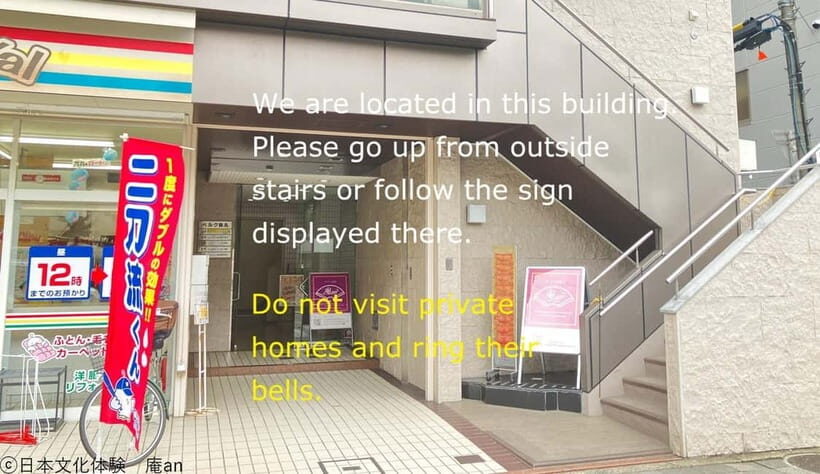
This tea ceremony experience is set in Kyoto (Honshu), with the meeting point just a quick hop from public transit: about a 1-minute walk from Exit 1 of the Subway Karasuma Line Gojo Station. The storefront faces Gojo-dori, so you can get your bearings fast and arrive without a long hunt.
The biggest practical win is the seating. You’ll be seated at tables and chairs, not on the floor. For your back and knees, that matters. For your attention, it matters too, because you’re less focused on posture and more able to watch what the instructor is teaching.
The atmosphere is calm and structured. You’re not doing anything stressful or overly performative. Instead, you’re learning how the tea presentation works, and you end by drinking what you’ve learned to appreciate.
You can also read our reviews of more tours and experiences in Kyoto.



What You Learn in an OTE-MAE Tea Ceremony
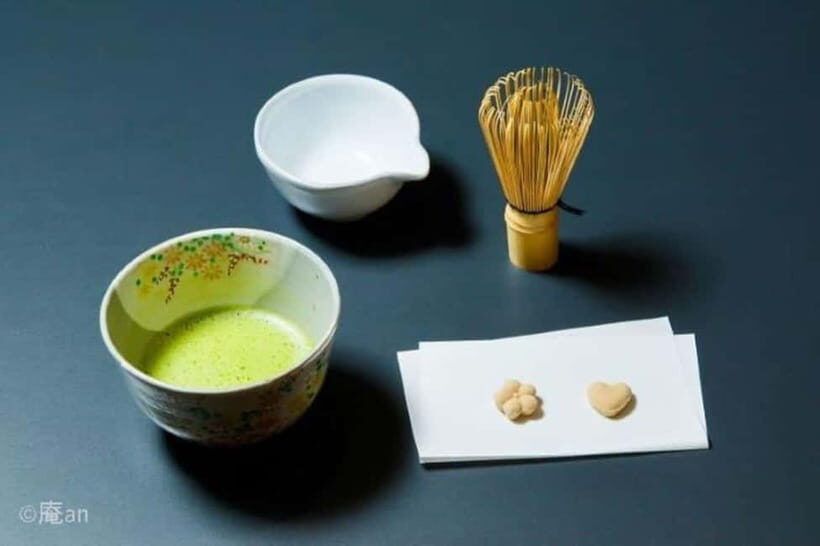
OTE-MAE is the style of tea presentation, and that’s the core of what you’re paying for here. You’ll learn the art of the tea ceremony step by step, guided by a Japanese instructor. The point isn’t just how to make matcha; it’s what each movement, utensil, and moment means in the tradition.
Expect explanation that connects the actions to the philosophy of the ceremony. That philosophy is often about mindfulness, respect, and quiet attention, and you’ll feel that right away because the format is unhurried. Even though the session is only 30 minutes, you’re not thrown into silence. You’re guided through what to notice.
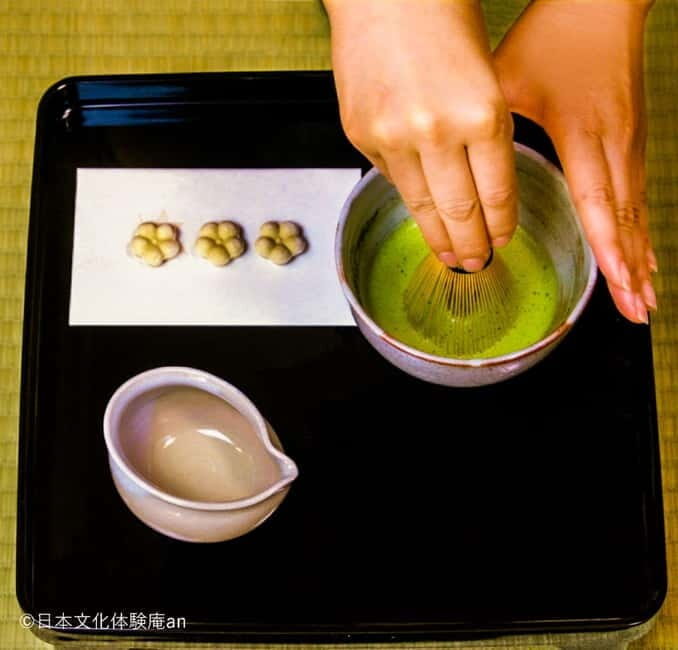
There’s also a teaching element: the session is built around a demonstration of how the host prepares matcha into the tea you’ll drink. That’s a key difference from a tastings-only setup. You’re learning the logic behind the steps.
Single-Origin Matcha and OHIGASHI: What’s Included in the Tasting
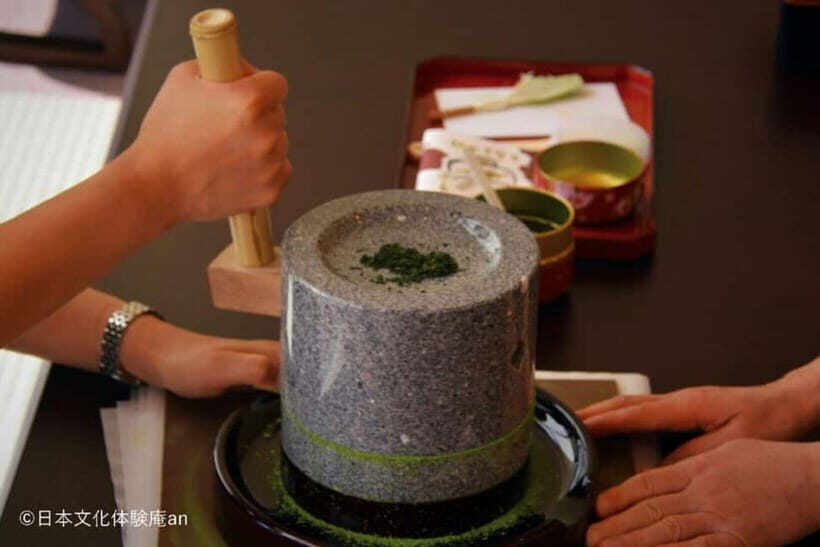
The tasting centerpiece is single-origin matcha. That means the matcha is presented as a specific type rather than a bland “any green tea powder” approach. If you care about flavors, this is the kind of detail that helps you notice differences instead of treating matcha as one-size-fits-all.
Along with the matcha, you’ll be served OHIGASHI (Japanese dried sweets). This isn’t just a snack add-on. In practice, it helps balance the strong, slightly bitter character of matcha, so your cup feels more complete. If matcha is new to you, that sweet pairing makes the experience easier to enjoy.
One more small but useful point: the session is short, so you won’t be waiting around while utensils sit unused. You get to taste and connect the lesson to the cup without dragging time.
Language Reality Check: English Support Can Be Limited
The instruction language is Japanese. English translation is provided as much as possible, but the setup also notes that if you want English support, you should contact the team. So plan for the possibility that your session will be more Japanese-forward, depending on what translation support is available that day.
This matters because tea ceremony teaching often includes small cultural details. If you don’t catch every sentence, you can still follow the structure: watch, learn the meaning of key actions, and then taste. But if you’re hoping for a full lecture on history, tea culture in daily life, and who drinks matcha when, this may feel like a quick sampler rather than a deep seminar.
If you want to get the most out of the language gap, keep your questions simple. Ask things like what to pay attention to when whisking, or how to describe the flavor profile of that single-origin matcha. Clear questions help more than trying to translate every word.
Time, Setting, and Comfort: 30 Minutes That Actually Works
The duration is 30 minutes, and that timing is part of the value. Kyoto is busy. A ceremony that fits inside a short window lets you do it on a day when you’re also hitting shrines, markets, and neighborhoods.
Because it’s seated at tables and chairs, you can keep your energy for the rest of the day. You’re not committing to a long floor-seated session. You’ll still get a full “try it and learn it” flow, just compressed into a manageable timeframe.
Be ready for a small practical truth: if the room is crowded, it can be harder to hear the guide clearly. Even if the guidance is clear enough visually, spoken details may be mixed. If you’re sensitive to noise or you rely on hearing, aim to sit where you have the best view and closest listening angle when you arrive.




Price and Value: Is $7 for Matcha Worth It?
At $7 per person for a 30-minute, instructor-led tea ceremony with single-origin matcha and OHIGASHI, the value is strong. You’re not just buying a drink. You’re buying context: an OTE-MAE guided experience that explains significance and demonstrates the process.
The offer also clarifies what’s included and what’s not. A completion certificate costs 300 JPY and is not included. So you can treat this as a straightforward cultural activity rather than an all-inclusive “collect documents” package.
Where you’ll feel the best value is if you’re doing Kyoto for first-time experiences. This is a friendly entry point to tea etiquette, the idea of how the host presents tea, and what matcha is supposed to taste like when it’s treated as a specific product.
Where to Meet and How to Plan Your Arrival on Gojo-dori
The meeting point is very concrete: 1 minute walk from Exit 1 of Subway Karasuma Line Gojo Station. The store entrance faces the main street, Gojo-dori. If you’re using maps, the coordinates are 34.99642916810299, 135.76176672966227.
Plan to arrive a little early. The session won’t be held for delays, so if you’re coming from another site, give yourself buffer time. Kyoto transit can be smooth, but walking between neighborhoods and stops can still take longer than you expect.
Also note the building setup: there’s no elevator. Stairs are required to reach each venue. Even though the activity is listed as wheelchair accessible, the no-elevator detail is important for planning, so it’s smart to contact the provider if you need confirmation about how they handle stairs for your situation.
Should You Book This Kyoto Tea Ceremony?
Book it if you want a short, meaningful Kyoto cultural experience without the long time commitment. It’s especially a good fit if you’d like to taste matcha thoughtfully, learn basic etiquette and meanings behind the motions, and then keep moving with your day.
Consider passing or setting expectations if you want long, detailed history in English, or you need a very quiet, low-noise setting where you can catch every spoken nuance. This ceremony is designed to be compact, and the language support can vary.
If you’re deciding between a matcha tasting and a teacher-led experience, this is leaning teacher-led. The inclusion of OHIGASHI and the matcha presentation style give you a complete little package.
FAQ
FAQ
How long is the Kyoto tea ceremony experience?
It lasts about 30 minutes.
Where is the meeting point?
It’s about a 1-minute walk from Exit 1 of Subway Karasuma Line Gojo Station. The entrance faces Gojo-dori.
What’s included in the experience?
You get an OTE-MAE Japanese tea ceremony experience set, including single-origin matcha tea and OHIGASHI (Japanese dried sweets).
What matcha will I drink?
You’ll enjoy a cup of single-origin matcha.
Are participants seated on the floor?
No. You’ll be seated at tables and chairs.
What language is used during the ceremony?
The instructor speaks Japanese. English translation is provided as much as possible, and you can contact the provider if you’d like to add it.
Is there a certificate included in the price?
A completion certificate is not included. It costs 300 JPY if you want one.
When does the experience operate?
It runs from 10:00 to 17:00. Reservations received after 17:00 are processed the next day.
Is the venue wheelchair accessible?
It’s listed as wheelchair accessible, but there is no elevator, so stairs are needed to reach each venue.
What if I’m late?
The event won’t be held to accommodate delays.
If you tell me what day/time you’re targeting and what you want most from tea (etiquette, flavor, or cultural context), I can help you decide whether this 30-minute format is the right fit.