REVIEW · BIKE & E-BIKE TOURS
No. 1 E-Bike Tour for Up to 5 Guests in Kyoto with a Local!
Book on Viator →Operated by Discovery Bicycle Tours Okinawa / e-CHARIty Naha · Bookable on Viator
Kyoto by e-bike feels like guided speed-walking. In about four hours, you glide between temple gates and river pauses, with a local guide steering you to spots like Nishi Honganji, Gion Shirakawa, Heian Shrine, and Nanzenji.
What I really like here is the small-group feel, with a maximum of 5 riders, plus the mix of big-name landmarks and quieter moments like the Kamo River break. You’re not stuck in long transit lines, either, since the e-bike keeps your day moving.
One thing to consider: it still takes actual bike riding time. If you’re not comfortable with cycling or the quick hand-sign briefing, you may feel it more than you expect—especially since the tour runs best with good weather.
In This Review
- Key Highlights You’ll Care About
- Why Kyoto Works So Well on an E-Bike
- Price and What $99.08 Covers (and Why It Feels Like Value)
- Meeting Point and the 1:00 pm Start You Should Plan Around
- First Ride: The Briefing and How the Tour Keeps You Safe
- Nishi Honganji: A Temple Stop That Feels Bigger Than It Looks
- Kagiyacho and the Nintendo Connection You Might Not Expect
- Gion and Gion Shirakawa: Tea-House Streets by E-Bike
- Heian Shrine and the Big Red Torii Gate Moment
- Nanzenji and the Lake Biwa Canal Detail (A More Interesting Stop Than You’d Think)
- Kamogawa (Kamo River) Pause: Relax, Cool Off, Keep Riding
- E-Bike Riding Tips So You Don’t Feel Rushed
- Who Will Enjoy This Most (and Who Might Want Another Option)
- Language Support and the Guide Factor (Yuki, for Example)
- Should You Book This Kyoto E-Bike Tour?
- FAQ
- How long is the e-bike tour in Kyoto?
- How much does it cost per person?
- What is the group size?
- What is included in the price?
- Are admission tickets included for the stops?
- Where do we meet for the tour?
- What time does the tour start?
- Do I get a mobile ticket?
- Can children join?
- What happens if the weather is bad?
Key Highlights You’ll Care About
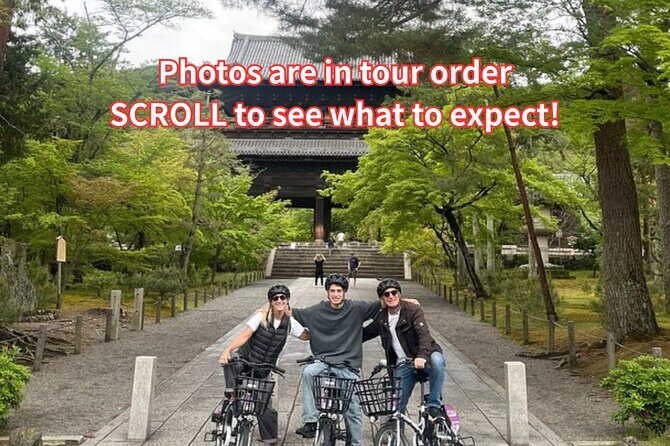
- Small group (up to 5 people) keeps the pace relaxed and the guide’s attention focused.
- E-bike + helmet + guide are handled for you, so you can show up and ride.
- Iconic Kyoto route covers Nishi Honganji, Gion, Heian Shrine, Nanzenji, and the Kamo River.
- Story stops, not just photo stops, with time to listen to what you’re seeing.
- Lake Biwa Canal area at Nanzenji adds a technical, cool-to-learn twist to temple sightseeing.
- Language flexibility is possible if you contact in advance, and the experience is led by guides like Yuki.
Why Kyoto Works So Well on an E-Bike
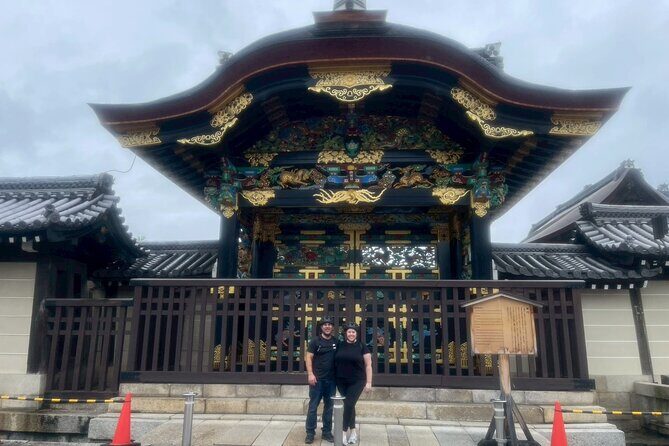
Kyoto can be a lot on foot. Distances add up fast, and some days you’ll feel like you’re just trying to get from one neighborhood to the next. An e-bike tour solves that problem in a very practical way: you spend your energy on enjoying the places, not on battling the in-between.
The route here hits the classic Kyoto highlights, but it’s paced as a cycling experience. You’re riding through different parts of the city, then stopping long enough to actually take things in. That combo matters because Kyoto’s details are where the magic lives: gate shapes, temple grounds, old street layouts, and riverside breathing room.
You can also read our reviews of more cycling tours in Kyoto

Price and What $99.08 Covers (and Why It Feels Like Value)
At $99.08 per person for about four hours, this is the kind of tour that makes sense when you look at what’s included. You’re not just paying for a map and a meetup point. The package includes the bike rental and a helmet, plus a cycling guide to keep you moving smoothly and explain what you’re seeing.
Also, the tour lists admission as free for the stops, which helps your budget stay predictable. Even with free entry, it’s the guiding that makes the difference: you’ll get context for places like Nishi Honganji and Nanzen-ji, and you’ll learn what to notice as you ride.
One more value point: small groups are part of the cost structure. With up to 5 people, the tour doesn’t feel like a herd. You’re more likely to get the time and attention you need if you’re slower, ask questions, or want the guide to clarify the next turn.
Meeting Point and the 1:00 pm Start You Should Plan Around
The tour starts at 1:00 pm. Your meetup is at Times Car Rental, 682 Higashishiokōjichō in Shimogyo Ward, Kyoto. From there, your guide meets you at a share-cycle “Clew” port located in front of a temple called Seikouin Wagatazizou (described as behind the hotel).
That port detail matters. Kyoto is full of similarly named streets and landmarks, so I’d treat the meetup like a checklist moment: get there early, take a quick look for the Clew bikes, and don’t be shy about confirming you’re at the right spot.
You’ll also receive a message from your guide via Viator (Tripadvisor) before the tour. I recommend checking that message so you know who you’re meeting and where to stand when you arrive.
First Ride: The Briefing and How the Tour Keeps You Safe
Before you roll out, you’ll get a briefing at the start location with a focus on cycling hand-signs. It’s one of those small details that makes a big difference on a bike tour in a busy city. When everyone understands signals, you spend less time worrying and more time watching the scenery.
You’ll be on an e-bike for a full half-day, so comfort and rhythm matter. The helmet is provided, and the fact that the guide is leading a short-group route means you’re less likely to get dropped into a chaotic ride with strangers.
Nishi Honganji: A Temple Stop That Feels Bigger Than It Looks
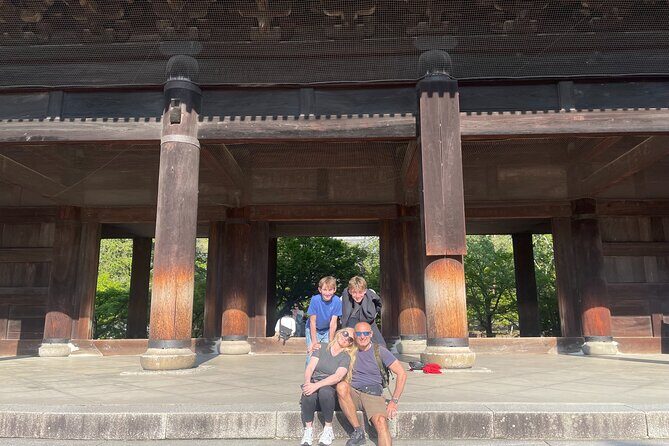
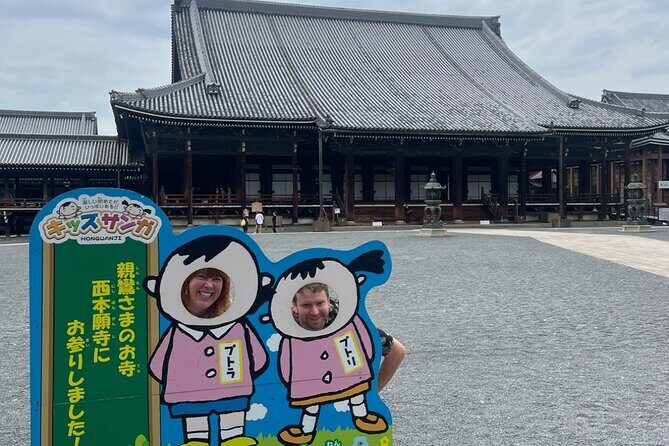
The tour’s early highlight is Nishi Honganji, described as the head temple of the Jodo Shinshu Hongwanji-ha sect. It’s also noted as a World Heritage–registered site, and the time here is long enough to feel the scale.
This is the kind of stop where listening pays off. Even if you’re mostly focused on walking through gates and courtyards, your guide can steer your attention toward what makes Nishi Honganji historically significant—without turning the tour into a lecture marathon.
Admission is free, so this is one of the best “value per minute” moments in the day: you’re getting major landmark time without extra ticket costs.
You can also read our reviews of more tours and experiences in Kyoto
Kagiyacho and the Nintendo Connection You Might Not Expect
After Nishi Honganji, you’ll pass through Kagiyacho, where a huge building catches your eye: the old headquarters of Nintendo. It’s a surprising detour in a temple-heavy route, and that contrast is part of why it works.
Kyoto isn’t only shrines and teahouse streets. Seeing a landmark tied to modern culture helps you understand how Kyoto layers eras on top of each other. You don’t stop for a tour here like you would at a museum, but you do get the chance to recognize the building and understand why it’s notable.
Gion and Gion Shirakawa: Tea-House Streets by E-Bike
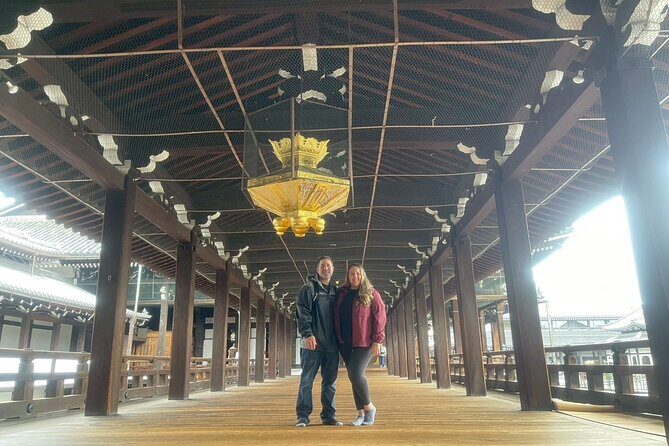
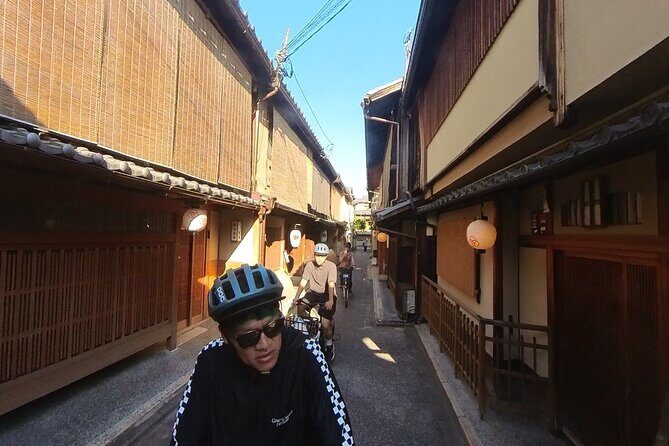
Then you’ll move into Gion, where the tour highlights the traditional street atmosphere of chaya-mati, with old buildings along the river. You get about 30 minutes there, which is a good amount of time for people who want photos, plus people who just want to wander slowly.
The tour also mentions the classic Kyoto texture you see around this area—seasonal plant details like cherry blossoms may appear depending on the time of year. And you’ll get time that includes a stroll through lively Kiyamachi Street, which fits naturally with the Gion mood.
The practical benefit of arriving here by e-bike: you’re not stressing about timing or finding parking for each mini-section of your day. You’re also more likely to notice the street geometry—how lanes narrow, how buildings line up, and where views open to the river.
Heian Shrine and the Big Red Torii Gate Moment
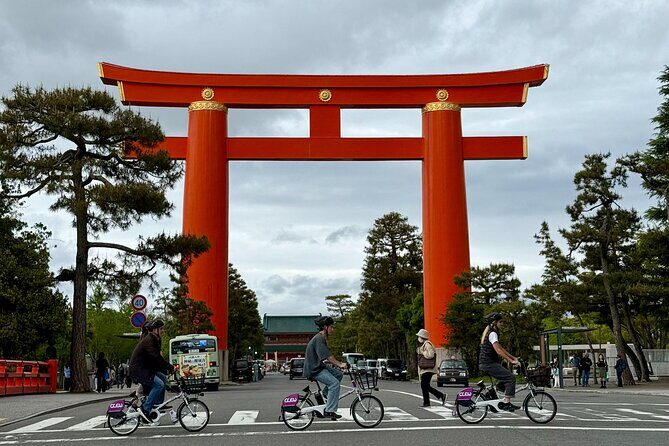
Heian Shrine is one of the stops on the route, and the tour description calls out a major visual: the large red torii gate. That’s not just a background photo. In Kyoto, big gate moments tend to structure the way you experience a site, because they frame where you walk and where you pause.
The shrine is said to commemorate the 1100th anniversary of the capital’s transfer to Heian-kyo. Emperor Kanmu is mentioned as the enshrined deity. That context helps you read the site as a historical marker, not only as a pretty spot.
If you like cultural landmarks that have a clear “why,” this stop usually lands well.
Nanzenji and the Lake Biwa Canal Detail (A More Interesting Stop Than You’d Think)
The route around Nanzenji includes stops connected to the Lake Biwa Canal, described as the waterway linking Kyoto and Lake Biwa. You’ll ride through the city where you can see a long river-like structure, and the tour explains how it helped Kyoto’s development by providing water.
What’s especially interesting is that the water system is described as skillfully designed to handle elevation differences between Kyoto and the source. Even if you don’t think you care about infrastructure, this is one of the rare moments in a sightseeing day where the engineering story makes the scene make more sense.
Then you reach Nanzen-ji Temple itself. The tour notes it as particularly special among Kyoto’s Five Mountains. You’ll get time to see the main temple and the gate—two features that draw people in because they feel strong and solid, not delicate.
Again, admission is listed as free, so you’re paying for the route and guide, not for tickets.
Kamogawa (Kamo River) Pause: Relax, Cool Off, Keep Riding
To close out, you’ll head to the Kamo River area. This is one of the nicest parts of a bike tour because it lets you stop performing and start relaxing.
The plan is simple: spend time relaxing in the riverbed along the river or cycling on the riverbank. Then, at the end of the tour, you can put your feet in the water to cool down and refresh.
Even on days when you’re trying to pack in temples, this kind of break changes how you feel. It turns the day from a checklist into an experience.
E-Bike Riding Tips So You Don’t Feel Rushed
You don’t need to be a cyclist expert, but you should be ready for a few practical realities of e-bike touring in Kyoto:
- Listen closely during the cycling hand-sign briefing at the start. That’s what makes group riding feel calm.
- Keep an eye on your own comfort. If you start feeling tense or slow, tell your guide early rather than powering through.
- Dress for short stops and possible walking. Even with an e-bike, the tour includes time at temples and streets, so comfortable shoes matter.
Also, remember it’s a small-group experience with a relaxed pace. That’s not the same thing as “no movement.” You’ll still be riding through multiple areas, so plan to treat it as a guided ride plus sightseeing.
Who Will Enjoy This Most (and Who Might Want Another Option)
This tour is a strong match for people who want Kyoto’s major sights without spending half the day navigating transit. With up to 5 people, friends and families can stay together without the vibe turning into a commuter train.
It’s also a good fit if you want a blend of:
- big-name temple time like Nishi Honganji and Nanzen-ji
- old-street atmosphere like Gion and Kiyamachi
- a breather like the Kamo River
- a less obvious technical stop at the Lake Biwa Canal area
If you can’t ride a bicycle comfortably, or you’re expecting an almost entirely walking experience, this might not be your best day. The tour description says most travelers can participate, but it also includes time on the bike and assumes you can handle cycling.
Kids can join if they’re under 10 but taller than 140 cm and can ride a bicycle, and they pay the same fee as an adult.
Language Support and the Guide Factor (Yuki, for Example)
A big part of why these tours work is the guide’s ability to turn landmarks into stories you can actually remember. This one includes guidance at a relaxed pace with a small group, so questions land well.
The tour description notes that some guides can speak German, Dutch, Bangladeshi, Hindu, and Urdu. If you have a language preference, you should contact before booking so they can try to match what you need.
One review response also clarifies the guide name as Yuki. That’s a helpful reminder: guides can vary, but the experience is consistently guided by locals who care about sharing what you’re seeing.
Should You Book This Kyoto E-Bike Tour?
If you want Kyoto highlights in one smooth afternoon and you like the idea of biking between neighborhoods instead of stitching them together with transit, this is a very good bet. The included helmet and bike rental remove friction, and the route combines temples, a classic Gion river-street feel, and a real reset at the Kamo River.
Book it if:
- you want a small group (max 5) and a relaxed pace
- you like guided context, not just photo stops
- you’re comfortable riding a bicycle for several parts of the day
- you’d rather see multiple districts efficiently
Skip it if:
- you’re not comfortable cycling or you’re expecting a mostly walking tour
- you’re traveling during a period where weather is often poor (the tour requires good weather)
If your goal is to get a lot of Kyoto into one day without feeling tired from logistics, this tour hits the sweet spot.
FAQ
How long is the e-bike tour in Kyoto?
The tour lasts about 4 hours.
How much does it cost per person?
The price is listed as $99.08 per person.
What is the group size?
The tour has a maximum of 5 travelers.
What is included in the price?
Included are a helmet, bike rental, a cycling guide, and use of the bicycle.
Are admission tickets included for the stops?
Admission is listed as free for the stops on the itinerary.
Where do we meet for the tour?
You meet at Times Car Rental, 682 Higashishiokōjichō, Shimogyo Ward, Kyoto, and the guide meets you at a share-cycle Clew port near Seikouin Wagatazizou.
What time does the tour start?
The start time is 1:00 pm.
Do I get a mobile ticket?
Yes, the tour uses a mobile ticket.
Can children join?
Children under 10 can participate if they are taller than 140 cm and can ride a bicycle, and they pay the same fee as adults.
What happens if the weather is bad?
The tour requires good weather. If it’s canceled due to poor weather, you’ll be offered a different date or a full refund.