REVIEW · GEISHA & MAIKO TOURS
Dance and Game with Maiko
Book on GetYourGuide →Operated by B.B.Advisors Inc. AN KYOTO · Bookable on GetYourGuide
Maiko time is short, and that is perfect. I love the tight focus: two dances up close and a traditional game you can jump into, not just sit through. You also get that rare chance to be near a Maiko in a way most Kyoto sightseeing never allows.
One thing to consider: the experience is listed as about 45 minutes, but the main show can feel closer to 30. And it does not play out in a classic ochaya setting; it’s in a building with a relaxed setup.
In This Review
- Key things to know before you go
- Maiko Dances: Two Performances You’ll Actually Remember
- The Game With a Maiko: Fun, Simple, and Participation-Based
- Photos Right Beside the Maiko
- The Senjafuda Lucky Charm: A Small Gift With Real Meaning
- Where You Go in Kyoto: Gojo Station to the Meeting Spot
- Duration and Timing: How to Fit It Into a Busy Day
- Price and Value: What $28 Buys You in Kyoto
- Who Should Book This Maiko Dance and Game Experience
- A Simple Read on the Overall Experience
- Should you book Dance and Game with Maiko in Kyoto?
- FAQ
- How long is the Dance and Game with Maiko experience?
- What do I actually do during the experience?
- Do I get photos and a souvenir?
- Is this held in a traditional tea-house style place?
- Is there English translation?
- Are kids allowed, and is there a child price?
- Is there an elevator at the venue?
Key things to know before you go
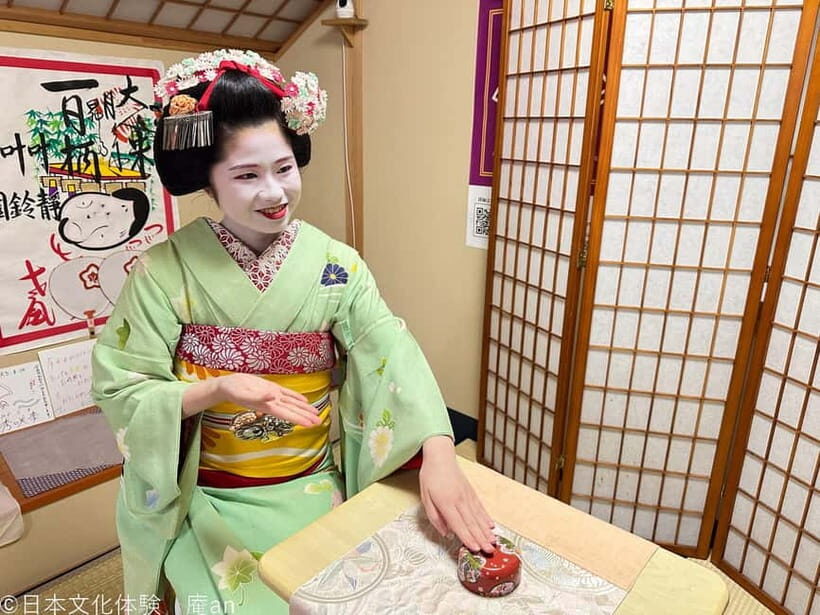
- Two Maiko dances, not one: you get more than a quick cameo.
- A game with real audience involvement: volunteers may be invited to play.
- Close-up photos: you’ll be right beside the Maiko for a commemorative shot.
- You leave with a Senjafuda: a small lucky charm gift from the Maiko.
- Not always 100% “Maiko-only”: in some situations, a Geiko may be invited instead.
- Short program timing: plan to fit it between lunches/dinners without expecting a long hang.
Maiko Dances: Two Performances You’ll Actually Remember
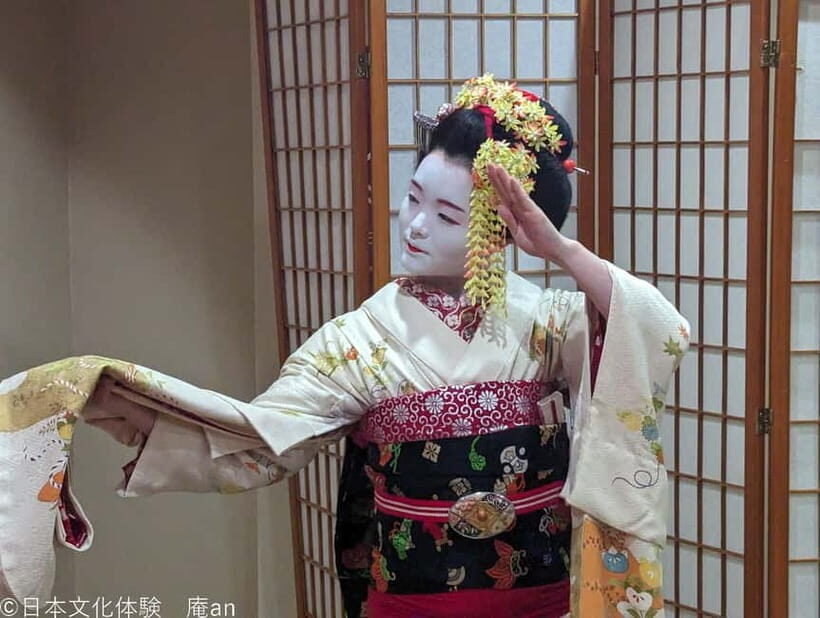
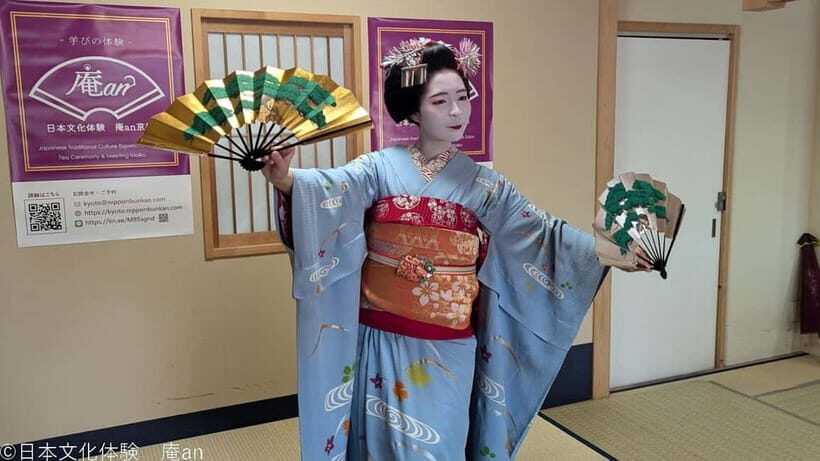
The heart of this experience is simple: you watch two Maiko dances, each bringing a different side of traditional performance. The dances are described as graceful and expressive, with themes like the seasons, love stories, and everyday life, all communicated through music and movement.
What I like about this setup for visitors is that it respects your limited time. Kyoto can swallow a whole day, and this gives you a concentrated hit of Maiko artistry. It’s not a museum-style explanation with endless facts; it’s performance first. If you’re the type who learns by watching, you’ll get a lot from it.
The other nice detail is how close the format is. This isn’t the distant “look but don’t touch” version of cultural experiences. You get to see the Maiko’s presence and how the performance fills the space, which is the whole point of meeting someone like this in person.
Do note one expectation shift: the listing says 45 minutes, but the actual main program may run shorter, so don’t plan it like a half-day event. Think of it as a focused intermission in your Kyoto day.
You can also read our reviews of more tours and experiences in Kyoto.



The Game With a Maiko: Fun, Simple, and Participation-Based
After the dances, you’ll move into the traditional game portion. It’s designed to be easy to follow, and it’s meant to get energy into the room. The format includes interaction between the Maiko and guests, and audience volunteers may be invited to play.
This is where the experience becomes more than watching. You’ll likely be clapping and cheering along, which turns it into a shared moment with the people around you. Even if you’re not selected to play, the game part adds a playful, human rhythm that makes the whole encounter feel less staged.
A practical consideration: if you’re traveling with kids who get shy in group settings, the participation element can be awkward. You might find the room atmosphere feels adult-heavy, and a child may hesitate to volunteer in front of everyone. If participation is the main goal for your family, bring patience and plan a “no pressure” mindset.
One more detail worth knowing: they may run the program in a context that overlaps with people eating lunch or dinner. That doesn’t mean it’s casual in a bad way, but it does mean the vibe can be less formal than you might picture for a traditional performance hall.
Photos Right Beside the Maiko
The photo moment is one of the biggest reasons this experience works for many visitors. You get a commemorative photo right beside the Maiko, with the chance to capture the moment at close range. That close-up angle is the part most people are really after when they book something like this.
If you want your best shots, come ready. Have your camera settings sorted before you get called in. When the photo time arrives, it’s not the moment to figure out where the zoom button is.
Timing matters here too. Because the whole program is compact, you’ll feel the schedule move quickly: dance, game, photo, gift. If you’re the type who gets distracted by rushing, set your expectations now and keep your camera in hand during the final stretch.
The Senjafuda Lucky Charm: A Small Gift With Real Meaning
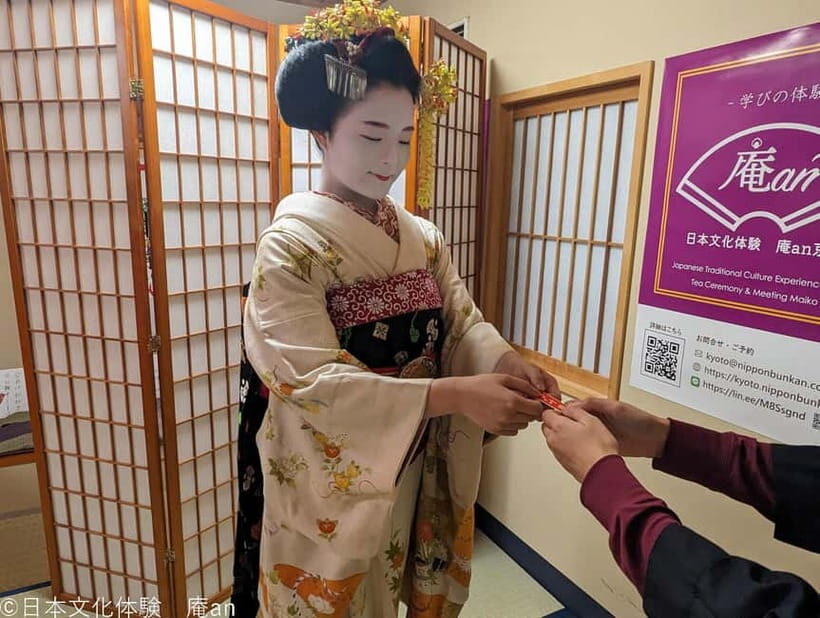
After the dances and the game, you’ll receive a lucky charm called the Senjafuda. It’s presented as a keepsake, so it’s not just a souvenir you buy after the fact.
What makes the Senjafuda gift valuable is that it connects you to the moment in a tangible way. You don’t leave Kyoto with another generic postcard-type item. You leave with something a Maiko directly gives during the experience, which makes it feel personal.
It’s small, but that’s part of the appeal. It’s easy to bring home, easy to keep, and easy to remember. If you like travel items that actually tie back to a specific story from your trip, this hits the mark.
Where You Go in Kyoto: Gojo Station to the Meeting Spot
This program is located in Honshu, Japan, with the meeting point a very manageable hop from public transit. You meet 1 minute walk from Exit 1 of Subway Karasuma Line Gojo Station. The store entrance faces Gojo-dori, so you’re not hunting down a hidden alley entrance.
The building itself is straightforward, but here’s the key logistics note: there’s no elevator. You’ll take stairs to reach the venue. If you have mobility limits, you’ll want to factor that in before you book.
Also, the venue is not an ochaya or traditional Japanese house. It’s in a building with a relaxed atmosphere and friendly staff. That can be a relief if you were worried about complicated etiquette or formal staging. You don’t need special preparation, and the vibe is geared toward visitors.





Duration and Timing: How to Fit It Into a Busy Day
The listing gives 45 minutes and operation hours from 10:00 to 17:00. Reservations received after 17:00 are processed the next day, so if you’re booking late, plan for that.
Then there’s reality: the main show may run closer to 30 minutes. So when you’re building your Kyoto day plan, treat this as a short stop, not a long anchor.
If you’re deciding when to go, think about your energy level. It’s a concentrated cultural moment with active participation. That means you don’t want it to land when you’re already stressed about getting to the next thing.
Also, they note they won’t accommodate delays. In other words, don’t plan to arrive “sometime near.” Arrive early so you’re not rushing up stairs while the room is already getting set.
Price and Value: What $28 Buys You in Kyoto
At $28 per person for a dance + game + photos + Senjafuda, the value is pretty easy to understand. You’re not paying for a long multi-course night. You’re paying for a rare experience: meeting Maiko-level performers in a format designed for visitors.
Here’s what you’re getting for your money:
- Two Maiko dances instead of a quick performance
- A participation-based game that keeps it lively
- Close-up photos beside the performer
- A Senjafuda gift you keep afterward
Now for balance: it’s short, and in some cases the timing can feel tighter than the advertised 45 minutes. Also, it sounds like not every portion is equally “for kids,” because the game involves audience volunteers and might not include everyone.
Still, if your Kyoto trip is tight and you want one high-impact cultural experience without committing to a half-day, this price-to-time ratio can make sense. It’s often easier to justify paying $28 for a single focused encounter than to spend more for longer shows that still require you to sit quietly for hours.
Who Should Book This Maiko Dance and Game Experience
I’d point this one at travelers who want:
- A short, memorable Maiko encounter without complicated planning
- A mix of watching and participating
- The chance to take photos close up
- A keepsake beyond the usual souvenir shelf
It may not be ideal if you’re looking for a slow, ceremony-like experience where you can relax for a long stretch. This is structured and time-bound. If you prefer tea, there are other programs offered specifically for Tea ceremony with Maiko (including a premium option). This one focuses on dance, game, and photo time.
It can also be a mixed fit for very shy kids, especially if they want to participate but feel embarrassed in front of adults. If you’re traveling with children, go in knowing the game invitation can be moment-dependent.
Finally, keep in mind the “Maiko first” part can shift. Depending on the situation, you may meet a Geiko instead of a Maiko. That doesn’t remove the experience; it just means don’t plan around the exact costume label in your head. The overall cultural encounter stays the point.
A Simple Read on the Overall Experience
The overall rating is 3.9 with 46 reviews, which is telling. This isn’t a universal “perfect for everyone” activity, but it clearly lands well when you match the format.
The most praised aspects line up with what this experience promises: the beauty of the Maiko dances, the fun of the game, and the value of getting close-up photos. People also like that it’s quick and doable even with a packed Kyoto schedule.
The common friction point is practical, not dramatic. Some sessions run shorter than expected. And for families, the game participation piece can be a little hit-or-miss depending on whether kids feel comfortable jumping in.
That’s why I think the biggest secret to enjoying this is to treat it as what it is: a short, friendly encounter designed for visitors, not a long formal dinner show. If you match the expectations, you’ll likely leave happy.
Should you book Dance and Game with Maiko in Kyoto?
If your Kyoto trip is busy and you want one high-impact Maiko moment without committing to a longer evening, I’d say yes. For a reasonable $28, you’re getting two dances, a traditional game, close-up photos, and a Senjafuda gift. That’s a lot in a small package.
I’d think twice if you’re expecting a long, slow cultural program or if your priority is exactly a particular setting like a traditional ochaya home. Also consider the participation element if you’re traveling with kids who get shy easily.
FAQ
How long is the Dance and Game with Maiko experience?
The program is listed as about 45 minutes. The schedule includes performances, a game, photos, and time to chat briefly.
What do I actually do during the experience?
You watch two Maiko dances, then you’ll see a traditional game between the Maiko and guests. Volunteers from the audience may be invited to play. You’ll also take a commemorative photo right beside the performer.
Do I get photos and a souvenir?
Yes. You’ll have a chance to take photos up close with the Maiko, and you’ll receive a lucky charm called Senjafuda.
Is this held in a traditional tea-house style place?
No. The venue is not an ochaya or traditional Japanese house. It’s in a building, with a relaxed atmosphere and friendly staff.
Is there English translation?
English translation will be provided as much as possible. If you want additional English support, you should contact the provider.
Are kids allowed, and is there a child price?
Children under 2 years old are free of charge. If a seat or meal is required, the same fee as 1 person may be charged.
Is there an elevator at the venue?
No. There is no elevator in the building, and you will need to take stairs.
If you want, tell me your travel month and whether you’re going solo or with kids, and I’ll help you decide where this fits best in your Kyoto day plan.