REVIEW · MUSEUMS
Kyoto: Uji Matcha Tea Museum Entry Ticket
Book on GetYourGuide →Operated by Chazuna · Bookable on GetYourGuide
Tea museums can be oddly fun. This one teaches Uji tea with digital exhibits that actually let you touch and experience tea. I especially like the Uji-cha no Ma room for answering real questions (like how Uji tea is made and why Gyokuro differs from Sencha), and I love that the museum keeps it engaging for a wide age range.
The main consideration: it’s more education-focused than hands-on milling or cooking. If you’re hoping for a long tasting flight, you might find it shorter and more museum-style than expected.
In This Review
- Key highlights at a glance
- A Quick Read Before You Go: What This Ticket Is Really For
- Inside Uji-cha no Ma: How Uji Tea Is Made (Without the Jargon)
- The History Room: A 10-yen Coin and a 4K Screen That Actually Feels Big
- The Tea Photo Spot in the Last Corner
- Price and Value for a One-Day Stop
- Who This Ticket Suits Best
- Timing: Making It Work in a Kyoto/Uji Day
- Should You Book This Entry Ticket?
- FAQ
- How long does the Kyoto: Uji Matcha Tea Museum entry ticket last?
- What’s included with the ticket?
- Where is this experience located?
- Is it wheelchair accessible?
- Can I reserve first and pay later?
- Is there free cancellation?
Key highlights at a glance
- Uji-cha no Ma digital exhibits that answer common tea questions in plain language
- Touch-and-experience displays tied to how tea is produced
- Gyokuro vs Sencha explained so you can order with confidence afterward
- History Room visuals anchored by a huge 10-yen coin and Byodoin Phoenix Hall imagery
- A 4K HDTV must-see screen showing townscape art called Meisho-zue
- A tea-themed photo spot in the last corner for fun, easy souvenirs
A Quick Read Before You Go: What This Ticket Is Really For
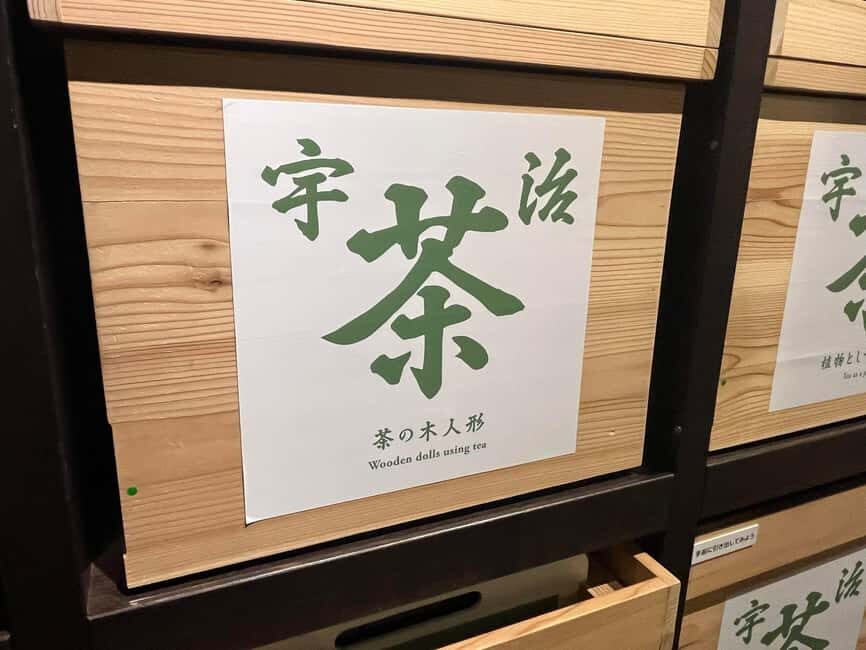
This is a one-day entry ticket to the Kyoto Uji Matcha Tea Museum experience, priced at about $3.87 per person. That low price matters, because it signals what the museum is best at: practical learning, not pricey add-ons. You’re not buying a guided tour here; you’re walking through themed rooms and letting the exhibits do the teaching.
You’ll get two main exhibition zones. One is the Uji Tea Room (Uji-cha no Ma), focused on production methods, the origin story, and how different types of green tea are made. The other is the History Room, where Uji and the Uji River’s changes over time are presented through big, high-impact visuals.
If you like museums that don’t talk down to you, you’ll probably enjoy this format. The screens and interactive elements are designed so you can move at your own pace and still feel like you learned something useful.
You can also read our reviews of more tours and experiences in Kyoto



Inside Uji-cha no Ma: How Uji Tea Is Made (Without the Jargon)
The heart of the museum is the Uji-cha no Ma (Uji Tea Room). This is where the exhibits try to answer the questions most people actually have, even if they’re too polite to ask at a tea counter.
Here’s what you can expect to see in this section:
- How tea is made, explained with digital displays
- A look at the birth story behind Uji tea
- Clear comparisons of Gyokuro vs Sencha
- Ideas on whether there’s a special way to make delicious tea
What makes this room work is that it’s built around curiosity. You can keep moving through panels and interactive screens until the basics click. I like that it’s not just lectures. The museum includes displays where you can touch and experience the tea, which is a big difference from “read-only” museum time.
Also, don’t underestimate how helpful the Gyokuro vs Sencha content can be for your next meal in Uji or Kyoto. Even if you don’t become a tea expert, knowing what sets one style apart helps you choose what fits your taste. Gyokuro and Sencha aren’t just two menu words—they come from different production approaches, and that changes flavor expectations.
Practical note: this is still a museum room flow, not a workshop with tools. Plan to spend enough time to stop, read, and try the interactive bits, but don’t expect hands-on tea processing.
The History Room: A 10-yen Coin and a 4K Screen That Actually Feels Big
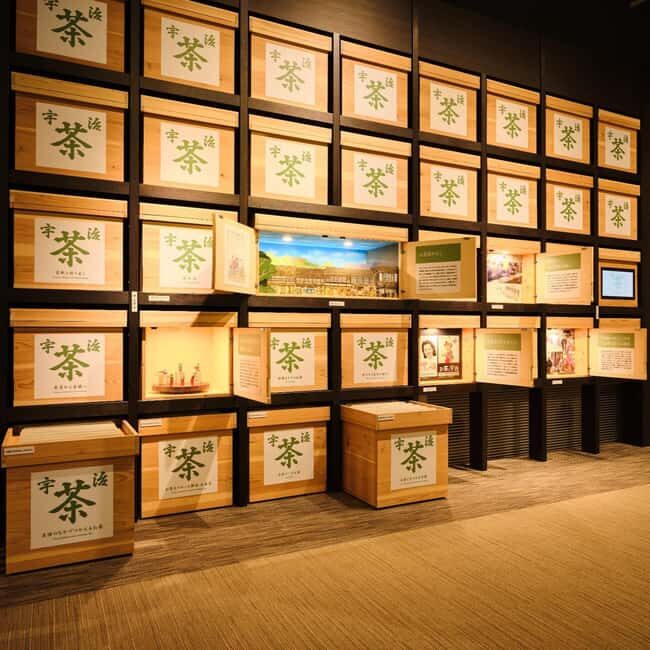
After Uji-cha no Ma, you shift from production to place. The History Room is built around the idea that Uji tea isn’t just a product—it’s tied to the town and the river.
You’ll be greeted by a huge visual: a 10-yen coin featuring Byodoin Phoenix Hall. It’s a smart museum move. Coins are instantly recognizable in Japan, and tying tea history to a familiar national icon makes the setting feel real, not abstract.
From there, the exhibits focus on changes in:
- The town of Uji over time
- The Uji River over time
- How those shifts connect to the story of Uji tea
The exhibits use digital presentations, and the standout moment here is the huge 4K HDTV screen displaying drawings titled Meisho-zue (townscape drawings). This is the kind of visual that gives you something you can’t get just by reading. Even if you’re not sure what every term means, the scale and clarity help you understand the idea: Uji’s environment and town life shaped the tea culture that came after.
If you like history that’s anchored to visuals you can actually see in your head afterward, this room is a highlight.
One consideration: because the History Room is so visual, it may feel less satisfying if you’re looking for detailed timelines in text form. It’s more about big presentation and interpretation than dense facts on paper.
The Tea Photo Spot in the Last Corner
Not every museum plans for photos, but this one does. In the last corner, there’s a tea-themed photo spot, designed for quick, fun pictures.
Why this matters: when you’re spending a short day in a city like Kyoto, you want at least one easy “capture moment” that doesn’t require hunting for the perfect background. This gives you a ready-made setting that fits the theme, so your photos match the story of where you were.
It’s also helpful if you’re traveling with kids or anyone who gets bored when museums feel too serious. The photo spot becomes a natural endpoint—finish, snap a few shots, and head out.
Price and Value for a One-Day Stop
At $3.87, this ticket sits in the category of “worth it even if it’s short.” That’s rare in Japan, where some attractions quietly creep upward in cost.
The value comes from two things you get for that price:
- Two full exhibition spaces (tea production plus history)
- Interactive digital elements, including touch and experience components
This isn’t an activity that depends on a paid add-on like a tasting menu to justify the price. You’re paying primarily for entry to the museum experience itself—so you should measure value by how much you enjoy exhibit-style learning.
If your ideal day includes strolling through themed rooms with screens, trying the interactive parts, and learning a few things you can use immediately (like what Gyokuro and Sencha differences mean), the price feels fair. If you’re expecting a long, guided, multi-course experience, you may feel the museum is too straightforward and compact for the time you have.
You can also read our reviews of more museum experiences in Kyoto






Who This Ticket Suits Best
This experience is built for variety. It’s enjoyable for children through adults, which tells you the museum pacing is approachable and the exhibits are designed for mixed groups.
I think it’s a great fit if:
- You want a quick, low-cost cultural stop in Uji
- You’re curious about how tea is made and how Uji became known for it
- You like museums that explain basics without requiring a background in tea culture
- You’re traveling with family and want something age-friendly
If you’re a serious tea nerd looking for deep technical instruction, you might still enjoy it, but the format sounds more educational and overview-focused than lab-level detail. Still, learning the difference between Gyokuro and Sencha alone can make a tea order feel less like guessing.
Timing: Making It Work in a Kyoto/Uji Day
The ticket is valid for one day, and you check availability for starting times. That suggests the museum may run entry windows or scheduled admission rather than a strict all-day walk-in only approach.
So plan like this:
- If you’re pairing this with other Uji stops, give yourself time to slow down in each room.
- Don’t rush the Uji-cha no Ma interactive sections. The exhibits are built on learning, and the best part is the moment when the production story clicks.
- Then go to the History Room for the visuals. Let the big screens and Byodoin-themed coin moment do the heavy lifting.
Even though the duration is listed as one day, you can treat it as a half-day or three-quarters-of-a-day activity depending on how long you linger in the rooms. The museum flow encourages pauses.
Should You Book This Entry Ticket?
If you want a cheap, meaningful introduction to Uji tea—with digital exhibits, interactive touch elements, and a history room that uses big visuals—you should book it. The $3.87 price makes it low-risk, and the content targets questions you’ll actually carry with you into your next cup of tea.
Book it especially if you’re traveling with mixed ages, want an easy photo moment at the end, and like museum learning that feels hands-on through touch-based displays.
Skip it if your main goal is a long tasting, a guided workshop, or deep technical tea training. This reads like an educational museum stop first—tea as a story, not just a product.
FAQ
How long does the Kyoto: Uji Matcha Tea Museum entry ticket last?
The ticket is valid for one day, so you can plan your visit within that day timeframe.
What’s included with the ticket?
The ticket includes museum admission.
Where is this experience located?
It’s in Honshu, Japan, as part of the Kyoto Uji area.
Is it wheelchair accessible?
Yes, the museum is listed as wheelchair accessible.
Can I reserve first and pay later?
Yes, you can reserve now and pay later.
Is there free cancellation?
Yes. You can cancel up to 24 hours in advance for a full refund.