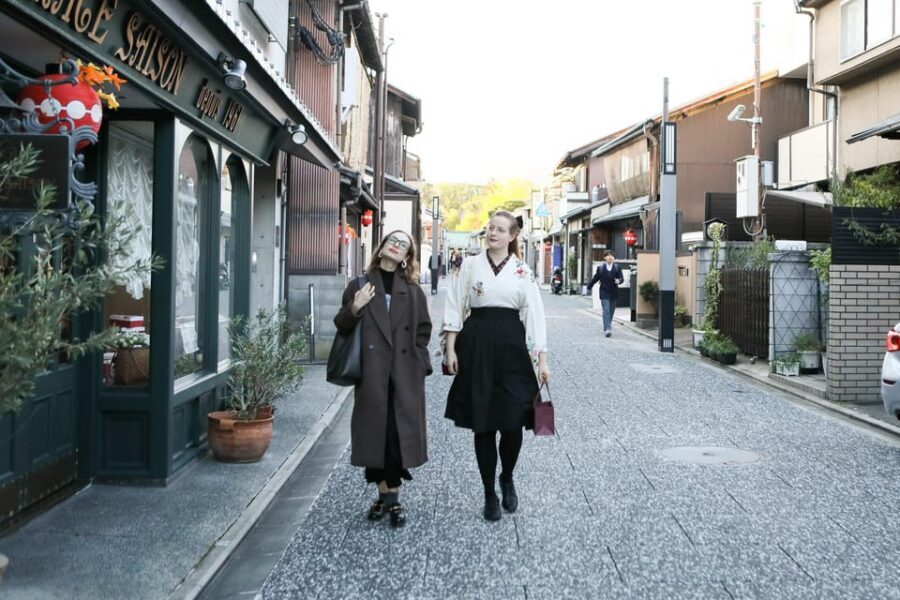
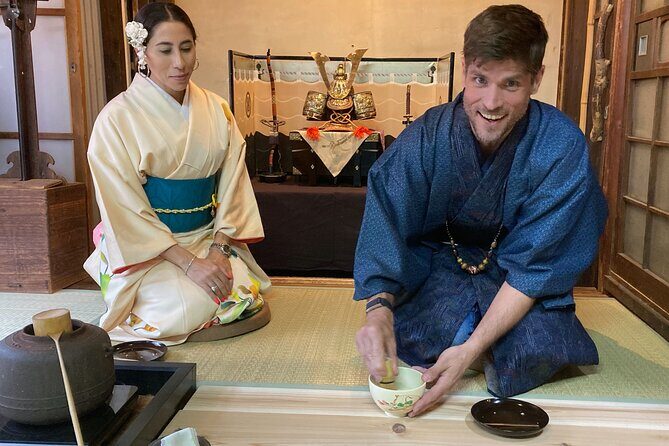
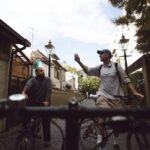
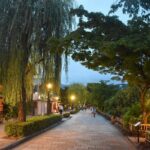
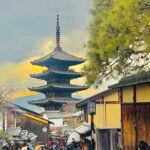
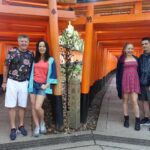
Arashiyama can feel like a moving crowd, but this walk slows it down. I like the small-group pace (max 6) and the fact that the guide, Yusuke Tanaka, built the route to keep things calm and local rather than forcing you through the same loud highlights. Two big perks for me are the time for photos (he helps you take good ones) and the option to hear the Tale of Genji connections while you walk.
One thing to plan for: you’ll do about 3km of walking, and at Seiryōji Temple and Daikaku-ji you need to take your shoes off to go inside. If it’s very hot or your legs run short, it’s worth bringing water and pacing yourself.
In This Review
- Key things that make this tour worth it
- Escaping Arashiyama crowds with a 6-person max walking route
- Price and what you actually get for $89
- Starting at Randen-yaJapan: where your quiet Arashiyama begins
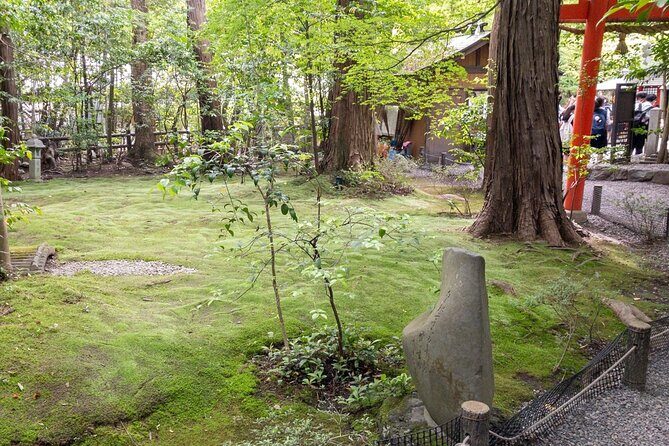
- Nonomiya Shrine: the black torii gate and the calm moss garden
- The bamboo forest stop: short enough to breathe, long enough to capture
- Seiryōji Temple: shoe-off calm and an old statue you can’t miss
- Daikaku-ji and Saga Gosho vibes: imperial-style grounds with fewer faces
- Osawa-no-ike Pond: seasonal quiet and a small ticket you’ll plan for
- The Tale of Genji option: literary storytelling you can actually use
- Getting the best experience: practical tips that matter
- Who this walking tour is best for (and who should skip it)
- Should you book this Arashiyama tour?
- FAQ
- How long is the Arashiyama Hidden Gems walking tour?
- How much walking is involved?
- What’s the group size?
- Is the bamboo forest stop included, and how long do you spend there?
- Are entrance tickets included in the $89 price?
- Where do you meet, and where does the tour end?
- Do I need to remove my shoes?
- What’s the difference between the standard tour and the Tale of Genji option?
- Is cancellation allowed, and does weather matter?
Key things that make this tour worth it
- A max group size of 6 keeps the pace comfortable and the guide’s attention personal.
- Nonomiya Shrine’s black torii gate is rare in Japan, plus there’s a peaceful moss garden to enjoy.
- Bamboo Forest with soundscape + photo help turns a short stop into a memorable one.
- Seiryōji Temple’s long timeline (about 1,200 years ago originally, with a later building around 300 years old) adds real depth.
- Daikaku-ji as a quieter imperial-style site lets you see Saga Gosho-like grounds without the usual crush.
- Osawa-no-ike quiet pond brings seasonal scenery and a small, straightforward ticket cost.
Escaping Arashiyama crowds with a 6-person max walking route
This is the kind of Arashiyama tour that feels like someone drew a line off the main flow of people and then made it practical. You start at Randen-yaJapan inside the Hannanri Hokkori Square, and you end at Daikaku-ji Temple. That matters because your walking loop is set up so you’re not backtracking all over town.
The tour runs 3 to 4 hours total. The walking portion is about 3km (around 55 minutes of walking time), with other time built in for shrine and temple viewing. It’s not an all-day hike, but it’s also not a sit-and-see shuttle tour. If you want Arashiyama at a humane pace, this fits.
One practical detail I appreciate: you get a mobile ticket, and the tour includes an original booklet (about 15 pages). That’s useful because it gives you something to read while you’re taking breaks or when you’re back at your hotel and want to remember what you saw.
You can also read our reviews of more walking tours in Kyoto
Price and what you actually get for $89
At $89 per person, this tour is priced like a guided experience rather than a bargain group bus. And that’s exactly what you’re buying: a local Kyoto guide, a curated route, photo help, and time in places that feel calmer than the headline spots.
Tickets are not included. You’ll pay admission for Seiryōji Temple (listed at ¥500) and for Daikaku-ji plus Osawa-no-ike Pond (listed as ¥800 total). You may also see the pond listed separately as ¥300. The important part for you: build a little cash buffer or confirm the exact ticket set-up on the day so you’re not surprised mid-walk.
What you get included is genuinely valuable:
- Guiding
- A 15-page original booklet
- Photo assistance (he’s learning photography as a hobby, so he pays attention to how you’ll get the shot)
If you’re the type who wants more than a quick photo stop, the price feels fair because the guide’s storytelling and pacing are part of the product, not an extra.
Starting at Randen-yaJapan: where your quiet Arashiyama begins
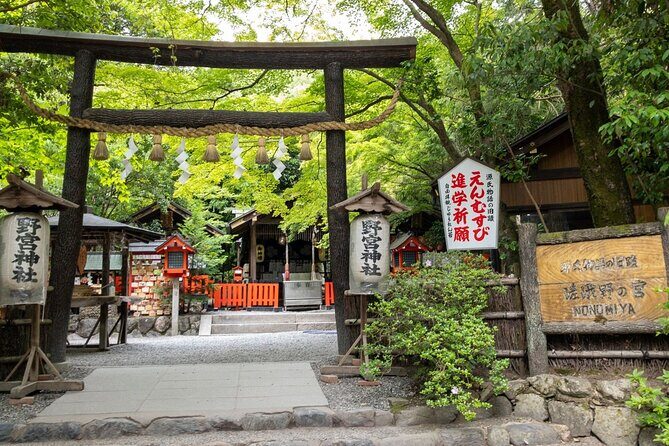
Your meeting point is Randen-yaJapan in the Hannanri Hokkori Square. For Kyoto, that’s a good location: it’s near public transportation, so you’re not scrambling for a remote pickup.
Because the tour ends at Daikaku-ji, it also helps that the guide offers a free returning walking tour if you want to get back to the starting point. That’s not a tiny detail. In Arashiyama, the station area and the sightseeing area can feel a bit disconnected, and a built-in way to return on foot can save you time deciding what to do next.
Nonomiya Shrine: the black torii gate and the calm moss garden
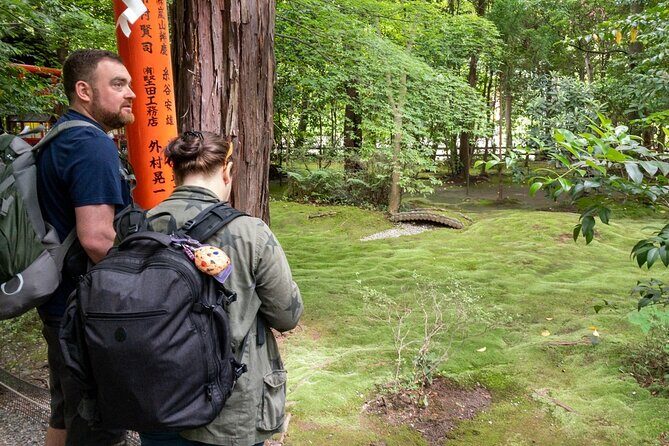
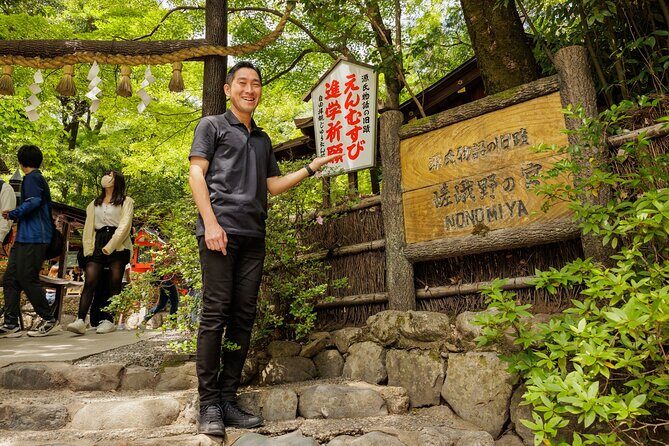
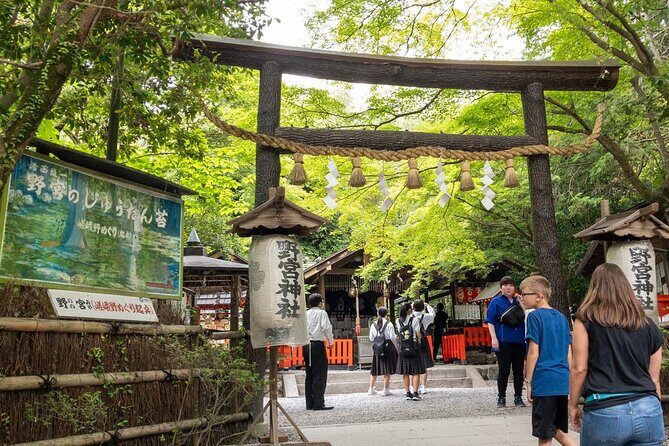
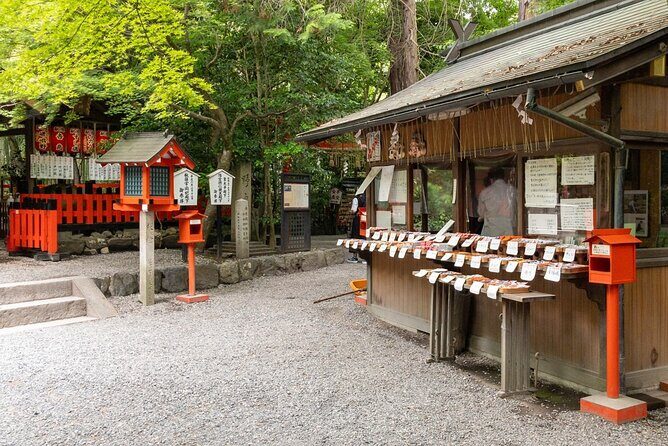
The first stop sets the tone. You’ll visit Nonomiya Shrine, where you can see a black wooden torii gate. The guide points out that only two shrines in Japan have black torii gates—so even if you’re not a shrine-collector, you’re seeing something unusually specific.
This stop isn’t just photo sightseeing. You also learn:
- how people walk into the space and how they pray
- the difference between a shrine and a temple
Those two bits are practical. If you’ve been to shrines before, this helps you do it more correctly and with more confidence. If you haven’t, it keeps you from feeling awkward when you arrive.
You’ll also get time for the moss garden. Moss in Kyoto isn’t just decoration; it’s part of the atmosphere—softens the area and makes the whole experience feel quieter without you having to fight crowds.
The bamboo forest stop: short enough to breathe, long enough to capture
Yes, it’s the bamboo forest. But this tour treats it like an experience rather than a checkpoint.
You’ll spend about 15 minutes there, and the guide focuses on more than just sightlines. You’ll be encouraged to listen to the soundscape of bamboo, then take photo time with assistance from Yusuke. That combination matters because bamboo is one of those places where you can either rush through and forget it, or stay long enough to notice what makes it special.
A quick consideration: 15 minutes goes fast, so if you’re aiming for very specific shots, bring your patience and follow his pace. It’s a tight stop on purpose, so you don’t burn the whole tour stuck in one spot.
Also note: in the Tale of Genji option, the bamboo forest is the exception—most other locations on the tour connect to The Tale of Genji, but the bamboo forest stop is not part of that literary link.



Seiryōji Temple: shoe-off calm and an old statue you can’t miss
Next is Seiryōji Temple, an area built around age and atmosphere. You’ll spend about 55 minutes here, which is long enough to slow down and actually look.
The key dates are impressive:
- the temple was originally built about 1,200 years ago
- the current building dates to about 300 years ago
- you can see a Japanese national treasure statue: Shaka Nyorai (Buddhism statue)
This is one of the stops where the tour’s small-group format helps. With more room and less crowd pressure, you can take in details without feeling like you need to sprint to keep up.
You’ll also need to take off your shoes to go inside. That’s common in Kyoto temples, but it’s worth planning for: wear socks you’re comfortable walking in, and consider bringing something small to step out cleanly if you just want to keep things neat.
One more practical tip: because the tour ends later and there aren’t many food options near the finish, it’s smart to keep your energy up. This is a good stop to hydrate and reset before the next leg.
Daikaku-ji and Saga Gosho vibes: imperial-style grounds with fewer faces
After Seiryōji, you move to Daikaku-ji Temple for about 50 minutes.
This is where the tour’s “quiet Arashiyama” promise really lands. Daikaku-ji is tied to an older imperial story as the former imperial palace area known as Saga Gosho, built about 1,200 years ago. On this route, the focus is on how you experience it, not just ticking a temple box.
The highlight here is the change in feel: Daikaku-ji is described as a hidden calm spot where you can enjoy a traditional imperial palace atmosphere without the typical crowding. If you’re tired of people swarming every viewpoint, this is a strong payoff.
And again, you’ll take off your shoes inside. That means you’ll want to move a little slower through the entry process and not treat it like a quick photo run.
Osawa-no-ike Pond: seasonal quiet and a small ticket you’ll plan for
Your final scenery stop is Osawaike / Osawa-no-ike, the oldest artificial pond in Japan. You’ll spend about 20 minutes here, and the emphasis is on quiet views and seasonal mood.
The pond’s ticket is listed as ¥300, and the combined admission for Daikaku-ji and Osawa-no-ike is listed as ¥800. Since the pricing info appears in two forms, I’d treat this as a “bring a little extra” situation: if you’re paying at the entrance, you’ll see the exact ticket set-up there and then.
Why this stop works at the end of a walking tour: you’ve already seen shrines, bamboo, and temple interiors. A pond is a reset. It lets you look out instead of looking at carvings, and it gives your feet a break while still feeling like you finished with something meaningful.
The Tale of Genji option: literary storytelling you can actually use
If you pick the The Tale of Genji option, the tour adds deeper storytelling where the route intersects with the novel. The important practical detail: both options visit the same locations, but most of those places (except the bamboo forest) appear in The Tale of Genji. So you’re not changing the logistics much—you’re changing the meaning you bring to what you see.
This is a great fit if:
- you’ve read the novel and want places to connect in your mind
- you like hearing how literature reflects real spaces and routines
- you want the guide’s interpretation rather than just facts
If you haven’t read it, you can still enjoy the tour; the storytelling is designed as added context, not a requirement. Think of it as an extra layer of atmosphere.
Getting the best experience: practical tips that matter
A few small choices can make or break your Arashiyama day.
- Bring snacks if you need them. The tour info notes there aren’t many restaurants around the ending point.
- Plan for shoe-off stops. Wear easy socks and shoes you can remove without drama.
- Go steady in warm weather. The route is comfortable, but it still adds up. A slower pace keeps the experience enjoyable, not tiring.
- Let the guide help with photos. Since he’s learning photography as a hobby, it’s worth using his eye rather than rushing your own shot list.
- Come with a curious mindset. You’ll learn shrine vs temple differences and how to pray at Nonomiya Shrine, so you’re not just walking—you’re building cultural context fast.
Who this walking tour is best for (and who should skip it)
This tour is ideal if you want Arashiyama that feels thoughtful rather than hectic. It’s especially good for:
- people who hate long queues and constant jostling
- anyone who enjoys temples and gardens, but wants a calmer flow
- readers of The Tale of Genji (the added storytelling makes a real difference)
It may not be the best choice if:
- you need a fully seated tour
- you have limited mobility and want to avoid shoe-off temple interiors
- you prefer maximizing the number of stops over slowing down and absorbing them
Should you book this Arashiyama tour?
If your goal is a quieter, more local Arashiyama with meaningful stops and a guide who helps you slow down and take good photos, I think it’s an easy yes. The combination of a small group, time in Nonomiya Shrine, Seiryōji’s treasure and age, and Daikaku-ji’s imperial atmosphere hits the sweet spot.
Book it if you want more than the bamboo forest selfie circuit. Skip it only if you’re hoping for a fully ticket-free day and minimal walking. Otherwise, this is a smart way to experience Kyoto’s Arashiyama with less noise and more substance.
FAQ
How long is the Arashiyama Hidden Gems walking tour?
The tour lasts about 3 to 4 hours total, including travel and walking time.
How much walking is involved?
You’ll walk about 3km during the tour, with roughly 55 minutes of that being walking time.
What’s the group size?
The tour has a maximum of 6 travelers.
Is the bamboo forest stop included, and how long do you spend there?
Yes. You’ll visit the Arashiyama Bamboo Forest for about 15 minutes.
Are entrance tickets included in the $89 price?
No. You’ll pay separate admission for Seiryōji Temple (¥500) and for Daikaku-ji and Osawa-no-ike Pond (listed as ¥800 total).
Where do you meet, and where does the tour end?
You start at Randen-yaJapan inside Hannanri Hokkori Square and end at Daikaku-ji Temple.
Do I need to remove my shoes?
Yes. You need to take off your shoes to enter inside at Seiryōji Temple and Daikaku-ji Temple.
What’s the difference between the standard tour and the Tale of Genji option?
The route is the same in both options, but the Tale of Genji option adds deeper literary storytelling. Most locations on the tour (except the bamboo forest) connect to The Tale of Genji.
Is cancellation allowed, and does weather matter?
You can cancel for a full refund up to 24 hours in advance. The tour requires good weather, and if it’s canceled due to poor weather, you’ll be offered a different date or a full refund.