REVIEW · KYOTO CRAFT WORKSHOPS
Kyoto: Japanese Calligraphy Workshop
Book on GetYourGuide →Operated by Gojo Paradiso · Bookable on GetYourGuide
Brushes make kanji click. I like the step-by-step shodo instruction for beginners and the patient English help from teachers like Takako at Gojo Paradiso. One drawback: it is not suitable for children under 10, so plan accordingly.
You’ll work in a small space by the Takase River on Kiyamachi Street, in central Kyoto, and you’ll leave with your own calligraphy on rice paper. Because the group is limited to 10, you’re not stuck watching others while your brush sits idle.
Expect a focused 1 to 2 hours: a bit of context, lots of practice, then a chance to take photos and browse a gallery at the end. You get English or Japanese support, plus plenty of supplies so you can concentrate on getting the stroke right.
In This Review
- Key points that make this workshop worth your time
- Shodo in Kyoto: what you’re actually learning
- The 1–2 hour flow: from history to your own kanji
- Brush strokes and kanji: how beginners avoid the usual mess
- Why writing your name in kanji feels special
- Your take-home masterpiece: rice paper, stamps, and real permanence
- Photos, gallery browsing, and special orders at the end
- Price and value: is $32 worth it in Kyoto?
- Location check: finding Gojo Paradiso on Kiyamachi Street
- Who this calligraphy workshop fits best (and who should skip it)
- Should you book this Kyoto Japanese calligraphy workshop?
- FAQ
- How long is the Kyoto Japanese calligraphy workshop?
- How much does it cost?
- Where is the meeting point?
- Is the workshop beginner-friendly?
- What languages are spoken during the workshop?
- What’s included in the price?
- Can I take photos during the workshop?
- Is there a limit on group size?
- Is the workshop wheelchair accessible?
- Who should not book this experience?
Key points that make this workshop worth your time
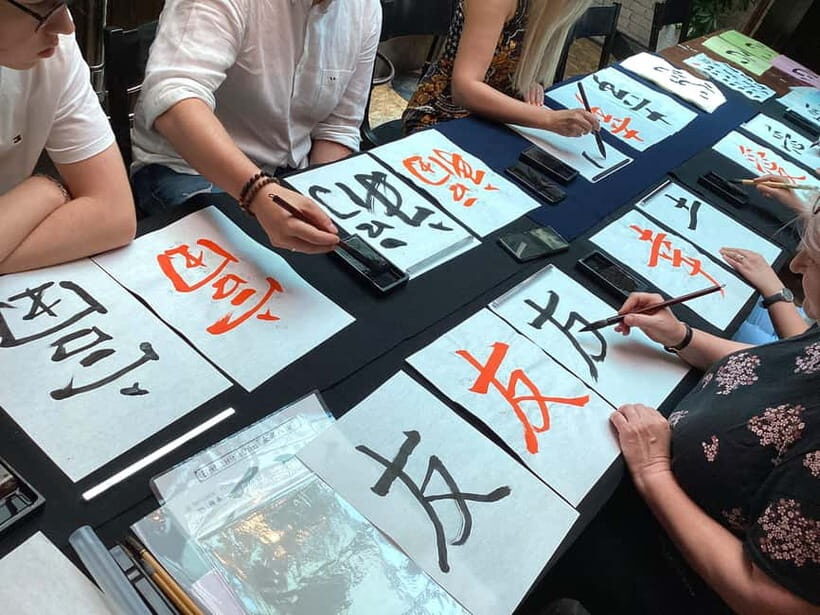
- Beginner-friendly shodo coaching that starts with basic brush strokes, not assumptions
- Small group size (max 10) so you can get hands-on correction
- Personal output you can take home as a one-of-a-kind memento on rice paper
- Your name in kanji is part of the lesson, which makes the piece feel truly yours
- End-of-class gallery time and photos, plus the option to place special orders
Shodo in Kyoto: what you’re actually learning
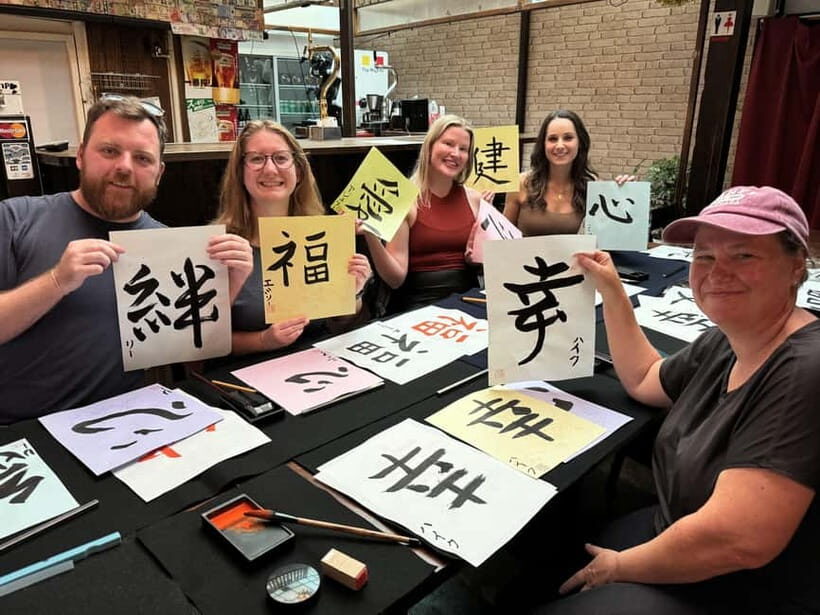
This Kyoto Japanese calligraphy workshop is built around shodo, the art of writing with a brush. It is not just a craft class. You learn how the character is formed, how the brush moves, and why each stroke matters. That makes it feel like culture, not just a souvenir factory.
At Gojo Paradiso (on Kiyamachi Street along the Takase River), your instructor guides you through the lesson in a way that works even if you have never picked up a brush before. You start with the meaning and background of calligraphy, then move into practical stroke practice.
And the teacher role is big here. The best part is how much time is spent helping you correct what your hand is doing. Even if your character looks a little wobbly at first, you get clear direction on what to adjust.
You can also read our reviews of more tours and experiences in Kyoto

The 1–2 hour flow: from history to your own kanji
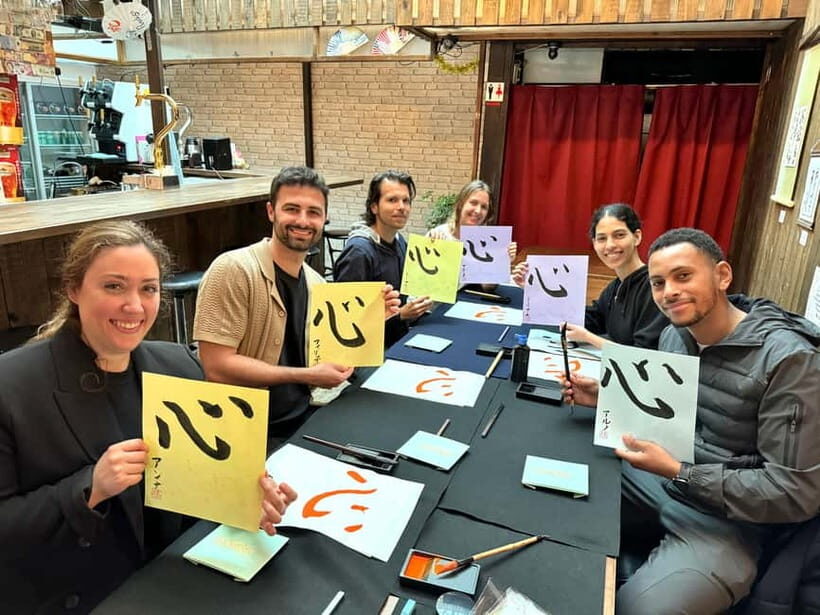
The timing is short on purpose. You’re in and out in about 1 to 2 hours, which is ideal if you want a meaningful Kyoto activity without burning half a day.
Here’s how the workshop typically moves:
- Intro to calligraphy: you’ll learn about the history and meaning of Japanese calligraphy before you start writing.
- Brush basics: you practice fundamental strokes so you understand how the brush head behaves on paper.
- Kanji characters: after the basics, you create your own character or characters using the steps you practiced.
- Personal writing: you’ll also write your name in kanji during the session.
- Finish strong: you can take photos at the end, explore the gallery, and place special orders.
It stays structured, but it does not feel rushed. Because the group is small, the instructor can slow down when your strokes need help.
One practical note: bring your patience. Calligraphy is controlled, not fast. If you expect perfect results in the first attempt, you’ll end up stressed. If you lean into the slow practice, you’ll get the most out of it.
Brush strokes and kanji: how beginners avoid the usual mess
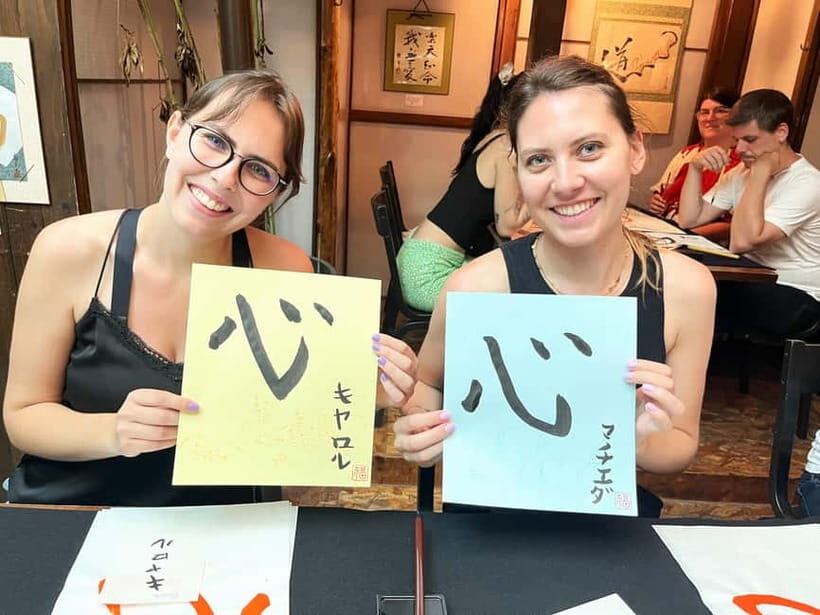
Calligraphy can look intimidating from a distance. Up close, the learning curve becomes very manageable because the workshop breaks things into small, repeatable steps.
You’ll practice basic brush strokes first, so your hand learns the rhythm. Then you apply those strokes to form a kanji character. That matters because kanji is not one single “shape.” It’s a set of decisions about direction, pressure, speed, and spacing.
Also, English instruction is available. You’re not stuck guessing what the teacher means. The instructor (and helpers, when present) can explain adjustments clearly and patiently, which is exactly what you want when your brush control is new.
You might find it helpful to wear clothing you don’t mind getting a little ink on. The activity is hands-on, and accidents happen. You’re provided the supplies, but you still control the brush.
Why writing your name in kanji feels special
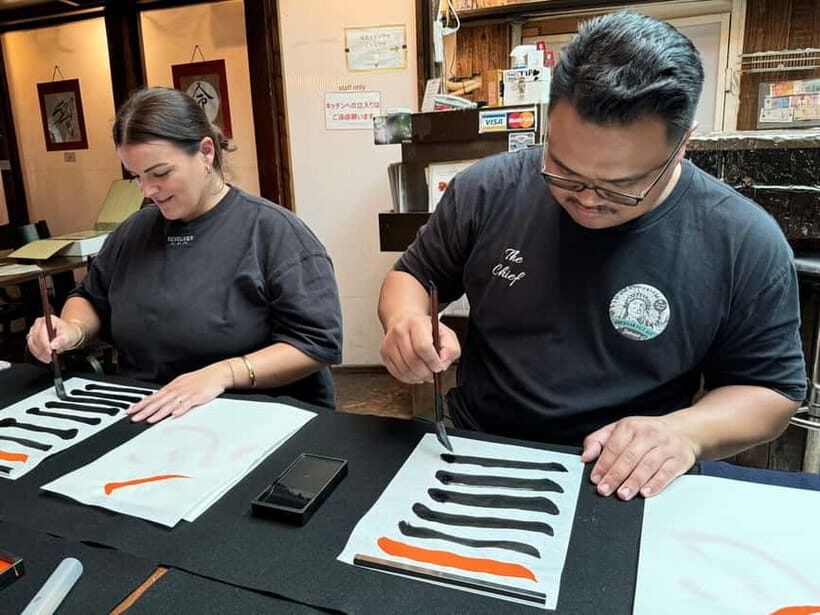
This workshop includes writing your name in kanji. For a lot of people, that’s the emotional highlight. It turns the lesson from learn-a-character-then-leave into this belongs to me.
In practical terms, it also forces you to use the strokes you practiced earlier, but in a more personal format. That makes the instructions more memorable. It’s one thing to copy a character. It’s another to translate your own name into kanji and write it with intention.
You’ll likely sign and get a teacher stamp as part of the final piece. That small step adds authenticity and helps your calligraphy look like something you’d actually want to display later.
Your take-home masterpiece: rice paper, stamps, and real permanence
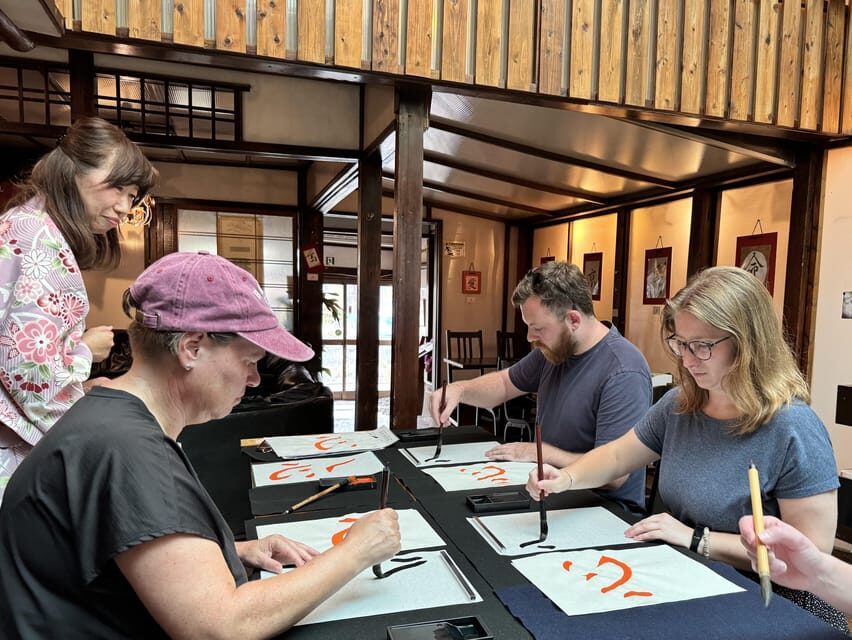
The workshop isn’t just about learning. It’s about finishing with something you can keep.
You take home your own calligraphy creation on rice paper. That’s the sort of souvenir that still makes sense after the trip. A postcard fades. A brush-stroke you practiced with guidance becomes a story you can tell.
The piece is one-of-a-kind, because it’s based on your strokes and your name (not a pre-made sheet). That’s why the small-group format matters. It gives the teacher a chance to help you make something that looks coherent, not just experimental.
Some sessions may include extra touches beyond the main work, like a small handmade gift from the instructor. Don’t assume it’s guaranteed every time, but if it happens, it’s a lovely bonus.






Photos, gallery browsing, and special orders at the end
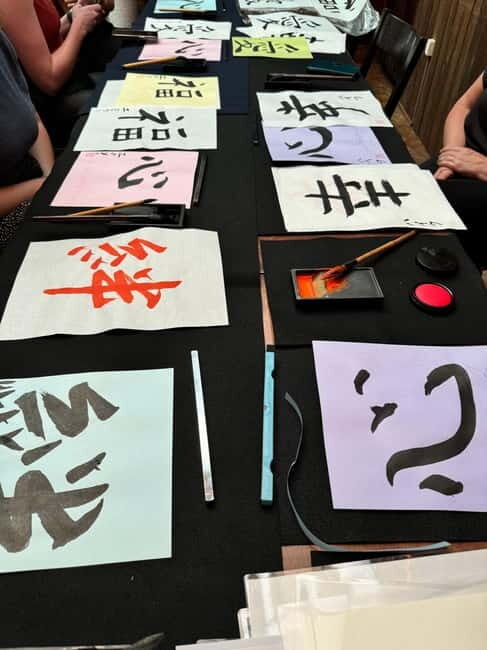
The last part of the workshop includes photo time and a chance to explore the gallery. This is a smart design choice. You get to see what finished work looks like beyond your own sheet, and it helps you appreciate the style you just practiced.
There’s also an option to place special orders. The key point for you is that the workshop does not end the moment you finish writing. You get a moment to look around, ask questions, and decide if you want to add something to your Kyoto keepsakes.
If you care about photos, this is the part to plan for. Bring your phone fully charged. Move carefully around the workspace so you don’t bump anyone while they’re still working with ink and paper.
Price and value: is $32 worth it in Kyoto?
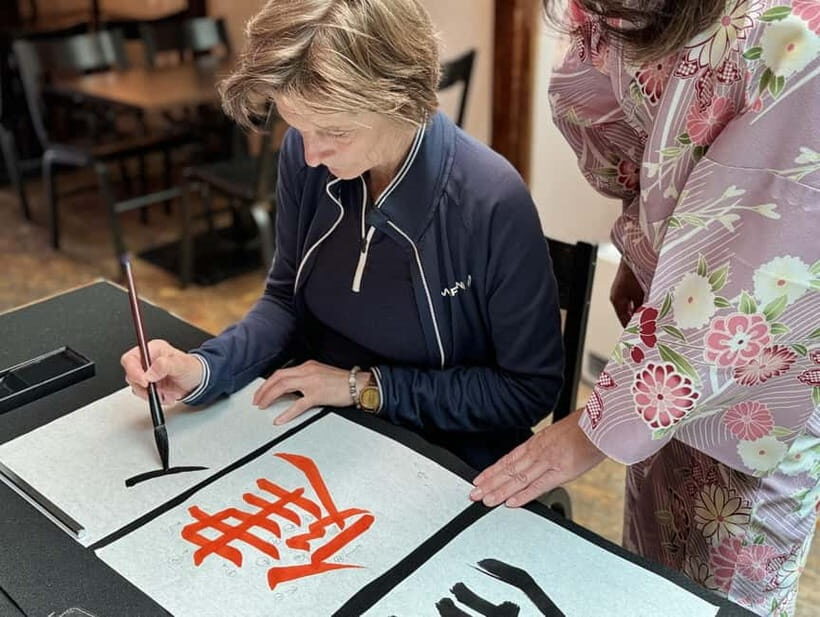
At $32 per person, this workshop sits in the “good deal” zone for Kyoto. Here’s why.
You’re paying for:
- an expert calligraphy instructor
- all necessary supplies
- a structured lesson that starts from the basics
- time with hands-on feedback
- a finished piece you take home on rice paper
If you compare that to the cost of buying calligraphy souvenirs without instruction, the value shifts quickly. You’re not just acquiring something; you’re learning a skill you can actually repeat at home if you want to.
The 1 to 2 hour duration is also part of the value. You get a complete experience—context, practice, and a take-home result—without a half-day commitment.
The main value-risk is only scheduling. If you pick a time that conflicts with your other Kyoto plans, you may feel like you rushed it. Choose a slot where you can arrive calmly.
Location check: finding Gojo Paradiso on Kiyamachi Street
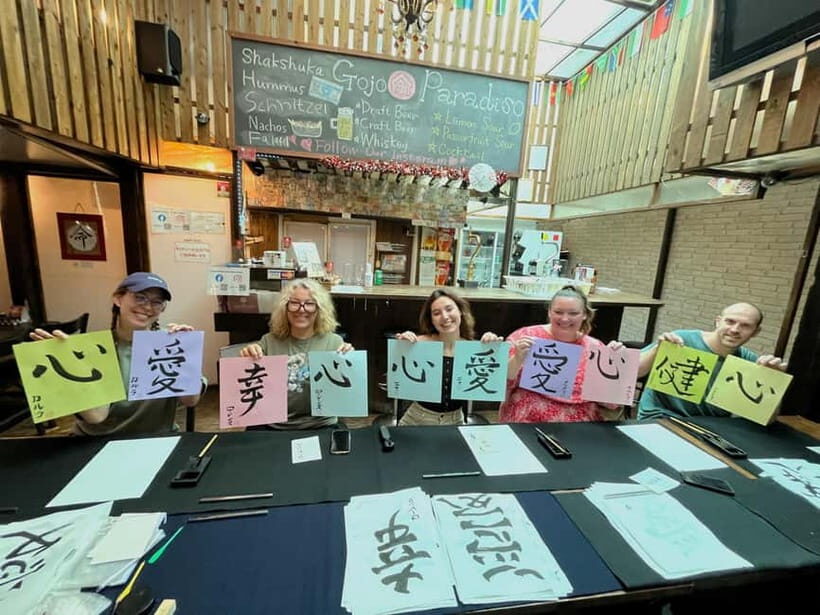
Meeting point is Gojo Paradiso, located along the Takase River on Kiyamachi Street.
From transit:
- about a 5-minute walk from Keihan Kiyomizu Gojo Station
- about a 10-minute walk from Keihan Shichijo Station
- roughly 386 meters from Kiyomizu Gojo Station
This is useful because you can pair the workshop with nearby Kyoto sightseeing. You’re not tucked way out of the center, so it’s easier to fit into a day.
Quick practical tip: arrive a few minutes early. The workshop starts on time, and you’ll want a moment to settle before your first stroke.
Who this calligraphy workshop fits best (and who should skip it)
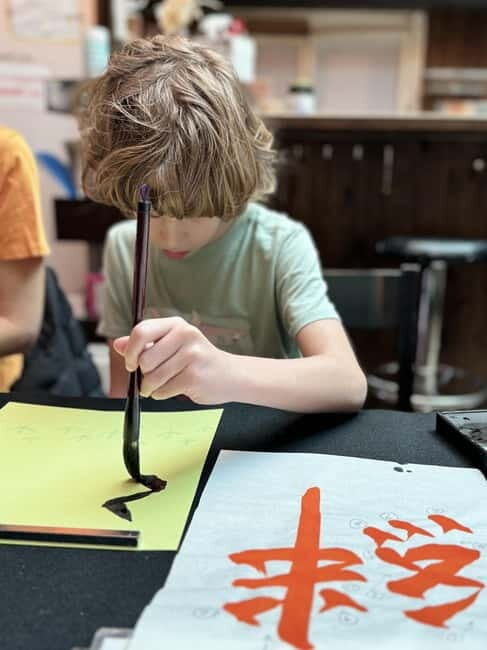
This is a strong choice if you want something hands-on, cultural, and beginner-friendly in central Kyoto.
It fits especially well if:
- you like learning through doing
- you want a take-home craft that feels personal
- you’d enjoy short, structured instruction in English or Japanese
- you want small-group attention (max 10 people)
It may not fit if:
- you’re traveling with children under 10 (not suitable)
- you dislike slower, detail-focused activities
Wheelchair accessibility is listed, and the workshop is designed as a small-group session. If you need specific support, it’s smart to contact the provider before you go so everyone’s on the same page.
Should you book this Kyoto Japanese calligraphy workshop?
Yes—if you want a high-value, guided Kyoto experience that ends with something you can actually keep.
Book it if you’re drawn to shodo and you like the idea of learning basic brush strokes and then writing a kanji character and your name. The small group size and the beginner coaching are the reason this works. It’s not just watching a demonstration.
Skip it only if calligraphy sounds too slow or too fiddly for you, or if you’re bringing kids under 10. If that is your situation, you’ll likely be frustrated instead of satisfied.
If you do book, pick a time when you can arrive without stress. Then give the brush a fair chance on your first attempts. Your second character usually looks better than your first, and that’s where the fun kicks in.
FAQ
How long is the Kyoto Japanese calligraphy workshop?
The workshop lasts 1 to 2 hours. You can check starting times based on availability.
How much does it cost?
It costs $32 per person.
Where is the meeting point?
You meet at Gojo Paradiso on Kiyamachi Street along the Takase River in Kyoto.
Is the workshop beginner-friendly?
Yes. The instruction is step by step and is designed to work for complete beginners as well as people with some experience.
What languages are spoken during the workshop?
The instructor provides instruction in English and Japanese.
What’s included in the price?
You get an expert calligraphy instructor, all necessary supplies, and the calligraphy experience. You also take home your own calligraphy piece.
Can I take photos during the workshop?
Yes. You can take photos during the final part of the workshop.
Is there a limit on group size?
Yes. It is a small group limited to 10 participants.
Is the workshop wheelchair accessible?
Yes, wheelchair accessibility is listed.
Who should not book this experience?
It is not suitable for children under 10 years.