REVIEW · WORKSHOPS
Itajime Shibori Scarf Class
Book on Viator →Operated by Kyoto Shibori Museum · Bookable on Viator
Silk, knots, and dye in Kyoto. This itajime shibori scarf class at the Kyoto Shibori Museum is hands-on, small-group, and built around an art-and-craft museum visit while your scarf dries. The museum team includes friendly helpers such as Kenji and teachers like June, who make the process feel easy.
I love the step-by-step guidance in a 30- to 60-minute session, with you choosing the fabric and working directly with the traditional resist dyeing method. I also like that the museum experience isn’t an afterthought; you can watch how shibori works on a short film and see impressive pieces upstairs while you wait.
One consideration: the class takes place on the 2nd floor, and signage from the street may not be super obvious, so give yourself a few extra minutes to find it.
In This Review
- Key highlights you’ll care about
- Why an itajime shibori scarf class in Kyoto feels worth your time
- Kyoto Shibori Museum: where the craft gets context (not just instructions)
- The 30–60 minute scarf class: choosing fabric and making the resist
- While your scarf dries: the museum upstairs turns waiting into sightseeing
- What you take home: a scarf you helped make (and little extras)
- Price and value: $43.60 for class + museum access + a real take-home
- Who this fits best (and who might hesitate)
- Getting there: timing, location, and practical arrival tips
- Small group dynamics: why a max of 10 matters for your results
- Should you book this Kyoto itajime shibori scarf class?
- FAQ
- How long is the itajime shibori scarf class?
- What do I make and take home?
- Where does the class take place?
- Is the class small?
- Is there a minimum age?
- Is there parking?
- Can I get a full refund if my plans change?
Key highlights you’ll care about
- Max group size of 10 means you get real attention when you’re folding, tying, and dyeing
- Kyoto Shibori Museum admission included gives you context, not just a craft souvenir
- Fabrics to choose from so your finished scarf has your style, not just a default option
- Second-floor exhibits while your scarf dries turns waiting time into sightseeing time
- Hands-on scarf making with traditional tools and a process you can explain later
- A take-home memento you’ll actually use or gift, not a throwaway postcard
Why an itajime shibori scarf class in Kyoto feels worth your time
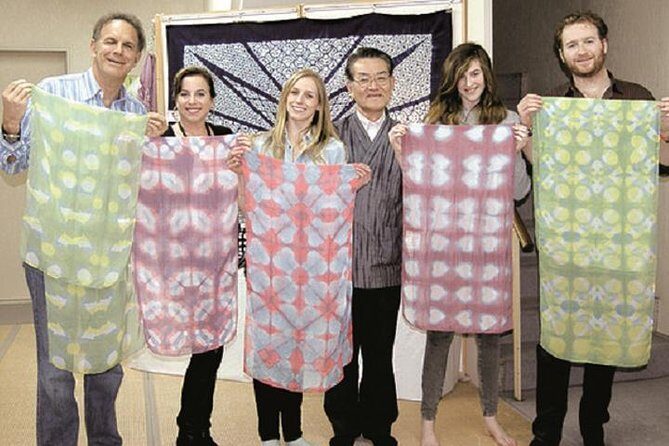
Kyoto has craft shops on almost every corner, but this experience is different because you’re making something using an old technique, not just buying it. You get to see how shibori works at the workbench level, and then you get the reward: a finished scarf you helped create.
The best part is the pacing. The scarf class window is short enough to fit into a day, but long enough to feel satisfying. And then the museum portion gives your scarf meaning—why the technique exists, how the results happen, and how people have mastered it over generations.
You can also read our reviews of more tours and experiences in Kyoto

Kyoto Shibori Museum: where the craft gets context (not just instructions)
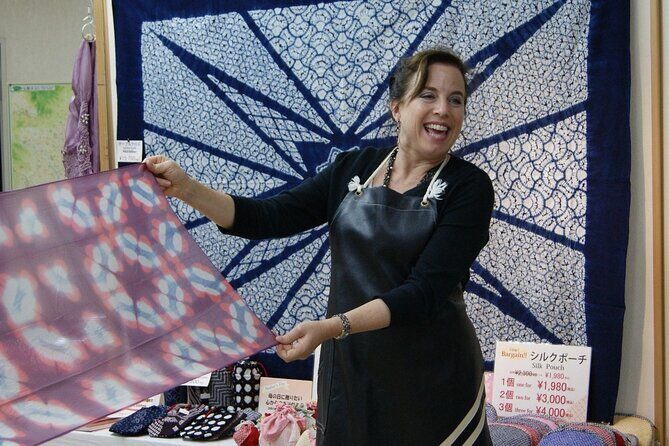
Your session centers on the Kyoto Shibori Museum, which is built for people who want to understand the craft, not only perform the steps. You’ll start by stepping into the shibori world through displays and learning about the dyeing method and its role in Japanese hand craft culture.
A big plus is that the museum experience happens in the same trip as your class. While your scarf is drying, you’re not stuck in a waiting room. You can look at what shibori can become—finished pieces and process education—so your final scarf feels connected to something larger.
The museum team is also part of the value. Multiple people described the staff as patient, fun, and willing to explain. That matters, because shibori can look mysterious from afar, and you’ll leave knowing what’s actually going on.
The 30–60 minute scarf class: choosing fabric and making the resist

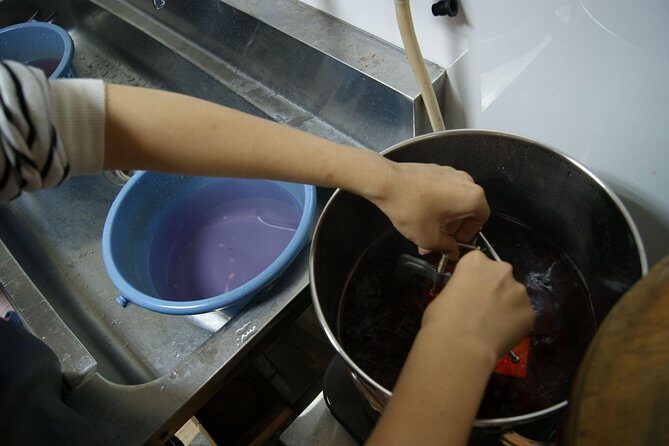
The core of the experience is making an itajime shibori scarf. You’ll learn the method with help from the teacher and then create your own pattern using traditional tools.
You start by choosing from Japanese fabrics. That choice isn’t a minor detail—fabric selection affects how the scarf feels and how the dye takes to the material. Picking your fabric first also helps you stay focused while the process begins.
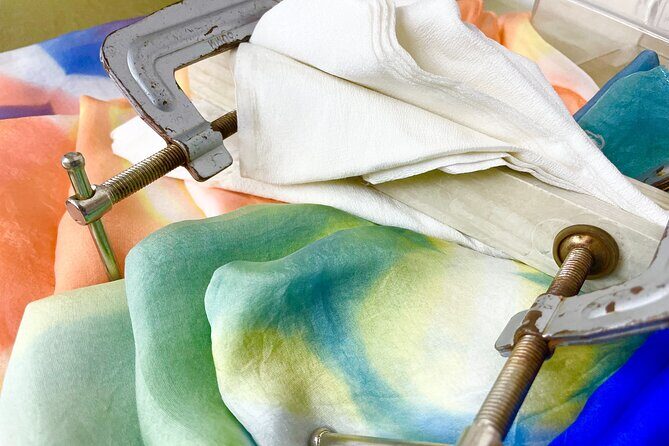
Then comes the hands-on part: you create the resist pattern that controls where dye can go. The result is a scarf that looks like dye magic, but it’s really careful technique and repeated steps. The staff help you through it, including where beginners often get stuck, like figuring out tension, placement, and timing.
I like the session length because it’s realistic. You’re not signing up for a half-day project. You get enough instruction to feel confident, and you still have energy left for Kyoto after.
While your scarf dries: the museum upstairs turns waiting into sightseeing
A dyeing project has a natural rhythm: you work, you wait, and you reveal. Here, that waiting time is built into the experience.
As your scarf dries, you can visit the museum exhibits—especially impressive pieces on a second floor gallery level. People specifically call out the displays as eye-catching, and one reviewer even said it felt like an unexpected highlight while they waited.
You may also encounter a short film about the process. That’s smart teaching, because it helps you connect what you did at your table with what you’re seeing in the gallery. And once you understand the process, the exhibits stop being decoration and become explanation.
If you’re the type who likes to understand a craft’s “why,” this part is for you. You’ll leave not only with a scarf, but with a story you can tell—how the technique works and why the patterns look the way they do.
What you take home: a scarf you helped make (and little extras)

The main take-home is the handmade shibori scarf you make during the class. That’s the souvenir payoff: it’s usable, personal, and made with a technique that’s old enough to have a deep cultural footprint.
You’ll also get finishing touches at the end. People mentioned that scarves come dried and packaged and that the staff takes care to wrap things up so you can go on with your day.
Some sessions include extra personalization for kids. One reviewer noted a certificate for their child after finishing the scarf. Even if you’re not traveling with kids, it’s a good sign that the team thinks beyond the bare minimum.
If you’re gifting, this is the kind of item that feels special. It’s not mass-produced, and you can point to the process you learned when someone asks how it was made.






Price and value: $43.60 for class + museum access + a real take-home

At $43.60 per person, the price can feel almost too fair once you understand what’s included. You’re not just paying for a quick demo. You’re paying for hands-on instruction, materials needed for the dyeing process, and the finished scarf you take home.
On top of that, admission to the museum is included, and the museum portion makes the day feel longer and more meaningful than the class time alone. That’s where the value really lands: you’re getting both doing and learning.
Also, group size matters for value. With a maximum of 10 people, the experience is more personal than a large workshop. In practical terms, that can mean you get faster help if you get confused mid-step, which is exactly when workshops can fall apart.
Who this fits best (and who might hesitate)
This class is a good match for people who want an authentic Kyoto craft moment without a heavy time commitment. The technique is hands-on, and the staff help you through it—so you don’t need to already be “artsy.”
It’s also good for families because there’s a minimum age of 6, and the staff makes the process understandable for younger participants. Just know adult pricing applies to all ages, so it’s wise to compare the cost of bringing kids versus other kid-friendly activities in the area.
If you dislike waiting, don’t worry too much. The drying period becomes museum time, so it’s not wasted minutes staring at a timer. The museum stops you from feeling like you’re stuck between steps.
The main reason someone might skip is if you want only the most famous Kyoto sightseeing and nothing else. This is a craft-and-museum experience first. You’ll still be near the action, but it won’t feel like a big landmark visit.
Getting there: timing, location, and practical arrival tips
The class is held at the Kyoto Shibori Museum, near public transportation. That helps on a Kyoto day when you’re bouncing between neighborhoods and don’t want to waste time figuring out last-mile routes.
Parking exists but it’s limited. There are two car parking spaces and bicycle parking available, so if you’re driving, plan ahead. For most people, public transit is the safer bet.
One practical tip: because the class happens on the 2nd floor, give yourself a few minutes to locate the room. Signage may not be obvious from street level, so arriving early can save you stress.
In terms of timing, the class runs about 30 to 60 minutes. The museum admission included means you should plan for a little extra time so you don’t feel rushed when your scarf is drying and you want to look around.
Small group dynamics: why a max of 10 matters for your results
Shibori is hands-on, which means your outcome depends on how well you can execute small steps. In a bigger group, that can turn into “watch and hope.” Here, the maximum of 10 people supports more direct help.
That shows up in the tone people describe—clear instructions, patient guidance, and a “you can do this” atmosphere. When you’re tying, folding, and dyeing, it’s not just about technique. It’s also about knowing what matters and what doesn’t.
This is also why the class feels relaxing for many people. You’re not competing for attention. You’re working alongside others, learning a shared craft rhythm, and getting help when needed.
Should you book this Kyoto itajime shibori scarf class?
Book it if you want a Kyoto souvenir with real meaning—something made with an old technique, taught by a friendly museum team, and paired with museum exhibits that explain what you’re seeing. The combo of hands-on scarf making + museum context + take-home result is a strong value for the time you spend.
You might choose something else if you’re not into crafts at all, or if you’re only chasing big-picture sightseeing. This experience is about process and hands-on learning first. If that sounds like your kind of travel day, you’ll probably be happy you scheduled it.
FAQ
How long is the itajime shibori scarf class?
The class runs about 30 to 60 minutes.
What do I make and take home?
You make an itajime shibori scarf using Japanese fabrics and take the finished scarf home with you.
Where does the class take place?
It takes place at the Kyoto Shibori Museum in Kyoto, Japan, which is near public transportation.
Is the class small?
Yes. The experience has a maximum of 10 travelers.
Is there a minimum age?
The minimum age is 6 years old, and adult pricing applies to all ages.
Is there parking?
There are two car parking spaces and bicycle parking spaces available.
Can I get a full refund if my plans change?
Yes. You can cancel for free up to 24 hours in advance of the experience start time for a full refund.