REVIEW · KYOTO
Shamisen Discovery in Kyoto 【Group】
Book on Viator →Operated by Shamisen Dojo · Bookable on Viator
Five people, one shamisen, and real momentum. In Kyoto, this group class is built for hands-on beginners: you’ll learn the basics, then play along in a short jam. Expect a professional instructor, a photo moment with the instrument, and a coffee or tea break to keep things relaxed.
What I really like is the access. With a max group size of 5, you can ask questions and get quick corrections on posture and technique. I also love the package includes practical things like a rental shamisen you can choose, plus photo-session time while you’re actually holding and playing.
One possible drawback: it’s only 60 minutes, so if you’re hoping for deep technique drills or performance-level results, you’ll likely want a longer follow-up lesson after this intro.
In This Review
- Key highlights at a glance
- What this Kyoto shamisen lesson really is
- The 60-minute flow: from first hold to a real jam
- 1) Shamisen intro: types, history, and what you’re looking at
- 2) Photo session: holding the shamisen during the lesson
- 3) Technique basics: posture and how to use the bachi
- 4) One shamisen scale: enough structure to play something
- 5) Free time to play: practice without pressure
- 6) Jam session: you create melodies with accompaniment
- What’s included (and why it matters for value)
- Rental shamisen
- Photo-session plus coffee or tea
- Instructional components inside the hour
- Instructor time: small group access is the whole point
- Left-handed players: a rare and genuinely helpful option
- Price and booking timing: is it worth $65.89?
- Where it fits in your Kyoto day
- Who this shamisen experience is best for
- Practical tips to get the most from your 60 minutes
- Should you book Shamisen Discovery in Kyoto (Group)?
- FAQ
- How long is the Shamisen Discovery in Kyoto group lesson?
- What is included in the 60-minute experience?
- Is transportation included?
- Can left-handed players participate?
- How many people are in the group?
- Where does the experience start?
- What is the cancellation policy?
Key highlights at a glance
- Max 5-person group means plenty of instructor attention
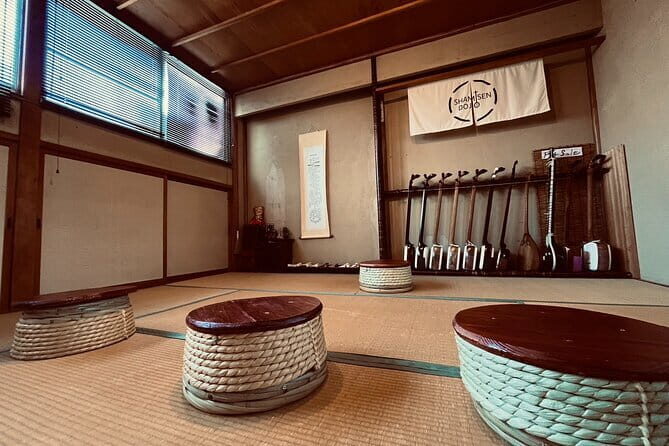
- Rental shamisen included, plus left-handed instrument options
- History + technique + scale in one focused hour
- Photo session while you play, not just posed photos
- Guided jam session where you create melodies with accompaniment
- Coffee/tea break (green tea) so you’re not rushing on an empty stomach
What this Kyoto shamisen lesson really is
A shamisen lesson in Kyoto sounds simple on paper. In practice, this one is designed as a first taste of Japanese traditional music without making you feel lost. You start with the basics, get hands-on coaching, then end with a session where you’re part of the music.
The setting is Shamisen Dojo, and the session runs from the meeting point in Murasakino Nakakashiwanocho (Kita Ward) with the activity ending back there. The group is kept small, and the format is built around you learning by doing, not watching someone else perform from the sidelines.
Also, this isn’t a “stand in line and watch” experience. It’s a lesson where you hold the instrument, learn the physical mechanics, and practice short patterns you can actually use during the final jam.
You can also read our reviews of more tours and experiences in Kyoto.


The 60-minute flow: from first hold to a real jam
This is a quick class, so every segment has a purpose. Here’s how the hour is structured, and what it means for you.
1) Shamisen intro: types, history, and what you’re looking at
You begin with an introduction to basic shamisen information—types and history included. This is useful even if you have zero music background. It helps you understand why the instrument is shaped the way it is, and what terms you’ll hear later during technique instruction.
This also sets expectations for sound. Instead of treating the shamisen like a random noise-maker, you’re taught the kind of playing you’ll try during the hour.
2) Photo session: holding the shamisen during the lesson
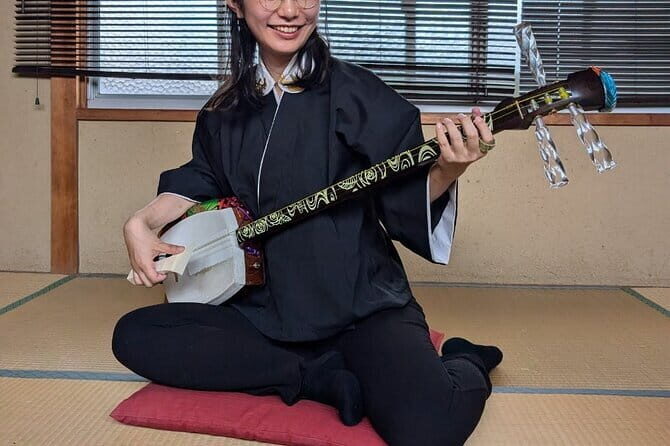
You get a photo session with the shamisen you like. The instructor can take photos of you playing, which is a nice touch because you don’t have to figure out angles or timing yourself.
For many people, this becomes the best souvenir moment. You’ll have an image that shows you doing the thing, not just standing next to an instrument.
3) Technique basics: posture and how to use the bachi
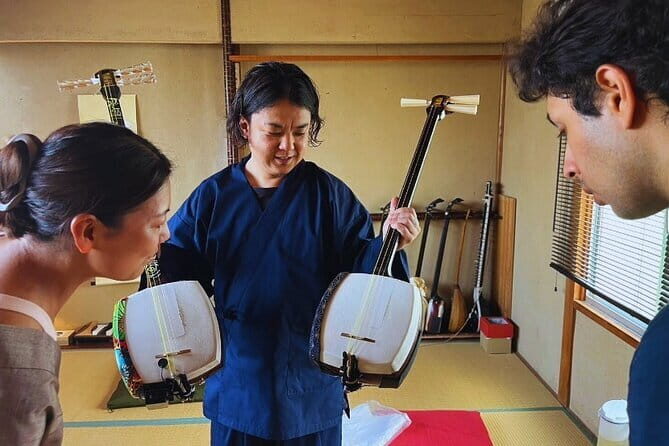
Next comes basic shamisen playing technique. In plain terms, you’ll learn how to hold the instrument and how to use the bachi (the playing plectrum). This part matters most for first-timers because the shamisen is held and played differently than most western string instruments.
If your hands feel awkward at first, that’s normal. The class is designed around step-by-step guidance, and the small group size helps the instructor spot issues early.




4) One shamisen scale: enough structure to play something
You’re introduced to one shamisen scale. You don’t leave with a hundred scales—you leave with a working idea of pitch movement and finger motion you can recognize later.
For a one-hour intro, this “one scale” approach is smart. It gives you a starting point for the jam and keeps the class from becoming scattered.
5) Free time to play: practice without pressure
After the instruction, there’s free time where you can play the shamisen freely. This is the moment where technique turns into muscle memory. You can repeat what the instructor showed, test small variations, and start trusting your own timing.
6) Jam session: you create melodies with accompaniment
Finally, you join a jam session. The instructor provides accompaniment, and participants can create melodies. The class also references working with five signature sounds of Japan, which frames the jam so it doesn’t feel like improv chaos.
Even if you think you’re not musical, this is the part that usually clicks. It turns the shamisen from a “class object” into a shared sound you’re making with someone else.
What’s included (and why it matters for value)
The listed inclusions are what make this lesson feel like a complete experience rather than a quick demo.
Rental shamisen
You get a rental shamisen, and you can choose the one you like for the session. That choice matters more than it sounds. A well-matched instrument can make your hand position and comfort feel less awkward, especially in your first hour.
Photo-session plus coffee or tea
You get the photo session and a coffee and/or tea break. Green tea is included, too.
That pause is practical. Kyoto days can move fast, and string-instrument practice works your hands and shoulders. A drink break helps you stay comfortable long enough to actually enjoy the final jam rather than feeling rushed.
Instructional components inside the hour
You’re not just getting sound and vibes. The course includes:
- introduction to shamisen basics (types, history, and more)
- photo-session time holding the shamisen
- lesson on basic playing techniques
- introduction to one shamisen scale
- free time to play
- jam session with accompaniment
For $65.89, that’s the real value: you get guided coaching plus actual playing time, all within a single scheduled block.
Instructor time: small group access is the whole point
The session is capped at a maximum group size of 5. That’s not a marketing detail—it changes how the lesson feels.
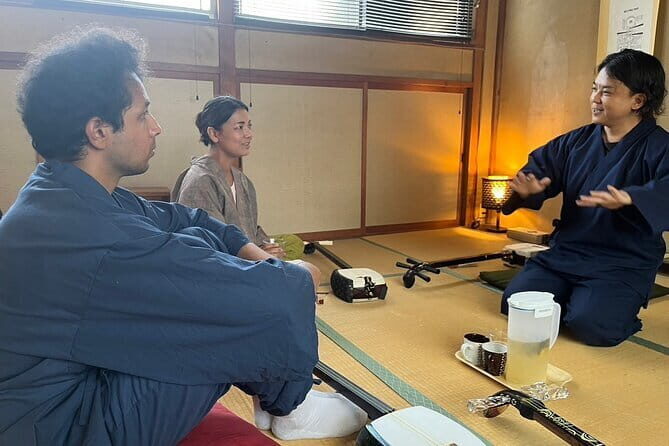
With fewer people, the instructor can watch your hand position, your posture, and how you’re striking with the bachi. It also means you’re more likely to get quick fixes instead of just general tips.
The instructor is Jack (Shamisen Dojo), and the class is described as taught by a professional with over 20 years of experience. In practice, that shows up as structured guidance that helps beginners move from holding the instrument to producing usable sounds within the hour.
The vibe also seems intentionally student-friendly. People describe the instruction as step-by-step and tailored to understanding, which is exactly what you want when you’re new to Japanese traditional instruments.
Left-handed players: a rare and genuinely helpful option
If you’re left-handed, you may worry that the lesson will be awkward or forced. Here, lefty shamisen are available.
That’s a big deal for beginners. When the instrument and playing setup fit you, you spend less time fighting your own ergonomics and more time learning the sound.
If you’re left-handed, I’d treat this as a smoother entry point than most “standard” instrument classes.
Price and booking timing: is it worth $65.89?
At $65.89 per person for about 1 hour, this isn’t the cheapest thing you can do in Kyoto. But it’s also not a paid performance where you watch and leave.
You’re paying for:
- rental instrument time
- guided instruction
- photo-session coverage
- coffee/tea break
- jam accompaniment and structure
And the group is small. That combination is where the value lives.
If you’re comparing it to other cultural experiences, think of this as a hands-on music workshop with a built-in souvenir moment. One hour isn’t long, but for learning the basics of a specific instrument, it’s a realistic first step.
You’ll also see that it’s commonly booked around 25 days in advance on average. So if you have fixed Kyoto plans, it’s smart to lock it in earlier rather than waiting for last-minute openings.
Where it fits in your Kyoto day
The lesson starts and ends at the meeting point in Kita Ward (Murasakino Nakakashiwanocho). The listing notes it’s near public transportation.
That matters because Kyoto can be a patchwork of neighborhoods. If you already have activities in the northern areas, this is a natural add-on. If you’re primarily sightseeing in central Kyoto, you’ll want to budget time for transit so you don’t arrive flustered.
Timing tip: schedule it at a moment when you still have energy. This is a hands-on class, not a quick stop in between coffee and crowds.
If you’re doing something iconic earlier in the day, this can work well as your calmer, creative activity afterward—hands on, not just eyes on.
Who this shamisen experience is best for
This course is especially well-suited for:
- complete beginners who want a structured start
- music lovers who want something different from the usual Kyoto checklist
- people who like learning a skill, then using it immediately in a jam
- couples or friends who want to learn together in a small group
- left-handed players thanks to the lefty shamisen option
It may be less ideal if you:
- want a long, detailed technique curriculum in one sitting
- expect a concert-style performance with minimal participation
- need private transportation, since private transport isn’t included
Practical tips to get the most from your 60 minutes
You’ll get the best experience if you show up ready to use your hands and pay attention to small physical details.
- Wear comfortable clothing that lets you move your shoulders and arms.
- Plan to arrive a few minutes early so the lesson starts on time.
- Don’t overthink the jam. The accompaniment is there to support you, and the scale gives you a starting point.
- Ask questions during the technique portion. That’s when small corrections make the biggest difference.
Also, since you’ll be playing and then taking photos, think of the photo session as part of the lesson. It’s not an afterthought.
Should you book Shamisen Discovery in Kyoto (Group)?
Yes, if you want a short, hands-on introduction to an authentic Japanese instrument, this is a strong pick. The combination of small-group access, a rental shamisen, a photo session, and an end-of-class jam is exactly what makes this feel like more than a quick activity.
Book it if you’re a beginner or you want a fun skill-based souvenir that you actively participate in. Consider it less if you’re looking for hours of technical training or private, all-in-one transport—this is a group lesson, designed for an efficient one-hour experience.
If your Kyoto trip needs one memorable, creative stop that isn’t just sightseeing, this shamisen class is a very practical way to make that happen.
FAQ
How long is the Shamisen Discovery in Kyoto group lesson?
The course runs for about 1 hour.
What is included in the 60-minute experience?
It includes a rental shamisen, a photo-session with the shamisen you like, a lesson on basic playing techniques, an introduction to one shamisen scale, free time to play, and a jam session with accompaniment. Coffee and/or tea (green tea) is also included.
Is transportation included?
Private transportation is not included.
Can left-handed players participate?
Yes. Lefty shamisen are available for left-handed players.
How many people are in the group?
The experience has a maximum of 5 people.
Where does the experience start?
It starts at Murasakino Nakakashiwanocho, Kita Ward, Kyoto, 603-8312, Japan, and ends back at the meeting point.
What is the cancellation policy?
Free cancellation is available up to 24 hours in advance for a full refund. Canceling less than 24 hours before start time isn’t refunded.