REVIEW · EVENING EXPERIENCES
Kyoto: Gion Night Tour Stories of Geisha and Maiko
Book on GetYourGuide →Operated by Localized Walking & Food Tours · Bookable on GetYourGuide
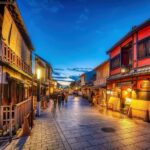
Gion at dusk changes the whole mood. This 2-hour small-group walking tour follows Gion’s quieter evening streets so you can learn how geisha and maiko culture works—and how to read the signs that locals notice. You’ll cover a tight route that starts at Ben’s Cookies Kyoto Shijo and ends at Yasaka Shrine, with guided pauses built for photos and stories.
I especially like two things: first, the focus on practical cultural cues, like how to identify teahouses and what traditional symbols on alley signs mean. Second, you’re guided by an expert storyteller—recent Spanish-guided feedback highlights guides named Pedro and Manuel, and that kind of consistent teaching tone matters on a night walk.
One possible drawback: because it’s a night walking format and includes shrine and street time, it’s not an ideal pick for very young kids (it’s listed as not suitable under age 12). Also, with a live guide in Spanish, you’ll want to be comfortable following explanations in that language.
In This Review
- Key things to know before you go
- A 2-Hour Gion Night Walk Focused on Geisha and Maiko Culture
- Getting Started at Ben’s Cookies Kyoto Shijo (and finding your guide fast)
- Statue of Izumo-no-Okuni: the first stop with story weight
- Shirakawa Canal at dusk: where the streets feel different
- How the tour teaches you to spot teahouses and traditional signs
- Photo stop and Gion Corner: moments to look longer, not rush
- Yasaka Shrine: closing the loop where the evening feels Kyoto
- Price and value: $22 for a small-group guided night in Gion
- Pacing, comfort, and who this is best for
- What the guide experience adds (Spanish commentary, and examples from feedback)
- Should you book the Kyoto: Gion Night Tour Stories of Geisha and Maiko?
- FAQ
- Where does the tour start?
- Where does the tour finish?
- How long is the Kyoto Gion Night Tour?
- How large is the group?
- What language is the live guide?
- What are the main stops on the route?
- What is included in the tour?
- How much does it cost?
- Is this tour suitable for children?
- Are there cancellation and pay-later options?
Key things to know before you go
- Sunset-to-night timing helps you see Gion when the crowds thin out
- Small group max 15 keeps the pace human and the questions answerable
- Teahouse signs and symbols are part of the lesson, not just scenery
- Planned photo stops give you moments to capture the right angles
- Multiple guided segments mean you get context at each landmark
- Finish at Yasaka Shrine, so you end in a classic Kyoto night setting
A 2-Hour Gion Night Walk Focused on Geisha and Maiko Culture
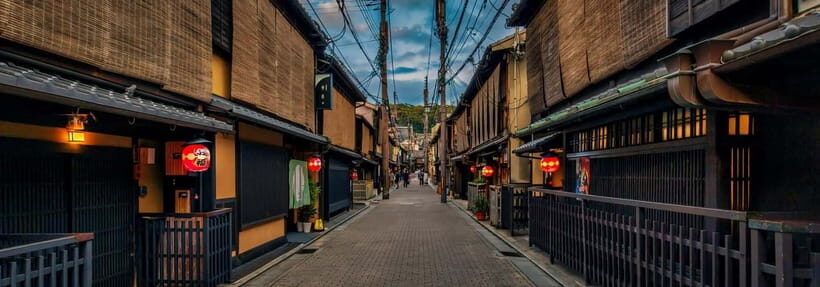
This tour is designed around a simple idea: when you walk Gion at the right hour, it starts making sense. You’re not just passing pretty streets—you’re learning the culture tied to the neighborhood, especially the world of geisha and maiko.
The route is short enough to stay comfortable, long enough to feel like a real experience. At roughly 2 hours, you get the benefit of a guided rhythm: move, pause, listen, look again, repeat.
And because it’s max 15 people, the vibe stays more like a guided stroll with a local in front of you, rather than a rush through landmarks.
You can also read our reviews of more evening experiences in Kyoto

Getting Started at Ben’s Cookies Kyoto Shijo (and finding your guide fast)
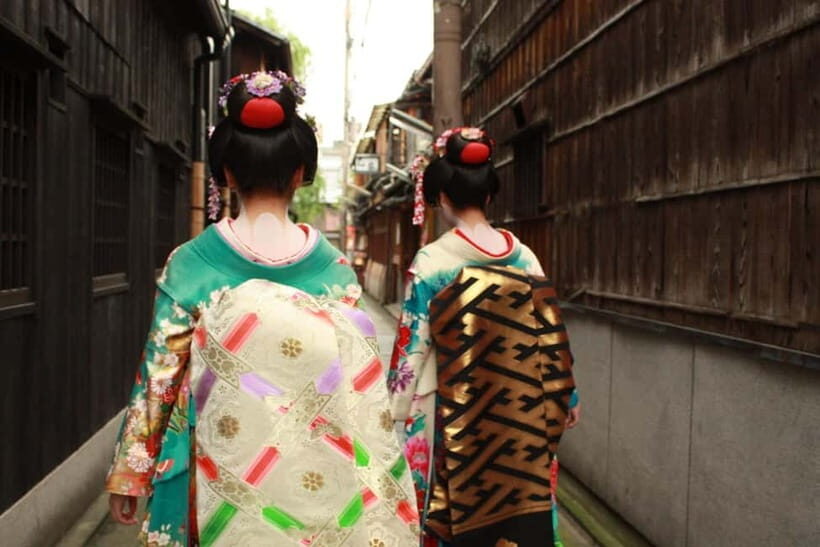
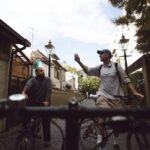
Your tour begins at Ben’s Cookies Kyoto Shijo. The guide is holding a sign with the tour name, which sounds basic—but at night in Kyoto, that little detail prevents a lot of stress.
The first portion includes a short guided moment right after you meet. Think of it as set your bearings fast: the guide lines up where you’re headed and helps you understand what you should be watching for as the tour moves deeper into Gion.
If you prefer structure, this start works. If you hate waiting, it’s still brief and keeps momentum.
Statue of Izumo-no-Okuni: the first stop with story weight
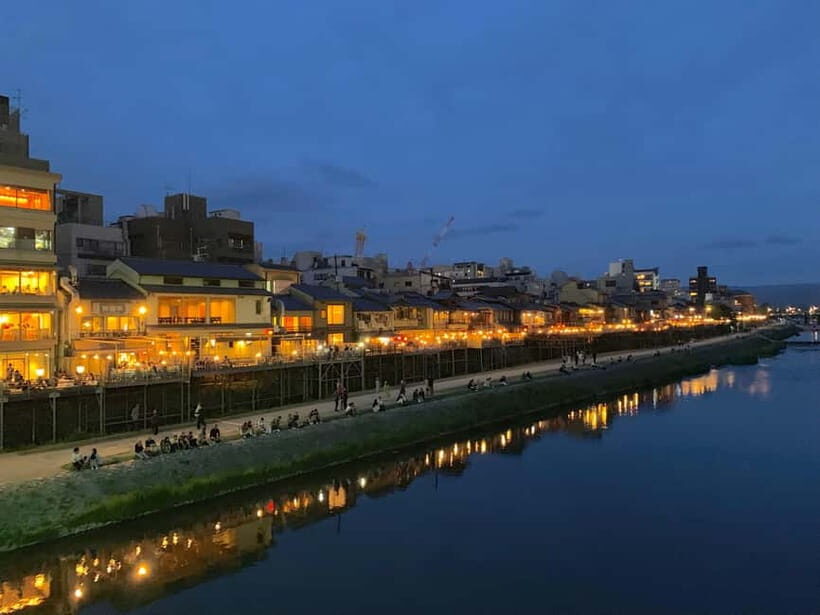
Right after the meeting area, you head to the Statue of Izumo-no-Okuni. You’ll pause for about 15 minutes with guided time built in, so it’s not just a photo-and-go moment.
Why start here? Because the tour wants you to connect Gion with the larger cultural threads that led to the entertainment traditions people associate with Kyoto. Even without turning this into a textbook, the guide’s explanations give you mental hooks for the rest of the walk.
Practical tip: if you plan to take photos, be mindful of foot traffic. Statues and photo angles can get crowded even when the tour is scheduled for quieter evening hours.
Shirakawa Canal at dusk: where the streets feel different
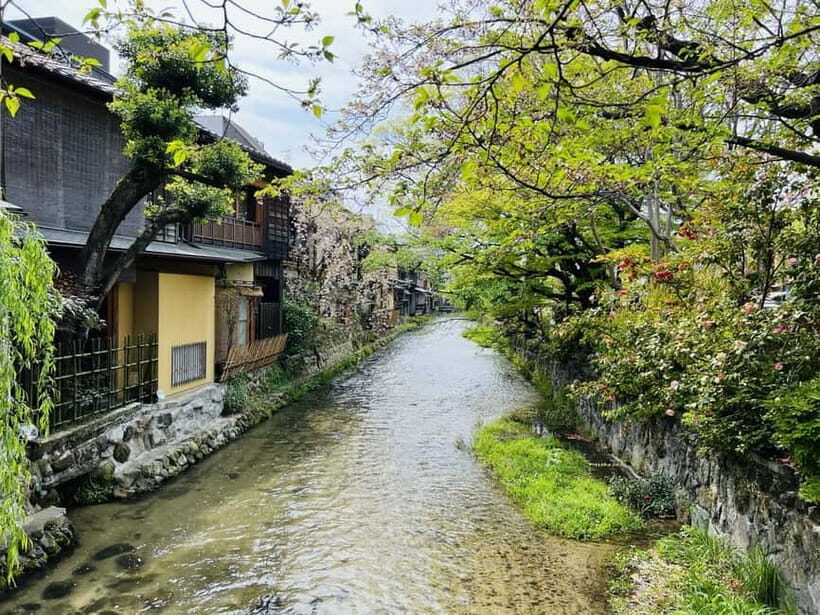
Next comes Shirakawa Canal, another stop that gets about 15 minutes of guided attention. Canal-side streets often change how you perceive the neighborhood—sounds soften, lights reflect, and you slow down naturally.
This is also one of the tour’s best times to notice how Gion looks when it’s not in full daylight mode. The tour is built around dusk timing, and this stop supports that: it’s a slower-paced lens before you move back into the alleys and signs.
In a small group, you usually get the chance to stand where you can actually hear the guide. That’s not guaranteed on bigger tours, so it’s a real advantage here.
How the tour teaches you to spot teahouses and traditional signs
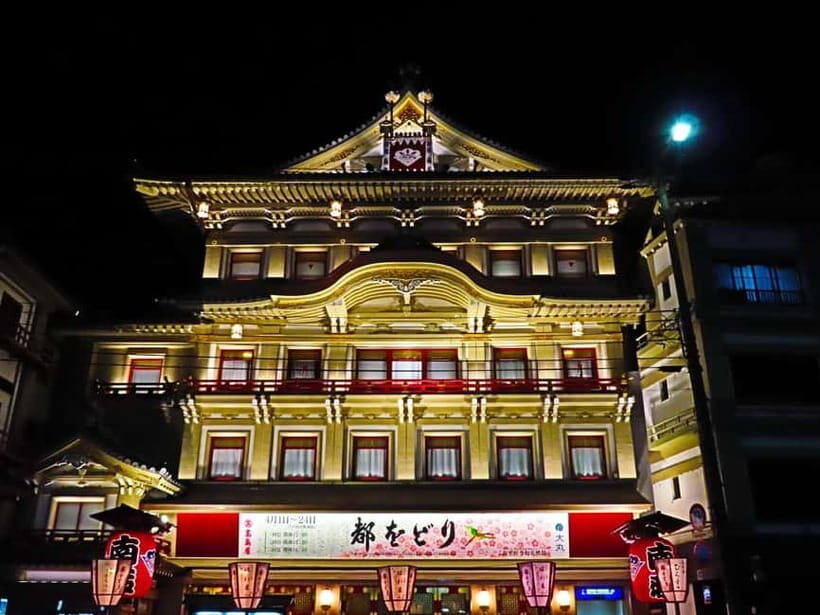
One of the highlights is the lesson on identifying teahouses and understanding the cultural significance of the traditional signs you’ll see in the area.
This is where the tour goes beyond “look at the street.” The guide isn’t just pointing at buildings. You’re learning what to look for and why those cues matter in how the neighborhood functions.
Why I like this part for your money: without some guidance, Gion can feel like a mix of pretty facades and mysterious doors. With a guide’s explanation, you’re walking away knowing what you’re seeing. That means your photos come with context, not just pretty lighting.
Also, night tours can sometimes feel like stealth watching with no explanation. Here, the instruction is explicit—how to read symbols, and how that connects to the geisha-and-maiko world.





Photo stop and Gion Corner: moments to look longer, not rush
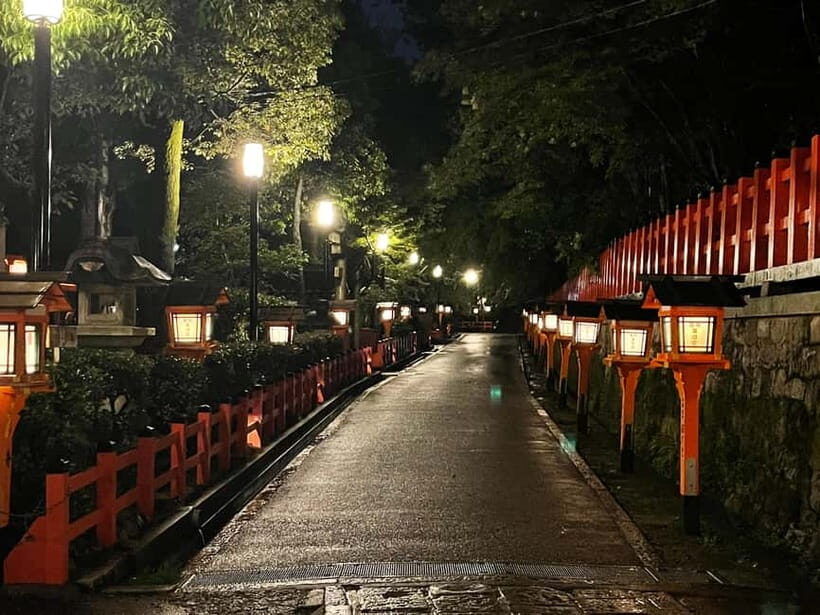
Midway through, you’ll have a photo stop, visit, and guided tour segment (about 15 minutes). Then there’s a specific stop at Gion Corner with photo stop, visit, and guided tour time (also about 15 minutes).
These segments are valuable because they give you breathing room. Instead of sprinting, you get time to look at details and ask questions through the guide’s narrative.
For photography, the best approach is to treat your camera as a secondary activity. Listen first, then frame what you learned. It’s the easiest way to get photos that look like the place you learned about—not just generic street shots.
Yasaka Shrine: closing the loop where the evening feels Kyoto
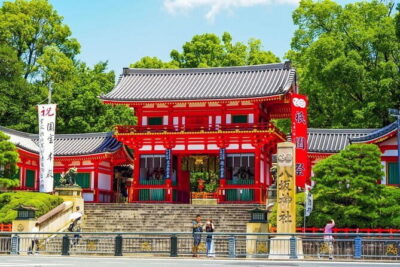
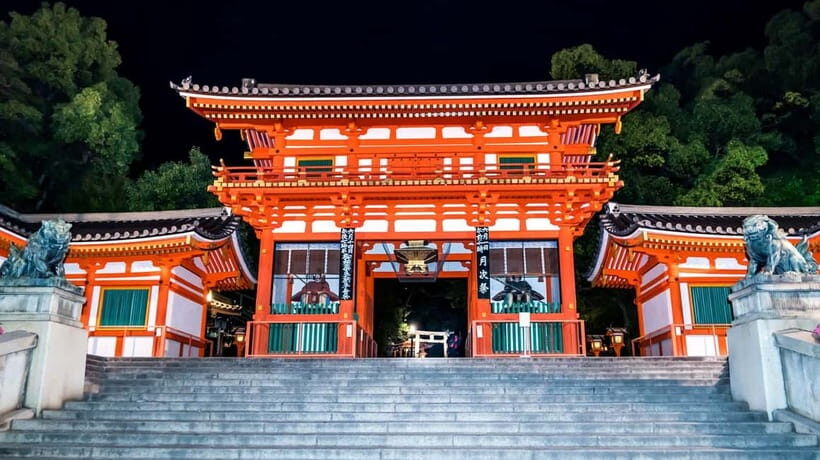
The last stop is Yasaka Shrine, where you’ll have additional photo stop, visit, and guided tour time (about 15 minutes), and the tour finishes there as well.
Ending at a major landmark makes logistics easier. You’re not searching for a last bus stop while your feet are tired. And since the tour started by getting you oriented and building context, finishing at Yasaka gives you a sense of arrival—like your evening walk has a clear conclusion.
This final stretch is also a good moment to confirm what you think you saw earlier. Once you connect the lessons about Gion’s cultural cues, the shrine area feels less like just another famous spot and more like part of your overall night route.
Price and value: $22 for a small-group guided night in Gion
At $22 per person for a 2-hour guided walking tour, the value is mainly in two areas: (1) the small-group size (max 15), and (2) the specialist focus on geisha/maiko culture plus teahouse-sign reading.
Street sightseeing is cheap in Kyoto, sure. But the reason tours like this are worth paying for is the “translation layer.” You’re getting guidance on what the neighborhood cues mean, and you’re doing it with a local guide who can explain the cultural background tied to geisha and maiko life.
If you’re the type who likes to understand what you’re looking at—rather than just passing through—this price lands in the sweet spot.
Pacing, comfort, and who this is best for
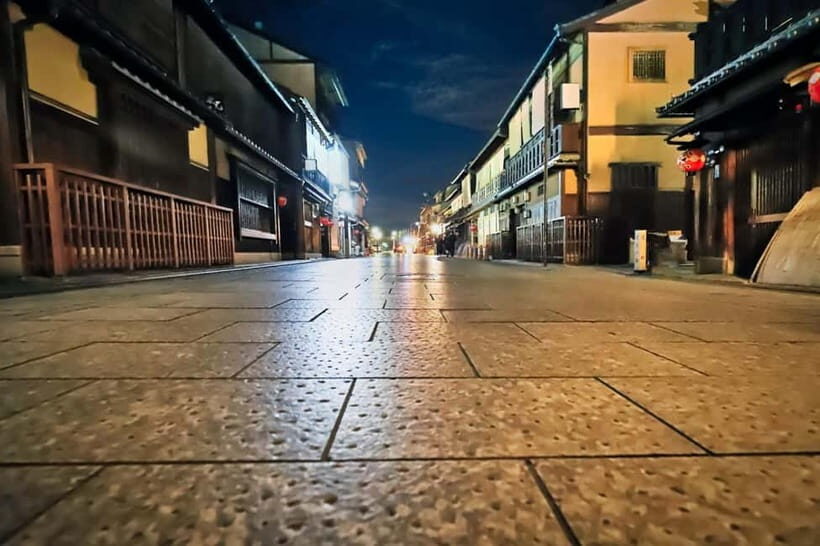
This is a night walking experience, and the route includes multiple guided pauses. That works well if you’re comfortable walking and you like stopping to learn rather than constantly moving.
It’s not suitable for children under 12, so it’s really aimed at adults and older teens who can enjoy quiet listening and longer pauses outside.
Who I’d recommend it for:
- Couples or solo travelers who want Gion without the chaos
- People who want a cultural explanation, not just photos
- Anyone traveling on a schedule who wants a compact evening plan
If you’re only interested in seeing geisha and maiko with no cultural context, you might feel the tour is “educational first, sighting second.” But if you want to understand the neighborhood, the structure fits.
What the guide experience adds (Spanish commentary, and examples from feedback)
The live tour guide language is listed as Spanish. That matters because the quality of the experience depends on being able to follow the explanations while you walk.
Recent feedback highlights guides named Pedro and Manuel, both praised for clear, enjoyable explanations of the neighborhood and its geisha-related cultural context. Even if you don’t know the names ahead of time, it’s a good sign that the guiding style is a core part of the value.
If you don’t speak Spanish well, consider pairing this with other Kyoto sightseeing where you can get English guidance. A great walking route in the dark loses its edge if you can’t follow the story.
Should you book the Kyoto: Gion Night Tour Stories of Geisha and Maiko?
Book it if you want Gion at the right hour and you care about learning the culture behind what you’re seeing. The combination of dusk timing, small group size, and lessons on teahouse signs and traditional symbols is the backbone of the experience—and that’s where you get lasting value.
Skip it if you’re traveling with very young kids, or if Spanish narration would be a deal-breaker for you. Also, if you’re only chasing sightings with no interest in the cultural explanations, you may want a different style of tour.
FAQ
Where does the tour start?
The meeting point is Ben’s Cookies Kyoto Shijo, and the guide will be holding a sign with the tour name.
Where does the tour finish?
The tour finishes at Yasaka Shrine.
How long is the Kyoto Gion Night Tour?
The duration is 2 hours.
How large is the group?
The tour is a small group with a maximum of 15 participants.
What language is the live guide?
The live tour guide language is listed as Spanish.
What are the main stops on the route?
Stops include Ben’s Cookies Kyoto Shijo (meeting point), Statue of Izumo-no-Okuni, Shirakawa Canal, a photo stop/visit segment, Gion Corner, and Yasaka Shrine (both photo stop/visit and finish).
What is included in the tour?
It includes a guided walking tour, an expert guide, cultural and historical explanations about geisha and maiko, and help with tips for identifying teahouses and traditional symbols.
How much does it cost?
The price is $22 per person.
Is this tour suitable for children?
No. It is listed as not suitable for children under 12.
Are there cancellation and pay-later options?
Yes. There is free cancellation up to 24 hours in advance for a full refund, and there is a reserve now & pay later option (you can book and pay nothing today).