REVIEW · GEISHA & MAIKO TOURS
Kyoto Geisha District Walking Tour in Gion
Book on Viator →Operated by Japan Wonder Travel · Bookable on Viator
Kyoto’s geisha district is easier to enjoy with a guide. This 2-hour Gion walk mixes Shinto shrine stops with the streets, canals, and lanes where geisha culture shows up in everyday life, plus a guide’s commentary that keeps the story straight. I especially like the small group cap (10 people)—it feels calm enough to actually hear explanations and ask questions—and I love how you hit both iconic highlights and quieter corners for photos. The main drawback to plan around is that 2 hours is fast, so if you want to linger forever in one spot, this won’t replace a longer self-guided wander.
You also get a practical setup that works well in Kyoto: a mobile ticket, a clear starting point at Gion Kōbu Kaburenjō, and a route designed to help you not get lost in the Gion maze. I’ve seen guide names like Takuma, Yuko, Yuji, Yoko, Tom, Hide, Eric, and Harry mentioned for leading this tour, and that variety matters because different guides explain things in different styles. Just be aware that your experience can depend on how clearly the guide communicates in English.
In This Review
- Key Points at a Glance
- Entering Gion the Right Way: It’s a Maze Without Help
- Meeting at Gion Kōbu Kaburenjō: A Clear Start and Easy Finish
- The Route Mix That Makes Sense: Shrines, Streets, Water, and Tradition
- Stop 1: Yasaka Shrine and the Lantern Atmosphere
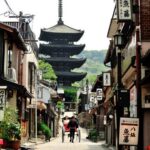
- Stop 2: Gion Streets and the Geisha District in Real Scale
- Stop 3: Tatsumi Daimyojin Shrine for Protection and Traveler Luck
- Stop 4: Tatsumi Bridge for That Movie-Scene Feeling
- Stop 5 (Canal Time): Gion Shirakawa and the Calm Waterway Look
- Stop 6: More Gion, Then Hanamikoji Street
- The Gion Corner Add-On: Turning Walking into Cultural Context
- Guides and Communication: Why Small Differences Matter
- Price and Value at $29.85: What You’re Really Paying For
- Practical Tips So You Get More From Every Stop
- Who This Tour Fits Best
- Should You Book the Kyoto Geisha District Walking Tour in Gion?
- FAQ
- How long is the Kyoto Geisha District Walking Tour in Gion?
- What’s the group size limit?
- Where is the meeting point, and do you end there too?
- Does the tour run rain or shine?
- Is this tour suitable for people with disabilities?
- If I cancel, do I get a refund?
Key Points at a Glance
- Small group cap of 10 keeps the pace friendly and the Q&A possible
- Mobile ticket means less fuss right before you start walking
- Yasaka Shrine + multiple Gion landmarks gives you context, not just photos
- Shops, streets, bridges, and canal views are timed for great visual variety
- Geisha spotting is possible but not guaranteed—the walk helps your chances
- Rain or shine keeps your Kyoto plans from falling apart
Entering Gion the Right Way: It’s a Maze Without Help
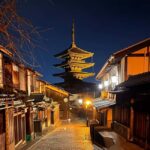
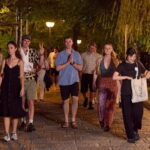
Gion is one of those places where the streets look simple until you’re standing there, map in hand, wondering why everything feels like it curves away from your goal. This tour is built for that exact problem. You get a guided route that threads together shrines, well-known streets, and calmer pockets of the district, so you spend less time figuring it out and more time understanding what you’re looking at.
What makes it more than a photo walk is the commentary around geisha traditions and how the culture fits alongside local religion and neighborhood life. You’re not just passing buildings—you’re being told what certain locations mean, and why people historically gathered where they did.
You can also read our reviews of more walking tours in Kyoto
Meeting at Gion Kōbu Kaburenjō: A Clear Start and Easy Finish
The meeting point is Gion Kōbu Kaburenjō, located at 570-2 Gionmachi Minamigawa, Higashiyama Ward, Kyoto. The tour also ends at the same spot, so you’re not trying to reverse-engineer your route while your legs are quietly filing a complaint.
Because the start is near public transportation, it’s simpler to build into the rest of your day. And since this is a walking tour, you’ll want to treat it like one: comfortable shoes help a lot, especially with the short bursts of steps along the way.
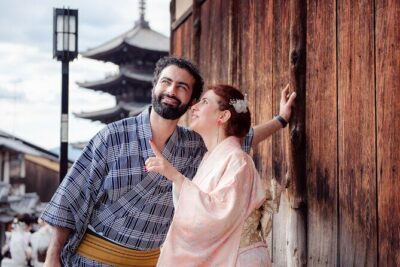
If you’re doing the kimono option, the day gets a bit more “follow the plan” and a bit less “wander.” After changing into kimono, you go to the Japan Kanji Museum & Library by yourself (about a 5-minute walk from the kimono rental store). After the tour, you need to return the kimono by 5:30 pm. If you hate time pressure, you’ll want to account for that early.
The Route Mix That Makes Sense: Shrines, Streets, Water, and Tradition
One reason this tour works for first-timers is the balance. You get religious landmarks that anchor the area in centuries of local practice, then you move into Gion streets where you can see how history and everyday life share the same narrow space.
Also, the schedule is structured in short, movable chunks. That matters because Gion can be crowded around certain streets and hours. By weaving between stop types—shrine area, lane, bridge, canal—you keep the visual rhythm going and avoid the feeling that you’re stuck in one place for ages.
Stop 1: Yasaka Shrine and the Lantern Atmosphere
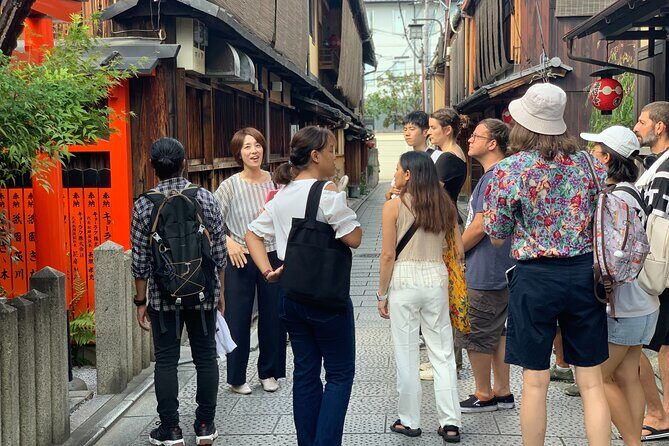
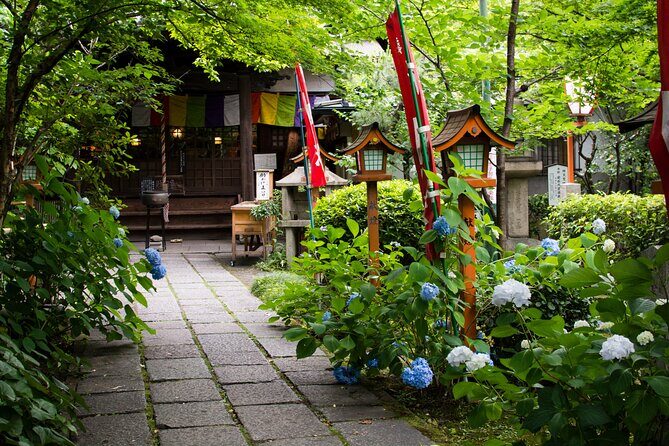
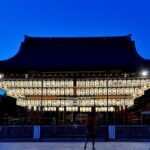
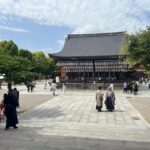
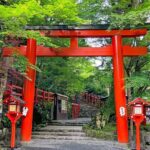
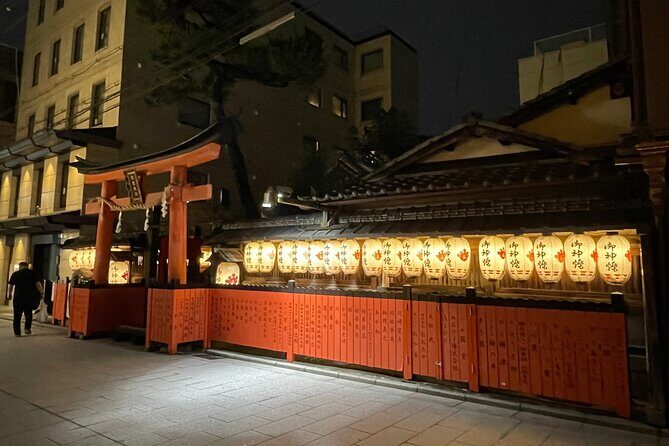
Yasaka Shrine is one of the most famous Shinto shrines in Gion, and starting here is a smart move. The shrine gives you immediate cultural grounding: architecture to notice, lanterns that set the scene, and a quieter pocket of atmosphere compared with the nearby streets.
The stop is about 40 minutes and admission is free, which is a good “high value” start. You’re not spending money to enter, and you’re using the early part of the tour to understand the setting before you move into the more famous Gion scenery.
A drawback to consider: if you’re trying to cram a lot of Kyoto into one day, this first stop can feel like a “big commitment” early. But it also pays off, because the rest of the route becomes easier to read once you understand what kind of place you’re walking through.
Stop 2: Gion Streets and the Geisha District in Real Scale
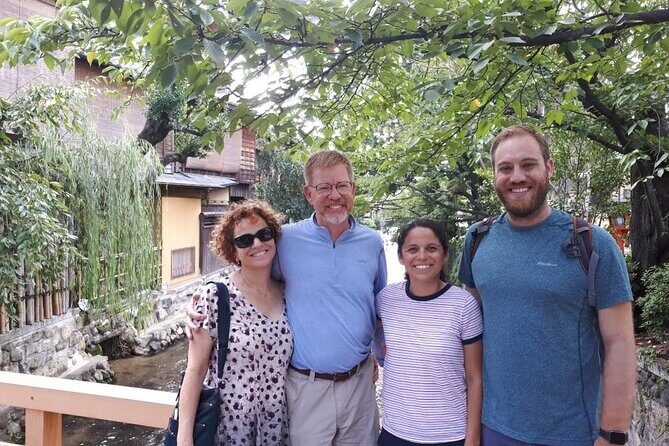
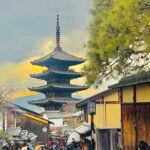
From the shrine, you transition into Gion itself—traditional wooden houses, narrow streets, and that recognizable feeling of stepping into a historic district without it being a museum. This stop is listed for about 20 minutes, and admission is free.
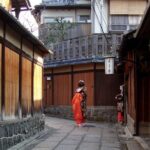
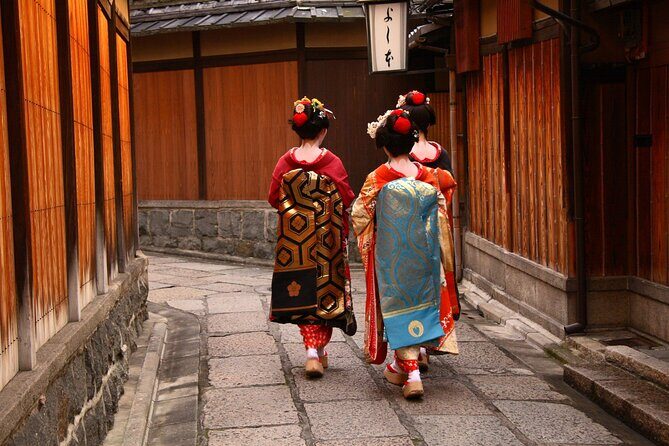
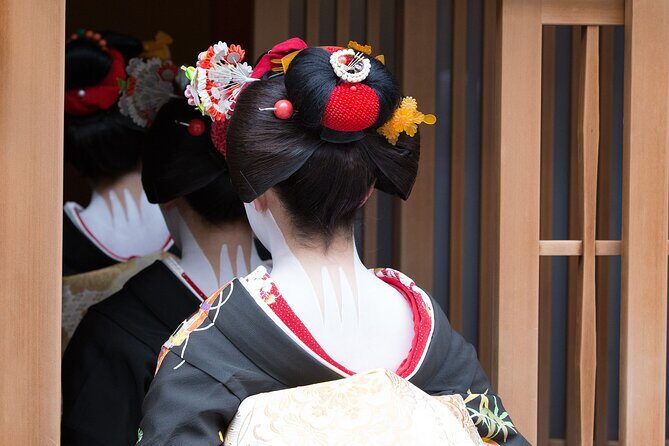
What I like about this portion is how it supports the tour’s main theme: geisha culture isn’t presented as a fantasy. Instead, it’s framed as part of Kyoto life—something tied to buildings, timing, and neighborhood tradition. If you’re hoping to spot geisha (or maiko), this is where the odds start to improve simply because you’re in the right part of town.
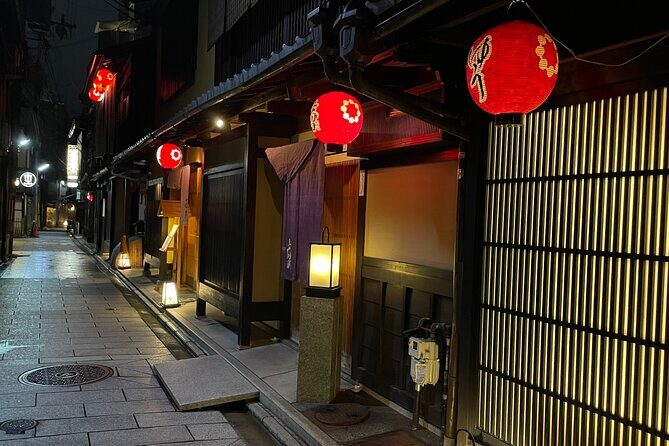
And yes, the timing of your walk matters. As the sun goes down, paper lanterns start to glow more softly, and the streets can feel more mysterious and cinematic. Even if you don’t see anyone, this is still one of the best segments for atmosphere and photos.


Stop 3: Tatsumi Daimyojin Shrine for Protection and Traveler Luck
Next comes Tatsumi Daimyojin Shrine, a much smaller, quick stop at about 5 minutes. It’s free to visit and dedicated to a deity of protection, good fortune, and safety—especially for travelers and warriors.
This is one of those “short but meaningful” stops. You’re not getting a long lecture; you’re getting context. In a city where people often connect religion to daily life, a stop like this helps you understand why shrines still show up in the story of places like Gion.
If you tend to prefer longer stops, treat this as a moment to read, look, and move on. The tour keeps momentum on purpose.
Stop 4: Tatsumi Bridge for That Movie-Scene Feeling
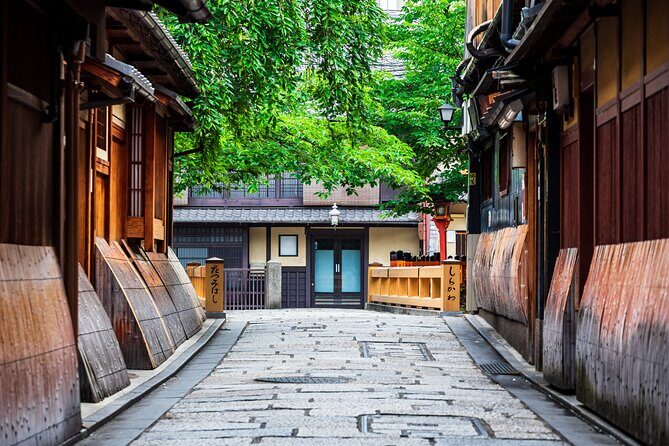
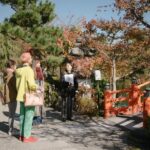
Tatsumi Bridge is listed at about 10 minutes, also free. The description is exactly the right mental image: a small traditional bridge in a corner of Gion that can feel like you walked into a set.
This is one of the easiest places to take good photos because the setting naturally frames the view. And because it’s a bridge, your position changes without you needing to constantly move—great for keeping the tour pace comfortable.
Stop 5 (Canal Time): Gion Shirakawa and the Calm Waterway Look
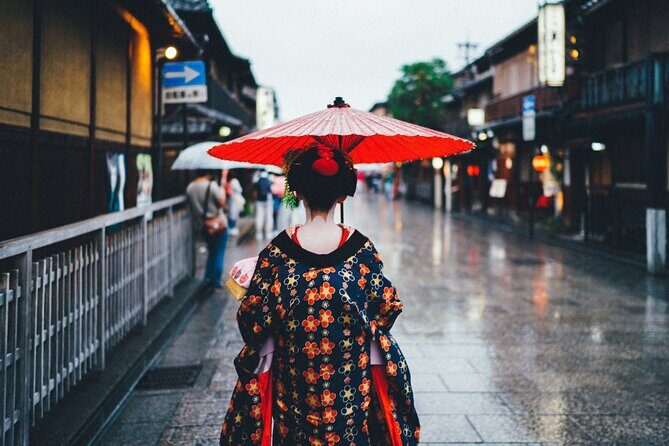
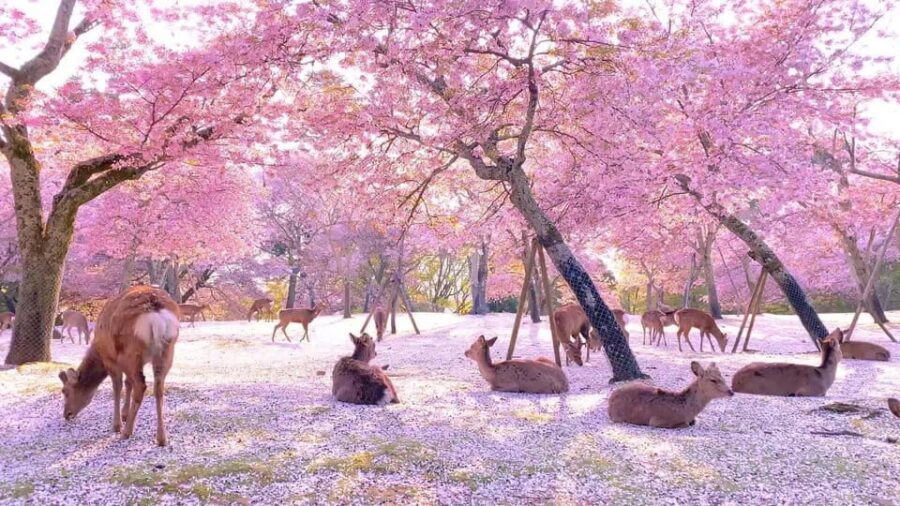
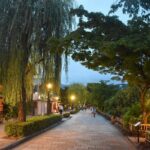
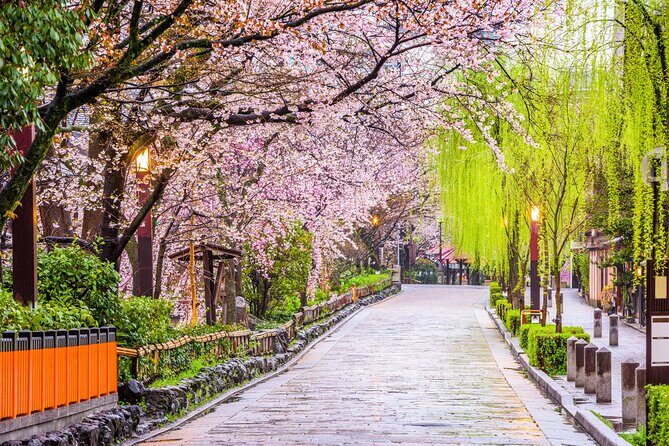
The tour includes Gion Shirakawa, also called Shirakawa Canal. This portion is described as a picturesque, tranquil waterway lined with well-preserved traditional machiya houses and weeping cherry trees.
Even if cherry blossoms aren’t in season, the structure of the canal area still delivers a “Kyoto postcard” look. This is the part of the route where you slow down without it feeling boring, and it’s also a nice visual reset after streets full of signage and people.
Why this stop adds value: when someone only shows you the loud famous street, you miss the fact that Gion has quiet stretches that shape daily life. Canal areas highlight that softer side.
Stop 6: More Gion, Then Hanamikoji Street
After the canal, you get another Gion section (about 20 minutes, free) before moving onto Hanamikoji Street (about 10 minutes, free). Hanamikoji is the main street in Gion, lined with traditional wooden machiya houses, tea houses, shops, and restaurants.
This is a good “big name” finish because the street is immediately recognizable. It’s also where you’ll see more visitors concentrating—so your guide’s job matters here: helping you look past the crowds and still notice the architecture and street rhythm.
If you love architecture and side details, don’t speed through this part. Even with limited time, a few careful glances can turn it from a checklist into a real sense of place.
The Gion Corner Add-On: Turning Walking into Cultural Context
The tour also includes Gion Corner, described as a venue showcasing traditional art performances that highlight Kyoto’s cultural heritage. The provided details don’t specify how long this takes, but it’s clearly positioned as a bridge between what you see on the street and what those traditions mean.
This makes the tour feel more complete. Instead of leaving Gion with photos and no explanation, you finish with a cultural reference point—something that helps you understand what you were watching for during the walk.
If you’re the type who likes to keep your evenings flexible, treat Gion Corner as the moment to slow down, sit, and absorb. If you prefer only outdoor walking, you might find this portion changes the pace.
Guides and Communication: Why Small Differences Matter
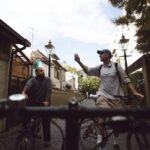
The most consistent praise across guide comments is how well guides explain the area—history, shrine context, and geisha customs. Names that show up include Takuma, Yuko, Yuji, Yoko, Tom, Hide, Eric, and Harry. Some guides are described as friendly and patient, and at least one guide is mentioned as speaking a little Spanish, which can be a big comfort if your Japanese is basic.
Here’s the practical takeaway: for a tour that’s built on commentary, communication quality matters. You’re spending money for interpretation, not just walking. If you’re sensitive to unclear English, choose an option/time slot where you’re confident the guide will match your language needs, and come prepared with simple curiosity questions you can ask on the fly.
Also, many guides do a smart job of timing. A few people mention seeing geiko or maiko during the walk, including sightings connected to being in the right place at the right time. That doesn’t mean it’s guaranteed—it means the tour helps you be where the district’s rhythms happen.
Price and Value at $29.85: What You’re Really Paying For
$29.85 for about 2 hours is, in practical terms, paying for three things: direction, context, and time savings.
First, direction. Gion is easy to get slightly wrong. A guide helps you connect the dots between locations so you’re not walking the “same pretty street loop” all day.
Second, context. Free shrines like Yasaka and Tatsumi Daimyojin are meaningful, but you’ll only feel that meaning if you know what to look for. The tour’s commentary is the value engine here.
Third, time. If you tried to build this route yourself with research, you’d spend hours reading, cross-checking opening details, and stitching together a path that makes sense on foot. This tour gives you a ready-made structure with a small group cap.
You also benefit from not paying for most shrine entry. Admission is listed as free for the shrine stops provided, which keeps the tour’s cost closer to what you pay upfront.
Practical Tips So You Get More From Every Stop
Wear comfortable walking shoes. This tour is meant for walking, and the route includes some stair movement, which is why it’s marked as not suitable for people with disability who need help going up and down stairs.
Bring a phone camera, but also bring patience. Seeing geisha is luck and discretion. The more you try to force it, the less it feels like Kyoto and the more it feels like you’re chasing. Best approach: stand back, keep noise low, and let your guide lead the way.
For photos:
- Yasaka Shrine lanterns are a strong start for dramatic shots.
- Tatsumi Bridge and the Shirakawa canal are easier to frame than dense street corners.
- Hanamikoji is photogenic, but watch for heavier crowd moments.
If you’re doing the kimono plan, build in extra time mentally. Changing clothes and strict kimono return timing by 5:30 pm means you’ll want to keep your day organized.
Who This Tour Fits Best
This is a great fit if you:
- Want a clear introduction to Gion without getting lost
- Prefer learning from a guide while you walk
- Like seeing both religious sites and famous neighborhood streets
- Want a small group experience capped at 10 people
It’s also a good match for families where kids can handle a walking pace and short explanation blocks. Children must be accompanied by an adult, which keeps it aligned with a mixed-age group.
If you dislike walking or can’t manage stairs, it’s not a strong fit since the tour isn’t suitable for that.
Should You Book the Kyoto Geisha District Walking Tour in Gion?
Book it if you want the shortest path to understanding Gion—shrines included—and you like the idea of learning the “why” while you walk. The value is strongest when you appreciate commentary, free shrine stops, and the chance to time your walk in a way that makes geisha spotting more likely.
Skip it if you want lots of free time at one stop, or if you’re very sensitive to language clarity and need highly detailed explanations in a specific language. Also think twice if stairs and uneven movement are an issue for you.
If you book, go in with the right mindset: look closely, ask questions, and keep your expectations realistic about sightings. With that, this tour does a nice job turning a famous neighborhood into something you actually understand.
FAQ
How long is the Kyoto Geisha District Walking Tour in Gion?
It’s about 2 hours.
What’s the group size limit?
The tour has a maximum of 10 travelers.
Where is the meeting point, and do you end there too?
The meeting point is Gion Kōbu Kaburenjō (570-2 Gionmachi Minamigawa, Higashiyama Ward, Kyoto). The tour also ends at the same location.
Does the tour run rain or shine?
Yes, the tour takes place rain or shine.
Is this tour suitable for people with disabilities?
It is not suitable for people with disability who need to go up and down stairs.
If I cancel, do I get a refund?
Free cancellation is available up to 24 hours in advance for a full refund. Canceling less than 24 hours before the start time doesn’t get you a refund.