REVIEW · WORKSHOPS
Hanakoushi cotton Scarf Class
Book on Viator →Operated by Kyoto Shibori Museum · Bookable on Viator
Kyoto fabric magic, taught in plain steps. I like the private class feel, where you’re not rushed and the instructor can check your work as you go. I also love that you end with something usable and display-worthy, not a throwaway craft. One thing to consider: the class is short, and if you’re expecting a long, deep production process from start to finish, you may find it a bit focused and brief.
Here’s what makes it especially fun: the instructor-led folding and dyeing is hands-on, and then while your scarf dries you get museum time—tools, samples, and examples that explain shibori beyond the classroom. In the sessions I’ve seen described, teachers like Nina and Yokahama-san (and a Sensei-style guide) are patient and clear, so even if you’re not a crafty person, you can follow along.
This costs $43.35 for a private group class and comes with a takeaway scarf, so it feels fair value compared to buying a finished souvenir you won’t wear. If you hate waiting around for anything, note that drying time is built in, and you’ll spend part of the lesson learning and looking instead of working the whole time.
In This Review
- Key things you’ll notice right away
- Entering Kyoto Shibori Museum and starting with folds
- Private class format: 30 minutes, with a museum break built in
- Choosing your color and learning the hanakoushi/sekka shibori technique
- While your scarf dries: museum browsing that actually adds context
- What you take home: a real scarf plus the chance to shop
- Price and value: $43.35 for a scarf-making experience
- Who this Hanakoushi scarf class is best for
- Booking this in Kyoto: quick practical tips
- Should you book this scarf class at the Kyoto Shibori Museum?
- FAQ
- How long does the Hanakoushi cotton scarf class take?
- Is this class private?
- What do I make in the class?
- What shibori method will I learn?
- Can I choose a color for my scarf?
- What do I do while the scarf is drying?
- Is the museum shop open during or after the class?
- Where does the class meet?
- Is it easy to get to using public transportation?
- What if I need to cancel?
Key things you’ll notice right away
- Private, just your group: you get personal attention instead of watching from the back.
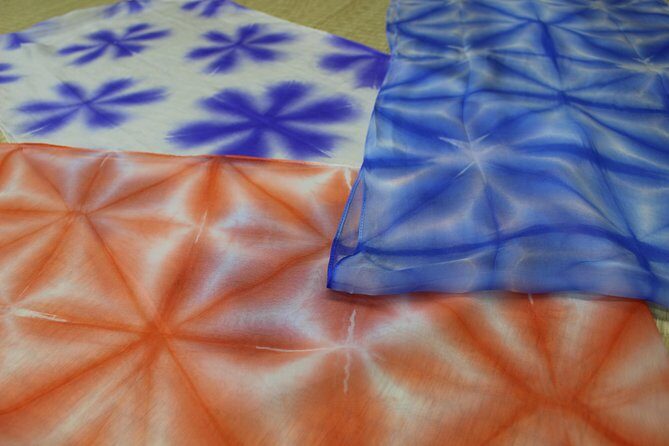
- Sekka shibori focus on a cotton scarf: you dye a 70-inch by 17-inch scarf you can actually use.
- Color choice up front: you pick your favorite color before folding.
- Hanakoushi method for the scarf result: your folds drive the pattern.
- While it dries, you learn in the museum: browse shibori art pieces, tools, and samples.
- Shop time afterward: you can buy extra shibori souvenirs and fabrics if you want more than one keepsake.
Entering Kyoto Shibori Museum and starting with folds
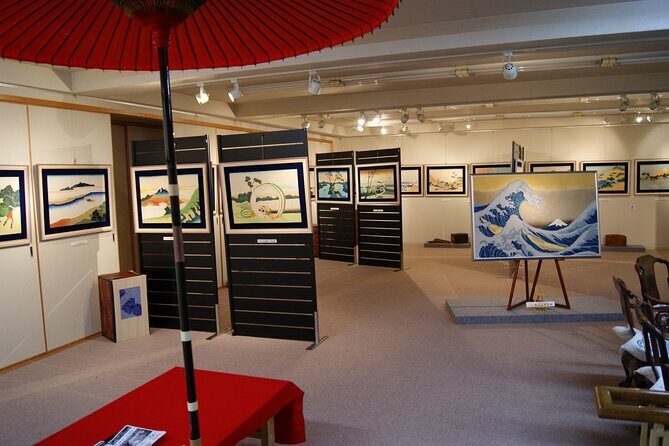
Your workshop happens at the Kyoto Shibori Museum, in Nakagyo Ward. You’ll start at 135-5 Shikiamichō and finish back there. The setting matters: it’s not a giant tourist factory, and the class feels grounded in the museum itself—part lesson, part craft gallery.
The first real moment you’ll remember is the transition from looking at shibori to doing it. Before any dye touches the fabric, you choose a color and learn how to fold your scarf in the hanakoushi/sekka shibori approach they teach. That folding step is the whole point. It’s where your pattern is decided, so the instructor’s pacing and clarity really pay off.
A practical tip: go in ready to pay attention to the steps, not just the final look. If you follow instructions closely during folding, your result tends to be much more satisfying. If you rush or skip details, the dye can still work—but your pattern may feel less crisp than what you had in mind.
You can also read our reviews of more tours and experiences in Kyoto

Private class format: 30 minutes, with a museum break built in
Most sessions run about 30 minutes, though the overall class experience can be up to 60 minutes depending on what’s scheduled and how your scarf drying time fits. Either way, you’re not stuck all afternoon. This is ideal if you want a hands-on craft without stealing half a day from Kyoto sightseeing.
Because it’s a private class exclusively for your party, you’re not sharing your instructor time with strangers. That means you can ask quick questions, and the teacher can correct technique while it’s still easy to adjust. In descriptions of the experience, visitors often highlight how friendly and helpful the staff are and how simple the process can be for tourists—especially compared with shibori methods that might sound complicated at first.
The other big feature of the timing is the drying break. While your scarf dries (about 30 minutes), you don’t sit around doing nothing. You’ll shift from hands-on work to learning: browsing museum displays and looking at real examples, tools, and samples.
If you’re very schedule-driven, this drying segment is predictable and helpful. You’ll know there’s a built-in pause, so you can plan the rest of your day around it.
Choosing your color and learning the hanakoushi/sekka shibori technique
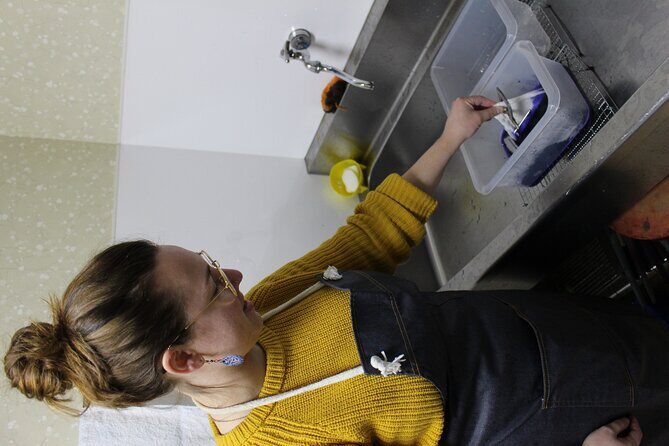
The class centers on dyeing a cotton scarf using the shibori folding-and-dye method they teach at the Kyoto Shibori Museum. The format described is: choose your color, fold the fabric in the instructed way, then dye it.
The takeaway scarf is substantial: 70 inches by 17 inches (175 cm by 50 cm). That size makes the finished result feel like a real Kyoto souvenir. You’re not making a small patch or a tiny ornament that’s mostly decorative and awkward to use.
What I like about this approach for first-timers is how it turns a traditional technique into something you can actually complete as a visitor. The folding step can sound intimidating, but it’s taught in manageable parts. People mention that the process has been simplified/modernized for tourists, without turning into something watered down.
And yes, you’ll learn the logic behind the method. Shibori isn’t just tie-and-dye. It’s about controlling resist—folds and bindings that protect parts of the fabric from dye so patterns appear. The instructor walks you through folding and dye application in a way you can repeat later, even if you don’t copy the exact same folds.
Also: be prepared for small details. If you want a scarf that looks crisp and intentional, you’ll want to handle the fabric carefully during the folding step. That doesn’t mean you need craft skills. It means you need patience for a few minutes.
While your scarf dries: museum browsing that actually adds context
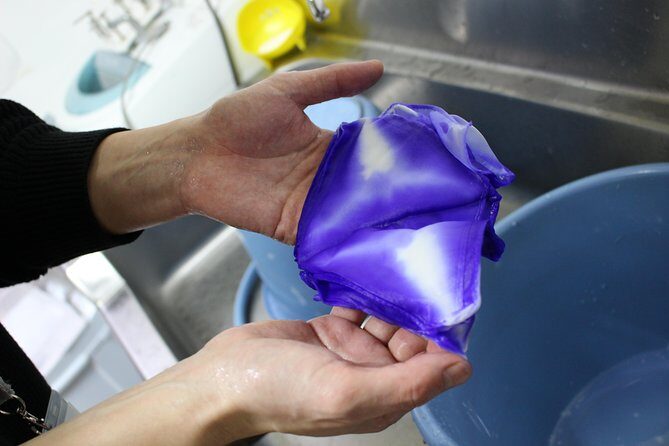
Once dyeing is done, your job shifts from making to understanding. Drying takes around 30 minutes, and that’s when the museum part becomes more than a waiting room.
In the museum area, you can browse shibori art pieces, tools, and samples. You also get explanation about shibori as a craft, not just a method for today’s project. This is where the experience becomes more meaningful. You start the class thinking you’ll learn how to dye a scarf, and then you end up looking at dozens of examples and realizing the technique has many variations.
A few descriptions point out that the museum is small, but that it packs a solid punch. Even if you only have a short time in Kyoto that day, this museum segment works as a calm break from the streets. It’s also a good way to spot patterns you like—so if you buy something in the shop, you can buy with taste, not just impulse.
If you’re the type who likes to shop but hates guessing, this museum browsing helps. You’ll see how different fold styles translate into different looks.
What you take home: a real scarf plus the chance to shop
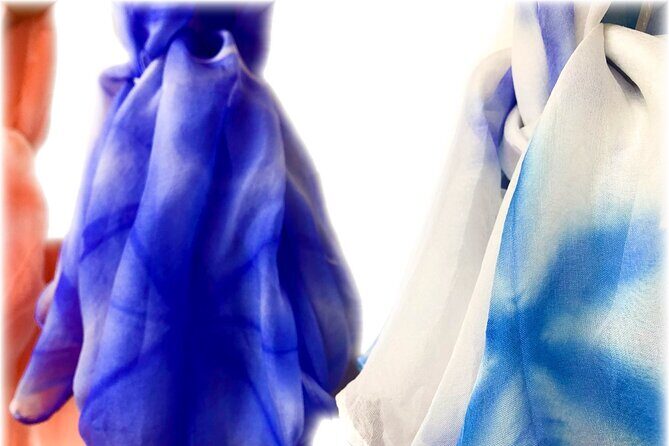
The main takeaway is your scarf—made during the class and ready as a souvenir. That matters. There’s a big difference between buying a finished shibori item and making your own version with your chosen color and folding pattern.
The scarf also has a practical side. Because it’s cotton and a large size, it’s easier to use than many delicate museum crafts. You can wear it, wrap it, or style it like a soft accessory. Even if you don’t wear scarves often, it’s still a satisfying keepsake because it’s functional.
Then there’s the shop. The museum shop sells shibori items, souvenirs, fabrics, and more. People mention buying things like a purse for a parent and samue-style clothing. That tells me the shop isn’t limited to one narrow souvenir category. If you want an extra gift, you can often find something small enough to bring home without turning your luggage into a shibori warehouse.
Just keep your timing in mind. If you’re heading to dinner or another attraction right after your class, buy quickly. The folding-and-dyeing souvenir is usually the star. Treat the shop as a bonus, not a second mission.






Price and value: $43.35 for a scarf-making experience
At $43.35 per person for a private class, you’re paying for two things: guided instruction and a high-quality takeaway project. You’re also paying for access to the museum experience during the drying time.
If you compare it to the cost of a finished shibori souvenir, it often lands in a similar ballpark—except here you’re making the item. That changes the value. It’s not just paying for the object. You’re paying for the process and the education that comes with it.
This price also makes sense for couples and friends. A private format usually feels expensive when the item is small. Here, the scarf size is large enough to feel genuinely worth the effort, and private instruction helps you get to a result you’re proud to show.
One caution on value: because the class is short, you won’t spend hours doing every stage of a full production workflow. If your goal is long, detailed workshop time, you might wish for a longer format. But if your goal is a meaningful Kyoto craft souvenir you can finish in an hour, it’s a strong fit.
Who this Hanakoushi scarf class is best for
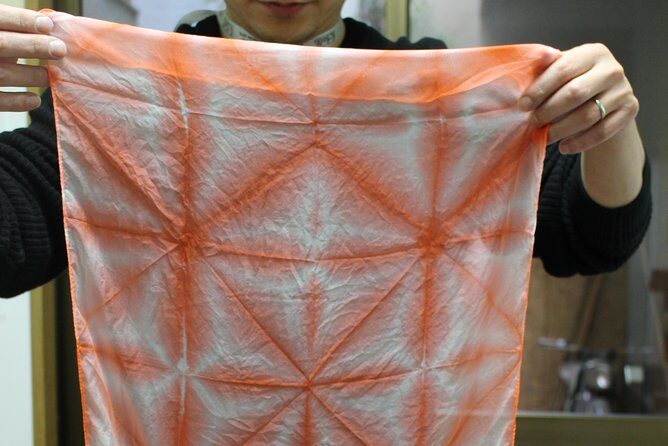
I’d point this class toward visitors who want a hands-on activity that’s still structured and easy to follow. It’s also great for people who enjoy traditional Japanese crafts but don’t want an overwhelming schedule.
It’s especially good for:
- First-timers interested in learning how shibori works, with clear step-by-step guidance.
- Couples or small groups who want a personal experience without sharing an instructor.
- Gift shoppers who want something more personal than a store-bought trinket.
- Anyone who likes museum time, as the drying break includes looking at tools, samples, and finished pieces.
It may not be ideal if:
- You expect the class to feel like a long, slow craft session from start to finish.
- You’re uncomfortable with a waiting period during drying (even though you’ll be doing museum browsing during that time).
Booking this in Kyoto: quick practical tips
Since the class is near public transportation, you can usually fit it into a mid-day plan. The workshop ends where it starts, so you can continue from the museum area without needing to figure out a separate transfer point.
Also, bookings happen ahead of time. On average, this is booked about 23 days in advance, so if you have a narrow window, don’t treat it like a last-minute whim.
Bring a mindset that fits the schedule: you’ll fold, dye, and then wait while drying. That waiting turns into museum viewing, so it’s not dead time. But you’ll want to avoid setting another time-critical appointment immediately during that drying window.
Should you book this scarf class at the Kyoto Shibori Museum?
If you want a Kyoto souvenir with actual craft behind it, I think this is a smart booking. The private format, the big cotton scarf size, and the museum context make it feel like more than just a quick craft stop.
Book it if:
- You want hands-on instruction in shibori without needing prior experience.
- You like learning by doing and then seeing related examples in a museum.
- You’d rather create a keepsake than buy one.
Skip or reconsider if:
- You only have time for very short activities and can’t handle any drying/waiting portion.
- You’re looking for a long, in-depth workshop where you do everything in a single uninterrupted work session.
FAQ
How long does the Hanakoushi cotton scarf class take?
The duration is about 30 minutes (approx.). The class is usually 30 minutes to 60 minutes per session.
Is this class private?
Yes. It’s a private tour/activity with only your group participating.
What do I make in the class?
You dye a cotton scarf sized 70 inches by 17 inches (175 cm by 50 cm).
What shibori method will I learn?
The class focuses on the traditional sekka shibori method, and it teaches the hanakoushi shibori method for the scarf you create.
Can I choose a color for my scarf?
Yes. You start by choosing your favorite color.
What do I do while the scarf is drying?
About 30 minutes while it dries. During that time, you learn more about shibori and browse art pieces, tools, and samples in the museum.
Is the museum shop open during or after the class?
You can browse and shop at the museum shop, which sells shibori items, souvenirs, fabrics, and more.
Where does the class meet?
The meeting point is Kyoto Shibori Museum, 135-5 Shikiamichō, Nakagyo Ward, Kyoto, 604-8261, Japan.
Is it easy to get to using public transportation?
Yes. It’s near public transportation.
What if I need to cancel?
You can cancel for a full refund if you cancel at least 24 hours before the experience starts. Free cancellation is offered, with no refund if you cancel within 24 hours.