REVIEW · EVENING EXPERIENCES
Gion Night Walking Tour
Book on Viator →Operated by Kyoto Fun · Bookable on Viator
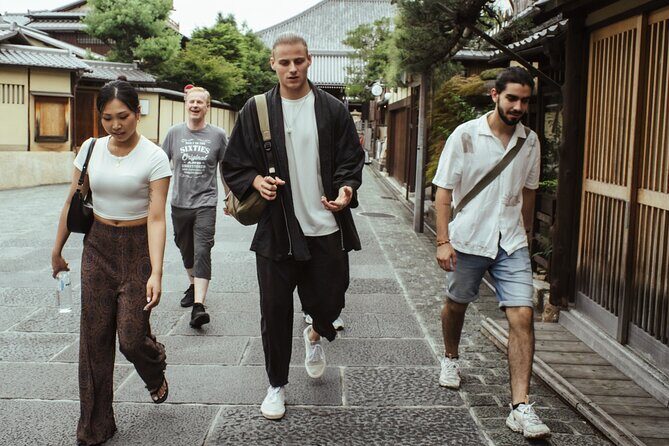
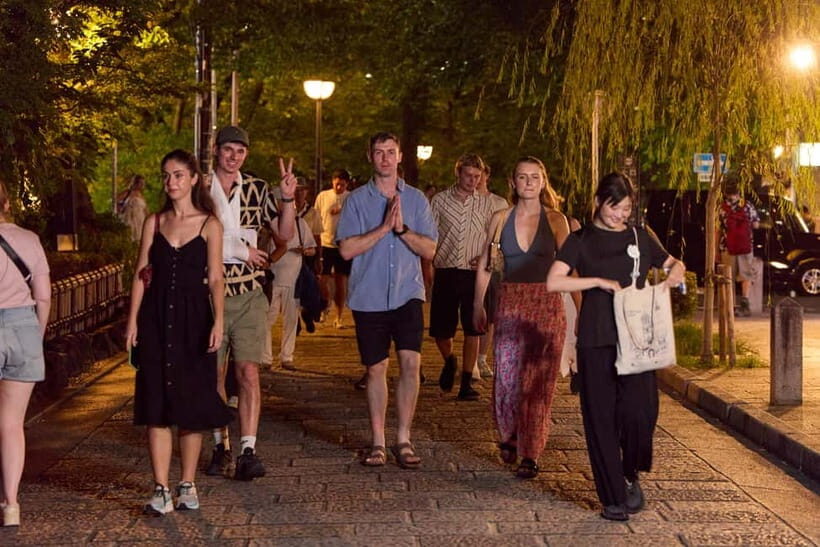
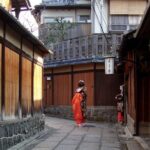
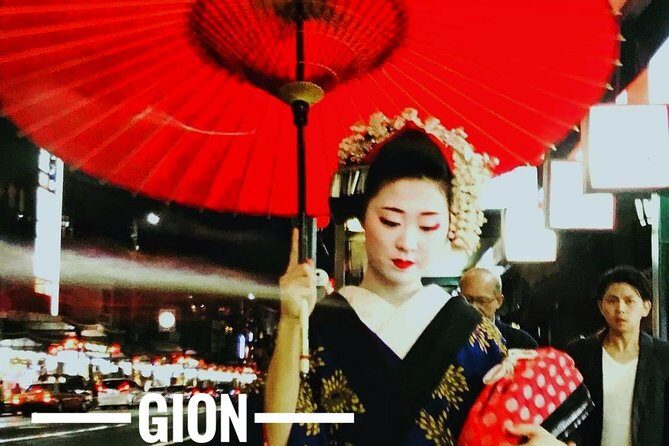
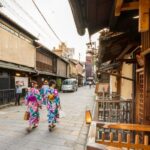
Geisha lanes after dark are pure Kyoto. In about two hours with a small group of 10, you get the stories behind the alleys and learn what you’re actually looking at in Gion, not just where to walk. One thing to consider: this is timed for evening atmosphere, so plan for good weather and comfortable shoes for cobblestones.
I love how direct the experience is. You start near Yasaka Shrine, then move through the geisha quarters and surrounding sights with brief, focused stops, from a view at Yasakanoto to lantern-lit prayer time at Yasaka Shrine. I also like that the tour is built for real life—mobile ticket, easy meetup, and an “ages 10 to 77” group that keeps the pace friendly.
If you’re hoping for nonstop action, keep expectations realistic. A night walk like this can be magical, but spotting geiko and maiko can vary by evening, and the tour is still a walk—so it rewards curiosity more than chasing a guarantee.
In This Review
- Key things to know before you go
- Why Gion looks different at night (and why this tour works)
- Starting fast at the Tsuruha Drug near Yasaka Shrine
- Stop 1: Miyagawacho Kaburenjo and the geisha quarters vibe
- The Zen Buddhism temple pause: a calmer reset
- Stop 2: Yasakanoto at nightfall for those photo-worthy views
- Stop 3: Yasaka Shrine lantern light and the Shinto basics
- Stop 4: Gion Shirakawa and the walk past high-end doors
- Group size, pace, and why the two hours feel right
- What you’re really paying for: value at $33
- Guides and the tone of the experience
- Practical tips so the evening stays fun (not stressful)
- Who should book this Gion night walk?
- Should you book this tour?
- FAQ
- How long is the Gion Night Walking Tour?
- How big is the group?
- Where do I meet the guide?
- Is the tour suitable for children and older adults?
- Do I need to print a ticket?
- Are any admissions included?
- Is the tour only for people who can walk easily?
- Is there a chance to see geisha or maiko?
- What if the weather is bad?
- Are service animals allowed?
Key things to know before you go
- Max 10 people means you get a more personal guide, not a crowd shuffle
- Two hours-ish keeps the pace easy for most ages (10 to 77)
- Gion focus: geisha culture plus the main nighttime sights you’d otherwise miss
- Free admission listed for key stops, so you’re not paying extra at each door
- Lantern-lit photos at Yasakanoto and along the route in preserved streets
- Weather matters, so your best results come on clear evenings
Why Gion looks different at night (and why this tour works)
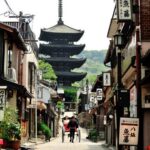
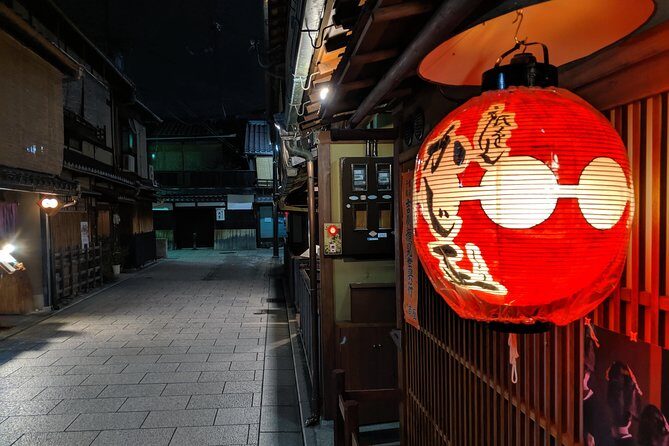
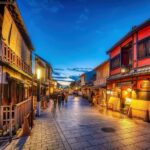
Kyoto after dark can feel like a stage set—especially in Gion. The streets narrow, the walls stay close, and the lantern light changes the whole mood. That matters, because the geisha districts weren’t built for daytime sightseeing. They’re places with routines, etiquette, and quiet rules.
This tour leans into that reality. Instead of a long lecture or a rushed highlight hunt, you get short stops with explanations that help you understand what’s going on behind the facades. You’ll walk through traditional lanes, then pause at specific points where the sights make more sense when you know the context.
For value, the math is simple. At about $33 per person for roughly two hours, you’re paying for a guide who can translate culture into something you can see with your own eyes. Add that the group stays small, and you’re less likely to feel like you’re just tagging along.
You can also read our reviews of more walking tours in Kyoto
Starting fast at the Tsuruha Drug near Yasaka Shrine
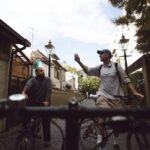
Meeting is designed to be simple. You start at Tsuruha Drug Yasaka Shrine Store, with the full address listed at 543番地 Gionmachi Minamigawa, Higashiyama Ward, Kyoto, 605-0074, Japan. It’s also described as an easy-to-find area near Miyagawasuji (the kind of landmark-based meetup that helps if you’re navigating by convenience stores).
This kind of meetup matters in Kyoto. When you’re finding Gion at night, you want less stress and more walking time. The tour also ends back at the meeting point, so you don’t have to worry about your return plan.
You’ll receive confirmation at booking, and you’ll use a mobile ticket. That’s one less thing to manage after a busy day of temples and trains.
Stop 1: Miyagawacho Kaburenjo and the geisha quarters vibe
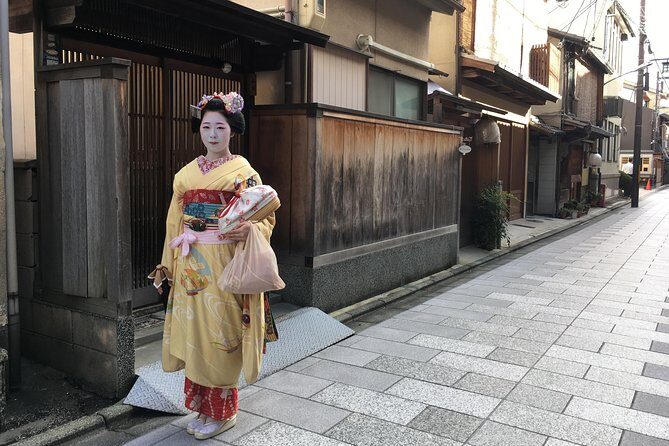
Your first named stop is Miyagawacho Kaburenjo, with a listed time of 30 minutes. The emphasis here is on geisha quarters and the secret lives of Kyoto’s masters of the arts—how they train, how the culture works, and why this world looks the way it does from the street.
What I like about starting here is that it sets your eyes. Before you reach the more famous lantern-lit shrines and viewpoints, you learn to read the neighborhood. You start noticing things that don’t scream tourist-billboard, like the rhythms of the lanes, the way buildings sit behind walls, and the difference between what you see from outside versus how the community functions.
Also, this stop lists admission ticket free, so you’re not waiting for timed entry fees to add to your schedule.
Tip for your camera: if you take photos, keep it respectful and quick. In a residential-feeling district, manners matter more than gear.
The Zen Buddhism temple pause: a calmer reset
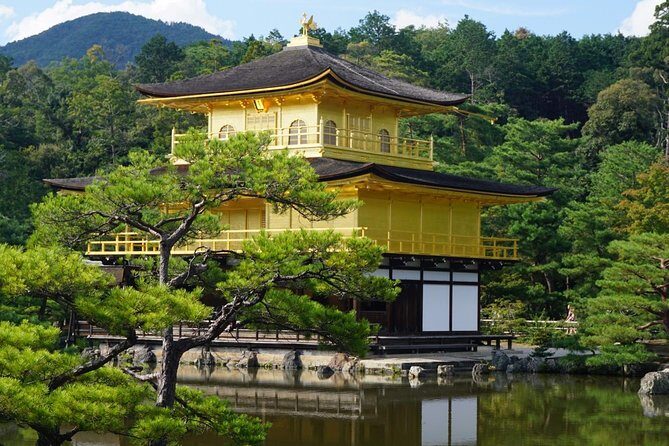
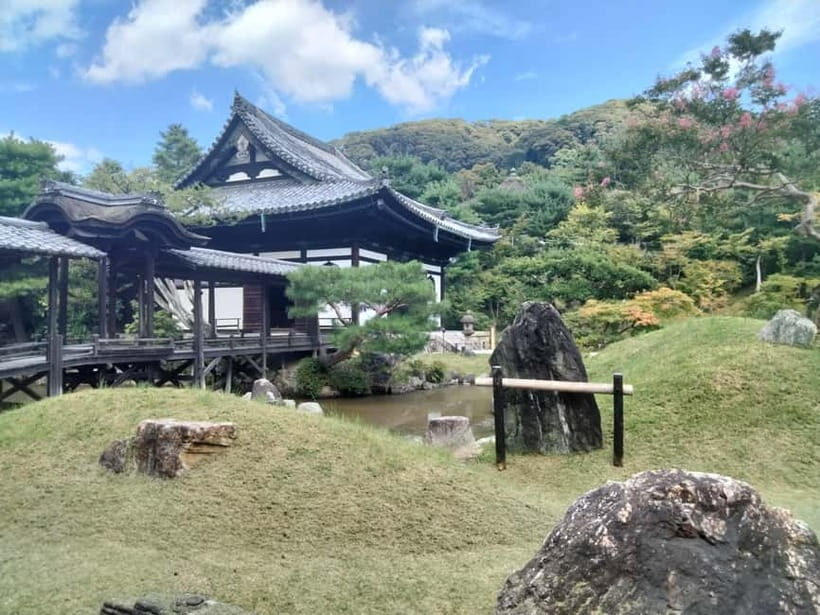
After the geisha-quarter walk, the itinerary includes a temple stop: you walk through the grounds of a beautiful temple and get a brief introduction to Zen Buddhism. The exact temple name isn’t provided in the information you have, but the goal is clear—slow the pace for a moment and give you a cultural lens that pairs well with what you’ll learn next about Shinto at Yasaka Shrine.
This is a smart balance. Without it, a geisha-focused night could feel like nonstop theater. With the Zen stop, you get contrast: the calm of temple grounds, then later the energy of shrine lanterns.
Because the time at this temple portion is listed as a separate stop without a detailed duration in the info you provided, treat it as a short, guided pause. Plan to keep your schedule flexible and follow the group’s pace.
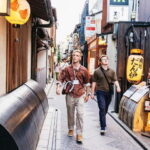
Stop 2: Yasakanoto at nightfall for those photo-worthy views
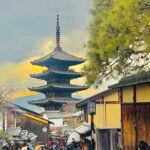
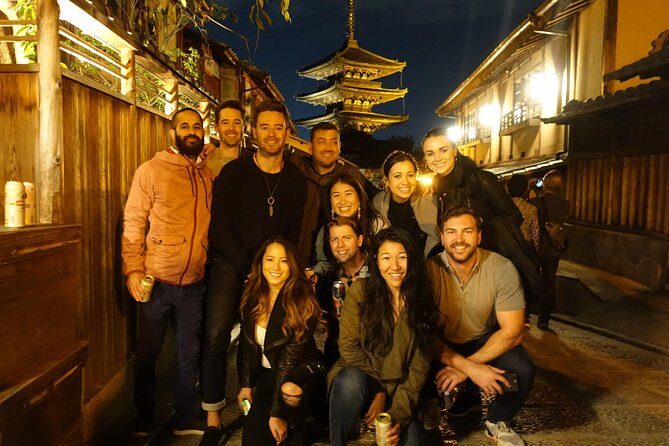
Next comes Yasakanoto, timed at 15 minutes and described as one of the most remarkable views in Kyoto—magical at nightfall. The purpose is both practical and emotional: you get a photo moment you’ll actually remember, and you learn what’s around you while you’re standing there.
In Kyoto, viewpoints can be crowded or confusing because the lines of sight change fast. A guided stop like this is helpful because you’re not guessing where to stand or what angle makes sense. You also get a reason for the scene beyond the obvious.
One consideration: 15 minutes is short. If you want multiple shots and you’re traveling with a partner who takes their time, you may have to manage expectations. Still, it’s enough time to capture the moment without turning this into a long detour.
You can also read our reviews of more evening experiences in Kyoto

Stop 3: Yasaka Shrine lantern light and the Shinto basics
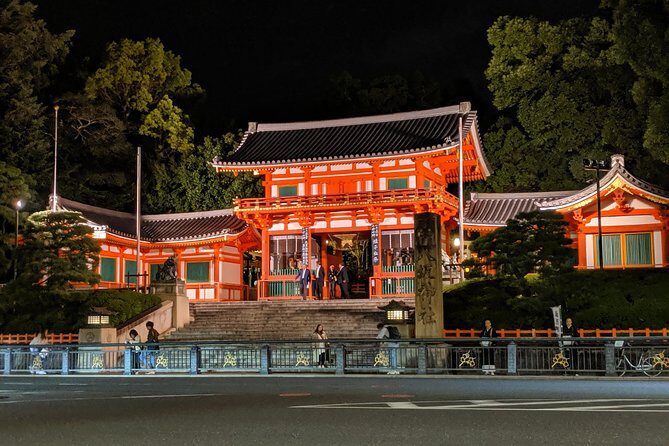
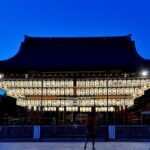
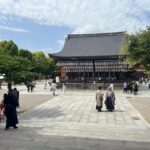
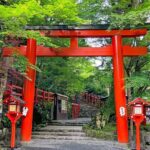
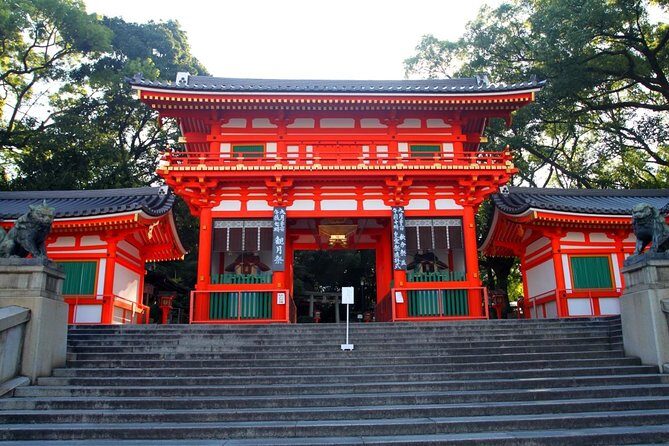
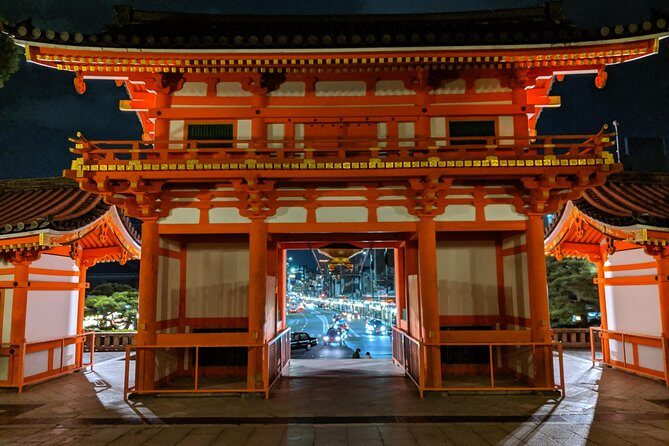
Then you reach Yasaka Shrine, listed for about 20 minutes. This is one of the classic Kyoto night scenes, lit up by lantern light. The guide explains the Shinto faith and gives you a chance to make a prayer for good fortune.
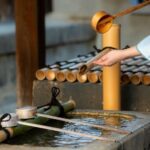
This part is where the tour becomes more than sightseeing. Shrine visits have rituals, and if you don’t know the basics, you can feel awkward even when you’re trying to be respectful. A short guided explanation helps you understand what you’re doing and why.
If you enjoy spiritual spaces, this stop is likely to be a highlight. It’s also a good moment to slow down. After the geisha quarter streets, the shrine atmosphere gives you breathing room and a sense of place.
Photo note: lantern lighting is great for pictures, but it can also make details harder to see. Look up and take a breath first—then shoot.
Stop 4: Gion Shirakawa and the walk past high-end doors
The final named stop is Gion Shirakawa, about 15 minutes. This is described as one of the most beautiful parts of Gion, with a walk past modern clubs and high-end restaurants along the route.
I like ending here because it closes the loop. Early on, you learn how the geisha world functions and how the neighborhood is built for discretion. Then, on the way out, you see how the area blends tradition and contemporary nightlife. It helps you understand why Gion feels like both heritage and living culture.
You’ll be walking through preserved district streets, and that blend is exactly what you don’t get when you only do daytime temple loops.
One practical note: ending on a commercial edge means the light, activity, and crowd level can vary. If you prefer quiet, lean into the guided pace and use the brief stop time to absorb the street details.
Group size, pace, and why the two hours feel right
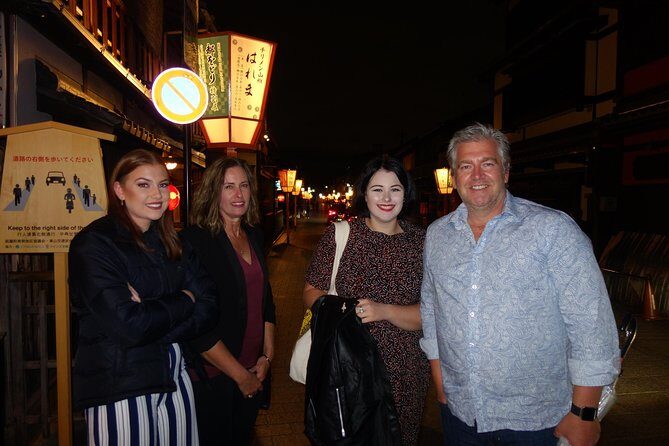
This tour caps at 10 travelers maximum, and it’s labeled suitable for ages 10 through 77. That combination usually signals a thoughtful pace. In Kyoto, “small tour” can still mean a big-feeling group. Here, you’re more likely to be able to hear the guide and ask a question without shouting.
The whole thing is “around two hours.” That duration works because it fits into an evening without turning into a half-day project. You’ll cover enough ground to feel like you explored Gion, but you won’t get stuck out too late when your energy is fading.
It’s also a good length if you’re doing other plans the same night—like dinner near Higashiyama or a temple visit earlier. You can treat this as your Gion evening anchor.
What you’re really paying for: value at $33
At $33.03 per person, you’re not buying tickets to a big attraction. You’re paying for interpretation: a guide who can connect the street layout, the cultural background, and the etiquette of the district into something you can actually use while you walk.
That value gets stronger because several stops list admission ticket free. You’re not layering extra costs at every pause. And with small group size, you’re not paying for headcount—you’re paying for attention.
So the real question isn’t only price. It’s whether you want a translator for the details of Gion. If yes, this is good value.
Guides and the tone of the experience
Your guide experience seems to depend on the individual, but the common thread is the ability to keep the night moving and explain culture clearly.
Names that have come up include Kevin, Karim, Nile, Cha cha, Shanda, Niall, Philippe, and Raphael. If you land with a guide like one of these, you can reasonably expect fluent English and an upbeat approach.
You should also know what to look for in the guide’s style. The best guides on this route do three things: they point out what to watch for, they keep the pacing friendly, and they give you enough background that the district stops feeling like a blur.
Practical tips so the evening stays fun (not stressful)
This walk is set up for nighttime charm, but your comfort drives the quality.
- Wear shoes you can handle on cobblestones and uneven stone streets.
- If rain is in the forecast, be ready for the weather rule. The experience notes good weather is required, and poor weather can lead to a different date or a full refund.
- Bring a charged phone for the photo stops—Yasakanoto is timed and worth planning for.
- Use your manners. This is a working district, and the guide’s explanations are partly about how to behave respectfully.
And since it’s near public transportation, you can line up dinner and transit without scrambling across Kyoto at midnight.
Who should book this Gion night walk?
This tour fits best if you want Gion to make sense.
- You’re curious about geisha and geiko culture and you don’t want to rely only on your own guesswork.
- You want a guided walk with multiple short stops rather than one long museum-style session.
- You like small groups and you prefer asking questions.
- Your travel style is evening-friendly: lanterns, photos, and a relaxed pace.
If you’re coming to Kyoto strictly for major-ticket attractions and timed admissions, you may feel this is more “culture context” than “must-see landmark checklist.” But if you want the streets to teach you something, this is a strong match.
Should you book this tour?
I’d book it if you want Gion at night with guidance that helps you read the district, not just wander it. The small group of 10, the tight two-hour timing, and the blend of geisha-quarter stories with lantern-lit shrine atmosphere make it a smart way to spend an evening in Kyoto.
I’d think twice if you dislike walking, you’re sensitive to uneven stone streets, or you’re traveling only when weather is perfectly guaranteed. Since the tour requires good weather, have a plan B day in mind.
Overall: if you want an enjoyable Gion evening that turns visuals into understanding, this is the kind of tour that earns its place on your Kyoto schedule.
FAQ
How long is the Gion Night Walking Tour?
It’s scheduled for about two hours.
How big is the group?
The tour is limited to a maximum of 10 travelers.
Where do I meet the guide?
The meeting point is Tsuruha Drug Yasaka Shrine Store, at the address listed for 543番地 Gionmachi Minamigawa, Higashiyama Ward, Kyoto.
Is the tour suitable for children and older adults?
Yes. It’s described as suitable for ages 10 through 77.
Do I need to print a ticket?
No. The tour uses a mobile ticket.
Are any admissions included?
Several stops list admission ticket free, including Miyagawacho Kaburenjo and the other listed stops.
Is the tour only for people who can walk easily?
Most travelers can participate, and it’s described as near public transportation.
Is there a chance to see geisha or maiko?
The tour is designed to show you real-life geisha walking along the alleyways, and spotting them can be part of the experience.
What if the weather is bad?
The experience requires good weather. If it’s canceled due to poor weather, you’ll be offered a different date or a full refund.
Are service animals allowed?
Yes, service animals are allowed.