REVIEW · AUDIO TOURS
Fushimi Inari Shrine: Explore the 1,000 Torii Gates on an audio walking tour
Book on Viator →Operated by VoiceMap Audio Tours · Bookable on Viator
Red gates keep you walking for answers. I love how this audio tour ties the shrine visuals to the beliefs and rituals you’ll actually encounter on-site, and I love the easy pace that lets you pause when a view or photo spot catches your eye.
You’ll also get the kind of practical guidance that makes the shrine feel more than a photo stop. The tour points out key landmarks like the fox statues and the Senbon Torii stretch, plus you’ll hear about rituals such as Hand Water and ideas connected to Wabisabi as you move through the grounds.
One heads-up: the experience includes the app and offline content, but you still need your own smartphone and headphones. Also download everything before you reach the shrine, because that’s when connectivity can get annoying.
In This Review
- Key highlights you’ll feel right away
- Why an audio walk works so well at Fushimi Inari
- Cost, time, and what you really get for $5.99
- Finding the start fast: the fox statue by Inari Station
- Stop-by-stop: from significance to Hand Water, then a main hall breather
- The Senbon Torii: how to enjoy the 1,000 gates without feeling rushed
- Okusha shrine and the Root-up Pine Tree: deeper in, quieter in the mind
- Ending at the pond in the Kumataka Shrine area
- Who this audio tour is best for
- Should you book this VoiceMap audio tour?
- FAQ
- How long is the Fushimi Inari audio walk?
- Where does the tour start?
- Where does the tour end?
- Do I need internet during the tour?
- What do I need to bring?
- Is the tour self-guided?
Key highlights you’ll feel right away

- Start near Inari Station: You meet at the entrance area by a fox statue, so you can get going fast.
- Offline audio and maps: Audio, maps, and geodata are available without service once downloaded.
- Ritual context, not just scenery: You’ll learn about Hand Water and what Wabisabi means in this setting.
- The Senbon Torii walk at your speed: A guided route through the 1,000 gates, with time to stop and look.
- Landmarks beyond the main gates: You’ll be pointed to the Okusha shrine and the Root-up Pine Tree.
- A wish moment: You can make a wish at the Heavy-Light Stone during the walk.
Why an audio walk works so well at Fushimi Inari
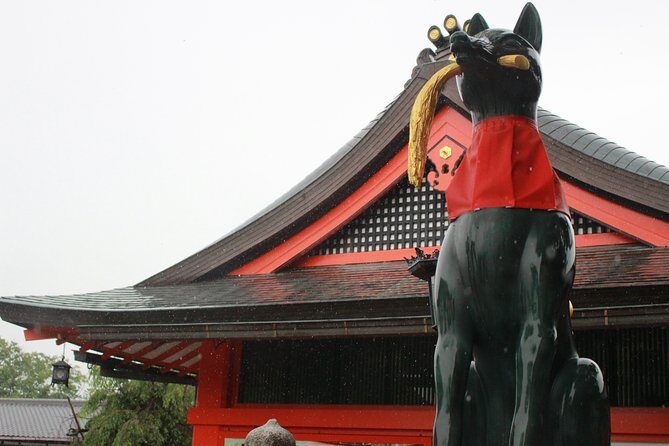
Fushimi Inari Shrine is famous for being visually loud: thousands of red torii gates, tons of fox imagery, and the feeling that the shrine goes on and on. A guided audio tour helps you slow down without feeling trapped in a group schedule. Instead of just moving forward for the next picture, you start noticing patterns—like where the fox statues appear, how the space shifts as you go deeper, and why certain stops matter to people who practice Shinto.
The best part is that the narration isn’t only about what to see. It connects the visuals to beliefs and rituals you’ll come across as you walk. That changes your experience from watch-and-go to understand-while-you-walk. You’ll still enjoy the views (because, yes, the torii gates are spectacular), but you’ll also know what you’re looking at and why people care.
This is also a private experience. Only your group participates, which is great if you prefer your own rhythm—especially at a site that draws heavy crowds most days.
You can also read our reviews of more walking tours in Kyoto



Cost, time, and what you really get for $5.99
At $5.99 per person, this is one of those deals that feels small until you notice what’s included. You get lifetime access to the English audio tour, plus the VoiceMap app for Android and iOS, and crucially, offline access to audio, maps, and geodata.
Time-wise, plan on about 45 minutes to 1 hour. That’s long enough to experience the shrine properly, including the main gate run through the Senbon Torii, but short enough that you can fit it into a busy Kyoto day. If you’re doing Kyoto efficiently, this is a smart add-on: it gives you depth without taking half your day.
What’s not included is also important. You’ll need your own smartphone and headphones, and you’ll want to download the audio and maps before you arrive. One practical tip from the kind of feedback I’ve seen for similar self-guided tours: once you’re at the shrine, you don’t want to be stuck troubleshooting your phone while everyone else streams past.
Finding the start fast: the fox statue by Inari Station
You’ll start at the entrance area opposite Inari Station, right in front of a statue of a fox. This matters more than it sounds. Kyoto can feel like a maze when you’re carrying luggage or coordinating with transit, and this start point helps you get oriented immediately.
Aim to arrive a few minutes early so you can:
- confirm you’re at the fox statue meeting point
- open the VoiceMap app
- make sure the audio is ready to play
Because the tour uses offline maps and geodata, you don’t have to fight for signal while you’re walking. You do, however, want the app ready before you step in—especially if you’re visiting during peak hours.
Stop-by-stop: from significance to Hand Water, then a main hall breather
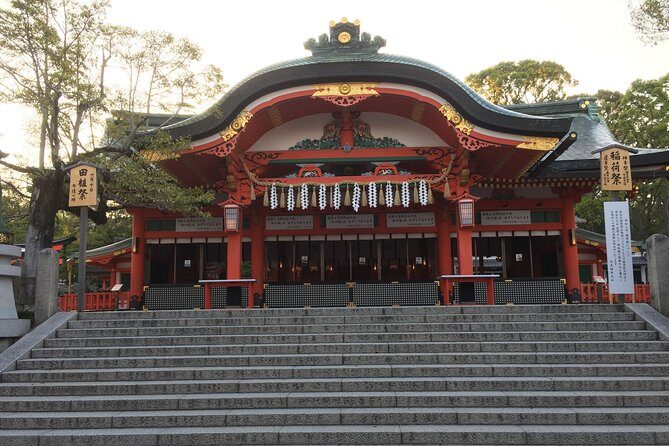
The early part of the route builds a foundation so the shrine doesn’t feel random. The first stops are about setting context—how to interpret what you’re seeing, what certain shrine elements represent, and how the rituals connect to the spaces around you.
Here’s what that feels like as you walk:
Stop 1: Fox statue at the entrance area
You begin right where you’ll keep seeing fox symbolism. It’s an easy start with a clear landmark, and it keeps you from wandering in the wrong direction.
Stop 2: Learning the significance behind the shrine
This part gives you mental hooks. Instead of only looking at torii gates and hoping it makes sense later, you get the basics first—so the walk through the complex later lands with more meaning.
Hand Water ritual segment
You’ll learn about a ritual called Hand Water. Even if you don’t participate, understanding what it is (and why it’s done) helps you read the space around you. You’ll notice people using areas for a purpose, not just treating them like decoration.
Short pause at the main hall
There’s a brief stop at the main hall. The key is that it’s short. You’re not stuck waiting around while the crowd churns—you’re given a moment to orient, observe, and reset before the longer torii-gate stretch.
Along the way, you’ll also hear about ideas connected to Wabisabi. You may or may not connect with it instantly, but hearing it in place helps. It’s one of those concepts that sounds abstract until you experience the calm, lived-in rhythm of the shrine grounds.
The Senbon Torii: how to enjoy the 1,000 gates without feeling rushed
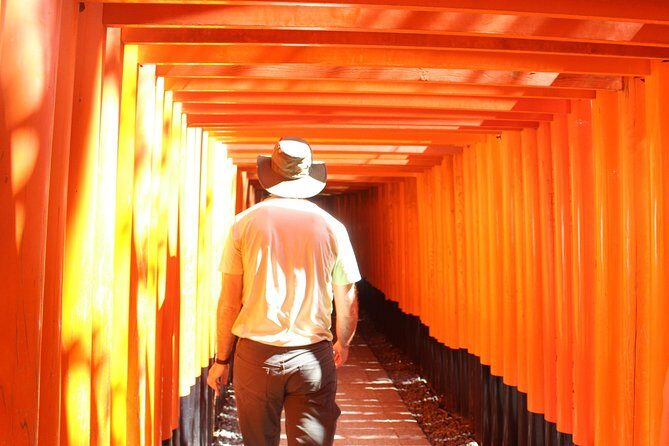
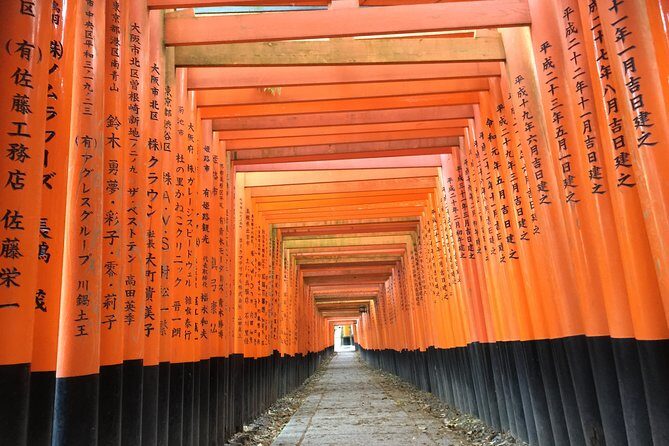
This is the centerpiece: the long walk through the Senbon Torii, the stretch known for the famous line of torii gates. You’ll spend time here, and the narration is designed to help you enjoy the walk at your pace rather than treating it like a sprint.
In practical terms, here’s how to make the most of it:
- Walk slowly enough to notice how the gate lines rhythmically repeat.
- Pause when the space opens up for views—this is where photos look best and where the shrine starts feeling bigger than a single courtyard.
- Don’t feel forced to keep moving just because others are passing you.
Because this is self-guided, you don’t have to “keep up.” You can linger at the moment you like, then resume when you’re ready. That one change alone makes a huge difference at Fushimi Inari, where the flow of people can otherwise feel relentless.
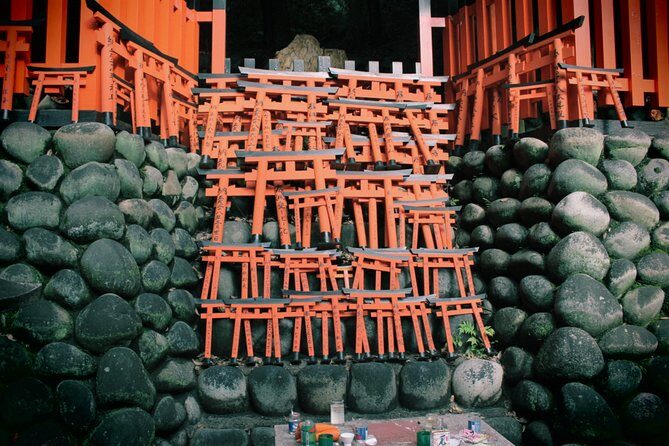
During this long segment, you’ll also be guided toward major landmarks mentioned in the tour experience, including the fox statues dotted across the shrine and the Heavy-Light Stone, where you can make a wish. The wish-stone moment is worth treating like a small checkpoint: stop, focus, and then move on while you still have the calm energy of the torii stretch.
You can also read our reviews of more tours and experiences in Kyoto

Okusha shrine and the Root-up Pine Tree: deeper in, quieter in the mind

After the main gate run, the tour keeps going into areas that feel less like a single landmark and more like a network of sacred spaces. This is where you start to feel the shrine’s scale in a more human way.
You’ll learn about:
- Okusha shrine: a stop that adds meaning to the route, so the walk doesn’t feel like you’re just walking around for more gates
- Root-up Pine Tree: a distinctive landmark where you’ll hear more context and symbolism
The vibe shift is the point. Early on, you’re drawn by the torii lines and the famous red arches. Later, you start appreciating details: the smaller features, the way the grounds guide your attention, and the sense that the shrine is meant to be experienced step-by-step.
If you’re the type who likes to understand what you’re standing near, this portion is for you. If you only want the big photo moment, you can still enjoy it—but the value here is in slowing down enough to notice the smaller, quieter stops the narration points out.
Ending at the pond in the Kumataka Shrine area

The tour ends at Kumataka Shrine, deep in the shrine’s complex, at a lovely pond area. That ending matters because it gives you a natural exhale after the long walk through the Senbon Torii.
You’ll have the option to keep going or take a quick break before returning toward the start. This is where you can:
- check your route back to transit
- grab water if you planned ahead
- take a slower last look around before you leave the shrine grounds
It’s a smooth finish: you’re not abruptly done in the middle of the busiest gate flow. Instead, you get a calmer spot that helps the experience feel complete.
Who this audio tour is best for
This is a great fit if you:
- want to explore at your own pace (without a group rushing you)
- like learning what you’re seeing as you walk
- prefer a simple plan that starts clearly near Inari Station
- plan to do multiple things in Kyoto and need something that fits in about an hour
It’s also a good choice if you already visited Fushimi Inari once and felt you got swept along. Returning with a self-guided narrative can make the shrine feel fresh, because you’ll focus on meaning instead of speed.
If you hate using your phone while walking, or if you’re the type who forgets downloads, this may be more work than you want—because the tour depends on you having the audio ready and functioning.
Should you book this VoiceMap audio tour?
Yes, you should book it if you want the popular Fushimi Inari experience plus the story behind it. For $5.99, you’re buying time efficiency (45 minutes to 1 hour), lifetime access, and offline audio + maps that help you understand the shrine without needing to join a bigger group.
Skip it only if you strongly prefer a purely free-form visit with no guided prompts, or if you don’t want to use your smartphone at all. In that case, you can still enjoy the gates on your own. But if your goal is to leave knowing more than what a quick photo captures, this audio tour is one of the best ways to do it without turning your day into a sprint.
FAQ
How long is the Fushimi Inari audio walk?
It takes about 45 minutes to 1 hour, approximately.
Where does the tour start?
The tour starts opposite Inari Station, in front of a fox statue at the entrance to Fushimi Inari Taisha Shrine.
Where does the tour end?
It ends at Kumataka Shrine, at a pond deep in the shrine’s complex.
Do I need internet during the tour?
No. The tour includes offline access to audio, maps, and geodata in the VoiceMap app.
What do I need to bring?
You’ll need your own smartphone and headphones.
Is the tour self-guided?
Yes. You use the VoiceMap app for an English self-guided audio experience, and only your group participates.