REVIEW · OSAKA COMBINED TOURS
From Kyoto: Japanese Drum Taiko Workshop in Osaka
Book on GetYourGuide →Operated by EE tour · Bookable on GetYourGuide
Ready to make rhythm in Japan? This Taiko workshop takes you from Kyoto into the drum world, with hands-on playing, not just watching, plus a quick culture setup before you hit the skins. I especially like the way you learn basics step-by-step with a pro, and I like the extra ritual of writing wishes on a Hachimaki headband. One note: it’s time-sensitive, and you need to be at the meeting point early so you don’t miss the fixed train connection.
The flow is simple and well paced: you start in Kyoto, ride together to the Osaka area, learn the background, watch a powerful demonstration, then practice and play a short piece as a group. In the studio, the English-speaking guide teams (like Michiko, Mie, and Michie) keep the experience friendly and clear, while the drumming instruction (for example, from Yusuke) focuses on what your body needs to do to make the beat sound right.
Because you’re actually playing, it’s not the best fit if you want a mostly seated show. Also, kids must be at least 7 years old, so plan around that if you’re traveling with younger family members.
In This Review
- Quick hits: what makes this taiko workshop worth your time
- Kyoto to Osaka by train and studio car: the easiest way to start
- Finding the meeting point at JR Kyoto Station (and not accidentally going the wrong way)
- The pre-drumming culture setup: history, calligraphy, and a wish on your headband
- Learning the basic movements: your instructor’s job is to make you sound good
- The finale: playing a short piece together (and feeling the group rhythm click)
- The costume photo moment: Happi and Hachimaki as a real souvenir
- Price and value: does $112 make sense for 150 minutes?
- Who should book this taiko workshop (and who should skip it)
- Timing tips that keep the day stress-free
- Quick FAQ for first-timers
- FAQ
- What language is the taiko workshop taught in?
- Where exactly do we meet in Kyoto?
- How do we get from Kyoto to the studio in Osaka?
- How long does the experience take?
- Are children allowed?
- How big is the group?
- Will I be able to play even if I’ve never tried taiko before?
- What’s included beyond drumming?
- If I’m booking alone or need flexible plans, what should I know?
- Should you book the Kyoto-to-Osaka taiko workshop?
Quick hits: what makes this taiko workshop worth your time
- Small group (up to 15) so you get real attention, not a lecture in the back row
- Calligraphy + Hachimaki: you write wishes before you drum, and it makes the whole thing feel personal
- Pro performance first so you can hear and see the energy you’re working toward
- Learn by doing: basic techniques, then a short, learnable piece with your group
- Traditional photo at the end, including Happi and Hachimaki, for a satisfying keepsake
Kyoto to Osaka by train and studio car: the easiest way to start
This experience is built around one smooth transfer day. You meet in Kyoto at JR Kyoto Station at the Central Ticket Gate on the north side (not the Shinkansen Central Ticket Gate). The landmark tip is useful: Kyoto Tower is in view from there, so you can orient fast instead of wandering the station like a character in a mystery.
From the meeting point, you take a short JR ride to Takatsuki Station, about 12 minutes. Then you hop into the studio’s private car for a quick ride to the Taiko venue. The whole movement between places is short enough that it doesn’t eat your afternoon.
Why this matters: if you’re only in the Osaka area for a limited time, the hardest part is always getting from point A to point B. This format removes that stress. You just show up, follow the guide, and focus on the drumming.
Practical tip: Kyoto Station is big. Walk the north side route and confirm the sign/banner your guide is holding—this is the fastest way to avoid the “where are you?” scramble.
You can also read our reviews of more tours and experiences in Kyoto


Finding the meeting point at JR Kyoto Station (and not accidentally going the wrong way)
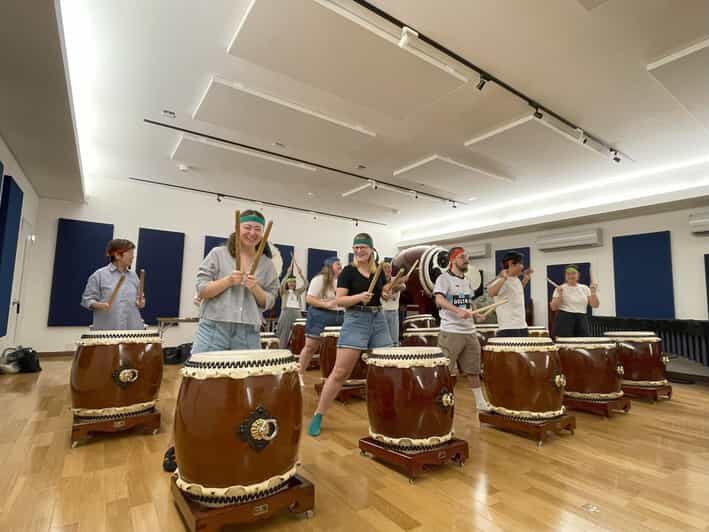
I’d treat the meeting point like the most important station stop of your trip. The instructions are specific, and they’re there for a reason: the train schedule is fixed, and late arrivals can mean you miss the start.
Here’s how to get it right:
- Go to JR Kyoto Station and use the Central Exit side, specifically the Central Ticket Gate you’re supposed to use.
- Do not go to the Shinkansen Central Ticket Gate.
- Your guide will have a banner showing Taiko, Japanese drum.
If you’re arriving by JR: exit through the Central Exit.
If you’re coming by subway: exit through Central 1 ticket gate, then take Exit 6 to the ground level. Walk along the station building so you can spot Kyoto Tower to the right.
If you’re arriving by taxi: show the driver the Japanese line 京都駅の北側のタクシーおりばにつけてください (north side where Kyoto Tower is).
Also plan to arrive 15 minutes early. The schedule is tight, and the experience can’t wait for late arrivals.
The pre-drumming culture setup: history, calligraphy, and a wish on your headband
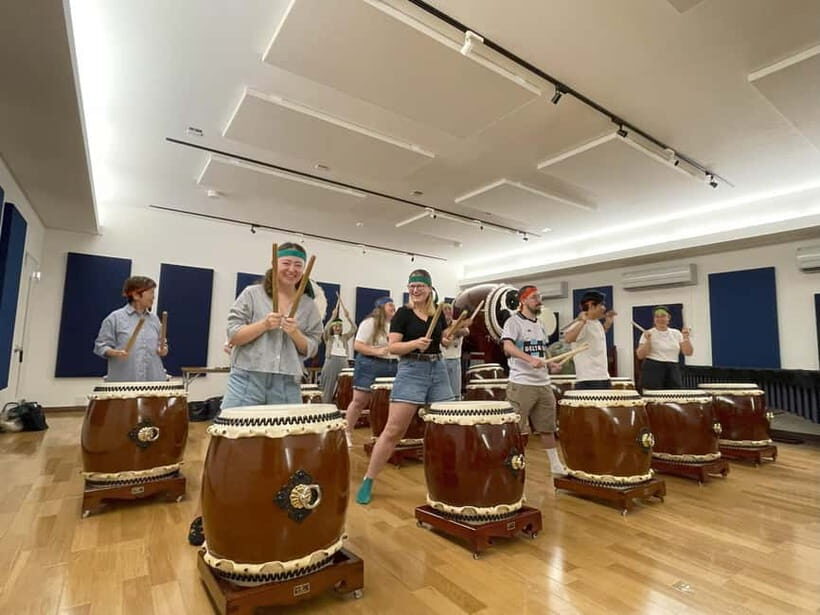
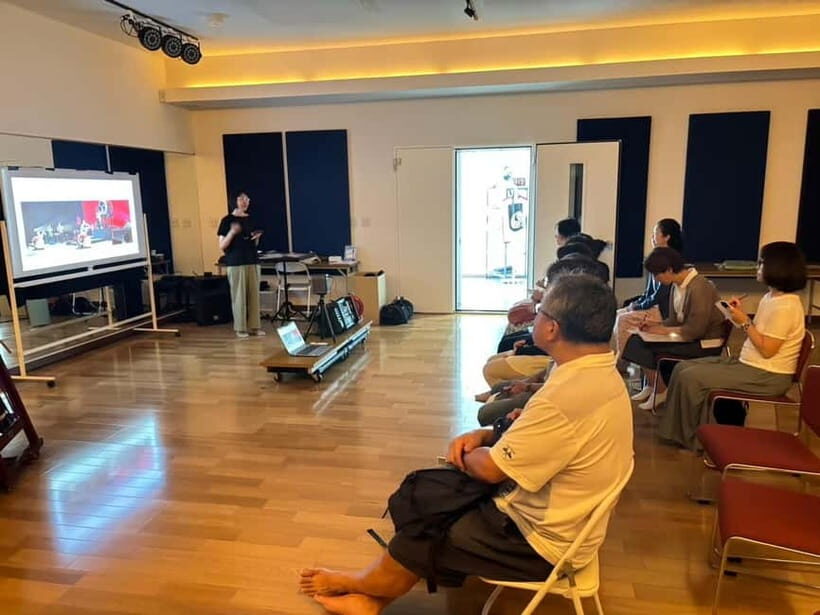
Before you play anything, you get a short culture briefing that explains why Taiko matters. You’ll learn how Taiko fits into Japanese life, not just how to strike a drum. This is a key part of the value. When you understand that the drum has social and cultural roles, the class feels less like a novelty activity and more like learning a living tradition.
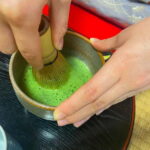
Then comes a small but memorable ritual. You try simple calligraphy, writing your wishes on a Hachimaki—the traditional headband you’ll wear during the session. It’s a playful moment, but it also helps you shift into the mindset of practice. You’re not just holding props for photos; you’re putting a personal intention on something you’ll use right away.
After that, you watch an amazing Taiko demonstration by a professional player. This isn’t background entertainment. It’s your reference point for what “good sound” feels like—power, rhythm control, and that big sound you can only get when technique and force work together.
I like how the class uses this order: culture → ritual → performance → technique. You feel the purpose before you start making noise.
Learning the basic movements: your instructor’s job is to make you sound good
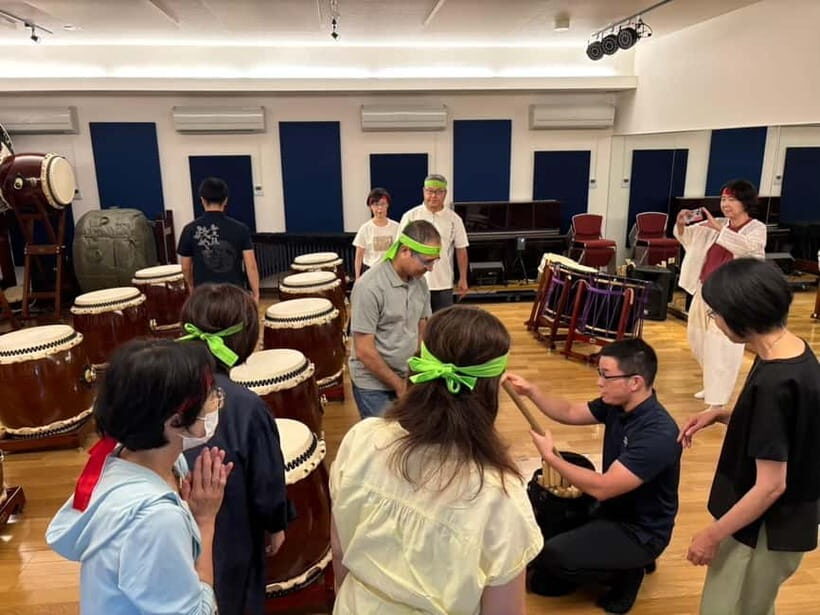
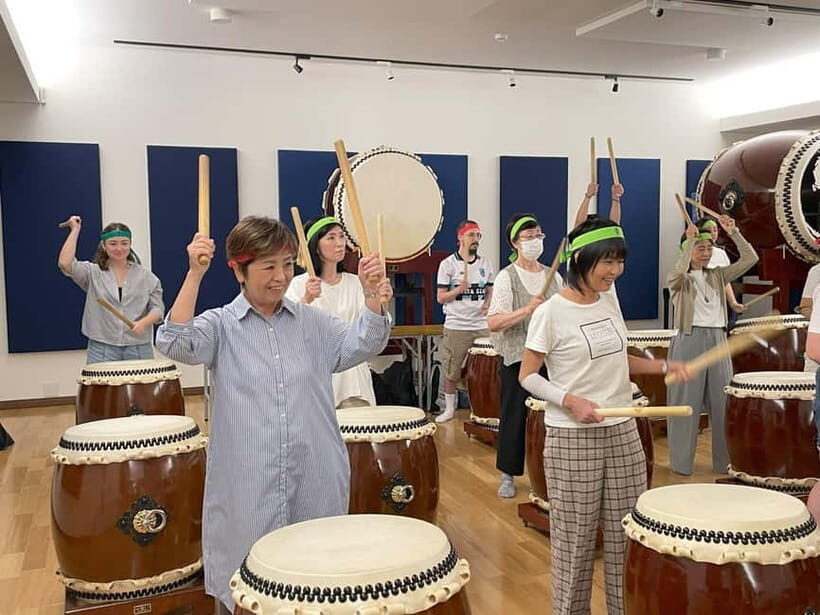
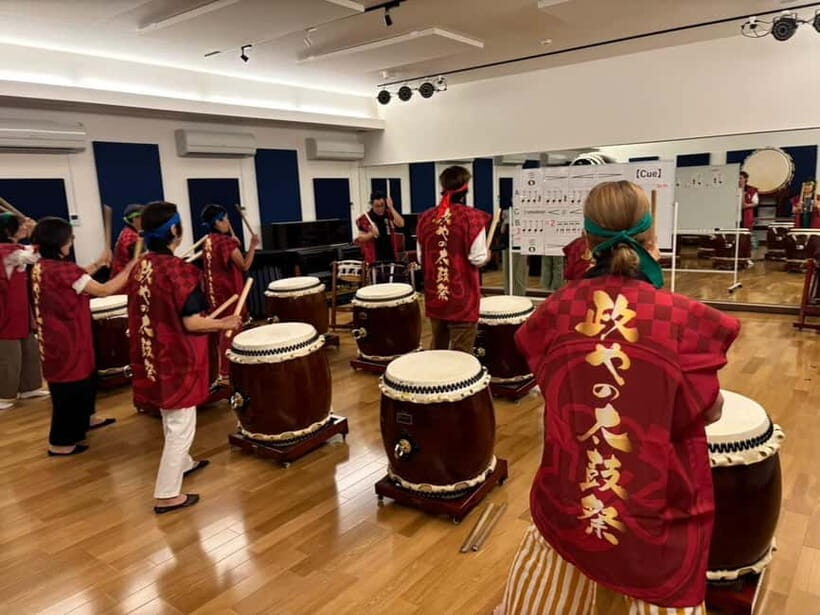
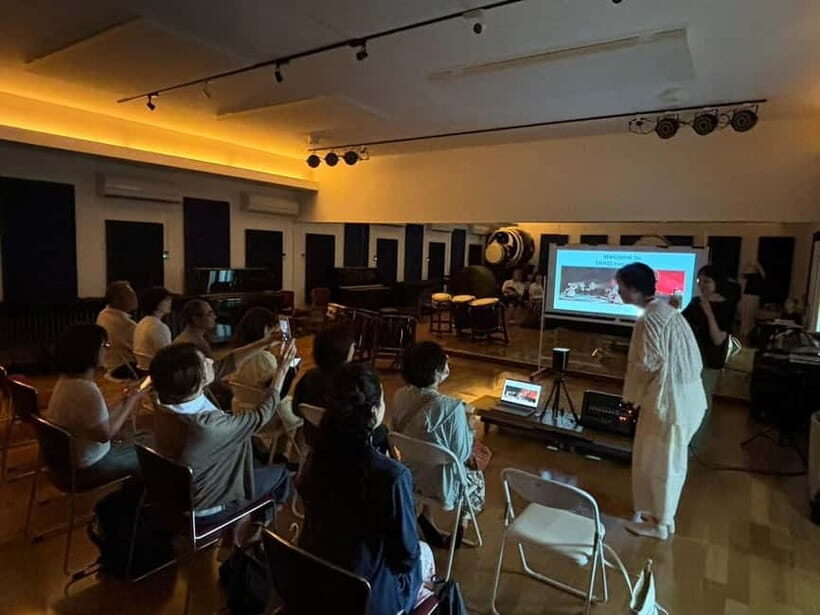
Once the demonstration is done, the friendly instructor takes over and teaches the basics. You’ll learn basic movements and techniques of Taiko drumming, then apply them immediately.
This is where the small group size helps. With a group limited to 15 participants, it’s easier for the instructor to correct hand position, posture, and timing. You’re not stuck copying one perfect student; you get guidance that matches what you’re doing.
You’ll also learn that Taiko isn’t only about hitting hard. You’re working on:
- timing within a short pattern
- controlled strike and volume
- coordination with your body (stance and arm motion)
From what’s consistently seen in the session structure, the class spends most of the time practicing a short piece in steps. That’s the smartest way to make beginners feel capable. It’s also why the experience ends up fun even if you’ve never touched a drum.
The finale: playing a short piece together (and feeling the group rhythm click)
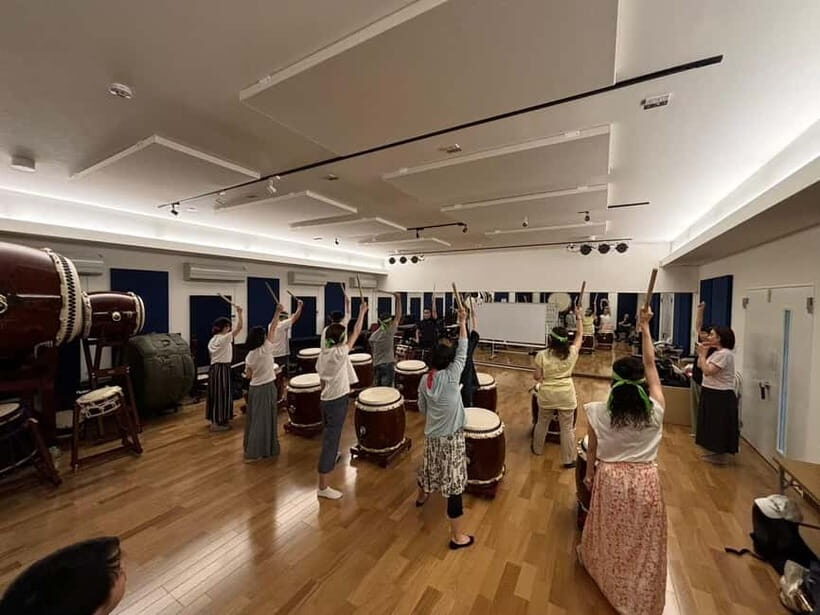
The “aha” moment comes at the end when you play as a group. After practicing the parts, you put it together into a simple piece of music with fellow participants.
This part matters more than it sounds. Taiko is loud, physical, and communal by nature. When everyone starts landing their beats together, the experience clicks into something that feels like real performance. You’re no longer doing exercises—you’re part of a rhythm team.
And yes, the learned piece is designed to be doable. The teaching approach is built for people without drum experience, but it still pushes you enough to feel proud of the result.
You’ll likely notice that your confidence grows fast. Early practice feels awkward. Then the class becomes less about mechanics and more about timing and energy.




The costume photo moment: Happi and Hachimaki as a real souvenir
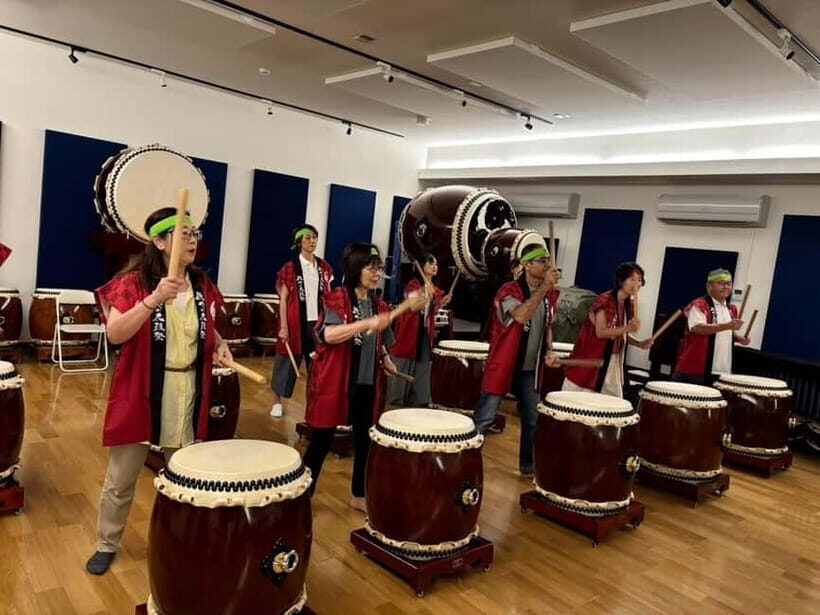
At the end, you get a commemorative photo while wearing traditional costume items—specifically a Happi and Hachimaki. The photo is brief, but it’s a strong closing note because it ties together everything you did: your wish writing, your headband, and the performance energy.
This isn’t a costume that has nothing to do with the workshop. You’ve already used the Hachimaki during the session, so it feels earned, not random.
If you’re the type who likes to look back on travel days with proof beyond memory, this ending helps. It’s also a nice “reset” moment after you play, when you can stand still and enjoy what you just did.
Price and value: does $112 make sense for 150 minutes?
At $112 per person for about 150 minutes, this sits in the mid-range for Japan hands-on cultural experiences. It’s not cheap, but it’s not inflated either for what you actually get.
Here’s the value equation I see:
- You’re paying for a guided experience in English, not a self-guided museum style visit
- You get pro performance time plus instructor teaching time
- You get hands-on practice where you play a piece, not just try one beat
- The price also covers key logistics: JR one-way ticket to Takatsuki and the car to/from the studio
So, the money isn’t only paying for the drum class. It’s also paying for the “Kyoto to Osaka without stress” structure. That matters if you’d otherwise spend time figuring out transit, timing, and finding the correct studio.
If you hate paying for transfers, you might feel the cost more. But if you like the convenience of being met, guided, and moved, it feels fair.
Who should book this taiko workshop (and who should skip it)
This workshop is a great fit if you want:
- an interactive Japanese cultural experience
- a session where everyone plays
- a mix of history + hands-on skill
- a small group day that’s not too long
It’s also solid for families with kids 7 and up, based on how the class is paced for first-timers.
You might choose something else if:
- you’re looking for a mostly passive performance
- you’re traveling with very young children (under 7 can’t participate)
- you can’t reliably arrive early for the train connection
The time commitment is real. Even though the “activity duration” is 150 minutes, plan on a total outing of about 2.5–3 hours including travel. Don’t schedule a tight next appointment right afterward.
Timing tips that keep the day stress-free
Here’s what I’d do to make the day go smoothly:
- Arrive at JR Kyoto Station north side early enough to find the meeting point without rushing.
- Keep a little buffer for Kyoto Station navigation.
- After the class, give yourself time to decompress and grab food, because the experience ends with the photo and you won’t want to sprint away.
You should also know what not to plan: returning early isn’t recommended, since the whole schedule is built around the group’s flow.
And remember: the experience can’t wait for latecomers, and you can’t join after the start time.
Quick FAQ for first-timers
FAQ
What language is the taiko workshop taught in?
The guide/instruction is offered in English, so you’ll be able to follow the history talk and the drumming teaching without needing Japanese.
Where exactly do we meet in Kyoto?
Meet at the Central Ticket Gate of JR Kyoto Station on the north side (near Kyoto Tower). Make sure it’s the Central Gate, not the Shinkansen Central Ticket Gate.
How do we get from Kyoto to the studio in Osaka?
You take the included JR one-way ticket to Takatsuki Station, then you ride in the studio’s private car to and from the venue.
How long does the experience take?
The experience runs about 150 minutes, and that totals roughly 2.5–3 hours including the train and car travel.
Are children allowed?
Children under 7 can’t participate.
How big is the group?
It’s limited to a small group of up to 15 participants.
Will I be able to play even if I’ve never tried taiko before?
Yes. You’ll learn basic movements and techniques, then you’ll play a simple piece together as part of the group.
What’s included beyond drumming?
You’ll get a short Taiko history explanation, do simple calligraphy to write wishes on a Hachimaki, watch a professional Taiko demonstration, and finish with a commemorative photo in traditional costume including Happi and Hachimaki.
If I’m booking alone or need flexible plans, what should I know?
Some days don’t allow single-participant bookings, so you may need to book/pay for two participants. Also, booking can be done with reserve now, pay later, and cancellation is possible up to 24 hours in advance for a full refund.
Should you book the Kyoto-to-Osaka taiko workshop?
If you want a memorable, physical “I did something in Japan” moment, this is an excellent choice. The best part is the mix: you get the culture context, then you get coached into being able to play, ending with a photo that actually reflects what you learned.
Book it if you:
- like hands-on classes
- want a small-group format with clear English guidance
- can show up early and follow the fixed schedule
Skip it if you’re seeking a slow, flexible day with no transport timing pressure. But if you’re ready to make noise the right way, this one is an easy yes.