REVIEW · KYOTO CRAFT WORKSHOPS
【OKADA】Kyoto Japanese calligraphy experience (shodo)
Book on Viator →Operated by OKADA Japan Culture Center · Bookable on Viator
Brush, ink, and calm in Kyoto. This beginner-friendly Japanese calligraphy (shodo) workshop gives you English support while you learn a little about kanji, then write your own piece on a take-home shikishi board in about an hour. What I like most is how the experience feels friendly and achievable even if you’ve never held a brush before.
One thing to plan around: a kimono is not included, so if you want the full look, rental costs extra. You can still keep it simple and focus on the calligraphy, plus optional fan writing adds extra fees.
In This Review
- Key points before you go
- A One-Hour Shodo Session in Kyoto’s Higashiyama Area
- English-Friendly Teaching: What You Learn Before You Write
- Fude Brush and Sumi Ink: Getting Your Hand to Behave
- Your Take-Home Shikishi Board: Make One Piece That Feels Real
- Optional Fan Calligraphy: Sensu or Uchiwa for Gifts
- Who This Experience Fits Best in Your Kyoto Plans
- Price and Value at About $45: What You Get for the Money
- Quick Practical Tips So Your Session Goes Smoothly
- Should You Book OKADA’s Kyoto Calligraphy Experience?
- FAQ
- Is the calligraphy instruction available in English?
- How long does the Japanese calligraphy experience last?
- Do I need any prior calligraphy experience?
- What materials are included in the workshop?
- Do I need to buy a shikishi board separately?
- Is a kimono included?
- Can I write on a fan, and what does it cost?
- Is transportation to and from the venue included?
- How large is the group?
- What is the cancellation policy?
Key points before you go
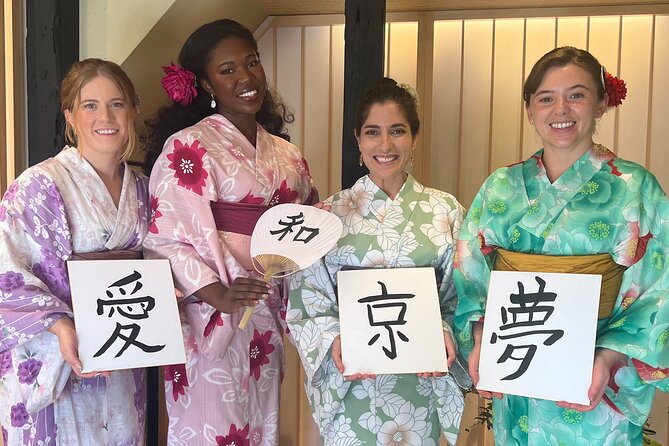
- Small group size (up to 8) means you’re not lost in the back row.
- English-speaking instructor helps you understand posture, strokes, and meaning without a guessing game.
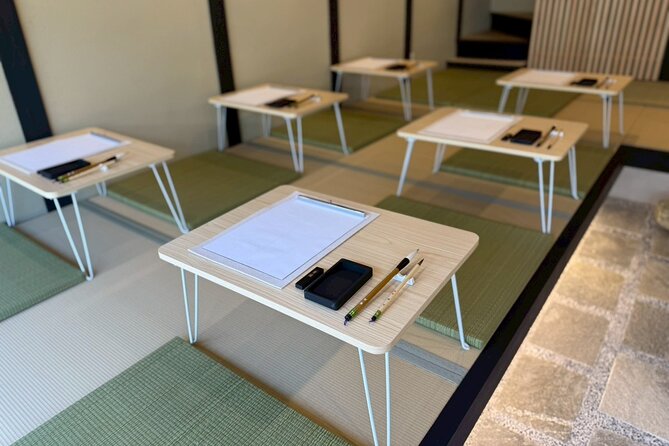
- Hands-on tools included: fude brush, sumi ink, and practice sheets.
- Take-home shikishi board gives you a real souvenir, not just photos.
- Optional writing on sensu (+¥1,500) or uchiwa (+¥800) lets you create an extra gift.
- No prior experience needed, so families and first-timers are welcome.
A One-Hour Shodo Session in Kyoto’s Higashiyama Area
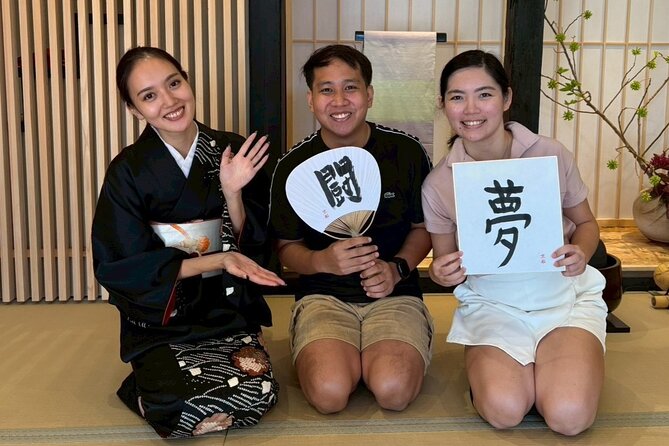
OKADA’s calligraphy experience is based in Kyoto’s Higashiyama Ward, with the meeting point at 102 Tatsumichō, Higashiyama Ward, Kyoto (605-0855). The session runs for about 1 hour, and it ends right back where you started, which makes it easy to plug into your day without a complicated schedule.
The venue is also conveniently near public transportation, so you won’t burn time stitching together buses and trains just to hold a brush. And you get a mobile ticket, which is handy when you’re already juggling maps, cash, and last-minute snack stops.
If you’re doing Kyoto in “temple days,” this class offers a nice switch-up. You still get culture, but it’s hands-on and calm, not another line with a million steps.
You can also read our reviews of more tours and experiences in Kyoto.



English-Friendly Teaching: What You Learn Before You Write
Japanese calligraphy looks simple from a distance. Up close, it’s all about control—where the brush starts, how pressure changes, and how strokes connect.
The class starts by walking you through the basics in a beginner-friendly way, including the history and meaning of kanji characters. That matters more than you might think. When you understand what the character represents, you stop treating it like a decoration and start treating it like writing with intention.
You’ll also get guidance on:
- proper posture
- brush technique
- stroke order
That trio is the difference between a picture of calligraphy and actual calligraphy. For first-timers, stroke order especially helps you avoid the common frustration of thinking, I’m sure I’m doing it wrong, but I don’t know how.
And because the instructor works in English, you’re not stuck translating everything in your head. This is the kind of lesson where you can relax and follow along step-by-step.
Fude Brush and Sumi Ink: Getting Your Hand to Behave
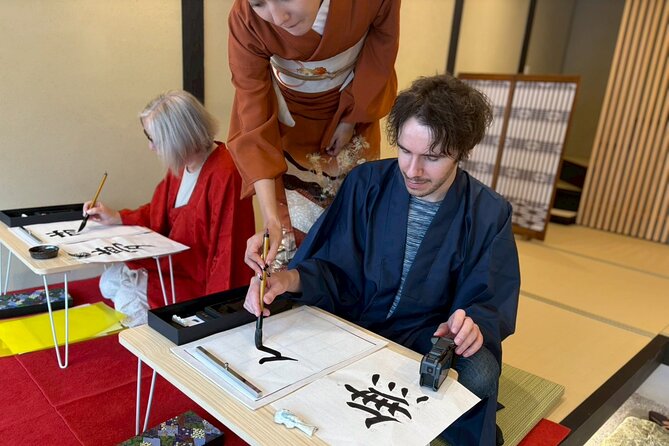
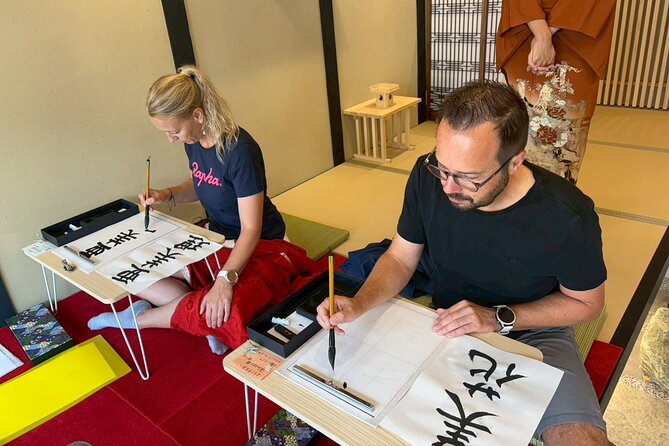
This is the practical part: you learn by doing. You’ll practice with a traditional fude brush and sumi ink, plus practice sheets before you write your final piece.
What surprised me in a good shodo class is how much the tools control the result. The fude brush isn’t like a pen. It’s softer, it responds to pressure, and it encourages you to slow down. When you rush, the strokes get heavier or messier. When you go steady, the line looks intentional.
The instructor guidance is key here. Even a small correction—like adjusting how you hold the brush or how you angle your wrist—can make your letters look dramatically cleaner. With small groups, it’s easier to get that kind of fix quickly instead of waiting your turn.
Also, don’t worry if your first try looks uneven. In calligraphy, uneven is part of the learning curve. The goal is not to instantly make museum-level work; it’s to understand why each stroke matters.
Your Take-Home Shikishi Board: Make One Piece That Feels Real
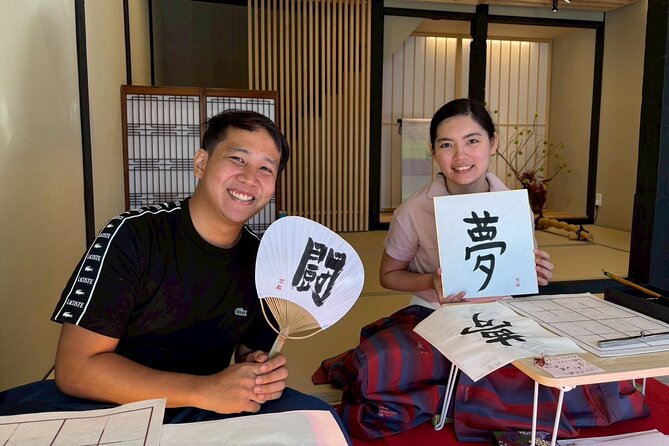
The highlight is your own original calligraphy on a shikishi board. This is the take-home item, and it’s one of the best reasons to book this type of workshop.
A shikishi board is designed for mounting and display, so your result isn’t trapped in your camera roll. It becomes a physical reminder of the day you sat down in Kyoto and made something by hand.
In the class, you’ll move from practice sheets to creating your piece. You’ll be guided through stroke order and technique, then you write your own character or characters as instructed by the teacher. The process is structured, but it still leaves space for your own style within the rules.
If you’re traveling with kids, this take-home piece is often the moment that turns a workshop from fun into meaningful. And if you’re an adult, it’s a souvenir that feels earned, not mass-produced.
Optional Fan Calligraphy: Sensu or Uchiwa for Gifts
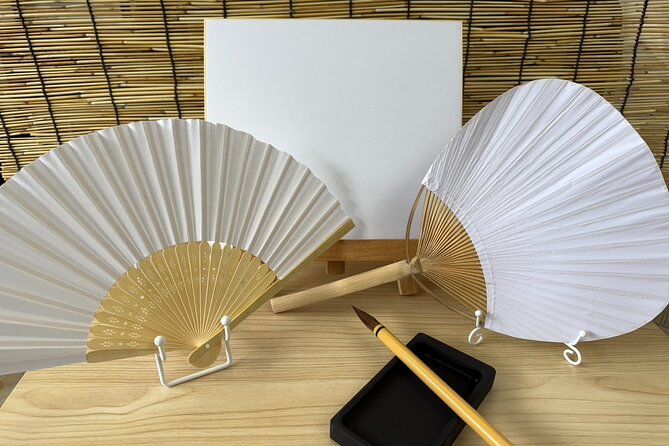
If you want an extra souvenir—or a gift—there are two add-ons:
- Sensu (folding fan) writing: +¥1,500
- Uchiwa (flat fan) writing: +¥800
This option is a smart move if you love Kyoto crafts and want a second object. Fans are also easier to wrap and bring home than a larger framed artwork.
But choose based on your travel style. If you’re tight on space or you’re carrying a lot already, the uchiwa is cheaper and easier to manage. If you like the idea of something more traditional with moving parts, go for the sensu. Either way, you’ll still be writing calligraphy, so it’s not like you’re “paying extra” for a random craft.





Who This Experience Fits Best in Your Kyoto Plans
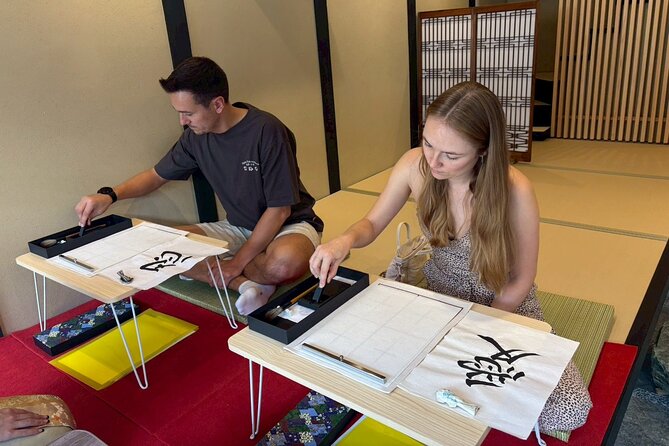
This is the kind of activity that works across age ranges. It’s beginner-friendly, and the format stays simple enough for kids while still giving adults something real to learn.
It’s especially good for:
- Families with children who need a calm, hands-on activity
- First-time visitors who want one direct cultural experience without complicated preparation
- Solo travelers who’d like a short class with direct attention
- Anyone who prefers making something over just watching
The small group size (up to 8) also helps. You get more personal feedback and you’re less likely to feel ignored.
If you’re expecting a full-day art retreat, this isn’t that. It’s focused and short. Think of it as a high-quality cultural hit: you leave with a piece of calligraphy and a clearer sense of how the strokes work.
Price and Value at About $45: What You Get for the Money
At $45.81 per person, this sits in the “single-session cultural workshop” category. Here’s where the value comes from.
You get:
- an English-speaking instructor
- all calligraphy materials (brush, ink, paper)
- practice sheets
- one shikishi board to keep
That means you’re not paying extra for supplies or dealing with the hassle of buying paper, brushes, and ink just to try it once. You also get a structured lesson rather than a vague DIY station.
The only likely extra costs are optional:
- fan writing (sensu or uchiwa)
- kimono rental if you want it
- getting yourself to the venue (transport isn’t included)
For many visitors, the take-home board is enough to justify the price by itself. It’s a souvenir that has your handwriting and your learning process inside it.
Quick Practical Tips So Your Session Goes Smoothly
I’ll keep these practical and simple:
- Bring a calm mindset. Calligraphy rewards slow attention.
- If you’re considering the kimono, budget extra in advance since it’s not included.
- If you want the option of extra fan writing, decide before you start so you can move efficiently during the lesson window.
- Wear clothing that lets you sit comfortably and move your arms without fuss. You’ll be using posture and brush technique, so mobility matters more than fashion.
Also, double-check the meeting address in Higashiyama Ward before you head out. In Kyoto, it’s common to get turned around by tiny side streets, and a short workshop doesn’t leave much time for wandering.
Should You Book OKADA’s Kyoto Calligraphy Experience?
Yes, if you want a short, friendly, beginner-proof shodo class with real materials and a take-home artwork. The combination of English instruction, small group size, and guided technique makes it a strong value for the price.
Book it especially if:
- you’re traveling with kids and want something that keeps attention
- you’d rather make something than just walk past art
- you want a Kyoto souvenir with actual meaning
Skip it if:
- you’re only interested in wearing a kimono and want that to be the main event (kimono costs extra)
- you’re looking for a long, multi-day art program
If you want one hour in Kyoto that’s creative, calm, and genuinely memorable, this is a solid choice.
FAQ
Is the calligraphy instruction available in English?
Yes. The experience includes an English-speaking instructor, and guidance is provided in English.
How long does the Japanese calligraphy experience last?
It lasts about 1 hour.
Do I need any prior calligraphy experience?
No. The experience is beginner-friendly and requires no prior calligraphy experience.
What materials are included in the workshop?
All calligraphy materials are included, including the brush, ink, and paper, along with practice sheets and one shikishi board to take home.
Do I need to buy a shikishi board separately?
No. You receive one shikishi board included with the experience, and you take it home.
Is a kimono included?
No. Kimono rental is not included in the plan and is listed as an additional cost (¥5000~).
Can I write on a fan, and what does it cost?
Yes. You can add fan writing: sensu folding fan (+¥1,500) or uchiwa flat fan (+¥800).
Is transportation to and from the venue included?
No. Public transportation to and from the venue is not included.
How large is the group?
The maximum group size is 8 travelers.
What is the cancellation policy?
You can cancel for free up to 24 hours in advance of the experience start time for a full refund. If you cancel less than 24 hours before, the amount paid is not refunded.