REVIEW · GEISHA & MAIKO TOURS
Maiko Dance and Tea Ceremony on a Noh Stage in Kyoto
Book on GetYourGuide →Operated by 株式会社くろちく · Bookable on GetYourGuide
A maiko dance on a Noh stage sounds unreal. It also turns out to be a calm, elegant way to understand Japanese culture up close in Kyoto.
You’ll watch a maiko perform graceful dance movements in an authentic Noh theater setting. I also love that the experience pairs the performance with a tea ceremony where matcha and seasonal sweets land right at the center of the moment.
One thing to consider: this is a shoe-off, indoor experience with seated viewing, so it’s not the kind of activity where you’ll be roaming around or staying super casual about comfort.
In This Review
- Key things to know before you go
- Maiko Dance on a Noh Stage: What Makes This Kyoto Setting Special
- The Tea Ceremony: Matcha, Sweets, and a Different Pace of Attention
- Your Time With the Maiko: Photos and a Short Human Moment
- What the Handkerchief and “Small Extras” Really Do
- The Practical Flow: Timing, Shoes, and Where to Be When
- Language Support: English Explanations Without Killing the Mood
- Price and Value: Is $141 Worth It in Kyoto?
- Who This Experience Fits Best (And Who Might Want Something Different)
- Quick Tips So Your Visit Feels Smooth
- Should You Book Maiko Dance and a Tea Ceremony on a Noh Stage?
- FAQ
- How long is the Maiko Dance and Tea Ceremony experience?
- Where do I meet, and where should I check in?
- Is there an English-speaking guide?
- Do I need to remove my shoes?
- What should I bring?
- Is transportation included?
- What is the cancellation policy?
- Can I reserve now and pay later?
Key things to know before you go
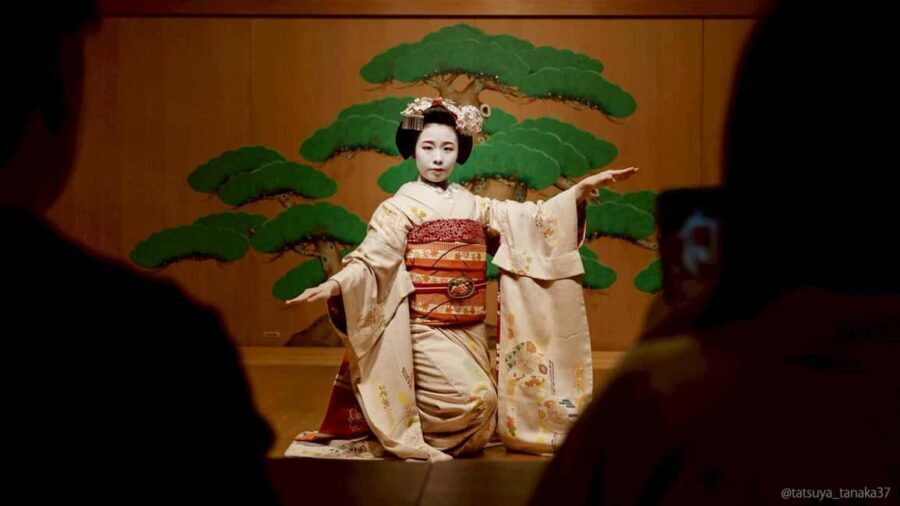
- A real Noh stage in Kyoto: you’re not watching a themed show in a random room.
- Maiko dance plus tea ceremony, both handled with care: art and etiquette in one focused block of time.
- Seasonal sweets with freshly prepared matcha: you’ll taste the hospitality, not just watch the motions.
- English support: a professional interpreter guide helps you follow what’s happening.
- Photo time and a chat with the maiko: the event aims for an intimate feel.
- Socks matter: you’ll participate indoors after removing your shoes, so plan ahead.
Maiko Dance on a Noh Stage: What Makes This Kyoto Setting Special
Kyoto has plenty of cultural performances. This one hits differently because the dance happens on an authentic Noh stage, not a modern prop set. Noh theater has a formal, almost ritual-like presence—quiet, controlled, and precise. That matters because a maiko’s dance isn’t just entertainment. It’s built for a space that understands stillness, gesture, and timing.
I like that the atmosphere is described as dignified and serene. That sets expectations. You’re meant to sit, watch, and take in details without the “tour bus” energy. It’s closer to a lived-in cultural moment than a quick stop-and-go photo op.
You’ll also get that added sense of place: the experience is in Honshu, Japan, with the specific setting in Kyoto. If you’ve done temples and shrines already, this gives you a different angle—performance culture, not just architecture.
You can also read our reviews of more tours and experiences in Kyoto.



The Tea Ceremony: Matcha, Sweets, and a Different Pace of Attention
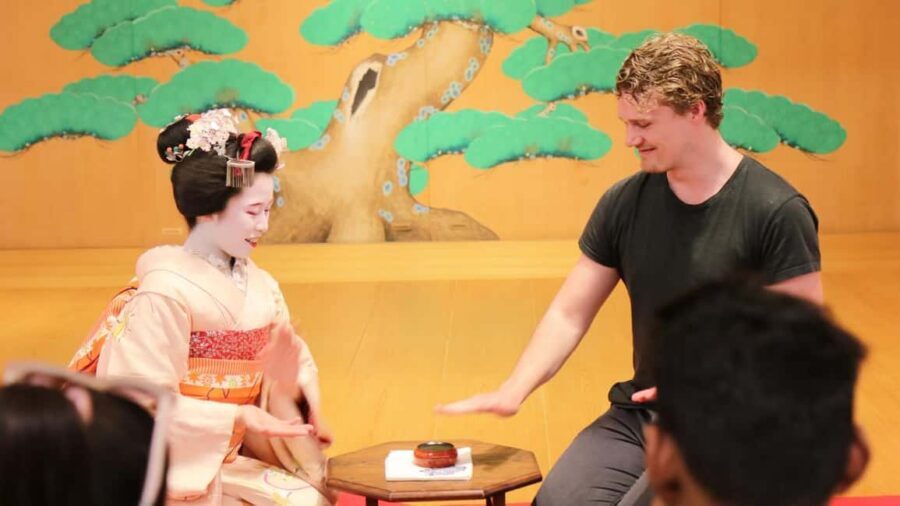
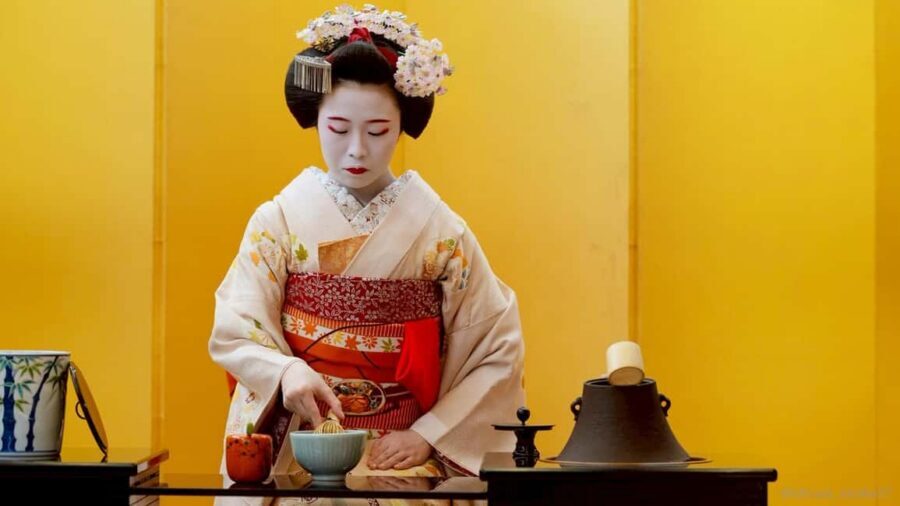
Then comes the tea ceremony, and this is where the experience shifts from stage-light grace to tabletop-level etiquette. You’ll get matcha and seasonal Japanese sweets served during the ceremony, with the maiko preparing matcha with refined precision.
Here’s what I think is valuable for you: tea ceremony isn’t about drinking a beverage. It’s about watching a sequence—how the action unfolds, how the host moves, and how guests respond. Even if you don’t know every step, the structure gives you something useful: a calm rhythm to experience Japanese hospitality in a controlled setting.
The sweets do important work too. Seasonal sweets in Japan aren’t random desserts. They’re meant to match the time of year and the feel of the tea moment. In practice, that means you’re tasting the season as much as you’re tasting sugar.
If you’re the type of traveler who likes your culture with a little practicality—something you can actually experience with your senses—this tea component is the right fit. You’ll use sight, smell, taste, and even the sound of the room as part of the experience.
Your Time With the Maiko: Photos and a Short Human Moment
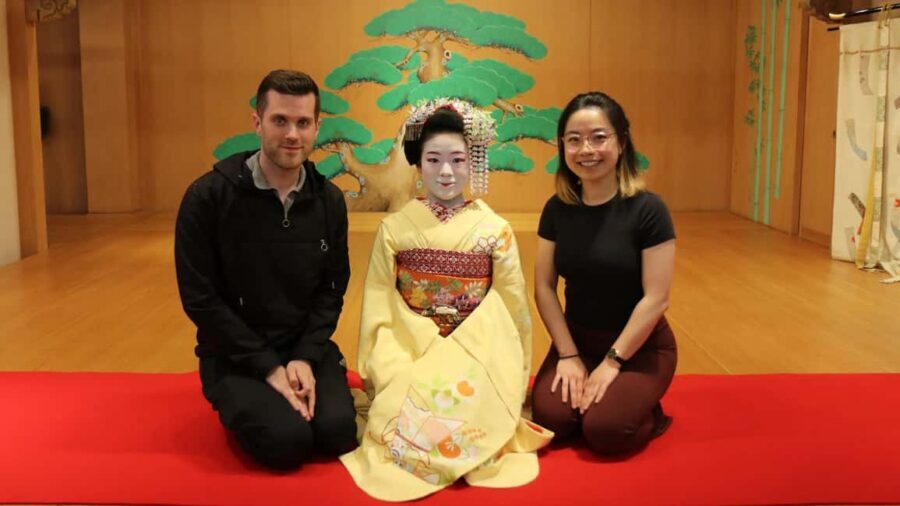
The highlights mention that you can take photos and chat with the maiko in an intimate setting. That’s a big deal for value, because so many cultural shows keep the performer at a distance.
You’ll likely feel the difference immediately. A performance is one thing. A brief, personal interaction is another. It’s also where you can ask follow-up questions through the English-speaking support, instead of wondering afterward what you just watched.
One practical note: because this is indoors and shoe-off, you’ll want to be comfortable enough to sit still, listen, and focus when it’s time for questions or photos. Bring your best “I’m here to pay attention” energy.
What the Handkerchief and “Small Extras” Really Do
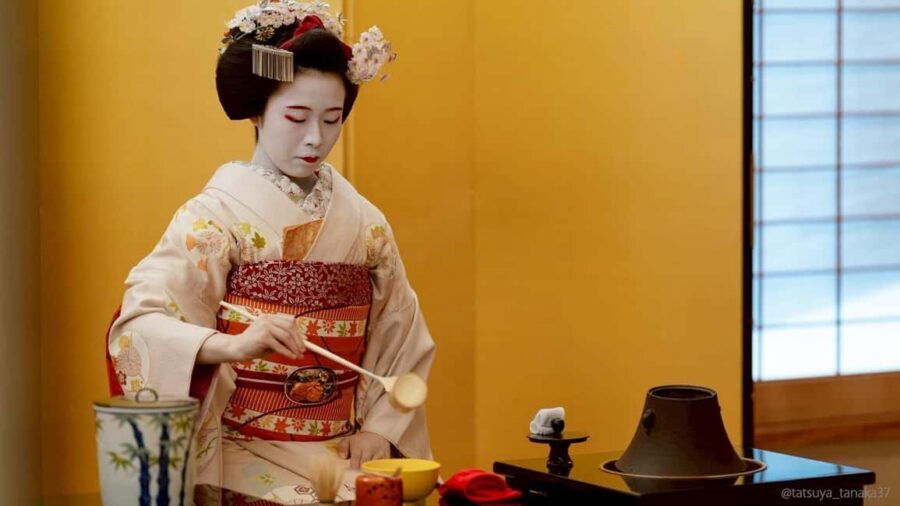
You get a Japanese-patterned handkerchief for each participant. On its own, that can sound like a souvenir line-item. But in experiences like this, small items often serve a purpose beyond memory.
For you, the handkerchief is likely part of the cultural framing. It’s practical too—handkerchiefs are used in everyday life in Japan, and giving one at the start helps everyone settle into the event mode. It’s also a nice way to make the experience feel complete, not just like you arrived, watched, and left.
The Practical Flow: Timing, Shoes, and Where to Be When
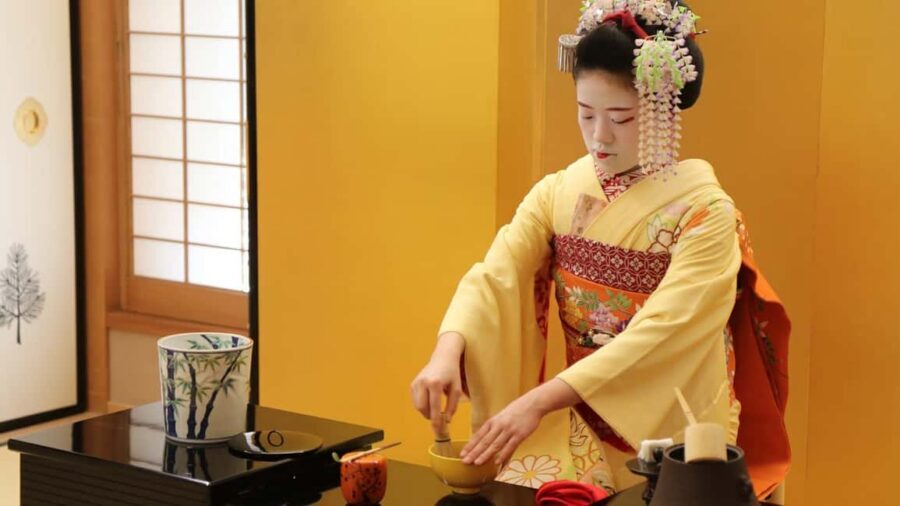
Plan for a tight but unhurried schedule. The duration is listed as 1 hour to 90 minutes, and starting times vary, so check availability for the slot that fits your day in Kyoto.
Arrive early. You’ll want to be at the 1st floor reception of Kurochiku Tensho-kan at least 15 minutes before the start time. That early arrival helps you get settled without rushing, especially because you’ll be participating indoors after removing your shoes.
Speaking of shoes: guests participate indoors after removing their shoes. That means:
- Bring socks (explicitly recommended).
- Expect a calm, seated environment where comfort helps you enjoy the ceremony and dance rather than fidget through it.
The seating is described as comfortable and set up for relaxed enjoyment. That’s important because Noh-style events work best when you can sit and watch closely. If you’re uncomfortable, you’ll miss the details you came for.





Language Support: English Explanations Without Killing the Mood
The event includes a professional English interpreter guide, and languages listed are English and Japanese. That’s what makes the experience more than just a visual show.
Japanese cultural performances can feel hard to decode if you don’t get any context. Having live help in English means you’re more likely to understand what you’re seeing—why a movement matters, how the tea ritual is structured, and what the etiquette cues are asking from you as a guest.
This is also where the experience stays balanced. You get explanations, but you’re still in a dignified space. The goal isn’t turning it into a lecture. It’s helping you follow along so the performance and tea ceremony land with meaning.
Price and Value: Is $141 Worth It in Kyoto?
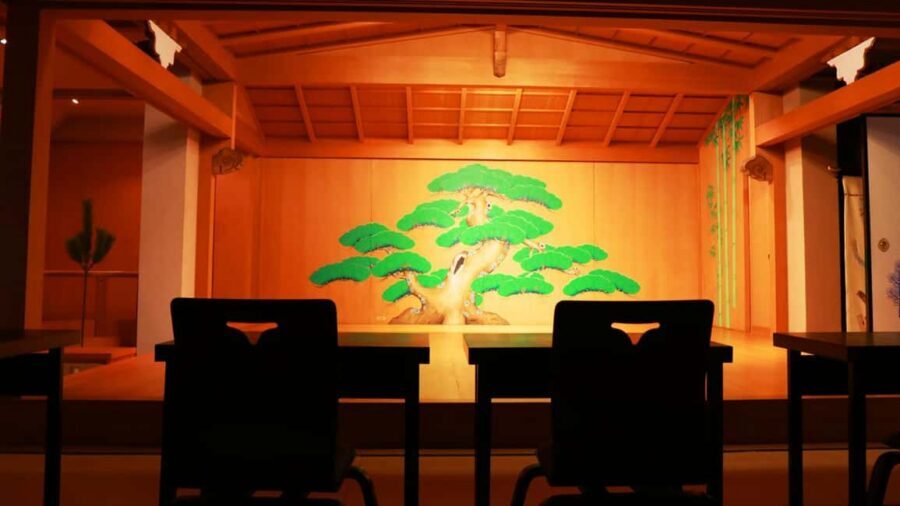
At $141 per person, this isn’t a budget activity. So the question is value, not just cost.
Here’s what you’re paying for, based on what’s included:
- A matcha ceremony experience with matcha and sweets served
- An English interpreter guide
- A Noh stage in Kyoto
- The maiko dispatch fee
- A handkerchief given to each participant
The dispatch fee and the Noh-stage component are the kind of costs that usually aren’t cheap. They’re also the reason you can’t easily recreate this type of event on your own. If you try to DIY a similar experience, you’d likely end up spending comparable money once you factor in entrance fees, scheduling, and a guide to translate the etiquette and performance context.
The extra value kicker is the human access: photos and a chat with the maiko in an intimate setting, plus the fact that you can follow along through English support. That combination makes it feel like more than a performance ticket.
If your Kyoto plan is already packed, you’ll also appreciate the time commitment. It’s relatively short for the cultural payoff—about one hour to ninety minutes.
Who This Experience Fits Best (And Who Might Want Something Different)
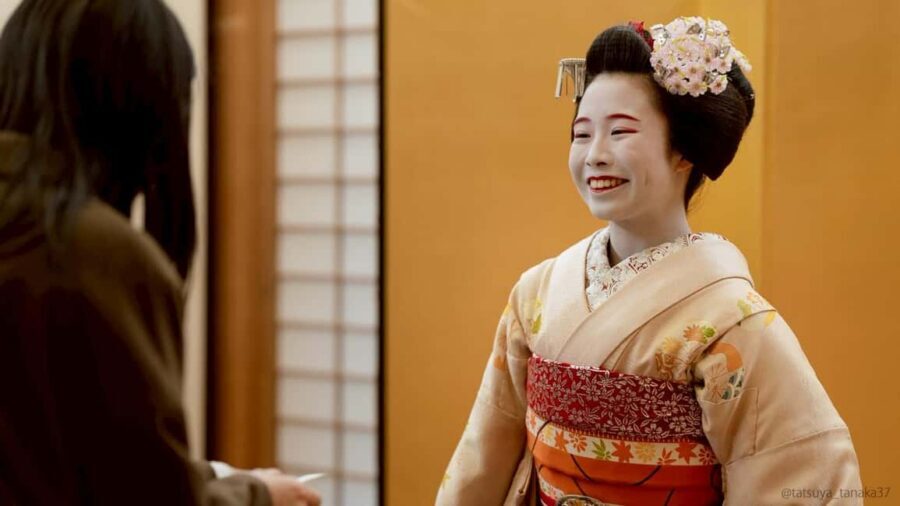
This is a great match if you:
- Want a cultural experience that involves your senses, not just sightseeing.
- Like the idea of seeing Japanese tradition in a performance space designed for it.
- Prefer an English-supported experience so you can understand what’s happening.
- Appreciate calm, seated activities where attention is part of the deal.
It may not be ideal if you:
- Want a hands-on workshop where you’re doing every step yourself.
- Don’t like shoe-off indoor settings.
- Need lots of time to wander or break the event into smaller chunks.
Quick Tips So Your Visit Feels Smooth
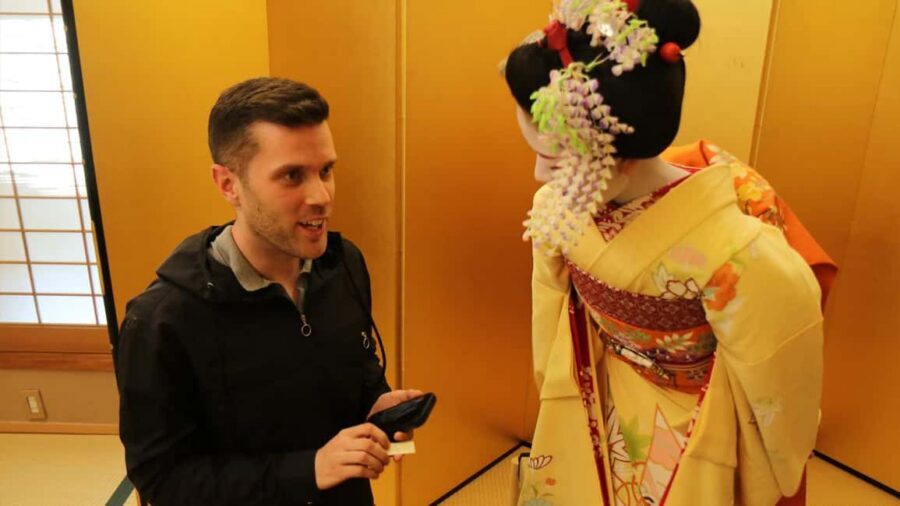
- Arrive on time. 15 minutes early is your friend at the Kurochiku Tensho-kan reception.
- Wear comfortable clothing and bring socks. You’ll remove shoes indoors.
- Keep your phone ready for photos, since photo time is part of the highlight.
- If you have questions, jot them down beforehand. With an interpreter guide, you’ll get more out of your chat moment.
Should You Book Maiko Dance and a Tea Ceremony on a Noh Stage?
I’d book it if you want a Kyoto experience that feels elegant and specific, not generic. The strongest reason is the pairing: a maiko dance performed on a true Noh stage, followed by a tea ceremony where matcha and seasonal sweets are part of the story. Add in English interpretation and the chance to take photos and chat, and it becomes a cultural moment you can actually connect to.
Skip it if you’re searching for a low-cost, casual activity or if shoe-off indoor rules would annoy you. This event works best when you’re ready to sit, watch, and pay attention.
If you want a short, high-meaning cultural stop in Kyoto, this one is a solid choice. Just plan your day around being early, comfortable in socks, and ready for a calm, art-focused hour to ninety minutes.
FAQ
How long is the Maiko Dance and Tea Ceremony experience?
The duration is listed as 1 hour to 90 minutes. Starting times vary, so check availability for the slot you want.
Where do I meet, and where should I check in?
The meeting point may vary depending on the option booked. For the visit, you should arrive at the 1st floor reception of Kurochiku Tensho-kan at least 15 minutes before the starting time.
Is there an English-speaking guide?
Yes. The experience includes a live tour guide/interpreter with English and Japanese languages.
Do I need to remove my shoes?
Yes. Guests participate indoors after removing their shoes.
What should I bring?
Bring socks. They’re specifically recommended since you’ll participate indoors after removing your shoes.
Is transportation included?
No. Private transportation is not included.
What is the cancellation policy?
Free cancellation is available up to 24 hours in advance for a full refund.
Can I reserve now and pay later?
Yes. The option says reserve now & pay later, meaning you can book your spot and pay nothing today.