REVIEW · KYOTO
Kyoto: Zen Garden, Zen Mind (Private)
Book on Viator →Operated by An Design · Bookable on Viator
Zen gardens click when someone reads them for you. This private Kyoto walk with garden designer Andrew makes Zen gardens understandable, and I especially like the chance to see three Nanzen-ji sites on foot, including Nanzen-ji. One catch: temple admission for all three stops adds ¥1,600 per person.
You’ll start near Keage Station and end right in front of Nanzen-ji, so you get a clean route without backtracking. I also like that it’s your group only, which means you can ask follow-up questions about symbolism, rock placement, or even the basics of Buddhist and Shinto practice.
In This Review
- Key highlights at a glance
- Why this Kyoto Zen garden tour beats reading signs
- How the $380 private price works (and where ¥1,600 fits)
- Meeting at Keage Station and ending in front of Nanzen-ji
- Konchi-in: the Nanzen-ji sub-temple that sets your eye
- Tenjuan Temple: where symbolism becomes something you can point to
- Nanzen-ji: the head temple moment (and why it matters)
- Andrew’s teaching style: design principles plus Zen basics
- Walking route reality: 3.5 hours on your feet, not on autopilot
- What you learn you can reuse at other gardens
- Who should book this private Zen garden, Zen mind tour
- Should you book it? My honest recommendation
- FAQ
- How long is the Kyoto Zen Garden, Zen Mind private tour?
- Is this tour private?
- Which temples are included?
- Are entrance fees included in the price?
- Where does the tour start and end?
- Is a mobile ticket provided?
- What happens if the weather is bad?
Key highlights at a glance
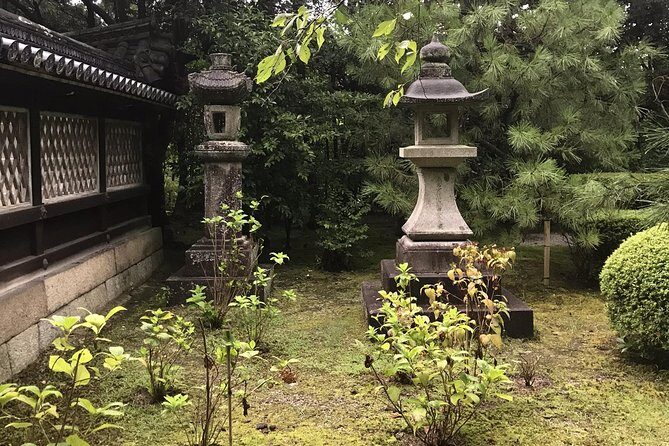
- Three Nanzen-ji stops in one walking loop: Konchi-in, Tenjuan, and the head temple, all on foot
- Garden-design thinking, not just sightseeing: you’ll learn how rock, emptiness, and arrangement communicate ideas
- Zen mind meets practical design details: you connect what you see to Zen principles and daily life
- Andrew’s focus on meaning: he ties aesthetics to philosophy, Japanese history, and contemporary Kyoto
- A calmer experience than rushing photo stops: the route and pacing keep things peaceful
Why this Kyoto Zen garden tour beats reading signs
Kyoto’s temple gardens can feel like quiet puzzles. A lot of the time, you stand there, look at rocks, maybe notice a pond or a wall of moss, and then… wonder what you’re supposed to get out of it. On this private walking experience, you get a guide who can explain what the garden is doing, not just what it is called.
I like that the tour is built around the idea of seeing slowly. You’re not zipping between attractions with your head on a swivel. Instead, you walk through the sub-temples and head temple of Nanzen-ji and learn how the same design principles show up in different ways.
The biggest win is how the lessons stick. When someone connects the shapes and placement to Zen practice—attention, restraint, and the value of emptiness—it turns the garden from decoration into communication. That shift is what makes you want to look longer and ask better questions.
You can also read our reviews of more private tours in Kyoto


How the $380 private price works (and where ¥1,600 fits)
The price is $380 per group for up to 4 people. For some trips, that structure feels like a “tour-for-solo-travelers tax.” Here, it’s usually a smart deal because you’re paying for a private conversation and guided interpretation across three temple stops.
The part to plan for: entrance fees are not included. You’ll pay ¥1,600 per person for the three temples. Even with that extra cost, I like the value because you’re getting context for multiple sites in one go, rather than just collecting stamps.
If you’re traveling as a pair or a small family, the math is straightforward: split the group price, then add the fixed temple admission. If you’re solo, you may feel the cost more. In that case, I’d ask yourself if you want a guide primarily for interpretation (this tour) or primarily for logistics (a simpler route might be enough).
Meeting at Keage Station and ending in front of Nanzen-ji
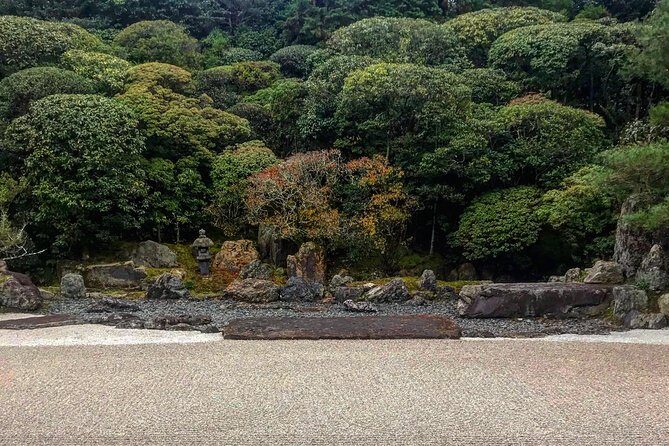
The tour starts at Keage Sta. (Higashikomonozacho), Higashiyama Ward, Kyoto and ends at Nanzenji Fukuchicho, Sakyo Ward, with the finish in front of Nanzen-ji. That matters more than it sounds.
Starting near a station means you can get there without complicated transfers. Finishing at Nanzen-ji means you end your walking day right where many people want to be anyway, instead of getting stranded with an extra train ride to a separate pickup point.
Also, this is a walking-focused experience. Kyoto has places cars can’t reach and buses don’t enter. You’ll get to paths and garden viewpoints that feel more like the temple’s own rhythm than a roadside stop.
Konchi-in: the Nanzen-ji sub-temple that sets your eye
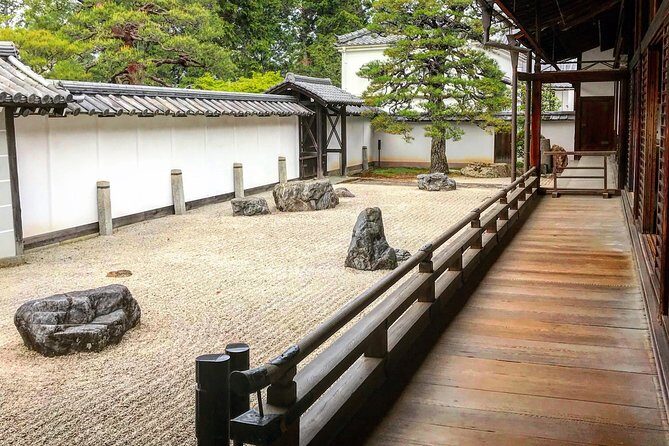
Your first stop is Konchi-in, a sub-temple of Nanzen-ji. This is a “warm-up” site, and it’s a good one. Sub-temples often feel less overwhelmed by crowds, and they let you practice the kind of looking the tour is teaching—quietly, on purpose, and with attention to details.
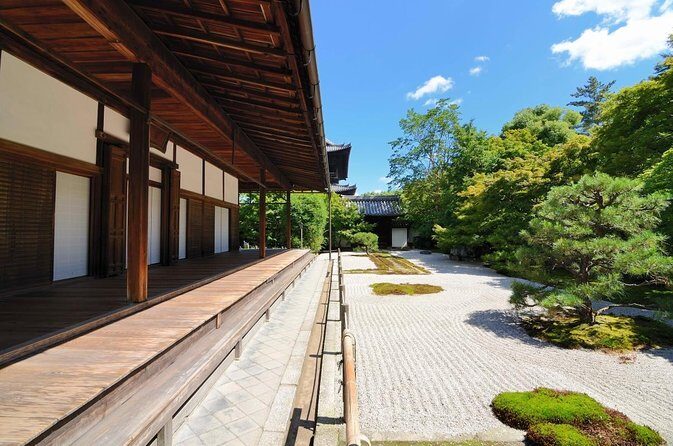
You’ll spend about an hour here, and that time is the point. Zen garden design isn’t about counting attractions. It’s about noticing how lines guide your gaze, how rocks and edges create meaning, and how emptiness is part of the composition.
A practical tip: use this first stop to tune your senses. Ask what you should notice first—rocks, gravel patterns, framing, or the way space is used. Once you train your eye at Konchi-in, the next two locations land much harder.
If you’re thinking, I want the highlights right away, you might be tempted to rush through Konchi-in. Don’t. Starting here helps you understand why the head temple later feels like the “same lesson, bigger scale.”
Tenjuan Temple: where symbolism becomes something you can point to
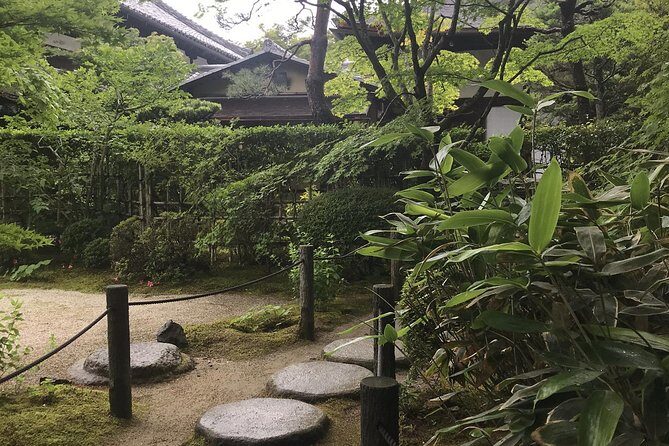
Next up is Tenjuan Temple, another sub-temple of Nanzen-ji, also around an hour. If Konchi-in teaches your eyes how to look, Tenjuan tends to deepen what you’re looking for.
This is where the tour’s “Zen mind” angle starts to feel concrete. Instead of vague explanations, you’ll connect garden design to spiritual and cultural practice—how restraint, reflection, and discipline show up in physical form.
Design details in Zen gardens can be surprisingly logical. You might learn how a rock arrangement guides attention or how the layout encourages a slower mental pace. It’s not just about the aesthetics; it’s about the experience the garden is trying to create.
One drawback to consider: if you prefer fast museum-style facts, Tenjuan may feel slower than you expect. The good news is that the pace works. You’re meant to let the meaning develop as you walk and compare, not just check off another temple.






Nanzen-ji: the head temple moment (and why it matters)
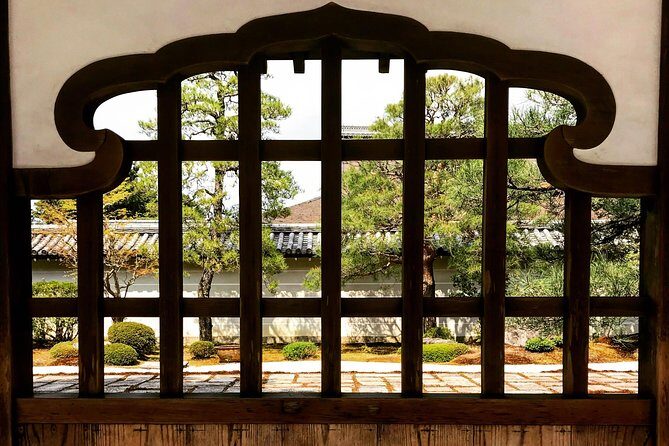
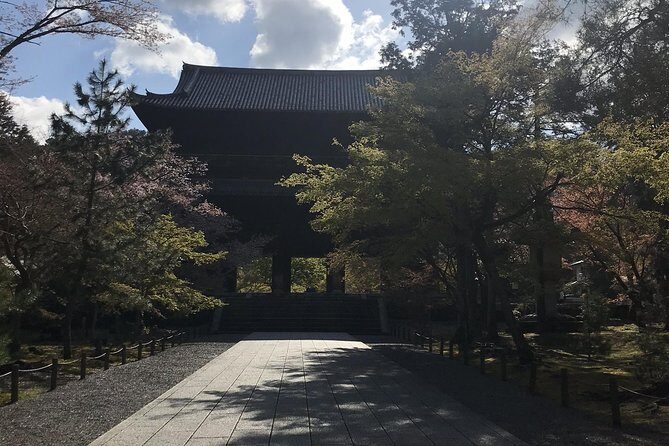
The main event is Nanzen-ji Temple, the head temple of the Nanzen-ji Zen monastery. This stop is also about an hour, but it carries more weight because it’s the center of the whole experience.
By the time you arrive, you’ve already learned how to interpret the garden language. Now the tour can build bigger connections—how the monastery’s world view shows up in the choices made across its sub-temples, and how the setting supports Zen practice.
This is also where you’ll likely appreciate why the walking route is part of the value. If you only visit the most famous photo points, you can miss how the garden’s atmosphere changes from angle to angle. A guide helps you notice those shifts instead of just accepting the scene as it appears at one moment.
If you’re a person who likes your travel with a little quiet thought attached, Nanzen-ji is exactly the right place to slow down. You’ll finish with a better grasp of why rock gardens and temple layouts are so central to Kyoto’s identity.
Andrew’s teaching style: design principles plus Zen basics

The tour’s standout feature is the guidance from Andrew (An Design). The information you get isn’t only about garden appearance. He brings garden-design training—reviews mention a Master’s in landscape architecture—and he also connects that training to philosophy and practice.
What I found helpful is the balance. You’re not stuck in theory. You learn how specific design principles work, and then you hear what they symbolize. That combination makes the garden feel less mysterious.
One theme you’ll hear again and again is how Zen thinking shows up in craft. You’ll talk about principles of Zen gardens and how they relate to Buddhist practice and daily life in Kyoto. Some explanations also cover basics of Shinto and Buddhist traditions, which helps if Kyoto’s spiritual landscape feels like a jumble.
From the reviews, you can also expect a guide who answers questions and can tailor the conversation to your interests. If you care more about design mechanics—like how rocks, gravel, or negative space are used—say so early. If you care more about the religious side, ask for that angle too. A private tour means you don’t have to guess what you’ll get.
Walking route reality: 3.5 hours on your feet, not on autopilot
The full tour runs about 3 hours 30 minutes. That includes walking time between stops, plus time inside each temple area. In Kyoto, that’s a manageable chunk of time, but it’s still a walking day.
Here’s how I’d prepare so it stays enjoyable:
- Wear supportive shoes with grip. Temple paths can be uneven.
- Plan to move at a slower pace than you normally would. The point is looking.
- Bring something for comfort (water and sun protection), especially if the weather is bright.
The experience also requires good weather. If conditions are poor, you’ll be offered a different date or a full refund, so you’re not forced into a bad-day visit.
If you’re traveling with limited mobility or you know long walks drain you fast, this is the part to think about. The tour is small-group and private, but it still involves walking between temple areas. You might find a less walking-heavy option fits better.
What you learn you can reuse at other gardens
A good tour doesn’t just entertain you for a few hours—it teaches you how to keep seeing after it ends. This one has that effect because the explanations focus on principles, not one-off trivia.
After Konchi-in and Tenjuan, you’ll start noticing patterns:
- how garden composition directs your attention
- how emptiness is treated as part of the design
- how rock and texture create structure for contemplation
Then at Nanzen-ji, those lessons feel bigger and more grounded. You’re no longer just looking at a famous site—you’re reading it.
Even if you later visit other Zen gardens or temples on your own, the tour gives you a mental checklist. You’ll know what questions to ask, what details are usually intentional, and what kind of silence to look for.
That’s why the tour feels more like education than sightseeing. You’ll leave with a new way to look at Kyoto.
Who should book this private Zen garden, Zen mind tour
This is a strong fit if you:
- want to understand Japanese gardens beyond appearances
- care about Zen philosophy and how it shows up in design
- like smaller, quieter experiences instead of rushing crowds
- enjoy asking questions in real time
It’s also a good choice for nature lovers, since the garden design is inseparable from seasonal feeling and the way plants and stone work together. Even if you don’t call yourself a “gardens person,” the tour’s focus on meaning makes it more universal.
It may be less ideal if your travel style is all checklists and fast highlights. The tour asks you to slow down. If that sounds exhausting, you may prefer a standard temple route.
If you’re on your first trip to Kyoto and you want one experience that gives you a framework for understanding multiple temples, this is a smart starting point. You get three stops tied together by design and practice.
Should you book it? My honest recommendation
Book it if you want Kyoto to make more sense. This tour gives you interpretation you can actually use: garden design principles tied to Zen and (in helpful ways) to Shinto and Buddhist practice. It’s also private, so you’re not forced into a one-size-fits-all experience.
I’d be cautious if you’re sensitive to extra costs. You pay the group price plus temple admission fees of ¥1,600 per person. If you were hoping for a single all-in cost, you’ll want to account for that upfront.
If you like quiet travel with thoughtful context, you’ll likely come away with a new appreciation for how rock gardens function as more than decoration. You don’t just see Nanzen-ji—you learn how to read it.
FAQ
How long is the Kyoto Zen Garden, Zen Mind private tour?
It lasts about 3 hours 30 minutes.
Is this tour private?
Yes. It’s a private tour, and only your group participates.
Which temples are included?
You visit Konchi-in, Tenjuan Temple, and Nanzen-ji.
Are entrance fees included in the price?
No. Entrance fees for the three temples total ¥1,600 per person.
Where does the tour start and end?
It starts near Keage Station (Higashikomonozacho, Higashiyama Ward) and ends in front of Nanzen-ji (Nanzenji Fukuchicho, Sakyo Ward).
Is a mobile ticket provided?
Yes, the tour includes a mobile ticket.
What happens if the weather is bad?
The experience requires good weather. If it’s canceled due to poor weather, you’ll be offered a different date or a full refund.