REVIEW · GEISHA & MAIKO TOURS
Kyoto: Walking tour Kiyomizu, Geisha District with a Local
Book on GetYourGuide →Operated by ENSHI KYOTO · Bookable on GetYourGuide
Kyoto’s stairs start the story. This walking tour pairs Kiyomizu Temple with the Gion geisha district, guided by someone who grew up in Kyoto and knows what to point out. I like that you get more than photo stops: you also get a Q&A at each place and small customs you likely won’t find in a guidebook. The one real drawback is physical: steep slopes and stairs mean it’s not a great match for low mobility or anyone who tires easily.
You’ll also like the way the group moves. The tour avoids the main roads and uses quieter streets in between, which makes Kyoto feel more human-scale and easier to photograph. If you’re expecting a relaxed, flat stroll, plan on a bit of climbing and some steps along the way. A guide can only do so much to control the terrain, so bring comfortable shoes and treat this as a walking tour first.
In This Review
- Key highlights you’ll feel during the tour
- Kiyomizu and Gion on foot: why this tour works
- Meeting at Shijo Bridge: the red-flag start matters
- Kiyomizu Temple: what you’ll learn beyond the main viewpoint
- Walking Kyoto’s quiet streets: better photos, calmer pace
- Gion and Geisha culture: the context you’ll carry home
- Photo shoot and omikuji: two small inclusions with big payoff
- Price and value: what $40 covers (and why it’s fair)
- Who should book this Kyoto walk (and who should skip)
- Practical tips before you go
- Should you book? My honest call
- FAQ
- FAQ
- Where is the meeting point for this Kyoto walking tour?
- How much does the tour cost?
- What’s included with the tour?
- Is the tour in English?
- Will there be time to ask questions during the tour?
- Is the tour suitable for people who use a wheelchair?
- Does the tour involve stairs or steep slopes?
- Can I pay later or keep plans flexible?
- What is the cancellation window?
Key highlights you’ll feel during the tour
- Kiyomizu Temple entry tickets included, so you don’t waste time figuring it out
- Photo shoot built into the walk, aimed at getting good shots in the right spots
- Omikuji fortune slips included, a classic Kyoto ritual you can actually try
- A Kyoto local guide who shares details that tend to get skipped online
- Q&A at each location, giving you a chance to ask about customs and culture
- Quiet streets over main roads, for a more peaceful Kyoto experience
Kiyomizu and Gion on foot: why this tour works
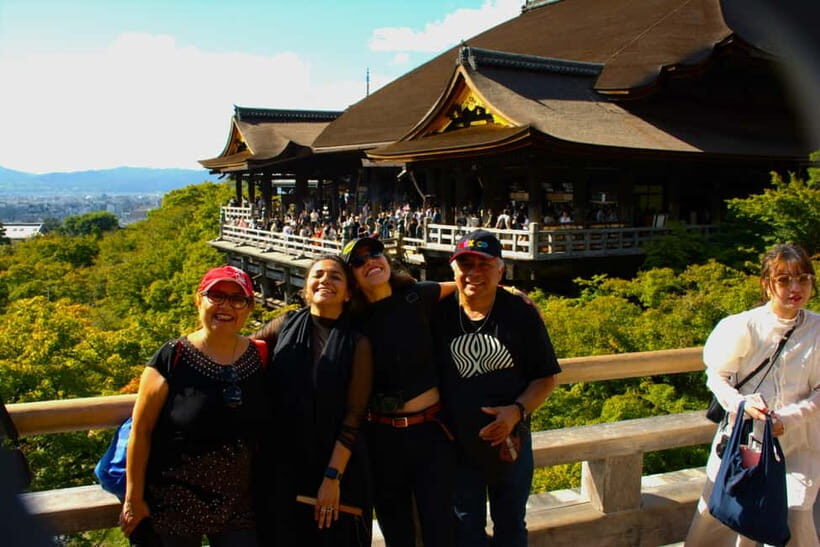
Kyoto can be overwhelming if you only follow crowds and big signage. What I like about this tour is its basic philosophy: slow down, walk the side streets, and let a local explain what you’re seeing as you go. You get a focused route through two of Kyoto’s most recognizable areas, but the pace feels guided rather than rushed.
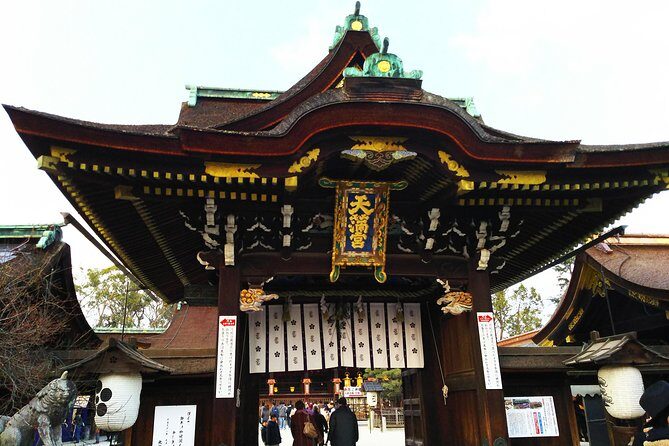
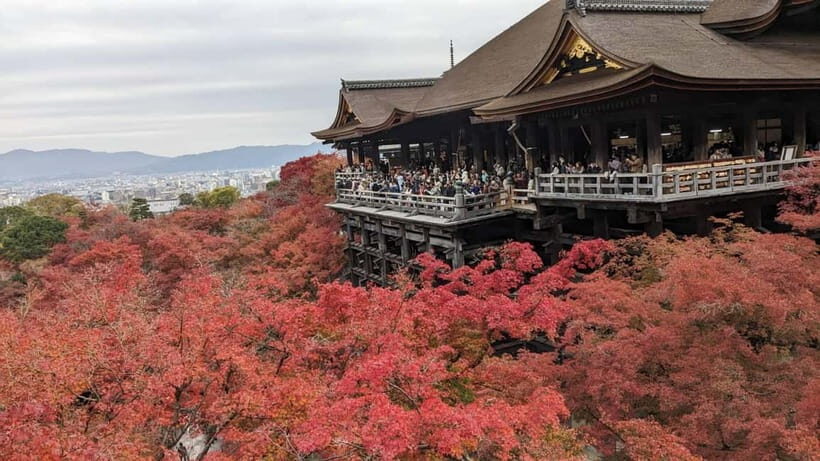
The Kiyomizu part is the anchor. Kiyomizu Temple is one of Japan’s most important temples, and the tour treats it like more than a “stand here for the view” stop. You’ll also get Geisha culture context in Gion, which helps you understand what you’re seeing instead of just collecting photos.
The value in a tour like this is clarity. A $40 price tag sounds simple on paper, but the real benefit is what you don’t have to figure out alone: where to look, what questions to ask, and how Kyoto customs connect to everyday life and old traditions.
You can also read our reviews of more walking tours in Kyoto


Meeting at Shijo Bridge: the red-flag start matters
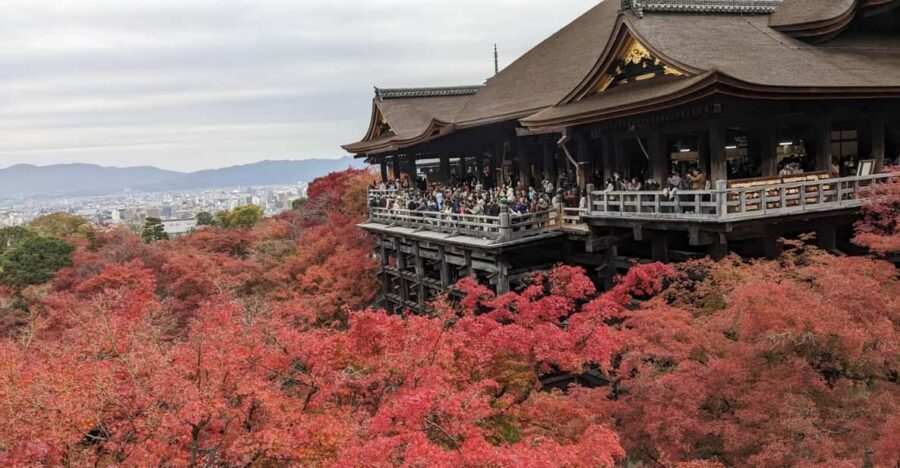
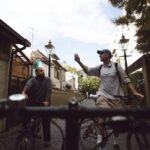
The tour begins on the southeast side of Shijo Bridge, where the guide will be holding a red flag. That sounds minor, but it’s the kind of detail that saves your first hour in Kyoto. If you’ve ever started a tour and spent time scanning for a meeting point, you know how much stress that removes.
Because it’s a walking format, your start point also sets the tone for timing and flow. You don’t need to rely on trains or taxis between major moments; you’re meant to move through the neighborhood streets in one continuous experience. I’d plan to arrive a bit early with your shoes ready, since the route includes steep slopes and stairs.
The tour ends back at the meeting point. That’s useful if you want an easy handoff back to your own plans—grab food, visit another spot, or head toward the rest of your day without having to re-orient from a faraway drop-off.
Kiyomizu Temple: what you’ll learn beyond the main viewpoint
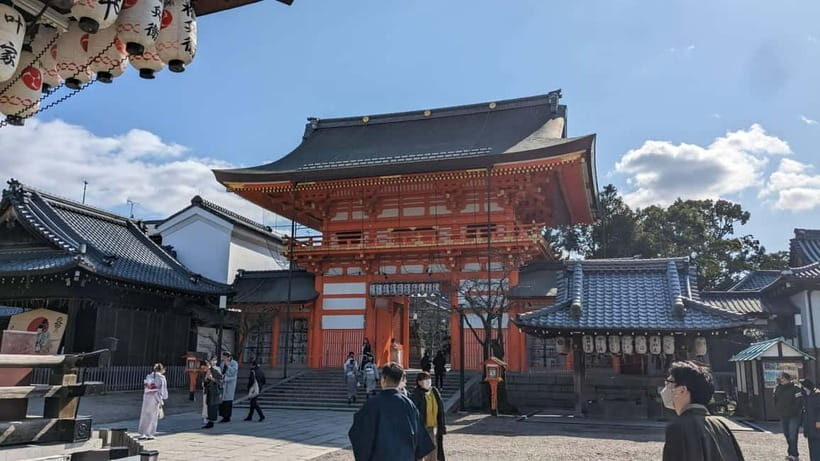
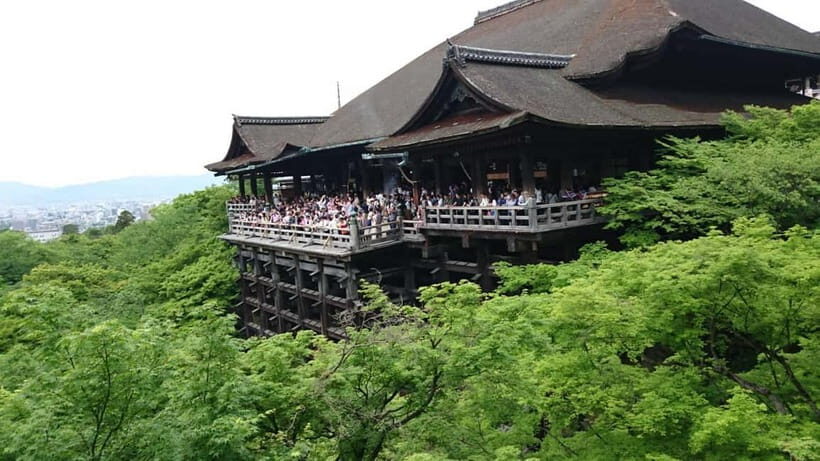
Kiyomizu Temple is the type of place where people often zoom in on the headline scenery. This tour keeps the focus, but your guide adds the layers that make the place click. Since you’ll have a local guide who grew up in Kyoto, you can expect explanations that feel practical and grounded, not just historical facts.
A key included item is the entry ticket to Kiyomizu Temple. That matters because it prevents awkward delays and keeps the experience moving. It also signals that the temple visit is a central part of the tour, not a quick exterior pass.
You’ll also participate in a ritual: omikuji (fortune slips). Even if you don’t read Japanese comfortably, the act itself is part of the culture. Your guide’s cues help you understand what to do and why people do it, turning a souvenir moment into something more meaningful.
And because there’s a Q&A session at the location, you can ask questions right while the details are fresh: what you should notice, how temple customs work, and what different spaces might mean. That timing is a big deal. Questions asked later often feel disconnected; questions asked on-site stick.
Walking Kyoto’s quiet streets: better photos, calmer pace
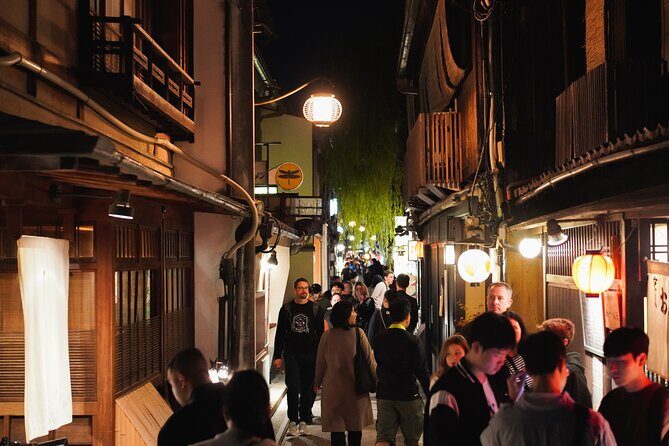
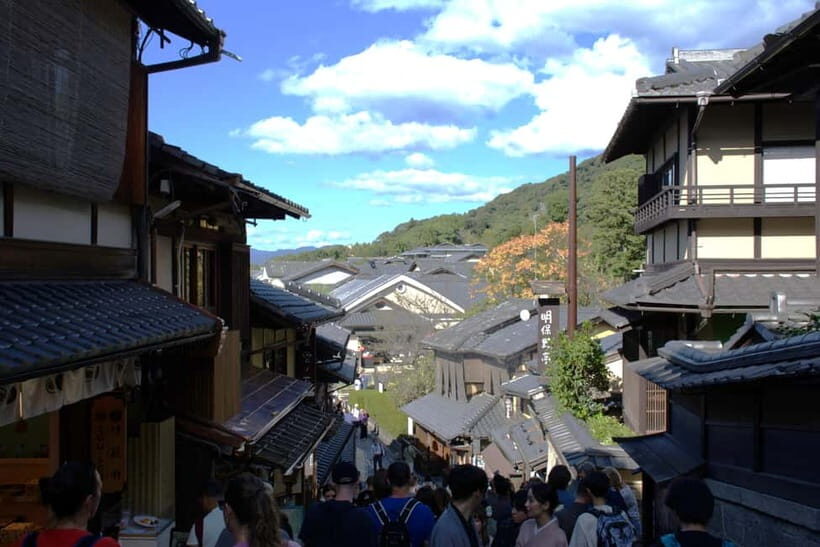
One of the best features of this tour is that it avoids the main roads. Kyoto’s center can get crowded, and main streets often feel like a conveyor belt. By choosing quieter lanes, you’ll likely feel like you’re walking inside the city rather than along it.
These in-between segments are where the tour earns its keep. Your guide doesn’t just point toward sights; they help you interpret them as you pass: why certain building styles show up, what the street layout suggests, and how local habits shape the atmosphere. This is the part that turns “I saw a temple and a district” into “I understood what I was seeing.”
It’s also where photography tends to get better. Narrower streets and fewer lanes of traffic give you cleaner backgrounds and more interesting angles. The tour even includes a photo shoot, so don’t treat the walks as casual roaming—think of them as guided positioning for better results.
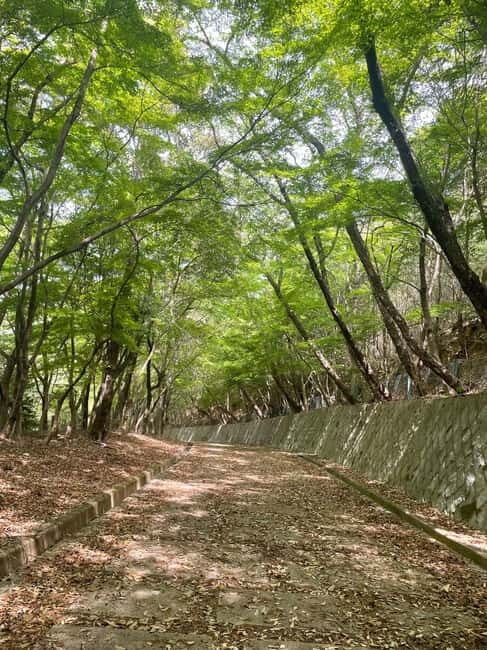
There’s still one honest note: the route uses steep slopes and stairs. If you’re steady on your feet, you’ll probably manage fine with comfortable shoes. If not, plan a different style of tour.
Gion and Geisha culture: the context you’ll carry home
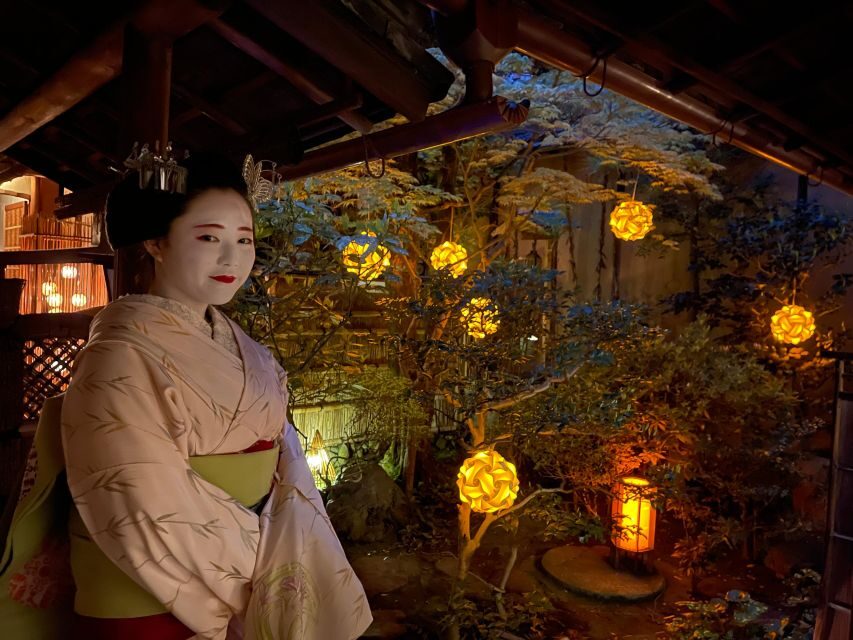
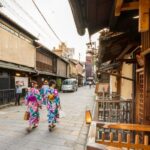
Gion is one of those places people recognize instantly, but they often misunderstand what they’re seeing. This tour addresses that directly by teaching the history of Geisha and explaining cultural details along the way. The goal isn’t to turn it into a lecture; it’s to help you recognize how tradition fits into modern Kyoto.
Your guide shares details that can be hard to find online. That might sound vague, but the effect is real: when someone explains what a custom means and how locals think about it, you stop looking at Gion as a costume set and start seeing it as a lived cultural district.
The tour also uses Q&A to keep you active. If you want to ask how Geisha culture works, what terms you might hear mean, or how to behave respectfully while sightseeing, you get time to ask at the locations instead of guessing on your own. That makes a difference in Japan, where small etiquette choices matter.
A practical benefit: moving through Gion with a guide can reduce the stress of figuring out where to stand. With a photo shoot included, you’re nudged toward spots that make sense and directions that improve your chances of getting a good photo without blocking others.




Photo shoot and omikuji: two small inclusions with big payoff
Two included extras often decide whether a walking tour feels worth it for people who are on the fence: the photo shoot and the omikuji fortune slip.
The photo shoot is helpful because it turns your camera roll into more than accidental snapshots. You get help with timing, angles, and likely where to pause during the walk. Even if you’re a confident photographer, a local eye can spot sightlines and moments you might miss—especially in narrow streets where positioning matters.
The omikuji is the opposite kind of souvenir. You’re not buying it as a trophy; you’re participating in a Kyoto ritual. Your guide’s explanation makes the experience less confusing, and it gives you a story you can tell later beyond just saying I bought a postcard.
Together, these two inclusions do something smart: they balance modern travel needs (photos) with cultural participation (fortune slips). That mix is a strong value driver for a $40 tour.
Price and value: what $40 covers (and why it’s fair)
At $40 per person, this tour sits in the lower-to-mid range for guided experiences in Kyoto. The good news is that the price isn’t just paying for walking and talking. It includes Kiyomizu Temple entry tickets, a photo shoot, and omikuji.
Here’s how I think about value in a tour like this:
- If you were to cover Kiyomizu entry on your own, you’d pay for admission anyway.
- If you want photos, you’d likely spend time figuring out locations and poses. This tour builds that in.
- The guide’s explanations are the intangible part, but they’re also the reason tours exist. With a local guide from Kyoto, you’re paying for a shortcut to understanding.
So yes, $40 is the headline number. But the better way to judge it is what’s included and how the guidance reduces guesswork. If your time in Kyoto is limited, removing uncertainty often feels worth more than a cheaper self-guided plan.
Who should book this Kyoto walk (and who should skip)
This experience is a great fit if you want a guided path through Kiyomizu and Gion with real cultural context, plus chances to ask questions. If you like history explained in plain language and you enjoy seeing neighborhoods rather than only big landmarks, you’ll probably enjoy this style.
It’s also a strong match for travelers who care about photos but don’t want to spend half the day searching for the best angle. The photo shoot inclusion takes the pressure off.
Now the clear constraints. It is not suitable for wheelchair users, and it’s not recommended if you have trouble with walking because of steep slopes and stairs. It’s also listed as not suitable for people with respiratory issues, altitude sickness, or those over 80, and it’s not suitable for people with low level of fitness.
If any of those apply to you, I’d treat this as a hard stop. The route’s physical demands are part of the experience design, so it won’t be comfortable if mobility is limited.
Practical tips before you go
You only need a few things to enjoy this tour smoothly.
First: wear comfortable shoes with grip. Kyoto streets can be uneven, and the tour involves slopes and stairs. If your footwear is more about style than support, switch it.
Second: be ready for questions. The tour includes a Q&A session at each location, so if something interests you—temple rituals, Geisha history, Kyoto customs—ask. That’s how you get the local insights the tour is built around.
Third: plan your day with buffer time. Meeting at Shijo Bridge by the red flag is easy once you’re there, but Kyoto can throw surprises at you with crowds and pedestrian flow. Arrive early, relax, and let the guide lead.
Should you book? My honest call
Book this tour if you want a focused walk that connects Kiyomizu Temple to Gion with a local guide who explains what you’re seeing, not just where to go. The included Kiyomizu entry, photo shoot, omikuji fortune slip, and on-site Q&A make the $40 price feel practical rather than gimmicky.
Skip it if you need a flat, low-impact route. The steep slopes and stairs are a known part of the experience, and it’s not suitable for wheelchair users or anyone with low fitness or certain health concerns.
FAQ
FAQ
Where is the meeting point for this Kyoto walking tour?
The meeting point is on the southeast side of Shijo Bridge. The guide will be waiting and holding a red flag.
How much does the tour cost?
The price is $40 per person.
What’s included with the tour?
The tour includes entry tickets to Kiyomizu Temple, a photo shoot, and omikuji (fortune slip).
Is the tour in English?
Yes, the tour is listed as available in English.
Will there be time to ask questions during the tour?
Yes. There is a Q&A session at each location so you can ask questions and go deeper into Kyoto and Japanese culture.
Is the tour suitable for people who use a wheelchair?
No, it is not suitable for wheelchair users.
Does the tour involve stairs or steep slopes?
Yes. The route includes steep slopes and stairs, so it is not recommended for those who have difficulty walking.
Can I pay later or keep plans flexible?
Yes. The listing indicates reserve & pay later, so you can book your spot and pay nothing today.
What is the cancellation window?
You can cancel up to 24 hours in advance for a full refund.