REVIEW · SUSHI MAKING CLASSES
Kyoto: Small-Group Authentic Sushi Making Workshop
Book on GetYourGuide →Operated by atelier SUSHI · Bookable on GetYourGuide
Kyoto’s best sushi lesson is small and calm. You get hands-on instruction in a restored townhouse, then you eat what you make in a peaceful setting.
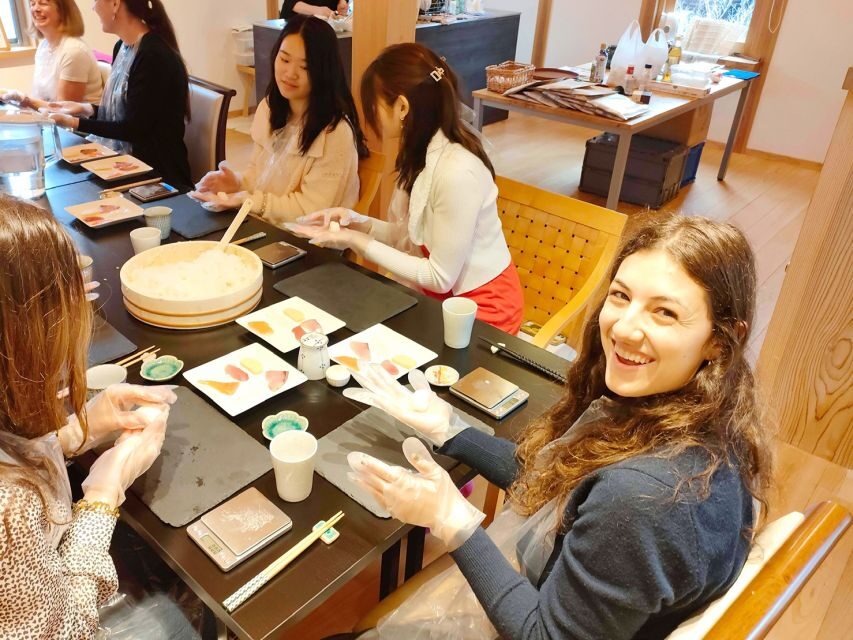
I love that it stays truly intimate (max 8 people), so you’re not stuck watching from the sidelines. I also like that the class includes the lunch you create—plus miso soup—and it comes with tools you can use again at home.
One thing to consider: it’s not suitable for vegetarians, and you should let them know about dietary restrictions when booking.
Key highlights
- Max 8 people means real back-and-forth, not a group lecture
- English-led, fully hands-on sushi making for nigiri and maki
- Fresh local fish and Kyoto-sourced ingredients, sometimes noted as coming from Nishiki Market
- A restored traditional townhouse (Kyoto Wand building) near Kiyomizu-dera and Gion
- You leave with a gift bag: rolling mat, chopsticks, and a recipe card
- Plenty of time to ask questions, including Japanese culture
In This Review
- A Kyoto Townhouse Where Sushi Takes Its Time
- Meet Kana and the Team: Friendly Guidance in English
- What You’ll Make: Nigiri and Maki in 90 Calm Minutes
- Rice seasoning: the step that decides everything
- Nigiri shaping: simple technique, real precision
- Maki rolling: build the roll you can actually slice
- Ingredients That Actually Matter: Fresh Fish, Local Seasoning, and Miso Soup
- Lunch at the End: Eat Your Sushi, Then Ask One More Question
- Finding Kyoto Wand Near Kiyomizu-dera and Gion
- Price and Value: $60 for Skills, Lunch, and Tools
- Who This Workshop Is Perfect For (And Who Should Skip)
- Should You Book This Kyoto Sushi Workshop?
- FAQ
- Is the sushi-making class taught in English?
- How long is the workshop, and how big is the group?
- What’s included in the price?
- Where do I meet for the workshop?
- Is hotel pickup included?
- Is it suitable for vegetarians or wheelchair users?
A Kyoto Townhouse Where Sushi Takes Its Time
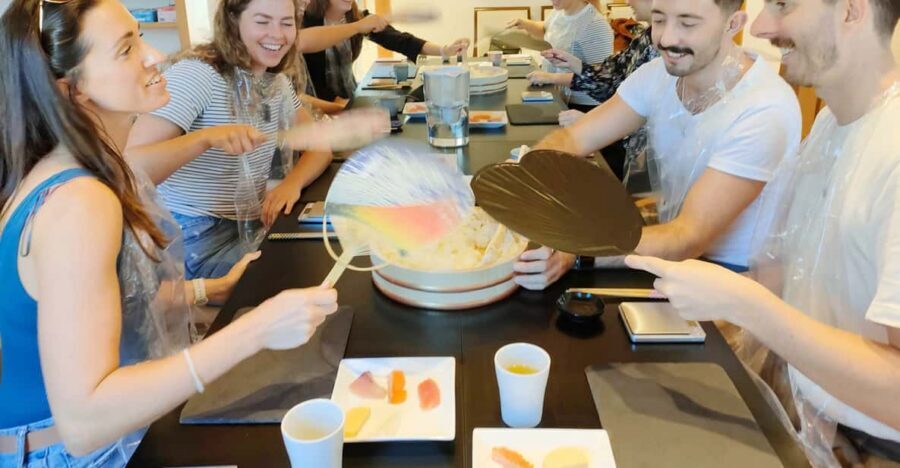
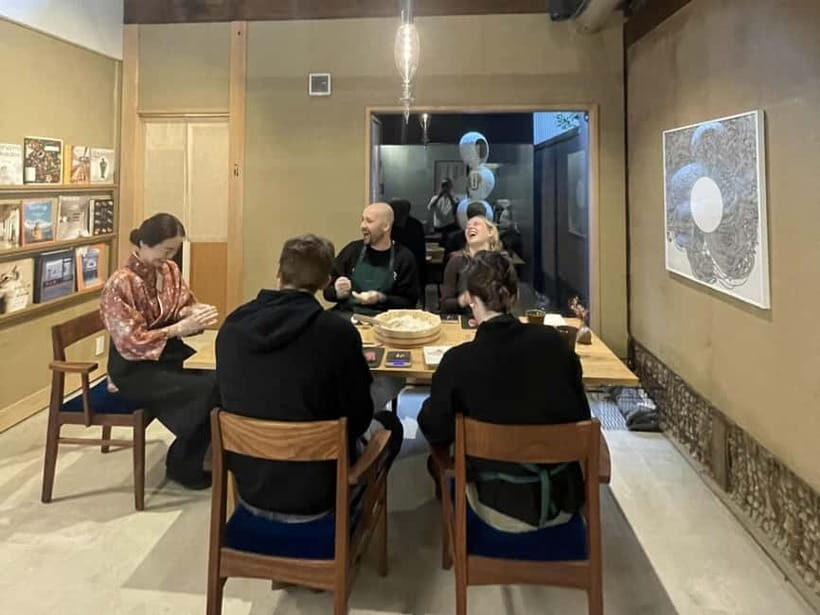
If you’re tired of rushing from one photo stop to the next, this workshop is a sweet reset. The setting is quiet and traditional, and the vibe is hands-on from the first minute. You’re not just learning how to roll. You’re learning why each step matters, from rice seasoning to shaping sushi so it holds its form.
The class is designed to feel unhurried. That matters because sushi is one of those skills where small changes make a big difference. A little too much water in the rice, too much pressure on a roll, or the wrong rhythm when you shape nigiri can turn perfect sushi into sad sushi fast. Here, you get enough time to correct course.
The biggest wins for me are simple: you get personal attention, and you eat a proper lunch that you made with your own hands. That combination is rare for the price.
Meet Kana and the Team: Friendly Guidance in English
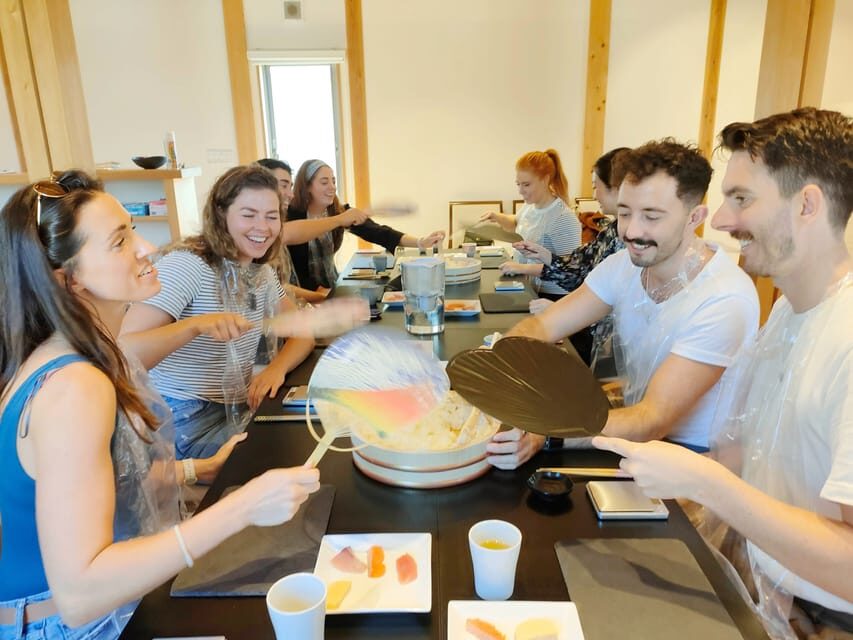
In Kyoto, the best food experiences usually hinge on the people. Here, that’s a major strength. The host Kana is often the lead instructor, and she’s known for clear, patient teaching and warm conversation. Her team also assists during the class—so you’re not stuck waiting when you have a question about how to grip rice, handle fish, or shape maki neatly.
What I really appreciate is that the instruction doesn’t feel transactional. You’ll likely find yourself talking through Japanese food culture while you work—Japan’s approach to seasons and technique comes up naturally when you’re surrounded by ingredients and doing the steps yourself. Some hosts also share personal background stories from Osaka and Kyoto, which makes the whole lesson feel more like learning from a local than following a script.
Since the class is conducted in English, it’s a good fit even if you’ve never handled a sushi rolling mat before. You’ll get explanations that don’t require sushi vocabulary to keep up.
You can also read our reviews of more tours and experiences in Kyoto

What You’ll Make: Nigiri and Maki in 90 Calm Minutes
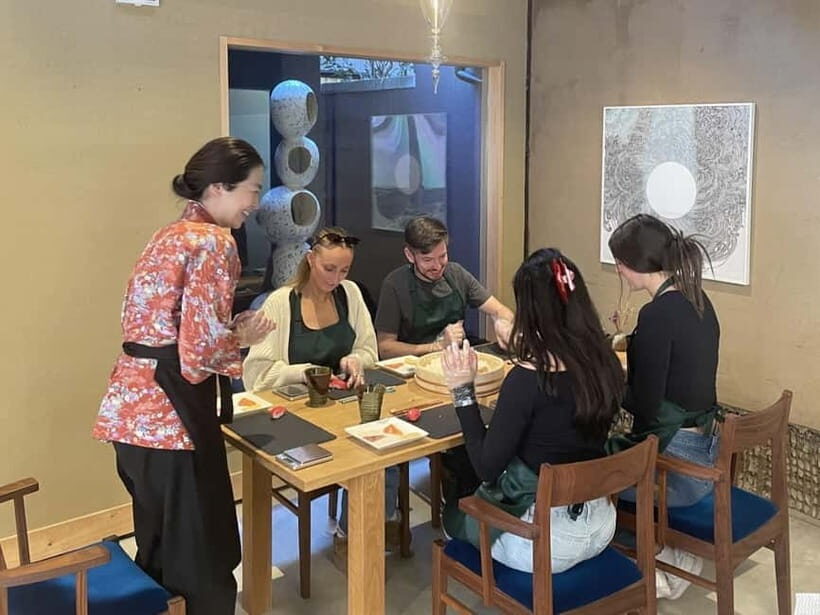
This is a 90-minute, fully hands-on workshop, limited to 8 participants. You’ll work through key sushi types—especially nigiri (hand-formed sushi) and maki rolls (rolled sushi). The goal isn’t just to finish something edible. The goal is to learn the fundamentals that make your sushi look and taste right.
Rice seasoning: the step that decides everything
Sushi starts with rice, and the class treats it that way. You’ll learn about the seasoning process for properly cooked sushi rice. Expect to handle the rice yourself and get guidance on how to work it without crushing it. This is where beginners often worry the most, but the pace is designed to help you get comfortable.
A practical tip you can carry home: if you mess up the rice texture, the rest of the sushi suffers. Getting rice right first is what turns sushi from a novelty into something you can replicate.
Nigiri shaping: simple technique, real precision
With nigiri, you’re learning how to shape rice and top it in a way that stays neat and balanced. The instruction is detailed, and it’s not one-and-done. You’ll likely repeat steps so you can feel how firm to press and how to position the fish.
If you’re nervous about eating raw fish, this class is often reassuring because you learn what makes it safe and tasty from the start. You’re handling ingredients in a guided setting, with fresh fish and proper handling taught as part of the lesson.
Maki rolling: build the roll you can actually slice
For maki, you’ll use the sushi rolling mat provided in the gift bag. You’ll learn to assemble a roll with the right amount of filling and to roll with consistent pressure so it holds together when you cut it.
A helpful takeaway here is that good maki isn’t about forcing the roll into a tight coil. It’s about controlling thickness and keeping the shape consistent across the whole roll.






Ingredients That Actually Matter: Fresh Fish, Local Seasoning, and Miso Soup
The quality of the ingredients is a core part of the experience, and it shows in the final taste. The class uses fresh, high-quality fish and carefully selected local ingredients. More than one participant has mentioned excellent fish quality and sourcing from Kyoto markets, including Nishiki Market.
This matters for two reasons:
- Sushi rice and technique are only half the equation. Fish freshness makes a huge difference in flavor and texture.
- When the ingredients are good, the lesson becomes more educational. You can taste the effect of the steps you’re learning.
You’ll also get miso soup along with the sushi you make. That’s a nice, calming counterpoint to the richness of fish and rice. It helps round out the meal so you’re not just eating sushi out of habit—you’re actually having lunch.
Lunch at the End: Eat Your Sushi, Then Ask One More Question
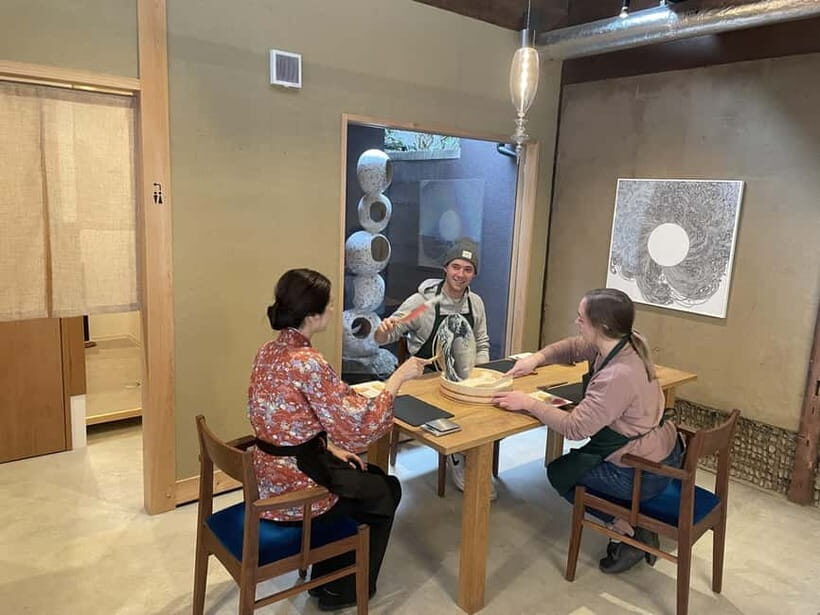
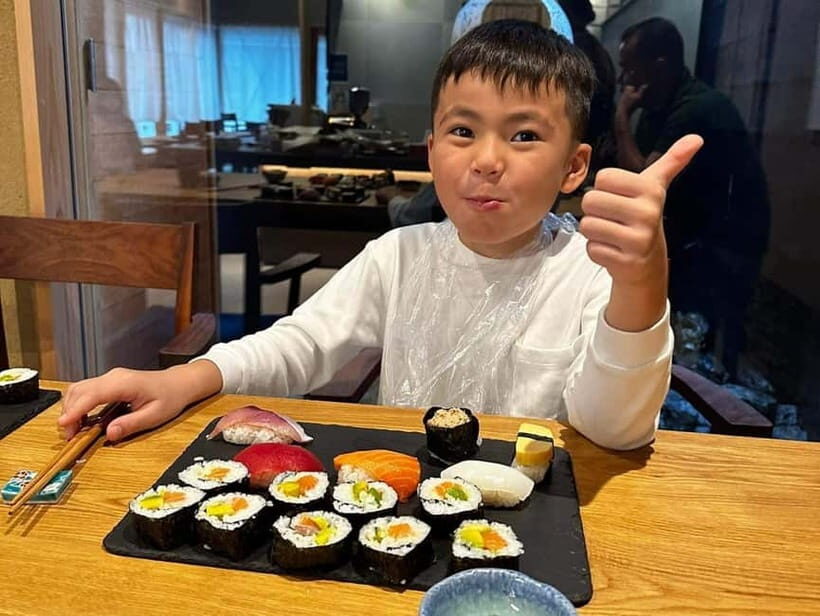
After you finish rolling and shaping, you’ll eat what you made. There’s a relaxed feeling at this point, because you’re not racing through a checklist. You sit in the workshop space, enjoy the sushi and miso soup, and you get room to ask questions.
This is where the workshop often becomes more than a cooking class. People typically want sushi tips for ordering in restaurants, and hosts are happy to talk about how Japanese food culture works—what matters, what to notice, and how technique shows up in the final dish.
Also: go hungry. Multiple people have described leaving full, with a lot of sushi for the class duration. If you only snack before you arrive, you’ll probably have a better time focusing on learning instead of worrying about whether you’ll get enough food at the end.
Finding Kyoto Wand Near Kiyomizu-dera and Gion
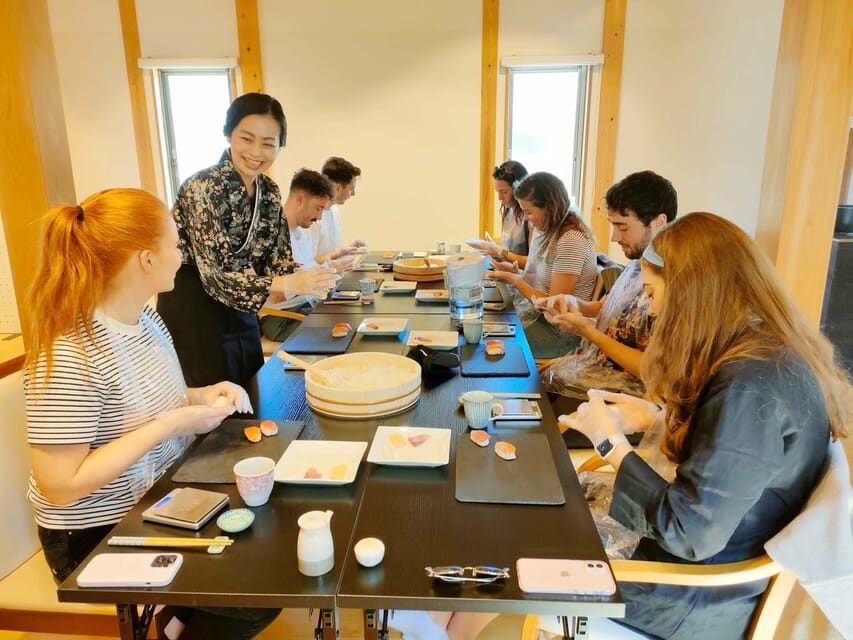
Logistics are refreshingly simple. The workshop takes place in the Kyoto Wand building, in a restored space. It’s minutes on foot from Kiyomizu-Gojō Station on the Keihan Main Line.
You’ll also be in a convenient area for Kyoto sightseeing. It’s within walking distance of major places like Kiyomizu-dera Temple and Gion, which makes it easy to fit into your day without a complicated commute. The Google Plus Code is XQVC+J7 Kyoto if you’re navigating with a phone.
One note: there’s no hotel pickup and drop-off. Plan to walk or use local transit on your own. The upside is that it keeps the day flexible—no waiting around for a van.
Price and Value: $60 for Skills, Lunch, and Tools
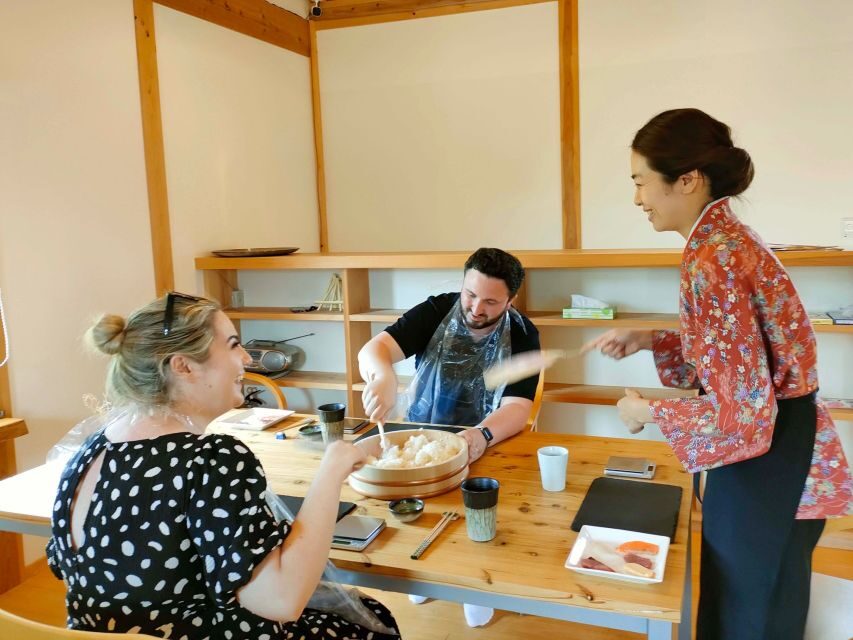
At $60 per person for 90 minutes, you’re paying for more than food. You’re paying for:
- Small-group attention (max 8 people)
- English instruction
- Fresh ingredients used during the class
- The lunch you make (sushi plus miso soup)
- Take-home tools: a rolling mat, chopsticks, and a recipe card
- Disposable gloves and an apron, so you can focus on technique
In plain terms, you’re buying a hands-on skill you can try again at home, plus a meal that feels earned. A lot of cooking classes teach technique but don’t feed you much. Here, you eat what you made, and people often mention it’s a satisfying amount.
If you’re doing Kyoto’s food circuit, this is also a good way to avoid the classic problem of eating great sushi without learning how to make anything yourself.
Who This Workshop Is Perfect For (And Who Should Skip)
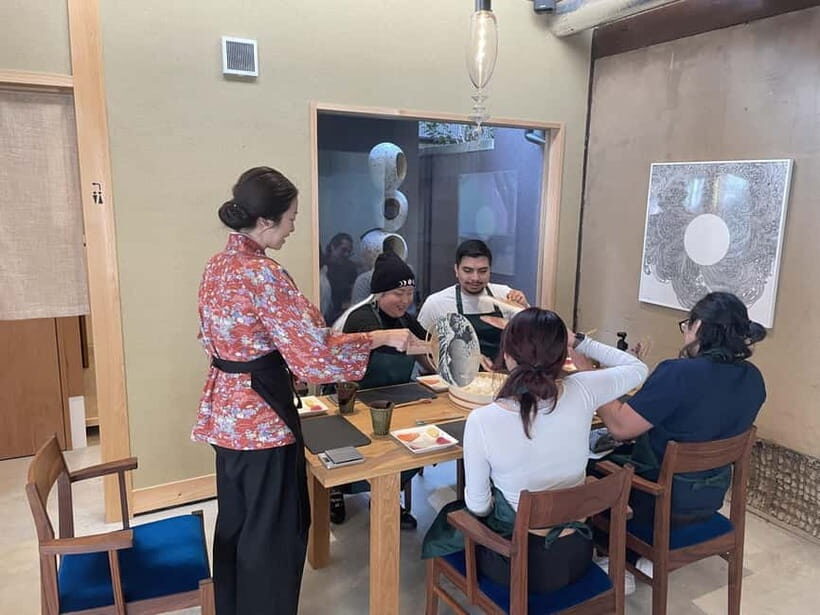
This workshop fits well if you:
- Want to learn real technique instead of copying a quick recipe
- Prefer smaller groups where questions are welcome
- Enjoy food culture conversation while you cook
- Are visiting Kyoto and want an activity that doesn’t feel like another “line and a photo” stop
You might find it less ideal if:
- You need vegetarian options (it’s not suitable for vegetarians)
- You’re using a wheelchair (it’s not suitable for wheelchair users)
- You’re expecting hotel-style convenience like pickup (you’ll need to get there yourself)
If you have allergies or special dietary limits, you should advise them when you book. They’ll need that info in advance.
Should You Book This Kyoto Sushi Workshop?
I’d book it if you want a Kyoto experience that’s calm, structured, and actually teaches you something you can use again. The small-group size, the English-led guidance, and the fact that you eat a lunch you made are the big reasons this stands out.
Book with confidence if you’re a beginner. You don’t need prior sushi skill to start, and the class pace is built for learning. And if you’re someone who loves food details—rice seasoning, shaping, rolling thickness—this is the kind of activity that sticks with you.
Skip it if you need vegetarian food or wheelchair accessibility. Otherwise, this is a strong pick for a memorable afternoon in Kyoto that combines technique, flavor, and conversation without the pressure.
FAQ
Is the sushi-making class taught in English?
Yes. The workshop is conducted in English, with an English-speaking host.
How long is the workshop, and how big is the group?
The workshop lasts 90 minutes and is limited to a small group of up to 8 participants.
What’s included in the price?
You get the sushi-making workshop with the English-speaking host, the sushi you make for lunch, miso soup, and a gift bag that includes a sushi rolling mat, chopsticks, and a recipe card. Disposable gloves and an apron are also provided.
Where do I meet for the workshop?
The workshop takes place in the Kyoto Wand building, minutes on foot from Kiyomizu-Gojō Station on the Keihan Main Line. The Google Plus Code is XQVC+J7 Kyoto.
Is hotel pickup included?
No. Hotel pickup and drop-off aren’t included.
Is it suitable for vegetarians or wheelchair users?
No. It’s not suitable for vegetarians, and it’s not suitable for wheelchair users.