REVIEW · BIKE & E-BIKE TOURS
Kyoto Shogun Cycling Tour
Book on Viator →Operated by KCTP · Bookable on Viator
A Shogun-themed bike ride is surprisingly fun. This private Kyoto ride mixes easy downhill momentum with guided visits to Kinkakuji, Toji-in, and Nijo Castle, so you cover major sights without slowing down for transit. I really like the included admission at every stop, and the way guides such as Seiya and Makoto explain what you’re seeing in clear English. One catch: it’s not offered for 1 person, and you do need to feel comfortable riding safely on public roads.
I also like the small-group feel (up to 6 per guide), which keeps the day feeling personal instead of rushed. The Toji-in stop is especially calming, with that wabi-sabi style focus on garden, quiet interiors, and a small tea-house atmosphere. If it’s raining, you can still ride with the provided rain poncho or switch to a walking tour using public transportation.
For about $153.50, the price feels fair because you’re getting the bicycle, helmet, rainwear, and entry tickets together—not just a route. Matcha service isn’t included, so if tea is part of your plan, you’ll want to budget for it separately.
In This Review
- Key things I’d plan around
- Riding Kyoto like a Shogun: what this tour really delivers
- Kinkakuji Temple (Golden Pavilion): gardens first, gold second
- Toji-in Temple: wabi-sabi Zen, quiet interiors, and a tea-house vibe
- Nijo Castle: the Tokugawa fortress where the Shogun era tightens
- The easy downhill ride: what to expect from the cycling itself
- Guides: the difference between seeing temples and understanding them
- Price and included extras: is $153.50 good value?
- Getting there: Wara Tenjin mae to Kyoto Station cycle terminal
- Rain and the plan B: bikes with ponchos or walking via transit
- Who this Shogun cycling tour fits best
- Should you book the Kyoto Shogun Cycling Tour?
- FAQ
- How long is the Kyoto Shogun Cycling Tour?
- What’s included in the tour price?
- Does the tour operate in rain?
- Is this tour suitable for children?
- Can I join as a solo rider?
- What if I need to cancel?
Key things I’d plan around
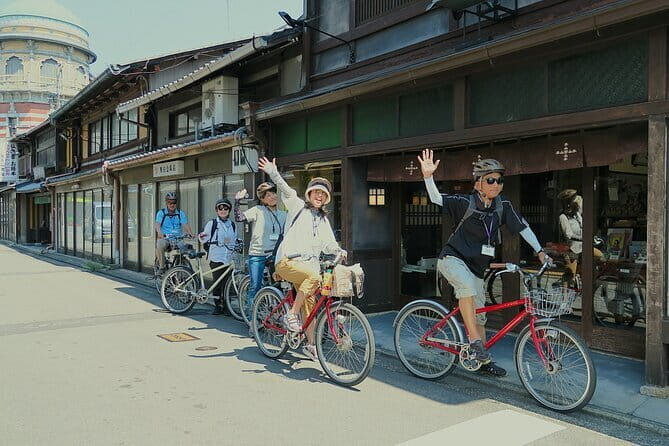
- Three iconic Shogun-era stops in one 3.5-hour private ride
- Guides with strong English and city smarts, including Seiya, Makoto, and Nozomi
- Helmet and rainwear included, plus a real rain plan
- Small-group format (min 2 guests, max 6 per guide)
- Admission tickets included for Kinkakuji, Toji-in, and Nijo Castle
- Wabi-sabi calm at Toji-in paired with fortress power at Nijo Castle
Riding Kyoto like a Shogun: what this tour really delivers
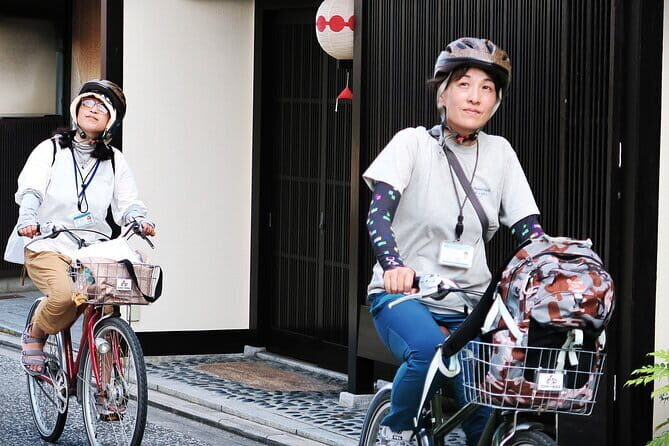
This tour works because it’s built around the best kind of Kyoto day: you get a clear structure (three major historical sights) and you move between them with a bike instead of waiting around. The route is described as easy downhill and suitable for everyone, which matters. It means the energy is about seeing places, not fighting your bike.
The format is also practical. Your group stays private, and with a maximum of 6 per guide, the guide can actually manage the pace. From the names that show up in guide feedback—Seiya, Yanai-San, Makoto, Yutaka Kaneda, Yasunobu Yagyu, Nozomi, Kaz, and JJ—you can expect that the human factor is a big part of the value. These guides are praised for crisp English and for turning big monuments into something you can picture and understand.
The only real limitation is the one that shows up on day one: solo riders aren’t accepted (minimum group size is 2). If you’re traveling alone, you’ll need to find a companion or look for a different format.
You can also read our reviews of more cycling tours in Kyoto
Kinkakuji Temple (Golden Pavilion): gardens first, gold second
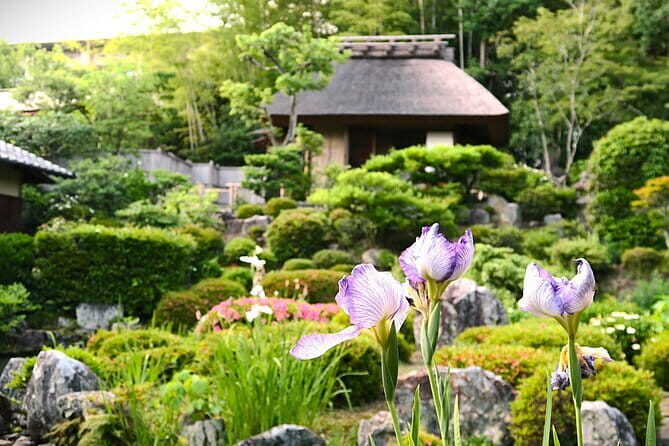
Your day starts at Kinkakuji Temple, the Golden Pavilion. You’ll visit with your guide and spend about an hour walking through the gardens around the temple building. This is a good start because it gives your eyes an easy on-ramp. Instead of sprinting from landmark to landmark, you’re eased into the setting—paths, landscaping, and the way the buildings sit inside the garden.
Why it’s worth your time: Kinkakuji is one of Kyoto’s most iconic sights, and the tour frames it in the context of the Ashikaga Shoguns. That government connection is part of what makes the pavilion feel more than just pretty. The gold-lined look is the hook, but the story makes it stick.
A practical consideration: this is a top-name stop, so you should expect crowds. The one thing a good guide changes here is flow. If you keep moving with the group and listen for what to notice in the surroundings, the garden walk becomes more than a photo line.
Toji-in Temple: wabi-sabi Zen, quiet interiors, and a tea-house vibe
Next comes Toji-in Temple, and this is the contrast stop that makes the whole ride feel balanced. You’ll spend about an hour inside, with your guide showing you the interiors of this quieter, historic temple.
Toji-in is described as an example of Japanese wabi-sabi Zen minimalism. In plain terms: it’s not about spectacle. It’s about restraint—groomed garden lines, calm spaces, and a teahouse feel that belongs to older rhythms. The tour also points out the idea of Zen masters contemplating the world, and that context matters when you’re standing in a place built for still attention.
Here’s the practical angle: the visit can feel peaceful, but you’ll still be on a bike tour schedule. So treat it like a calm hour, not a long lingering session. If you like quiet temples, this stop is your reward for riding.
One more thing to know: matcha service isn’t included. If you’re hoping to add tea to the experience, keep that in mind so it doesn’t surprise you mid-visit.
Nijo Castle: the Tokugawa fortress where the Shogun era tightens
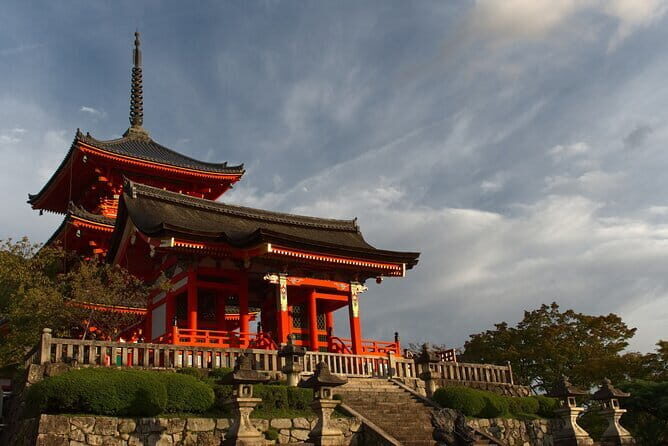
Your final stop is Nijo Castle, and it’s the longest block of time on the tour at about 1 hour 30 minutes. The tour frames it as the home of the Tokugawa Shogunate in Kyoto for the final shoguns, with a sense that this is where an era is already changing.
This stop gets your brain working again after the quiet of Toji-in. You’ll move through the grounds of the castle residence, where ornamental carvings and magnificent buildings help you understand how power was displayed in wood, design, and stone layout.
Why the extra time helps: castles are visual systems. When you have more time, you’re not just checking boxes; you can step back, follow the flow, and notice how the design supports status and control. The tour also highlights that the site carries about 400 years of history and was the setting for many historical events. That’s exactly the kind of framing a guide can make practical—otherwise it’s easy to get lost in the details.
The easy downhill ride: what to expect from the cycling itself
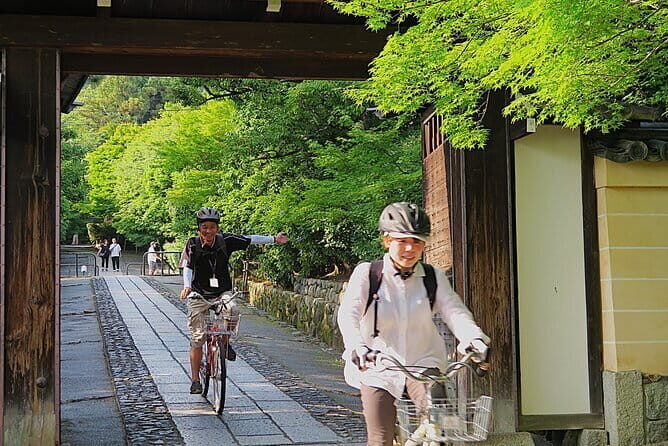
The headline promise is an easy downhill route. That doesn’t mean you can relax completely. You’ll still be riding in Kyoto conditions, and the rules for kids make the point clear: children must be at least 10 years old, 145 cm or above, and able to ride a bicycle safely on the road unassisted.
So for adults too, the takeaway is simple: if you’re comfortable riding outdoors and you can stay alert, you’ll be fine. If you’re shaky with balance or you avoid roads, this is the part to think through before booking.
The pacing works because the tour length is tight and predictable: about 3 hours 30 minutes total. The stop lengths are clearly divided—about an hour at Kinkakuji, about an hour at Toji-in, and about 1.5 hours at Nijo Castle—so you’re not stuck guessing how long you’ll be away from the bike.






Guides: the difference between seeing temples and understanding them
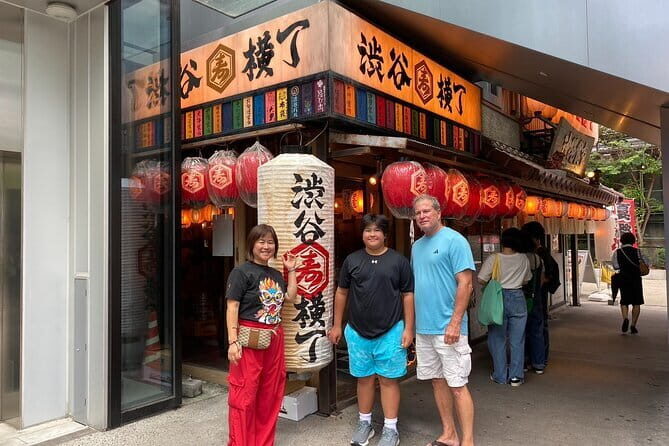
What repeatedly shows up in the feedback is guide quality. People call out guides like Seiya for being incredible knowledgable about Kyoto and for having brilliant English. Nozomi gets praise for excellent information around Shinto and Buddha temples, plus visits connected to places like Gion and the Imperial Palace area. Makoto earns credit for being personable and helpful, even building in flexibility when a local festival was happening.
Yutaka Kaneda and Yasunobu Yagyu get named with the same pattern: strong English, insider tips, and route decisions that add context without turning the day into a lecture. The vibe is that you don’t just stand in front of landmarks; you get reasons to look closer.
That’s what makes this tour feel “worth it” even if you’ve visited Kyoto sights before. The bike gets you between places, but the guide is what turns those stops into something you can actually retell later.
Price and included extras: is $153.50 good value?
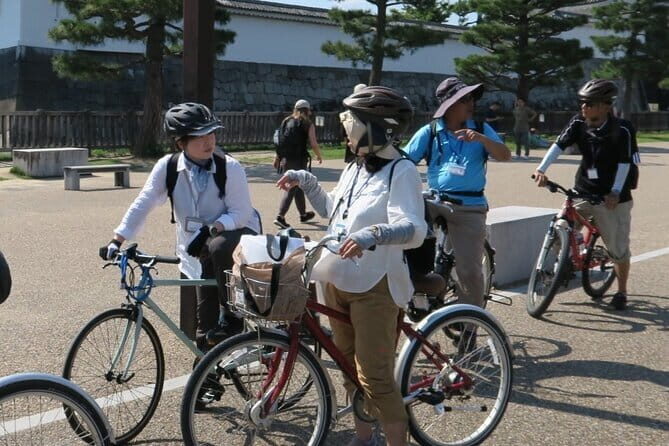
At $153.50 per person for about 3.5 hours, the price only makes sense because key costs are bundled in.
You’re included for:
- bicycle use
- helmet
- rainwear
- admission tickets at each stop
That’s a big deal in Kyoto, where temple entry adds up and where last-minute rentals can eat time and energy. Here, the tour handles the basics so you can focus on the experience. You also get a mobile ticket, which tends to make check-in easier.
What’s not included:
- matcha service
So if you want the full tea-house moment, plan to pay for it separately. For most people, that’s a small add-on. But knowing it up front keeps the day from feeling like a surprise bill at the end.
Getting there: Wara Tenjin mae to Kyoto Station cycle terminal
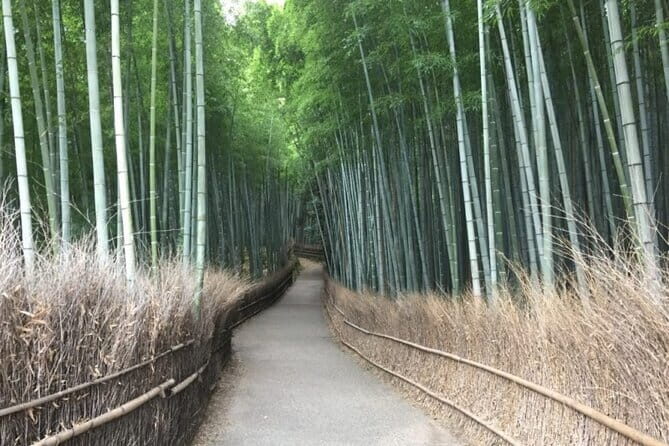
The tour starts at Wara Tenjin mae (Kyoto, Kita Ward) and ends at the Kyoto Cycling Tour Project at the Kyoto Station Cycle Terminal (Shimogyo Ward). The locations matter because Kyoto traffic can be annoying and Kyoto stations are huge.
The good news: the tour notes you’ll be near public transportation. Use the addresses and get your bearings early. If you’re taking trains that day, Kyoto Station is often easier as an end point, since you can roll straight into your next plan.
Also, the meeting point is different from where you finish, so don’t assume you’ll bike back to your starting location. Build your schedule around the end at Kyoto Station.
Rain and the plan B: bikes with ponchos or walking via transit
One reason I’d feel comfortable booking this is the rain policy is practical. The tour runs in rain. You can continue on bikes using the rain poncho at no extra cost.
If you’d rather not ride in wet conditions, you can switch to a walking tour using public transportation, and that is included in the tour fee. That’s the kind of option that saves your day if rain turns uncomfortable or visibility feels poor.
Who this Shogun cycling tour fits best
This is a strong pick if you want:
- a guided day with clear stops (not a self-made itinerary)
- cycling that’s described as easy and downhill-leaning
- a history-focused route centered on Kinkakuji, Toji-in, and Nijo Castle
- a small private group so you can ask questions and keep pace
It also works well for families with kids who meet the riding rules (10+ and 145 cm+) and who are genuinely comfortable riding on the road.
If you want a tour that feels like it was designed for people who can’t handle bikes or who need to go at a very slow, stop-anytime pace, this probably won’t match. The structure is tight, and it’s a real ride between three stops.
Should you book the Kyoto Shogun Cycling Tour?
I’d book it if your dream Kyoto day includes three things in one afternoon: the Golden Pavilion area, the quieter Zen-feeling of Toji-in, and the power-story of Nijo Castle—plus a bike that lets you cover ground without turning the day into logistics.
I wouldn’t book it if you’re traveling solo, because the format has a minimum of 2 guests per guide. And I’d think twice if you’re uneasy riding outdoors on public roads, since even the child criteria depend on safe unassisted riding.
Finally, check your plans knowing that policies can be strict: the cancellation policy states this experience is non-refundable and cannot be changed for any reason. On the upside, the rain plan is clearly built to keep the day moving.
FAQ
How long is the Kyoto Shogun Cycling Tour?
The tour lasts about 3 hours 30 minutes, with roughly 1 hour at Kinkakuji, 1 hour at Toji-in, and 1 hour 30 minutes at Nijo Castle.
What’s included in the tour price?
You get bicycle use, a helmet, rainwear, and admission tickets for each stop. Matcha service is not included.
Does the tour operate in rain?
Yes. The tour will run in rain. You can either continue cycling with a rain poncho at no extra charge or switch to a walking tour using public transportation, which is included in the tour fee.
Is this tour suitable for children?
Children must be at least 10 years old, at least 145 cm tall, and able to ride a bicycle safely on the road unassisted.
Can I join as a solo rider?
No. The tour accepts a minimum of 2 guests per guide and does not accept 1-person participants.
What if I need to cancel?
The stated policy is that the experience is non-refundable and cannot be changed for any reason. If the tour is canceled because the minimum number of travelers isn’t met, you’ll be offered a different date/experience or a full refund.