REVIEW · SAMURAI EXPERIENCES
Kyoto: Samurai Sword & Kimono Action Filming Experience
Book on GetYourGuide →Operated by GOATtrip株式会社 · Bookable on GetYourGuide
Samurai swordplay in a real temple yard.
I love that this Myokaku-ji experience turns a famous Kyoto theme into hands-on practice: you learn basic sword techniques, then you step into a short on-camera chambara sequence. What makes it especially fun is the combo of skill-building, kimono dressing, and a filmed result you can actually take home.
I also like the human side. The instructors are Japanese and English speakers, and some are period-drama actors, including Kesuke Irie San and Kazuya Naito San, who (in my experience of the vibe) bring patience and humor to keep it from feeling stiff. One drawback: it’s physical. You’ll be holding and wielding a sword prop in a crouched stance and doing choreographed moves, so wear comfy clothes and be honest about your mobility.
The setting is historic too, with the temple area tied to Sengoku-era legends like Oda Nobunaga. Plan on bringing your own camera, since the experience includes photography and video and also a photo download service at the end, but transportation and meals aren’t included.
In This Review
- Key Points I’d Prioritize
- Myokaku-ji Dojo: Training Where the Sengoku Legends Walked
- 70 Minutes of Sword Tricks: Makkogiri to Kesagiri
- Kimono Dressing: Fun Costume Time Without the Hassle
- Watching the Chambara Performance by Period-Drama Pros
- Your Camera Moment: Filming the Sword Sequence
- Price and Value: Is $127 Worth It?
- How to Plan: Where to Go, What to Wear, What to Bring
- Small Group Energy: Up to 6 Makes It Work
- Who Should Book (and Who Should Skip)
- Should You Book This Samurai Sword and Kimono Experience?
- FAQ
- Where do I meet for the experience?
- How long is the activity?
- Is kimono dressing included?
- Can I bring and use my own camera?
- Do I get the photos or video afterward?
- What languages are the instructors?
- What should I wear and bring?
- Is transportation or meals included?
- Who is this not suitable for?
- Is there a refund if I cancel?
Key Points I’d Prioritize
- Myokaku-ji is the place to do sword techniques in Kyoto (described as the only place in Japan where you can do so).
- Makkogiri and kesagiri technique training before you act out the final sequence.
- Kimono rental is included, and you dress in a traditional outfit during the experience.
- Chambara performance by professional actors based on bushido training and period-drama choreography.
- You perform, then film, with your own camera and a photo/video download service to keep the memory.
- Small group size (up to 6) means you’re not just watching from the side.
Myokaku-ji Dojo: Training Where the Sengoku Legends Walked
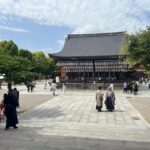
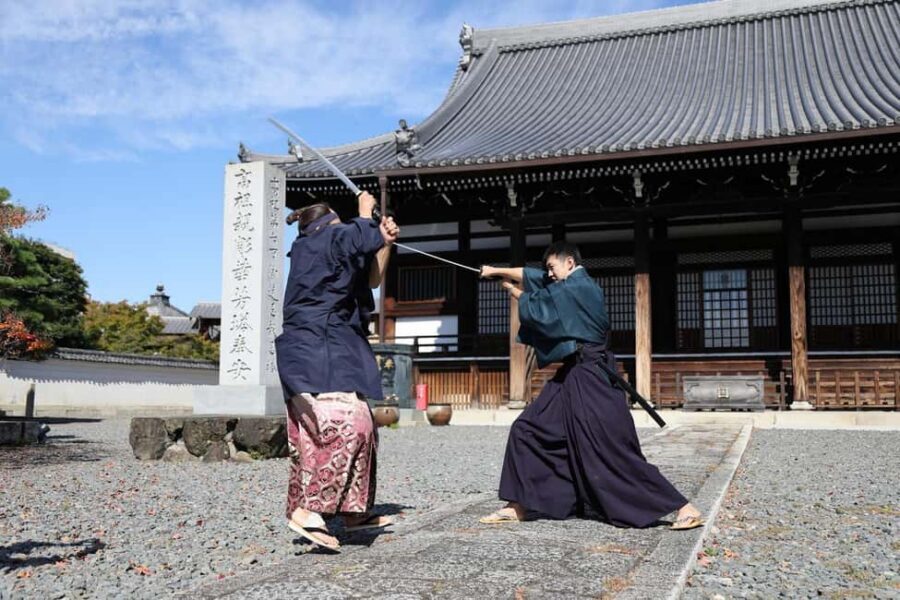
This experience happens at Myokaku-ji Temple on Honshu, and the key word here is setting. You’re not in a generic studio. You’re in a real temple environment, and the story connected to Sengoku warlords like Oda Nobunaga gives the whole class extra weight, even when you’re laughing at your own sword pose.
Your meeting point is specific: gather at Myokaku-ji Dojo, to the left after you enter the main gate of Myokaku-ji Temple. That matters because this is a short 70-minute session. If you wander and arrive late, you’ll feel it.
A nice practical touch is the skip-the-line access via a separate entrance. Kyoto can slow you down fast, so having a streamlined entry helps you keep your day on schedule. You still have to find the dojo, but once you’re there, the pacing moves.
You can also read our reviews of more tours and experiences in Kyoto.

70 Minutes of Sword Tricks: Makkogiri to Kesagiri
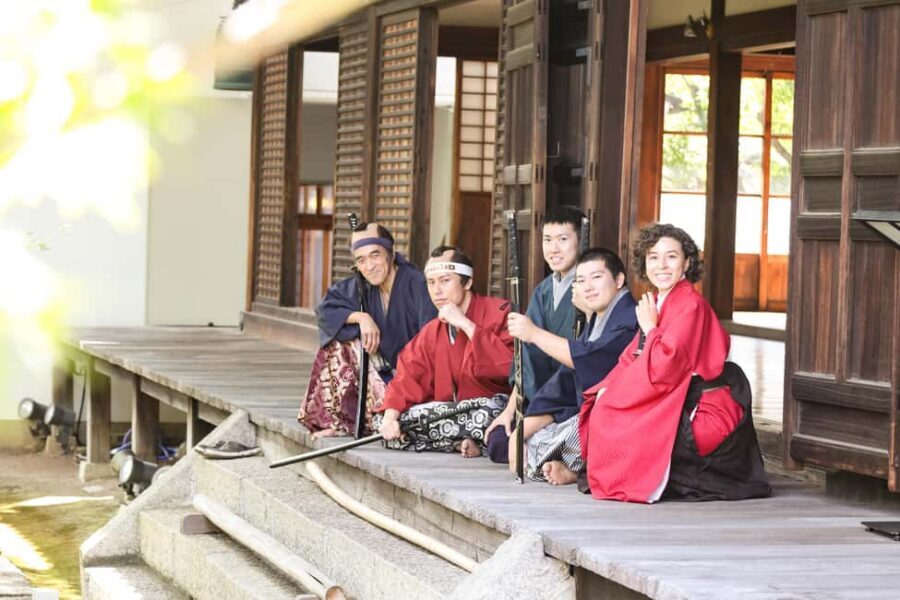
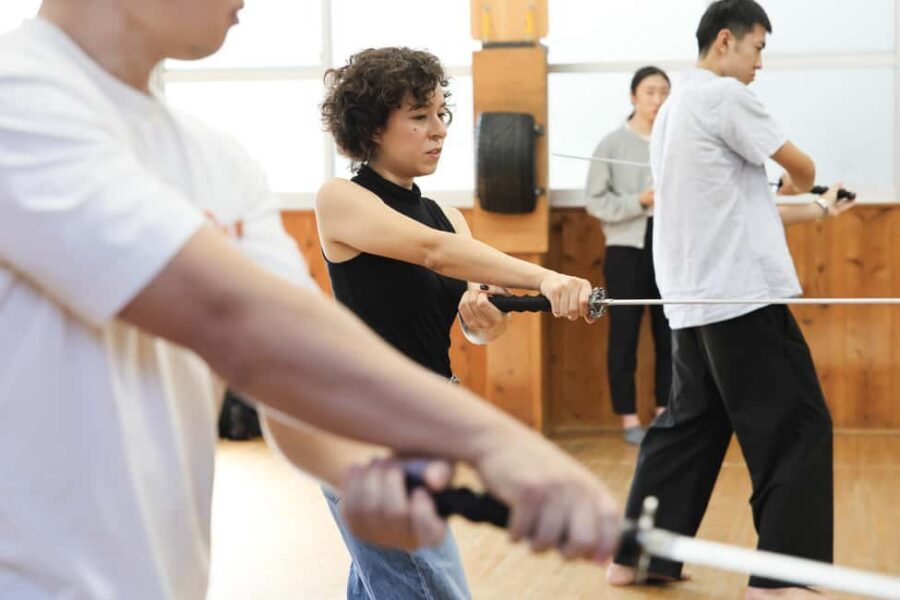
The program is built like a mini-action-movie workflow: basics first, performance second. You start with instruction on holding and wielding the sword prop. Then you work on techniques like makkogiri and kesagiri, which are taught so you’re not guessing or copying blindly.
What I like about this structure is that it balances two goals you want from a Kyoto activity like this. One: you get real technique cues, not just a show. Two: you don’t spend the entire time “training like a kendo class.” Instead, you learn just enough to participate in the choreographed fighting scene.
You’ll be guided through how to move safely and confidently. The group stays small (up to 6), which helps because instructors can adjust posture and hand position when you need it. If you’ve never done this before, that individual attention makes the difference between awkward and actually fun.
Kimono Dressing: Fun Costume Time Without the Hassle
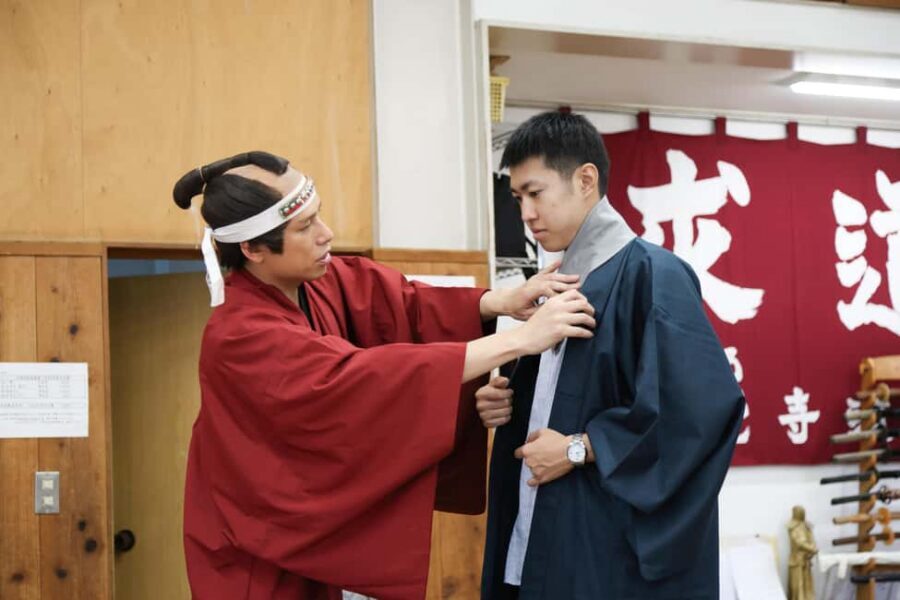
Kimono dressing is included, and it’s a big part of why this tour works. The kimono isn’t just for photos; it changes how you move and stand, which makes your sword poses feel more “period drama” than cosplay cosplay.
The important thing is what you wear before you get dressed. The experience asks for comfortable clothes suitable for physical activity, and that’s exactly right thinking. You’ll be training and posing, so dress in layers that won’t restrict you. You also want clothes that are easy to handle because your kimono dressing will take time.
This is also one of those activities where the outfit helps you stay in the moment. When the kimono goes on, your brain stops treating the day like a museum stop and starts treating it like a role.
Watching the Chambara Performance by Period-Drama Pros
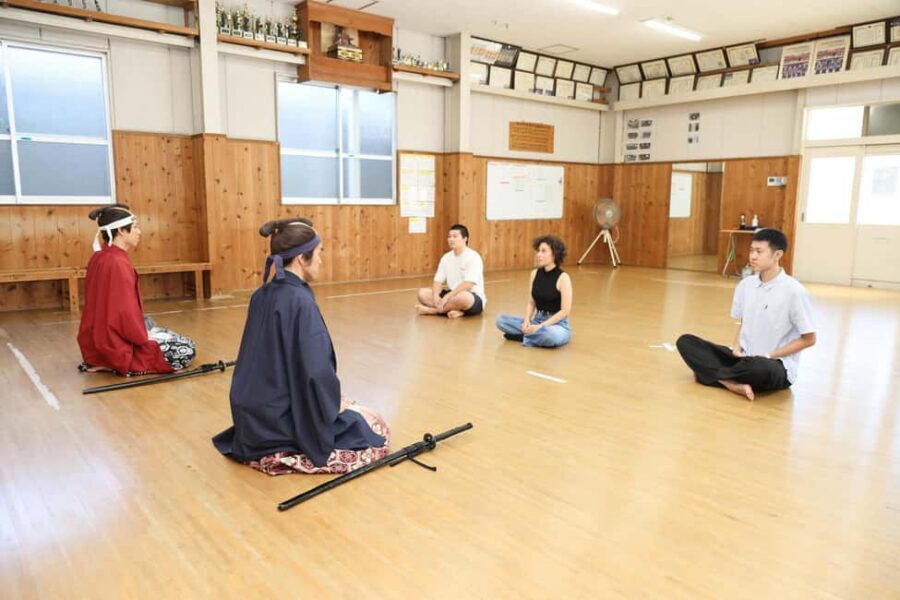
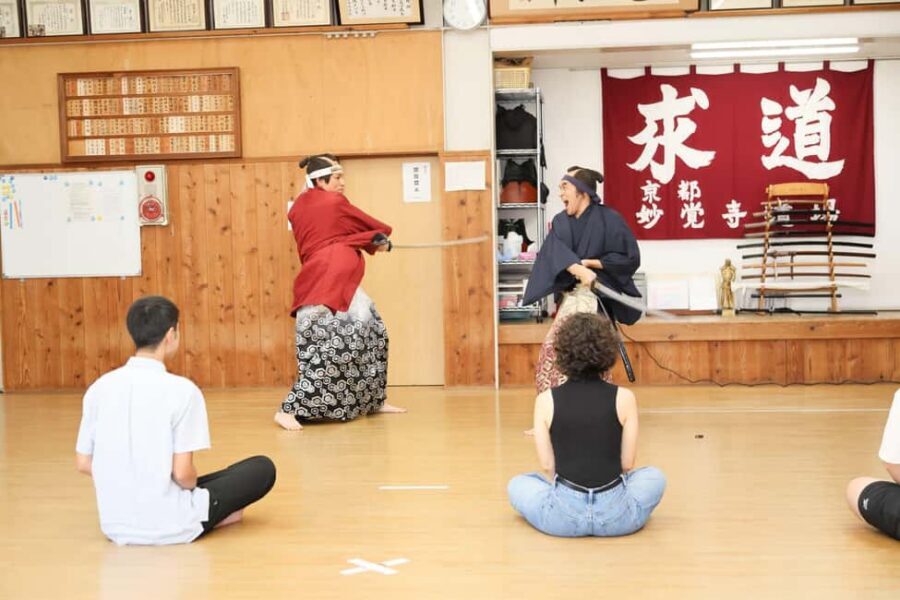
After the instruction portion (and kimono dressing), you watch a chambara performance by professional samurai actors. This is where the experience earns its credibility. The performance is meant to show authentic samurai skills shaped by bushido training and the kind of choreography you’d expect in period dramas.
I like that you’re not just watching a random reenactment. The instructors are professional actors, so the timing and movement feel designed for an audience. It’s performance, yes, but it also gives you a visual map for what you’ll do next: stance, sword angle, pace, and how the fight “reads” when it’s acting rather than real combat.
Also, it’s entertaining without requiring you to be a movie buff. Even if you don’t know chambara conventions, your body understands what’s happening after seeing it once.
Your Camera Moment: Filming the Sword Sequence
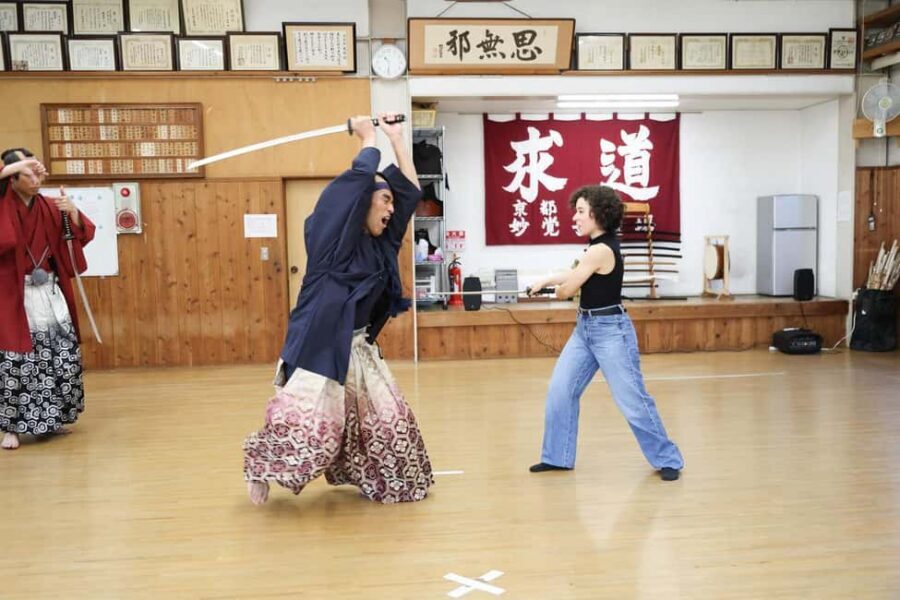
This is the part that turns a lesson into a souvenir. After you learn the techniques, you perform the sword moves for the final scene. The experience includes photography and video recording, and you’re welcome to shoot your own footage with your camera as well.
So you’ll get two things:
- Your own recorded clip(s), captured by you
- A “finished memory” via the included photo download service
That download piece matters. A lot of Japan experiences rely on “good luck with your photos.” Here, you’re planning for a digital takeaway, which is the difference between a nice day and a day you can rewatch later.
One practical tip: bring your camera fully charged and ready. The session is short, and action moves happen quickly. If you waste time checking settings while you’re supposed to practice, you’ll feel it in the schedule.
Price and Value: Is $127 Worth It?
At $127 per person for about 70 minutes, this isn’t the cheapest thing you can do in Kyoto. But it also isn’t priced like a casual photo spot. You’re paying for multiple “value buckets” in one tight window:
- Hands-on instruction in sword techniques (not just watching)
- A chambara-style performance by professional actors
- Kimono rental included
- Filming support, photography/video recording, and a photo download service
The big value point is that you don’t have to coordinate multiple vendors. You get costume, coaching, acting, and recorded results in a single session. The main thing that might lower the value for some people is what’s not included: transportation to and from Myokaku-ji Temple and meals. If you’re already close by, you’ll feel like it’s a fair trade. If you’re far, you may feel the extra travel cost.
Also consider the group size. Because the group is limited to 6, you’re more likely to get guidance rather than being background scenery.
How to Plan: Where to Go, What to Wear, What to Bring
This activity is tightly timed. Check starting times based on availability, and plan to arrive a few minutes early so you can locate the dojo left after the main gate.
What to bring:
- Your camera
- Comfortable clothes for physical activity
You can take photos and videos during the experience, and photography/video recording is included with your camera. That means you should come ready to record without obsessing over filming every second.
What not to do:
- No smoking
- No alcohol and drugs
That’s standard, but it also keeps the environment calm while you’re in costume and training.
Small Group Energy: Up to 6 Makes It Work
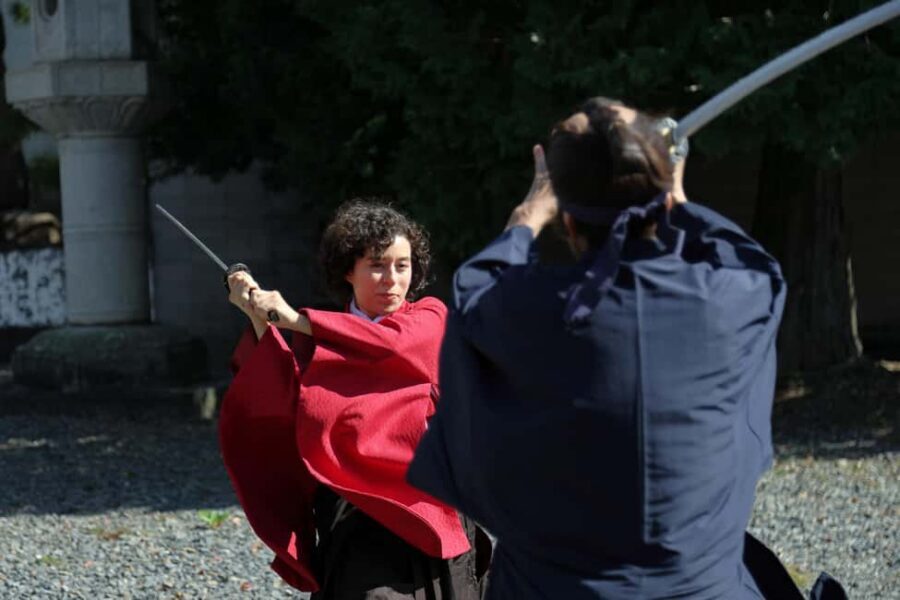
A small group changes everything in an activity like this. With up to 6 participants, you can learn at a pace that fits beginners. You can ask questions in English or Japanese without feeling like the instructor is stuck in a one-size-fits-all script.
This also affects the fun factor. If you’re the kind of person who worries about doing things wrong in front of others, you’ll probably relax here because the vibe is playful. You’re learning, acting, and moving, not judging a performance like a formal test.
A name-drop for context: Kesuke Irie San and Kazuya Naito San have been involved as instructors/actors, and their approach is part of the reason people leave feeling both entertained and coached.
Who Should Book (and Who Should Skip)
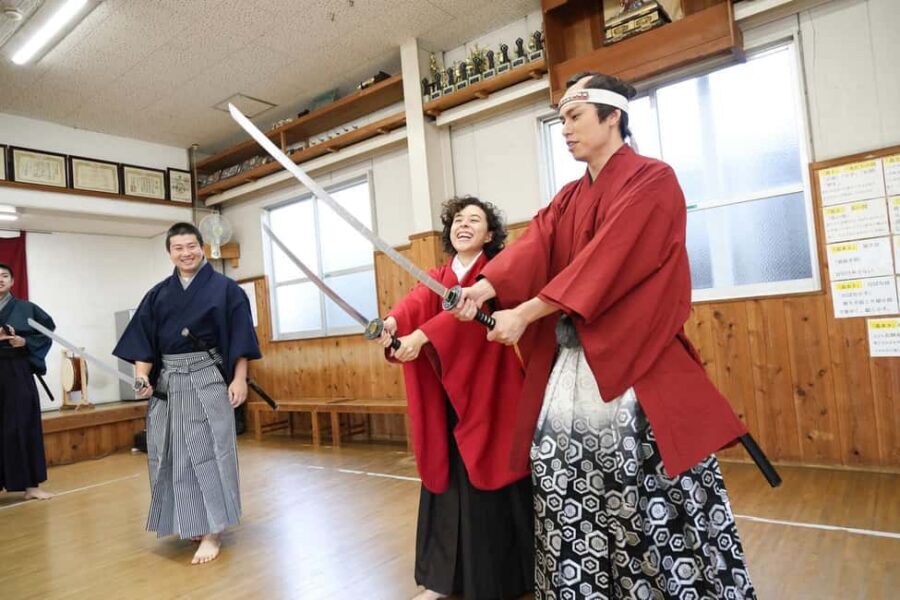
This is best for adults and older kids who want to do something active and theatrical, not just observe.
It’s not suitable for:
- Children under 5
- Pregnant women
- People with back problems
- People with pre-existing medical conditions
- People over 95
Even if you’re generally healthy, think about the physical demands: holding and wielding a sword prop, maintaining stances, and following choreography. If you have concerns about your back, balance, or range of motion, skip it or ask in advance if modifications are possible (the tour data doesn’t mention modifications).
Who tends to love it:
- People who want a hands-on Kyoto experience that creates a real keepsake
- Anyone drawn to Japanese sword culture, even if you’re brand new
- Families going for shared laughter and a film souvenir (as long as age requirements fit)
Should You Book This Samurai Sword and Kimono Experience?
Book it if you want a Kyoto activity that’s equal parts practice and play, and you like the idea of leaving with filmed footage plus kimono memories. The price can make you hesitate, but the included kimono rental, technique instruction, professional chambara performance, and photo download service make it feel like a complete package rather than a simple “try it for a minute” stunt.
Skip it if you can’t handle light physical activity, you’re dealing with mobility or medical restrictions, or you hate doing anything that involves posing and choreography. Also, if you’re planning to take on long transfers in a busy Kyoto day, factor in transportation because it’s not included.
If your schedule allows a 70-minute block and you can show up with a camera and comfy clothes, I think this is one of those experiences that turns into an easy story you’ll actually show later.
FAQ
Where do I meet for the experience?
Meet at Myokaku-ji Dojo, to the left after entering the main gate of Myokaku-ji Temple.
How long is the activity?
The experience lasts 70 minutes.
Is kimono dressing included?
Yes. Rental kimono is included in the experience.
Can I bring and use my own camera?
Yes. You can take photos and videos during the experience, and photography and video recording are included with your camera.
Do I get the photos or video afterward?
You get a photo download service as part of what’s included.
What languages are the instructors?
Instructors speak Japanese and English.
What should I wear and bring?
Bring a camera and wear comfortable clothes suitable for physical activity.
Is transportation or meals included?
No. Transportation to/from Myokaku-ji Temple and meals are not included.
Who is this not suitable for?
It’s not suitable for children under 5, pregnant women, people with back problems, people with pre-existing medical conditions, and people over 95.
Is there a refund if I cancel?
Yes. Free cancellation is available up to 24 hours in advance for a full refund.