REVIEW · KIMONO RENTAL & PHOTOSHOOT
Kyoto: Kimono Tea Ceremony with Matcha and Sweet
Book on GetYourGuide →Operated by GLOBA Inc. · Bookable on GetYourGuide
A well-made matcha starts with ritual. This Kyoto kimono and tea ceremony blends hands-on matcha, seasonal sweets, and respectful etiquette teaching in a calm tatami tea room.
I like that you don’t just watch—you get guidance, then make your own bowl. I also like that the session connects each step to simple Zen ideas, so it feels meaningful instead of staged.
One possible drawback: kimono dressing and the photo rhythm can move fairly fast, and the traditional tatami seating may feel like work if you’re sensitive to low seating. If you’re picky about comfort, request the chair option ahead of time.
In This Review
- Key things you’ll actually notice
- Kyoto’s kimono-and-tea ceremony: more than a souvenir activity
- Your 90-minute flow: from kimono fitting to your matcha bowl
- The tea master lesson: etiquette, tools, and Zen values that connect
- Making matcha yourself: what you’re learning with every whisk
- Wagashi in Kyoto: seasonal sweets with a reason to slow down
- Kimono dressing details that actually affect your comfort
- Seating and chairs: tatami is traditional, not always friendly
- Group size: about 12–14 people, and that matters
- Price and value: is $66 worth it?
- Who should book this Kyoto tea ceremony with matcha and wagashi
- When to go and how to plan your day
- Should you book this Kyoto kimono tea ceremony?
- FAQ
- How long is the Kyoto kimono tea ceremony with matcha?
- Is it an English-language tea ceremony?
- Do I have to sit on tatami mats?
- Does the price include kimono dressing and hair styling?
- Can children join the ceremony?
- What’s included, and is transportation provided?
- Is free cancellation available?
Key things you’ll actually notice
- Kimono dressing as a full part of the experience, not a quick change-and-go
- English-led tea instruction with patient, slow guidance from hosts like Maki and Megumi
- Make-your-own matcha, using premium powder and learning the aim of the whisking process
- Seasonal wagashi, so the sweets’ look and flavors shift with the time of year
- Zen values taught in plain language: Wa, Kei, Sei, Jaku
- Small-group feel (about 12–14 participants), which makes questions easier
Kyoto’s kimono-and-tea ceremony: more than a souvenir activity
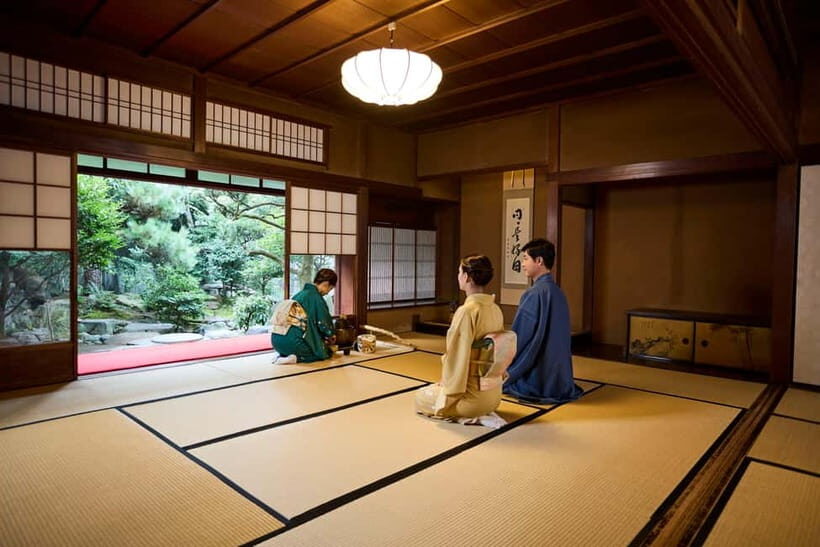
Kyoto does “tradition” well, but a lot of experiences still feel like a checklist. This one works better because it’s built around a full tea ritual: the room, the tools, the gestures, and the reasons behind them. The kimono isn’t just costume dressing—it’s part of training your posture, your pace, and your attention.
What makes it satisfying is the balance. You’ll learn the history, tools, and etiquette, then you’ll put that knowledge into action by preparing matcha yourself. And because the staff explain what the ceremony is trying to cultivate—Wa (harmony), Kei (respect), Sei (purity), and Jaku (tranquility)—the whole thing lands as a calm lesson, not a performance.
You can also read our reviews of more tours and experiences in Kyoto.


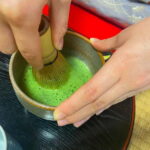
Your 90-minute flow: from kimono fitting to your matcha bowl
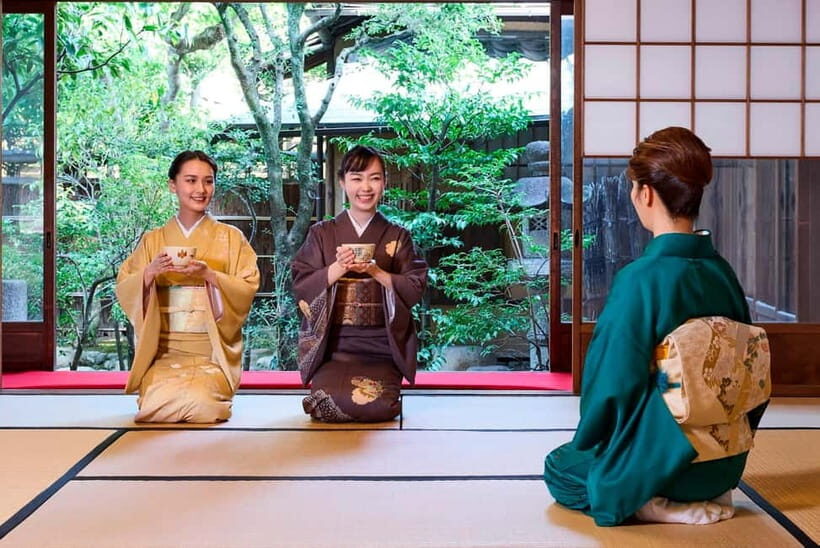
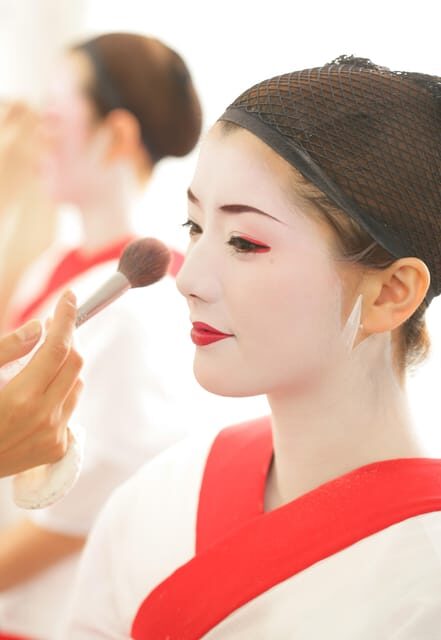
The experience is designed to start with the kimono. Staff help you get dressed, and you’ll also get hair styling if you’re a woman with long hair (long hair only). The idea is simple: once you’re in the outfit, you’ll move with the ceremony rather than switching modes halfway through.
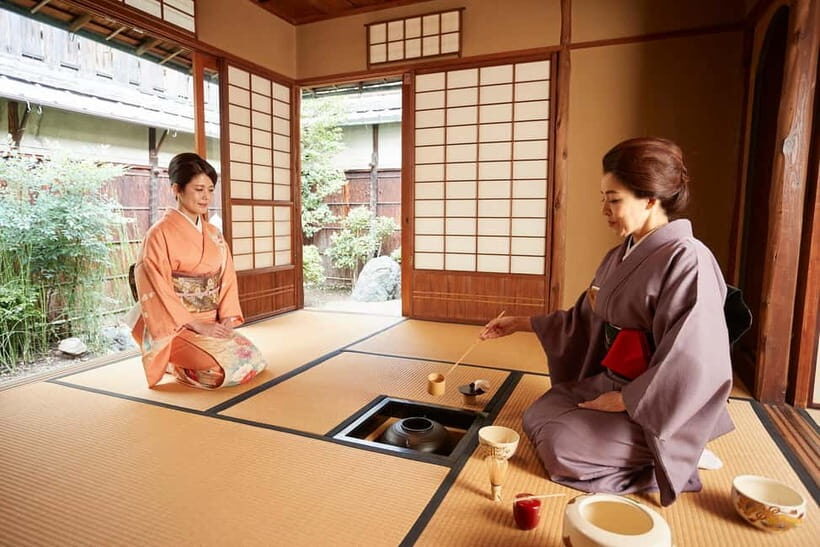
Next you step into the tea room, where the tools and utensils are carefully arranged for the ritual. You’ll sit on tatami mats as is customary, but you can request wooden chairs, and bamboo chairs can be requested in advance if tatami isn’t your thing. The pacing matters here: you’re shown the steps, then you’re guided through making a bowl of matcha.
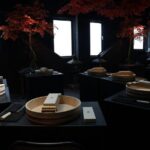
After you make your matcha, you’ll enjoy traditional Japanese sweets called wagashi. The wagashi change with the season—flavor, color, and design—so your session feels specific to the moment you’re in Kyoto, not a copy-paste script.
The tea master lesson: etiquette, tools, and Zen values that connect
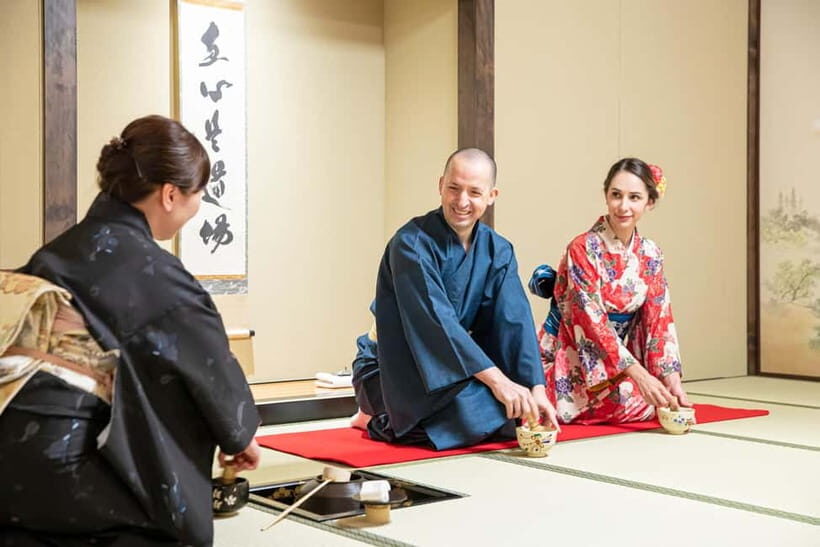
A lot of tea ceremonies stop at the “how.” This one also teaches the “why.” You’ll be guided through the tea-making process while learning the history, the meaning of the tools, and the etiquette that shapes each step. That’s why people finish this feeling they didn’t just collect photos—they gained a framework.
The staff explain Zen principles in a practical way. Wa is harmony—how you share space and move calmly. Kei is respect—how you handle utensils and follow the order of things. Sei is purity—how care and cleanliness show up in preparation. Jaku is tranquility—how the ceremony creates quiet focus.
If you’re worried about language, don’t be. Sessions are led in English, and staff assistance is bilingual. Reviews point to hosts like Maki and Megumi offering clear, slow explanations, and they make it easy to participate instead of watching from the sidelines.
Making matcha yourself: what you’re learning with every whisk
This is the hands-on part that turns the experience from “nice” into “I can do this.” You’ll learn how to make your bowl of matcha using high-quality matcha powder, and you’ll practice the steps rather than simply receiving a cup.
Think of it like a short skill lesson. The goal isn’t to impress anyone with speed—it’s to learn how to approach the process with intention. The staff guide you through what they’re looking for, then you do the work yourself, supported the whole time.
And because you’re preparing it in the context of the ceremony, matcha becomes more than a drink. You experience it as a ritual object—handled carefully, made with attention, and served with seasonal sweets. If you like food experiences that explain technique and meaning, this is a strong fit.
Wagashi in Kyoto: seasonal sweets with a reason to slow down
Wagashi are part dessert, part art, and part cultural storytelling. You’ll be served Japanese sweets during the tea ceremony, and the selection changes with the season—so you’re likely to see different colors, flavors, and designs depending on when you go.
What’s worth noting is how wagashi reinforces the ceremony pace. You aren’t just eating between steps; the sweets are woven into the atmosphere. That makes the tasting feel like a break in the ritual rhythm rather than a separate snack moment.
If you’re the type who pays attention to details—textures, sweetness level, and presentation—wagashi is where you’ll appreciate the care. And if you’re more practical, it still works because the staff guide you on what you’re eating and when it fits into the flow.



Kimono dressing details that actually affect your comfort
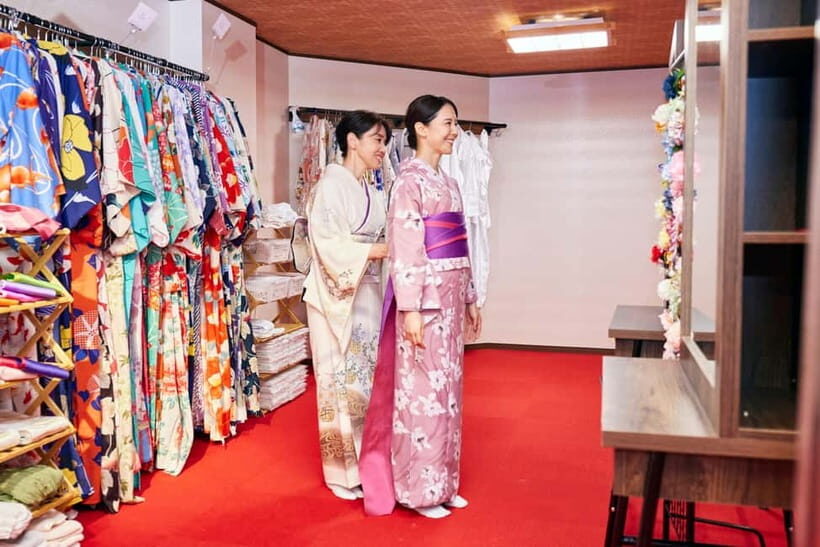
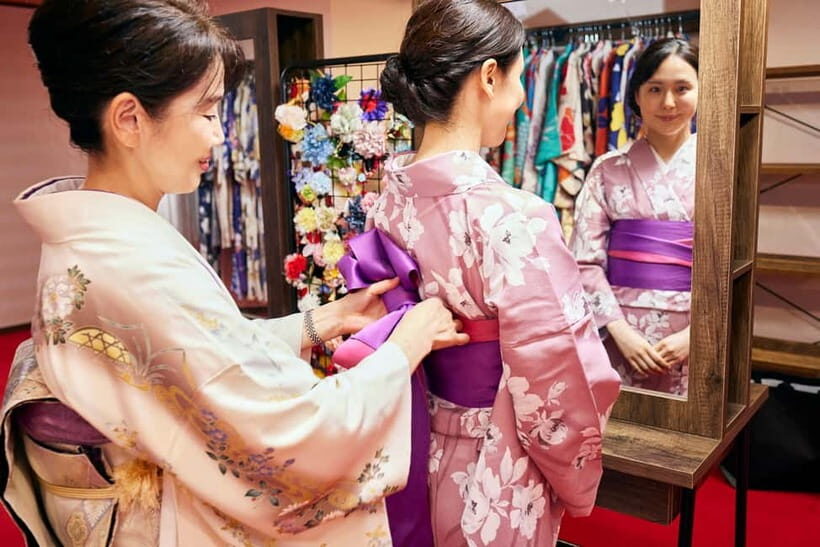
Kimono dressing isn’t one uniform experience. You’ll choose a kimono, and staff help with the fitting process, aiming for a beautiful result that you can wear during the ceremony. Reviews mention variety in styles and sizes, plus the obi (belt), and even kimono socks.
For women, hair styling is included, but only for long hair. That’s important because if your hair is shorter, you’ll want to plan accordingly. Some participants also mention picking hair flowers, which can add a lovely personal touch and makes photos look extra intentional.
Practical tip: if you care about makeup, plan to do it earlier. One review highlighted that the dressing phase can feel quick, so you may not have time for last-minute touch-ups once you’re in the outfit.
Seating and chairs: tatami is traditional, not always friendly
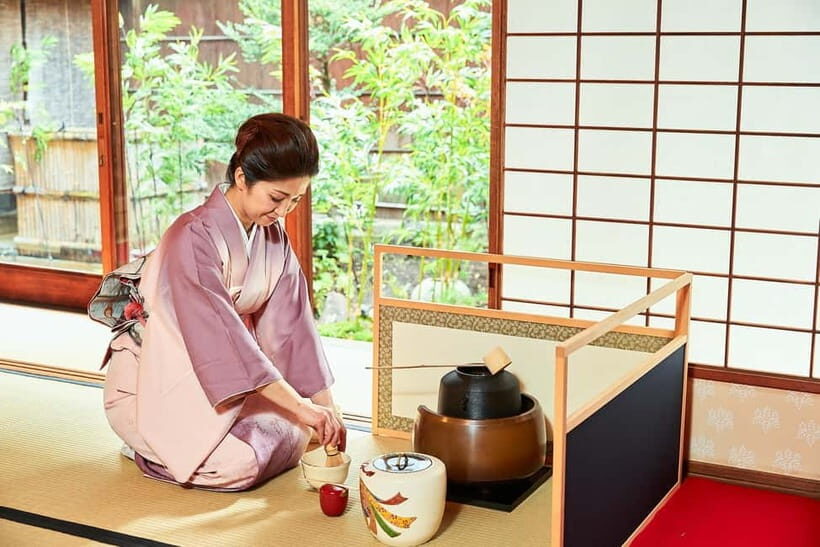
The standard setup is tatami mats, and the ceremony is built around sitting low and moving carefully. That’s part of the experience, but it’s also the main comfort variable.
Here’s the helpful part: you can request a wooden chair, and bamboo chairs are available upon advance request for those who don’t want tatami seating. Also, the format allows you to sit however you prefer within the setting, so you can prioritize comfort without feeling like you’re breaking the rules.
If you know your knees don’t love low seating, request the chair options early. It’s one of the easiest ways to keep the ceremony calm instead of painful.
Group size: about 12–14 people, and that matters
Expect a small group, typically about 12–14 participants. That size is big enough for a lively atmosphere, but small enough for the tea master to explain clearly and still give you moments to participate. In a ceremony like this, too-large groups can turn everything into a production line. Here, the scale helps keep the rhythm steady.
If you enjoy learning in a setting where you can ask something or get corrected gently, this group size supports that. And because the instruction is in English, the pacing is more manageable than it might be in a language-blind demo.
Price and value: is $66 worth it?
At $66 per person, the value depends on what you want from your Kyoto day. If you only want a matcha cup, you could find it cheaper elsewhere. But that’s not what this experience sells.
You’re paying for a bundle: kimono dressing, guided tea ceremony instruction by a tea master, hands-on matcha preparation, and seasonal wagashi, plus bilingual staff support. For many people, kimono dressing alone is already a meaningful spend. Adding the ritual teaching and the chance to make matcha yourself turns it into more than a rental.
Also, the duration is around 90 minutes (with guidance that it can run approximately 90–120 minutes). That’s enough time for you to be dressed, learn the flow, practice matcha, and eat the sweets—without feeling rushed every step of the way.
If you want an experience where you leave with both a memory and a skill (how to prepare matcha in a ceremonial style), this pricing looks reasonable.
Who should book this Kyoto tea ceremony with matcha and wagashi
This is a great match if you want a Kyoto experience that’s cultural but not exhausting. It suits couples, solo travelers, and small groups who like structured activities with clear instruction. It’s also a strong option if you’re interested in mindfulness and the philosophy behind everyday Japanese rituals.
It’s not for kids under 7. The ceremony also includes sitting low on tatami in the standard format, so if that’s a problem for your body, you’ll want to choose the chair option in advance.
If you’re the kind of traveler who likes learning etiquette—how to handle tools, how movements matter—this session will feel rewarding. And if you care about photos, you’ll likely appreciate the kimono visual payoff before and after, but the main win is still the ritual itself.
When to go and how to plan your day
Because wagashi changes with the season and the ceremony is scheduled by starting times, pick a time that fits your energy level. Plan it when you want to slow down, not when you’re rushing to the next temple photo stop.
Also plan around comfort. If you’re sensitive to low seating, remember that chair options exist, but bamboo chairs require advance request. If your hair needs special handling and you want styling included, bring long hair expectations into your planning.
Finally, don’t treat this like a quick “tea tasting.” It’s a guided ceremony with etiquette instruction and hands-on preparation. The best way to enjoy it is to show up ready to pay attention and follow the pace.
Should you book this Kyoto kimono tea ceremony?
Book it if you want a calm, culturally grounded Kyoto activity with hands-on matcha and English guidance. The biggest selling point is the combination: you get kimono dressing plus a tea master-led ritual plus your own bowl of matcha, finished with seasonal wagashi. That mix is hard to replicate with a simple cafe stop.
Skip it or adjust your expectations if you mainly want a low-effort, self-guided photo experience. You’ll be participating in etiquette and movements, and the kimono dressing timeline may feel a bit brisk if you’re hoping for lots of styling time.
If you want a Kyoto memory that feels quiet and skill-based, this is one of the better-value ways to do it.
FAQ
How long is the Kyoto kimono tea ceremony with matcha?
The experience is scheduled for about 90 minutes, and it may run approximately 90–120 minutes.
Is it an English-language tea ceremony?
Yes. The instruction is in English, and you’ll also have bilingual staff assistance.
Do I have to sit on tatami mats?
Tatami seating is customary, but wooden chairs are available upon request. Bamboo chairs can be requested in advance.
Does the price include kimono dressing and hair styling?
Yes. Kimono dressing is included. Hair styling is included for women with long hair only.
Can children join the ceremony?
Children under 7 are not allowed.
What’s included, and is transportation provided?
Included are kimono dressing, the tea ceremony led by a tea master, hands-on matcha preparation, Japanese sweets (wagashi), and bilingual staff assistance (plus hair styling for long-haired women). Transportation to and from the venue is not included.
Is free cancellation available?
Yes. You can cancel up to 24 hours in advance for a full refund.