REVIEW · WORKSHOPS
Kyoto: Japanese Koto Musical Instrument Class
Book on GetYourGuide →Operated by Gojo Paradiso · Bookable on GetYourGuide
Quiet notes, real hands-on progress. This Kyoto Koto class at Gojo Paradiso turns traditional music into something you can actually touch, not just listen to, with a beginner-friendly lesson that starts with hearing the sound live. You’ll learn directly from a skilled instructor who teaches in English and Japanese, so the basics land quickly.
What I like most is how quickly you get to play. You’ll work on the classic tune Sakura Sakura right in the lesson, and the pacing is friendly even if you’ve never held an instrument before. The other big win is the teaching style: Natsuko comes across as super patient and clearly knows how to break things down.
One drawback to consider: it’s not a kids’ class, since it’s listed as not suitable for children under 10. Also, with a 90-minute format, you’ll finish feeling satisfied, but you won’t become a koto performer in one go.
In This Review
- Key points to know before you go
- Why Kyoto’s Gojo Paradiso fits a koto lesson so well
- Meeting the koto: what happens in the first part of the class
- Playing Sakura Sakura with your own hands
- Once you get the basics, you can try other songs
- What Natsuko’s teaching style feels like in a small group
- The value question: is $32 worth it?
- Practical details that affect your day (without the headache)
- Who should book this Koto class in Kyoto
- Should you book it? My honest take
- FAQ
- How long is the Kyoto Japanese Koto Musical Instrument Class?
- What is the price per person?
- Is prior experience required to take the class?
- What song will I learn during the lesson?
- Who teaches the class, and what languages are used?
- Where is the meeting point?
- How far is it from the nearby stations?
- Is it suitable for young children?
Key points to know before you go
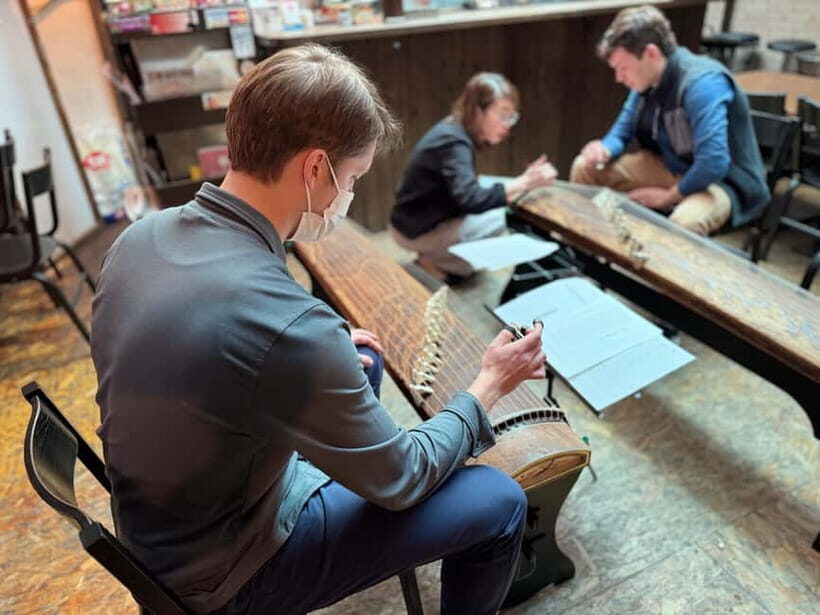
- A live start: you begin by hearing the koto performed so your brain learns the sound first
- Play Sakura Sakura: you’ll try the famous folk melody with guidance
- Small group energy: limited to 10 participants, so attention stays personal
- English and Japanese teaching: easier explanations and fewer misunderstandings
- Patient instruction from Natsuko: reviewers highlight clarity and a calm pace
Why Kyoto’s Gojo Paradiso fits a koto lesson so well
Kyoto can feel like it’s always moving, but this class makes the time slow down in a good way. Gojo Paradiso sits along the Takase River on Kiyamachi Street, so you’re not stuck in a windowless room with an instrument. Even before you play, the setting helps the whole experience feel quieter and more focused.
I also like that the meeting point is practical. You can reach it from Keihan Kiyomizu Gojo Station in about 5 minutes on foot, or Keihan Shichijo Station in around 10. That means this doesn’t need to turn into a half-day logistics puzzle.
And the vibe matches the instrument. The koto’s sound is delicate, and the lesson is built around letting you experience that calm firsthand before asking you to reproduce it.
You can also read our reviews of more tours and experiences in Kyoto

Meeting the koto: what happens in the first part of the class
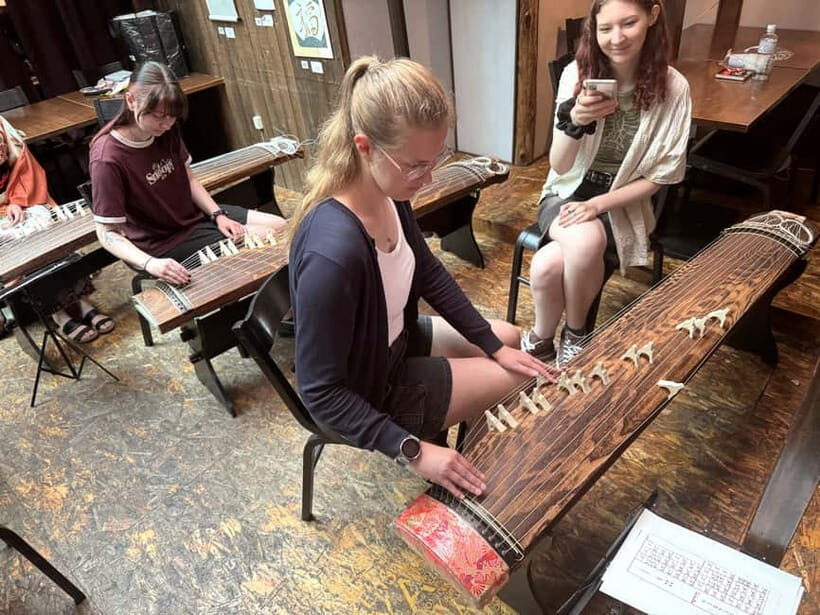
The class runs for 90 minutes, and it’s structured to keep you from feeling lost. You start with a live performance, not a lecture. This matters more than you’d think. When you hear the phrasing, timing, and tone directly, it gives your hands something to aim for once instruction begins.
Then the instructor guides you into playing. Beginners are welcome, and the materials are provided, so you’re not juggling renting gear or figuring out how to use an unfamiliar setup. You also don’t have to have music theory or prior lessons to participate; the class is designed around step-by-step learning.
In plain terms: you’re given a path, not just an instrument.
Playing Sakura Sakura with your own hands
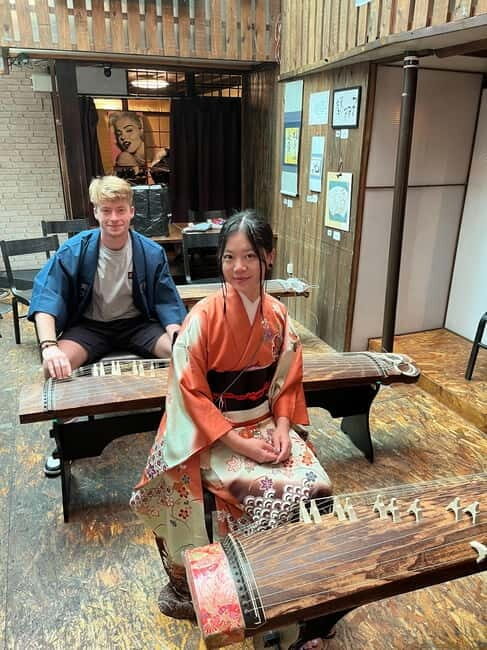
The main moment is learning Sakura Sakura, a well-known Japanese folk song that’s often used because it teaches you the feel of the melody without requiring advanced skills first. In a lot of music lessons, beginners spend too long watching. Here, the lesson pushes you into doing early.
I love this approach because it changes your mindset fast. Instead of thinking, I’m just learning about koto music, you start thinking, I can make that sound too. The reviews back up that feeling: people describe the lesson as dream-like, with many saying they finally felt capable after being guided.
If you’ve never played anything before, you might worry about coordination. The class is built to reduce that pressure. You’ll be supported as you work through the parts needed to perform the song in a way that’s achievable for first-timers.
And yes, you should plan to take a few photos and videos while you’re playing. This is one of those Kyoto experiences where a quick recording actually captures the personal win.
Once you get the basics, you can try other songs
After Sakura Sakura, the class makes space for you to go further. The format allows you to try other songs once you’ve mastered the core melody. That’s a smart design choice for a 90-minute class.
Here’s why: beginners often want two things at the same time. They want a confidence boost, and they want variety. Starting with Sakura Sakura gives you an immediate anchor, and trying additional pieces keeps the session from feeling repetitive.
Even if you don’t play perfectly, the goal is to leave with something you can recognize, remember, and improve later. That matters because the best souvenir is usually the one that changes how you see a place.
What Natsuko’s teaching style feels like in a small group
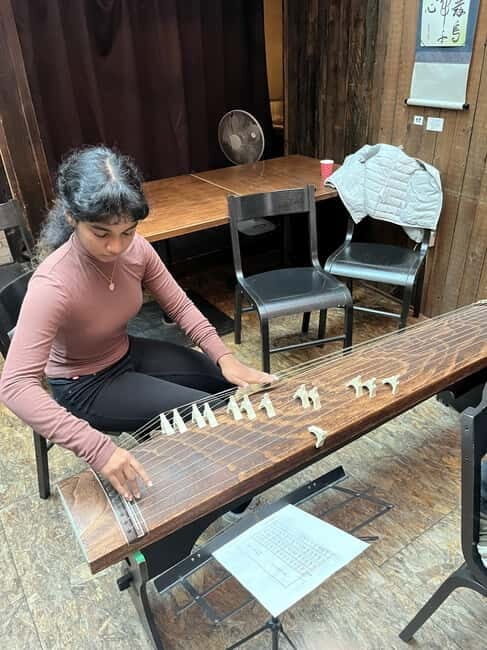
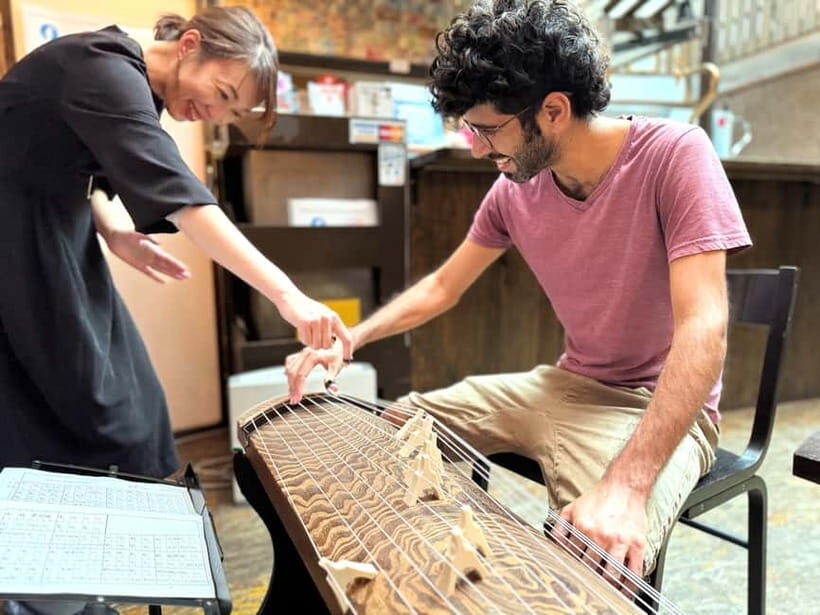
This is a small-group class, limited to 10 participants. That size keeps the experience from turning into a crowded workshop where you wait your turn and hope the instructor notices you. Instead, you get more time to get clarification and adjust what you’re doing as you go.
The reviews point to something very specific: the instructor’s friendliness and patience. People describe the teaching as clearly explained, with pacing that makes it feel possible even for complete beginners. One reviewer even singled out Natsuko by name, saying the experience felt great and recommending it enthusiastically.
I also like that the instruction is available in English and Japanese. That reduces the frustration that can happen when music instruction gets lost in translation. You’ll spend more time learning and less time guessing what to fix.

The value question: is $32 worth it?
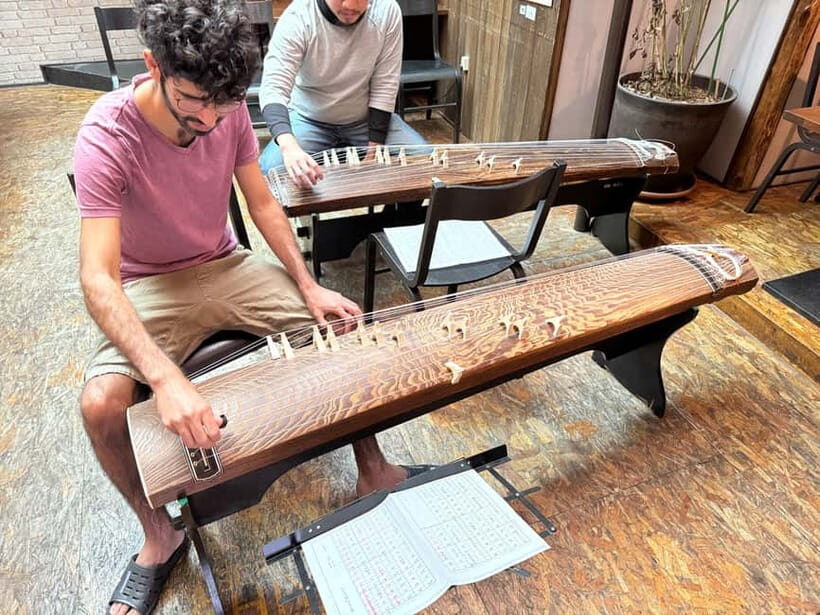
At $32 per person for 90 minutes, this class is priced in the “good deal” category for a hands-on cultural lesson in Kyoto. What makes it good value isn’t just the cost. It’s the full package:
- Expert instruction during the session
- Koto and all necessary materials provided
- No prior experience required
When materials and setup are included, you’re paying for time and guidance, not for rentals or add-ons. And the small group size adds value because you’re not competing for attention.
Think of it like this: for the price of a couple casual meals, you get a real skill moment—something you can practice after your trip too, if you find a place or teacher back home.
Practical details that affect your day (without the headache)
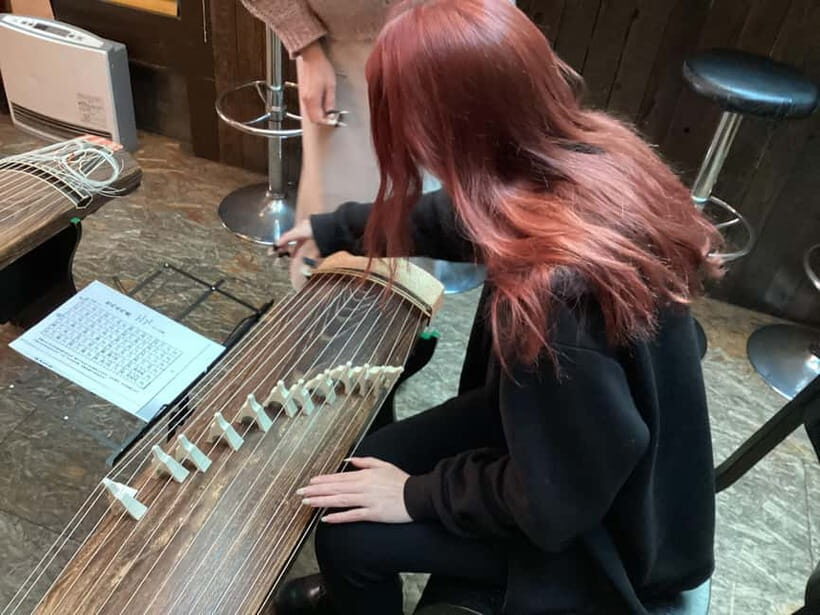
Location and timing matter because you’ll want to arrive unhurried. The class is at Gojo Paradiso along the Takase River on Kiyamachi Street, with clear walking routes from the nearby Keihan stations. Plan to show up with enough buffer so you can settle in before the live performance starts.
Also consider who the class fits:
- It’s not listed as suitable for children under 10, so if you’re traveling with younger kids, you’ll need a different plan.
- The class is described as wheelchair accessible, which is reassuring if you need that option.
If you like to travel by momentum, this one still works. It’s short enough to fit between sightseeing blocks, but long enough to actually learn something.
And one more important point: reservation is required at least 1 day in advance. That’s the easiest way to avoid last-minute disappointment.
Who should book this Koto class in Kyoto
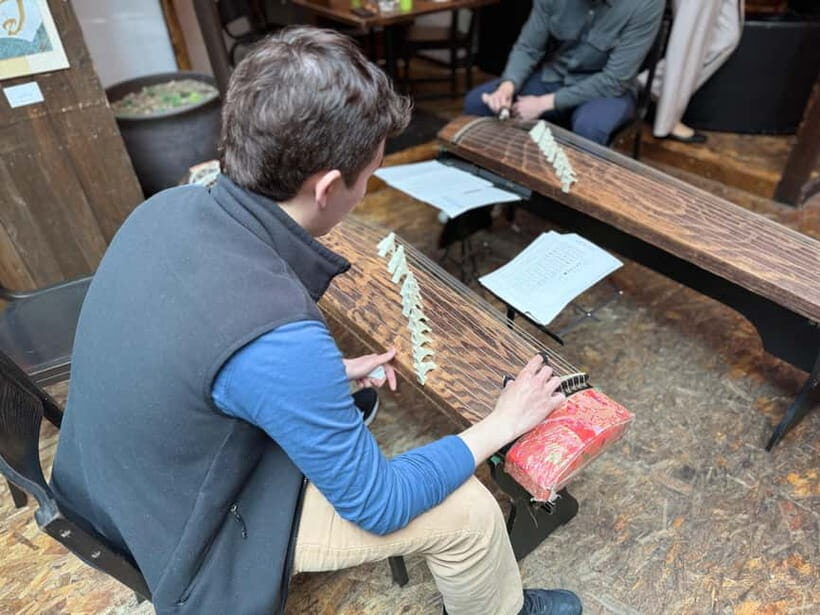
You’ll likely enjoy this if you:
- want a hands-on cultural experience, not just a museum stop
- enjoy music and want to understand it through playing, not reading
- are a total beginner and want guided progress
- prefer small-group instruction over large tours
I think it’s also a great “balance” activity for people who feel overloaded by temples and streets. Kyoto has plenty of calm to offer, but this kind of calm has a sound attached—one you make yourself.
If you’re a music lover, even casually, you’ll appreciate the lesson structure: hear first, then play. That’s the most beginner-friendly way to learn something that can feel intimidating at first.
Should you book it? My honest take
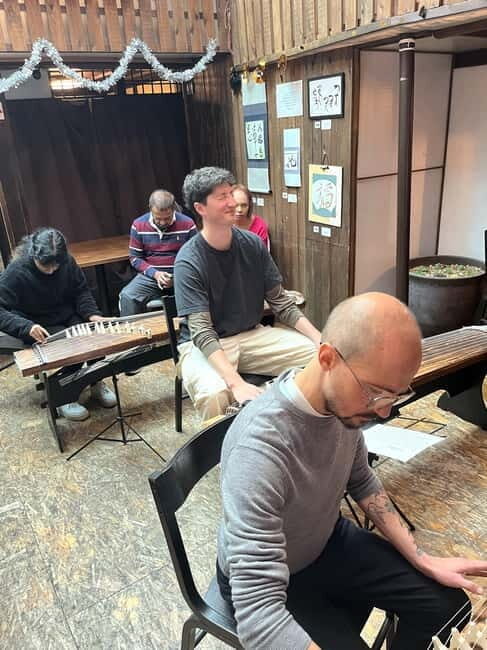
Book it if you want something memorable that’s still practical. The class is beginner-friendly, materials are included, and the session is designed around real playing time. The best part is the combination of a calm musical setting and clear, patient teaching—especially the way Natsuko’s guidance helps first-timers feel like they can actually do it.
Skip it only if you’re looking for a long, deep training program. This is a 90-minute introduction. You’ll leave with a solid start and a story worth repeating, not a lifetime of mastery in one sitting.
If you’re in Kyoto and you like the idea of creating a new sound with your own hands, this is exactly the kind of activity that turns a trip into a personal experience.
FAQ
How long is the Kyoto Japanese Koto Musical Instrument Class?
It lasts 90 minutes.
What is the price per person?
The price is $32 per person.
Is prior experience required to take the class?
No. Prior experience is not required, and the class is set up for beginners.
What song will I learn during the lesson?
You’ll learn Sakura Sakura with your own hands, and you may also try other songs after.
Who teaches the class, and what languages are used?
The instructor teaches in English and Japanese.
Where is the meeting point?
The meeting point is Gojo Paradiso on Kiyamachi Street along the Takase River.
How far is it from the nearby stations?
It is about a 5-minute walk from Keihan Kiyomizu Gojo Station and about a 10-minute walk from Keihan Shichijo Station.
Is it suitable for young children?
No, it is not suitable for children under 10 years.
![[Kyoto Street Shot] Recording every wonderful moment of travel with shutter (free kimono experience) - Kyoto photo route: Gion Shirakawa, Yasaka Shrine, Maruyama Park, and more](https://7.kyotoescapes.com/wp-content/uploads/kyoto-street-shot-recording-every-wonderful-moment-of-travel-with-shutter-free-kimono-experience.jpg)