REVIEW · HISTORICAL TOURS
Kyoto Heritage Run – Venture through historical Kyoto landmarks
Book on Viator →Operated by Kyoto Fitness · Bookable on Viator
Kyoto is made for walking. This tour adds jogging without making sightseeing feel like a race. In about three hours, you cover roughly 10 kilometers of central Kyoto, stopping for culture, short workouts, and small “look closer” moments that you’d likely miss if you were just trying to keep up on your own.
Two things I really like: you get exercise that’s built into the route (not tacked on), and you’re guided with both a fitness pro and a tour guide. The pace is active, but the structure helps—warm-up first, then Tabata-style bursts, then a calm wind-down with stretches. One thing to consider up front: this isn’t a casual stroll. You need moderate physical fitness, and you’ll be running/jogging the majority of the time.
In This Review
- Kyoto Heritage Run at a Glance: what makes it work
- Price and logistics: is $97.55 a smart buy?
- Where you start matters: Nijojo-mae and a ready-to-run morning
- Imperial Palace Park: jogging, history, and Tabata-style bursts
- Crossing Kamogawa: a quick change of scene that keeps momentum
- Heian Shrine: architecture stop with a short break in the rhythm
- Shirakawa River and the immense torii gate: the most “Kyoto-at-a-glance” stretch
- Maruyama Park and Yasaka Shrine: winding down near the heart of Kyoto
- Gion and the Kamogawa finish: the run ends, the day keeps going
- Guides, pace, and that small-group magic
- Who this Kyoto Heritage Run is best for (and who should skip it)
- Before you go: practical tips that make the day smoother
- Should you book Kyoto Heritage Run?
- FAQ
- How long is the Kyoto Heritage Run?
- How far do you cover on the tour?
- Where does the tour start?
- Where does the tour end?
- What sights are included?
- Is lunch or bottled water included?
- What level of fitness is required?
- Is a mobile ticket used?
Kyoto Heritage Run at a Glance: what makes it work
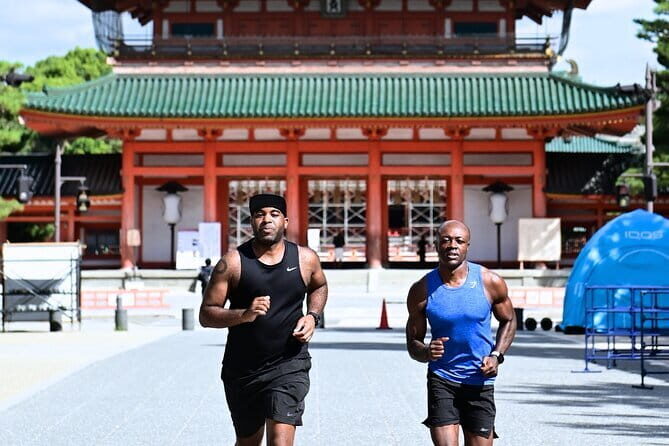
- A guided city run built around Kyoto’s best-known landmarks
You see the big hitters like the Imperial Palace area, Heian Shrine, and Yasaka Shrine—then you connect them with a route that keeps you moving.
- Fitness-led segments, not just lectures
Expect a warm-up at the start and Tabata-style exercises around the Imperial Palace grounds.
- Photo-friendly riverside walking-jogging sections
The Shirakawa River portion features weeping willows and small stone bridges, plus an immense torii gate on the way.
- Small group size
Maximum 12 travelers makes it easier to keep a steady pace and stay together.
- Designed as a time-saver
In one go, you cover multiple neighborhoods and districts that normally take several separate outings.
- Ends with recovery time
The finish includes stretches on the eastern bank of the Kamogawa, so you’re not just dropped off mid-sweat.
Price and logistics: is $97.55 a smart buy?
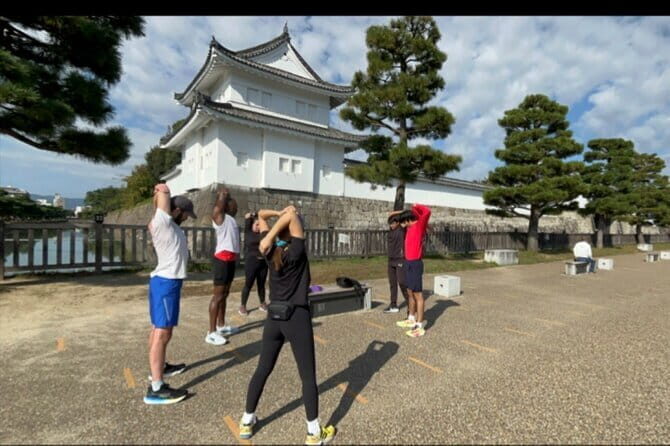
At $97.55 per person for about three hours, you’re paying for more than entry-level sightseeing. You’re buying structure: a pre-run warm-up, an active workout format (including Tabata-style intervals), and a guided route that strings together Imperial-area sites, shrine stops, river scenery, and classic streets like Gion—all in one morning run.
It also helps that the tour includes all fees and taxes. What you won’t get: lunch and bottled water. So I recommend you budget for a snack afterward (or bring something light you can eat after you shower/change) and plan on buying water near the end. Since it’s a mobile-ticket experience, have your phone ready at check-in.
This also runs on good weather. If Kyoto’s doing its wet-weather routine, you may be offered a different date or a full refund. In other words: it’s not a last-minute “must go no matter what” activity. Pick a day when you can be flexible.
You can also read our reviews of more historical tours in Kyoto
Where you start matters: Nijojo-mae and a ready-to-run morning
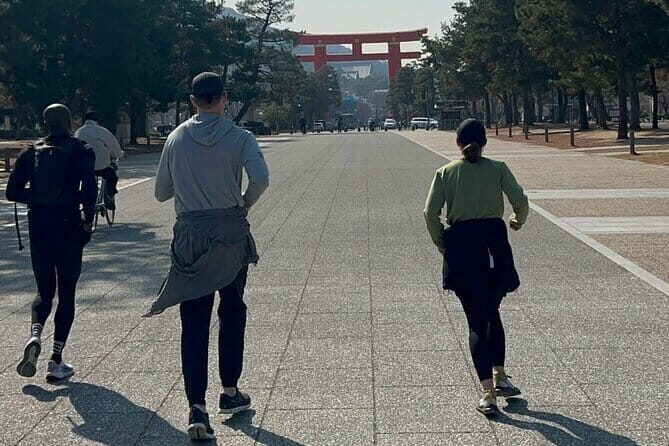
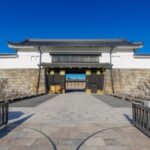
Your starting point is Nijojo-mae Station, across from Nijo Castle. Seeing Nijo Castle from the outside is a nice warm start because it immediately frames the morning: Kyoto isn’t just temples and streets—it’s also political history, especially the Tokugawa shogunate era (1603–1868).
At 8:30 am, the timing is good for two reasons. First, you’ll be in motion before the day’s crowds really lock in. Second, the route is set up for an energetic but controlled start: you’re greeted by your guides and then led into a warm-up and a brief history of Kyoto City.
This is where the small group size helps. With a maximum of 12 travelers, the guides can manage different running comfort levels without turning it into a chaotic stampede. If you’re the kind of person who likes to feel “guided,” not just “pushed forward,” this setup fits.
Tip: wear running shoes or at least supportive sneakers. You’ll cover close to 10 kilometers, and you’ll do best if your feet are happy from the beginning.
Imperial Palace Park: jogging, history, and Tabata-style bursts
The first major stop is the Kyoto Imperial Palace area (Imperial Palace Park). The tour jogs east to reach it, and once you’re there you get a brief history framing what this imperial center meant for Kyoto when the city served as Japan’s capital.
Here’s the practical reason this stop is more than just a scenic waypoint: the tour adds Tabata-style exercises once you’re at the Imperial Palace grounds. That matters because it turns a “look and move on” moment into something you actively participate in. You’ll warm up, learn a bit, then do short bursts that feel like a workout class—except you’re also in one of Kyoto’s most historically important settings.
What I like about this format is that it keeps your brain engaged while your body gets tired in a useful way. Instead of only watching, you’re doing intervals, taking quick breaks, then resetting and continuing to the next part of the route.
Possible drawback: if you’re not a fan of high-intensity intervals, you might find this segment mentally harder than the sightseeing portions. But the tour is guided by a fitness professional, so you’re not expected to “figure it out” alone.
Crossing Kamogawa: a quick change of scene that keeps momentum
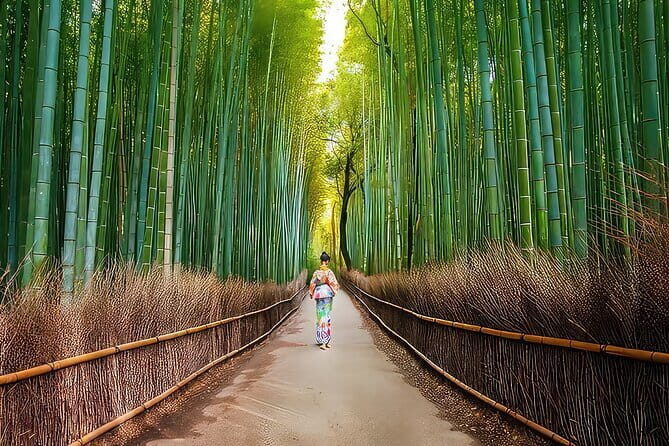
After the Imperial Palace grounds, the route crosses the Kamogawa. This part is less about a specific “big stop” and more about flow—using the river as a natural corridor between major landmarks.
Crossing here also helps you shift from the formal imperial space to a more shrine-and-neighborhood Kyoto. You’re still moving, but your setting changes quickly enough that the morning doesn’t feel like it’s dragging.
If you like the rhythm of walking neighborhoods—then switching to riverside views—this is a good mid-tour reset.
Heian Shrine: architecture stop with a short break in the rhythm
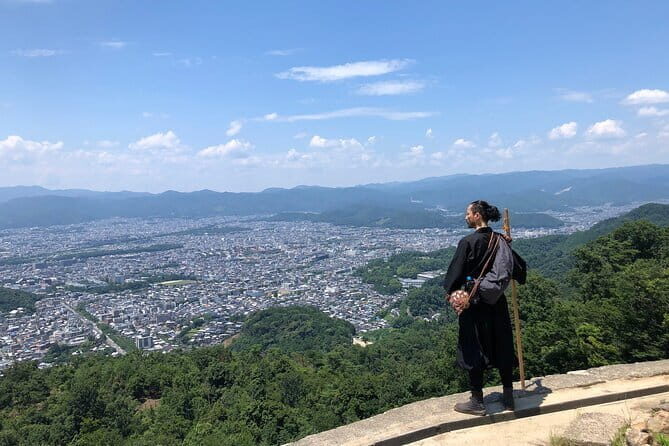
Next up is Heian Shrine, with a brief stop. The tour passes through this portion after the Kamogawa crossing, keeping the momentum while giving you time to focus.
Heian Shrine is known for its grand architectural presence, and during this break you get a chance to slow down for a moment—without losing the run’s overall energy. This is the kind of stop where a guide can make a difference: you’re not only seeing structures; you’re hearing why they matter in Kyoto’s cultural story.
One thing I’d watch for: this stop is “brief,” not a long exploration. If you like to linger and sketch for an hour, this tour may feel fast. If you want efficient exposure with clear highlights, it’s built for you.






Shirakawa River and the immense torii gate: the most “Kyoto-at-a-glance” stretch
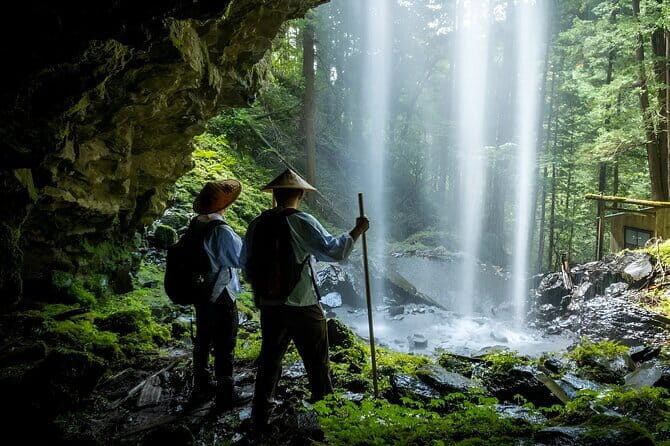
After Heian Shrine, you pass through an immense torii gate and jog along the Shirakawa River. This is the route’s most visually cinematic segment, lined with weeping willows and small stone bridges.
The practical value here is huge: you get riverside scenery while still moving. You’re not stuck doing a long transit between sites. Instead, the scenery carries you, and the jog becomes part of the experience.
This segment also tends to be where you’ll appreciate the guides’ pacing. If you go too fast here, you miss the scenery. If you go too slow, the tour stops feel rushed later. The guided pace aims for a middle ground: enough energy to keep you in the “run mode,” but time to notice the river details and take a few photos.
Maruyama Park and Yasaka Shrine: winding down near the heart of Kyoto
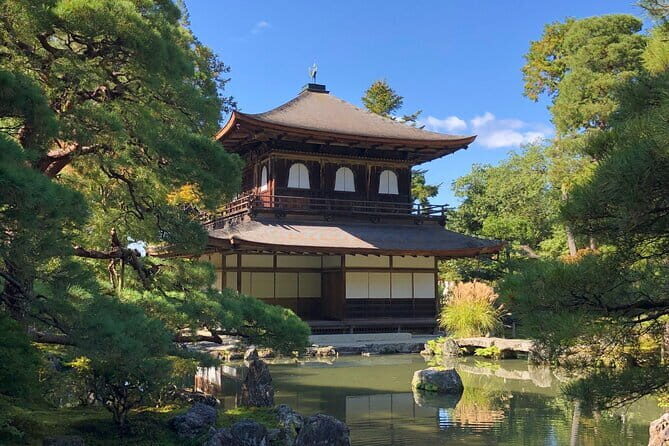
From the Shirakawa River route, you lead into Maruyama Park and then Yasaka Shrine. This is another turning point: you’re moving from river-and-gate scenery into a shrine area that feels more connected to everyday Kyoto life.
Maruyama Park acts like a decompression zone. It’s serene enough to balance out the earlier intensity. And Yasaka Shrine gives you that classic Kyoto moment—big visual impact, central location, and a sense that you’re stepping into the city’s cultural center.
If you’re the type who likes to see the “most famous” places and still feel like you’re getting something more than a quick photo, this pairing tends to hit the sweet spot. You’re not only checking a box; you’re reaching a place where you can feel the atmosphere shift.
Gion and the Kamogawa finish: the run ends, the day keeps going
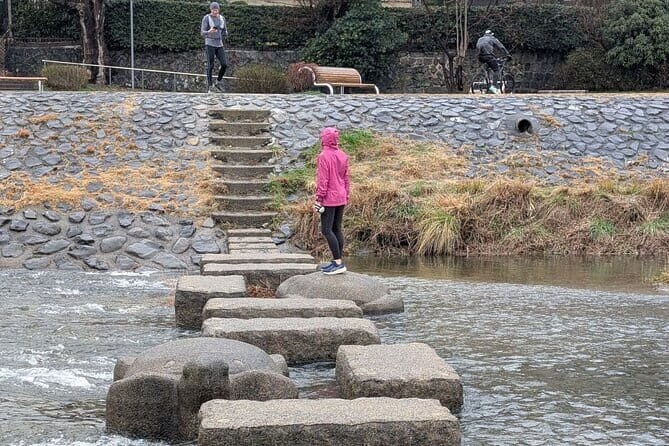
The tour then passes through Gion (en route) and concludes around the eastern bank of the Kamogawa with stretches. One reason I like this finish is that you get a transition from effort to recovery. Instead of stopping and immediately dissolving into the city, you get a guided wind-down.
Gion is a strong choice for the end-of-tour portion because it’s one of the most recognizable neighborhoods in Kyoto. Even if you’re not doing a full evening walk, you still get that “I’m in Gion now” feeling as you move toward the finish point (Gion Shijo Station is where the tour references ending).
And the stretches are not a tiny detail. After running, they help you loosen up enough to continue your day—whether you’re heading to lunch, returning to your hotel, or planning an evening stroll.
Guides, pace, and that small-group magic
A theme in great running tours is simple: you need leaders who can handle logistics without turning the day robotic. In this case, you have a fitness professional plus an experienced tour guide, and it really matters.
Some past participants highlight guides Francis and Areo by name, and that’s a useful clue. When guides are good, you feel it in the way they balance facts with movement—history at the right times, exercises that fit the setting, and pacing that keeps the group together.
With a maximum of 12 travelers, you’re also less likely to feel like you’re running alone or waiting forever for stragglers. That group size makes it easier to keep momentum and still feel personal.
Who this Kyoto Heritage Run is best for (and who should skip it)
This tour fits you if:
- You like moving while sightseeing and want to cover a lot of ground in a short window.
- You enjoy short bursts of exercise (including Tabata-style drills) rather than only “touring.”
- You’re curious about Kyoto’s key landmarks but want a route that avoids feeling like a checklist with zero context.
- You’re coming for a short stay and want to get your bearings early.
You might skip it if:
- You hate running or even jogging for most of the tour.
- You’re looking for a slow, long, sitting-down temple-and-garden day.
- You need frequent long breaks. This is built as an active route, not a flexible wander.
Before you go: practical tips that make the day smoother
Here’s what will help you enjoy the run instead of thinking about logistics:
- Bring your own water. Bottled water isn’t included.
- Eat something light beforehand if you can, but don’t overdo it. You’ll be running.
- Wear grippy shoes. Kyoto walkways and river paths can be a bit unpredictable depending on weather.
- Have your phone charged. You’ll use a mobile ticket.
- Plan for photos, but don’t let photos slow you too much. The best river/gate moments are time-based on the run schedule.
One more thought: this is scheduled for 8:30 am. If you’re usually a late-morning person on vacation, treat this as your workout commitment day—and plan the rest of your sightseeing accordingly.
Should you book Kyoto Heritage Run?
Yes—if you want a fast, guided way to see central Kyoto without spending the whole day figuring out routes. I like it because it blends movement with meaning: you jog between major locations, you get a history framing at the start, you do Tabata-style exercises in a meaningful setting, and you end with stretches so you can keep going.
Book it if you’re comfortable with moderate fitness and you’re excited by the idea of doing exercise while sightseeing. Skip it if you want a relaxed walking day or if jogging most of the morning sounds draining.
If you’re on your second day in Kyoto and want to get your bearings fast, this kind of structured run can be a smart pick. You’ll come away knowing where key landmarks sit in relation to each other—and you’ll have a clear sense of how to build the rest of your trip from there.
FAQ
How long is the Kyoto Heritage Run?
The tour lasts about 3 hours.
How far do you cover on the tour?
The experience is described as covering approximately 10 kilometers.
Where does the tour start?
You meet at Nijojo-mae Station, located opposite Nijo Castle.
Where does the tour end?
The tour ends at a different location than where it starts, concluding around the eastern bank of the Kamogawa near Gion Shijo Station.
What sights are included?
You’ll pass through or stop at places including the Imperial Palace Park area, Heian Shrine, Yasaka Shrine, Maruyama Park, Gion (en route), and along the Kamogawa and Shirakawa River areas.
Is lunch or bottled water included?
No. Lunch and bottled water are not included.
What level of fitness is required?
The tour calls for a moderate physical fitness level.
Is a mobile ticket used?
Yes, the tour uses a mobile ticket.