REVIEW · FUSHIMI INARI TOURS
Kyoto Early Bird Tour in Uji and Fushimi Inari
Book on Viator →Operated by GuideMe Japan · Bookable on Viator
Beat the crowds before they wake up. This early-bird tour pairs Fushimi Inari with Uji’s temple highlights, and it includes Byodoin Temple entry so you’re not stuck in ticket lines. I especially liked how the schedule is built for mornings, when the streets feel calmer and you can actually hear your guide.
I also love the small-group format (maximum 8), because questions don’t get lost and the pace stays friendly. Our guide Genki made the day click by explaining the practical differences between Shinto and Buddhism in a way you can remember. One consideration: the tour price doesn’t include transportation or lunch, so plan for those extra costs.
The good news is that the tour ends at Uji Station, and your guide will help you with directions for getting back to Kyoto on your own.
In This Review
- Key highlights you’ll feel right away
- Why Uji and Fushimi Inari First Thing Feels Different
- Getting There: Kyoto Station Meet-Up and the Morning Rhythm
- What the timing means for your day
- Stop 1: Fushimi Inari-taisha Before the Rush Gets Loud
- Byodoin Temple and the Phoenix Hall: UNESCO Without Ticket-Line Headaches
- What to expect in your 1 hour 30 minutes at Byodoin
- Ujigami Shrine: A Quiet Spiritual Pause in the Heart of Uji
- Why this stop matters
- A small consideration
- How Genki’s Shinto and Buddhism Talk Helps You See More
- Walking Pace, Comfort, and What to Bring
- Mobile ticket tip
- Price and Value: What Your $55.18 Actually Buys
- Who this is best for
- Should You Book This Kyoto Early Bird Tour in Uji and Fushimi Inari?
- FAQ
- How long is the Kyoto Early Bird Tour in Uji and Fushimi Inari?
- What’s included in the tour price?
- Is Byodoin Temple admission included?
- Is transportation included?
- How many people are in the group?
- Can I cancel for free?
Key highlights you’ll feel right away
- Early start, fewer crowds: You hit major sights before the biggest waves arrive.
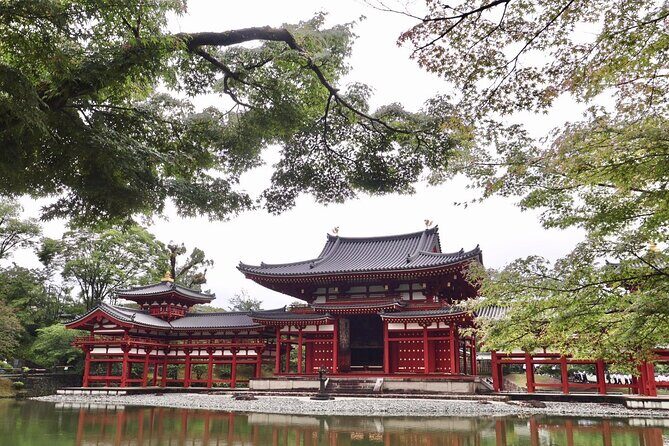
- Byodoin entry is included: No extra ticket step at the UNESCO site.
- Fushimi Inari first: Thousands of red torii feel more atmospheric when it’s still quiet.
- Genki’s Shinto vs Buddhism thread: Explanations that connect shrines and temples.
- Mobile tickets: Easier check-in with less fuss.
- Three focused stops: Fushimi Inari, Byodoin Temple, and Ujigami Shrine—no filler.
Why Uji and Fushimi Inari First Thing Feels Different
Kyoto looks pretty much the same on a postcard. The morning version is different. When you start early, you’re not competing with tour buses and phone screens for breathing room. At Fushimi Inari, the torii gates go on forever, and that effect lands better when the path isn’t jammed.
You’ll also get something many one-day trips miss: a real sense of how shrines and temples fit together in everyday life. By the time you reach Uji, it stops feeling like a checklist and starts feeling like one connected morning walk through Japan’s spiritual geography.
If you like your sightseeing structured but not rigid, this style works. You’re guided to the right places, then you get time to look closely. And because it’s a morning tour with a maximum of 8 people, you’re unlikely to feel squeezed.
You can also read our reviews of more tours and experiences in Kyoto.



Getting There: Kyoto Station Meet-Up and the Morning Rhythm
The meeting point is at Kyoto Station (Higashishiokoji Kamadonocho, Shimogyo Ward). That’s convenient because you’re not trying to find a neighborhood address at 8-something in the dark. From there, you’ll head toward the Fushimi Inari area, then continue to Uji.
A practical heads-up: the tour ends at Uji Station. The guide won’t ride the train back with you, but they will help you with directions. That’s normal for this kind of morning format, and it actually can make your day easier—you’re not forced to return immediately to the station you started from.
What the timing means for your day
The full tour runs about 5 hours 30 minutes. With three stops that each take roughly 1 hour 30 minutes, you’re not rushing through everything at breakneck speed. You’re also not stuck doing long, unplanned transit stretches. The flow is built for a satisfying morning, then you still have the rest of the day to do whatever you want.
Stop 1: Fushimi Inari-taisha Before the Rush Gets Loud
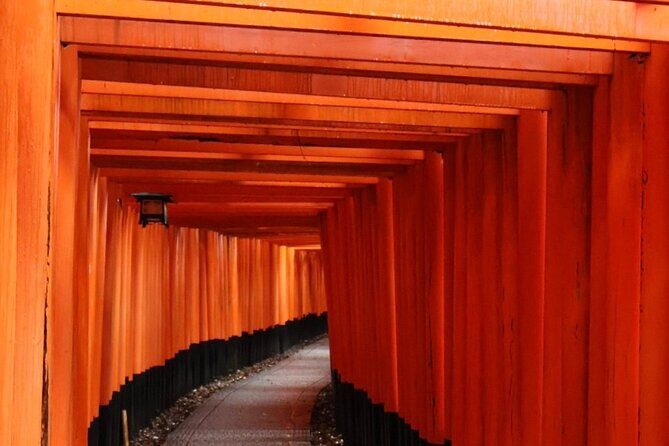
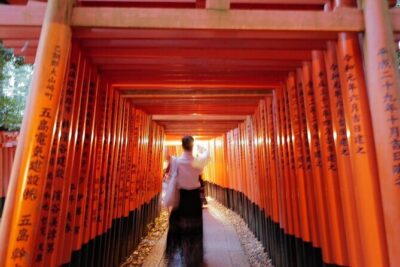
You’ll start at Fushimi Inari-taisha, one of Japan’s most famous shrine sites. The star of the show is the path through thousands of red torii gates. In the morning, the gates feel less like a photo backdrop and more like a living tunnel you’re walking through.
Here’s what to focus on as you go:
- Look at how the torii lines up behind you and ahead of you. The perspective is part of the magic.
- Take a few pauses. Even short stops make the space feel bigger.
- Pay attention to details your eyes usually skip, like how the shrine paths change as you move deeper in.
Even though the tour time at this stop is about 1 hour 30 minutes, you’re not trapped in a single viewing moment. You can do the basic walk-through, then decide whether you want to go a little farther along the route.
One drawback to consider: if you’re not feeling steady on your feet, the torii-area walk can be uneven in places. The tour is listed for people with moderate physical fitness, so it’s not a full hike, but it’s still walking.
Byodoin Temple and the Phoenix Hall: UNESCO Without Ticket-Line Headaches
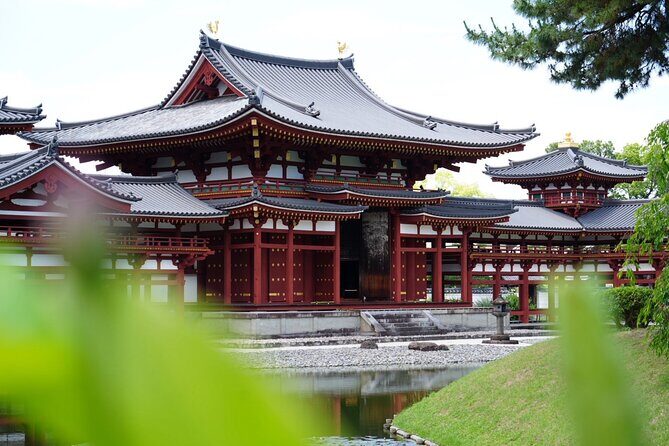
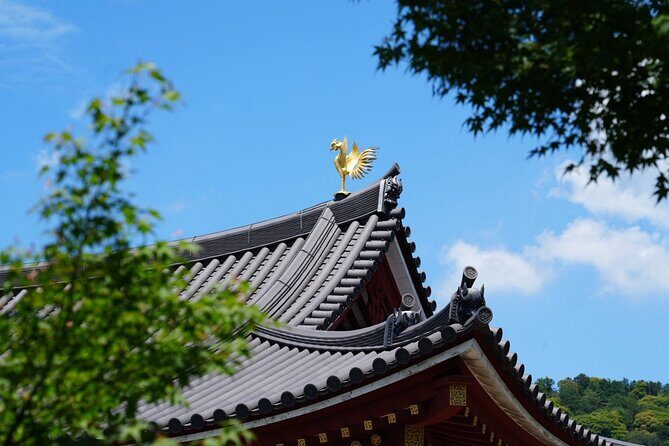
Next you’ll head to Byodoin Temple in Uji. This is the UNESCO World Heritage Site most people recognize right away because it’s featured on the Japanese 10 yen coin.
The big draw is the Phoenix Hall, which is the visual heart of the complex. Even if you don’t know the background, the hall’s presence is strong. It’s the kind of place where you can stand back, look again, and then notice new angles as the light shifts.
What I really like here is the practical design of the tour: Byodoin Temple admission is included, so you avoid the annoying stop-and-wait moment that can eat up your morning. Instead, your time goes into actually being there—reading what you can, looking closely, and letting the architecture do its job.




What to expect in your 1 hour 30 minutes at Byodoin
You’ll have time for:
- A calm walk through the temple grounds
- Time to see the Phoenix Hall area from different angles
- Space to ask questions and connect what you’re seeing to the shrine/temple story you heard earlier
If you’ve had your fill of crowds at other Kyoto landmarks, this stop often feels like relief. Uji in general has a more laid-back feel than the busiest Kyoto streets.
Ujigami Shrine: A Quiet Spiritual Pause in the Heart of Uji
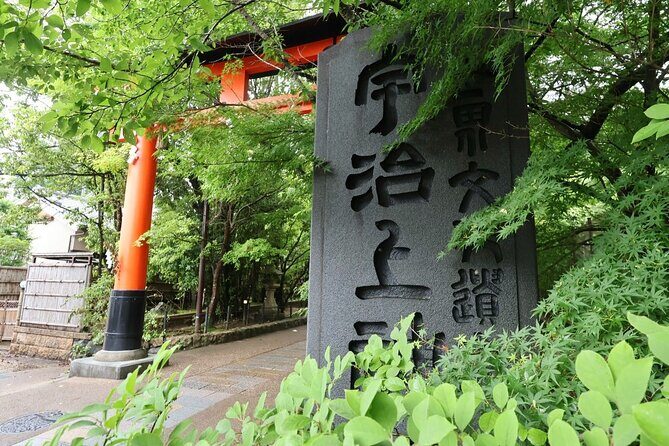
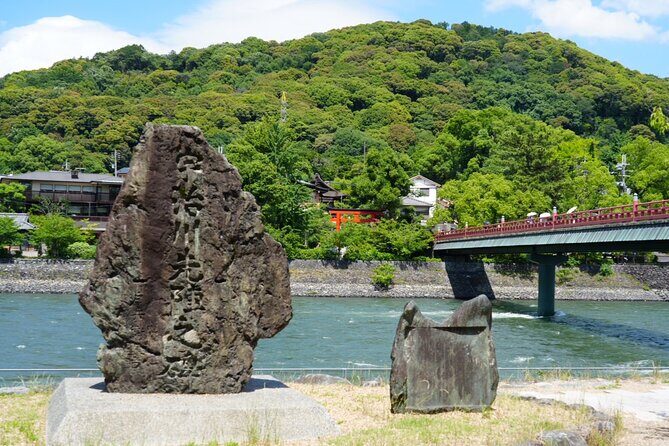
After Byodoin, the tour heads to Ujigami Shrine. It’s described as Japan’s oldest standing shrine, and the mood changes in a good way. This is where you get a calmer, more sheltered atmosphere—think mossy, wooden architecture and a sense of stillness that feels made for slow looking.
Admission at this stop is free, which helps your budget too. It’s one more reason the tour feels “efficient”: you’re paying for guidance and time, not for stacked entry fees.
Why this stop matters
This isn’t just another postcard stop. It’s a bridge between two spiritual worlds: shrines like Ujigami, where the focus is on shrine practice, and temples like Byodoin, where Buddhist tradition shapes the space.
When your guide points out the difference in a simple way—without turning it into a lecture—you start to notice things you’d otherwise gloss over.
A small consideration
Because Ujigami is peaceful and you’re moving from the busier atmosphere of Fushimi Inari, you might find yourself wanting more time here. That’s a good sign. The stop is around 1 hour 30 minutes, which is solid for most people, but if you love quiet shrines, you may want to linger after the tour ends.
How Genki’s Shinto and Buddhism Talk Helps You See More
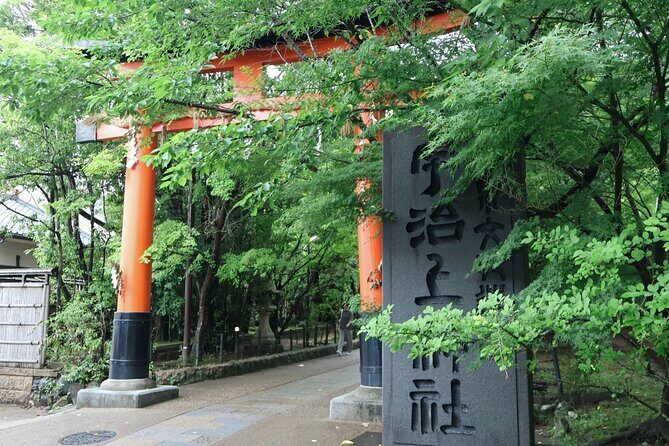
One of the best parts of this tour was the way Genki explained the connection between Shinto and Buddhism. It wasn’t a dump of facts. It was just enough structure so you can interpret what you’re looking at while you walk.
I think that’s the secret sauce on a morning tour like this:
- If you understand what you’re seeing, you don’t need endless time.
- If you can ask questions, you don’t end up guessing.
- If the guide gives you a few clear comparisons, temples and shrines stop looking like random stops on a list.
Genki was also described as warm, engaging, and caring. That matters more than you’d think. When your guide’s approach feels human, you’re more likely to relax, ask questions, and enjoy the pace instead of rushing through photos.
Walking Pace, Comfort, and What to Bring
This is a sightseeing tour, not a sit-down museum day. You’ll be on your feet across three stops, each about 1 hour 30 minutes. Add in transit time and you’ve got a solid morning of walking.
Because the tour is marked for moderate physical fitness, I’d plan for:
- Comfortable shoes with grip
- Layers (mornings can feel cooler than later)
- A small water plan (the tour doesn’t include lunch)
Also, since lunch isn’t included, you’ll likely want to think about what you’ll do after. If you’re staying in Kyoto, you might want a plan for a later meal once you’re back in the city.
Mobile ticket tip
You’ll use a mobile ticket, which is great. Just make sure your phone is charged enough for the morning and that you’re not scrambling with battery anxiety at the gate.
Price and Value: What Your $55.18 Actually Buys
The listed price is $55.18 per person, and the tour includes an English-speaking guide plus Byodoin Temple entrance. That’s the key value point.
You’re also getting:
- A maximum of 8 travelers
- A morning schedule aimed at fewer crowds
- Skip-the-lines convenience at the UNESCO stop (because admission is included)
What’s not included:
- Transportation fee: ¥390 per person
- Lunch
So yes, there are add-ons. But the included parts are exactly where tours often get annoying—entry and guided context. If you were to do this route yourself, you’d still spend time figuring out logistics, and you’d likely lose time at ticket steps.
One more detail that’s useful: this tour is often booked about 62 days in advance on average. If you’re traveling during peak season, booking early can help you avoid the sold-out problem.
Who this is best for
This tour fits you if:
- You want a calmer morning in Kyoto rather than a crowd marathon
- You care about understanding what you’re seeing, not just where to stand for photos
- You’re okay with walking and being on the go for about half a day
- You prefer small-group access to your guide
If you’re the type who hates walking even short distances, you might find the pace tiring. If you love deep, solo wandering with zero schedule, you might prefer a self-guided day—but you’d miss the structured flow and the Byodoin entry convenience.
Should You Book This Kyoto Early Bird Tour in Uji and Fushimi Inari?
Book it if you want the best parts of Kyoto’s shrines and Uji’s temple atmosphere without spending your morning fighting lines and crowds. The biggest wins for me are simple: early timing, a small group, and Byodoin admission included—all three directly protect your time and your mood.
Skip it (or at least reconsider) if you already plan to arrive extremely early on your own and you don’t need a guide to connect Shinto and Buddhist context. This experience shines when you value guidance and when you’re willing to walk a morning route at a comfortable pace.
For most first-timers and repeat Kyoto visitors alike, it’s a smart half-day plan: you get Fushimi Inari’s torii wow-factor, the UNESCO weight of Byodoin, and Uji’s calmer shrine side—then you’re done early enough to keep your Kyoto day flexible.
FAQ
How long is the Kyoto Early Bird Tour in Uji and Fushimi Inari?
It runs for about 5 hours 30 minutes.
What’s included in the tour price?
The price includes an English-speaking guide and the entrance fee to Byodoin Temple.
Is Byodoin Temple admission included?
Yes. Byodoin Temple entry is included in the tour.
Is transportation included?
No. You pay a transportation fee of ¥390 per person.
How many people are in the group?
The tour has a maximum group size of 8.
Can I cancel for free?
Yes. You can cancel for a full refund up to 24 hours before the experience starts.