REVIEW · 1-DAY TOURS
Kyoto 1 Day Golden Route Bus Tour
Book on Viator →Operated by H.I.S.Co., Ltd. · Bookable on Viator
One day, Kyoto, and you will see the icons. This Kyoto Golden Route bus tour strings together the biggest names—especially Fushimi Inari and Kinkaku-ji—with a licensed English-speaking guide, a comfy air-conditioned ride, and key entrance fees included. I like the value because you pay once and get tickets handled for stops that usually cost extra. One drawback: it’s a packed day with real walking and stairs, and the bus will not wait if you’re late.
Guides can make or break a day like this, and the examples from past groups are strong. In different runs, names like Kuri San, Toshi, Haromi, and Yoko show up in standout comments for clear explanations and smooth handling of the schedule. Just remember: this is a shared tour (up to 40 people), so you’ll need to keep pace and follow the timing.
In This Review
- Key points to know before you go
- A One-Day Kyoto Plan That Hits the Big Icons (Without Train Stress)
- Price and What $71.85 Really Covers
- Where You Start: Kyoto Station Meeting Point at 8:15am
- Stop 1: Kiyomizu-dera for Panoramic Views and UNESCO Status
- Stop 2: Fushimi Inari and the 1,000 Torii Gates
- Lunch Break: Kyoto-Style Buffet (Full Day Only)
- Stop 4: Tenryu-ji and the Arashiyama Bamboo Grove Walk
- Stop 5: Kinkaku-ji (Golden Pavilion) in About 45 Minutes
- Stop 6: Kyoto Handicraft Center for Real Shopping Time
- How the Day Feels: Packed Timing, Shared Pace, and Real Steps
- Guide Quality: Why English Guidance Helps More Than You Think
- Half-Day Option: Great If You Want Arashiyama to Be Your Afternoon
- Who Should Book This Kyoto Golden Route Tour?
- Should You Book This Kyoto Golden Route Tour?
Key points to know before you go
- A packed highlight loop: Kiyomizu-dera, Fushimi Inari, Arashiyama/tenryu-ji bamboo area, then Kinkaku-ji
- Tickets included where it counts: Kiyomizu-dera plus Tenryu-ji and Kinkaku-ji on the full day
- English-only guidance: a government licensed guide runs the whole experience
- Long day, big walking total: plan for roughly 16,000 steps and some steep stone steps
- Mobile ticket convenience: you’ll use a phone ticket instead of paper
A One-Day Kyoto Plan That Hits the Big Icons (Without Train Stress)
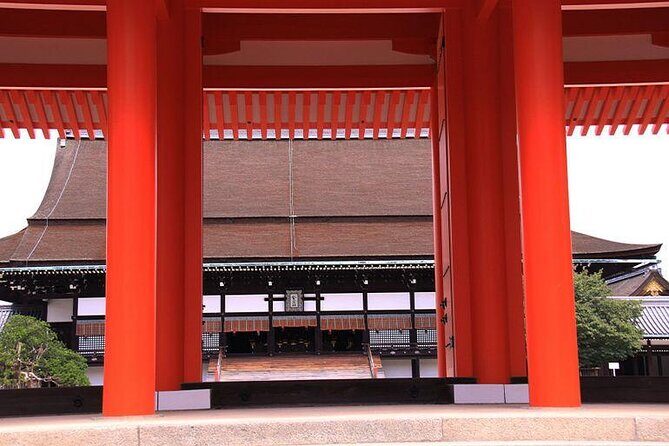
Kyoto has a way of making you feel like you need a spreadsheet. This tour is the opposite mood. It gives you one long day that focuses on the sights most people come to Kyoto for—shrines with photo-famous details, temples with iconic views, and the bamboo area people dream about.
The logic is simple: you start early, you ride in comfort between areas, and you spend time at the places that have the strongest “first-time Kyoto” payoff. On top of that, several entrance fees are already included, so you don’t lose time (or budget) figuring out ticket windows in the middle of a rush.
You can also read our reviews of more tours and experiences in Kyoto


Price and What $71.85 Really Covers
At $71.85 per person for the full day, you’re paying for more than transportation. You’re buying:
- a government licensed English guide
- an air-conditioned vehicle
- entrance tickets for Kiyomizu-dera, Tenryu-ji (full day), and Kinkaku-ji (full day)
- a Kyoto-style buffet lunch on the full day
- a short stop for shopping at a handicraft center
The big value move here is how the tour handles the entry tickets you’d otherwise pay for separately. You also get a scheduled flow, which matters in Kyoto when lines and transit time can snowball. Drinks aren’t included, but food is: that alone helps you avoid getting stuck hunting for lunch at the wrong moment.
Where You Start: Kyoto Station Meeting Point at 8:15am
This starts at Tourist Bus Terminal, Kyoto Station Hachijo Entrance (Kyoto Avanti). Departure is set for 8:15am, and you should arrive about 15 minutes early.
Why I’d treat the meeting time as serious business: the bus follows its schedule and will not wait for late arrivals. In other words, build in time for getting from your train platform to the correct entrance and finding the group before you’re pushed into the “sorry, it left” scenario. Big luggage isn’t allowed on the tour, too, so travel light and use a small day bag.
One more practical point: the tour uses a mobile ticket. Make sure your phone is charged and the ticket is accessible before you get to the terminal, not after you’re stressed in line.
Stop 1: Kiyomizu-dera for Panoramic Views and UNESCO Status
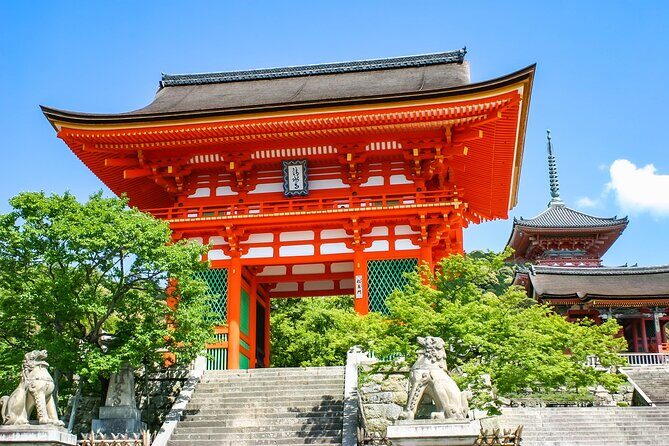
Kiyomizu-dera is your first major hit, and it’s easy to see why. You’ll get about 1 hour 10 minutes, and admission is included.
What to expect in that time:
- you’ll walk through temple grounds where the views are a major part of the experience
- you’ll spend enough time to enjoy the setting without feeling totally rushed
A key “real life” note: even when a visit is “only” around an hour, Kyoto temple areas often involve stairs and uneven footpaths. If you’re the type who likes photos from multiple angles (most people do), you’ll want shoes that handle stone steps comfortably.
If you’re thinking about crowds: going early helps, and starting the day here gives you momentum before other waves arrive.
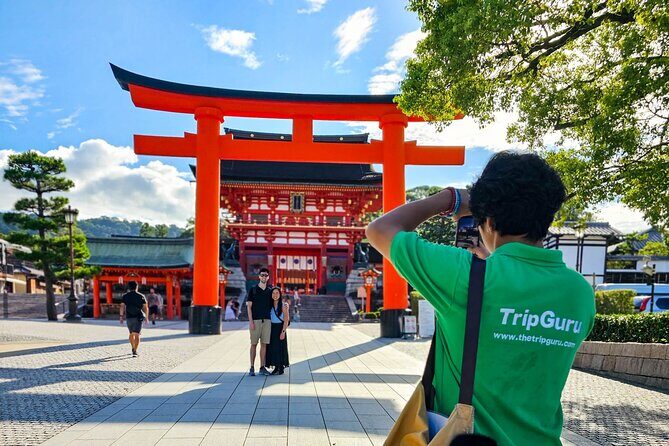
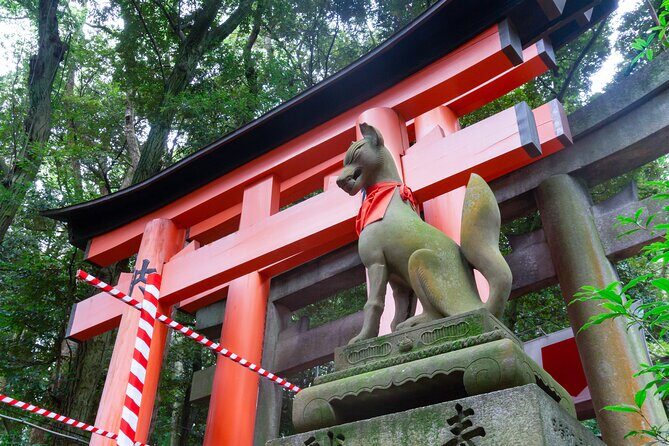
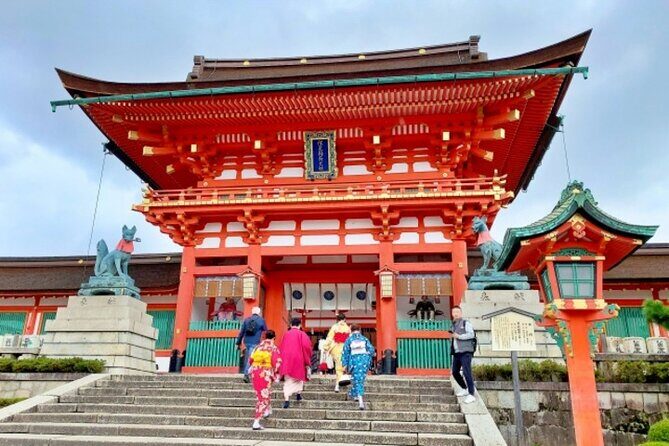
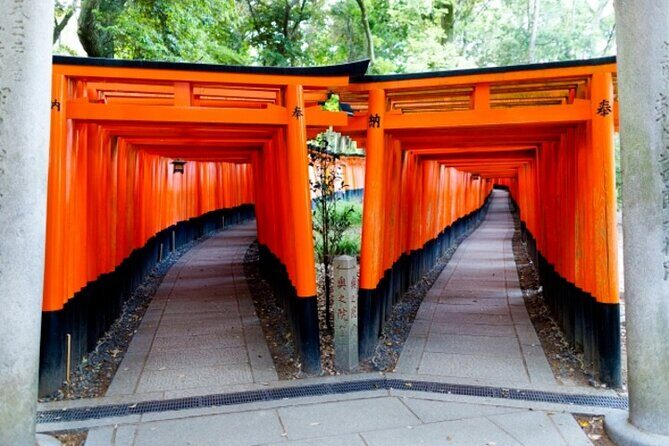
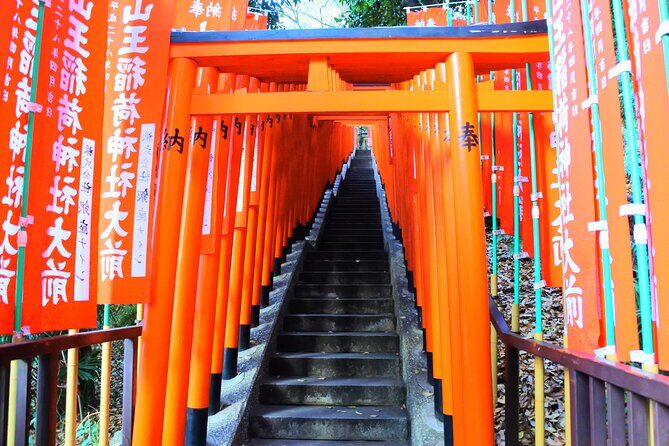
Stop 2: Fushimi Inari and the 1,000 Torii Gates
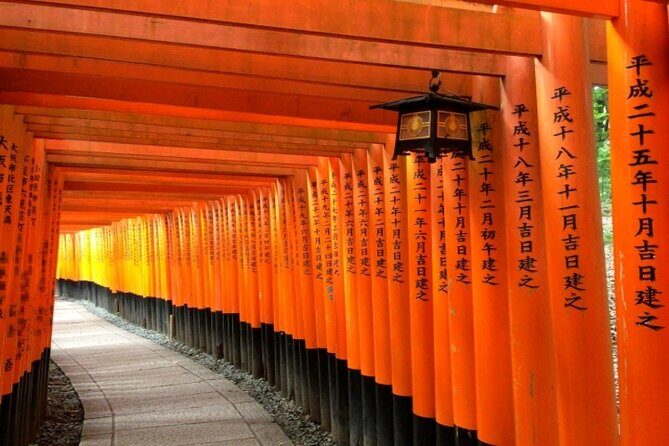
Next up is Fushimi Inari-taisha, with about 1 hour 10 minutes. Admission is included, and this is where Kyoto becomes very “postcard,” fast.
You’re going through the famous torii gates, and the magic is in the slow movement forward—your eyes track the repetition, and the path draws you deeper. It’s also a great place for people-watching. Even when the area is crowded, it keeps a calm rhythm if you move at a steady pace.
Important timing reality: a torii walk can be short or long depending on where you stop. The tour window is set, so you’ll want to decide early what matters most to you—up close gate details, a photo angle at a key bend, or continuing deeper toward quieter sections.
Half-day note: if you’re on the half-day option, after Fushimi Inari you proceed onward toward Arashiyama and then the tour disbands there. You’ll handle the rest on your own. That’s great if you already plan an Arashiyama evening.





Lunch Break: Kyoto-Style Buffet (Full Day Only)
On the full-day plan, you get 50 minutes for lunch at a Kyoto-style buffet. It’s included, but beverages aren’t.
For timing, 50 minutes is usually just enough if you keep your choices efficient:
- pick your basics quickly
- avoid a super long line moment
- sit, eat, and reset your feet
This matters because your afternoon is still heavy. You’ll want your energy for Arashiyama and Kinkaku-ji, where walking and stairs can add up quickly. Also, you’re asked not to bring your own food and drinks into the restaurant—so plan to buy water separately if you need it.
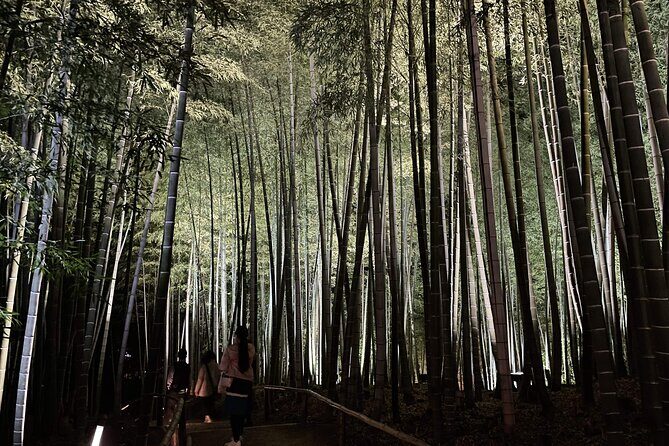
Stop 4: Tenryu-ji and the Arashiyama Bamboo Grove Walk
This is the heart of the Arashiyama experience on the full-day plan. You’ll spend around 2 hours at Tenryu-ji, with admission included.
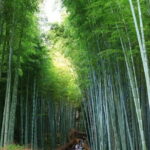
The attraction here is the bamboo grove walk. Even if you’ve seen photos before, being in the space changes things. The grove is a “walk-through” experience, not a quick glance. You’ll likely find yourself slowing down, looking up, and pausing at the spots where the light and the spacing of the stalks create a natural frame.
Two practical tips for this stop:
- bring comfortable shoes with grip, since temple paths can be slick if it rains
- manage your expectations: in busy hours, you won’t have the grove to yourself, but you can still enjoy it if you keep moving and pause strategically
If the weather shifts, this part of the day can feel slower—bamboo areas and temple grounds don’t speed up just because the schedule says so. The good news is that 2 hours gives breathing room.
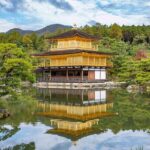
Stop 5: Kinkaku-ji (Golden Pavilion) in About 45 Minutes
Then comes Kinkaku-ji, the Golden Pavilion. You’ll have around 45 minutes, with admission included.
This stop is shorter than some others, and that’s intentional. Kinkaku-ji is photo-heavy and visually immediate, so most of the value comes from:
- seeing it from key viewpoints
- taking in the reflection-style visuals people love
- grabbing a few angles without losing time to wandering
If you’re the kind of visitor who likes to linger and read every sign, 45 minutes might feel tight. But if you want the landmark experience without turning the day into a slow crawl, it fits the overall plan well.
Stop 6: Kyoto Handicraft Center for Real Shopping Time
You’ll also stop at a Kyoto Handicraft Center for about 30 minutes. Admission is free, and this is your shopping chance.
This isn’t a “buy nothing and leave” stop. It’s short, so choose with a plan:
- look for small items you can carry comfortably
- avoid bulky purchases since the tour restricts large luggage
- if you’re hunting for gifts, decide early whether you want practical items or more decorative ones
The best approach in a time-limited shopping stop is to treat it like a market sprint, not a leisurely browse.
How the Day Feels: Packed Timing, Shared Pace, and Real Steps
The tour runs about 9 hours 45 minutes. That’s not a “sit and snack” day—it’s a moving, stepping, arriving, and leaving day.
One review detail that matches what you should expect: you need to be ready for roughly 16,000 steps across the day, plus stairs. If you’re not used to that kind of walking, you might feel it most in the afternoon after lunch.
Here’s how I’d prepare:
- wear shoes you trust on stone steps
- bring a small water bottle you can purchase on your own (drinks aren’t included)
- keep your phone ready for photos, because you won’t want to fumble when you have only 30–45 minutes
And because it’s a shared tour for up to 40 people, you’ll be moving with the group. That’s not a deal-breaker, but it does mean personal pacing matters less than good timing.
Guide Quality: Why English Guidance Helps More Than You Think
With an English-speaking guide driving the flow, you’re not just collecting stamps. You’re getting context while you stand in the actual place.
From past runs, guide names like Kuri San, Toshi, Haromi, and Yoko have been praised for being professional and for making the experience feel organized. In practical terms, good guidance helps you:
- understand what you’re looking at fast
- navigate the best viewing angles
- stay calm when lines or crowds shift
On a one-day loop like this, that matters. You don’t have time to “figure it out later” between sites.
Half-Day Option: Great If You Want Arashiyama to Be Your Afternoon
There’s also a half-day plan. After Fushimi Inari, the tour proceeds toward Arashiyama, and then it ends there. You return on your own.
That split can be smart if:
- you already plan to spend more time in Arashiyama after the tour
- you want a lighter day and fewer total stops
- you don’t want to commit to the full 9+ hours
Just be aware: once the tour ends at Arashiyama, you’re on your own for transit and timing. If you like independence, it can be a good trade. If you’d rather have everything handled start to finish, the full day fits better.
Who Should Book This Kyoto Golden Route Tour?
I think this tour is best for:
- first-timers who want the classic Kyoto icons in one day
- travelers who hate transit juggling and want an air-conditioned ride between areas
- people who appreciate having entrance fees handled and guided context in English
I’d be more cautious if you:
- want a slow, deep, no-rush visit to each temple
- have limited mobility or fatigue from long stair-heavy walking
- hate being on a schedule with a bus that won’t wait
Should You Book This Kyoto Golden Route Tour?
If your goal is to check off Kyoto’s must-see temples and shrines with minimal planning pain, this is a strong value. The included admissions and the English guidance make it easier to get real enjoyment from each stop instead of spending half your day figuring out logistics.
But go in honestly: this is a long day with serious walking. If you pack good shoes, arrive on time, and treat the schedule like part of the experience, you’ll likely come away feeling like you used your Kyoto time well. If you want a slower pace, consider mixing one or two of these stops with free time on your own instead.